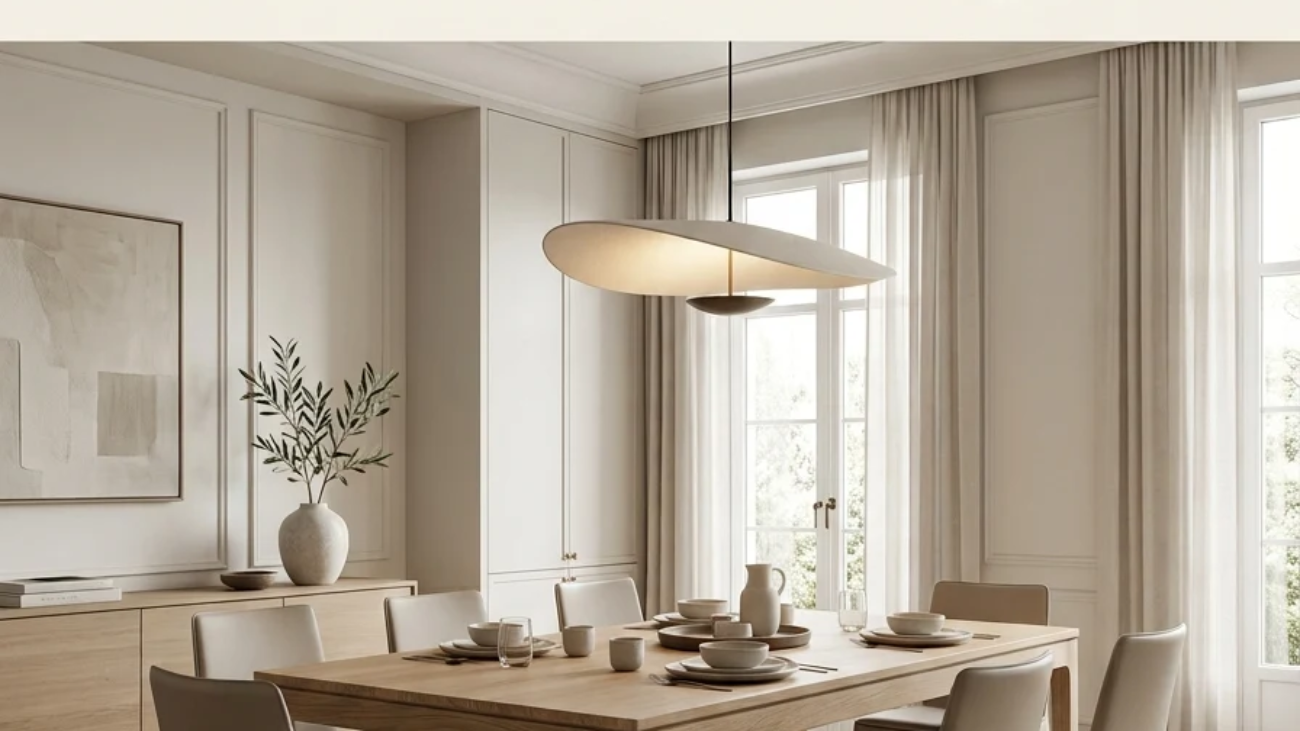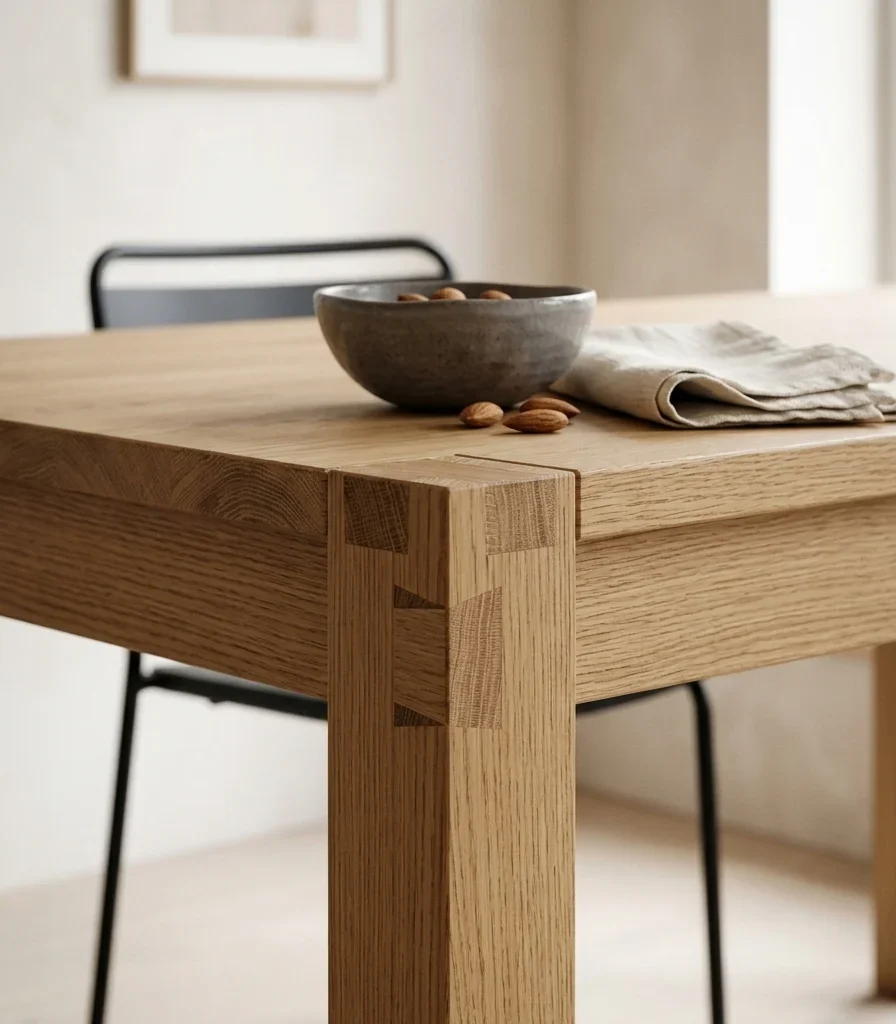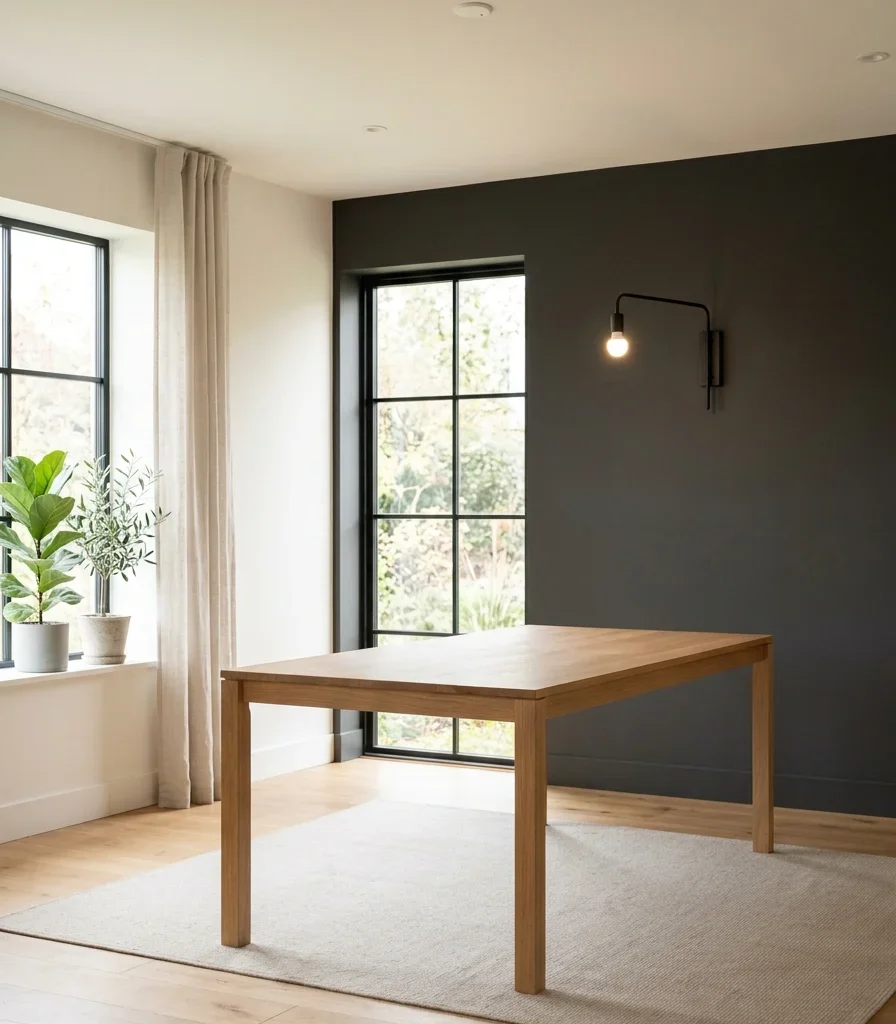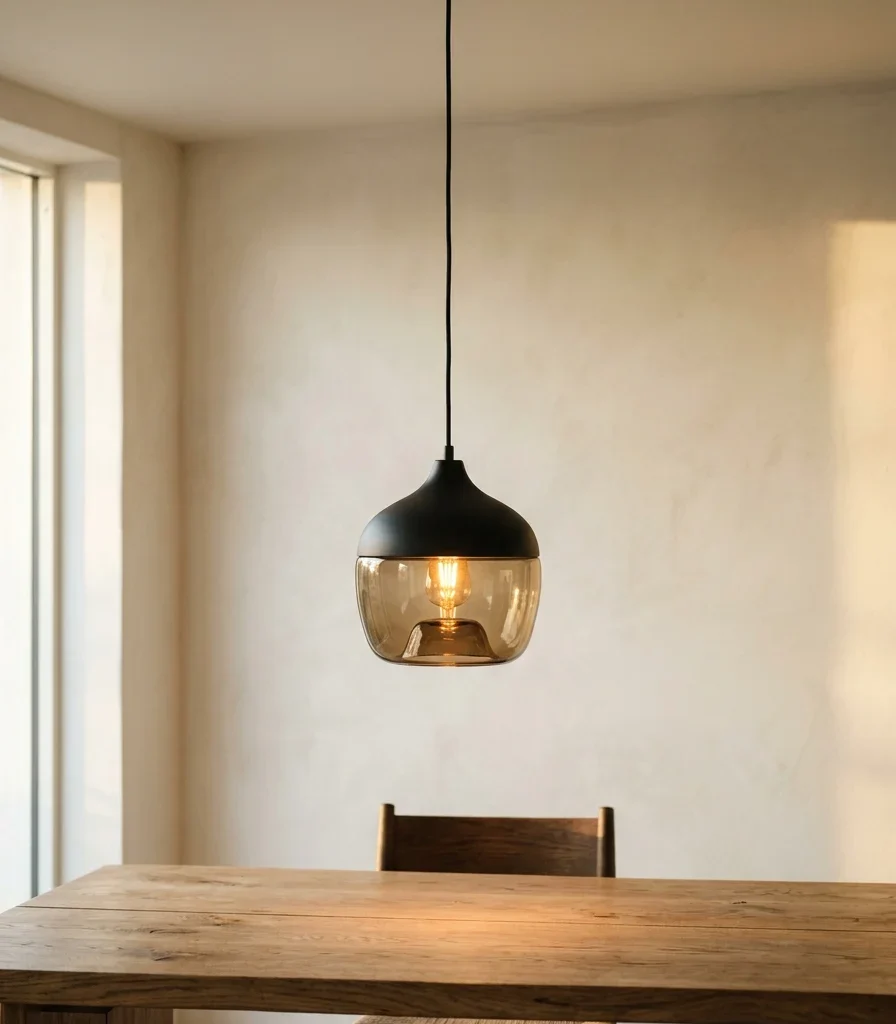
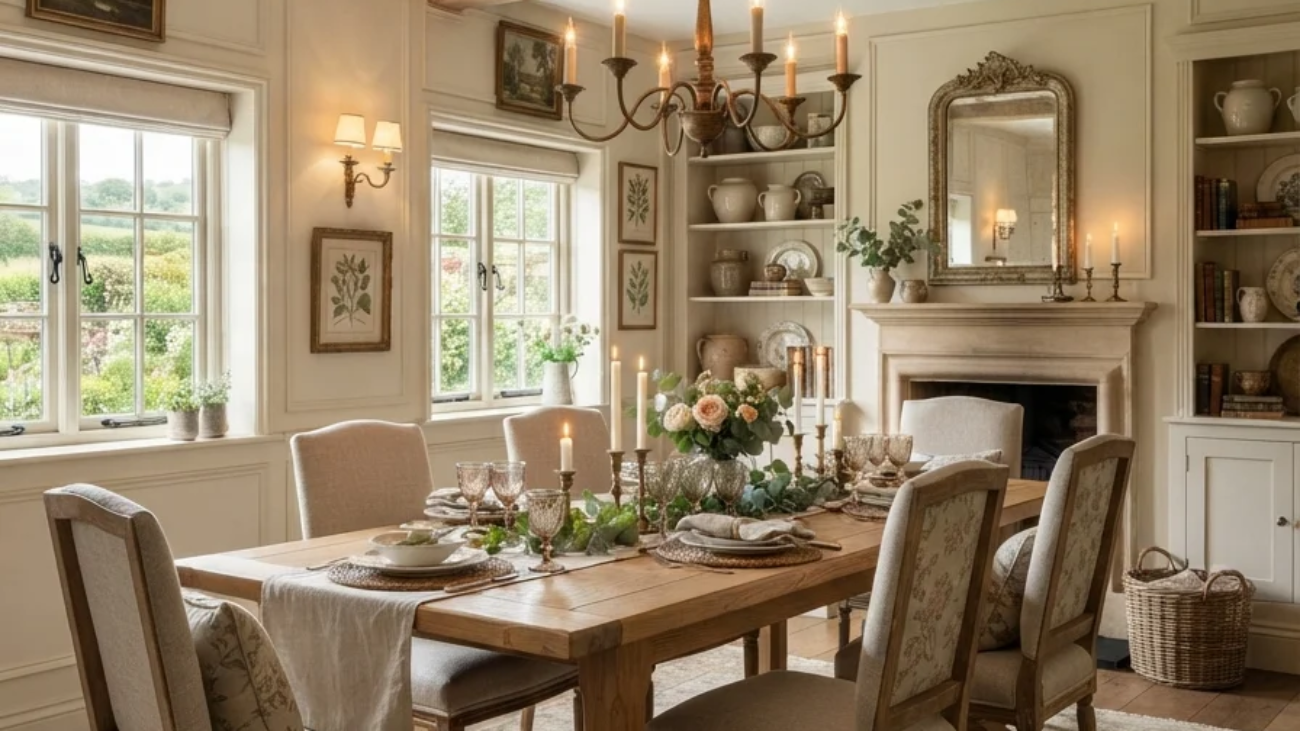
English countryside dining rooms combine traditional architectural character, natural materials, muted botanical colors, and comfortable furniture to create spaces that feel gracious without becoming formal. These 20 timeless English countryside dining room ideas show how to use aged wood, linen, soft lighting, floral patterns, antiques, and thoughtful layouts to recreate that collected country-house feeling.
There is something quietly comforting about an English countryside dining room: afternoon light falling across an old oak table, linen moving gently beside a window, and the faint warmth of candlelight waiting for dinner. The room feels established rather than decorated, with objects gathered over time instead of purchased to match. Its elegance comes from proportion, patina, craftsmanship, and restraint rather than shine or excess. Here are 20 ideas worth saving and stealing.
Why The Timeless Elegance of an English Countryside Dining Room Works So Well
English countryside interiors developed from the practical rooms of rural cottages, manor houses, rectories, and country estates rather than from a single formal design movement. The look overlaps with the Arts and Crafts tradition, English Georgian and Victorian interiors, and the accumulated character of old country houses. Unlike modern farmhouse style, it favors patinated furniture, traditional silhouettes, botanical references, layered textiles, and the visual evidence of age.
Its material palette is equally specific: honey-toned or dark oak, pine, walnut, aged brass, wrought iron, natural linen, wool, rush seating, glazed ceramics, and occasionally limestone or terracotta. Colors tend toward chalky warm white, mushroom taupe, muted sage, olive, dusty blue, faded rose, ochre, and deep forest green. The important distinction is softness; colors should look slightly weathered rather than freshly saturated.
The style feels particularly relevant now because homeowners are moving toward rooms that feel personal, durable, and less dependent on fast-changing trends. The emphasis on secondhand furniture, natural fibers, repairable materials, antiques, and pieces that become better with age also fits the wider preference for sustainable decorating. An English country dining room can therefore feel current without looking designed around a short-lived trend.
Small dining rooms can absolutely achieve the look, although scale matters. Start with one appropriately sized wooden table, use wall-mounted or compact lighting, keep curtains full-length to emphasize height, and choose a narrow sideboard rather than several small storage pieces. The goal is not to reproduce a country estate; it is to capture its material warmth and collected character within the space you actually have.
Style at a Glance
| Element | Detail |
| Philosophy | Collected, comfortable elegance with visible age and craftsmanship |
| Key Materials | Oak, pine, linen, wool, rush, aged brass, ceramic, wrought iron |
| Color Palette | Warm ivory, mushroom, sage, olive, faded blue, dusty rose, ochre |
20 Timeless Elegance of an English Countryside Dining Room Ideas
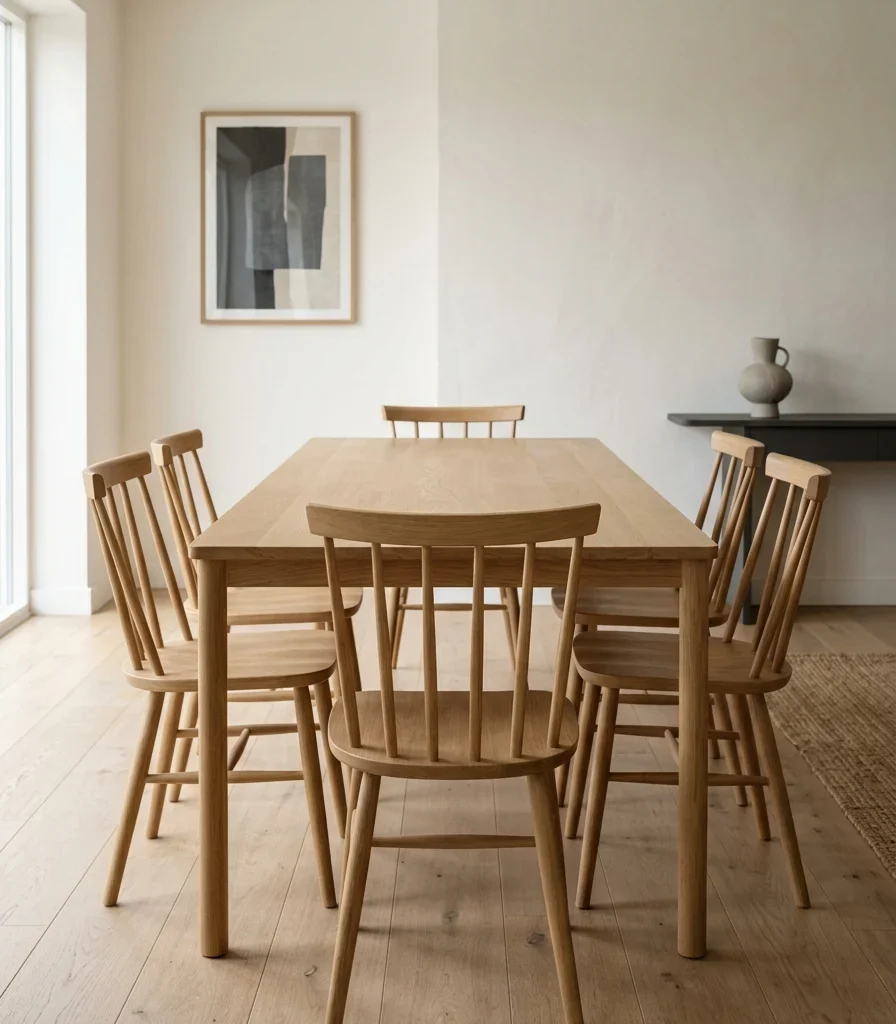
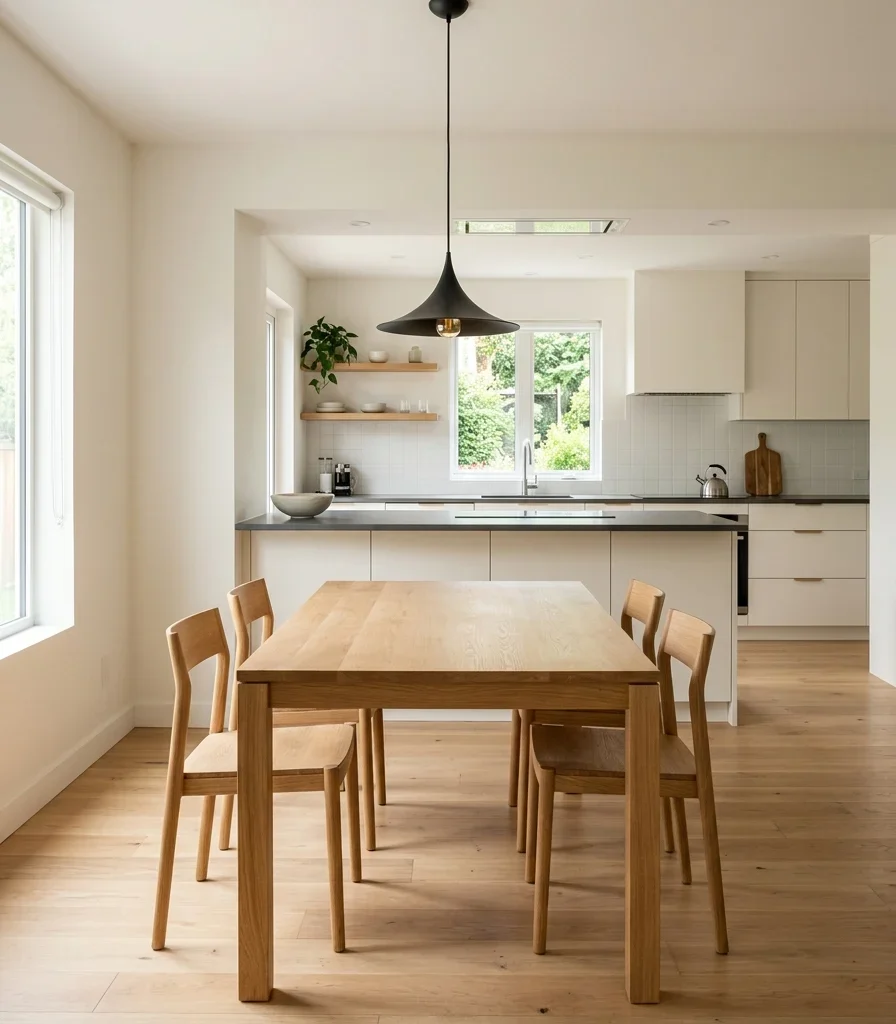
1. Ground the Room With a Weathered Oak Farmhouse Table
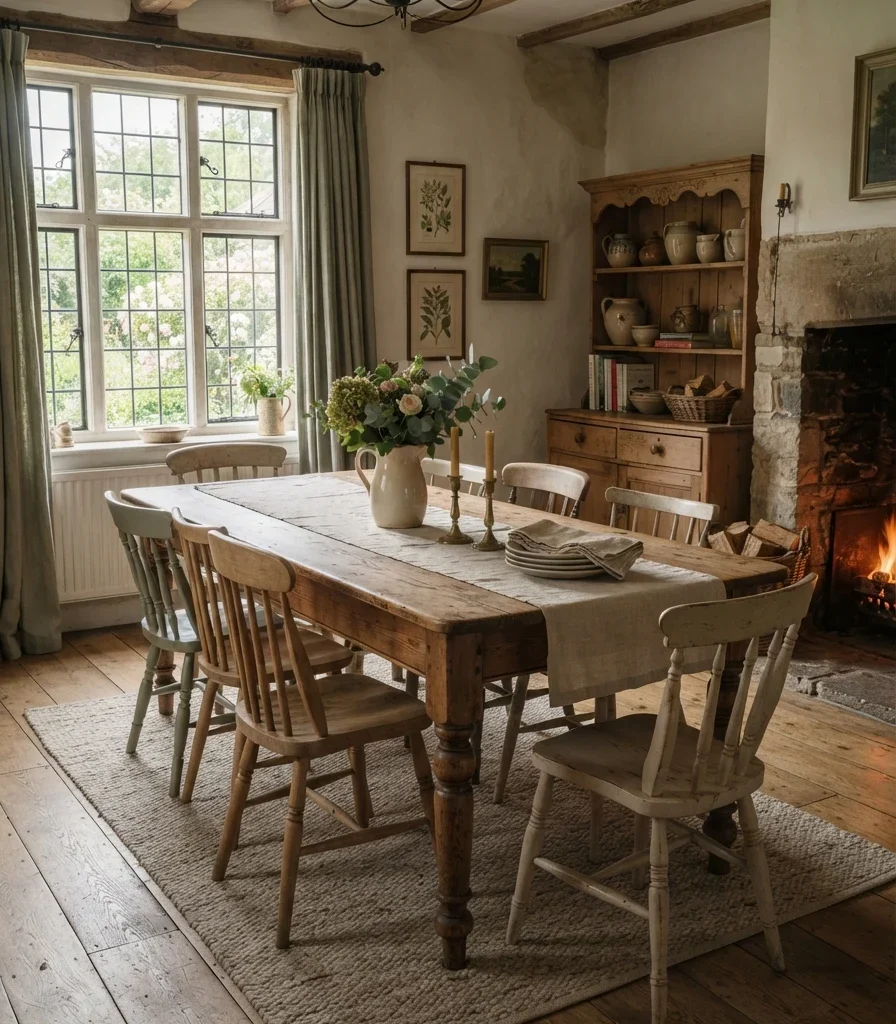
Vibe: Grounded. The table gives the room the reassuring weight of furniture meant to be used for decades.
Why it works: A substantial oak table establishes visual hierarchy immediately, while its imperfect surface prevents the dining room from feeling overly formal. The combination of weathered timber and upholstered or rush-seat chairs creates material contrast without introducing unnecessary decoration.
How to get it: Choose a solid-oak table with a matte or lightly waxed finish rather than glossy polyurethane. Leave approximately 90 cm of circulation behind occupied chairs so the table feels generous without obstructing movement.
💡 Quick Win: Rub a small amount of clear furniture wax into an unfinished-looking oak tabletop to deepen the grain without creating a shiny surface.
Shop The Look
| Product |
| Weathered solid oak farmhouse dining table |
| English ladder-back rush seat dining chair |
| Natural linen table runner oatmeal |
| Antique-style brass candlestick pair |
| Stoneware farmhouse serving platter |
2. Layer Mushroom and Sage for a Quiet Country Palette
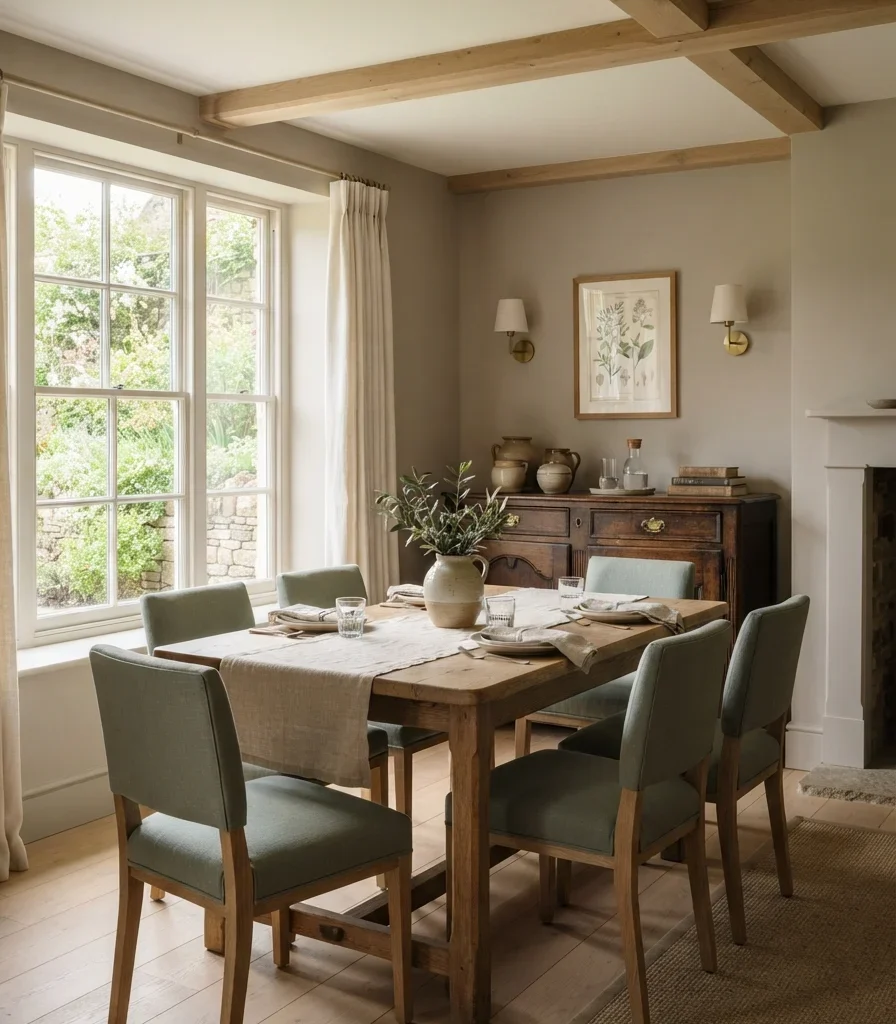
Vibe: Hushed. The restrained colors make the room feel settled rather than decorated.
Why it works: Mushroom and sage sit close enough in value to create continuity, while the warm ivory ceiling prevents the darker colors from visually lowering the room. The muted green also connects the dining room to the garden outside, an important characteristic of country-house interiors.
How to get it: Use mushroom taupe on the walls and reserve sage for upholstery, ceramics, or a painted sideboard. Avoid pairing these shades with stark brilliant white, which can make the palette look contemporary rather than timeworn.
Shop The Look
| Product |
| Mushroom taupe washable interior paint |
| Sage green upholstered dining chair |
| Antique oak sideboard with drawers |
| Botanical fern wall art framed |
| Sage green ceramic table vase |
3. Hang a Traditional Brass Chandelier Over the Table
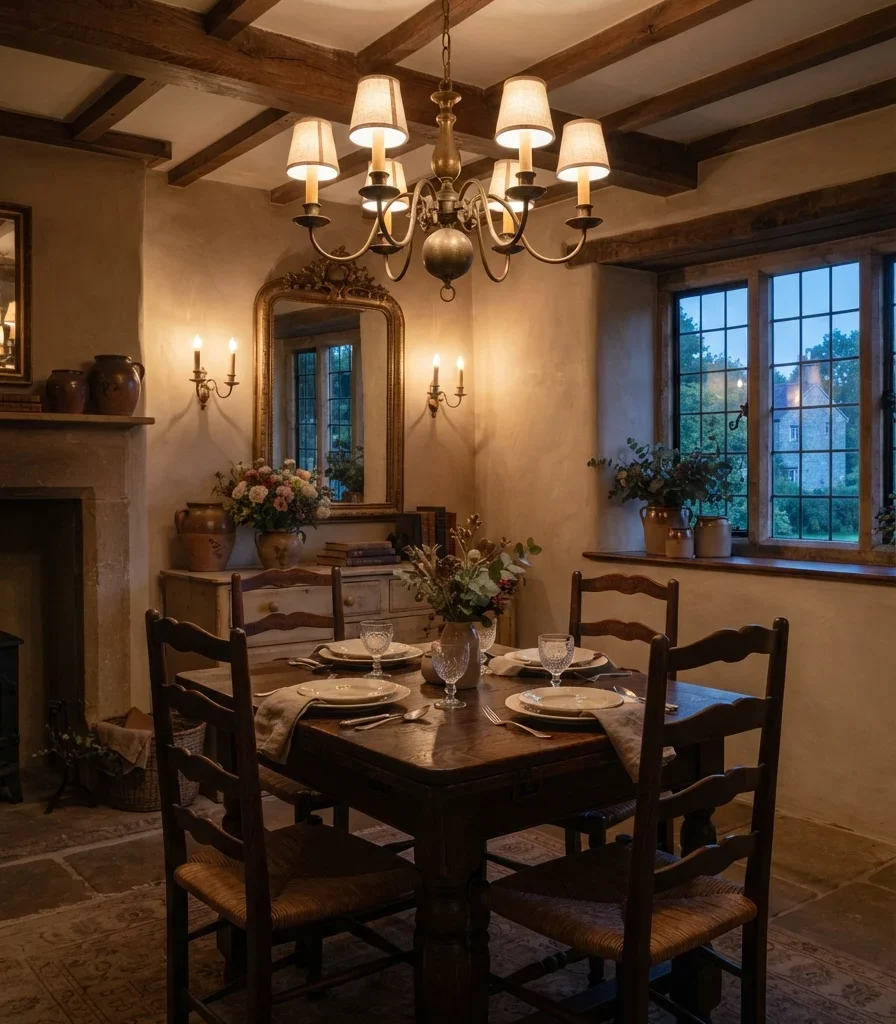
Vibe: Luminous warm light makes the dining room feel intimate as evening arrives.
Why it works: A chandelier creates a strong vertical focal point while visually connecting the ceiling to the dining table. Aged brass is softer than polished chrome and works naturally with oak, linen, ceramics, and traditional architecture.
How to get it: Hang the lowest part of the chandelier roughly 75–90 cm above the tabletop. Choose a dimmable 2700K bulb so the fixture can shift from practical dinner lighting to a softer evening glow.
💡 Quick Win: Replace cool-white bulbs in an existing chandelier with 2700K dimmable bulbs before changing the fixture itself.
Shop The Look
| Product |
| Six-arm aged brass dining chandelier |
| 2700K dimmable warm LED candle bulbs |
| Brass chandelier chain extension |
| Antique brass ceiling medallion |
| Traditional brass dimmer switch |
4. Bring in the Texture of Natural Linen
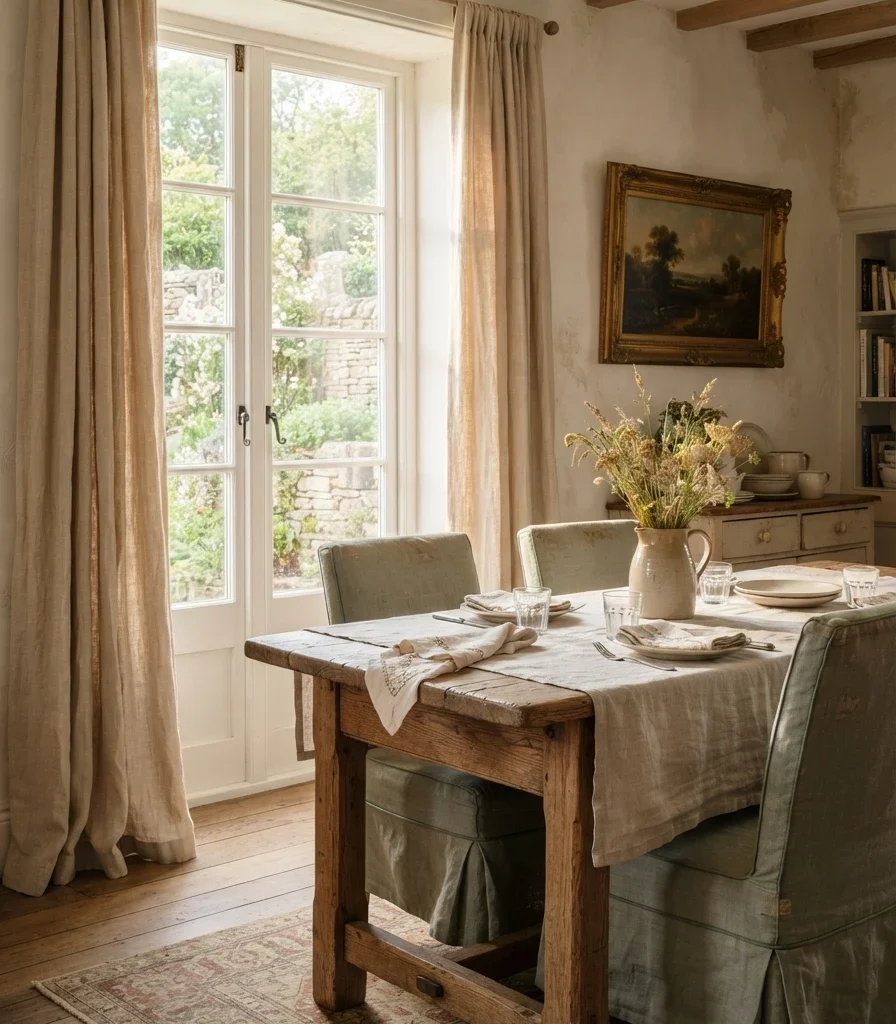
Vibe: Sun-warmed linen softens the hard edges of timber and makes daylight feel gentler.
Why it works: Natural linen introduces irregular texture and relaxed movement, qualities that balance the solidity of oak furniture. Its slightly uneven weave also feels more authentic to an English country house than crisp synthetic curtains.
How to get it: Choose linen curtains in natural flax or warm ivory and hang the rod close to the ceiling. Let the panels just kiss the floor rather than stopping at the windowsill
Shop The Look
| Product |
| Natural flax linen curtain panels |
| Unbleached linen tablecloth |
| Stonewashed linen napkin set |
| Natural linen chair cushion ties |
| Embroidered linen dining runner |
5. Use Faded Blue as a Traditional Accent
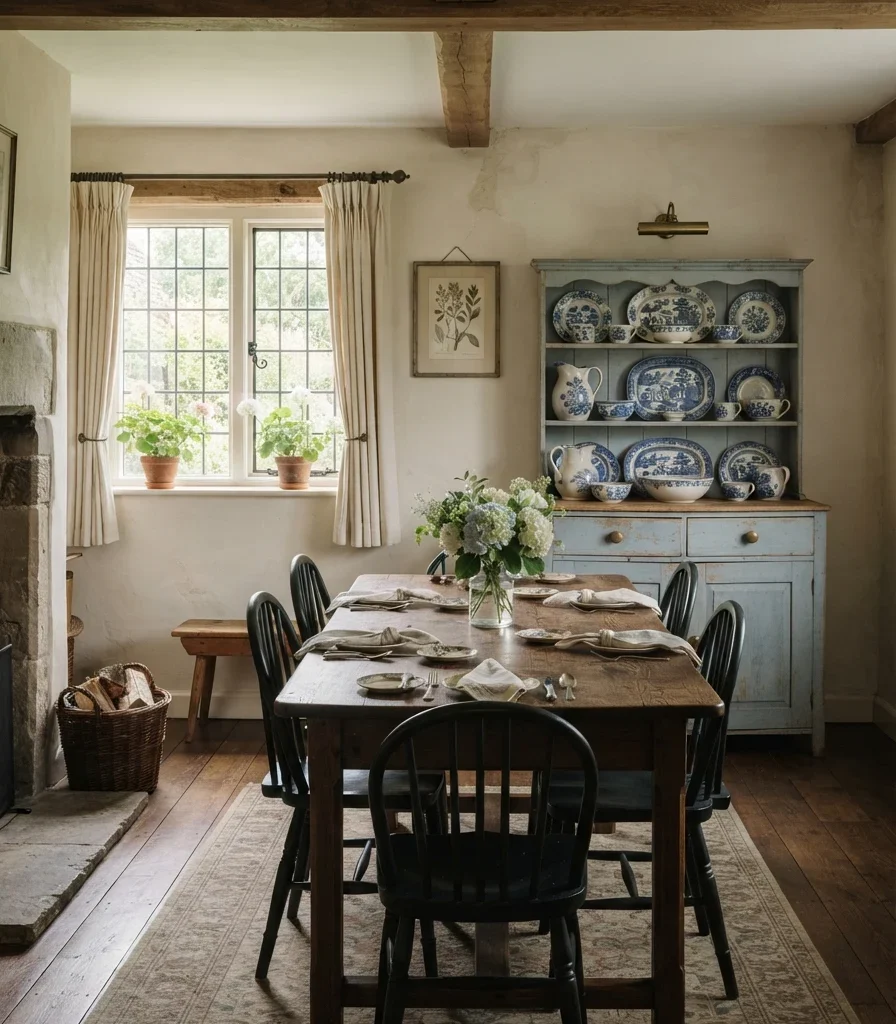
Vibe: Nostalgic faded blue brings the gentle memory of old painted country furniture into the room.
Why it works: Desaturated blue works especially well against warm timber because its coolness creates controlled contrast. The key is choosing a greyed, chalky blue rather than a bright royal or coastal blue.
How to get it: Use faded blue on one secondary element such as a dresser or lower cabinet, then repeat it in three smaller accessories. This keeps the color intentional rather than scattered.
Shop The Look
| Product |
| Faded blue painted wooden sideboard |
| Blue-and-white botanical dinnerware |
| Antique-style blue ceramic pitcher |
| Powder blue linen napkins |
| Blue floral framed country print |
6. Mix Oak, Wicker, and Aged Brass
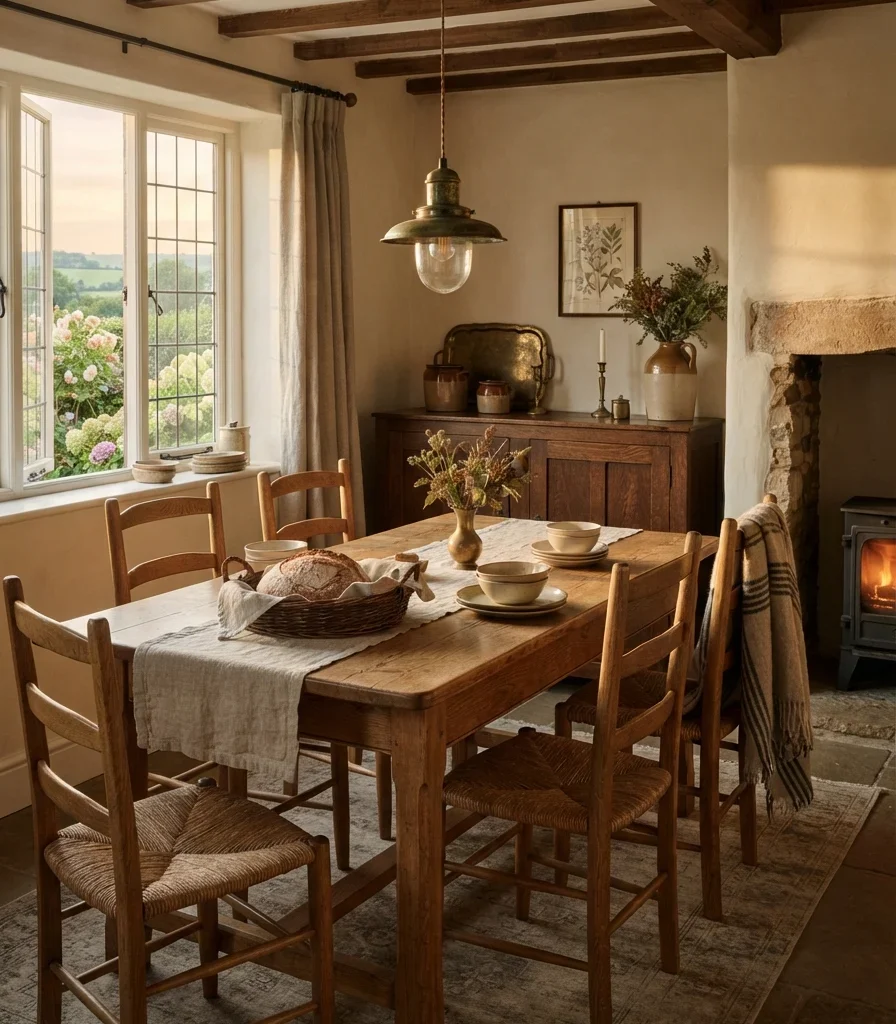
Vibe: Layered, different natural textures make the room feel collected rather than coordinated.
Why it works: Material contrast is more important here than color contrast. Smooth oak, fibrous rush, cool ceramic, and softly reflective brass each catch light differently, creating visual depth without relying on busy patterns.
How to get it: Limit the room to three dominant natural materials- oak, woven fiber, and aged metal- and allow smaller accessories to repeat those materials.
💡 Quick Win: Add one vintage-style woven market basket beside the sideboard; it introduces the right texture without committing to new furniture.
Shop The Look
| Product |
| Honey oak trestle dining table |
| Woven rush-seat country dining chair |
| Aged brass linear pendant |
| Natural seagrass market basket |
| Antique brass serving tray |
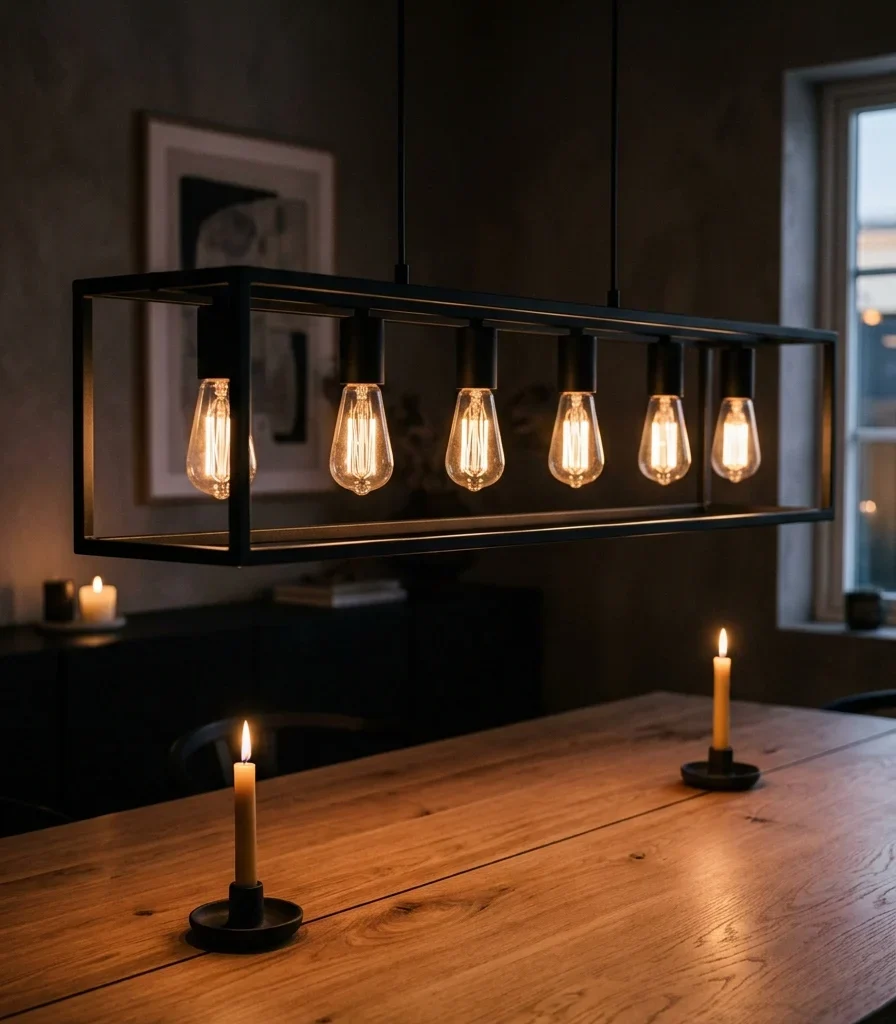
7. Create a Candlelit Dining Atmosphere
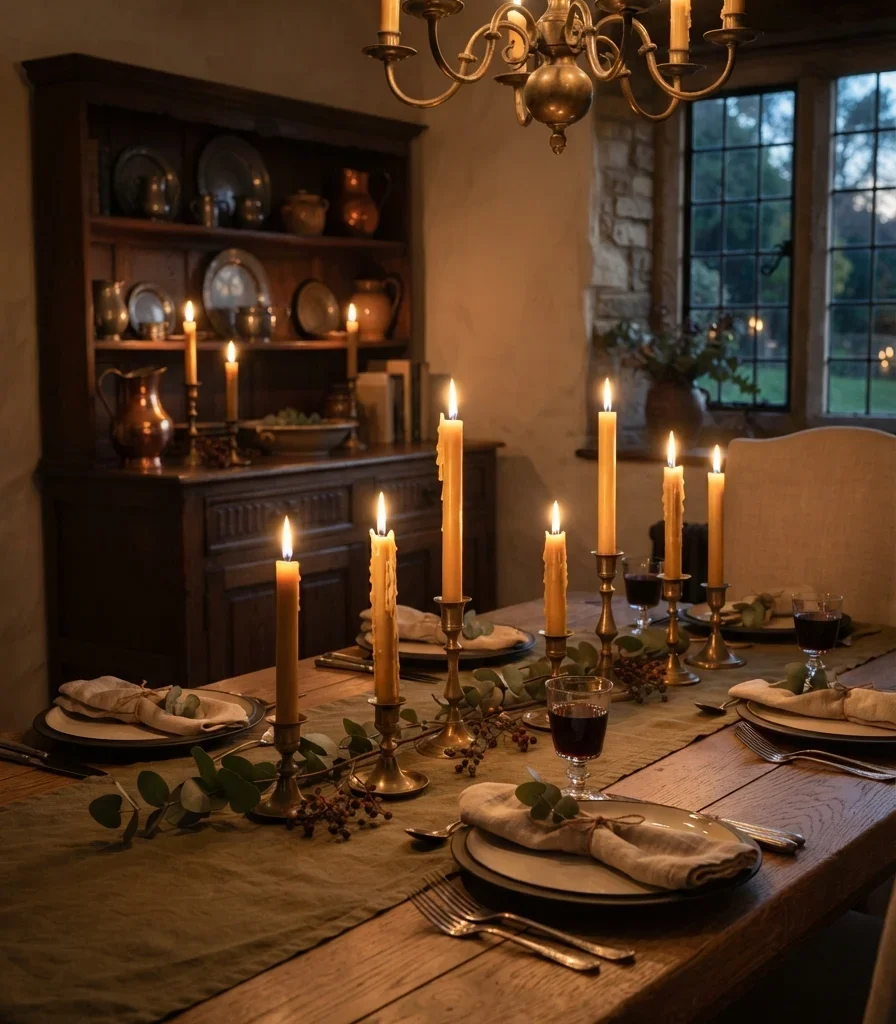
Vibe: Glowing candlelight gives old timber and aged metal a softness that overhead lighting cannot reproduce.
Why it works: Low-level light creates a more intimate visual field and draws attention toward the dining table, where conversation and food actually happen. Brass candlesticks reinforce the warm reflection without requiring additional color.
How to get it: Place three or five candleholders along the table rather than lining them up symmetrically. Use unscented beeswax tapers so food aromas remain the focus.
Shop The Look
| Product |
| Beeswax taper candle set |
| Antique brass candlestick trio |
| Glass hurricane candle holder |
| Traditional brass taper snuffer |
| Linen candle table runner |
8. Choose Upholstered Chairs With Traditional Profiles
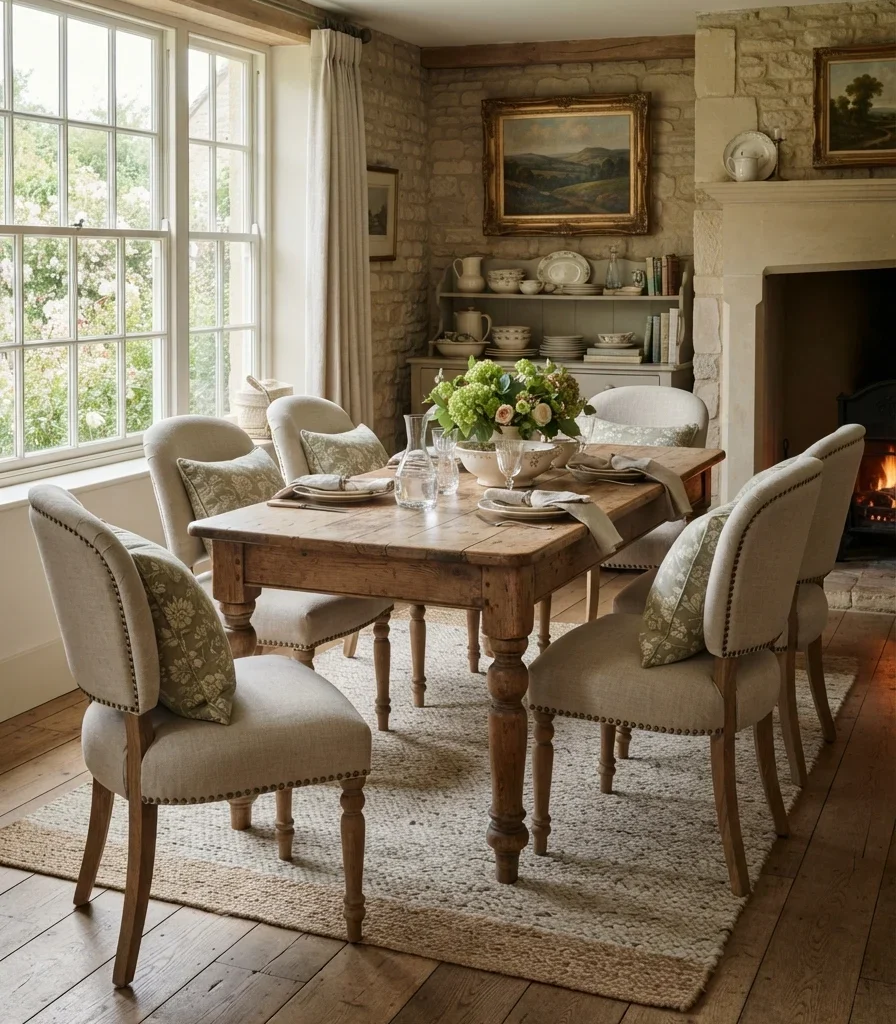
Vibe: Comfortable. The chairs suggest that dinner is meant to last rather than be hurried.
Why it works: Upholstered backs introduce softness against a hard wooden table, while traditional curved profiles reference English dining furniture without requiring elaborate carving. The chairs also make the room more practical for long meals.
How to get it: Look for oatmeal or mushroom linen upholstery and wooden legs in a tone close to the dining table. Avoid ultra-sleek metal legs, which introduce a competing modern visual language.
Shop The Look
| Product |
| Oatmeal linen upholstered dining chair |
| Turned-leg English dining chair |
| Mushroom linen seat cushion |
| Floral lumbar dining cushion |
| Oak furniture touch-up wax |
9. Display Blue-and-White Ceramics on a Dresser
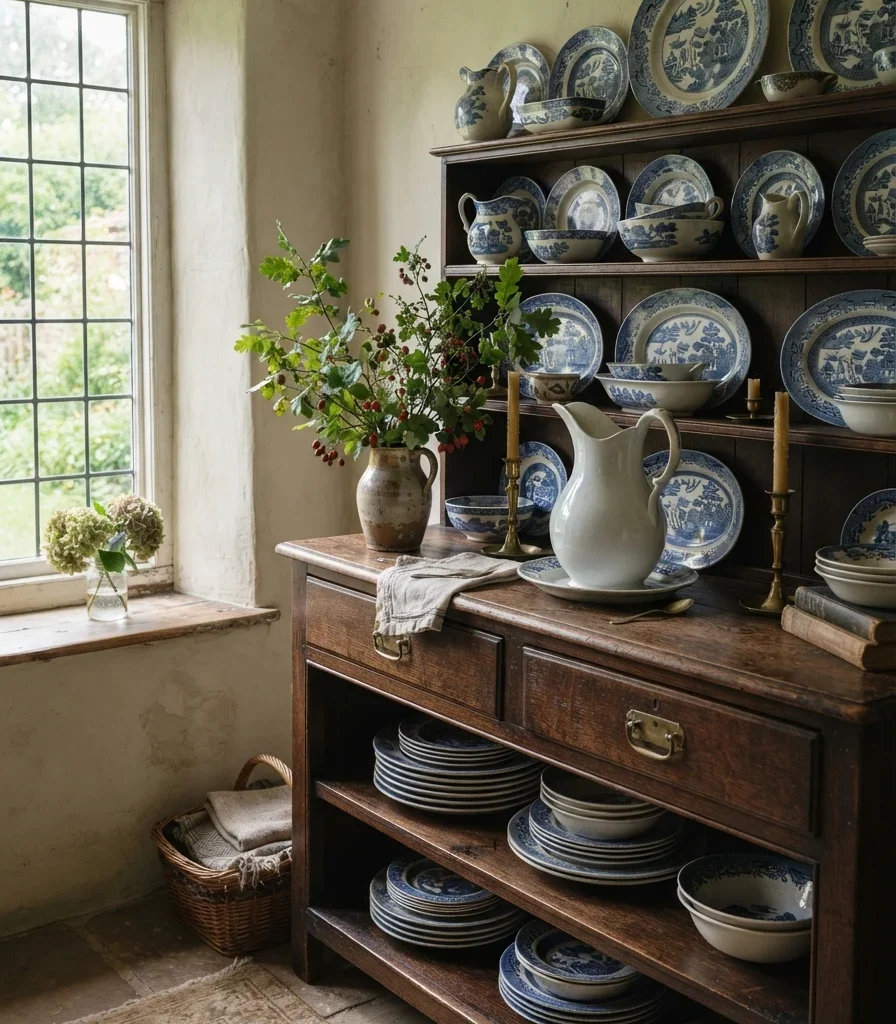
Vibe: Collected; the display feels accumulated over years rather than bought in a single afternoon.
Why it works: Repeating blue-and-white ceramics creates cohesion while allowing different shapes and patterns to provide variation. A dark wooden dresser gives the collection enough visual weight to prevent delicate ceramics from looking scattered.
How to get it: Group ceramics in odd-numbered clusters and vary height: one tall pitcher, two medium vessels, and several lower plates or bowls create a more natural hierarchy.
💡 Quick Win: Start with three blue-and-white transferware pieces from a thrift shop or vintage market instead of buying an entire matching collection.
Shop The Look
| Product |
| Blue-and-white transferware dinner plate set |
| Traditional porcelain pitcher |
| Blue floral ceramic serving bowl |
| Dark oak display dresser |
| Brass plate display stand set |
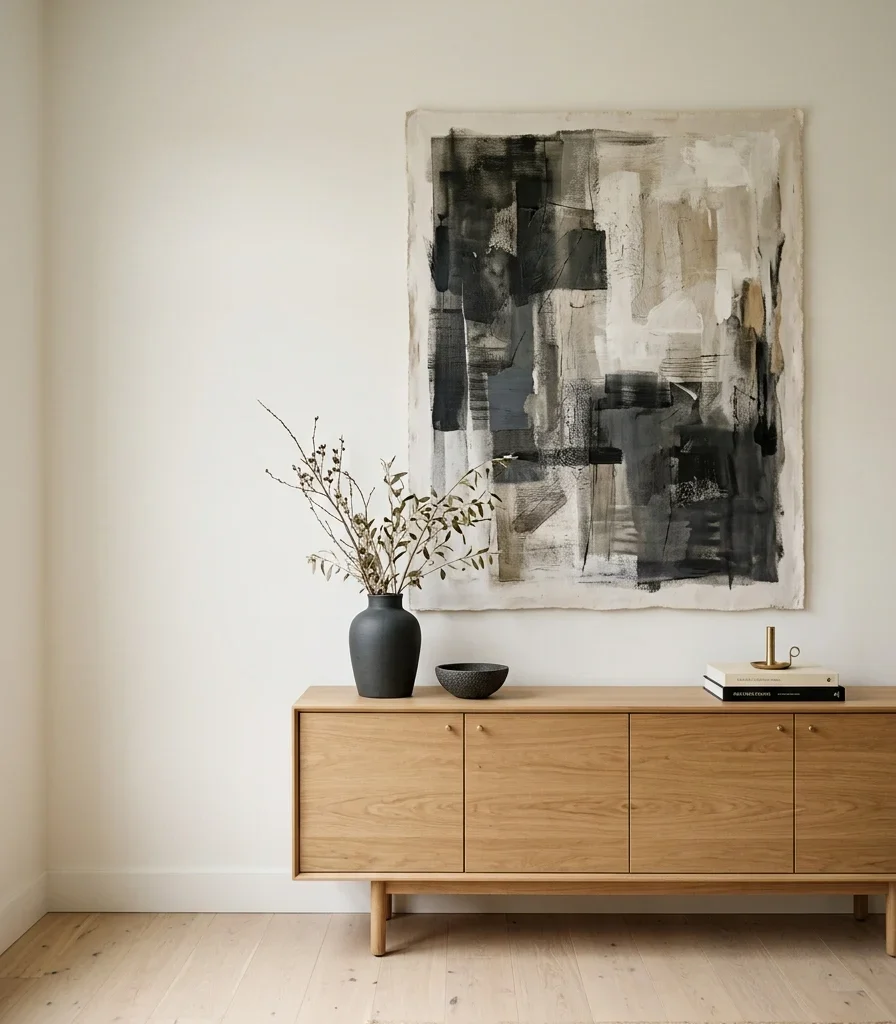
10. Use an Antique-Style Sideboard to Balance the Table
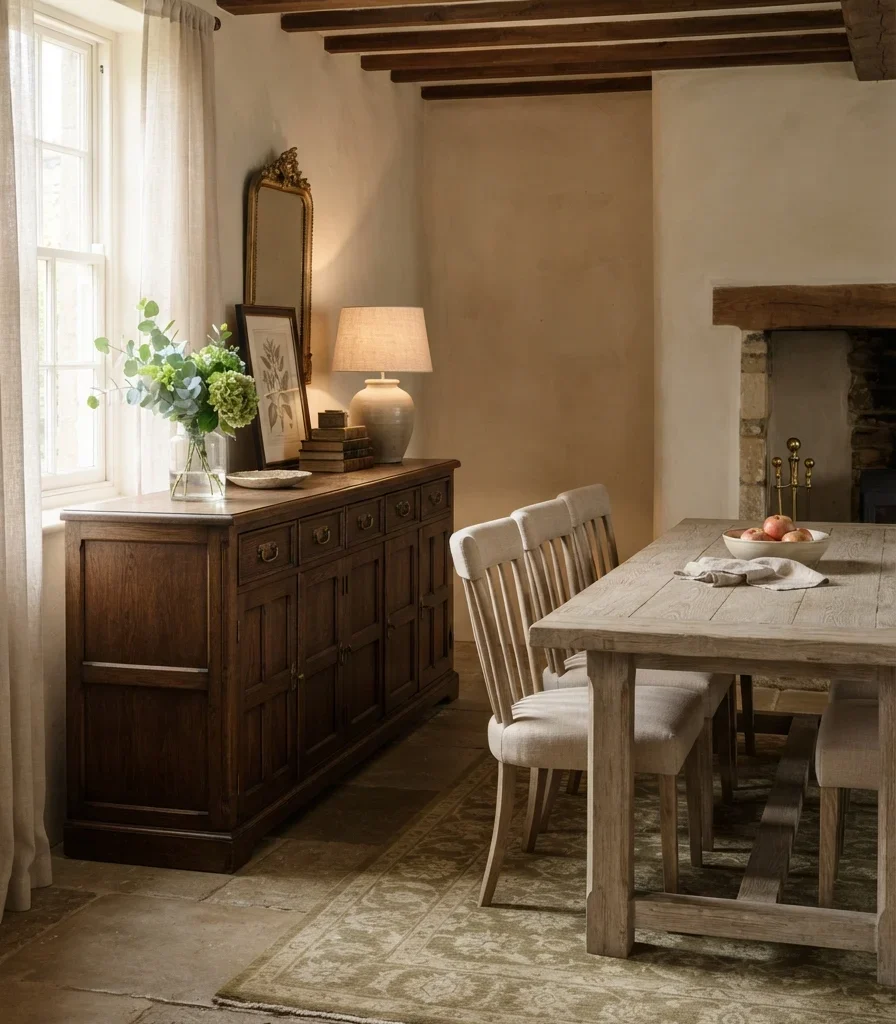
Vibe: Anchored. The sideboard gives the room a strong architectural counterweight.
Why it works: A long, low sideboard balances the horizontal dining table while adding essential storage. Darker timber can also create depth when the main table and walls are lighter.
How to get it: Select a sideboard roughly two-thirds the length of the dining table. That proportion creates a visual relationship without making the storage piece compete with the table.
Shop The Look
| Product |
| Dark oak English-style sideboard |
| Aged brass cabinet pull set |
| Antique-style ceramic table lamp |
| Small framed landscape oil print |
| Woven storage basket with handles |
11. Frame the Windows With Full-Length Country Curtains
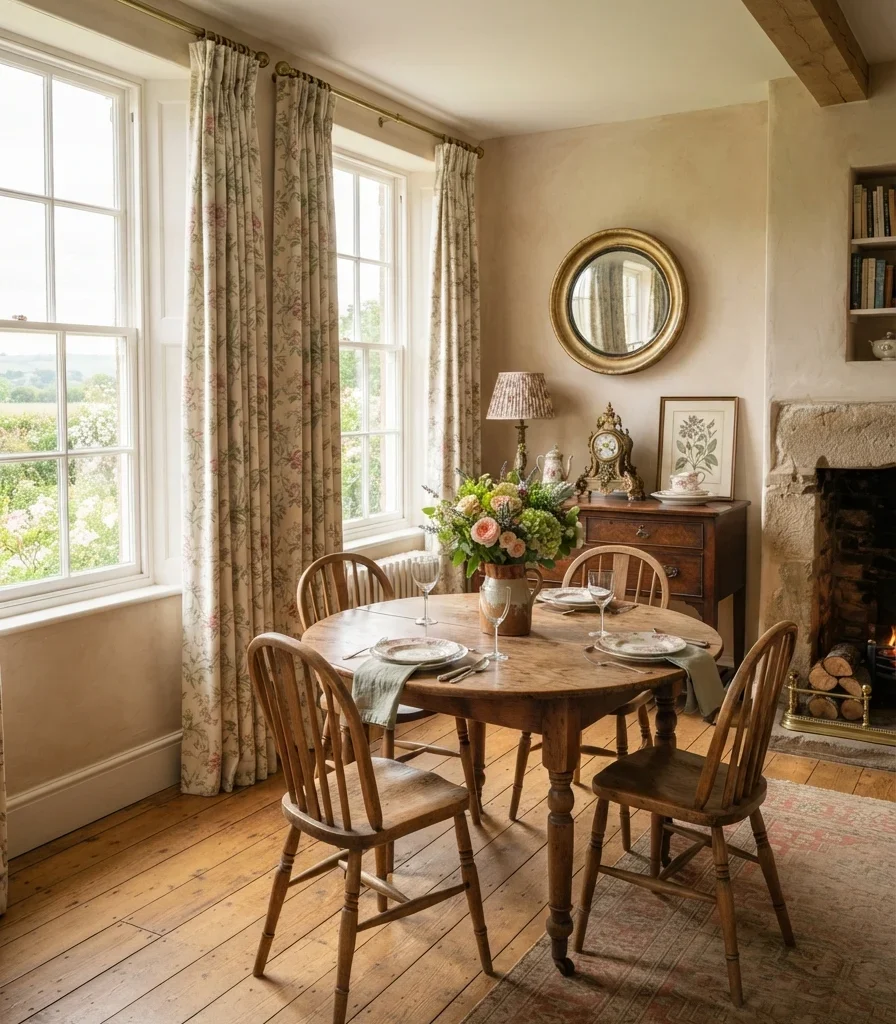
Vibe: Airy. The curtains turn ordinary daylight into a softer architectural feature.
Why it works: Full-length fabric emphasizes vertical height and makes windows appear more substantial. A small-scale botanical print adds country character without visually overwhelming the dining table.
How to get it: Mount the curtain rod 10–15 cm above the window frame and extend it beyond both sides so the fabric can stack away from the glass when open.
Shop The Look
| Product |
| Small floral linen curtain panels |
| Aged brass curtain rod |
| Brass curtain rings with clips |
| Floral linen tieback pair |
| Window privacy sheer linen panel |
12. Make a Gallery Wall From Botanical and Landscape Prints
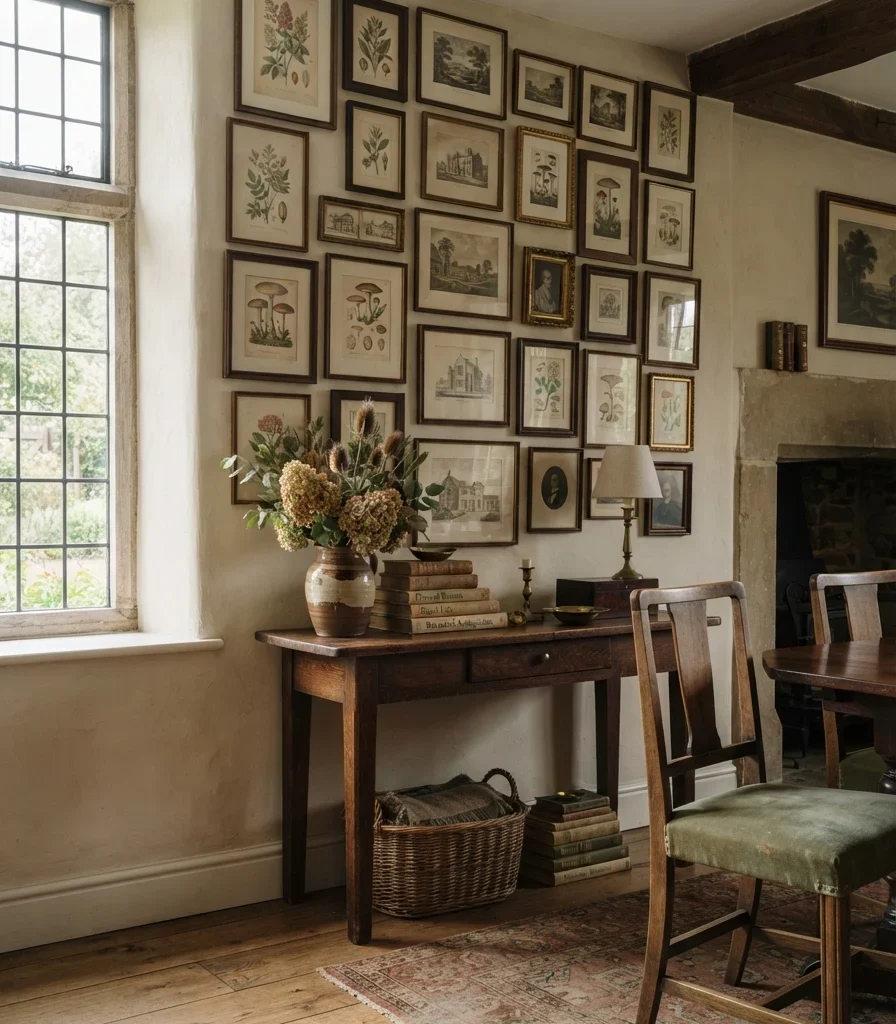
Vibe: Thoughtful; the wall feels like a personal collection rather than a decorative backdrop.
Why it works: A varied gallery wall adds vertical visual weight and gives a plain dining wall the layered character associated with older country houses. Keeping the frames within a narrow family of antique wood and muted brass prevents the arrangement from becoming chaotic.
How to get it: Begin with the largest landscape print at eye level, then build outward using smaller botanical studies. Keep approximately 5–8 cm between frames for a cohesive salon arrangement.
Shop The Look
| Product |
| Vintage botanical print set |
| Antique brass picture frames |
| Dark oak landscape frame |
| Picture hanging wire and hooks |
| Aged paper countryside art prints |
13. Introduce Pattern With a Muted Floral Tablecloth
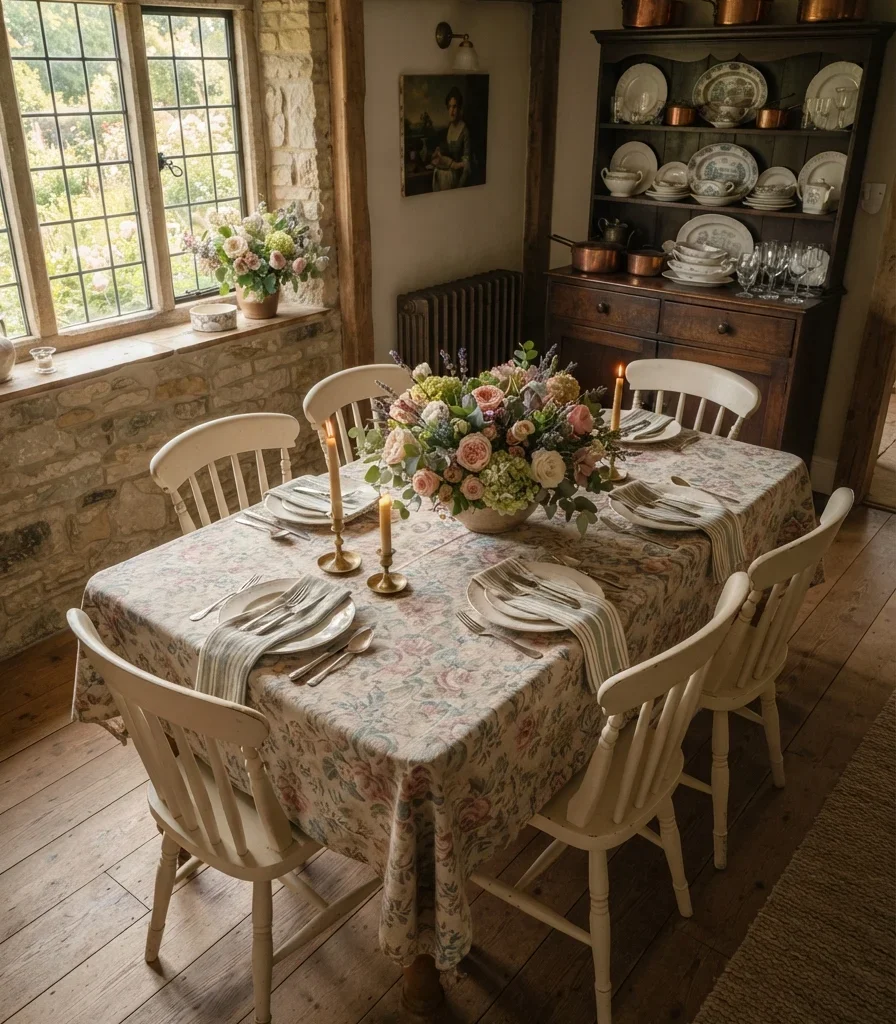
Vibe: Layered; the floral pattern gives the table the softness of an old country-house textile.
Why it works: A small-scale floral print introduces pattern without dominating the room. The muted background allows the oak table and ceramic pieces to remain visible through the fabric, preserving the sense of material depth.
How to get it: Choose a floral print containing no more than four muted colors and repeat one of those colors in the napkins or ceramics.
Shop The Look
| Product |
| Muted English floral cotton tablecloth |
| Sage floral linen napkin set |
| Cream stoneware dinner plate set |
| Small brass taper candleholders |
| Vintage-style floral serving tray |
14. Let the Floor Become Part of the Design
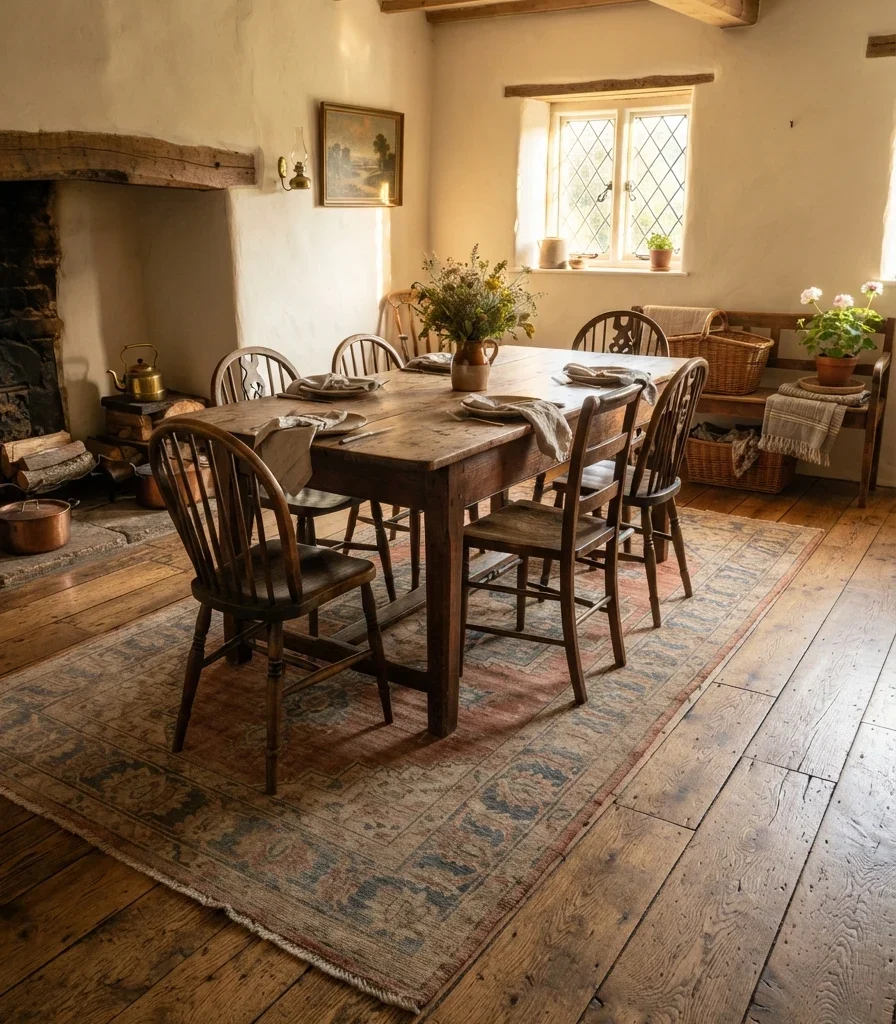
Vibe: Rooted; the floor makes the entire room feel connected to the history of the house.
Why it works: Wide timber boards introduce horizontal continuity and natural variation beneath the furniture. A faded wool rug adds softness and protects the floor while creating a subtle visual zone around the dining table.
How to get it: If replacing flooring is not realistic, use a large distressed-look wool rug with enough visible timber around its edges to preserve the room’s natural foundation.
💡 Quick Win: A secondhand Persian-style runner can create instant patina for considerably less than replacing a perfectly serviceable floor.
Shop The Look
| Product |
| Wide-plank natural oak flooring |
| Faded Persian-style wool dining rug |
| Non-slip rug pad natural felt |
| Vintage-style woven floor basket |
| Oak floor maintenance wax |
15. Center the Room Around the Dining Ritual
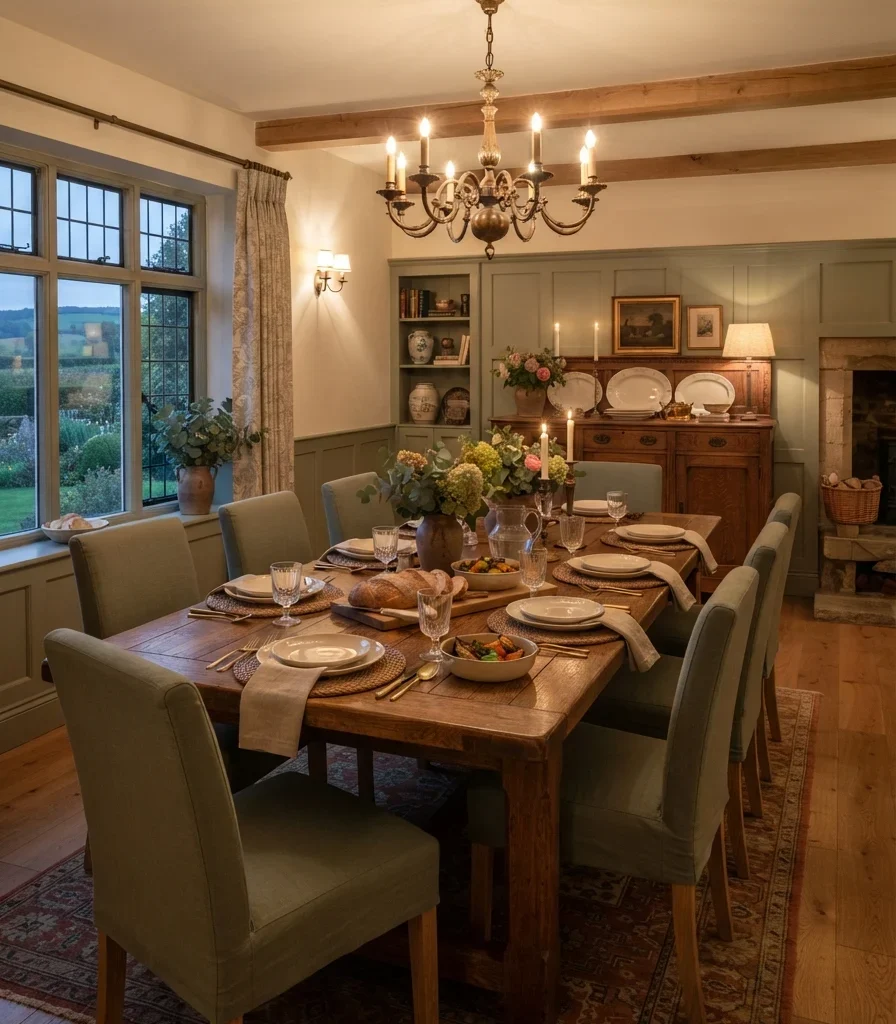
Vibe: Welcoming; the room feels organized around people rather than objects.
Why it works: The strongest dining rooms prioritize their actual function: comfortable seating, clear circulation, accessible serving storage, and flattering light. This functional hierarchy prevents the country aesthetic from becoming a collection of decorative props.
How to get it: Center the chandelier and table first, then allow at least 90 cm behind frequently used chairs. Position the sideboard within easy reach of the table without narrowing the primary walking route.
Shop The Look
| Product |
| Extendable solid oak dining table |
| Upholstered English country dining chair |
| Large traditional dining chandelier |
| Solid wood serving trolley |
| Oak serving board with handle |
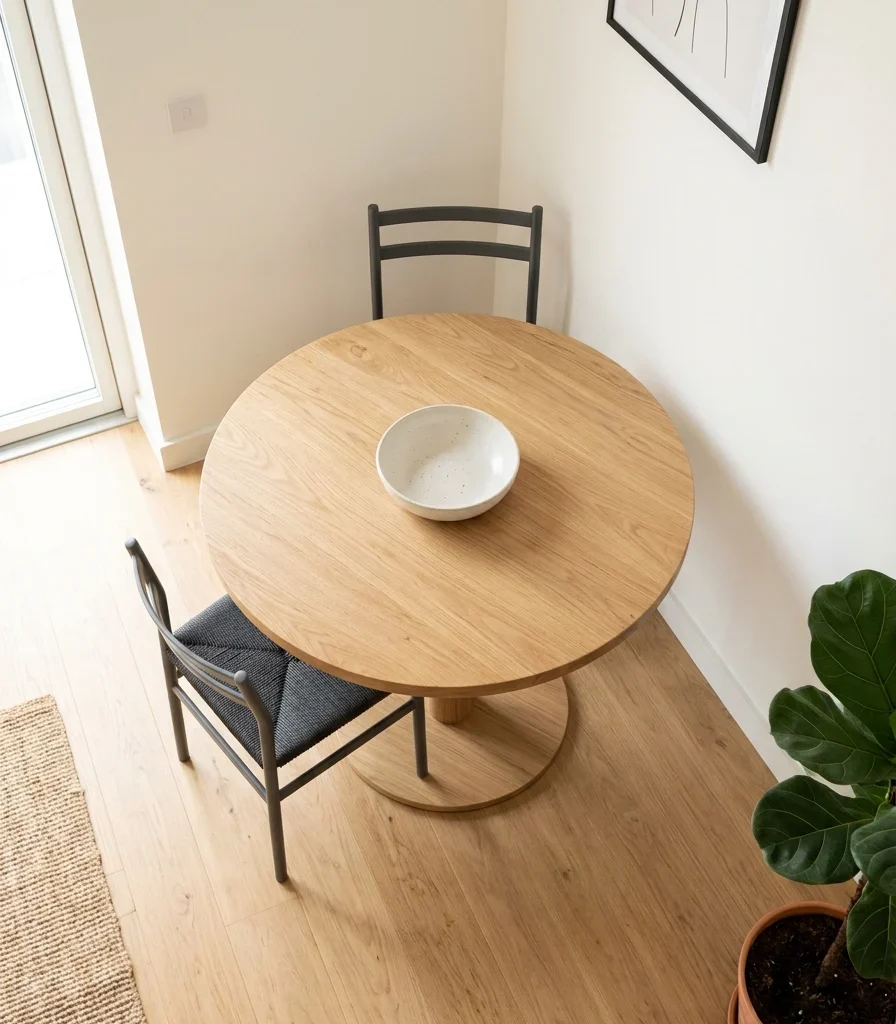
16. Use a Small Round Table in a Compact Dining Room
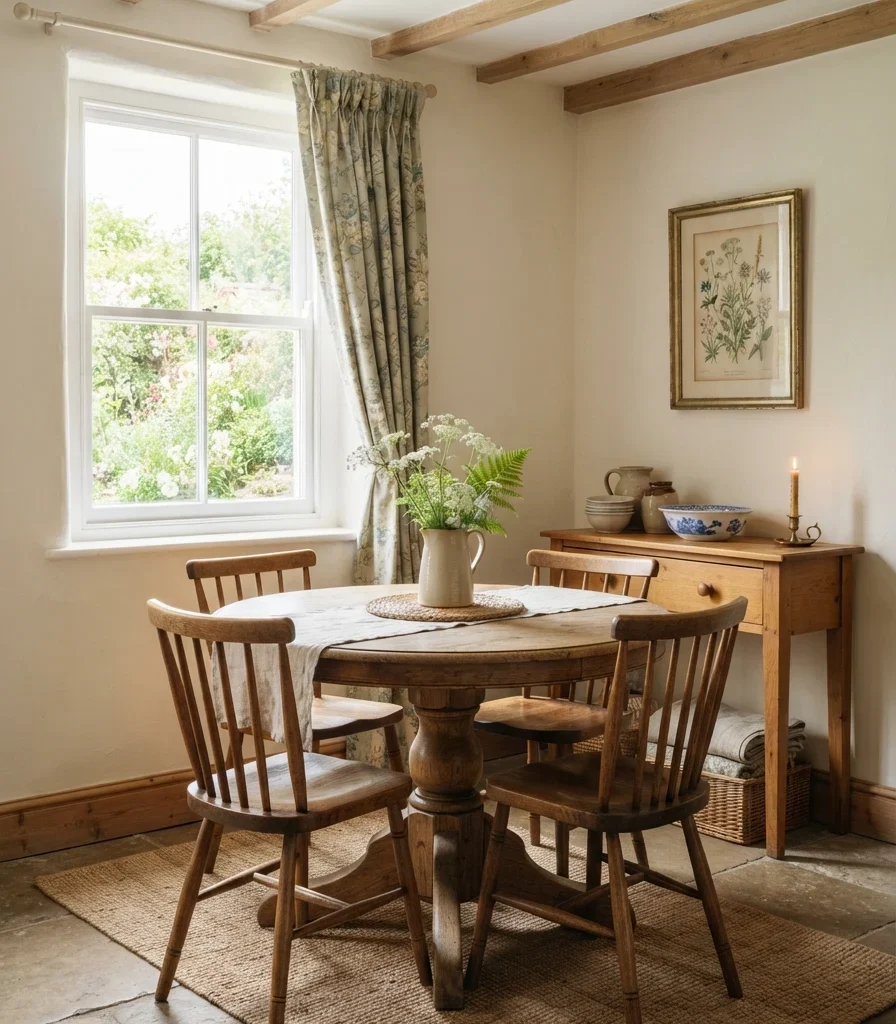
Vibe: Intimate. The compact footprint makes conversation feel naturally close.
Why it works: A round pedestal table eliminates sharp corners and allows chairs to move around the perimeter more freely. It is particularly effective in narrow dining rooms where a rectangular table can create awkward circulation.
How to get it: For four people, look for a round table around 110–120 cm wide and pair it with armless chairs that can tuck completely underneath.
Shop The Look
| Product |
| Round oak pedestal dining table 120cm |
| Compact spindle-back wooden chairs |
| Slim antique oak console table |
| Small woven storage basket |
| Petite brass wall sconce |
17. Add a Painted Welsh-Style Dresser
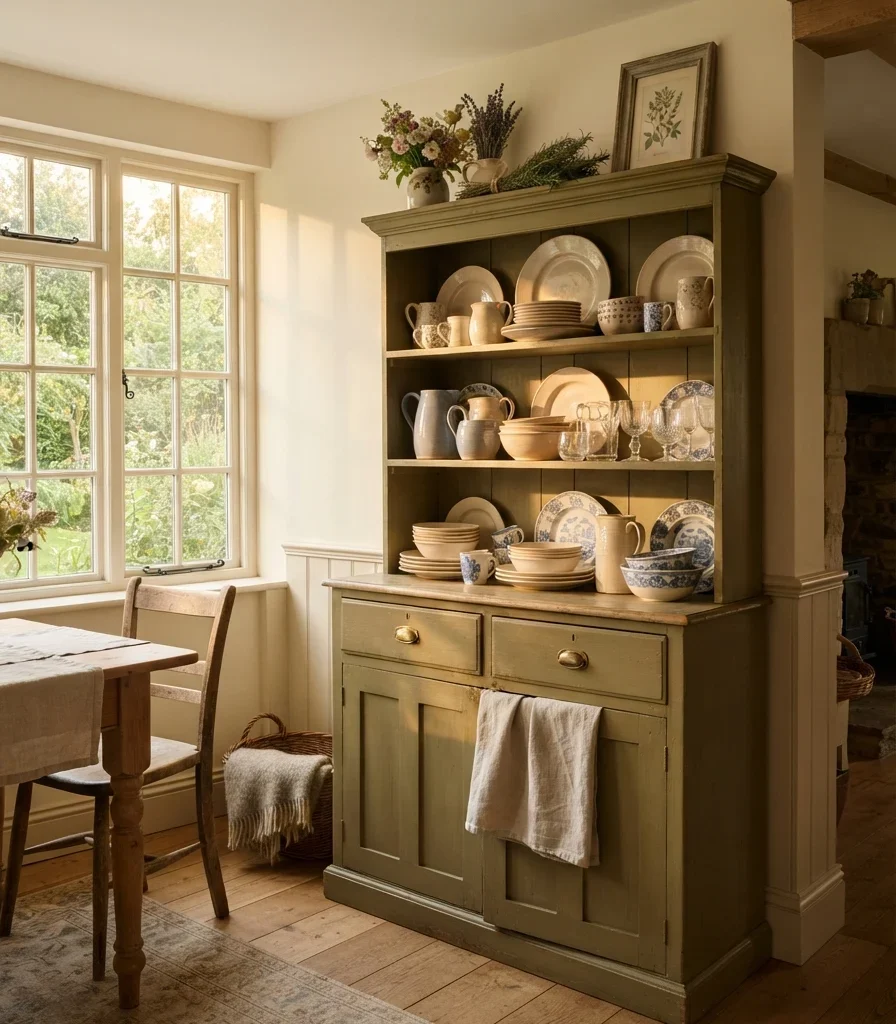
Vibe: Domestic. The dresser makes useful objects part of the room’s decoration.
Why it works: A traditional dresser provides vertical storage while creating a strong focal point that a low sideboard cannot offer. Painted timber also breaks up an all-wood furniture scheme and gives the room an unmistakably country-house character.
How to get it: Paint the dresser in a muted olive or heritage green with a low-sheen finish, then leave some natural wood visible on the countertop if the piece allows.
💡 Quick Win: A freestanding secondhand wooden dresser can be transformed with chalky mineral paint and aged-brass replacement pulls.
Shop The Look
| Product |
| Olive green Welsh-style dresser |
| Aged brass cup pull hardware |
| Cream stoneware dinner plate set |
| Handmade ceramic pitcher collection |
| Wooden plate display rack |
18. Pair Floral Wallpaper With Simple Furniture
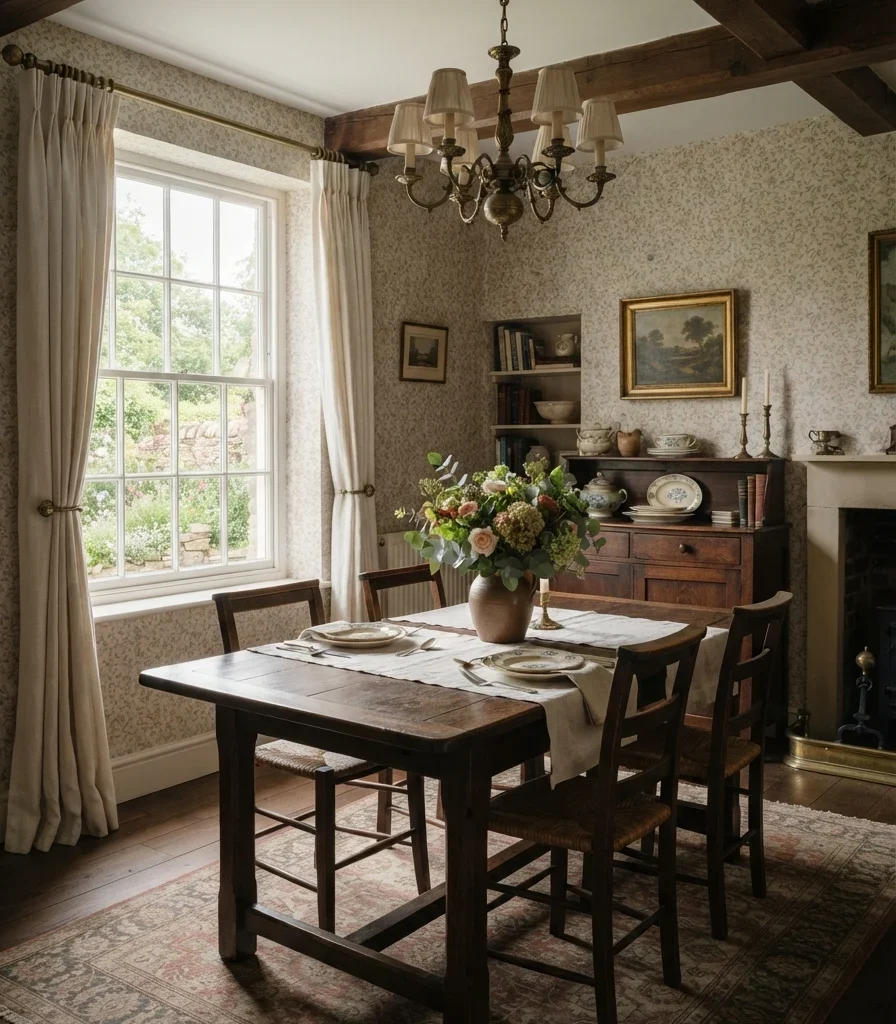
Vibe: Romantic. The wallpaper gives the walls the quiet pattern of an English garden.
Why it works: Small-scale botanical wallpaper works because its visual complexity is balanced by simple furniture silhouettes. If both wallpaper and furniture are highly ornate, the dining room can quickly feel visually heavy.
How to get it: Choose wallpaper where the background is close to the wall’s existing undertone and keep large furniture pieces relatively plain. Repeat one flower color through the table linen or ceramics.
Shop The Look
| Product |
| Muted English floral peel-and-stick wallpaper |
| Dark walnut dining table |
| Cream linen dining chair |
| Antique brass wall sconce pair |
| Botanical ceramic centerpiece bowl |
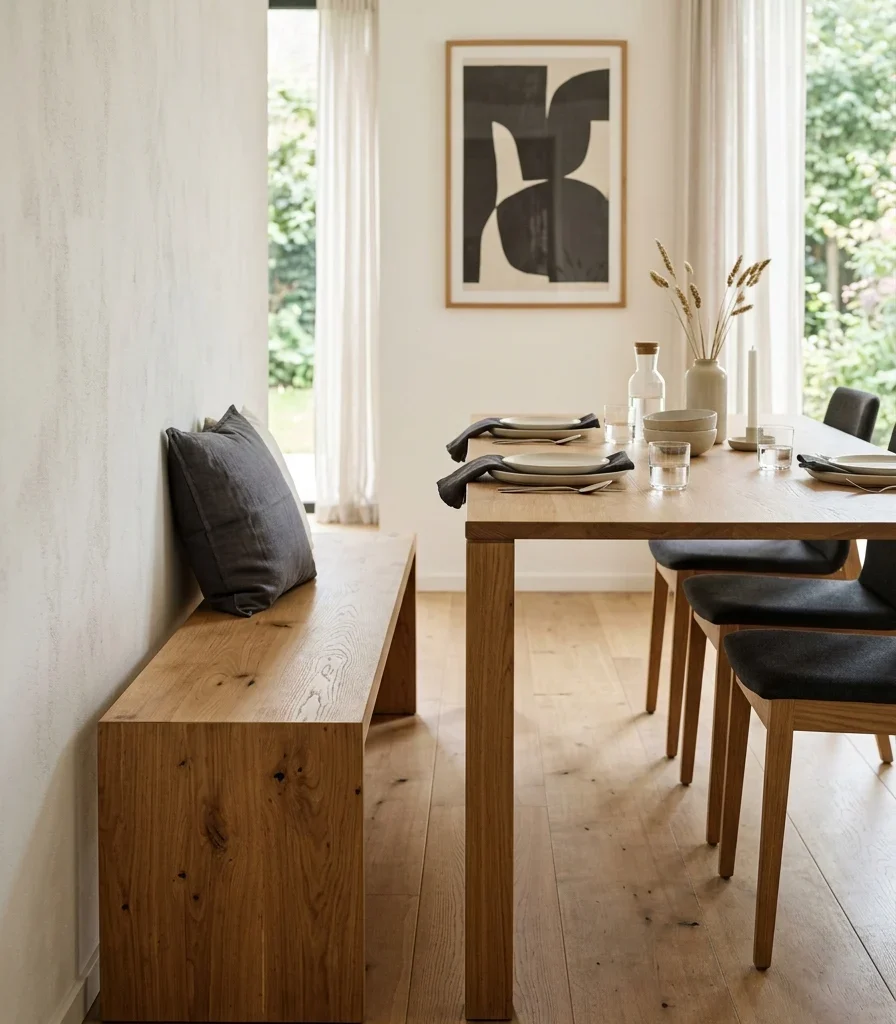
19. Create a Flexible Dining Nook With a Built-In Bench
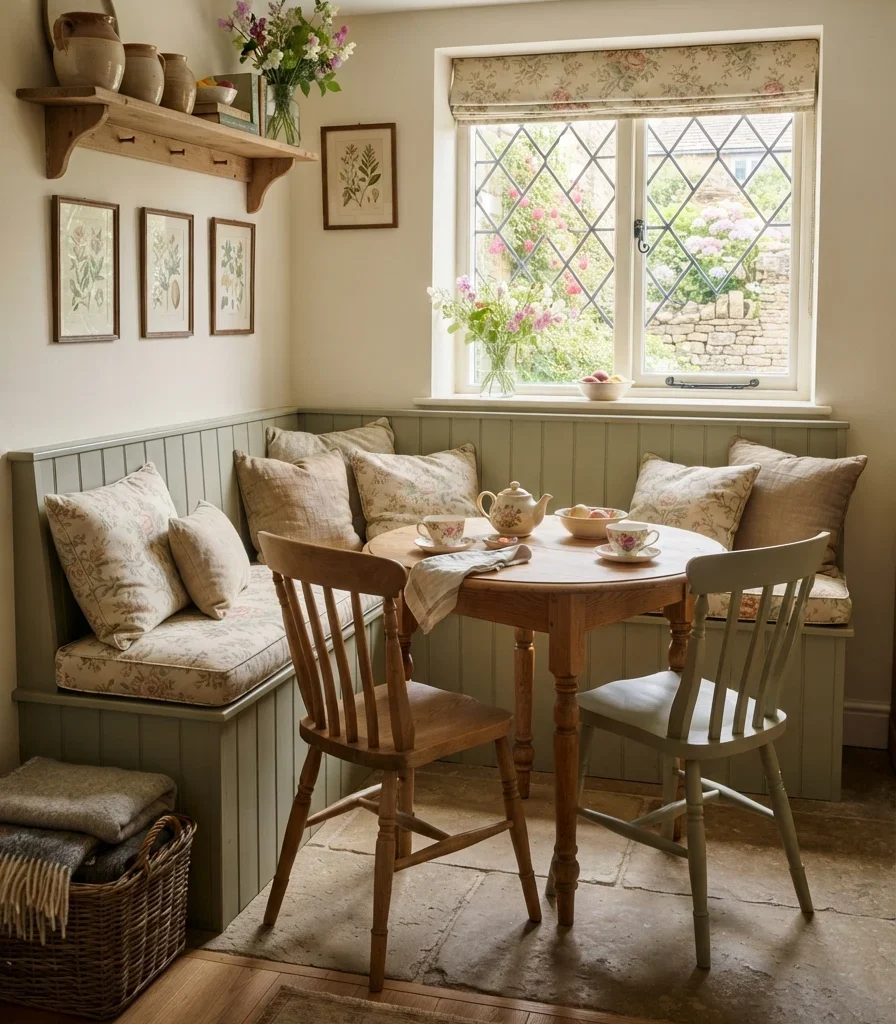
Vibe: Sun-warmed; the nook feels like a little country-house corner designed for lingering breakfasts.
Why it works: Bench seating uses wall space efficiently and eliminates the chair clearance required along one side of the table. The upholstered cushion also introduces a large area of pattern and softness without taking up additional floor area.
How to get it: Use a 45–50 cm deep bench with a tailored linen cushion and pair it with a round pedestal table. Keep the wall shelf shallow, around 15–20 cm, to preserve headroom and circulation.
Shop The Look
| Product |
| English cottage-style bench cushion |
| Floral linen bench cushion cover |
| Round pedestal oak dining table |
| Slim spindle-back dining chair |
| Narrow reclaimed wood picture shelf |
20. Finish With an English Country Tablescape
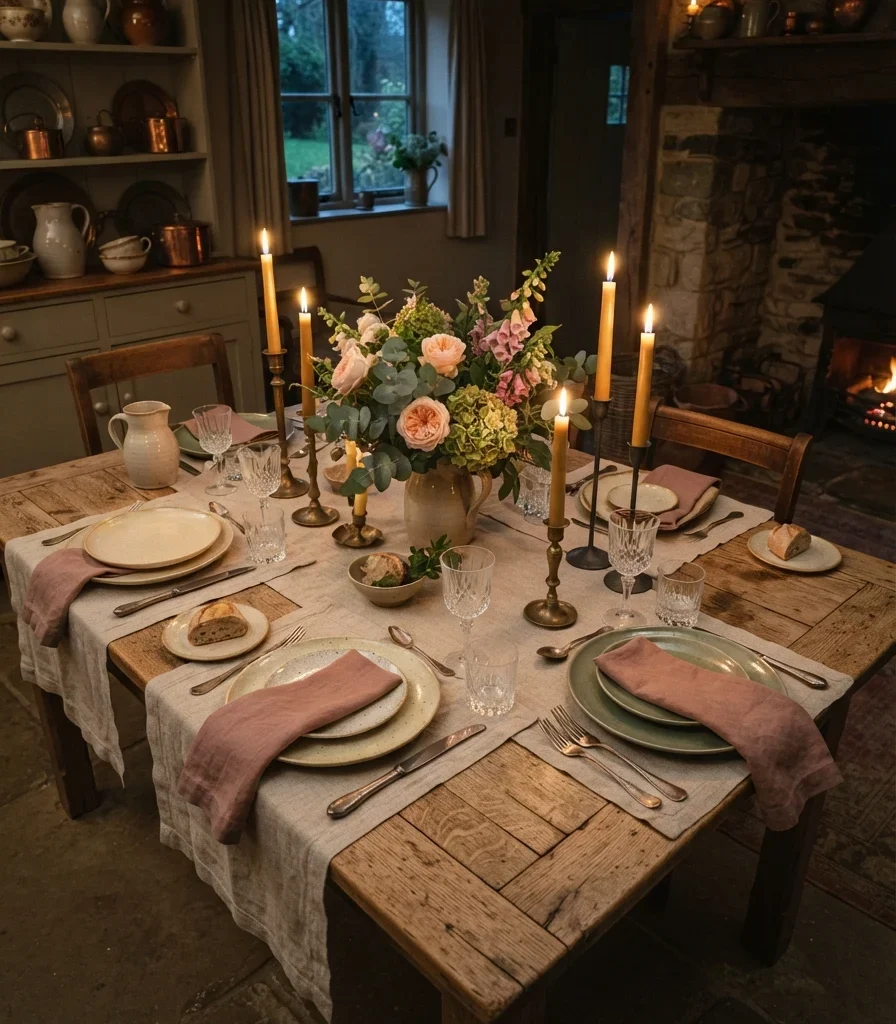
Vibe: Hushed; the table feels ready for a long conversation rather than a staged photograph.
Why it works: An English country tablescape succeeds through relaxed layering rather than formal symmetry. Natural linen, slightly mismatched ceramics, low flowers, aged metal, and candlelight combine different textures while keeping the palette restrained.
How to get it: Keep the centerpiece below approximately 30 cm so diners can see across the table. Mix two or three ceramic patterns within the same muted color family rather than using a completely matching dinner set.
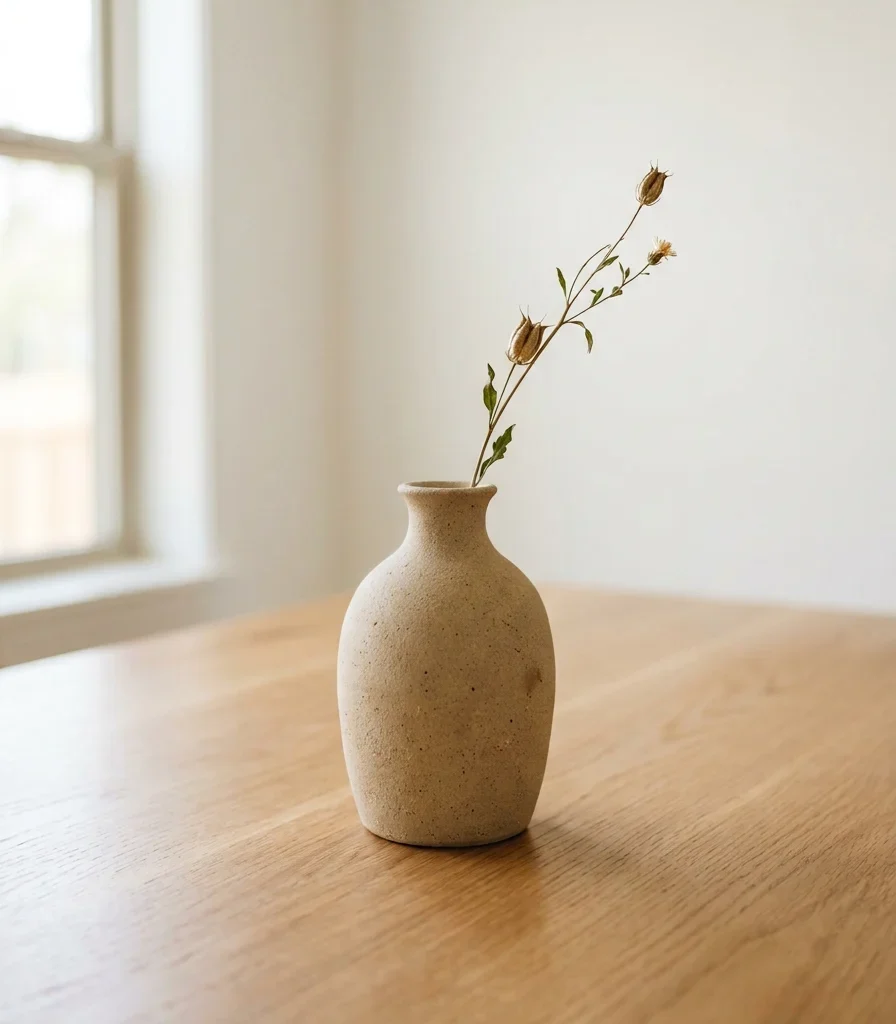
💡 Quick Win: Put three small garden clippings into a single vintage ceramic jug instead of buying a large formal bouquet; the asymmetry feels much more natural to the style.
Shop The Look
| Product |
| Natural linen dinner napkin set |
| Vintage-style mismatched ceramic plate set |
| Antique silver-style flatware set |
| Small ceramic country pitcher |
| Beeswax taper candle collection |
How to Start Your English Countryside Dining Room Transformation
The first move should be the dining table: choose a solid oak or oak-look farmhouse table in a medium honey-brown finish. It establishes the room’s scale, warmth, and material direction, making it much easier to select chairs, lighting, rugs, and accessories without creating a disconnected collection of pieces.
The most common mistake is making everything artificially distressed. Excessively chipped paint, fake wormholes, heavily antiqued furniture, and matching “vintage” accessories can make the room look themed rather than genuinely lived-in. Choose one or two authentically aged pieces and let the rest be simple, well-made furniture.
For an inexpensive entry point, start with a natural linen table runner under $30, a small aged-brass candlestick set under $25, and a blue-and-white ceramic pitcher under $40. Those three additions can immediately shift an ordinary dining table toward English country character without replacing furniture.
A focused weekend refresh can realistically cost $150–$500, depending on what you already own. A more substantial room with a quality oak table, chairs, lighting, rug, curtains, and storage can run $2,000–$6,000+. Architectural changes, antique sourcing, flooring, and custom cabinetry may take several months, but the atmosphere can begin changing in a single weekend.
Frequently Asked Questions About The Timeless Elegance of an English Countryside Dining Room
What is the difference between English countryside and modern farmhouse dining rooms?
English countryside dining rooms emphasize accumulated history, traditional furniture profiles, muted botanical colors, antiques, and natural patina. Modern farmhouse tends to use cleaner silhouettes, brighter whites, shiplap, industrial hardware, and more deliberately coordinated furniture. An English country room can include a farmhouse table, but it should usually be softened with linen, aged brass, traditional ceramics, or vintage pieces.
Which colors work best in an English countryside dining room?
The strongest palette starts with warm ivory, mushroom taupe, muted sage, olive green, faded blue, dusty rose, and honey oak. For a darker dining room, forest green or deep olive can create a more traditional country-house atmosphere. Avoid extremely cool whites and highly saturated accent colors because they tend to fight the aged materials that give the style its character.
How much does it cost to create an English countryside dining room?
A small styling update can cost around $150–$500 if you already have a suitable table and chairs. A complete mid-range transformation with dining furniture, curtains, lighting, rug, storage, and accessories can reasonably reach $2,000–$6,000 or more. Antique furniture can either increase or reduce the budget depending on where you source it, which is why estate sales and secondhand markets are worth exploring.
Can an English countryside dining room work in a modern house?
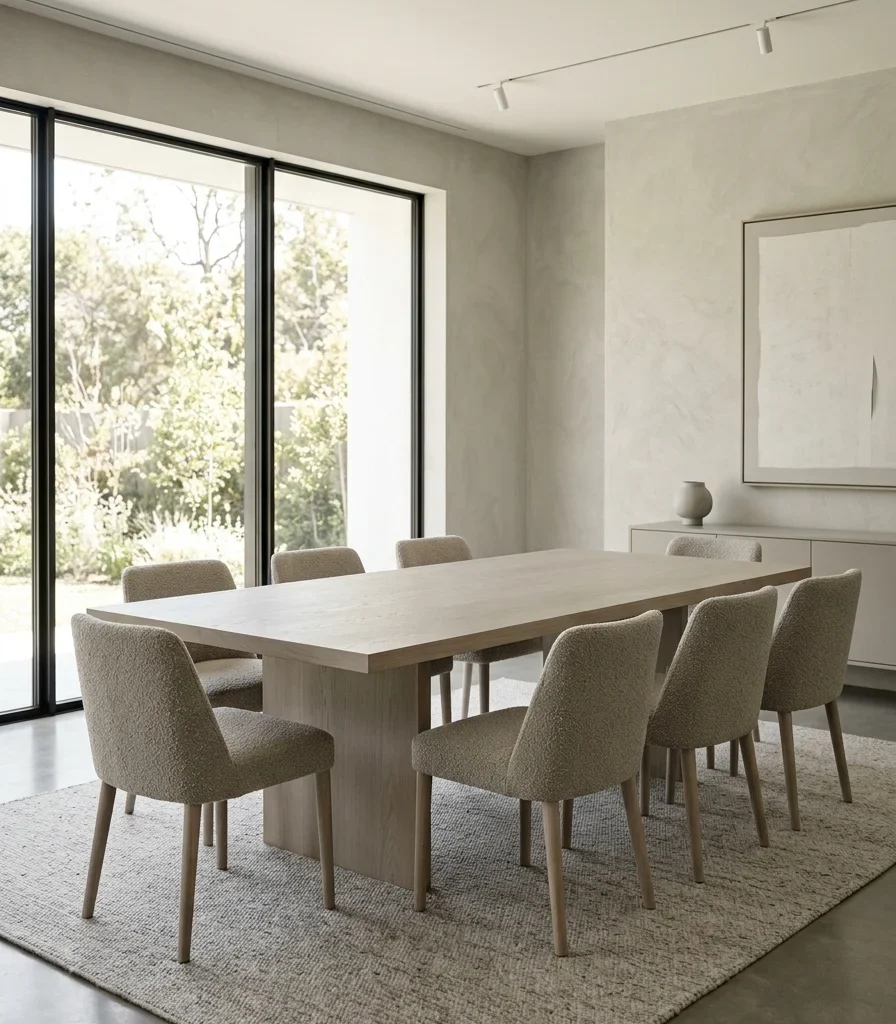
Yes, and the contrast can actually make the style more interesting. Keep modern architecture such as large windows or clean flooring, then introduce traditional oak furniture, linen curtains, aged brass lighting, botanical artwork, and antique ceramics. The key is allowing the country pieces to be substantial enough to visually balance the cleaner architecture rather than filling the room with small decorative objects.
What is the best lighting for an English countryside dining room?
A dimmable aged-brass chandelier or traditional pendant is usually the strongest central fixture, ideally paired with 2700K warm bulbs. Wall sconces or table lamps can provide lower secondary light, while beeswax candles add the softest evening layer. For a dining table, hanging the chandelier roughly 75–90 cm above the tabletop generally provides an intimate light level while maintaining comfortable sightlines.
Ready to Create Your Dream English Countryside Dining Room?
These 20 English countryside dining room ideas cover the details that make the style convincing, from oak furniture and muted color palettes to linen, candlelight, floral patterns, traditional storage, and practical layouts. The transformation does not need to happen all at once; starting with one honest material and one well-chosen vintage piece is often the most convincing approach. Today, try replacing your existing table centerpiece with a simple ceramic pitcher filled with three or four garden branches and add a pair of aged-brass candlesticks beside it. Over time, the room should begin to feel quieter, warmer, and more rooted- the kind of dining space where dinner naturally stretches into conversation. Save or pin your favorite ideas, especially the oak table, botanical ceramics, linen curtains, and candlelit tablescape, and use them as your English country-house design roadmap.