
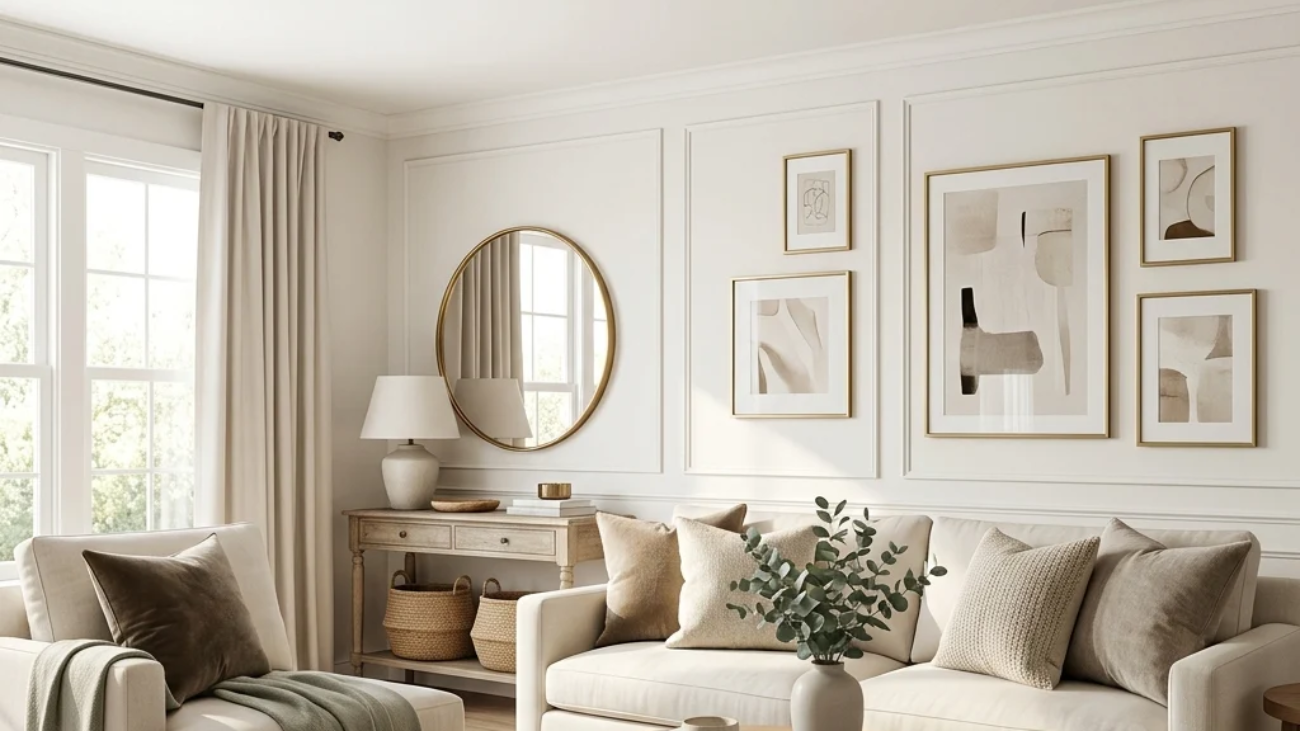
Budget home decor is the practice of maximizing visual impact per dollar spent, prioritizing paint, lighting, and rearrangement over expensive new furniture, and choosing high-leverage swaps that change how a room reads without changing its price tag much at all. This article gives you 20 real budget home decor ideas spanning color, material, lighting, furniture, and layout, each one built to look far more expensive than it actually costs.
The feel is unmistakable: a room that reads as considered rather than cheap, where the money went exactly where it shows, and nowhere it doesn’t. Budget decorating isn’t about doing without, it’s about knowing precisely which five changes matter and skipping the fifty that don’t. Here are 20 ideas worth saving and stealing.
Why Budget Home Decor Works So Well
Budget home decor isn’t a visual style, the way farmhouse or Japandi is; it’s a spending philosophy that can dress up almost any aesthetic, rooted in the postwar thrift culture of “make it do” and more recently in what retailers now openly call the “dupe economy,” where affordable lookalikes of expensive designer pieces are marketed and searched for by name. What separates genuinely good budget decor from decor that simply looks cheap is leverage: spending disproportionately on the handful of changes to paint, lighting, and one or two hero pieces that do the most visual work, while accepting lower-cost versions everywhere else.
The materials that make budget decor read as expensive rather than corner-cut are ones that mimic pricier finishes convincingly: peel-and-stick tile that replicates zellige or marble, contact paper in a convincing faux-marble or wood-grain finish, and vinyl rugs printed in high-end pattern styles at a fraction of a wool rug’s cost. Color-wise, warm white and greige remain the budget decorator’s best friend, since a $30 gallon of paint in a versatile neutral does more per dollar than almost any single furniture purchase, with one confident accent color, often terracotta or sage, introduced through cheaper textiles rather than furniture.
Budget decorating has surged specifically because rising furniture and rent costs are colliding with a genuine cultural shift toward secondhand shopping. Facebook Marketplace and local thrift stores have become primary furniture sources rather than last resorts, and Pinterest and TikTok searches for “dupe” versions of specific designer pieces have grown sharply as more people decorate with intention on tighter budgets.
Small spaces are, if anything, the best-case scenario for budget decor, since fewer square feet directly means fewer dollars needed to make a real visual impact. The honest limit is on functional basics: a genuinely uncomfortable secondhand mattress or a wobbly desk chair isn’t worth the savings, so prioritize spending on daily-use comfort items first and let decorative surfaces absorb the budget cuts.
Style at a Glance
| Element | Free & Low-Cost Moves | Small-Investment Moves |
| Philosophy | Rearrange, repaint, restyle what you own | Spend on the one or two pieces that show |
| Materials | Existing furniture, secondhand finds | Peel-and-stick tile, vinyl rugs, paint |
| Color Palette | Warm white, greige | Terracotta or sage accents via textiles |
20 Budget Home Decor Ideas
1. Repaint Just the Trim Instead of the Whole Wall
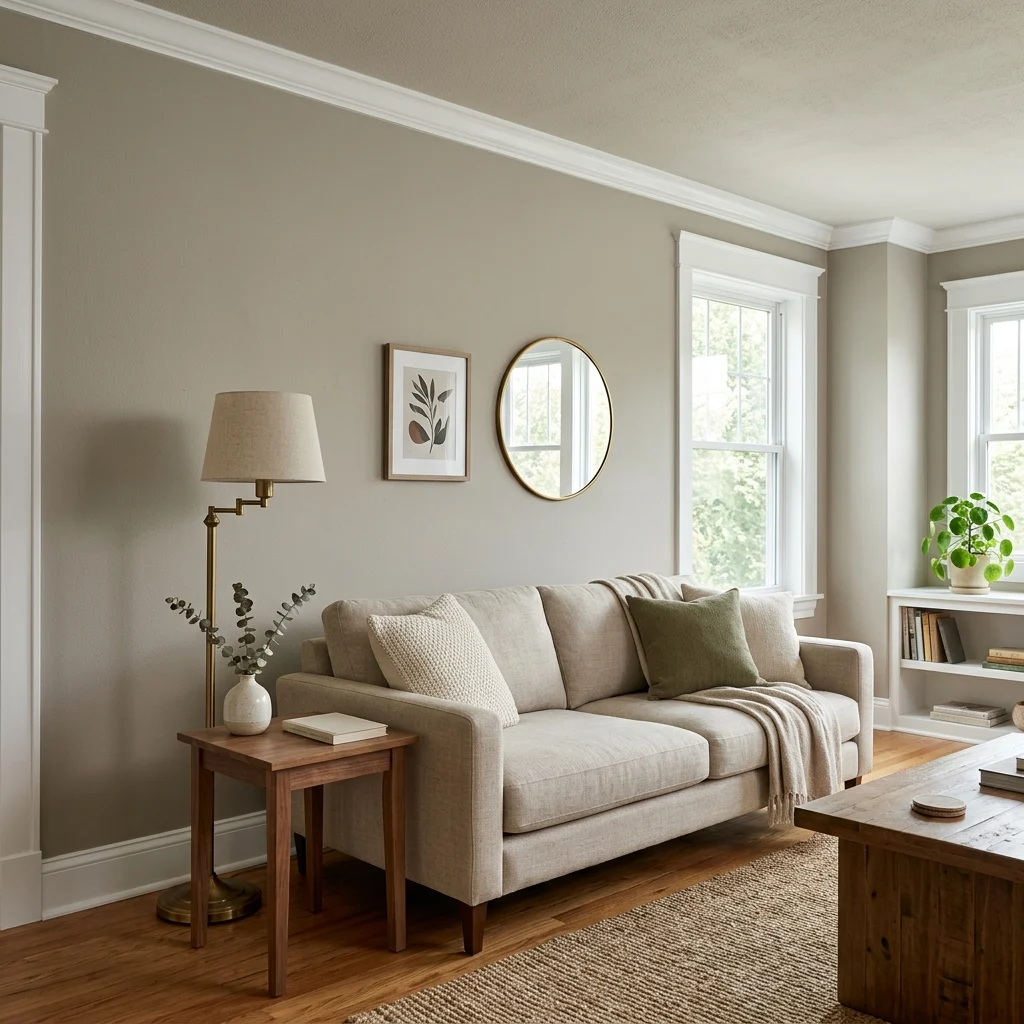
Vibe: The room feels refreshed, crisp trim doing more work than a full repaint ever could.
Why it works: Repainting only the baseboards, door frames, and window trim in a bright white contrast uses a design principle where a small amount of high-value change draws the eye and makes the entire room read as more maintained without the cost or labor of painting every wall. A single gallon of trim paint covers most rooms’ full trim run, making this one of the highest-impact-per-dollar changes available in any budget refresh.
How to get it: Use a semi-gloss white paint rather than matte specifically for trim, since the sheen contrast against matte wall paint is what makes the trim read as crisp and freshly finished rather than simply a different shade of white.
💡 Quick Win: Painter’s tape along the wall-trim seam takes ten minutes and is what separates a professional-looking line from a smudged one.
Shop the Look
| Product |
| Semi-gloss white trim paint, quart |
| Angled trim paintbrush |
| Painter’s tape, sharp-edge |
| Wood filler for trim gaps |
| Drop cloth canvas sheet |
2. Peel-and-Stick Tile for a Backsplash Upgrade
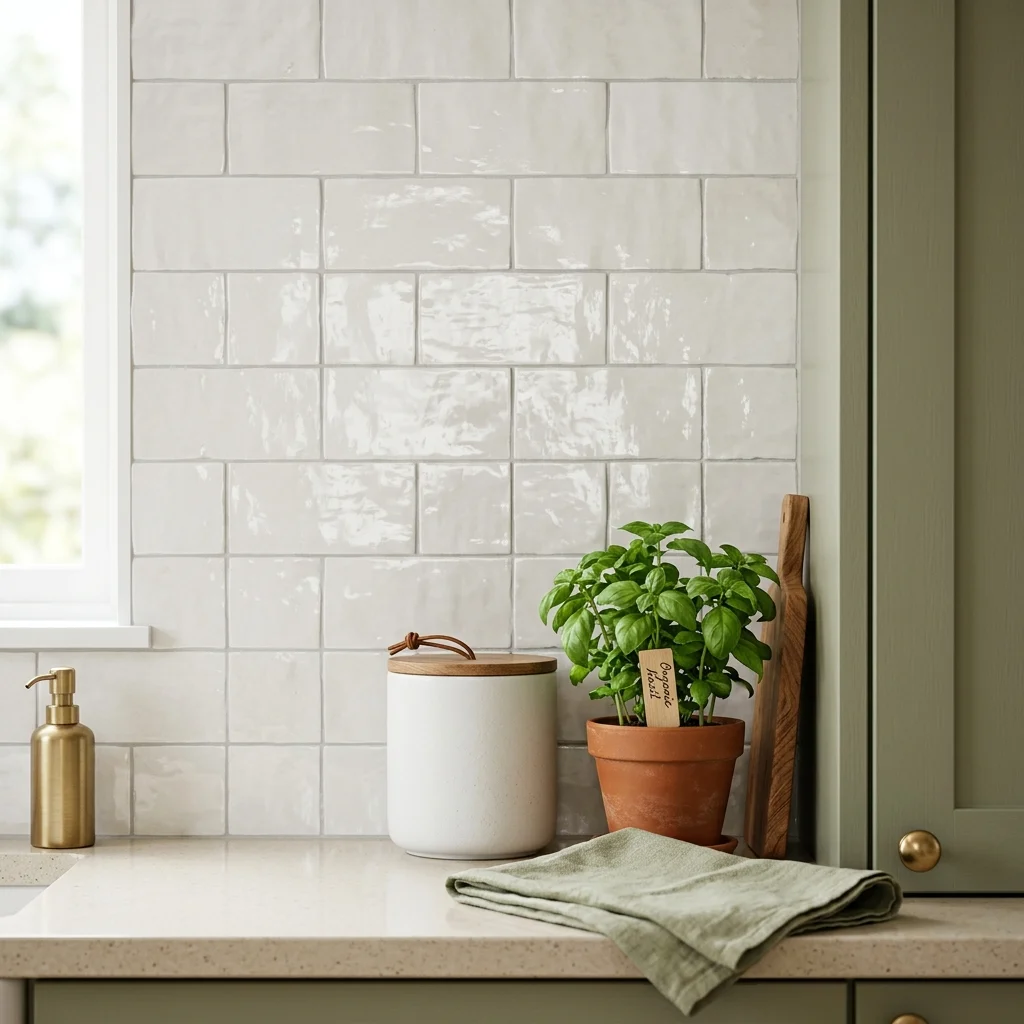
Vibe: The kitchen feels upgraded, a single wall doing the work of a full renovation.
Why it works: A backsplash sits at eye level in direct sightline of anyone standing at the counter, which is why upgrading it delivers outsized visual return relative to its actual wall area, a design principle sometimes called “focal surface leverage,” where small, high-visibility areas matter more than large, low-visibility ones. Peel-and-stick tile in a zellige or subway pattern replicates the irregular glaze and dimension of real tile at a fraction of the material and labor cost of installed ceramic tile.
How to get it: Clean and degrease the existing backsplash surface thoroughly before applying, since peel-and-stick tile’s adhesive fails almost exclusively due to residue left on the wall rather than the product itself.
Shop the Look
| Product |
| Peel-and-stick zellige-style tile sheets |
| Adhesive tile edge trim |
| Degreasing wall cleaner spray |
| Ceramic kitchen canister set |
| Small terracotta herb planter |
3. Swap Just the Lampshades for an Instant Refresh
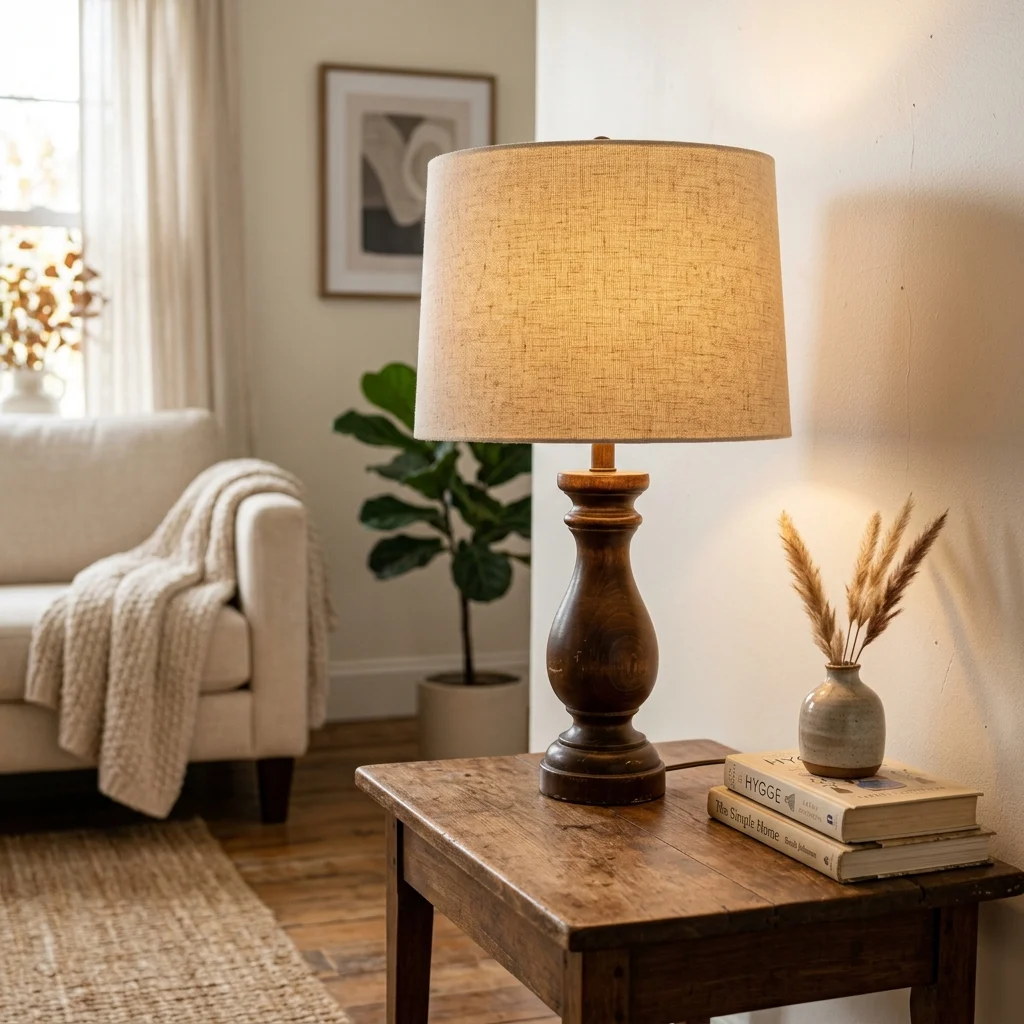
Vibe: The corner feels updated, one small swap changing the whole lamp’s character.
Why it works: A lampshade is the single largest visible surface on most lamps, meaning its color, shape, and material do most of the visual work regardless of how dated or plain the base beneath it might be. Replacing a yellowed or mismatched shade with a clean linen drum shade updates the entire fixture’s appearance for a small fraction of the cost of buying a new lamp outright.
How to get it: Measure your existing harp (the wire frame holding the shade) before buying a replacement shade, since shade sizing is based on harp height and diameter, not the lamp’s overall size.
💡 Quick Win: A single new lampshade under $20 can visually update a lamp that would otherwise cost $60–100 to replace entirely.
Shop the Look
| Product |
| Linen drum lampshade, neutral |
| Replacement lamp harp, adjustable |
| Warm white LED bulb |
| Small walnut side table |
| Neutral book stack, decorative |
4. Rearranging Existing Furniture Before Buying Anything New
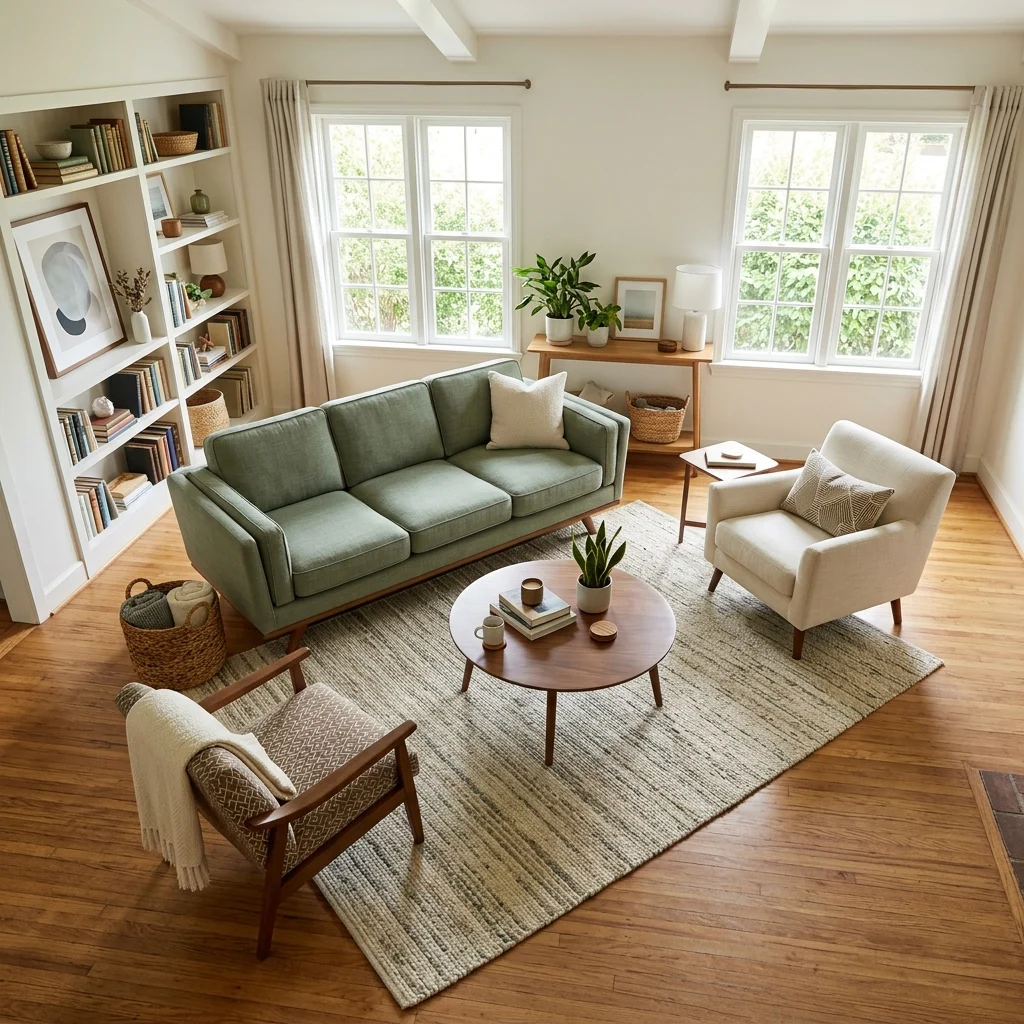
Vibe: The room feels fresh, entirely new, without a single new purchase.
Why it works: Furniture arrangement is the only decorating lever that costs literally nothing, yet it changes the room’s proportion, traffic flow, and visual weight distribution as dramatically as new furniture would. Pulling a sofa a few feet from the wall and angling seating toward a shared center point often does more for a room’s feel than any single purchase could. This is the same conversational-grouping principle interior designers charge for, applied entirely for free.
How to get it: Try floating your largest piece, usually the sofa, at least a few inches off the wall it currently touches, and angle at least one chair inward rather than square against another wall, before considering any new furniture purchase.
Shop the Look
| Product |
| Furniture sliders for easy repositioning |
| Rug grippers, non-slip |
| Measuring tape for layout planning |
| Furniture placement planning app subscription |
| Felt floor protector pads |
5. Thrifted Frames Spray-Painted to Match
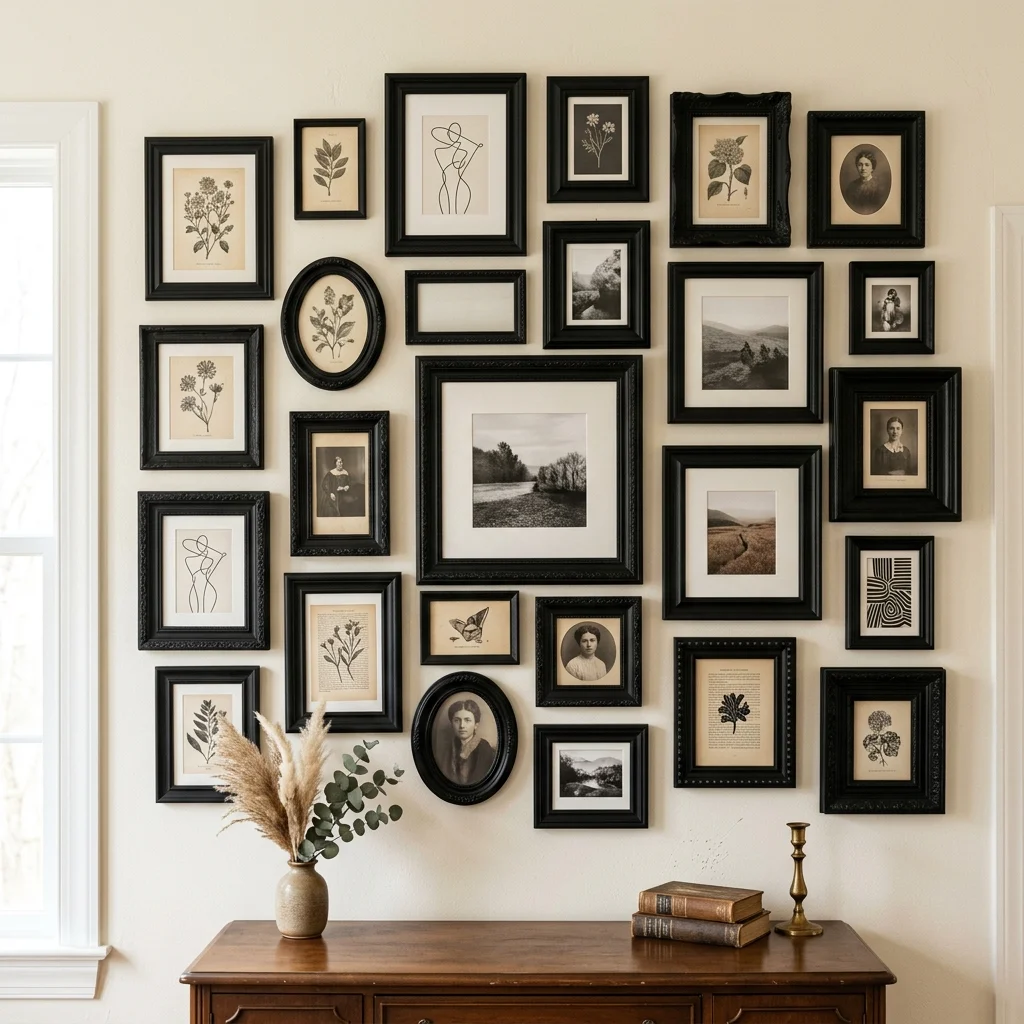
Vibe: The wall feels curated, mismatched frames unified by one shared coat of paint.
Why it works: Thrifted frames typically arrive in a chaotic mix of finishes and eras, which is exactly what makes them cheap, but a single unifying spray-paint color removes that visual noise entirely, since color consistency, not frame shape, is what makes a gallery wall read as intentional. This lets budget decorators access varied, interesting frame silhouettes that would cost far more if purchased new and pre-matched.
How to get it: Sand glossy frame finishes lightly before spray painting so the paint adheres evenly, and apply two to three thin coats rather than one heavy coat to avoid drips pooling in ornate detail work.
Shop the Look
| Product |
| Matte black spray paint, multi-surface |
| Fine-grit sanding sponge |
| Printable art bundle, neutral tones |
| Painter’s tape for frame masking |
| Command picture hanging strips |
6. Use One Budget Accent Color Instead of Full Room Repaint
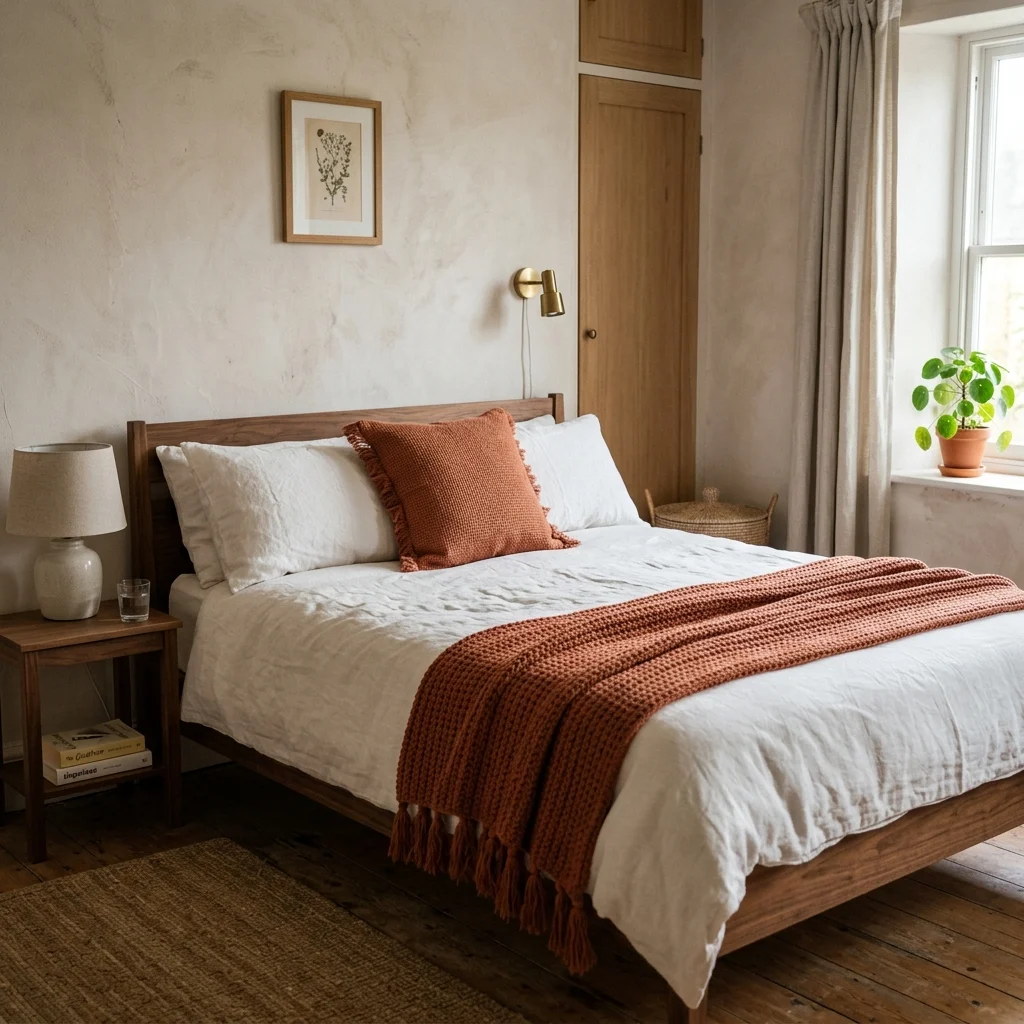
Vibe: The bed feels considered, one warm color doing all the storytelling.
Why it works: Introducing color through textiles, a pillow cover, a throw blanket, rather than paint, costs a fraction as much and carries none of the risk of an expensive wall color that turns out wrong under your room’s specific light. This is the same accent-color principle used in far pricier design schemes, just executed through a $15 pillow cover instead of a $50 gallon of paint and a weekend of labor.
How to get it: Choose one confident accent color and introduce it through no more than two textile items so it reads as a deliberate accent rather than a scattered, uncertain color choice.
💡 Quick Win: A pillow cover (not a whole new pillow insert) is the cheapest way to test a color commitment before ever touching a paintbrush.
Shop the Look
| Product |
| Terracotta linen pillow cover |
| Woven throw blanket, warm tone |
| Neutral bedding set, existing base |
| Small ceramic accent vase |
| Warm white bedside lamp |
7. Faux Marble Contact Paper on Furniture Tops
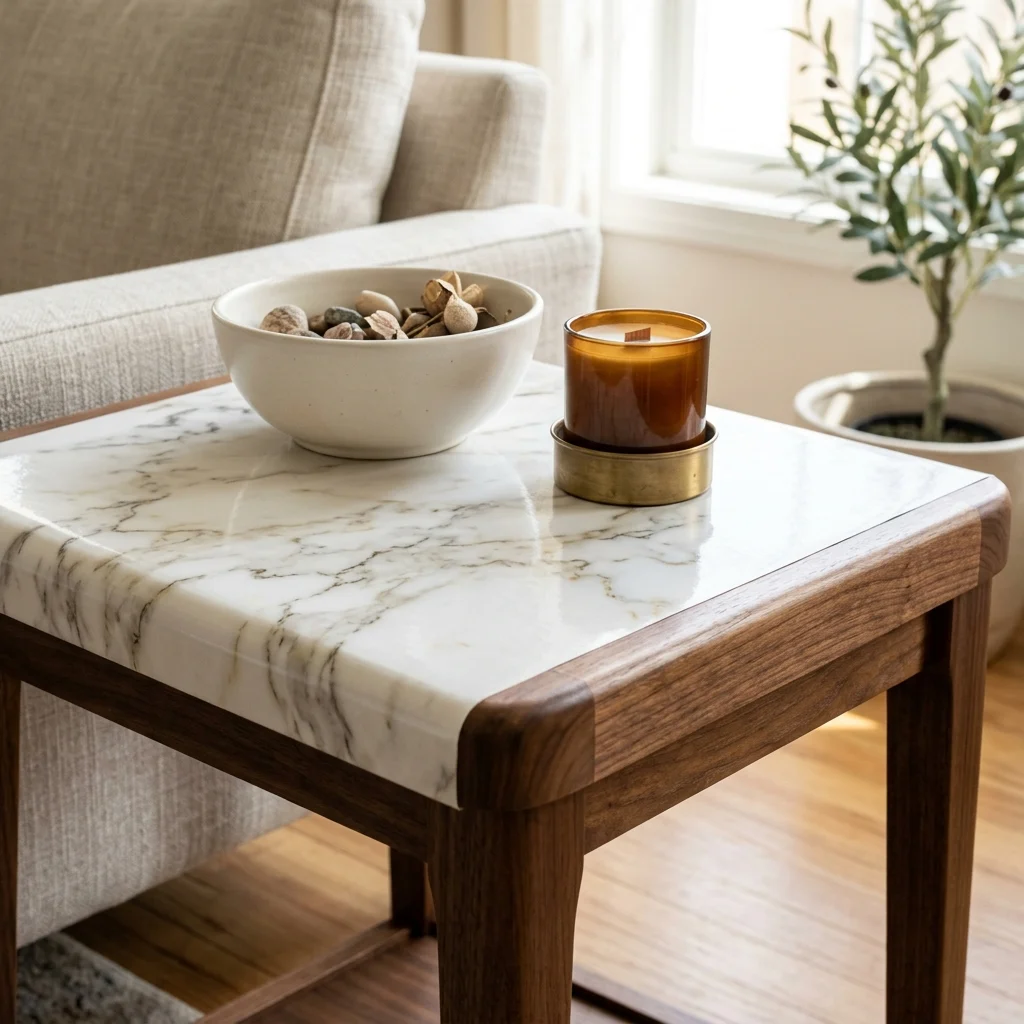
Vibe: The table feels upgraded, a laminate top disguised convincingly as stone.
Why it works: High-quality faux marble contact paper is printed with realistic veining and a subtle satin finish that mimics honed stone’s light behavior closely enough to read as real from normal viewing distance, which is the specific test that matters; nobody inspects a side table from six inches away. This technique works because tabletops are horizontal surfaces viewed at an angle rather than straight on, which hides the paper’s minor seams far more effectively than a vertical application would.
How to get it: Apply contact paper to a perfectly clean, dry surface using a plastic squeegee to push out air bubbles from the center outward, and wrap the paper slightly around table edges for a seamless finished look.
Shop the Look
| Product |
| Faux marble contact paper roll |
| Plastic application squeegee |
| Craft knife for trimming edges |
| Ceramic decorative bowl |
| Brass taper candle holder |
8. Float Furniture Away From Walls for Free
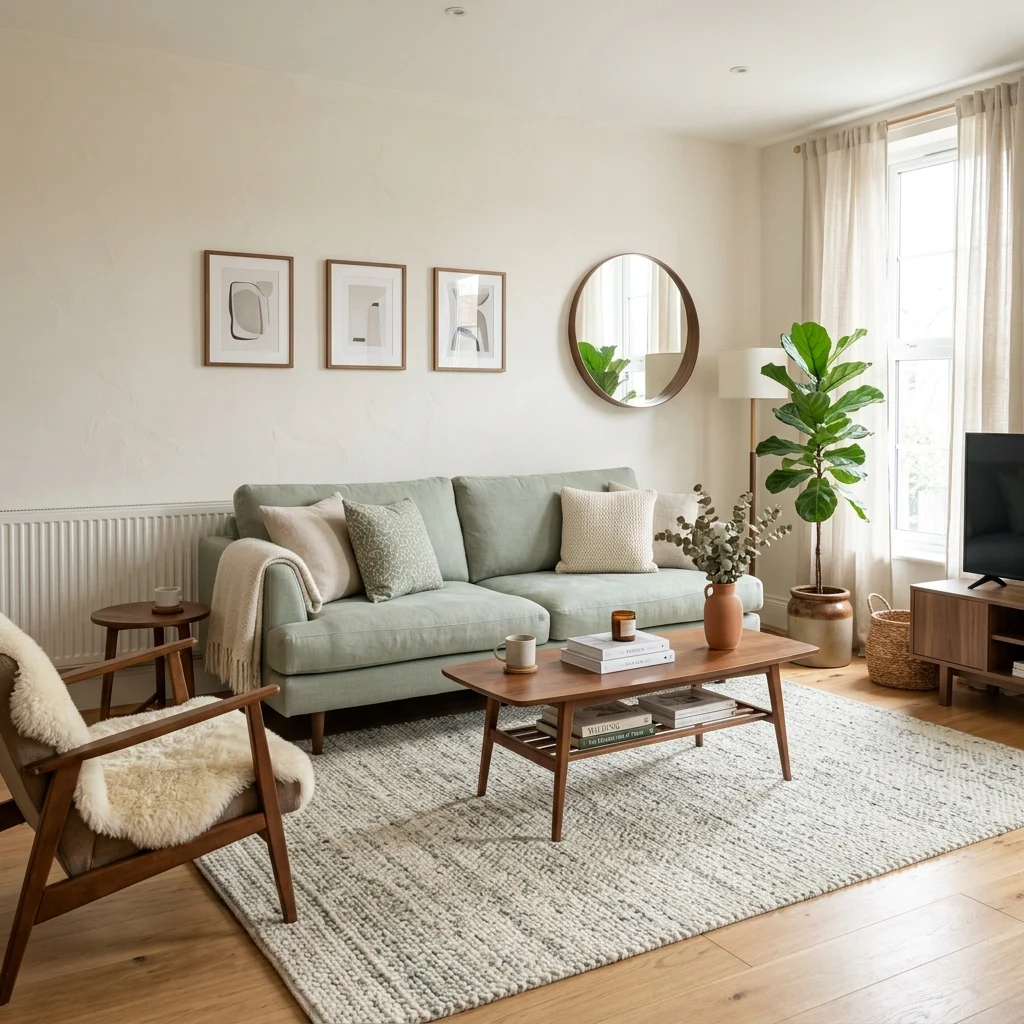
Vibe: The room feels intentional, furniture claiming its own defined zone.
Why it works: Furniture pushed flush against every wall is one of the clearest visual signals of an unconsidered room, since it suggests the furniture was placed for maximum floor clearance rather than genuine layout planning. Floating even one piece a few feet into the room creates a defined zone with implied boundaries, the same soft-zoning principle designers use in open floor plans, at zero material cost.
How to get it: Pull your sofa or largest seating piece at least 18–24 inches from the wall behind it, and anchor the newly defined zone with your existing rug so the gap reads as intentional rather than accidental.
Shop the Look
| Product |
| Furniture sliders, floor-safe |
| Rug pad, non-slip |
| Measuring tape |
| Small console table for the gap behind the sofa |
| Artificial floor plant |
9. Wall-Mounted Everything to Skip Buying Furniture
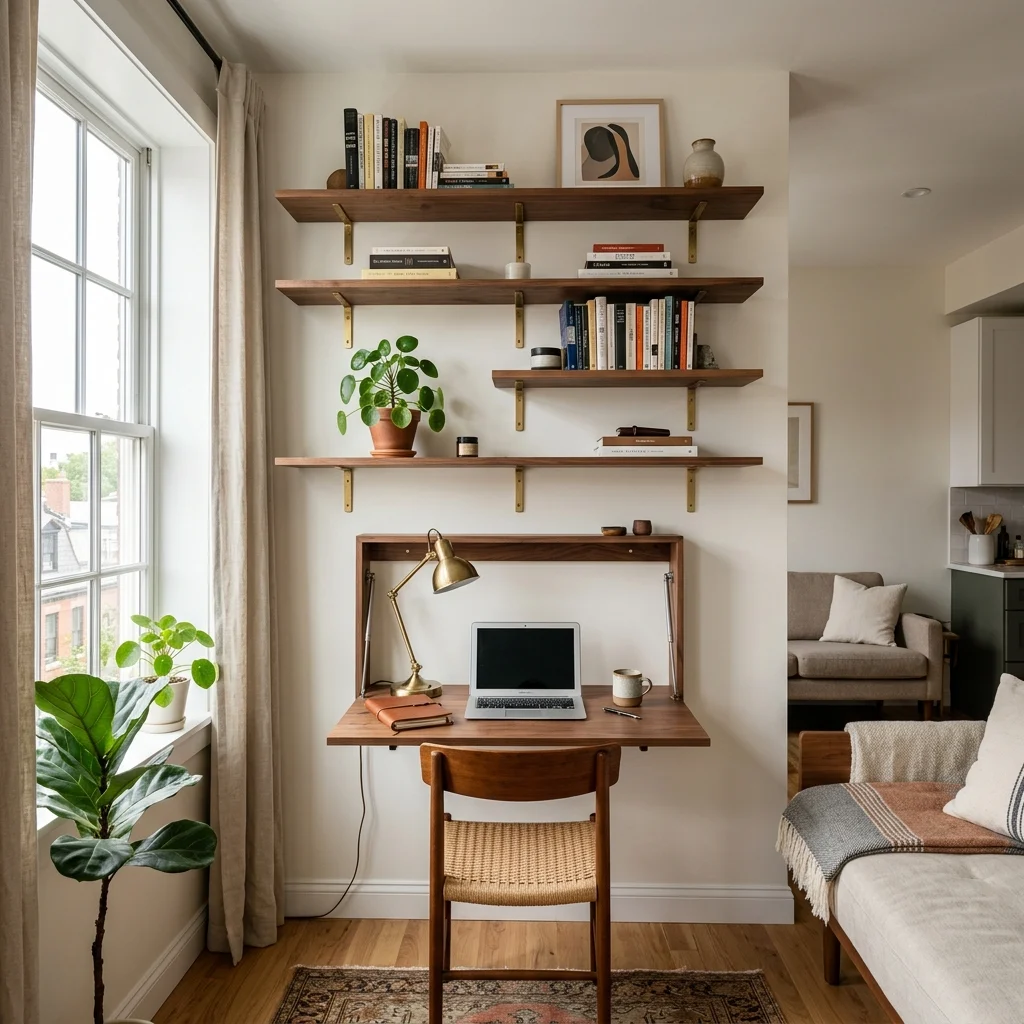
Vibe: The studio feels efficient, walls doing the job that floor space would otherwise cost.
Why it works: Wall-mounted shelving, desks, and storage cost less per square foot of function than equivalent freestanding furniture, since you’re paying for a bracket and a panel rather than a full frame, legs, and finished sides meant to be seen from every angle. In a small space, specifically, this also reclaims floor area that would otherwise require paying for a larger apartment to accommodate the same storage.
How to get it: Prioritize wall-mounting for the two furniture types with the worst cost-to-function ratio when freestanding bookshelves and desks, while keeping seating and beds as traditional floor furniture, since those need to bear real daily weight and use.
💡 Quick Win: A single floating shelf under $25 can replace a $150 bookshelf’s function for a small book and decor collection.
Shop the Look
| Product |
| Floating wall shelf set |
| Wall-mounted fold-down desk |
| Small brass wall sconce |
| Compact desk lamp |
| Wall anchor hardware kit |
10. Facebook Marketplace Sofa Instead of New Retail
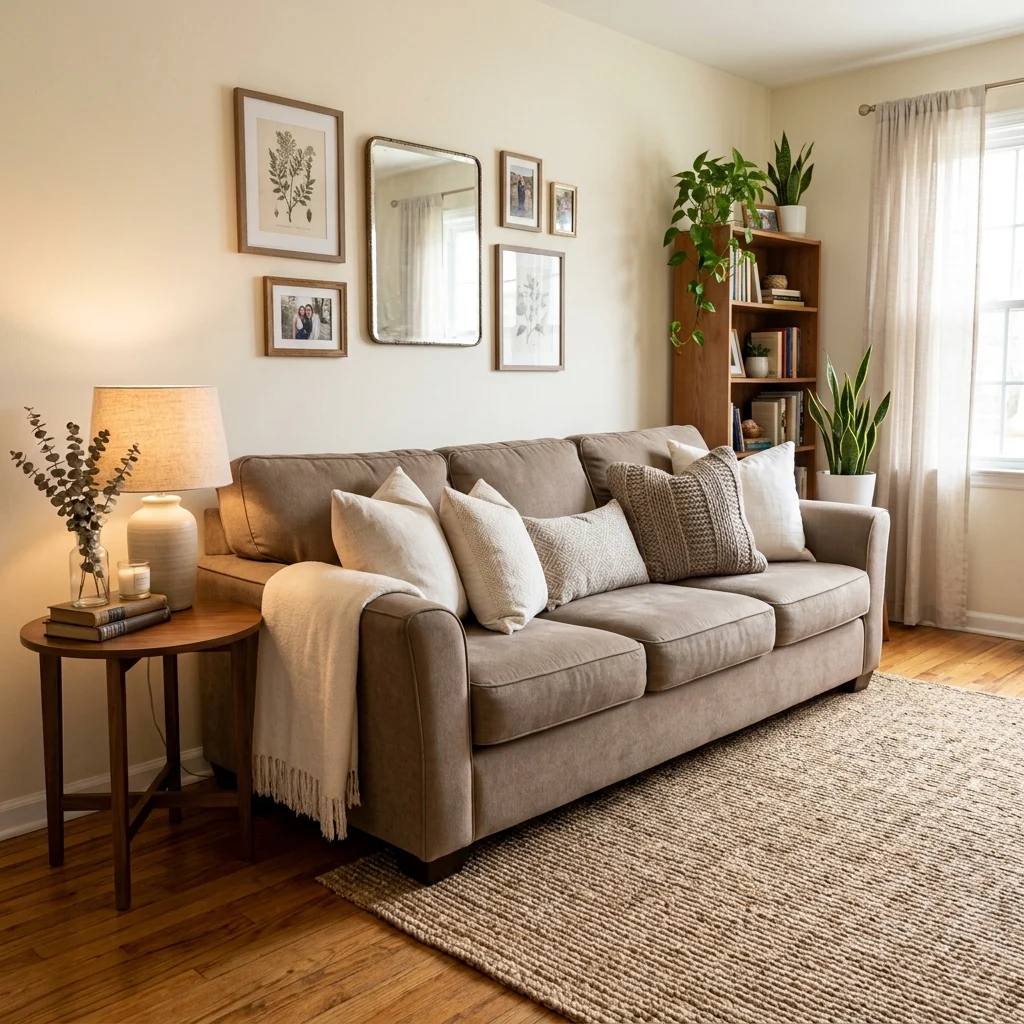
Vibe: The room feels resourceful, one smart secondhand find anchoring the whole space.
Why it works: A sofa is typically the single most expensive piece in any living room, which means it’s also the piece where secondhand buying delivers the largest dollar savings relative to a comparable new purchase. A $2,000 retail sofa in solid, gently-used condition frequently resells for $300–600 on local marketplaces. Restyling a secondhand sofa with new pillow covers and a throw immediately disguises whatever cosmetic wear the previous owner left behind.
How to get it: Test any secondhand sofa for structural soundness in person before buying. Sit in multiple spots, checking for sagging or frame creaking, since cosmetic wear is fixable with new covers, but a broken frame is not.
Shop the Look
| Product |
| Neutral linen pillow covers, set |
| Woven throw blanket |
| Fabric upholstery cleaner |
| Furniture leg caps for stability |
| Small round side table |
11. Budget LED Strip Lighting Under Cabinets
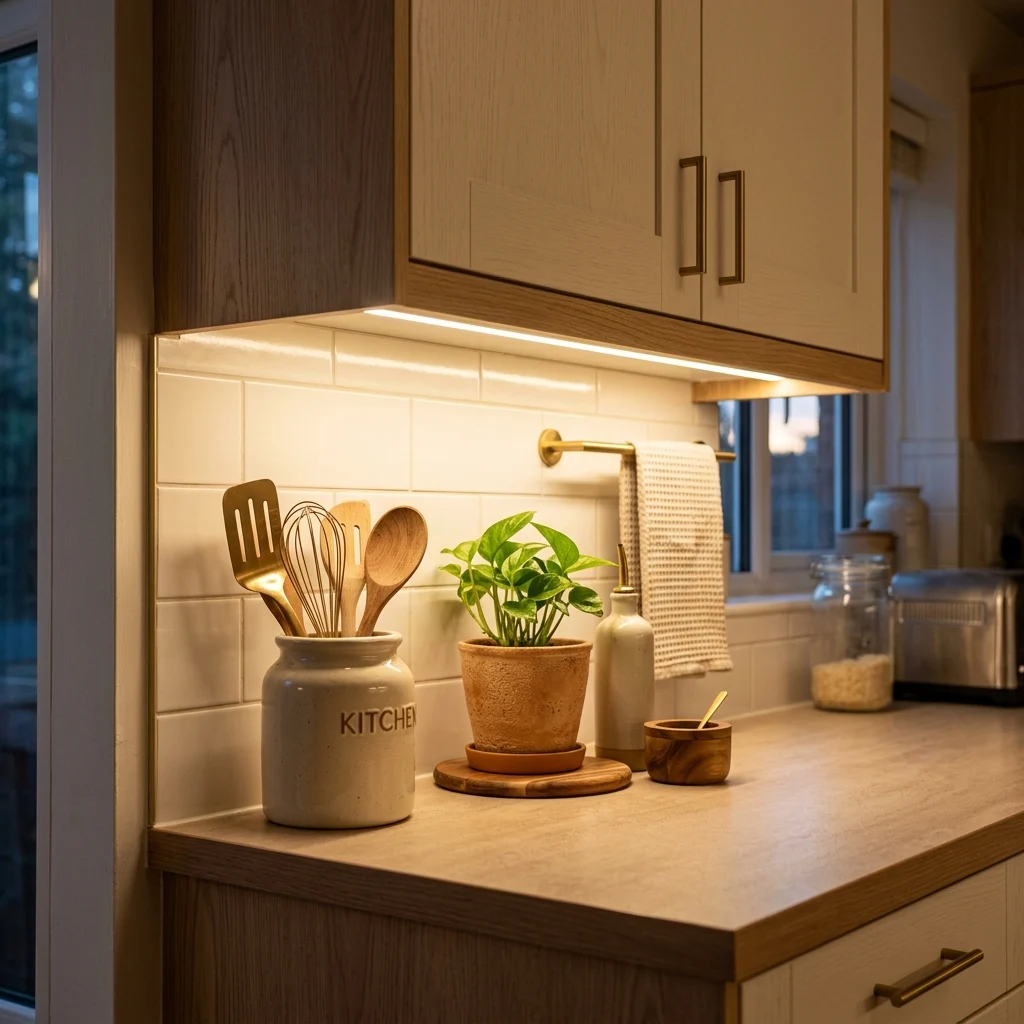
Vibe: The counter feels functional, with warm light exactly where you actually need it.
Why it works: Under-cabinet lighting solves a real functional problem; most kitchen counters are shadowed by the cook’s own body under standard overhead lighting, while also adding a warm ambient glow that reads as a genuine kitchen upgrade at installation costs a fraction of new cabinetry or countertops. Self-adhesive LED strips require no electrician for a plug-in version, making this one of the highest-return, lowest-effort kitchen updates available.
How to get it: Choose warm-white LED strips (2700–3000K) rather than the cooler white common in cheaper strip kits, since cool light under cabinets tends to read as clinical rather than the warm ambient glow the upgrade is meant to deliver.
Shop the Look
| Product |
| Warm white LED strip lighting kit |
| Plug-in dimmer switch for strips |
| Adhesive cable clips |
| Ceramic kitchen canister set |
| Small potted herb plant |
12. Secondhand Wood Furniture Refinished Instead of Bought New
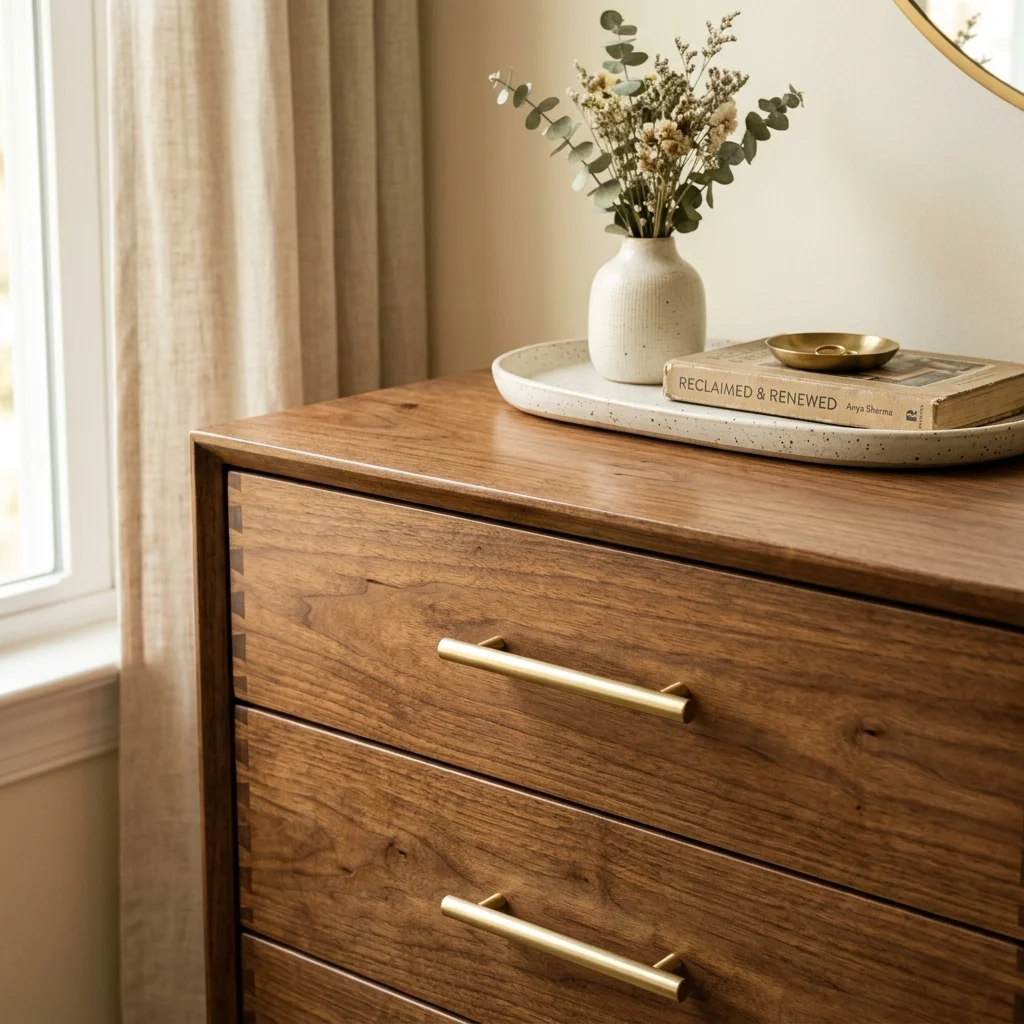
Vibe: The dresser feels revived, decades-old joinery wearing a fresh finish.
Why it works: Solid wood furniture built decades ago, commonly available secondhand for $30–80, is frequently better constructed than comparably priced new furniture made from particleboard or veneer, since older pieces were built before manufacturers began prioritizing material cost over longevity. A fresh stain and new hardware update the surface entirely, while the underlying solid-wood joinery, dovetail joints, and real wood drawer bottoms continue doing the structural work that new budget furniture often can’t.
How to get it: Strip the old finish with a chemical stripper or sand down to bare wood before applying new stain, since stain applied over an existing finish absorbs unevenly and produces a blotchy result.
Shop the Look
| Product |
| Wood furniture stripper, chemical |
| Walnut wood stain, oil-based |
| Fine-grit sanding block set |
| Brushed brass drawer pull set |
| Clear polyurethane topcoat |
13. Dollar-Store Vases Grouped for a High-End Look
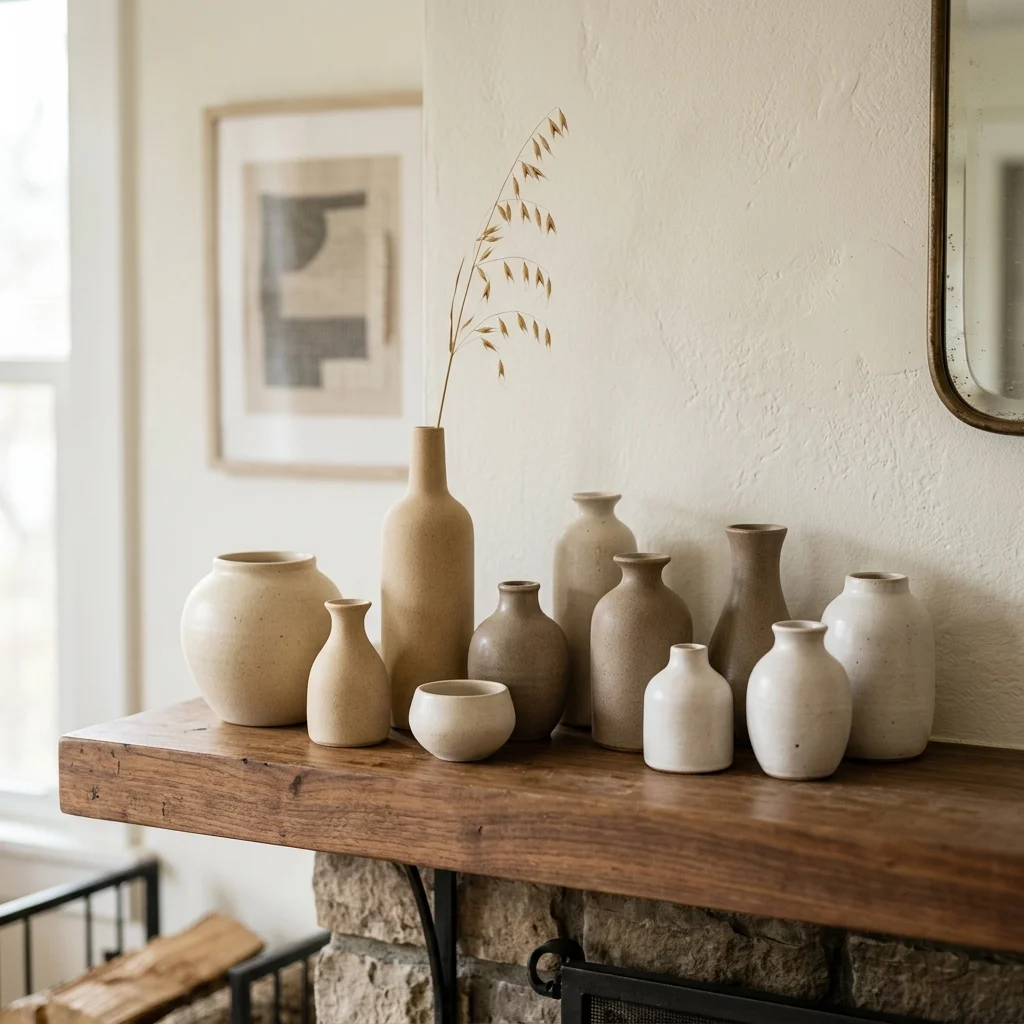
Vibe: The mantel feels cohesive, with budget pieces reading as one considered collection.
Why it works: Inexpensive ceramic vases from discount and dollar stores often use the same basic clay-and-glaze manufacturing process as higher-end ceramics. The difference in perceived value comes almost entirely from styling, not material quality. Grouping several budget vases at varied heights in a shared matte, neutral glaze family applies the same asymmetric-triad principle that expensive ceramic collections use, which is what disguises the individual pieces’ low cost.
How to get it: Buy multiples of the same budget vase in slightly different sizes rather than one of several different styles, since repetition of a single simple form reads as more intentional than a scattered mix.
💡 Quick Win: Three identical dollar-store vases in graduated sizes, grouped, consistently outperform one single “nicer” vase bought alone.
Shop the Look
| Product |
| Matte ceramic vase, set of three |
| Dried floral stem, single |
| Small ceramic tray for grouping |
| Neutral candle, unscented |
| Small book stack, decorative |
14. Choose Warm White Paint for Maximum Resale on Leftover Cans
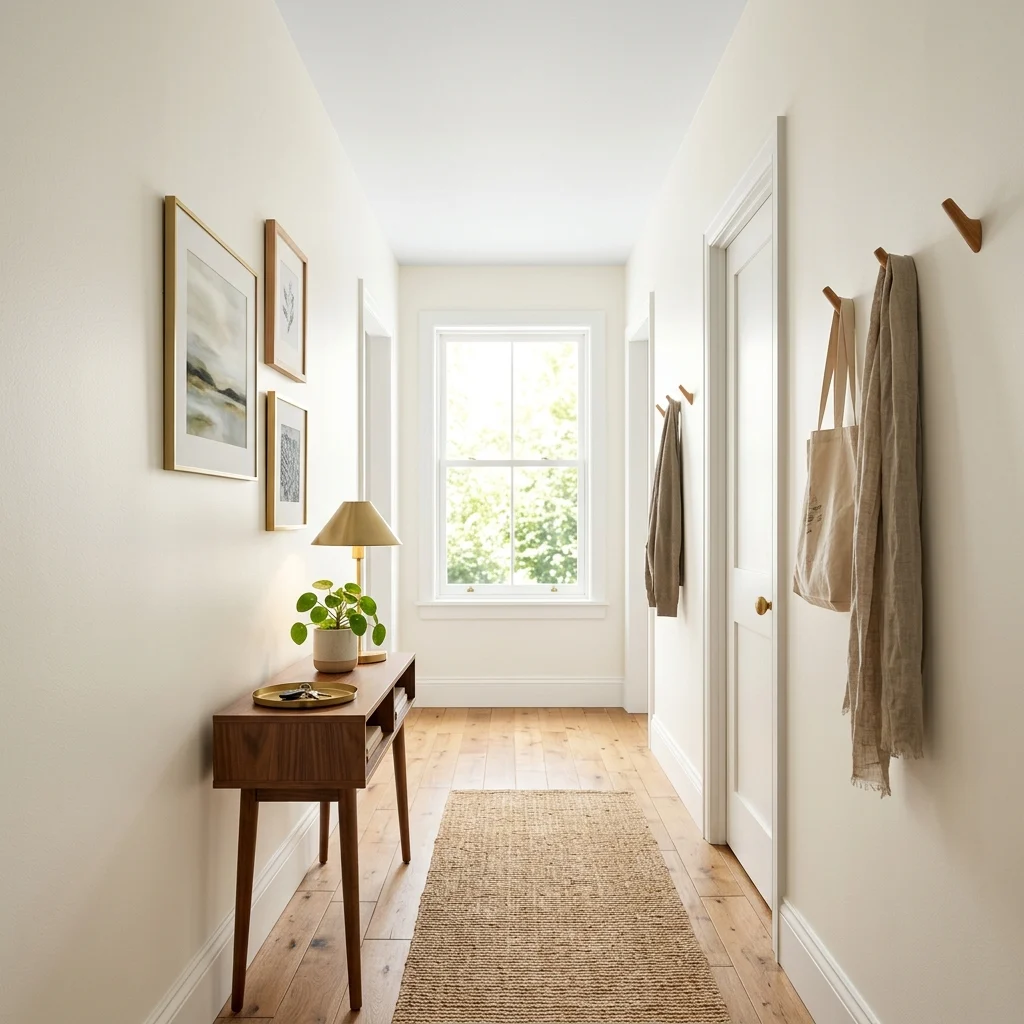
Vibe: The hallway feels fresh, with clean paint doing the heaviest lifting for the least cost.
Why it works: A gallon of quality warm-white paint typically covers 350–400 square feet and costs less than almost any single piece of new furniture, making it the single highest square-footage-per-dollar decorating purchase available. Choosing a widely popular warm white rather than a trend color also means leftover paint stays useful for touch-ups and future rooms, avoiding the sunk cost of a half-used can in a shade you’ll never repeat.
How to get it: Buy a sample pot first and paint a two-foot square in your actual room’s light before committing to a full gallon, since warm whites shift noticeably between north-facing and south-facing rooms.
Shop the Look
| Product |
| Warm white interior paint, gallon |
| Paint sample pot for testing |
| Roller and tray set |
| Painter’s tape |
| Small framed art print |
15. Zone a Studio With Rugs Instead of Furniture
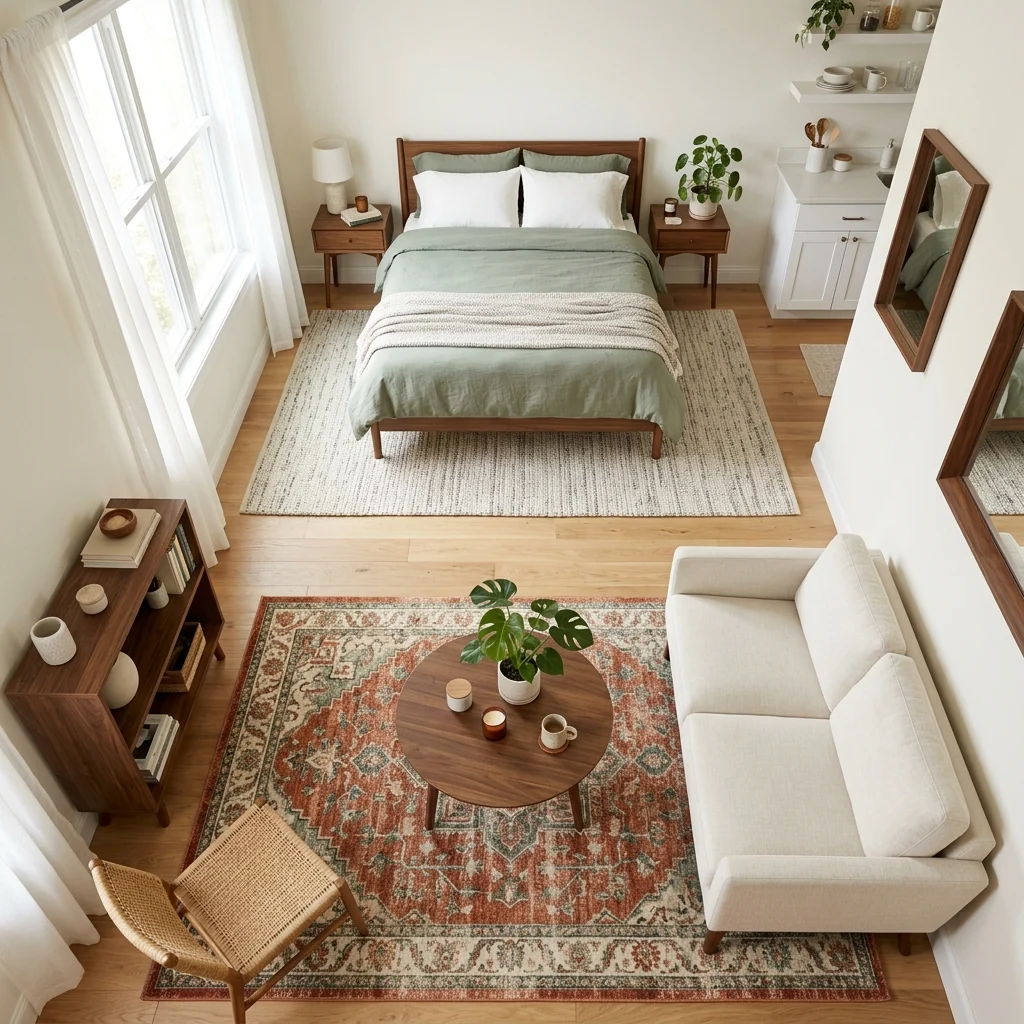
Vibe: The studio feels organized, with two zones defined without spending on a single divider.
Why it works: Two different area rugs, one under the bed, one under the seating area signal separate functions to the eye at a fraction of the cost of a room divider, folding screen, or bookshelf partition, since rug boundaries alone are enough for the brain to read “this is a different zone” the same way a change in flooring material would in a built space. This soft-zoning technique also stays fully reversible, unlike any built or furniture-based divider.
How to get it: Choose two rugs in a shared color family but different patterns or textures, and make sure each rug is sized so every piece of furniture in that zone sits fully on it, not partially off the edge.
Shop the Look
| Product |
| Budget area rug, bedroom zone |
| Budget area rug, living zone, different pattern |
| Rug pad, non-slip |
| Small room-defining console table |
| Artificial floor plant |
16. Budget Vinyl Rug in a High-End Pattern
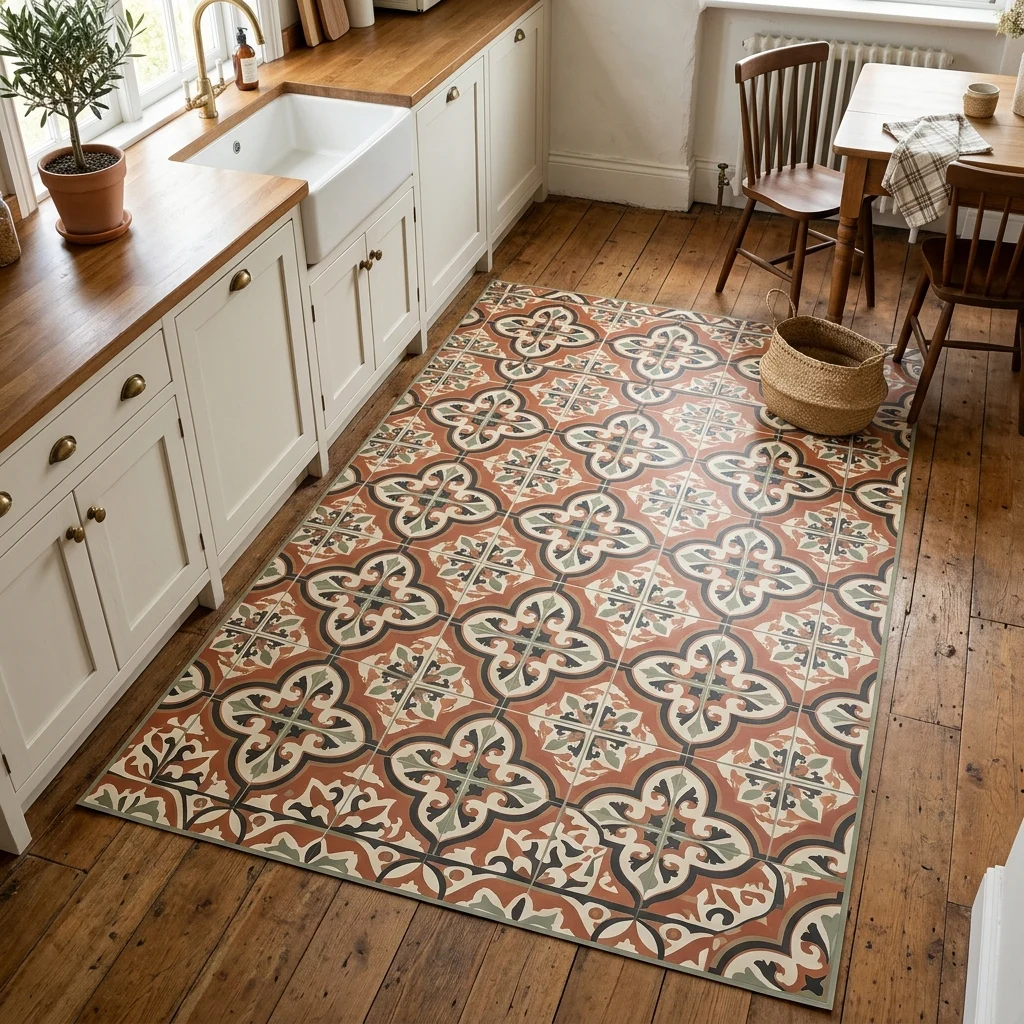
Vibe: The floor feels refined, a printed pattern standing in for real tile.
Why it works: Printed vinyl rugs replicate the look of expensive encaustic cement tile, a material that can cost $15–30 per square foot installed at a small fraction of that price, since the vinyl print achieves the same visual pattern without any of the labor, subfloor prep, or permanence that real tile installation requires. This makes it a specifically strong choice for rental kitchens where installing real tile isn’t an option at all.
How to get it: Choose a low-profile vinyl rug (under 1/8 inch thick) rather than a thicker foam-backed mat, since thinner vinyl lies flatter and reads more convincingly as an actual floor material rather than an obvious rug layered on top.
Shop the Look
| Product |
| Printed vinyl floor rug, tile pattern |
| Non-slip rug backing spray |
| Vinyl rug trim edging |
| Kitchen floor cleaner, vinyl-safe |
| Small kitchen runner rug |
17. Layer Budget Faux Florals in a Cohesive Color Story
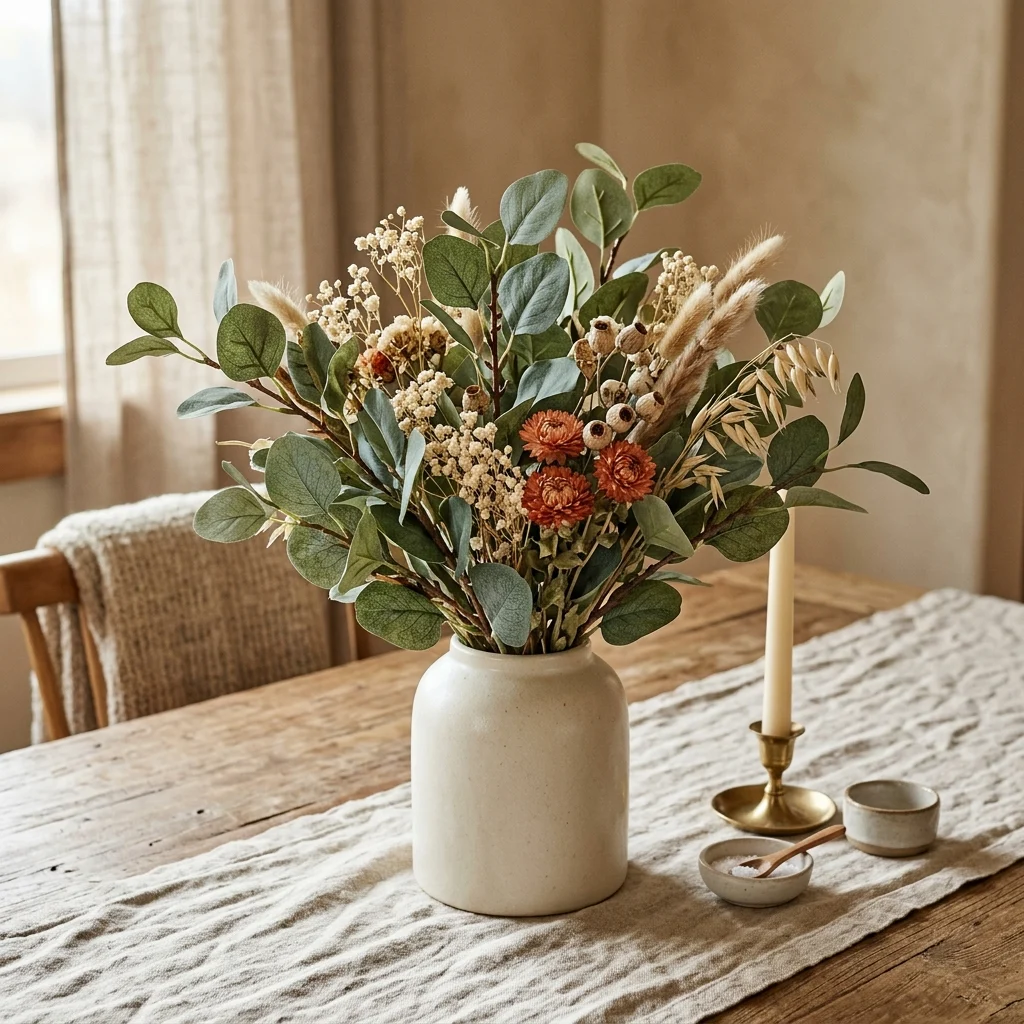
Vibe: The table feels natural, faux stems doing convincing work in a considered palette.
Why it works: Quality faux florals in dried, muted tones rather than glossy, saturated fake flowers read as genuinely dried botanicals rather than obviously artificial ones, because real dried flowers already have the same slightly faded, matte color quality that budget faux versions are designed to mimic. This is a specific budget technique: choosing faux items in colors that are already supposed to look imperfect sidesteps the biggest tell of cheap fake plants, which is usually an overly saturated, glossy green.
How to get it: Choose faux eucalyptus or dried-look florals specifically over bright artificial flowers, and trim stems to varied lengths before arranging so the grouping reads as gathered rather than uniformly store-bought.
💡 Quick Win: A single budget faux eucalyptus garland, cut into shorter stems, can fill several small vases instead of buying multiple separate bunches.
Shop the Look
| Product |
| Faux eucalyptus stem bundle |
| Dried-look faux floral stems |
| Ceramic centerpiece vase |
| Linen table runner, neutral |
| Floral stem cutting shears |
18. Nesting Tables to Skip Buying Multiple Side Tables
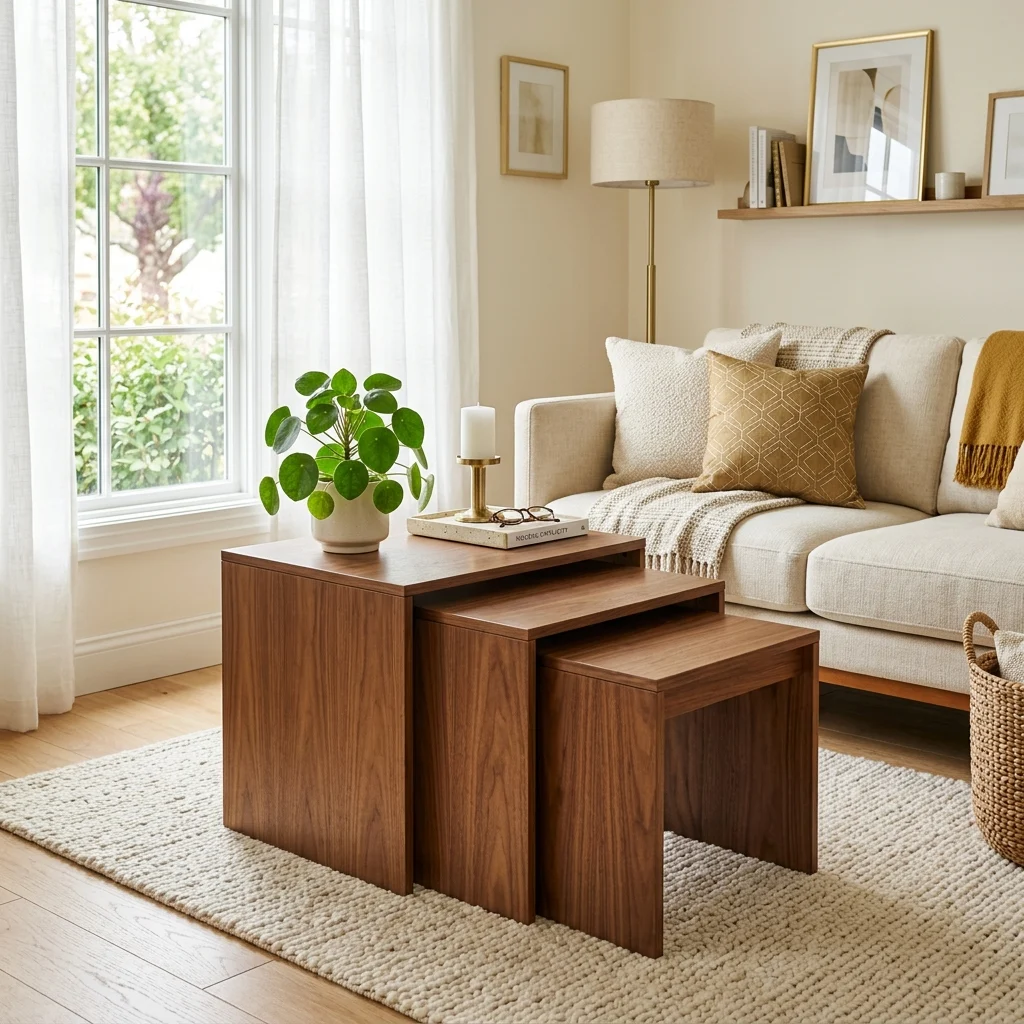
Vibe: The room feels tidy, one purchase doing the job of three separate tables.
Why it works: A single nesting table set typically costs less than buying a coffee table and two separate side tables individually, since the manufacturing and shipping efficiency of a matched set undercuts buying pieces separately, while still providing the same functional surface count when tables are pulled apart for guests. This is a straightforward cost-per-function calculation: one purchase covering three furniture roles beats three separate purchases nearly every time.
How to get it: Choose a nesting set with at least a few inches of height variation between tables, so each piece can function independently as a side table rather than only working when stacked together.
Shop the Look
| Product |
| Walnut nesting table set, three-piece |
| Small ceramic decorative tray |
| Artificial potted plant, small |
| Felt furniture floor pads |
| Coaster set, neutral |
19. Dollar-Store Candles in Bulk for Ambient Light
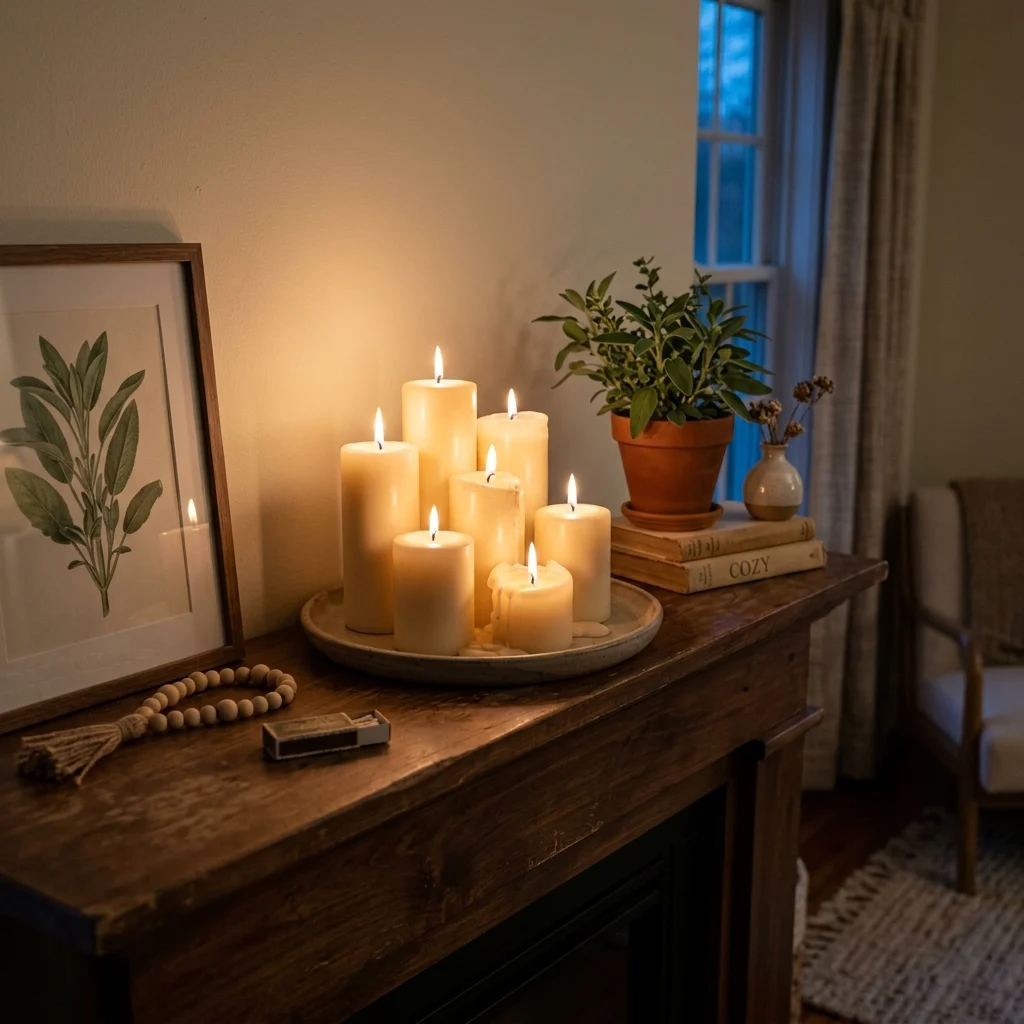
Vibe: The mantel feels intimate, warm, with a flickering light costing almost nothing.
Why it works: Grouped candles at varied heights create the same layered, warm ambient glow that an expensive accent lighting fixture would, using flame instead of electricity, which makes this the cheapest possible way to add a genuine warm light source to a room with no wiring or fixture cost at all. Buying plain, unscented pillar candles in bulk from a discount retailer costs a fraction of styled decorative candles while producing an identical visual result once grouped and lit.
How to get it: Group candles in odd numbers at graduated heights on a single tray, using a taller candle as the visual anchor with two or three shorter ones surrounding it, mirroring the same asymmetric-grouping principle used with vases.
Shop the Look
| Product |
| Unscented pillar candle set, bulk |
| Ceramic candle tray, footed |
| Long-reach candle lighter |
| Small greenery sprig, faux |
| Beeswax or soy candle refill set |
20. Budget Faux Plants That Look Real
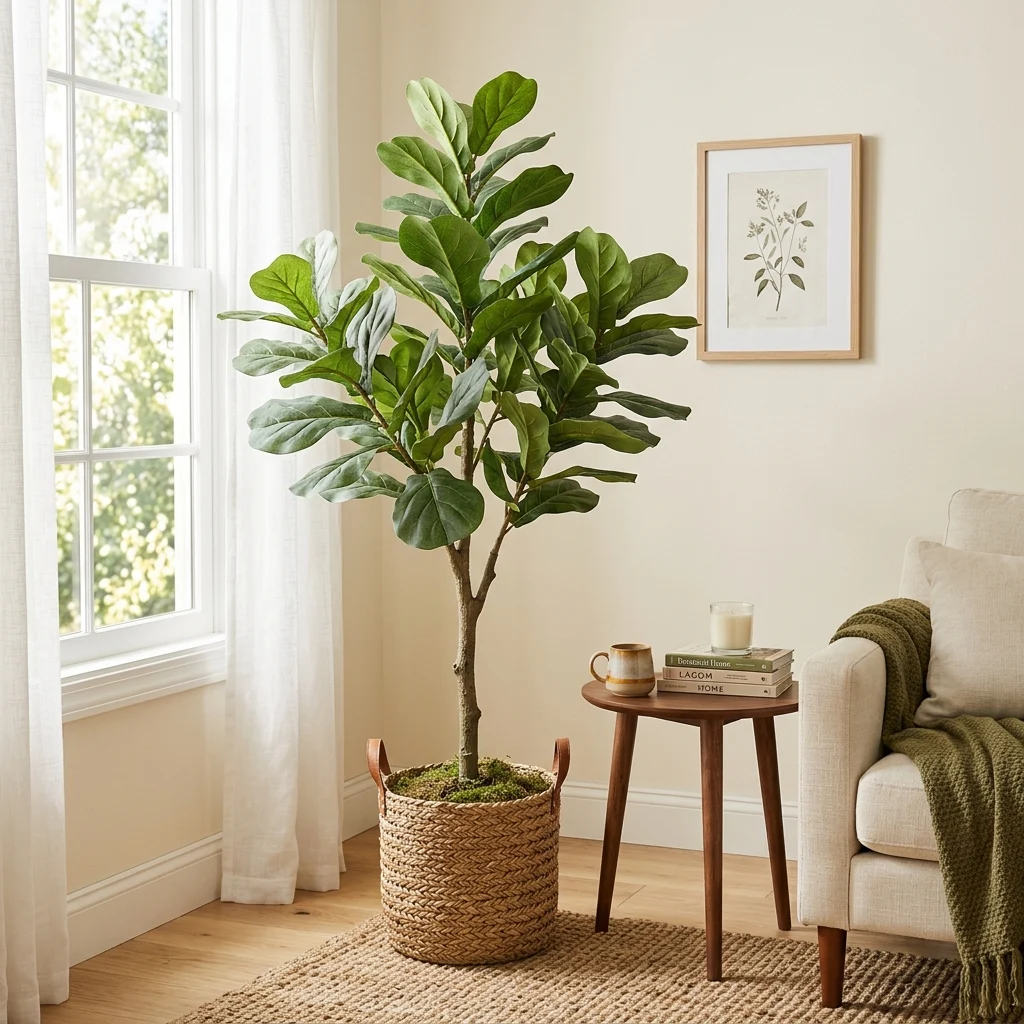
Vibe: The corner feels natural, a plant that never needs watering is doing convincing work.
Why it works: Budget faux plants read as fake almost entirely because of two details: uniform, glossy leaf color and leaves all facing the same direction, both of which are fixable after purchase, regardless of the plant’s original price point. Manually bending stems and leaves into varied, asymmetric angles, the way a real plant actually grows toward available light, does more for realism than spending significantly more on a “premium” faux plant left in its factory arrangement.
How to get it: Remove the plant from its display arrangement and manually reshape several stems to face different directions before placing it in a natural woven basket planter, which further disguises the plastic base pot.
💡 Quick Win: A light dusting of matte spray sealant over glossy faux leaves knocks down the artificial shine that’s usually the biggest giveaway from a distance.
Shop the Look
| Product |
| Budget faux fiddle leaf fig plant |
| Woven basket planter cover |
| Matte spray sealant for faux leaves |
| Small decorative floor tray |
| Plant stand, wood, adjustable height |
How to Start Your Budget Home Decor Transformation
Your first single move should be rearranging the furniture you already own, because it costs nothing and immediately reveals whether a room’s real problem is its layout rather than its furniture. A surprising number of rooms that feel like they “need new furniture” actually just need their existing pieces pulled away from the walls and regrouped.
The most common mistake is spreading a limited budget evenly across many small purchases instead of concentrating it on one or two changes with the most visual leverage, like paint or a secondhand sofa. This produces a room full of scattered small updates that never quite add up to a finished look; fix it by picking the single highest-impact item on this list for your specific room and fully committing the budget there first.
Three specific items under $50 that create immediate impact: a warm-white paint sample pot and roller for testing trim paint, a set of three matte ceramic vases from a discount retailer, and a bundle of warm-white LED string lights or under-cabinet strip lighting.
A weekend-scale refresh trim paint, rearranged furniture, and new pillow covers realistically costs $50–$150. A fuller budget room transformation mixing secondhand furniture with a few new accent pieces generally runs $300–$800 and takes four to six weekends of gradual sourcing and installing, since good secondhand finds take patience to locate.
Frequently Asked Questions About Budget Home Decor
What is the difference between budget decor and cheap-looking decor?
Budget decor concentrates spending on a few high-leverage changes, such as paint, lighting, and one hero furniture piece, while accepting lower-cost versions everywhere else, whereas cheap-looking decor spreads a small budget evenly across everything with no clear priority. The visual difference comes down to intentional contrast: a room with one genuinely well-chosen sofa and simple painted walls reads as considered, while a room with ten mismatched $10 items reads as cluttered regardless of the total amount spent.
What colors work best for budget home decor?
Warm white and greige are the most budget-efficient base colors because a single gallon covers the most square footage per dollar of any decorating purchase, and both shades stay versatile enough to work with whatever furniture comes later. Terracotta and sage are the most common budget accent colors, typically introduced through $10–20 textile pieces like pillow covers rather than paint, which keeps the color commitment low-risk and easy to change later.
How much does a full budget home decor refresh actually cost?
A single-weekend refresh using trim paint, rearranged furniture, and new pillow covers typically costs $50–$150. A more complete room transformation mixing one or two secondhand furniture finds with new accent pieces generally runs $300–$800, while a full-home budget refresh across several rooms usually falls between $1,000 and $2,500 when spread across several months of gradual sourcing rather than done all at once.
Does budget decor work well in a rental apartment?
Yes, many of the highest-impact ideas on this list, including furniture rearrangement, lampshade swaps, and peel-and-stick backsplash tile, are specifically renter-friendly and either fully reversible or removable without damaging deposit-protected surfaces. Peel-and-stick products in particular are designed to remove cleanly from most painted and laminate surfaces when applied correctly, making them one of the few “renovation-style” updates renters can genuinely use.
What is the single best budget item to buy first for a room refresh?
A gallon of warm white paint for the trim or a small accent wall consistently delivers the highest visual return per dollar spent, since it changes the room’s overall polish more than almost any single furniture or decor purchase at a similar price point. After paint, a set of new pillow covers or a swapped lampshade are the next-highest-return purchases, since both update a room’s color and lighting character without requiring any furniture replacement at all.
Ready to Create Your Dream Budget Home?
These 20 budget home decor ideas span color, material, lighting, furniture, and layout from a can of trim paint and a rearranged sofa to a secondhand dresser refinished with new brass hardware, so there’s a genuinely high-leverage starting point here, no matter how small your current budget actually is. You don’t need to tackle every idea at once, and starting with the free changes, rearranging furniture, floating a sofa off the wall before spending a single dollar is exactly the right order to work in, not a compromise on the way to something better. Today’s specific action: pull your largest piece of furniture at least a foot away from its wall and see how the room’s flow changes before you buy anything at all. Once the highest-leverage changes are in place, the room stops feeling like it’s missing something expensive and starts feeling like every dollar in it was spent on purpose. Save the ideas that fit your actual budget today, that peel-and-stick backsplash, that thrifted dresser, because in budget decorating, knowing where to spend matters more than how much you have to spend.
You Might Also Like
- 20 DIY Home Decor Ideas You Can Actually Make Yourself
- Eco Friendly Bamboo Home Decor: 9 Stunning Ways to Style Every Room
- 10 Stylish Shelf Decor Ideas for Every Room
- Modern Home Decor: 15 Ideas Worth Saving and Stealing
- 13 Minimalist Home Decor Ideas for a Calm, Clutter-Free Space
- 12 Small Space Decor Ideas for a Modern Minimalist Home
[…] 20 Budget Home Decor Ideas That Actually Look Expensive […]