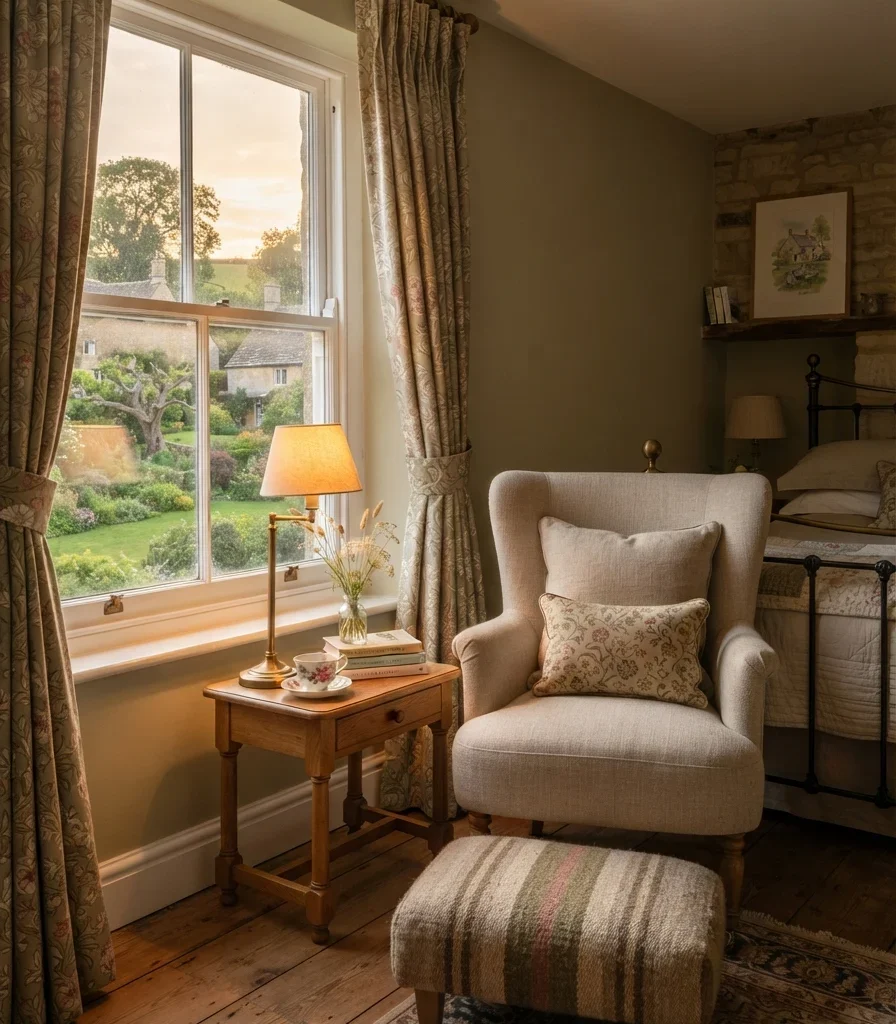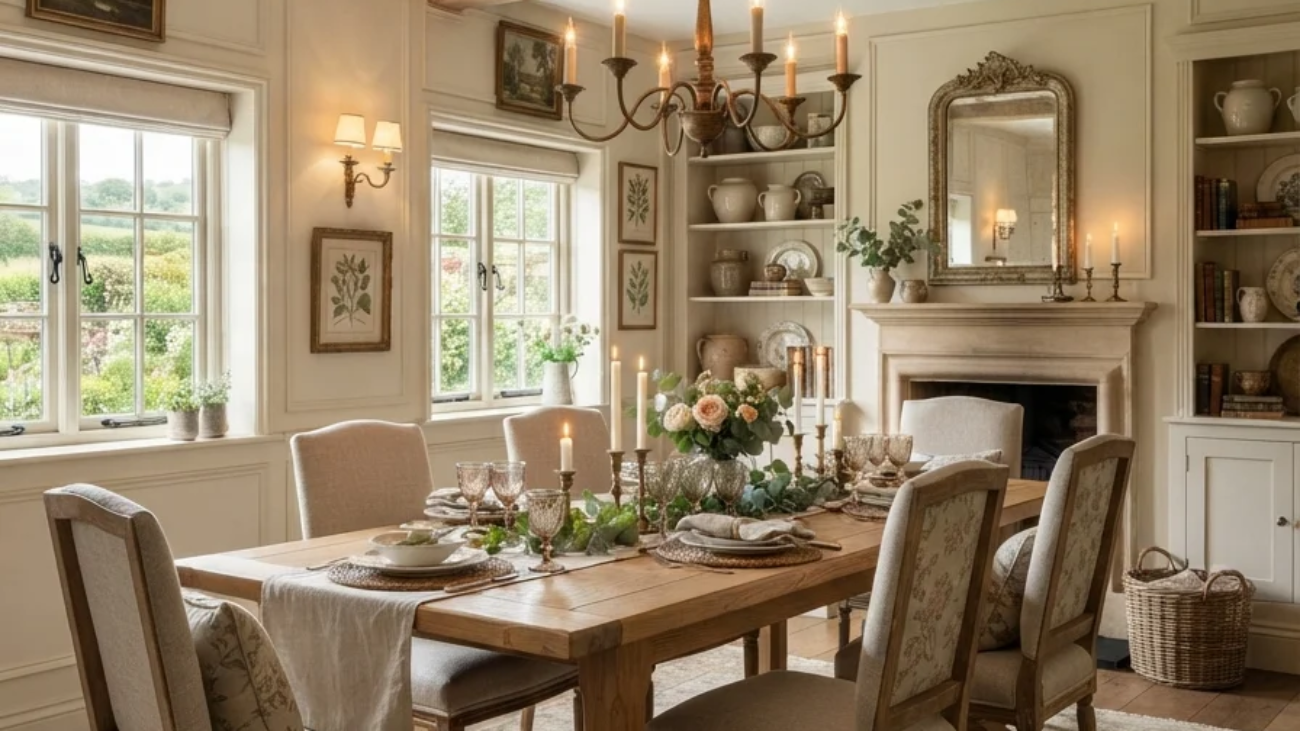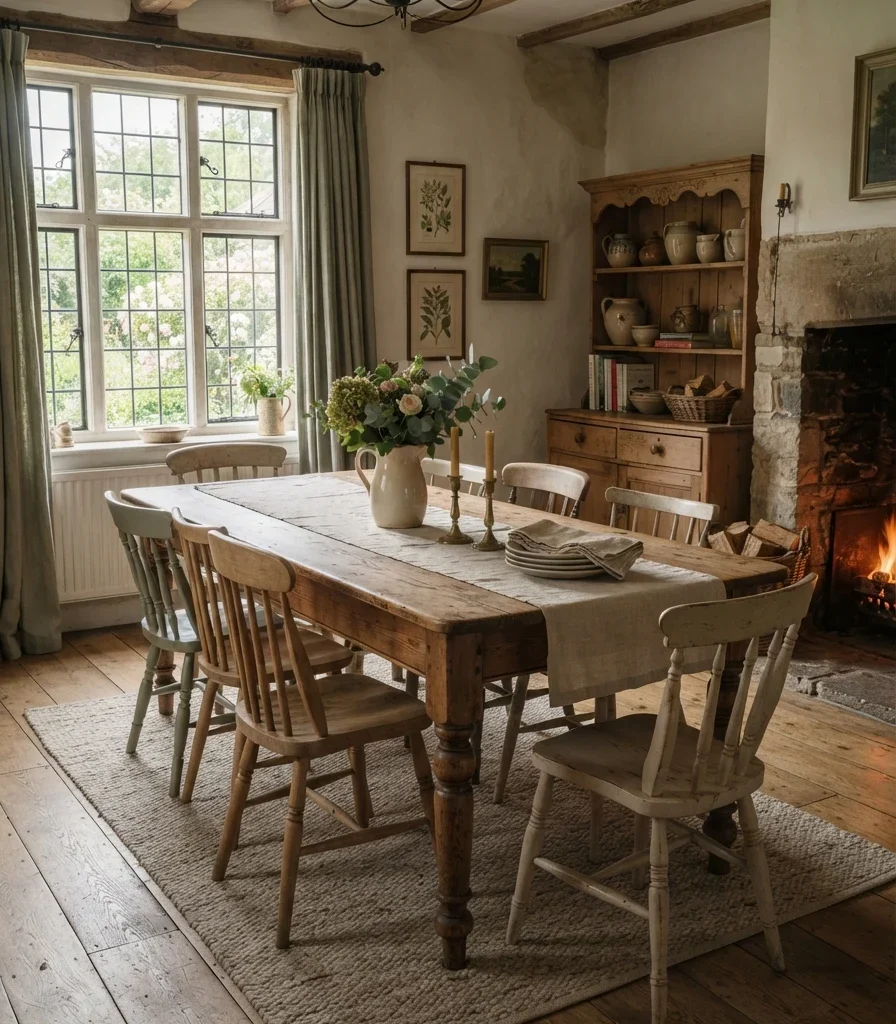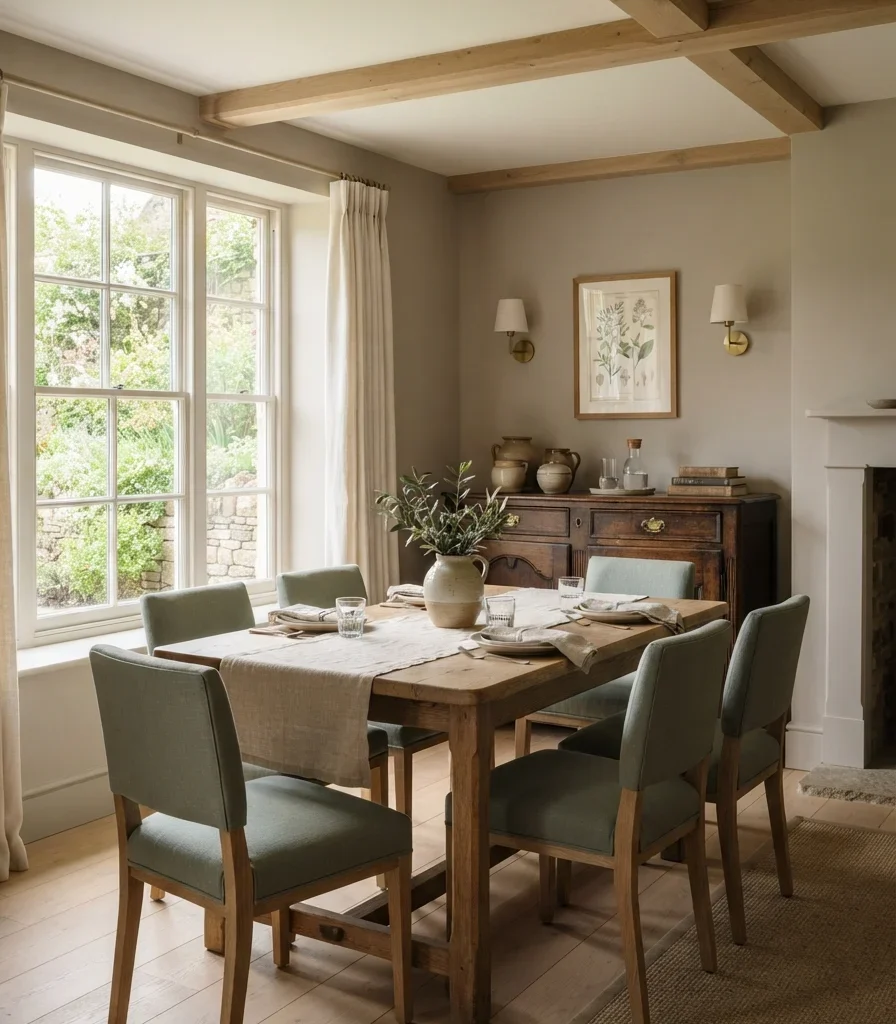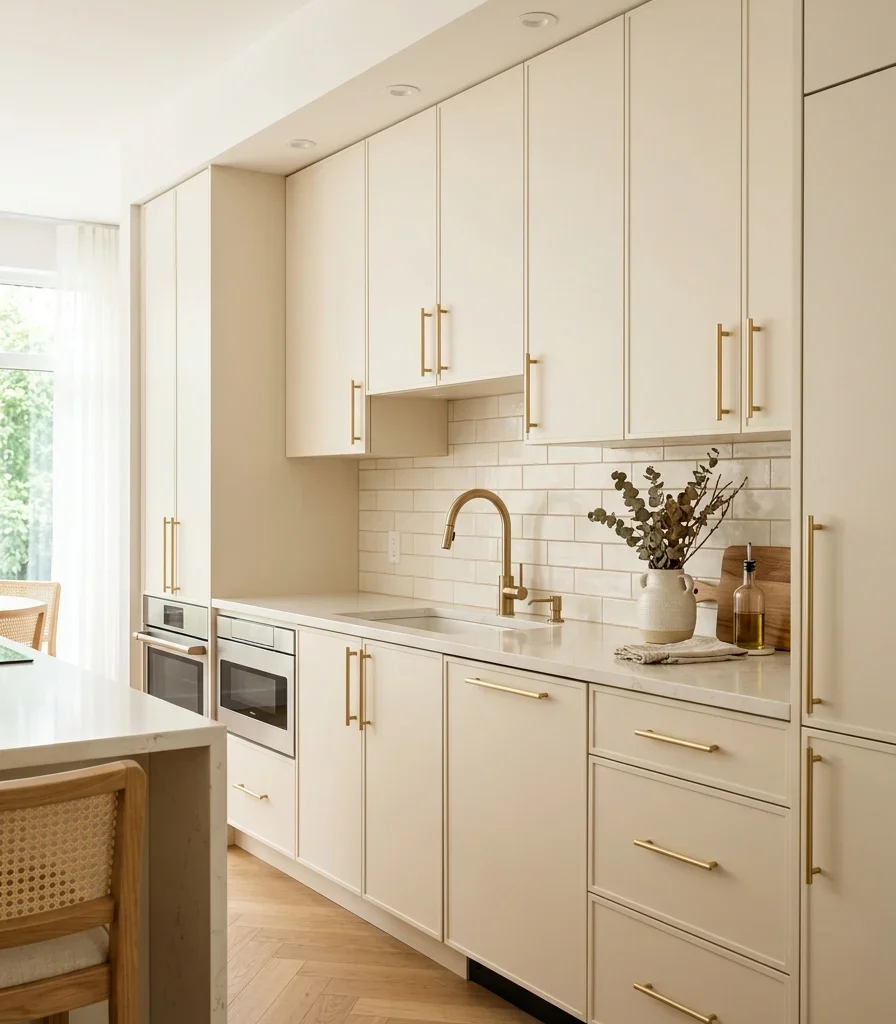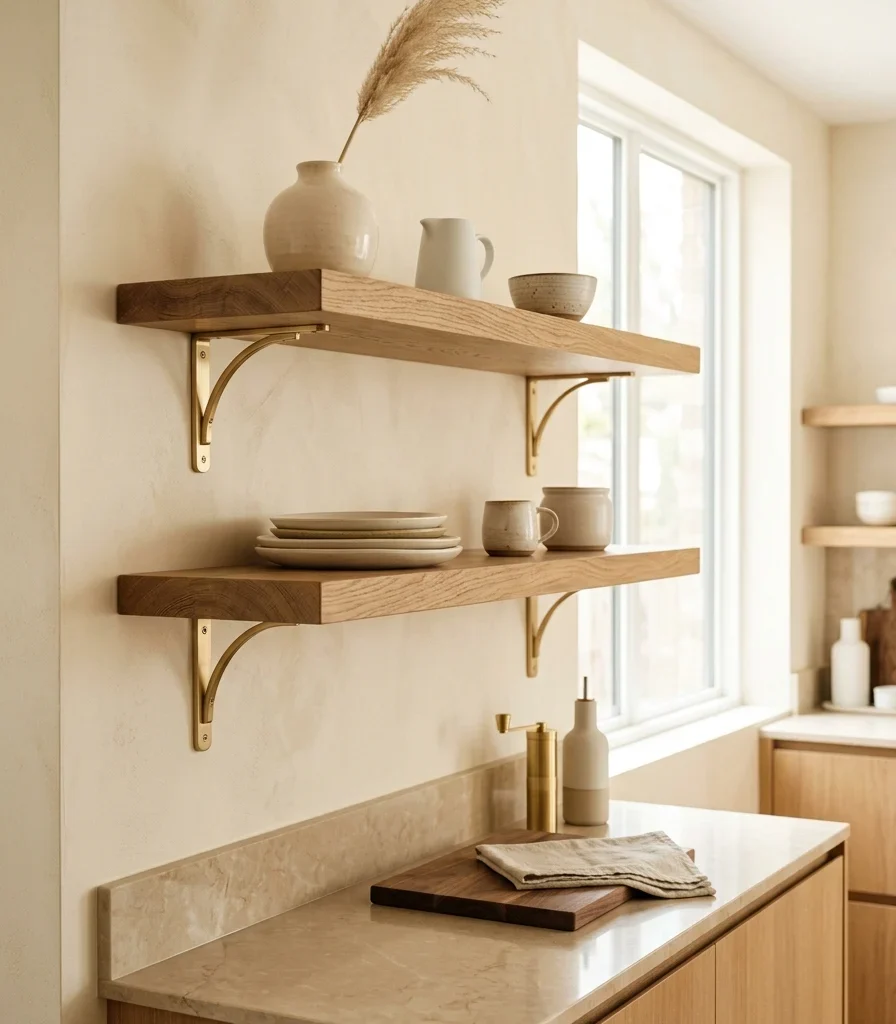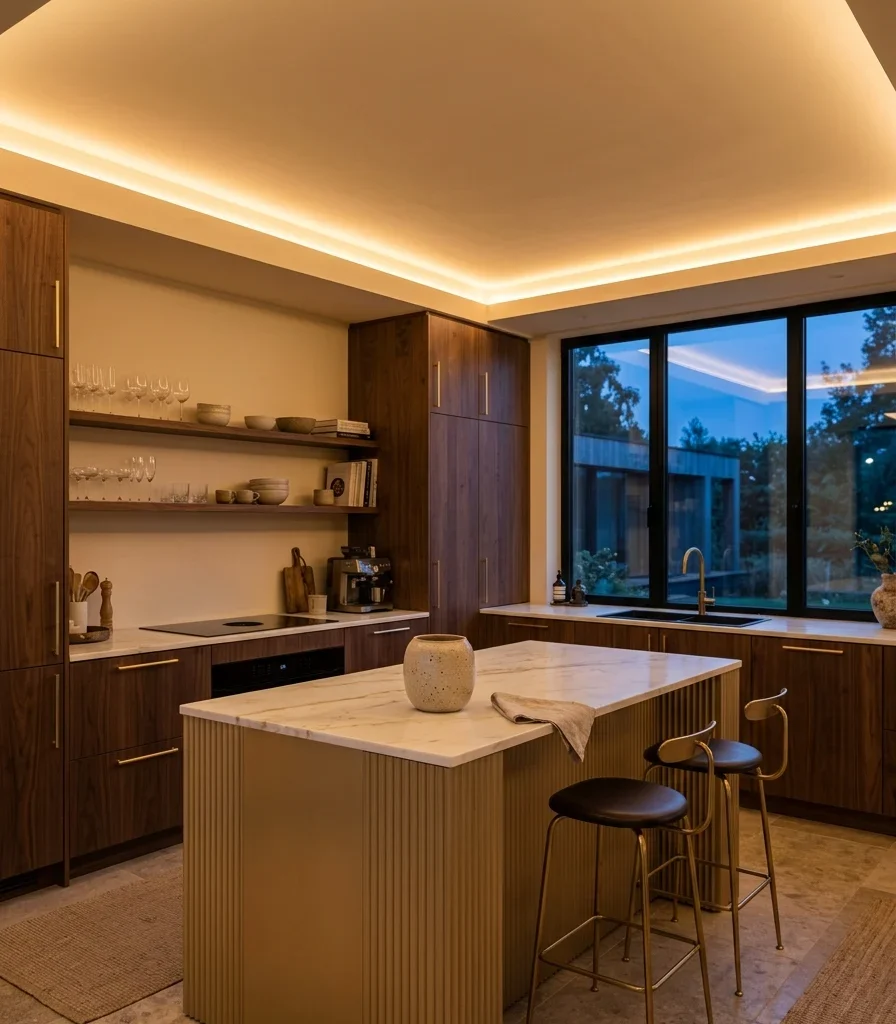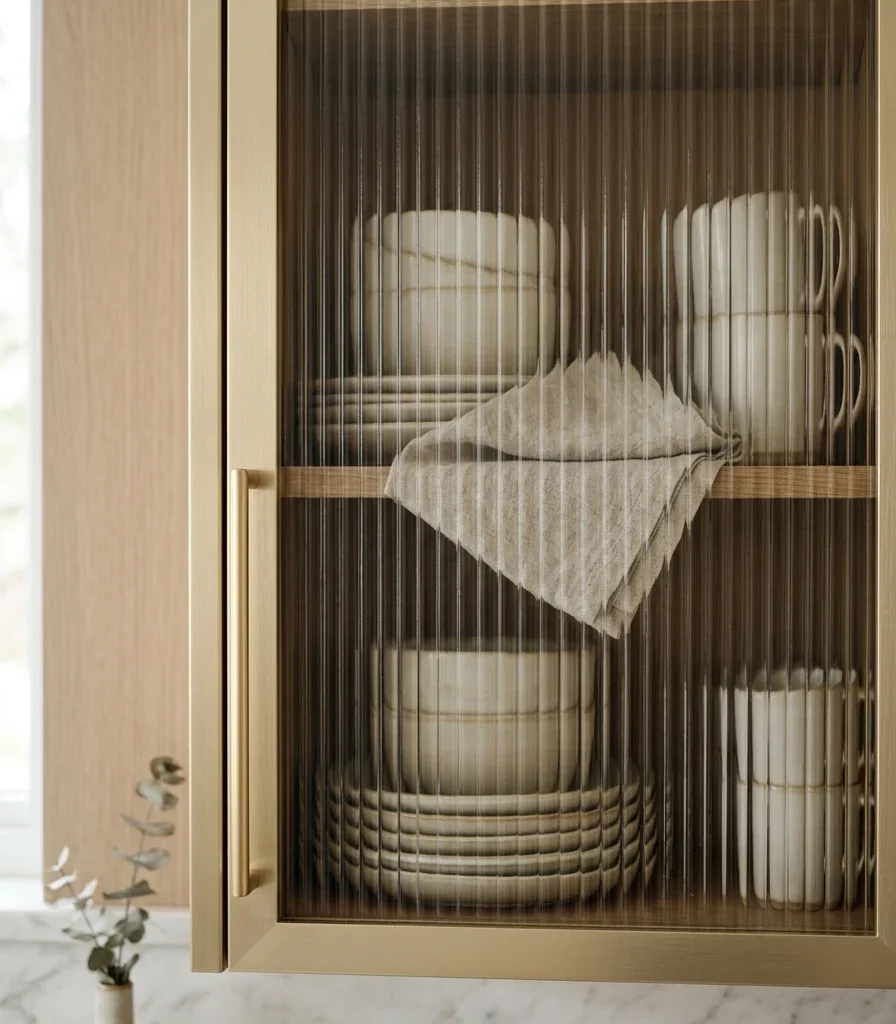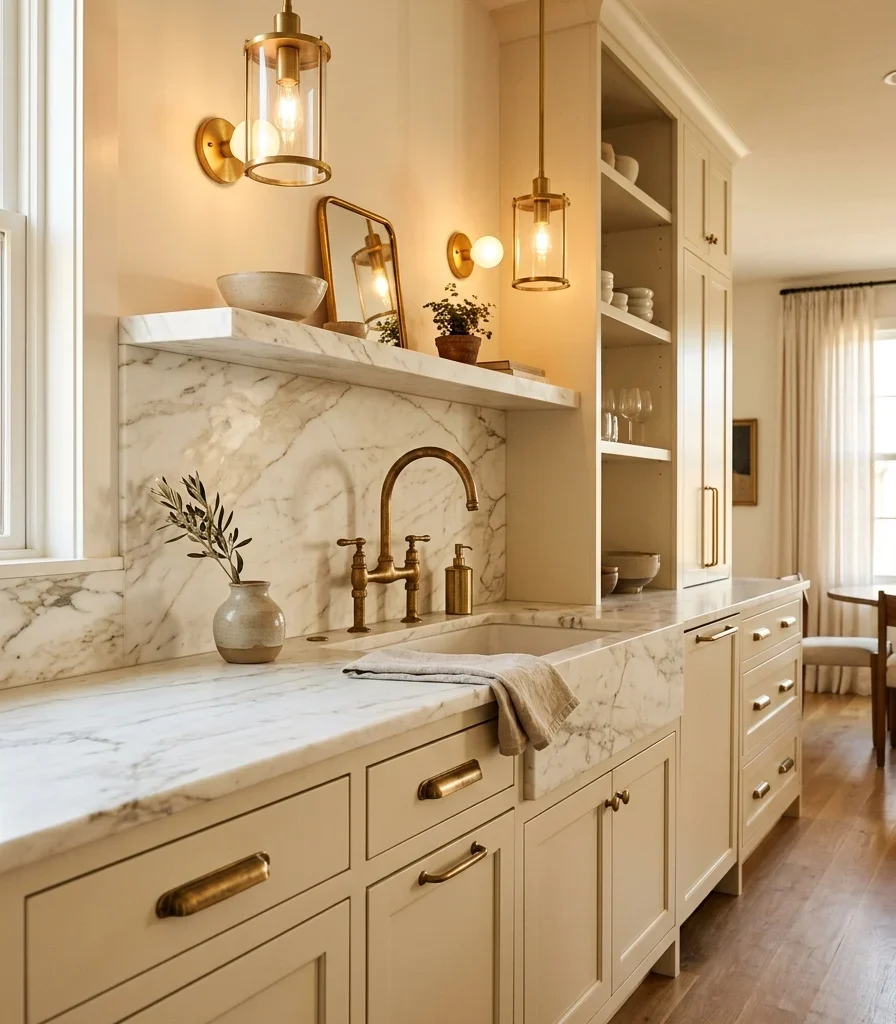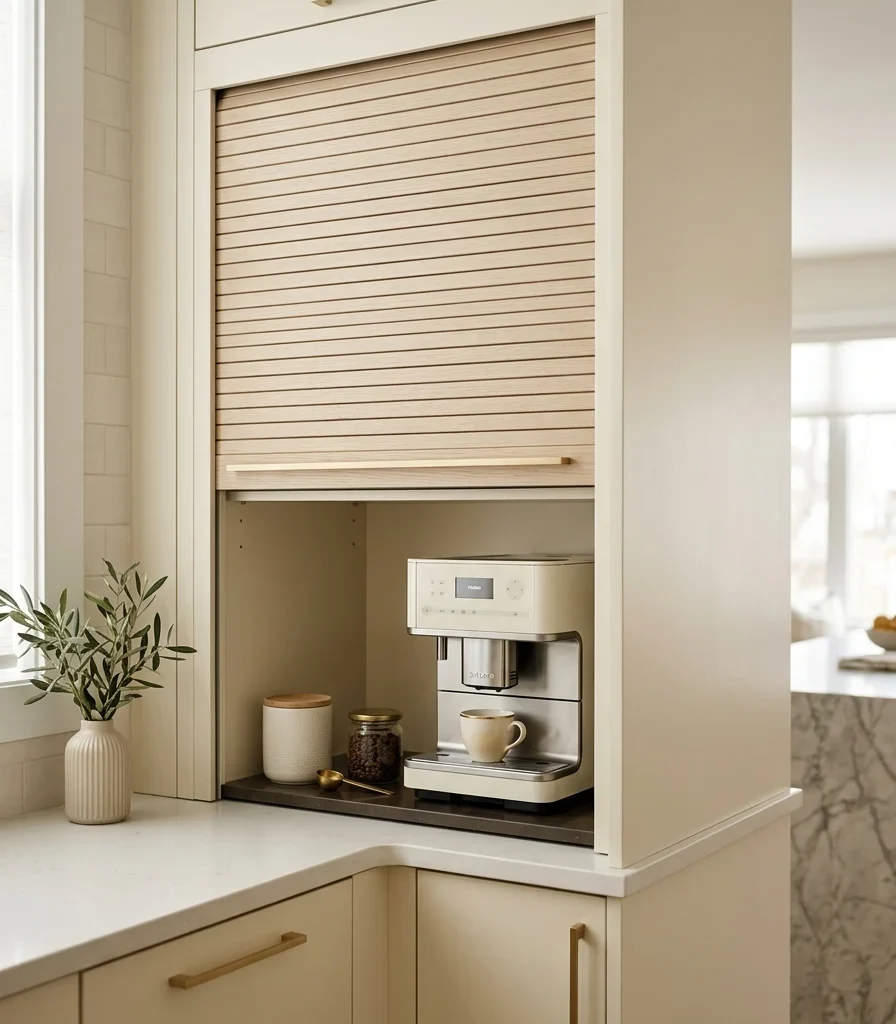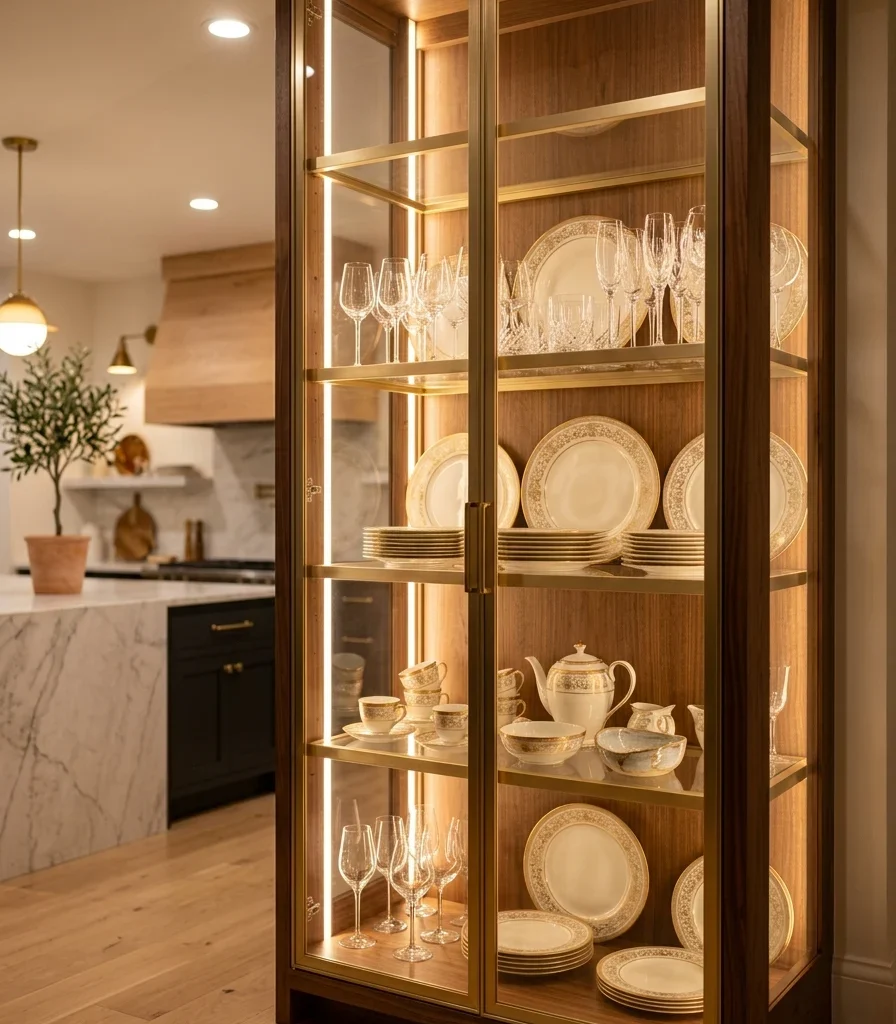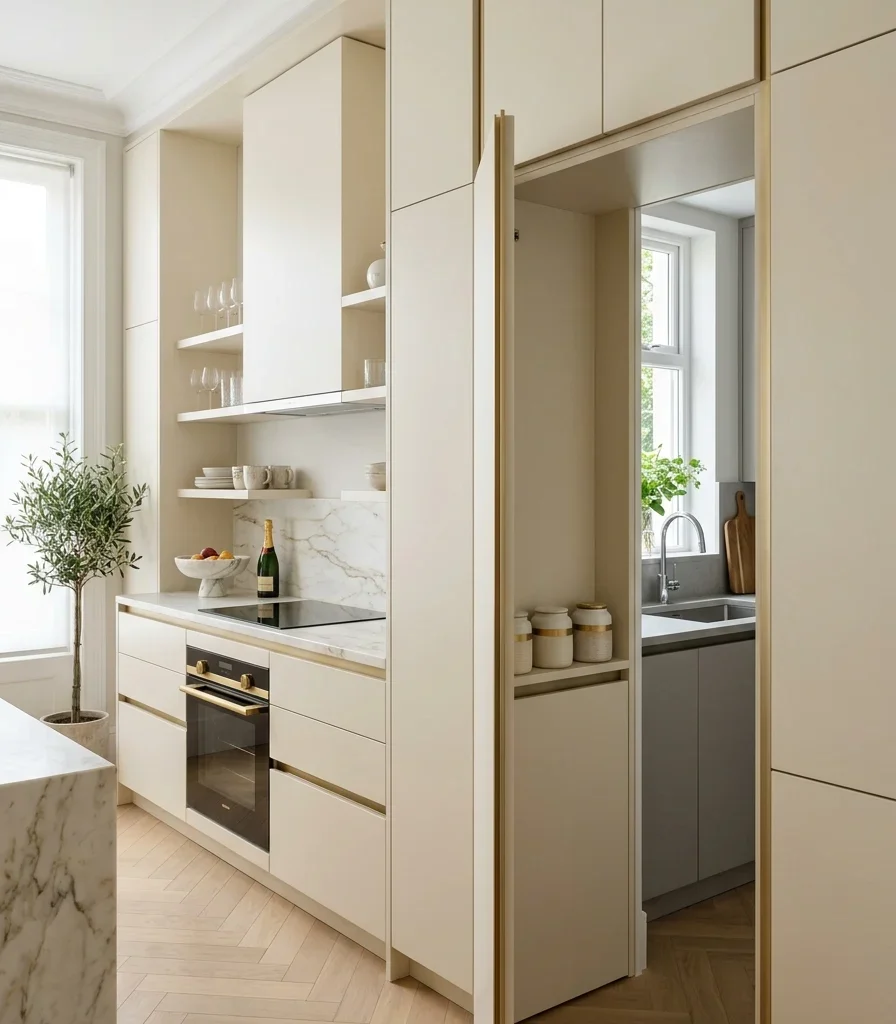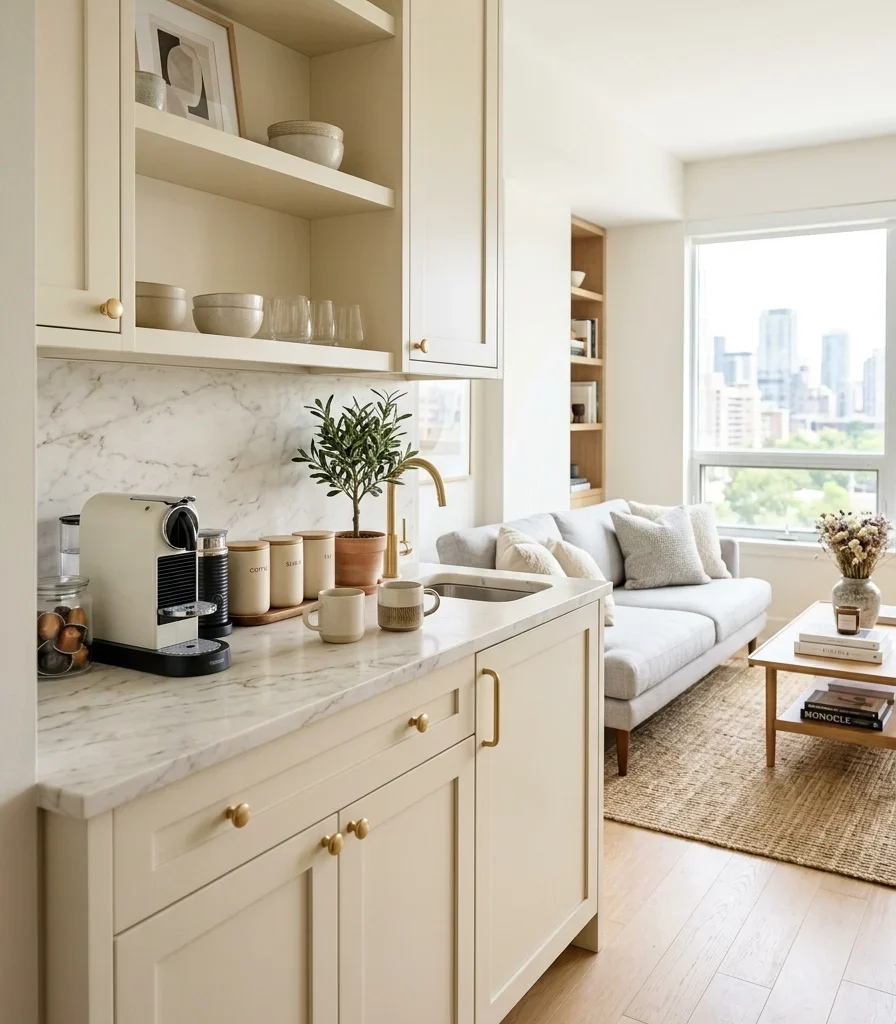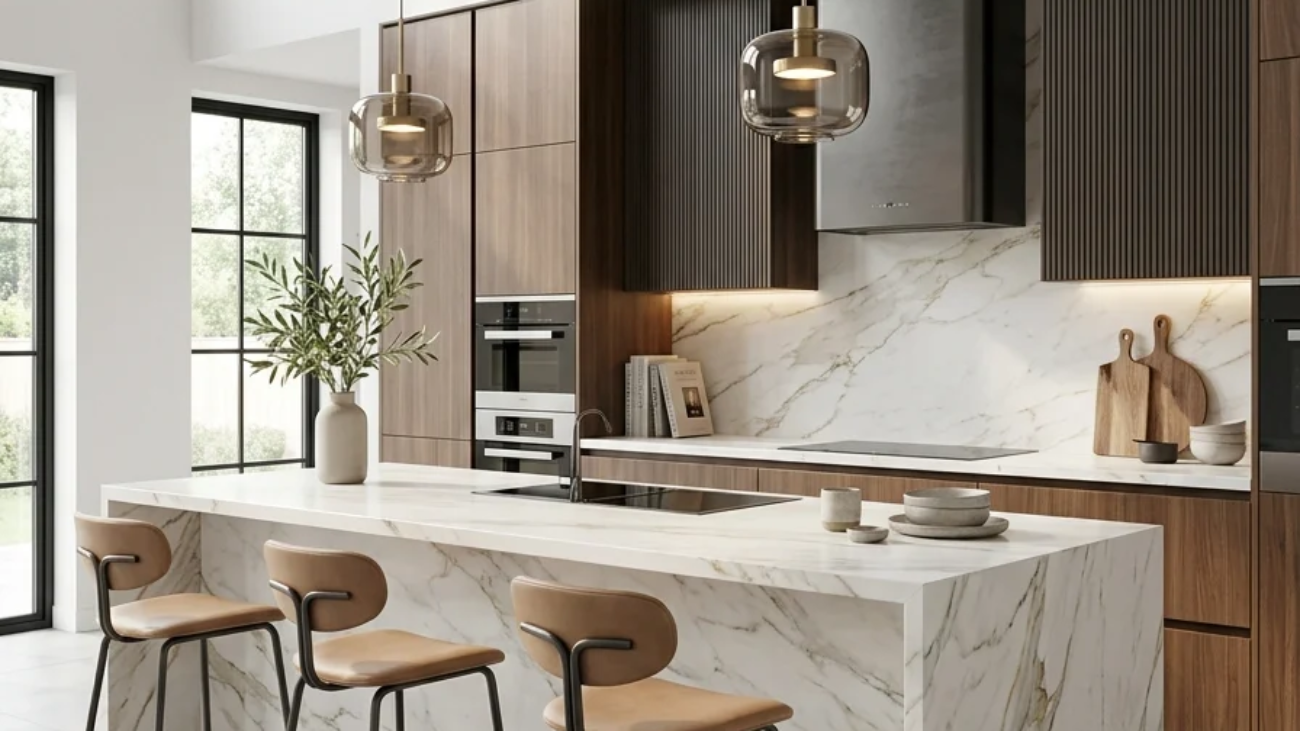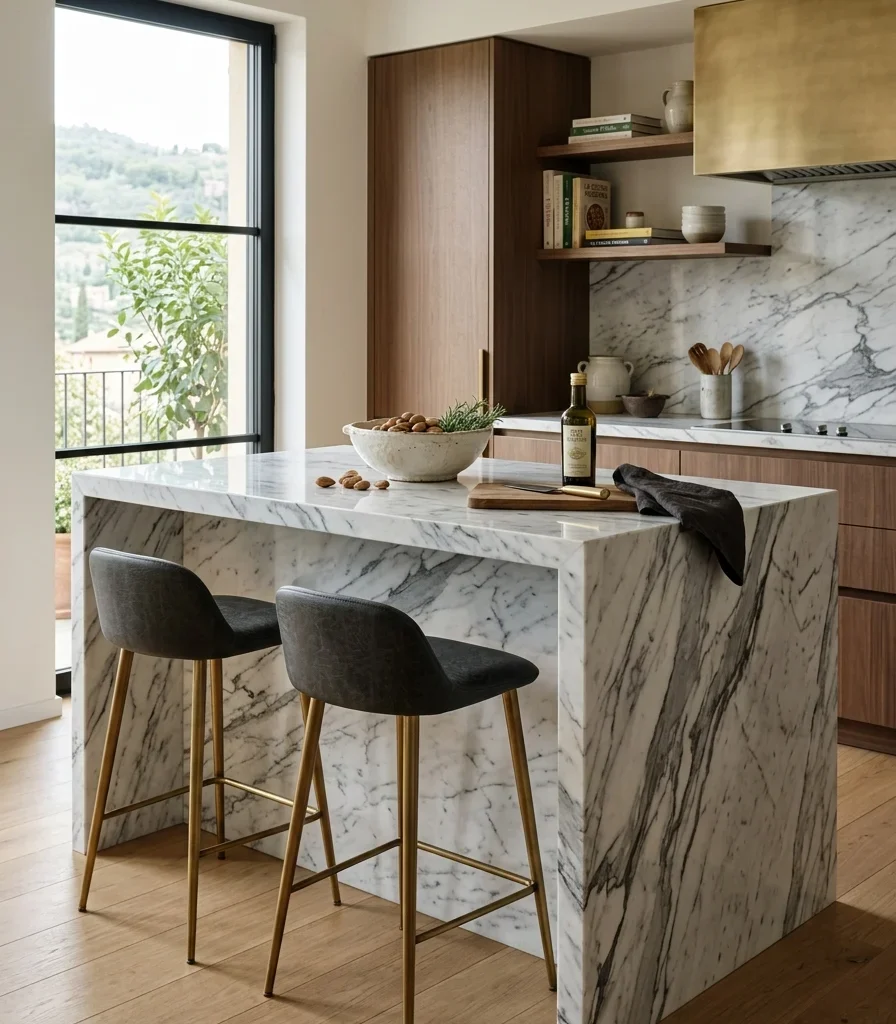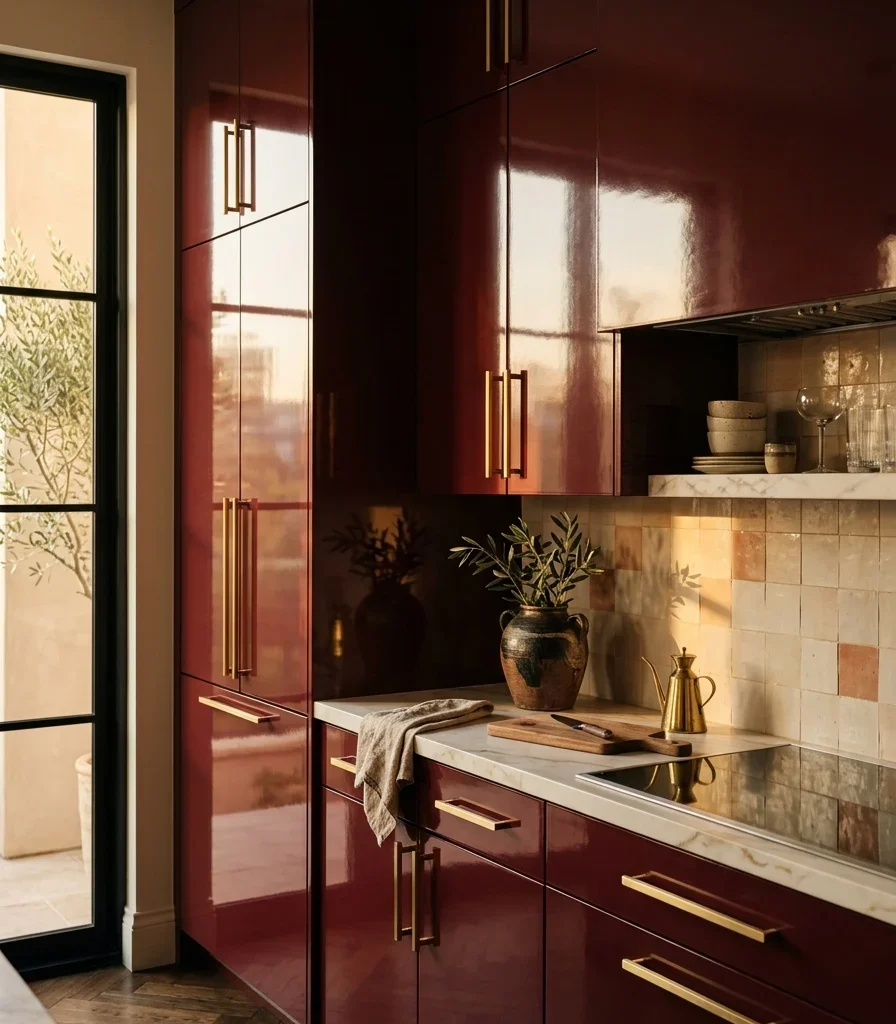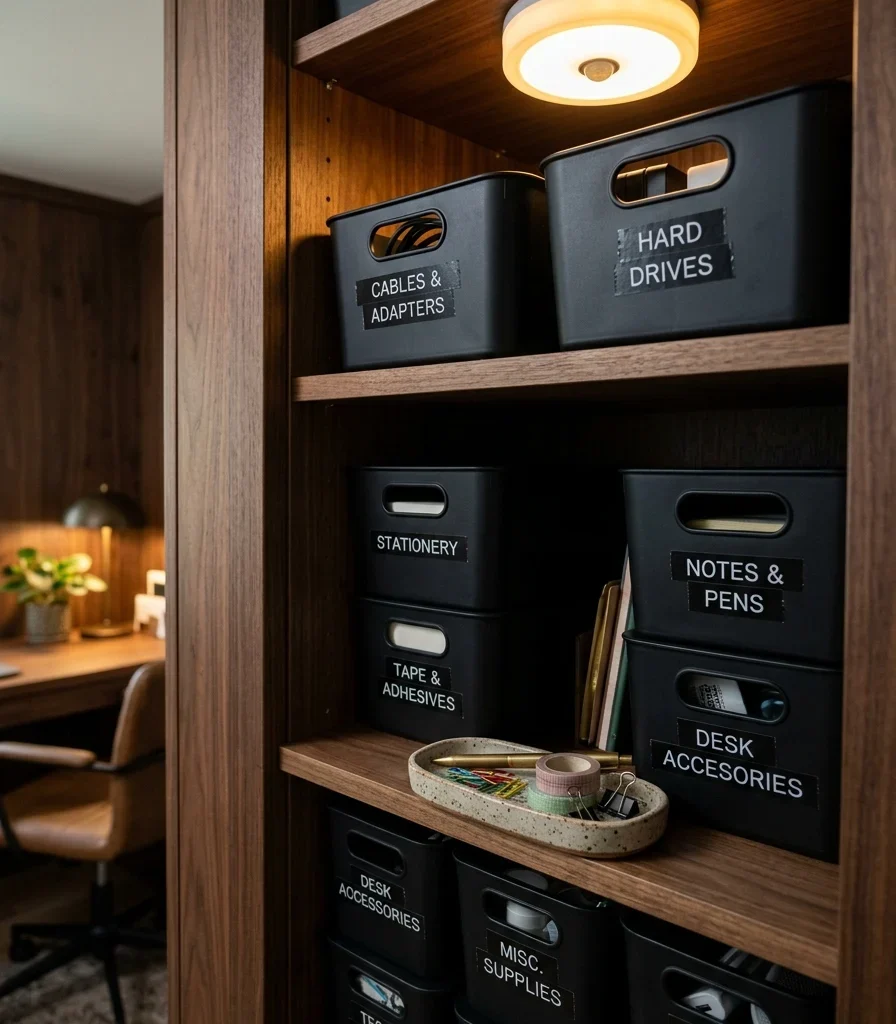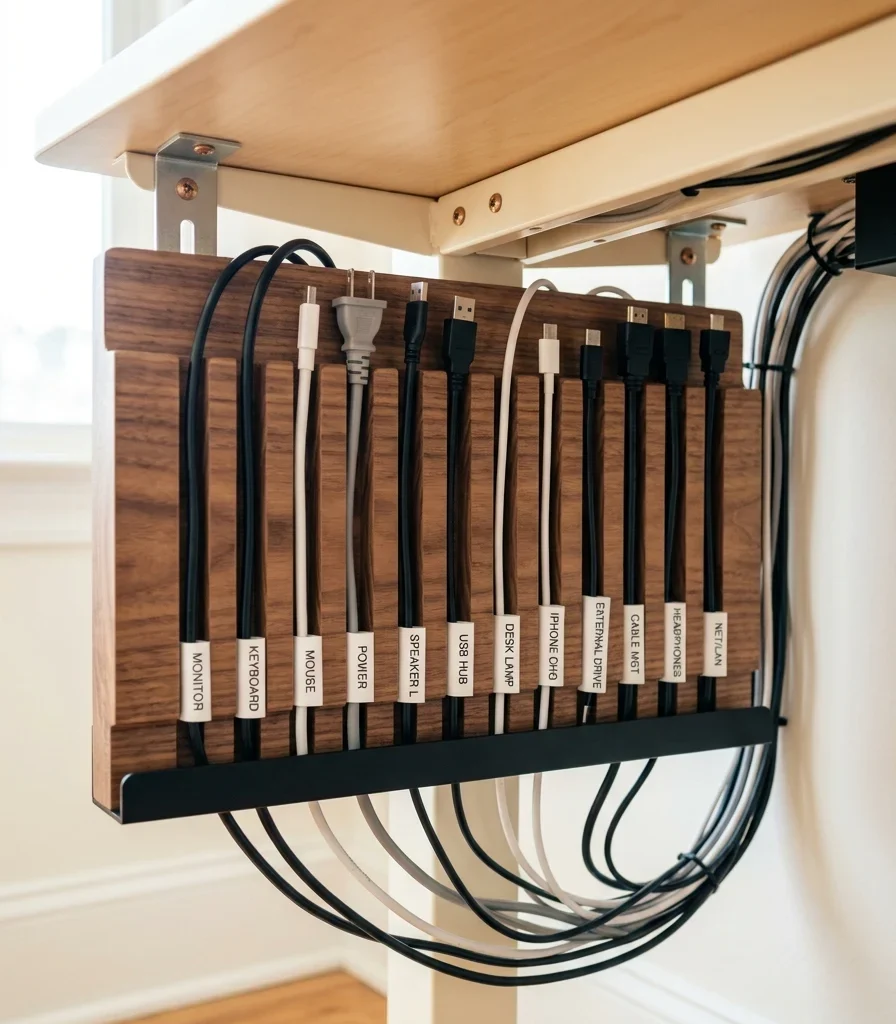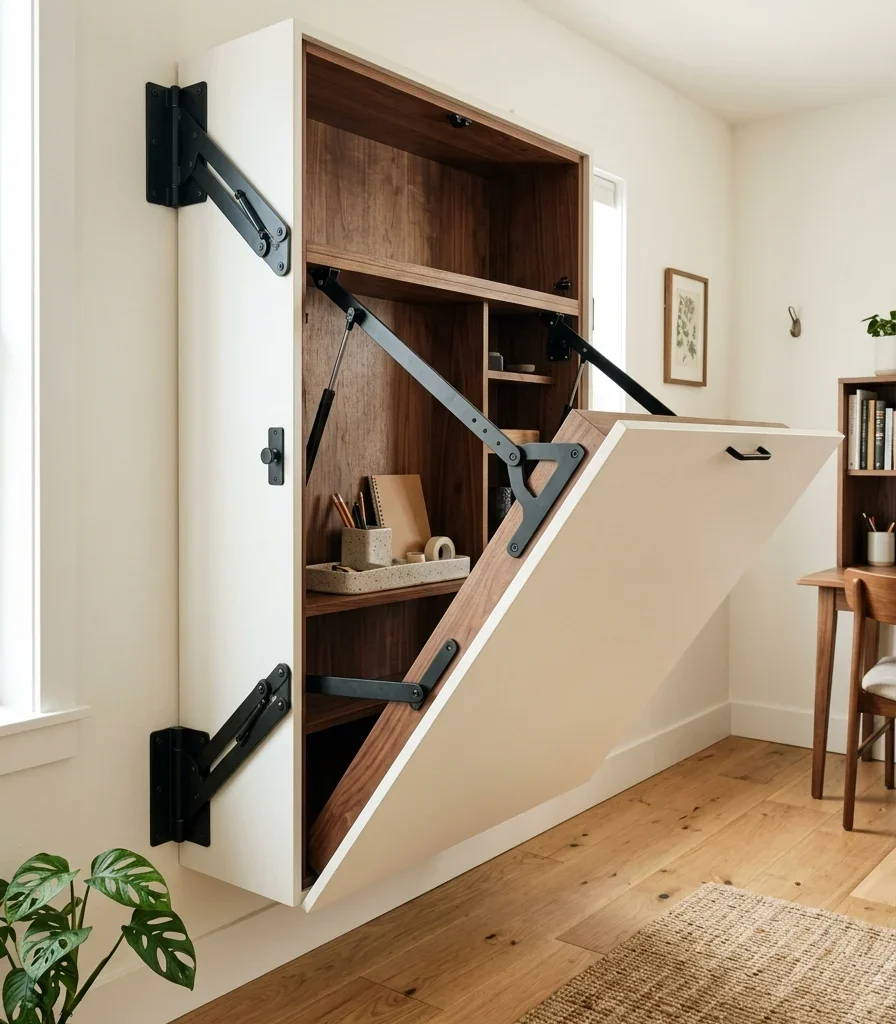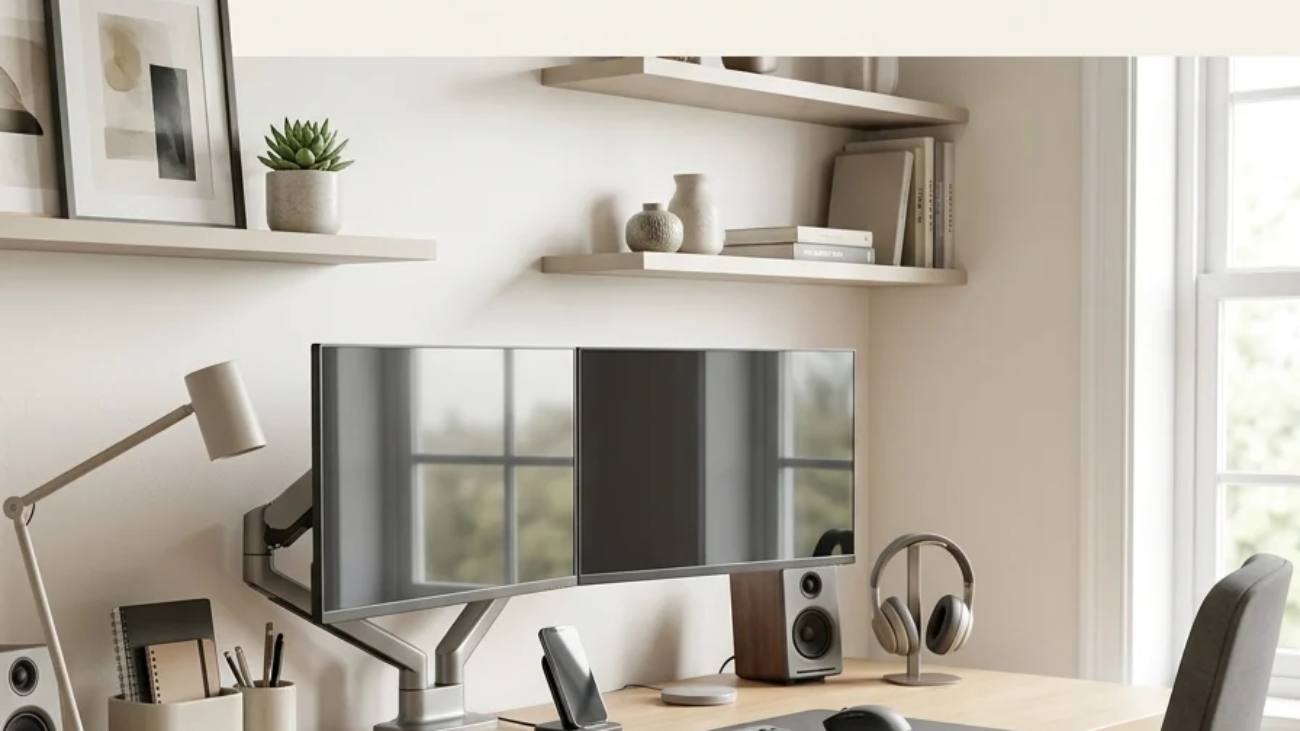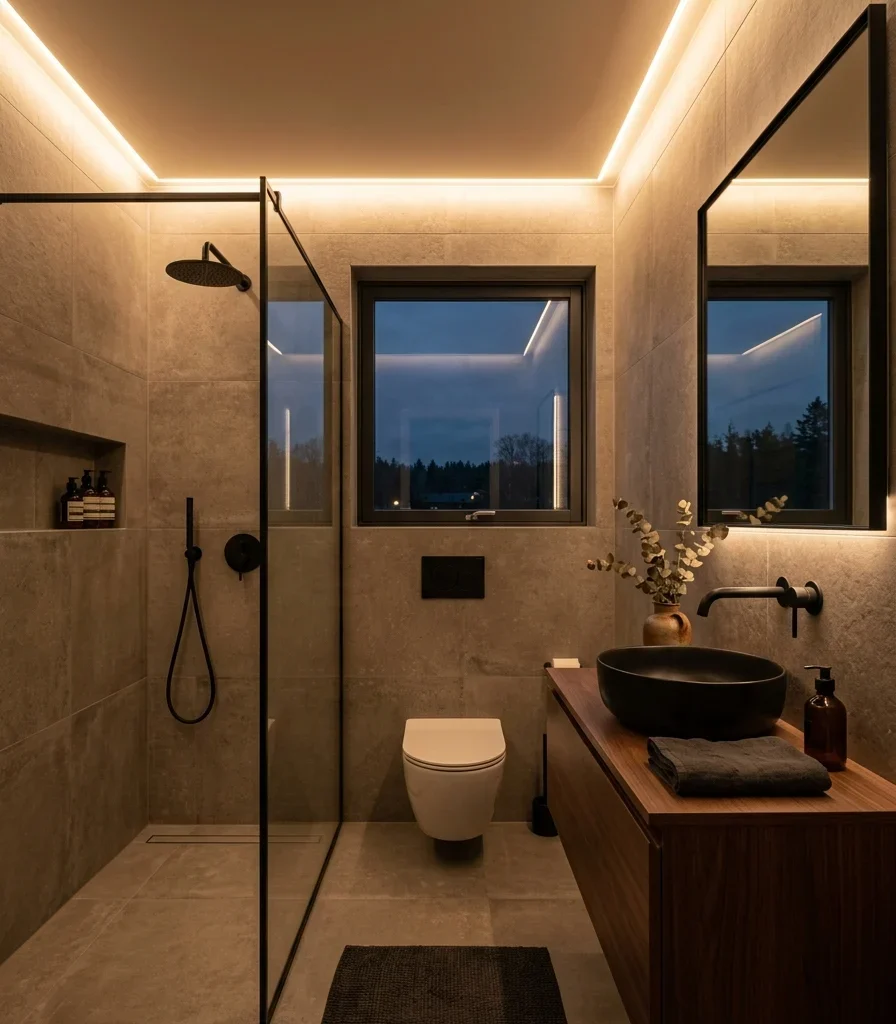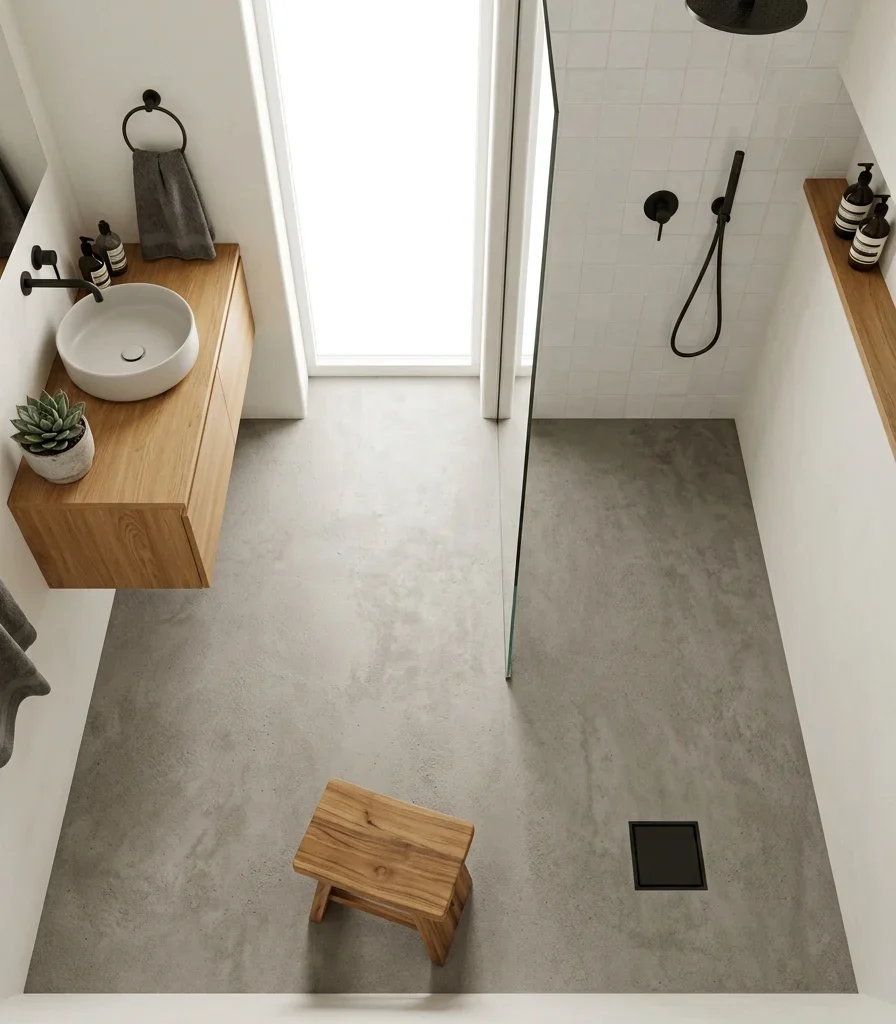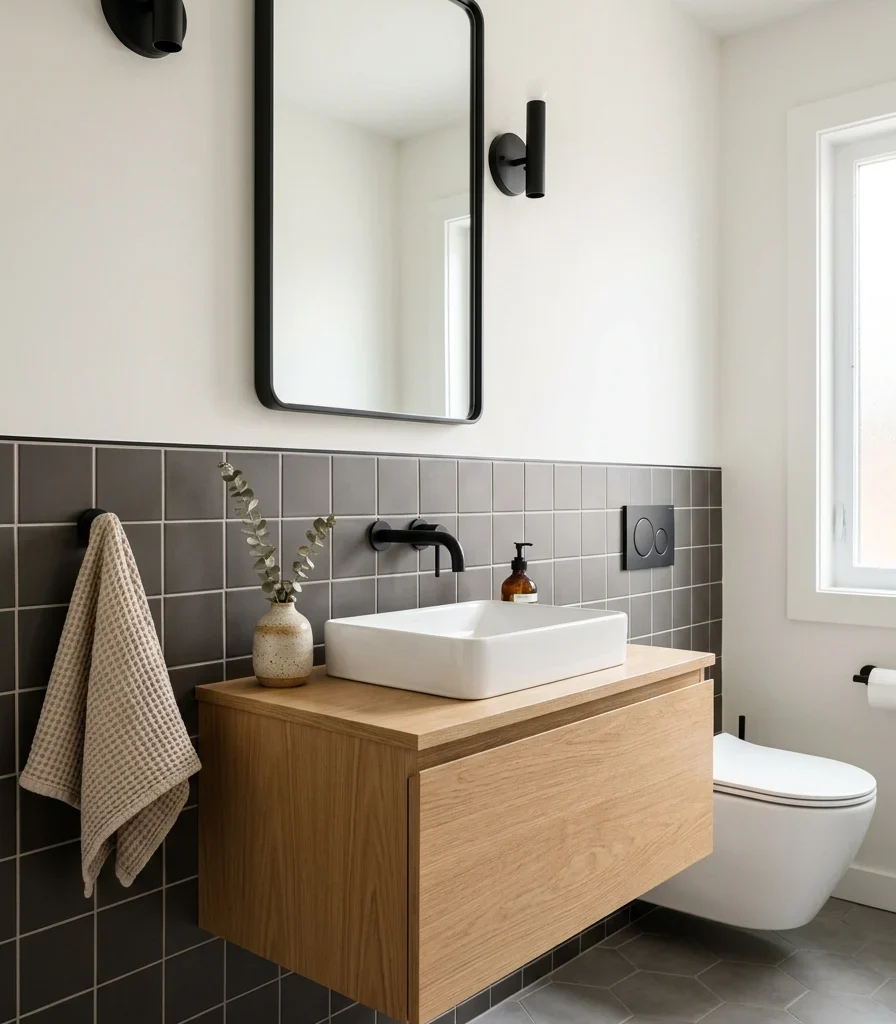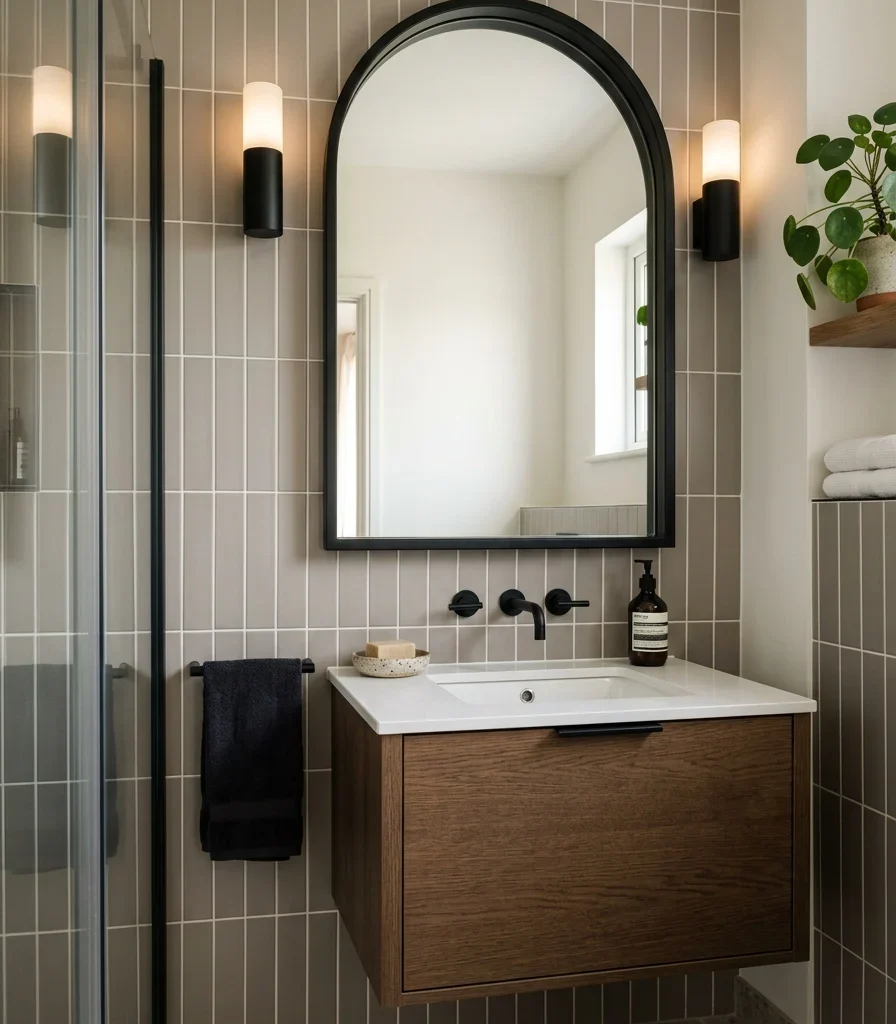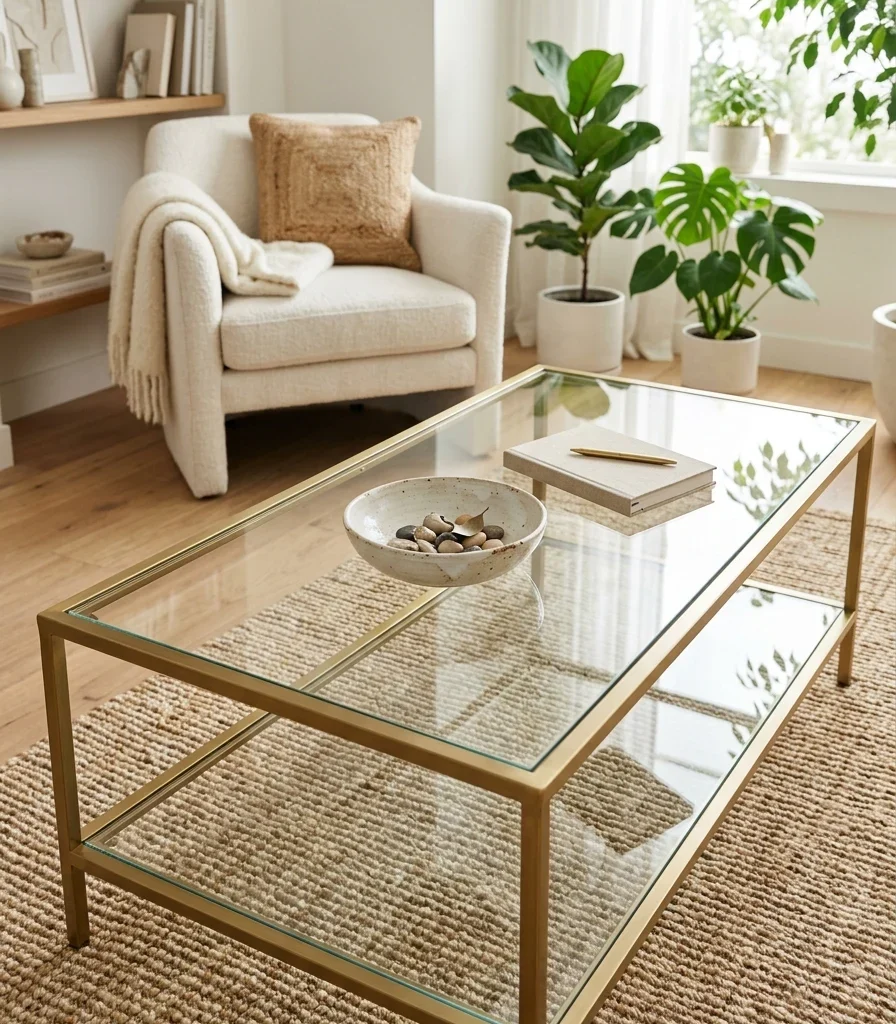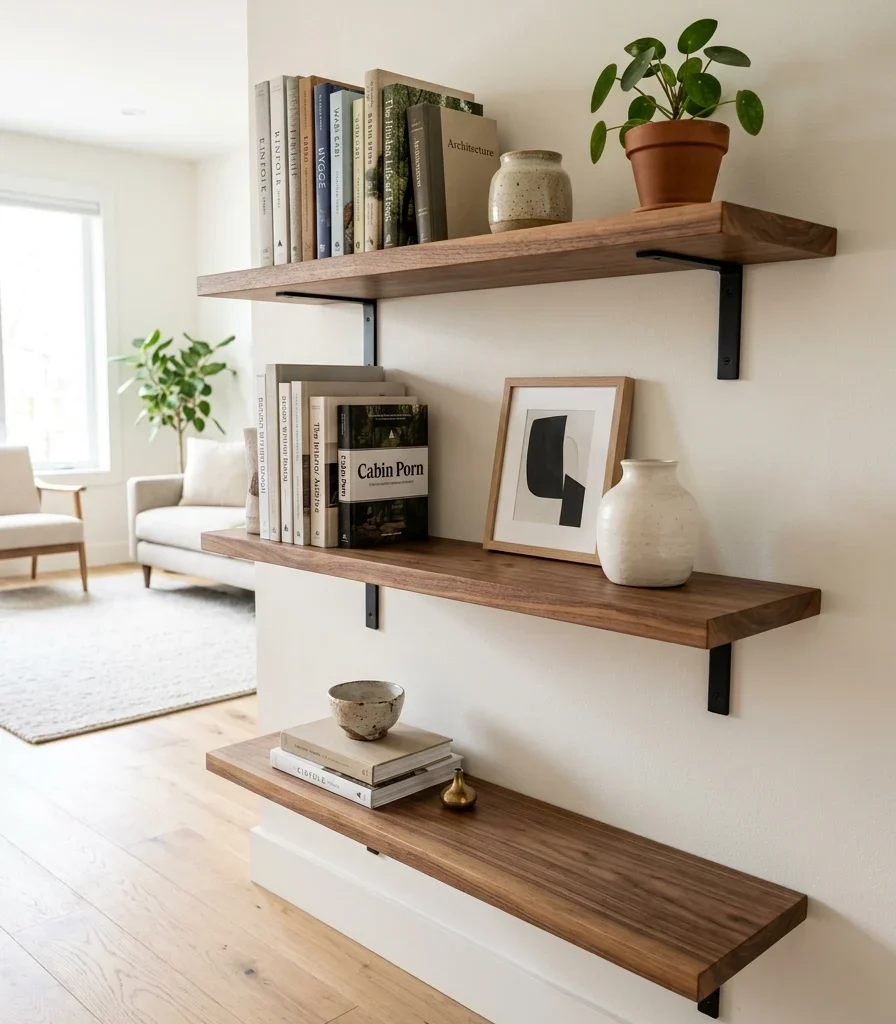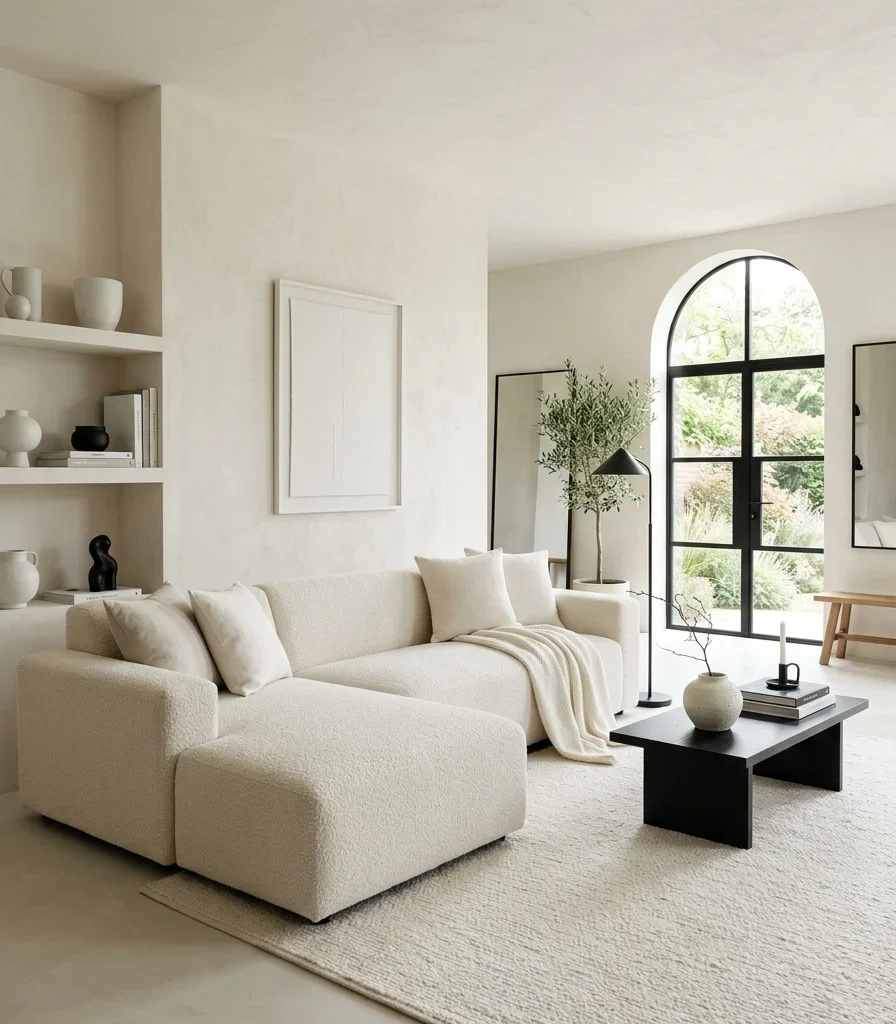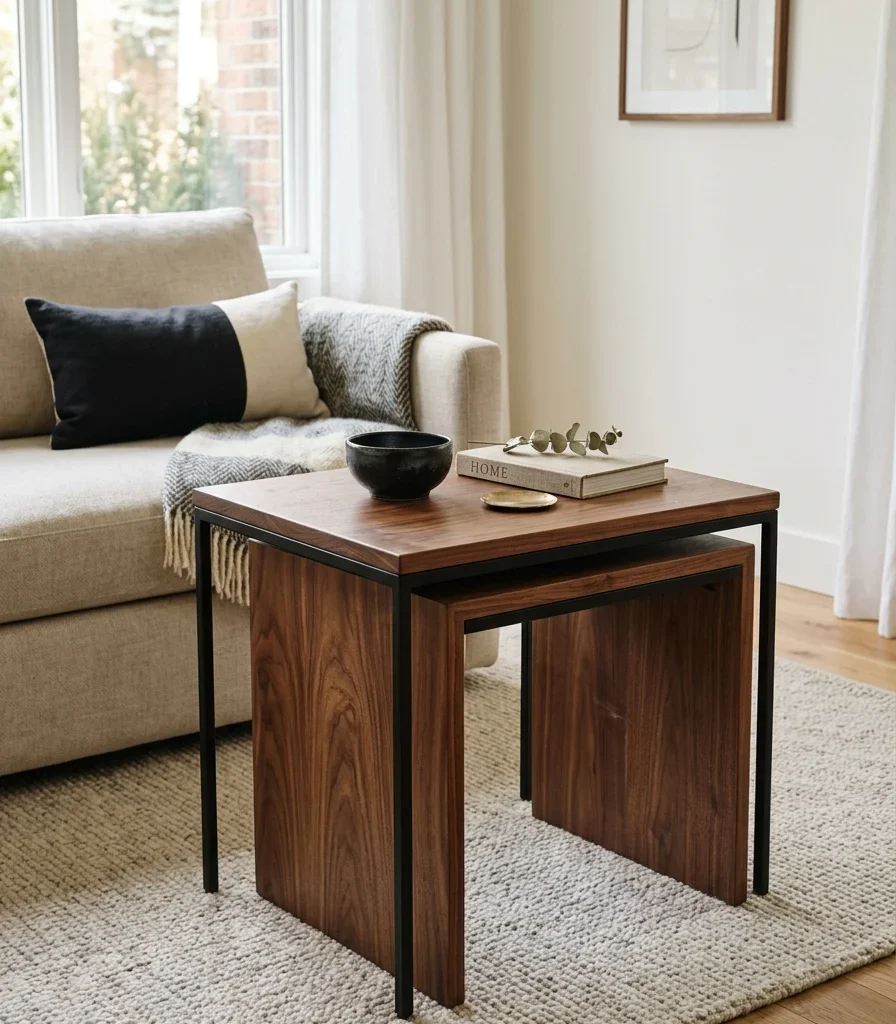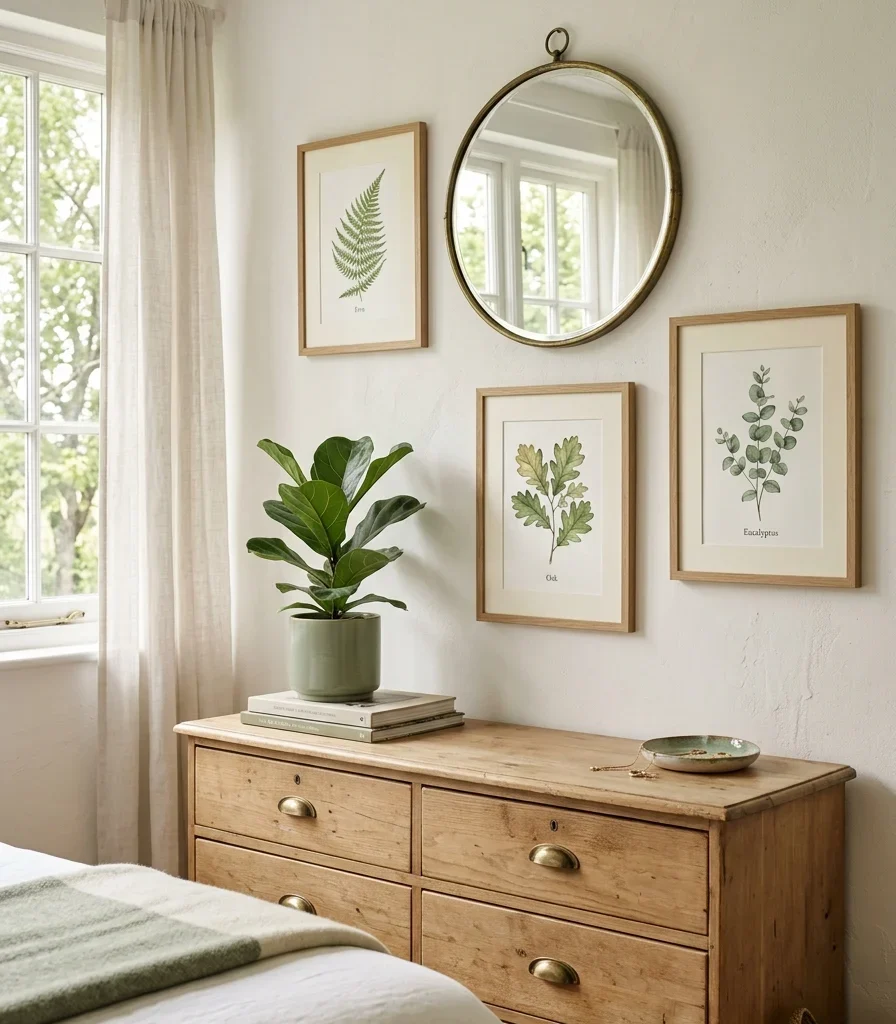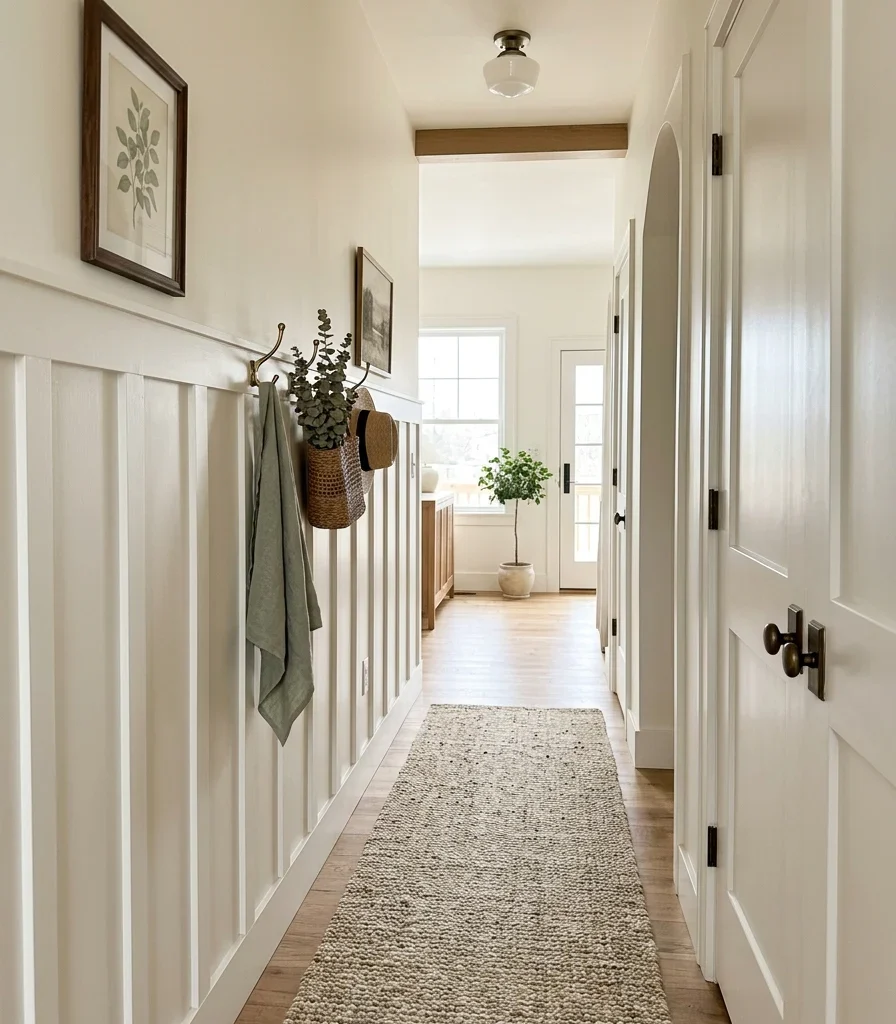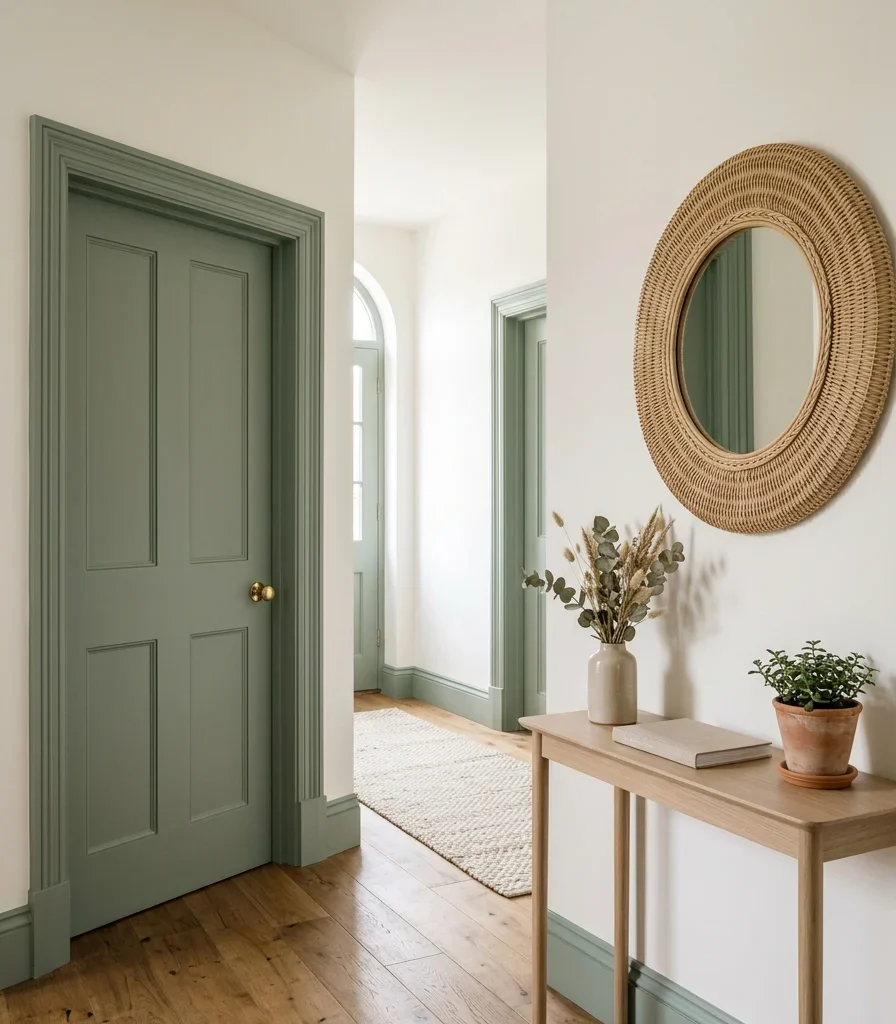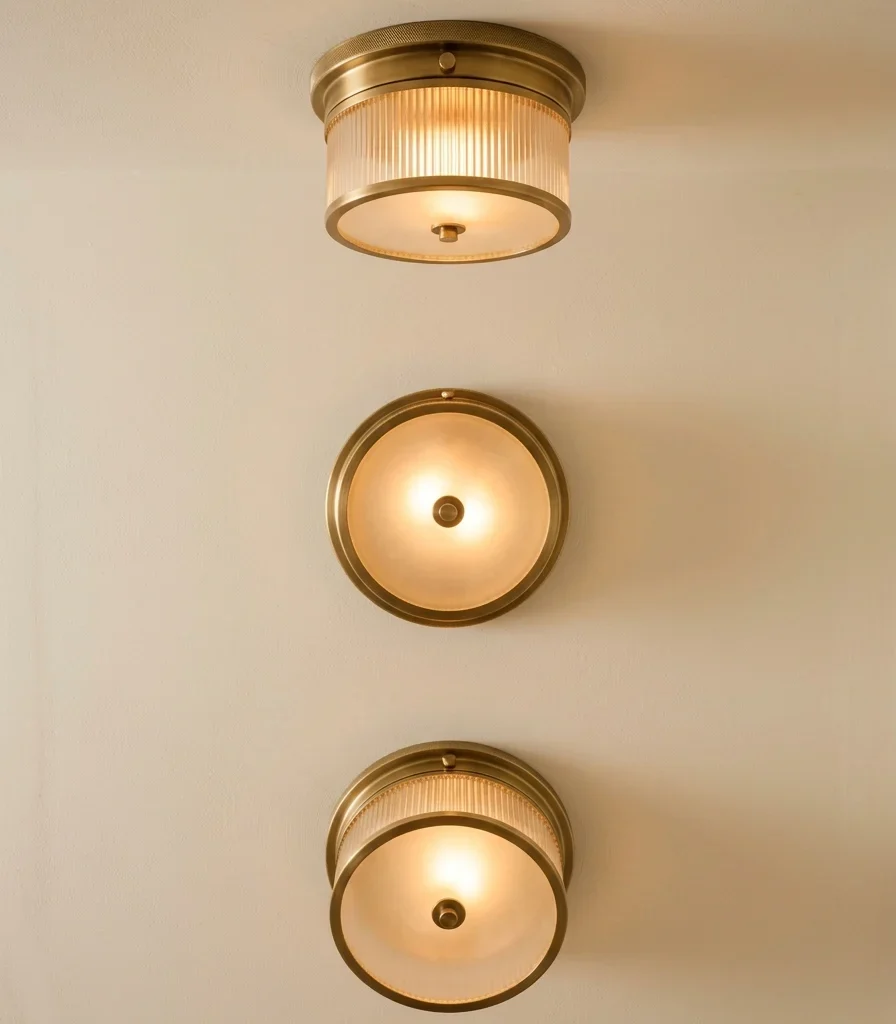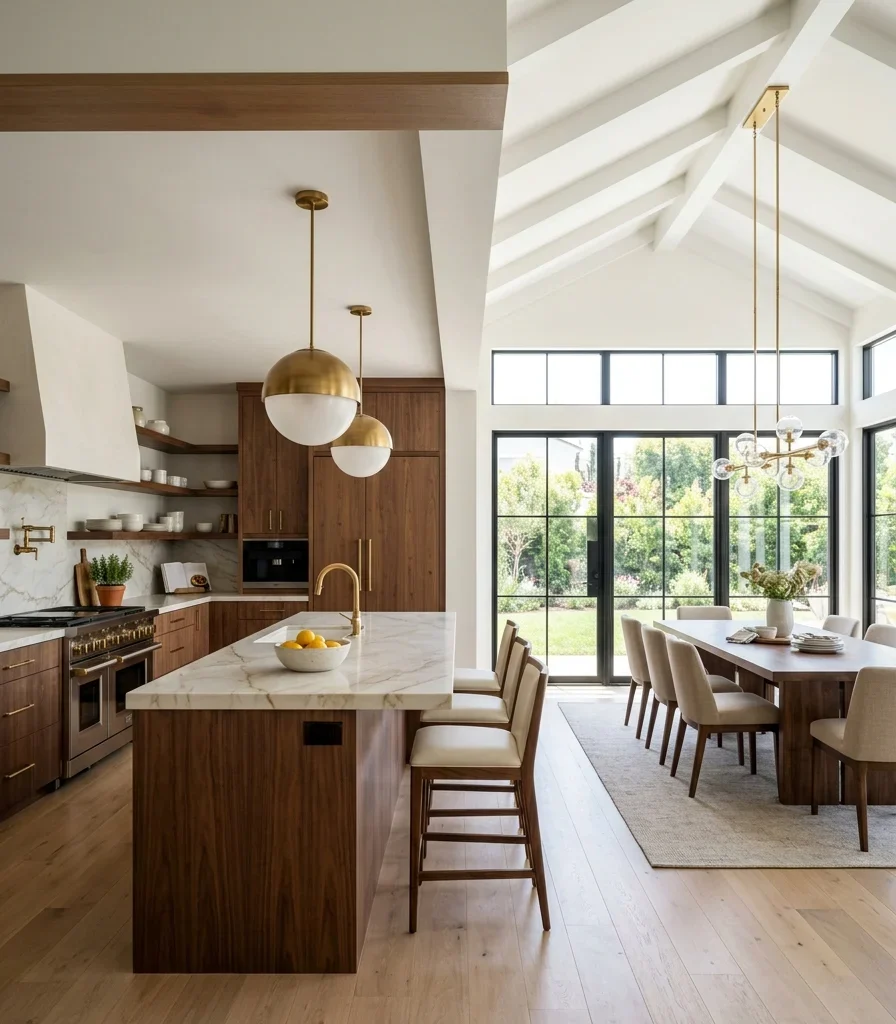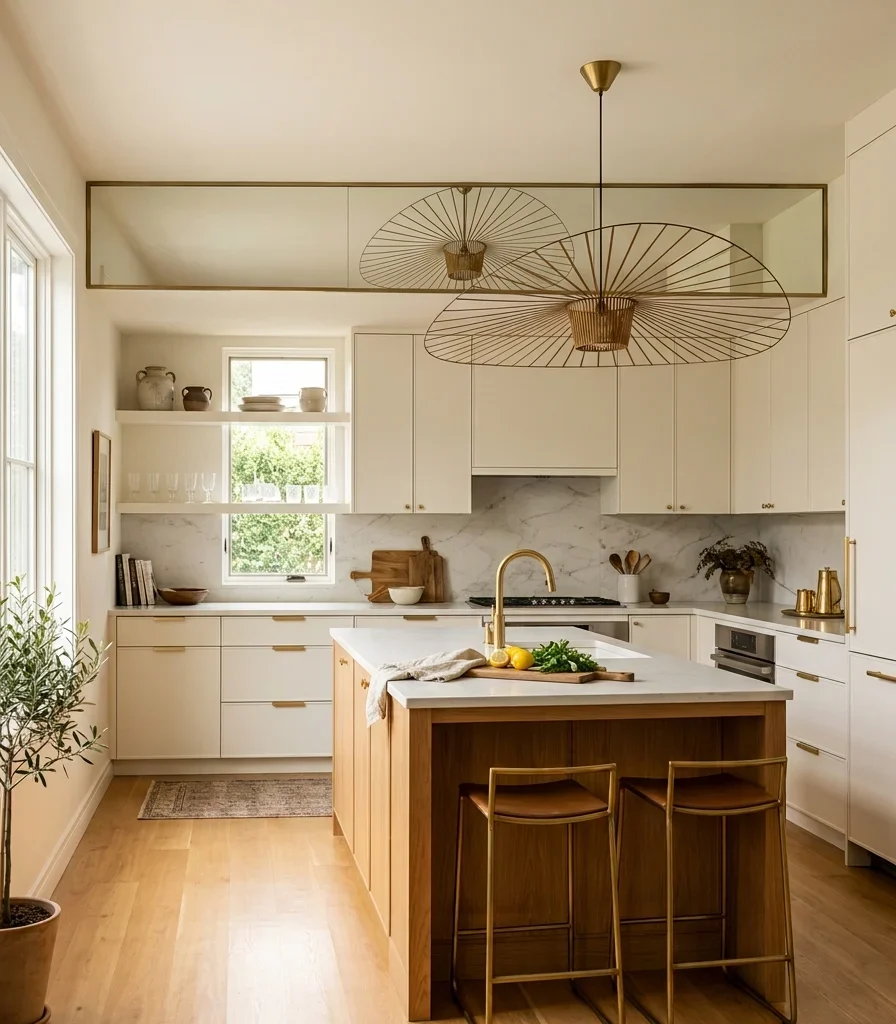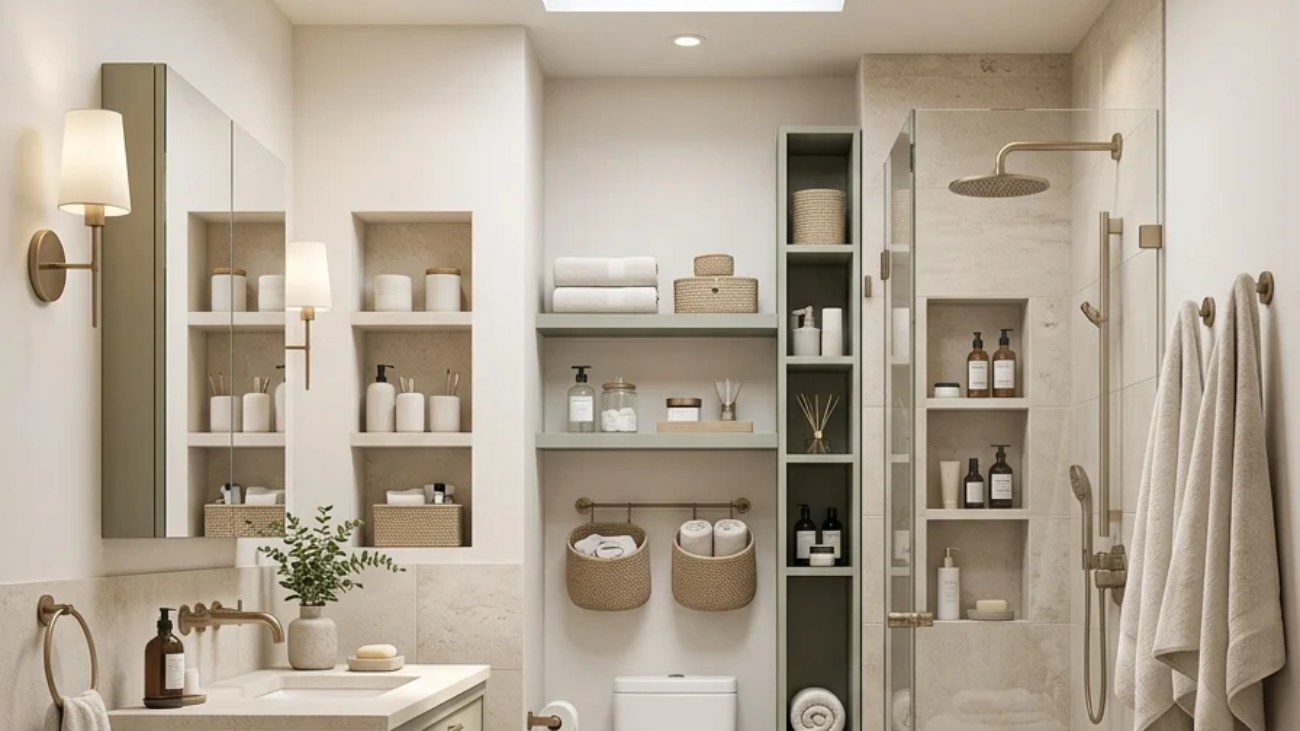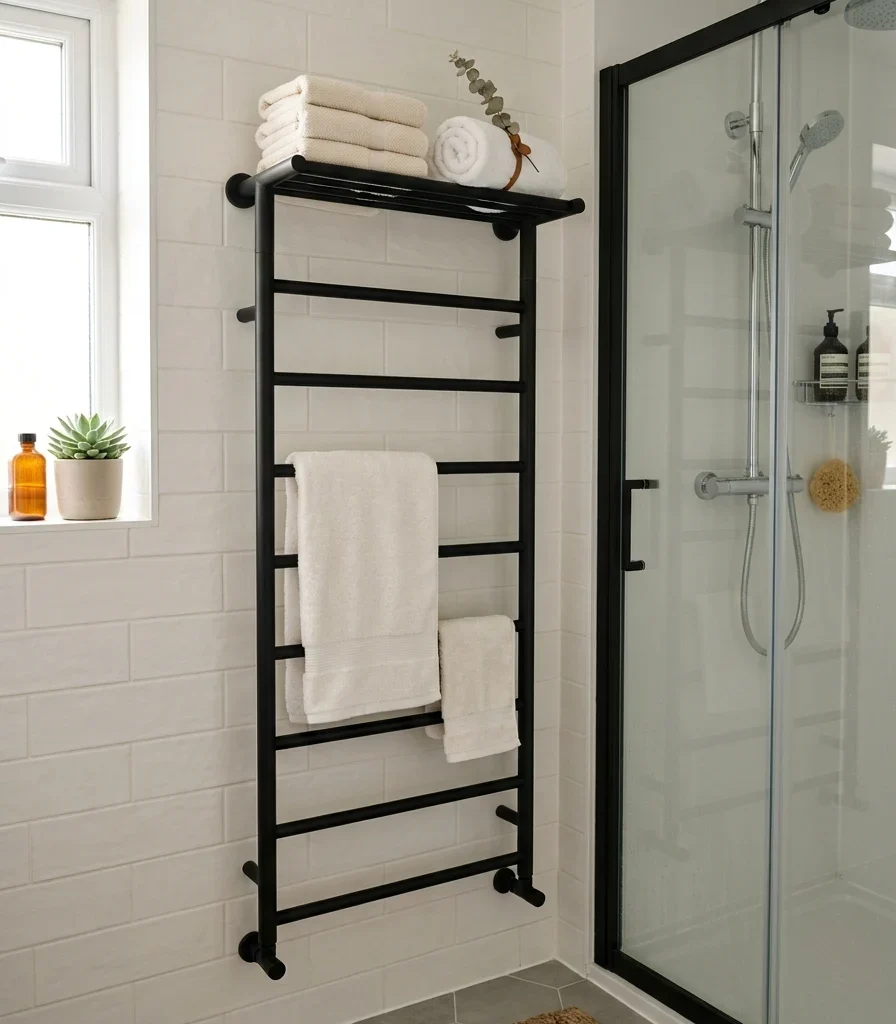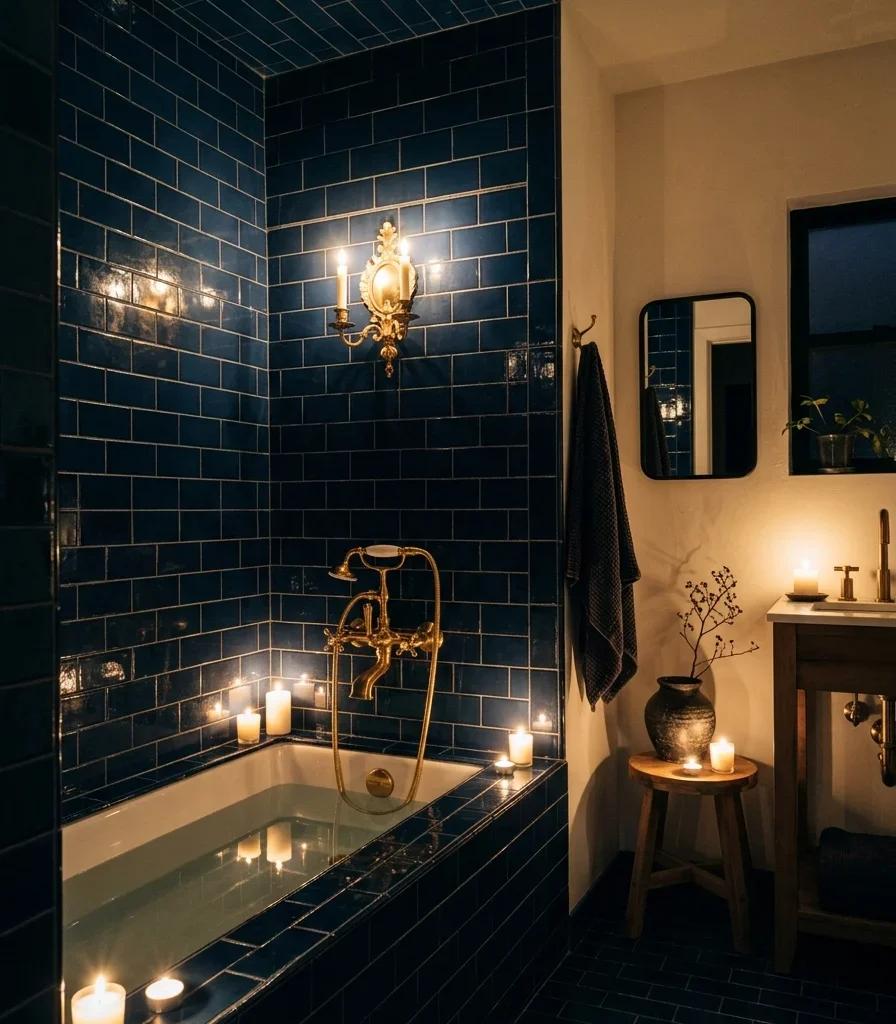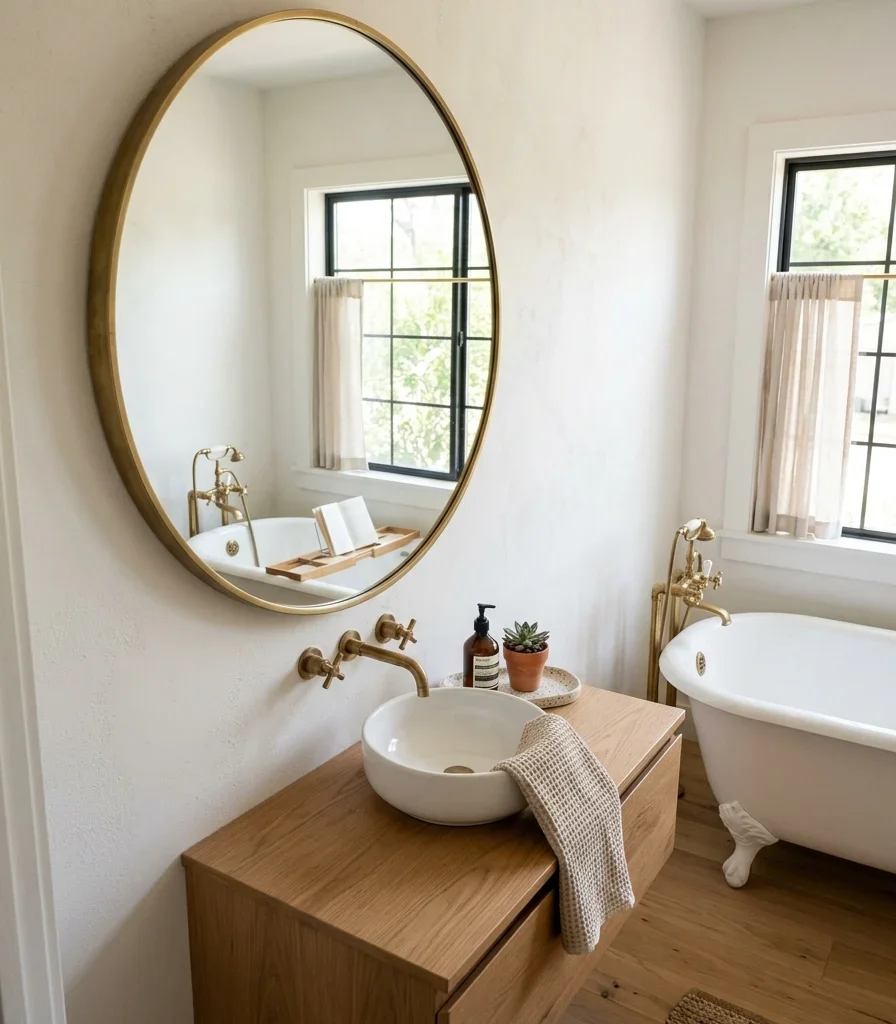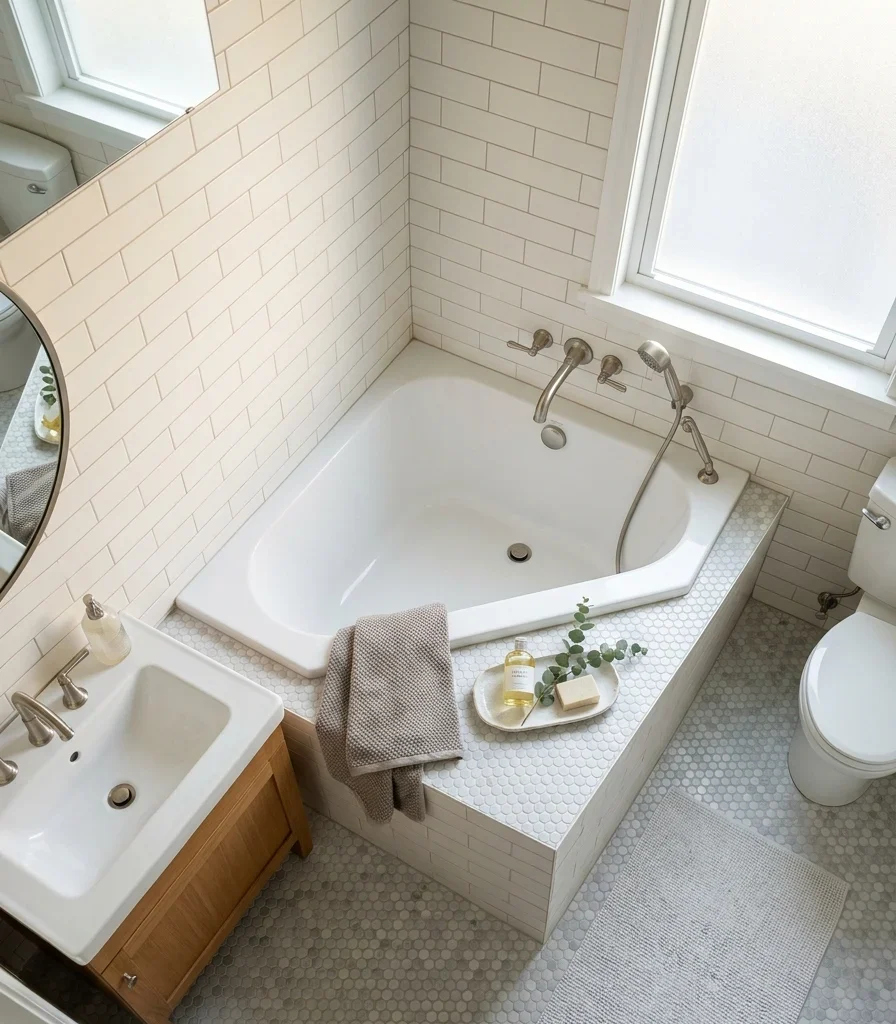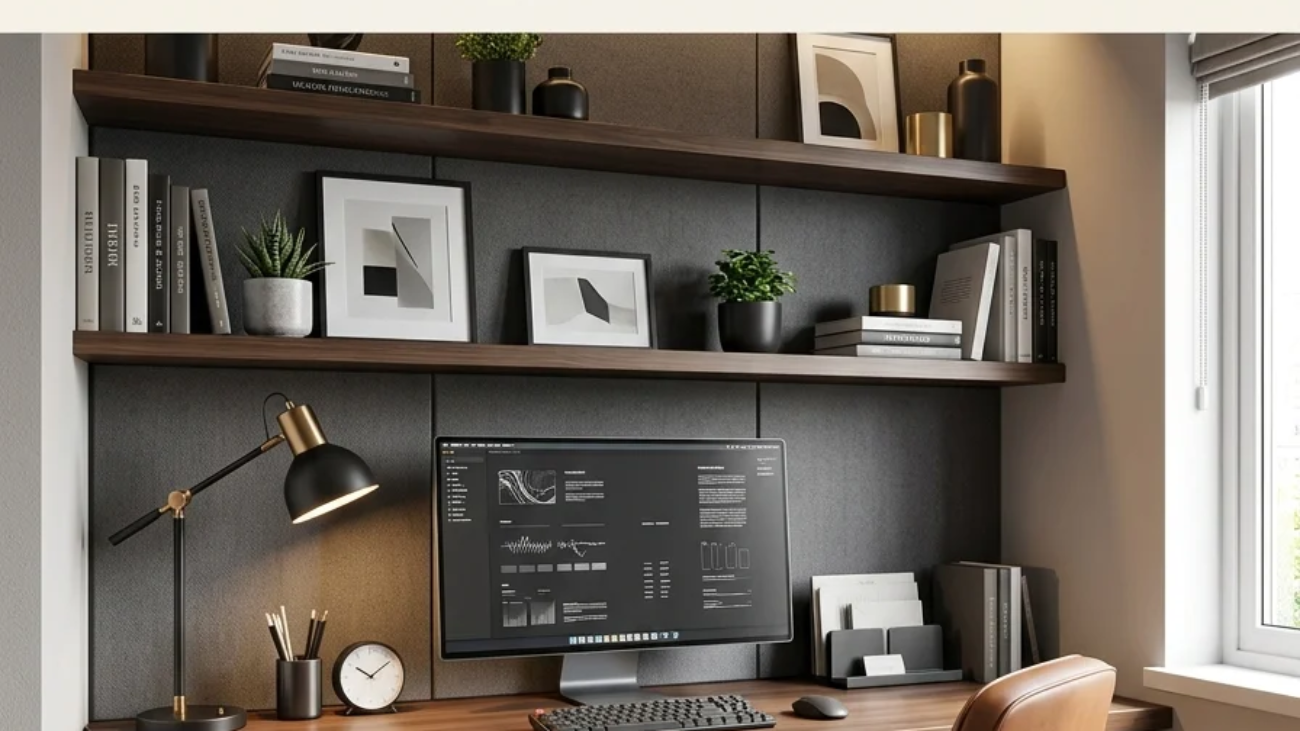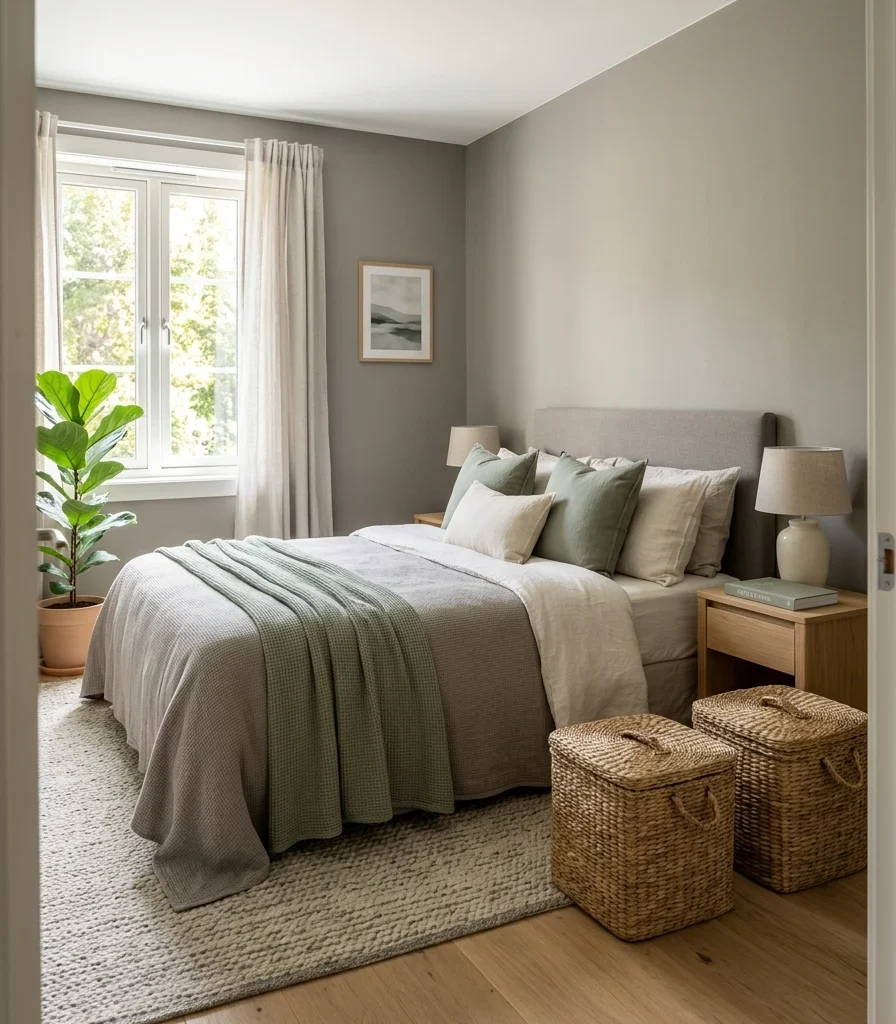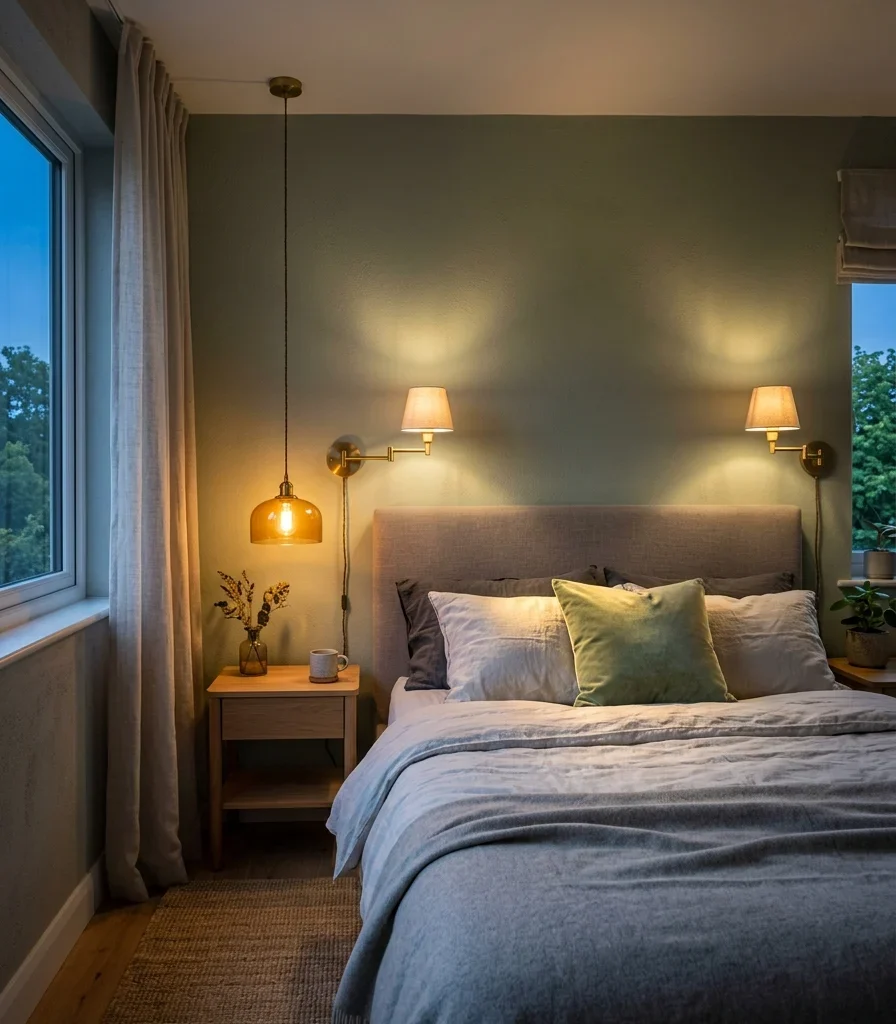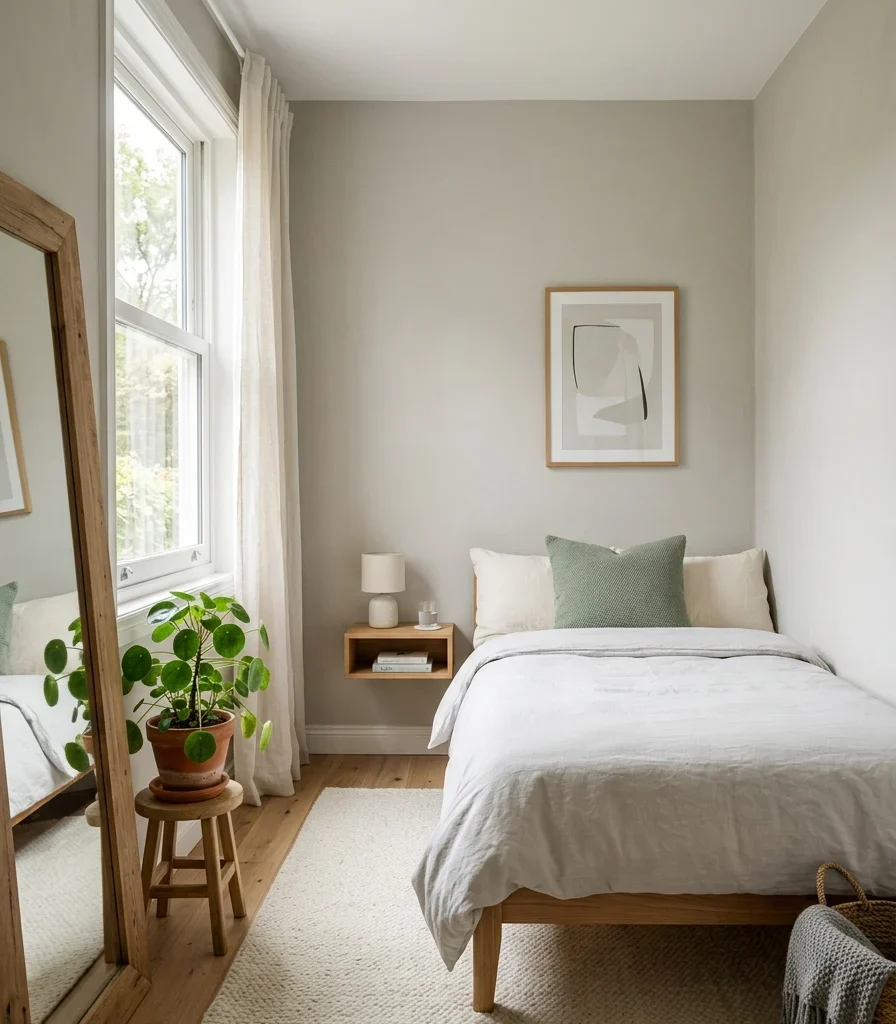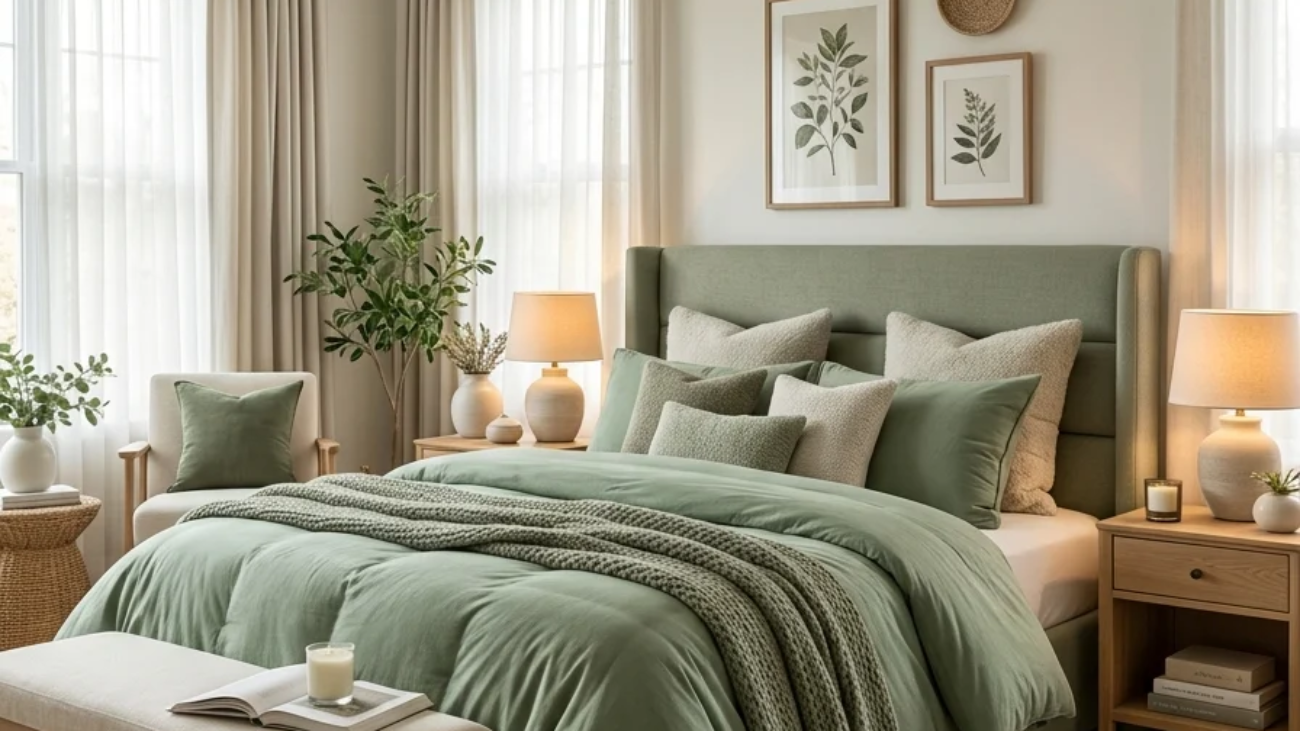
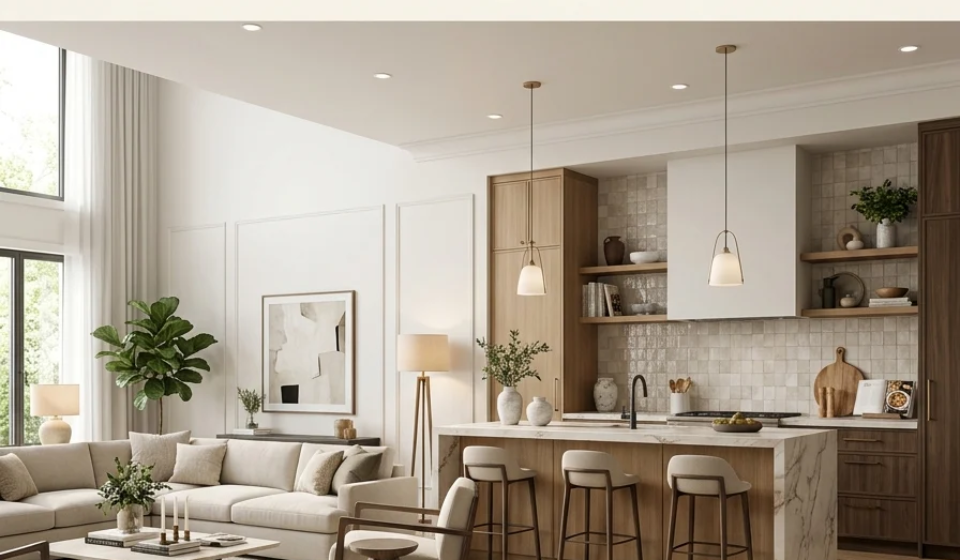
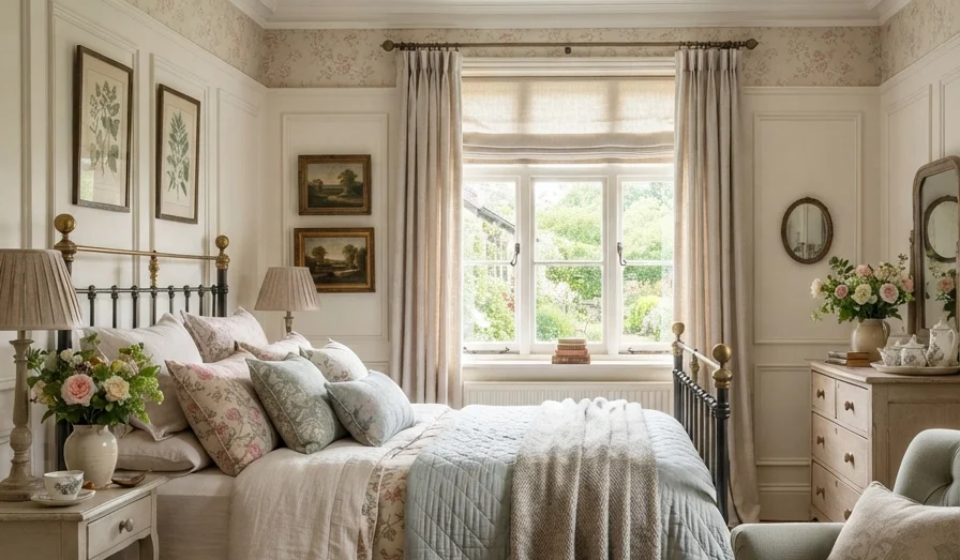
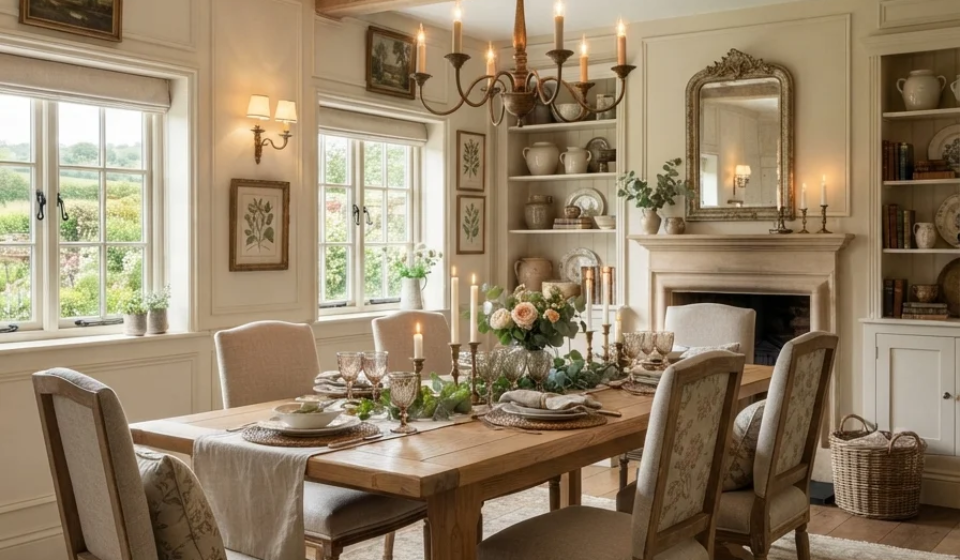
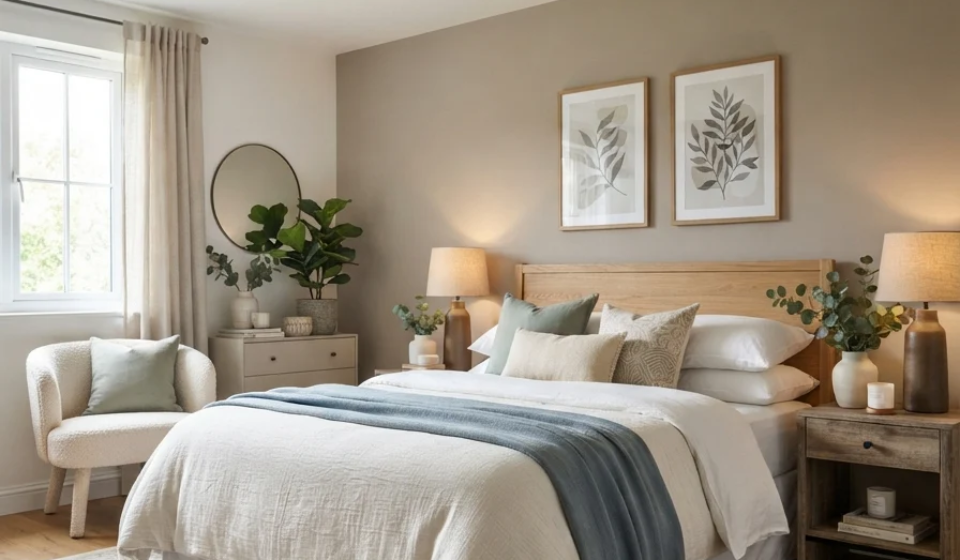
15_Modern_Home_Decor

Modern Home Decor: 15 Ideas Worth Saving and Stealing

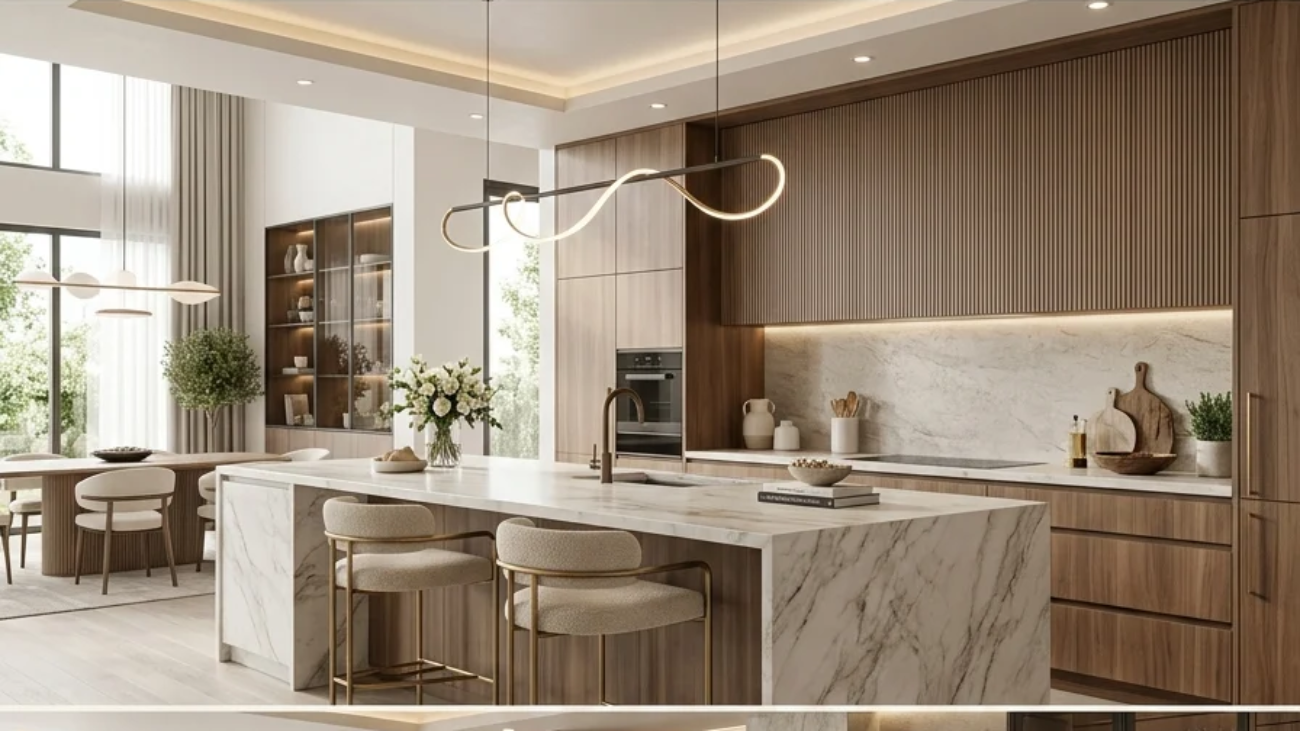
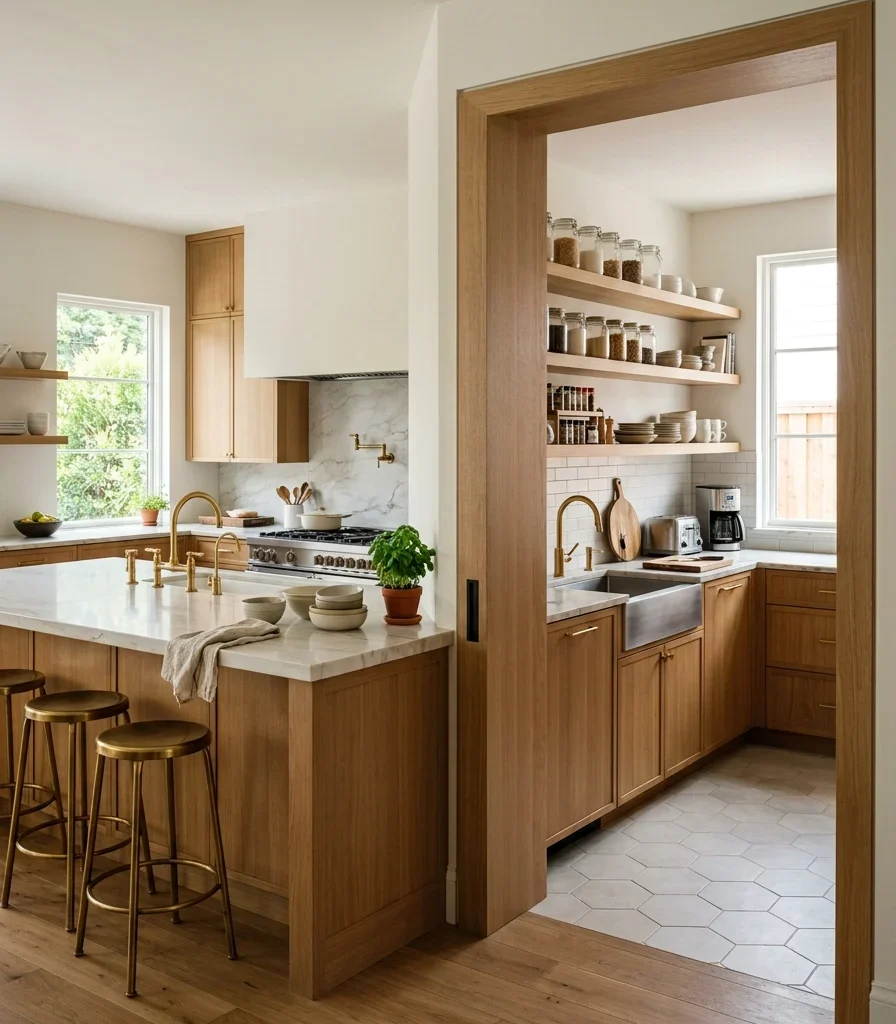
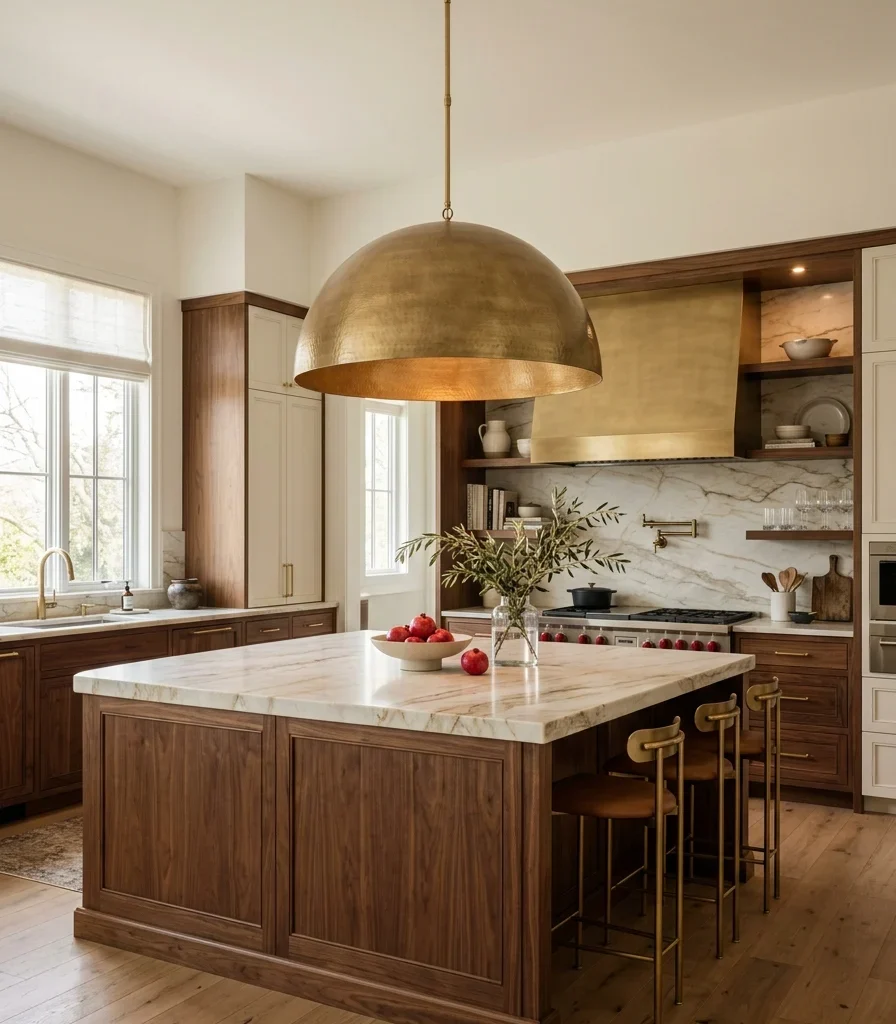
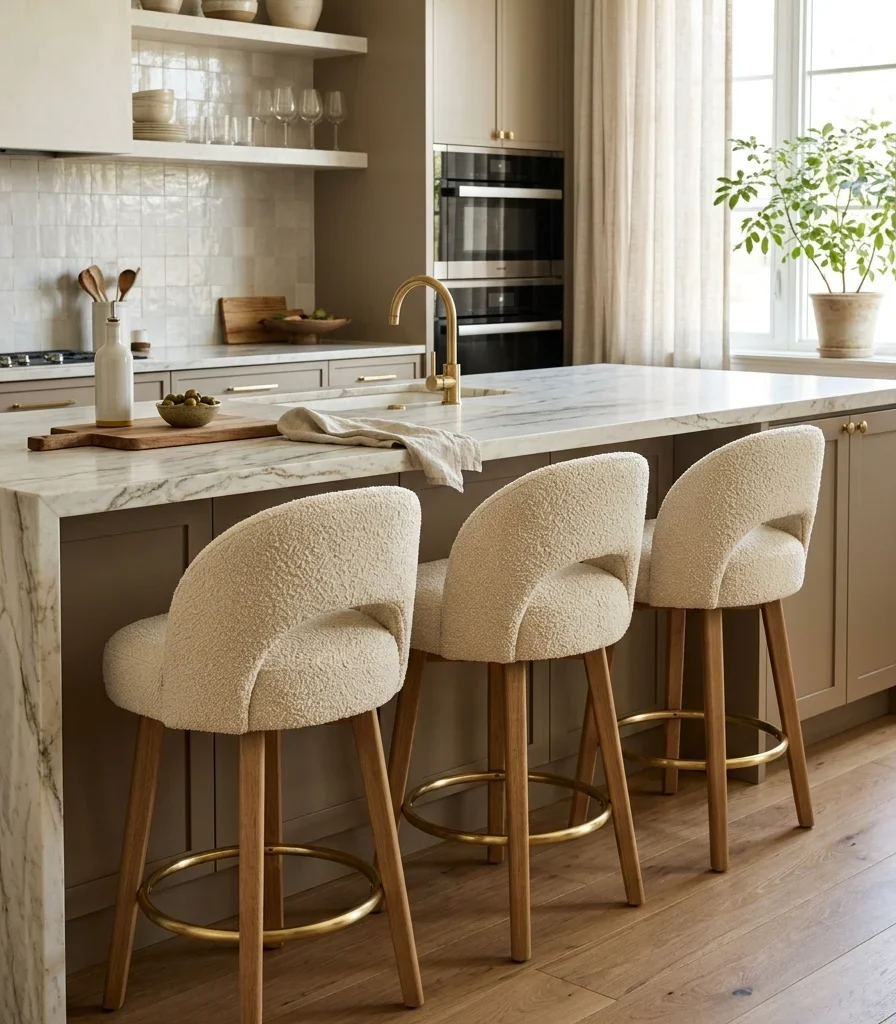
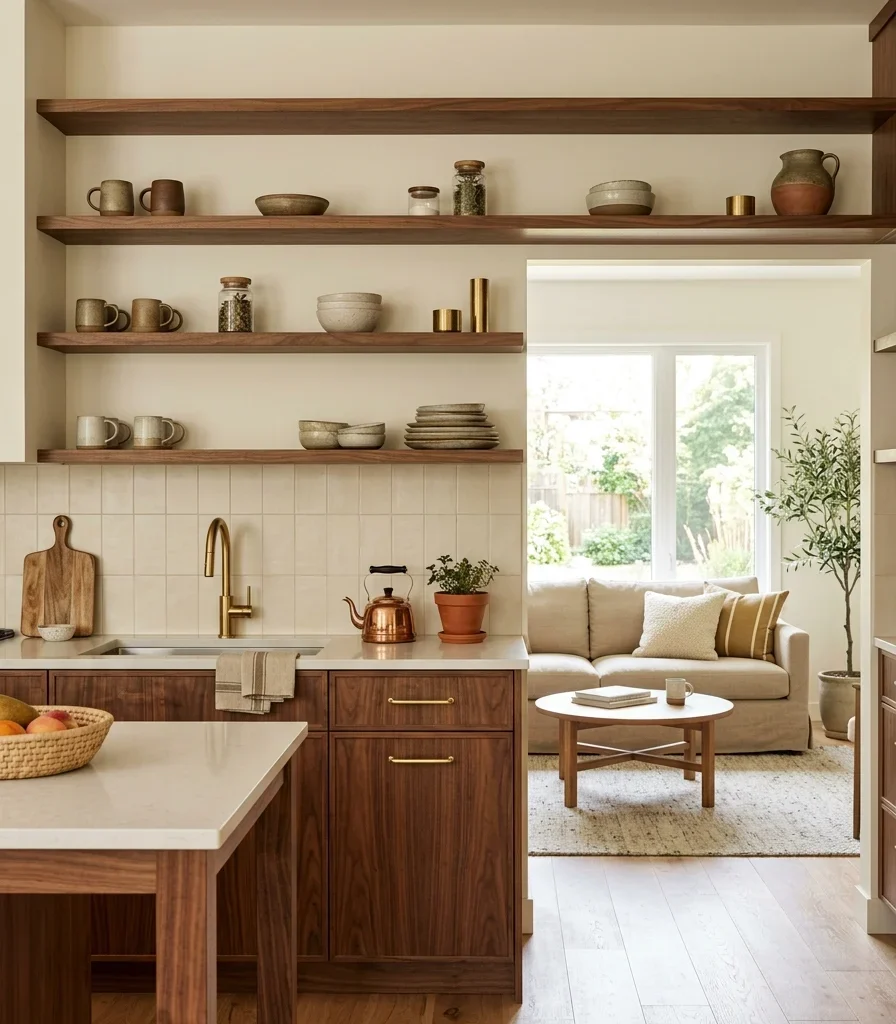
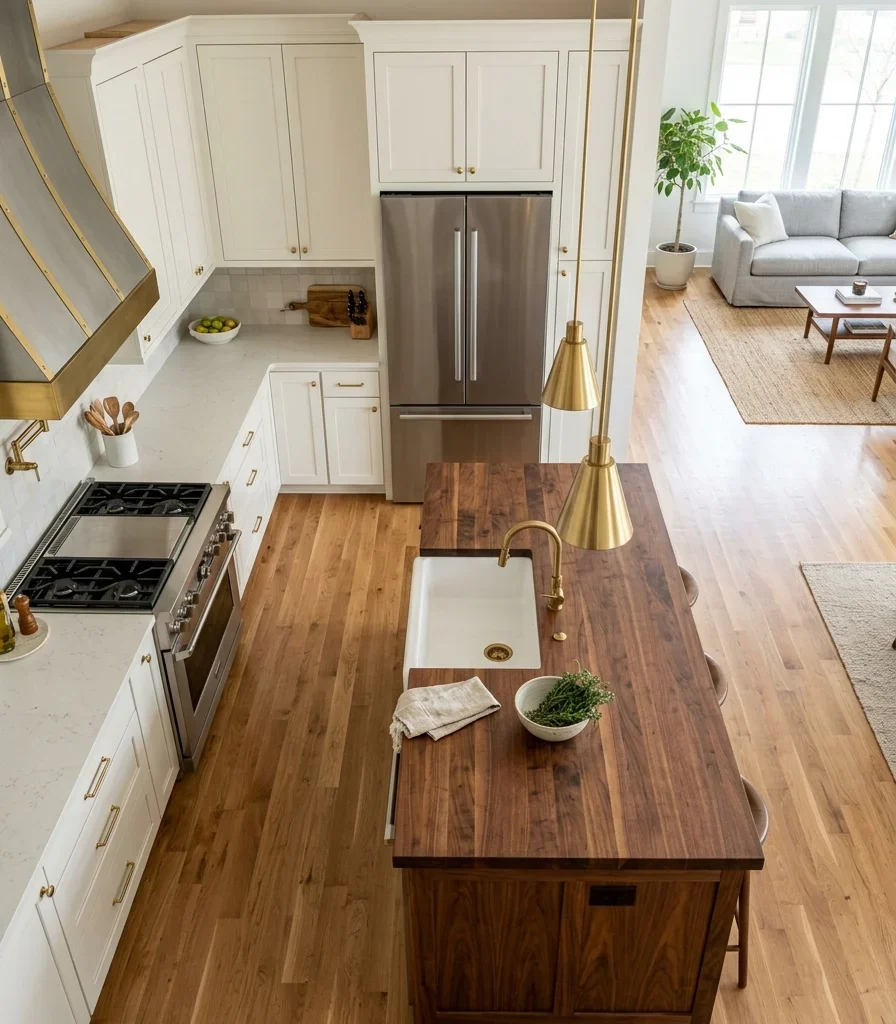
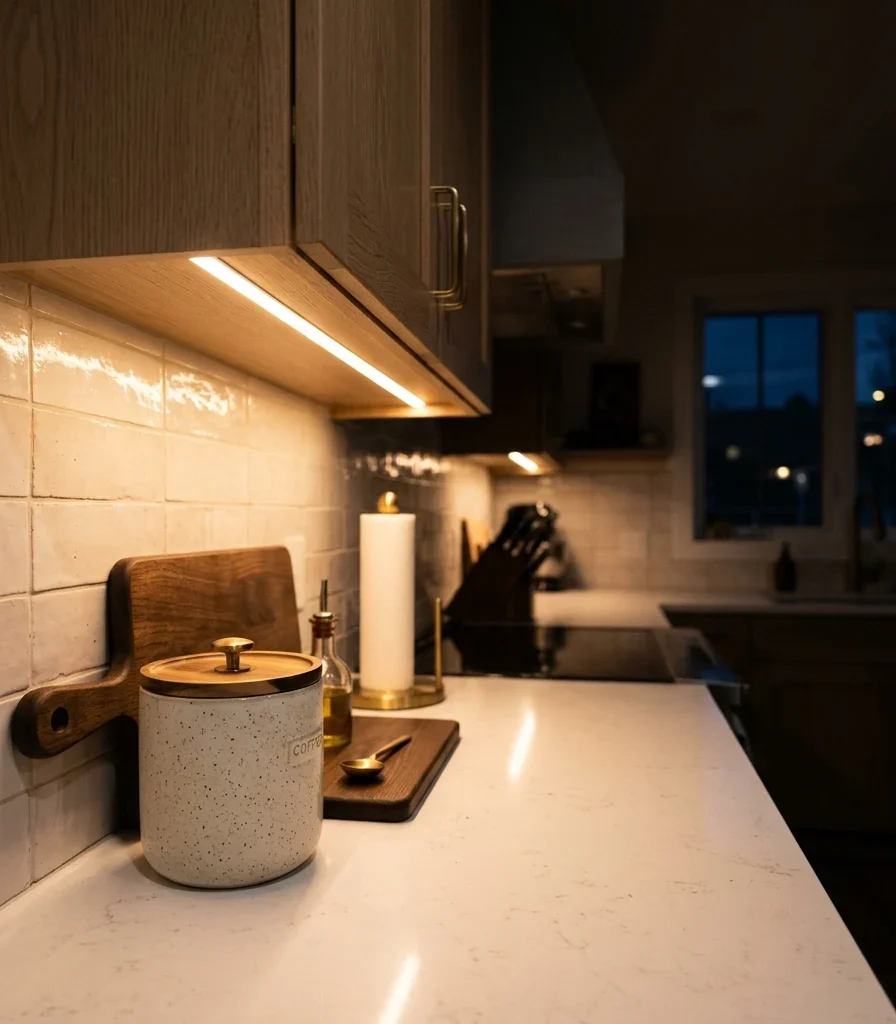
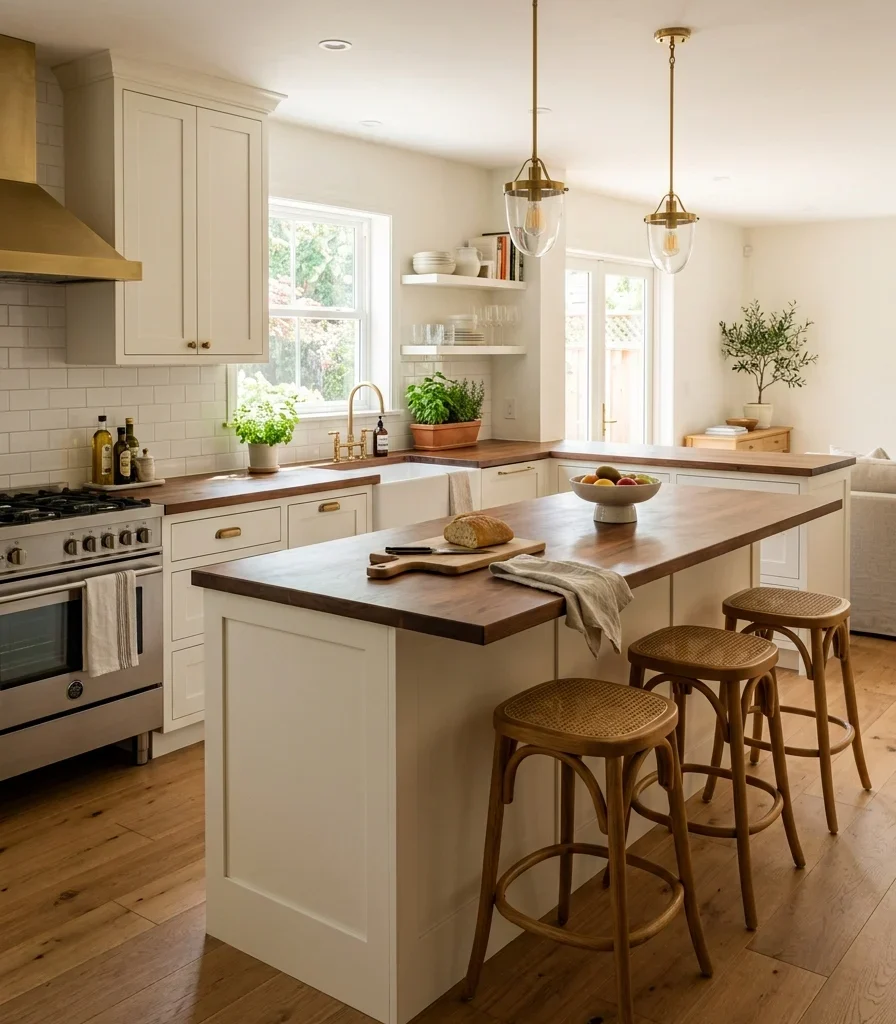
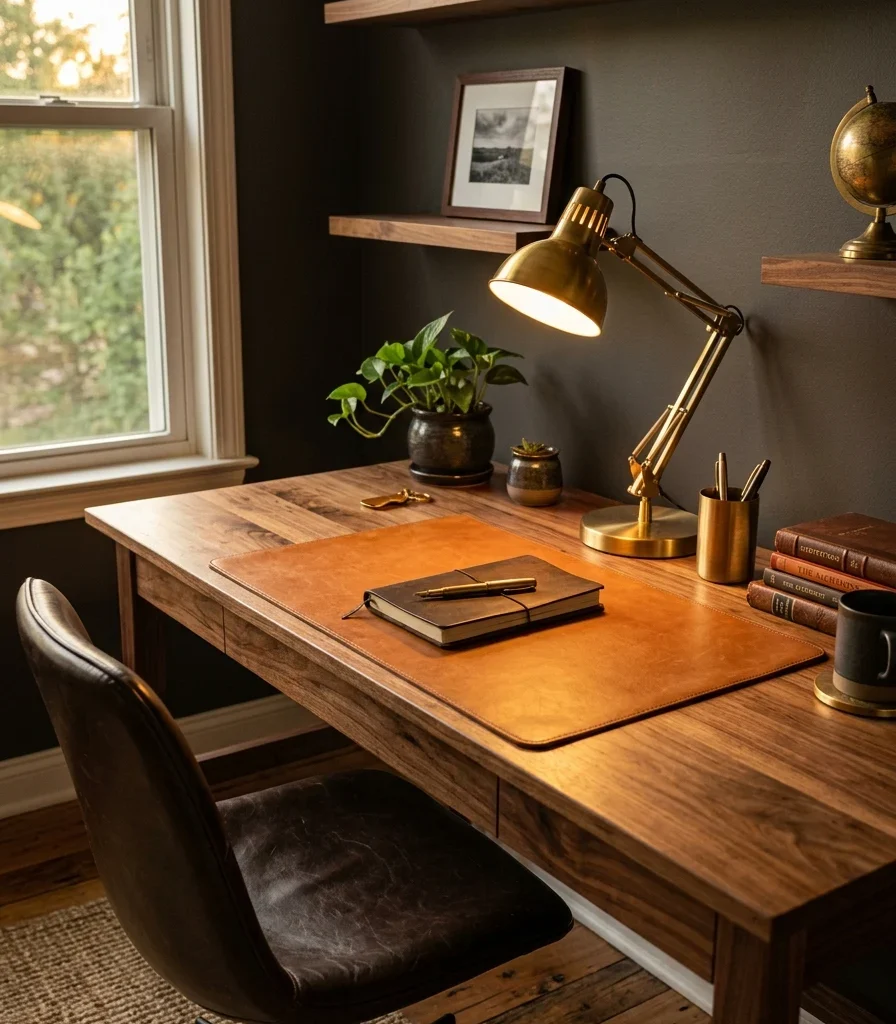
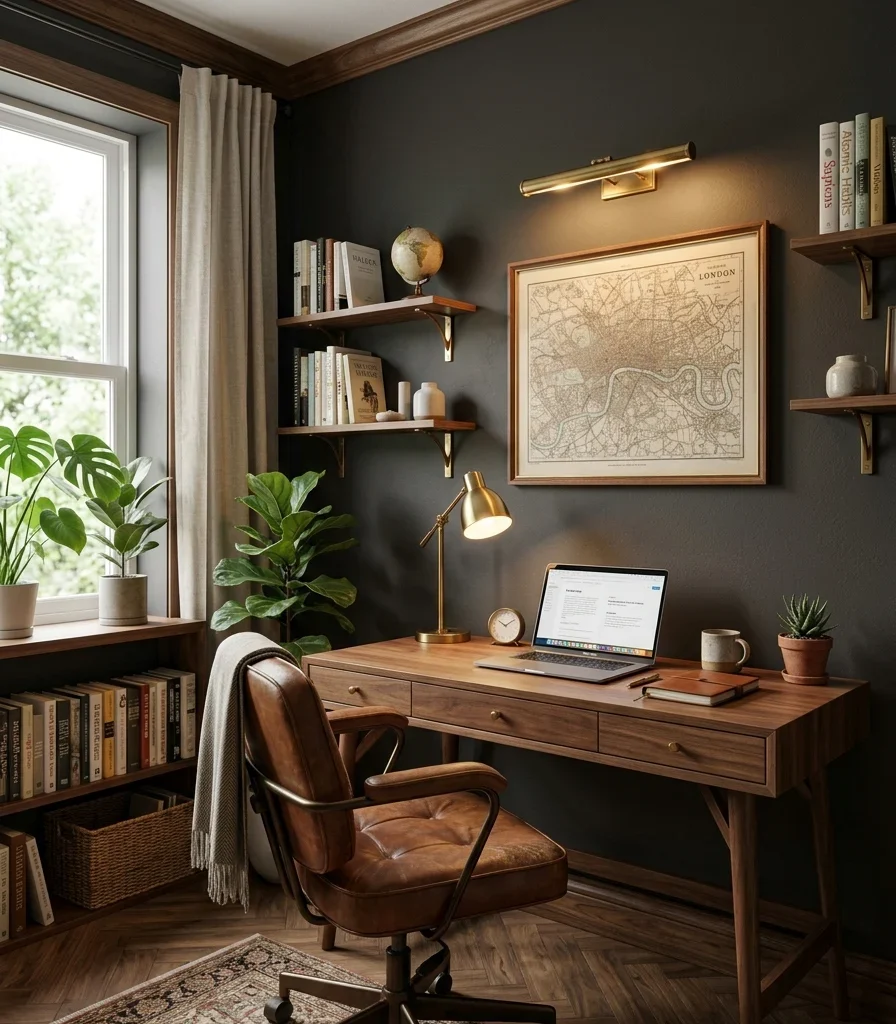
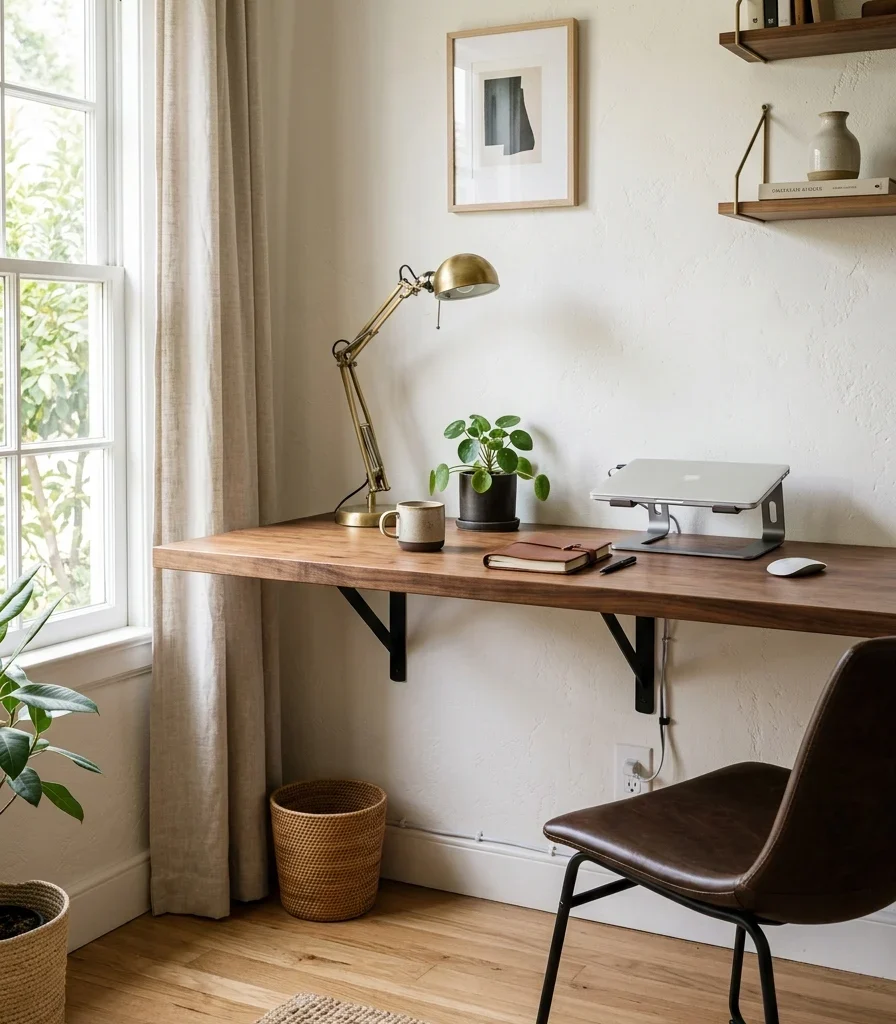
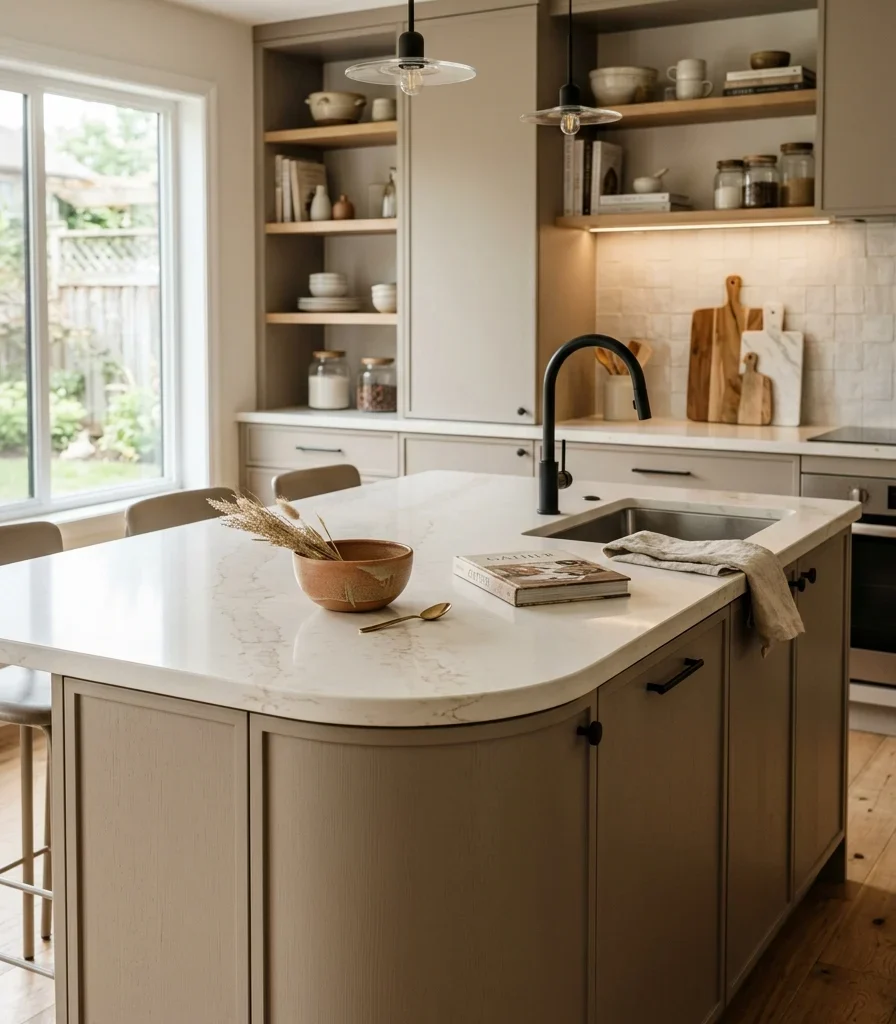
Modern home decor is a style built on clean lines, function-first furniture, and a deliberately restrained color story. This article gives you 15 modern home decor ideas covering color, materials, lighting, furniture, and layout — all rooted in real design principles, not trends that fade by next season.

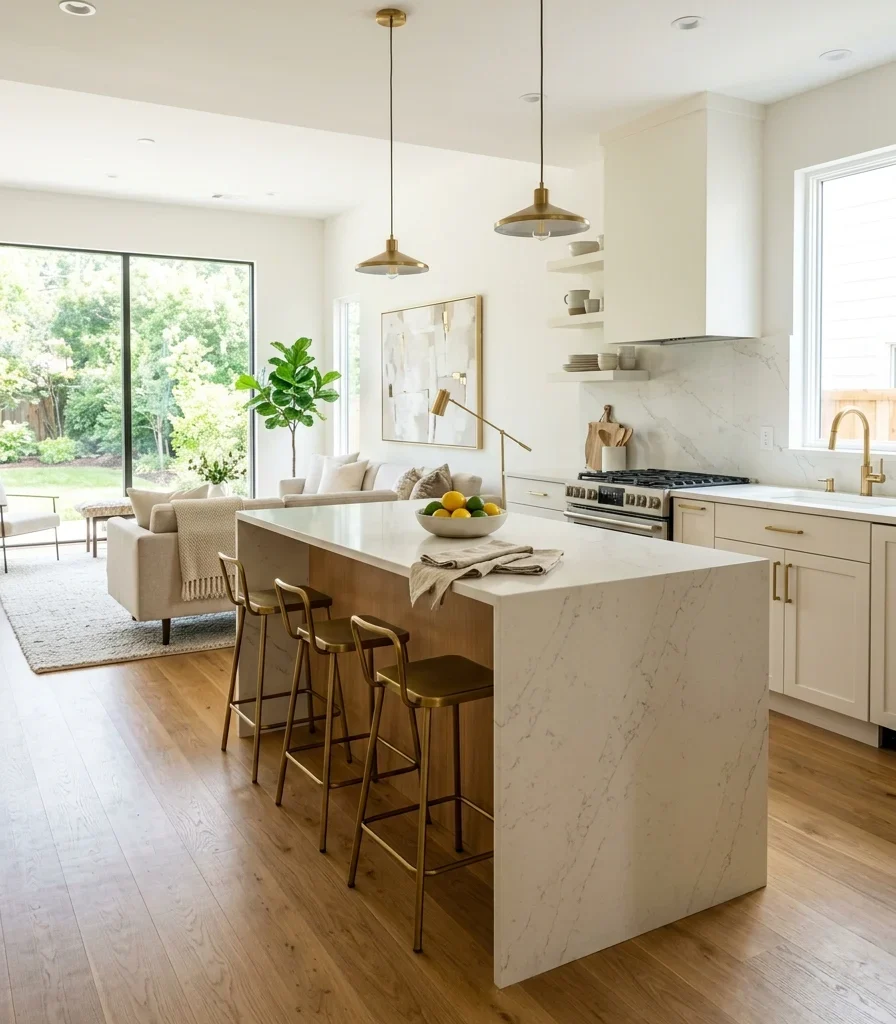
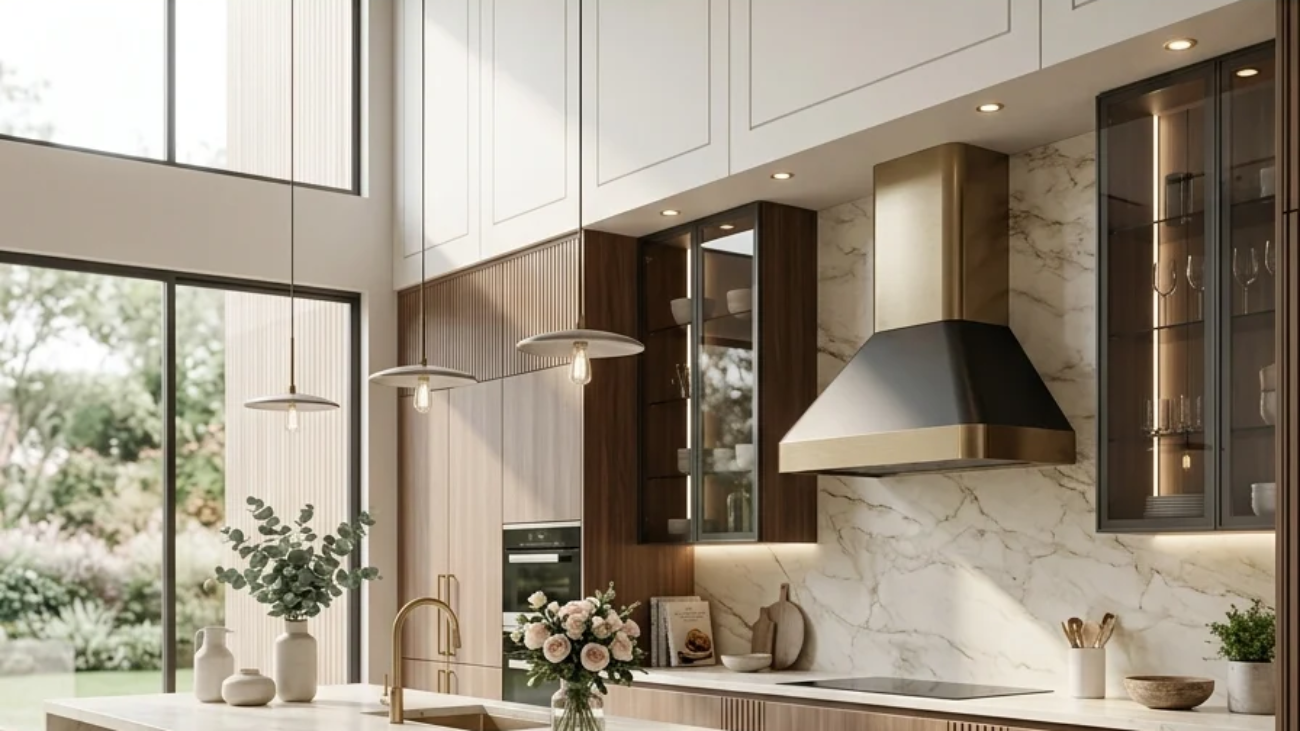
The feel is unmistakable: light that moves freely across uncluttered surfaces, textures that feel cool and considered, and rooms that breathe instead of shout. Nothing here is accidental — every material, every angle, every negative space is doing a job. Modern home decor rewards restraint the way a well-tailored jacket rewards good fabric. Here are 15 ideas worth saving — and stealing.

Why Modern Home Decor Works So Well

Modern design traces back to early-to-mid-20th-century movements Bauhaus, International Style, and later Scandinavian modernism — all built on the belief that form should follow function. It differs from “contemporary” (which shifts with current trends) because modern refers to a specific, historically fixed design language: geometric forms, minimal ornament, and honest materials shown as themselves rather than disguised.

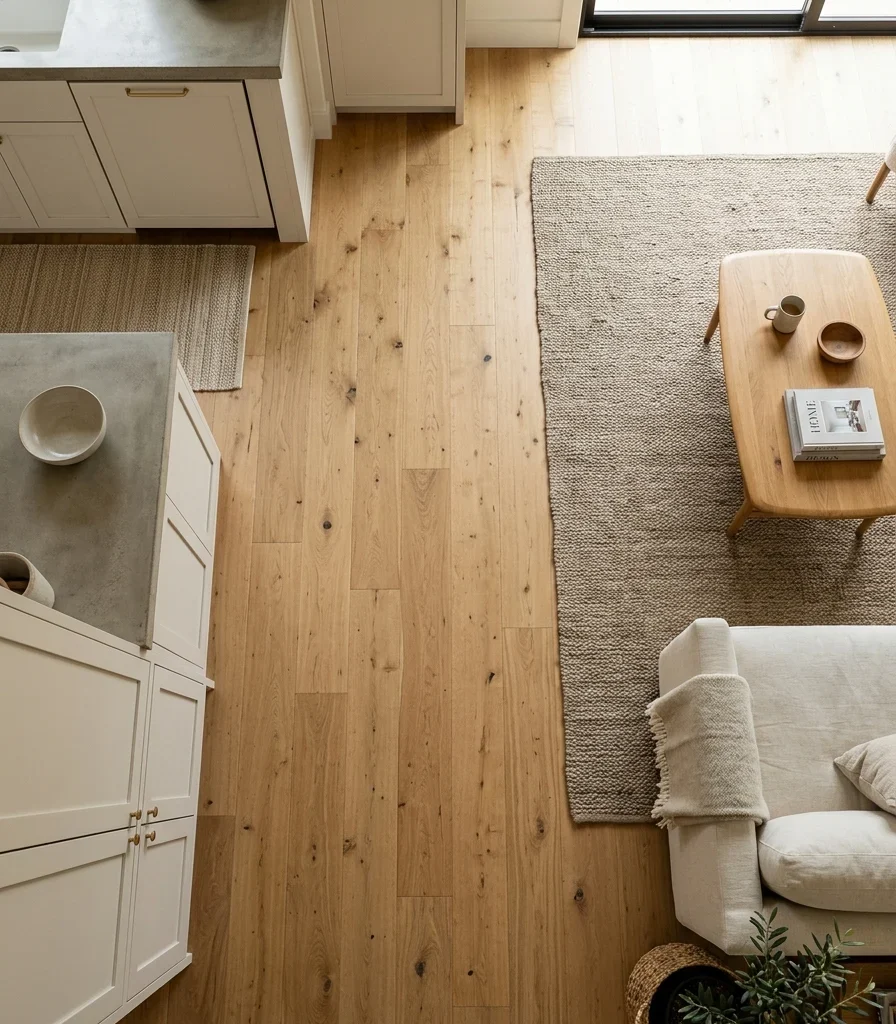
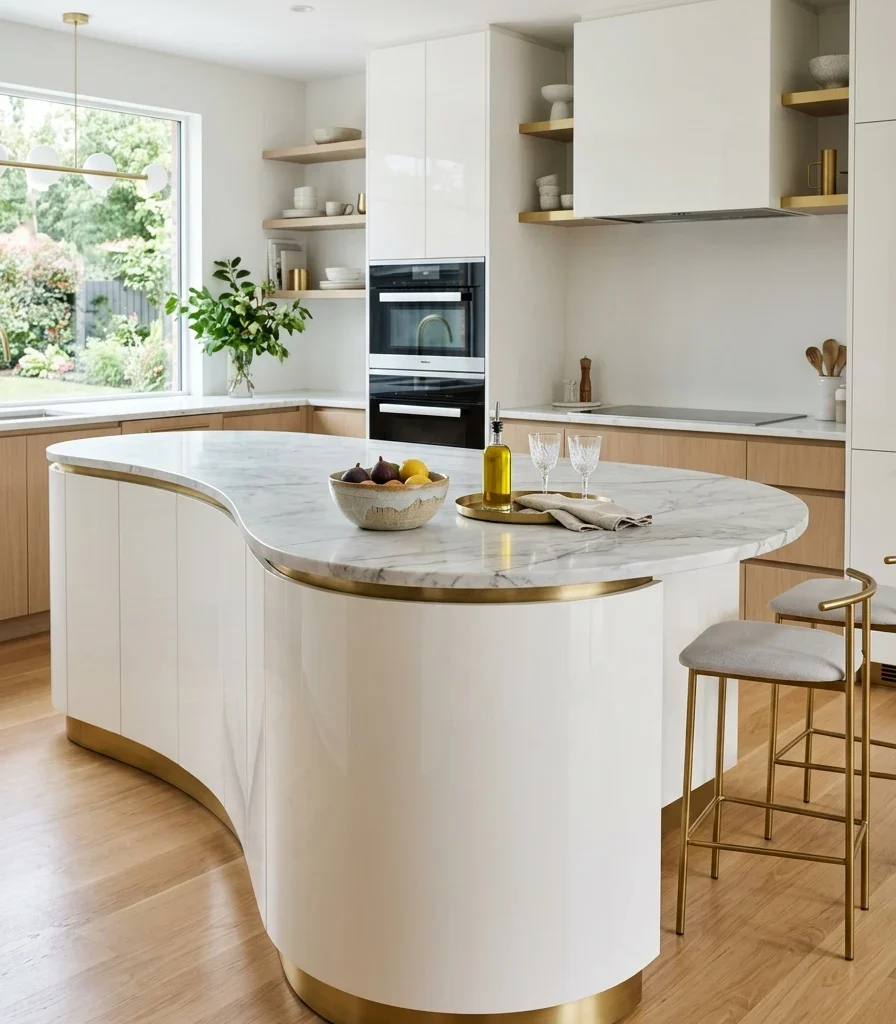
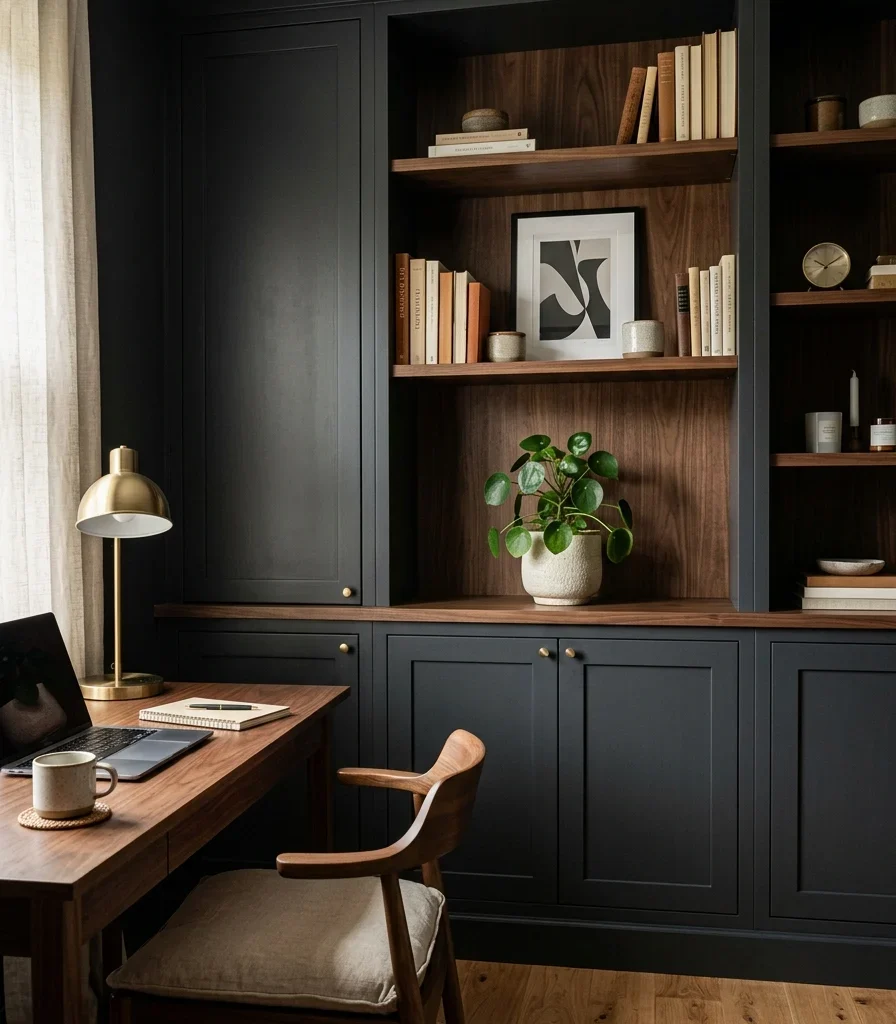
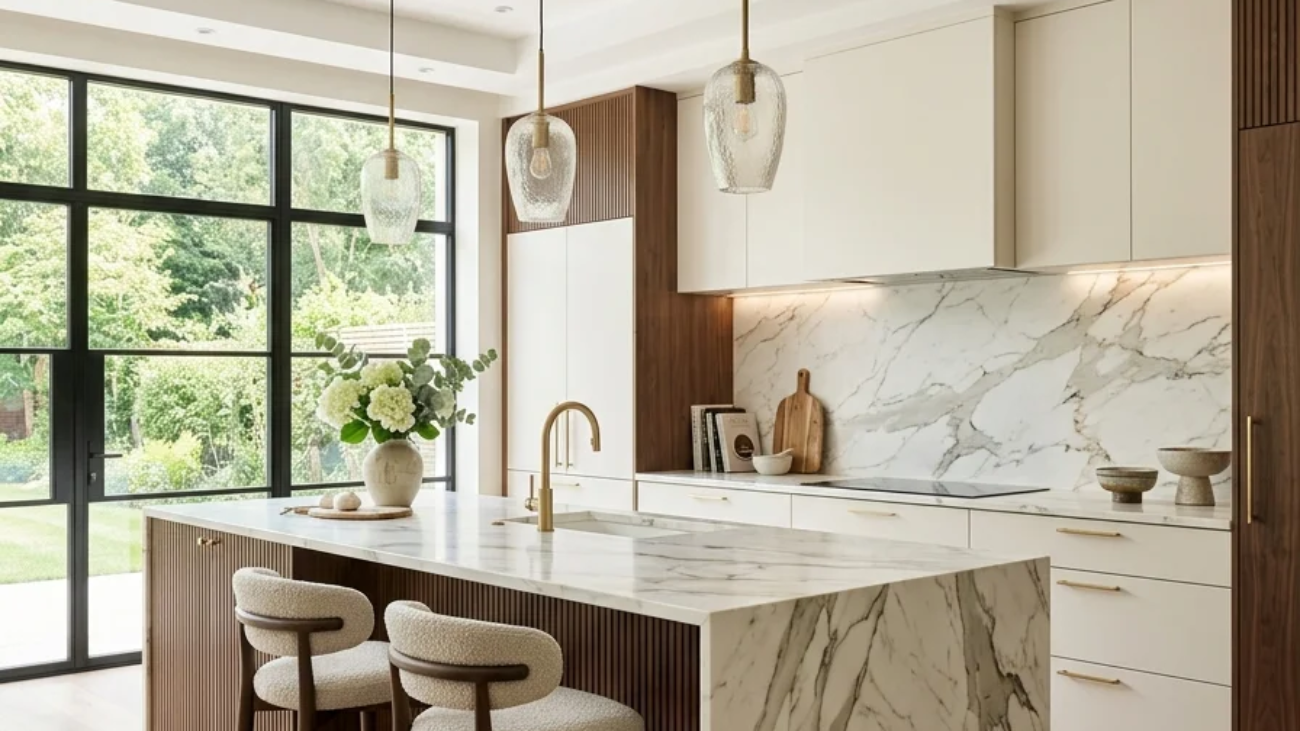
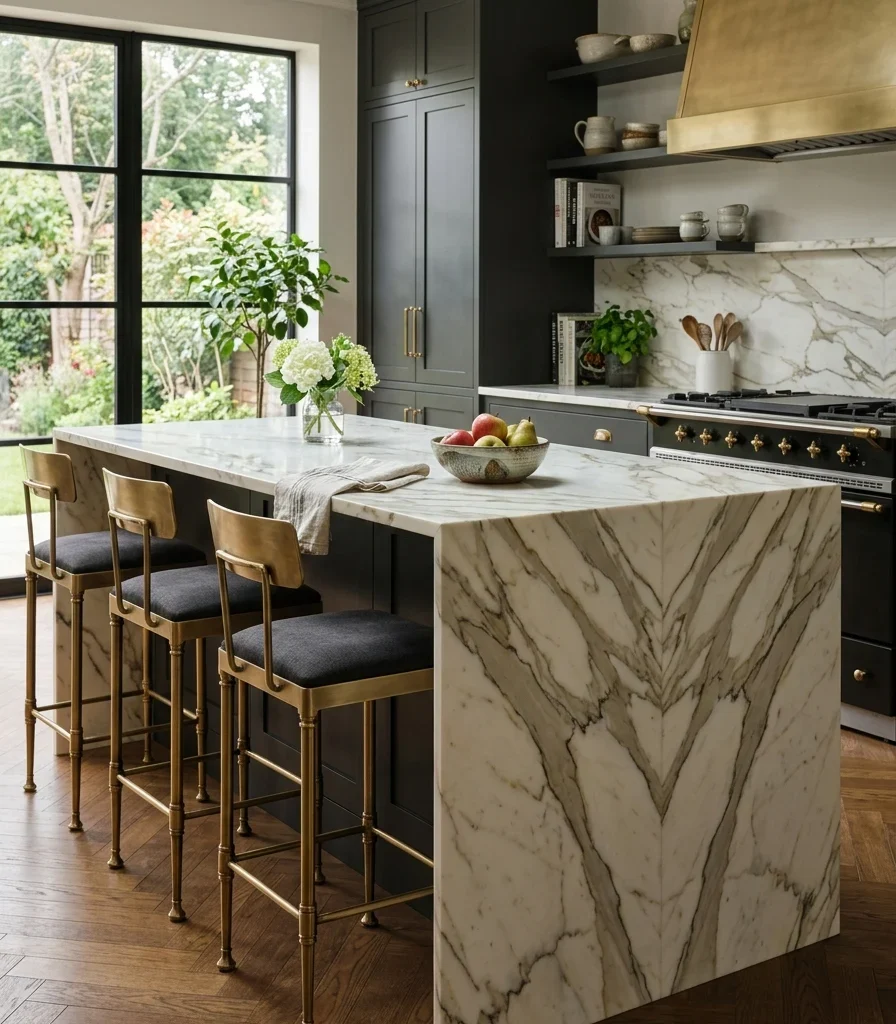
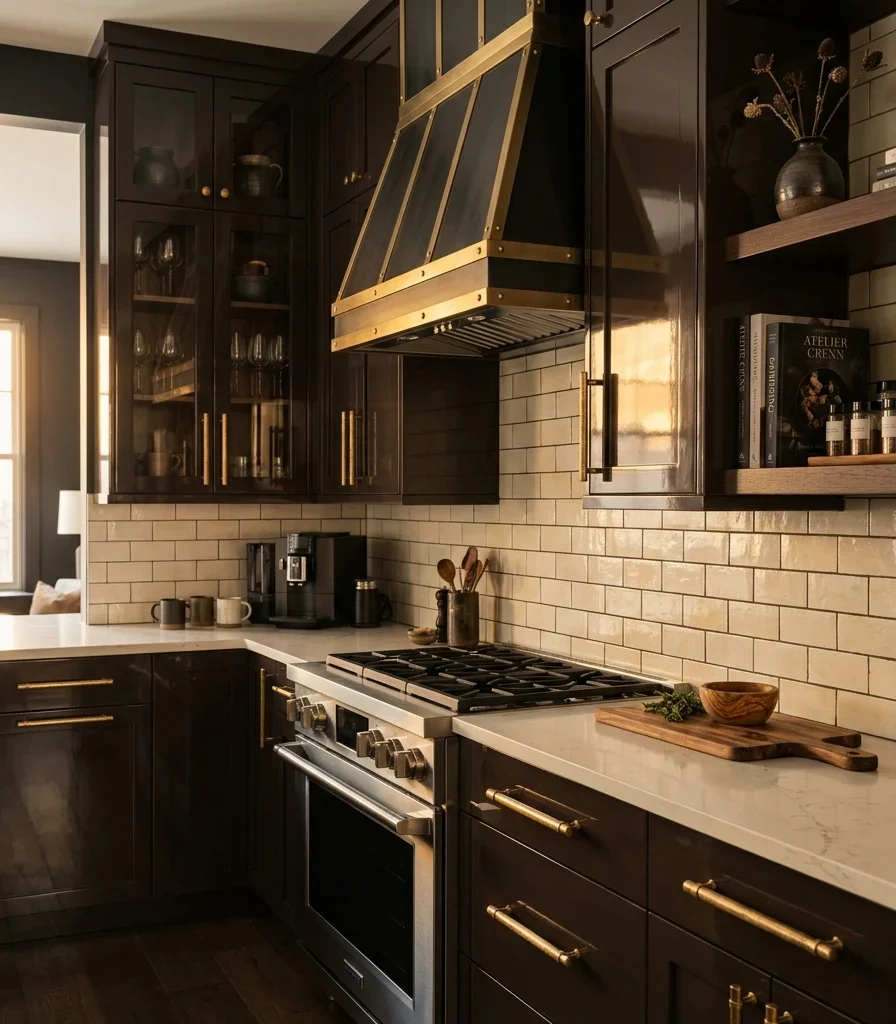
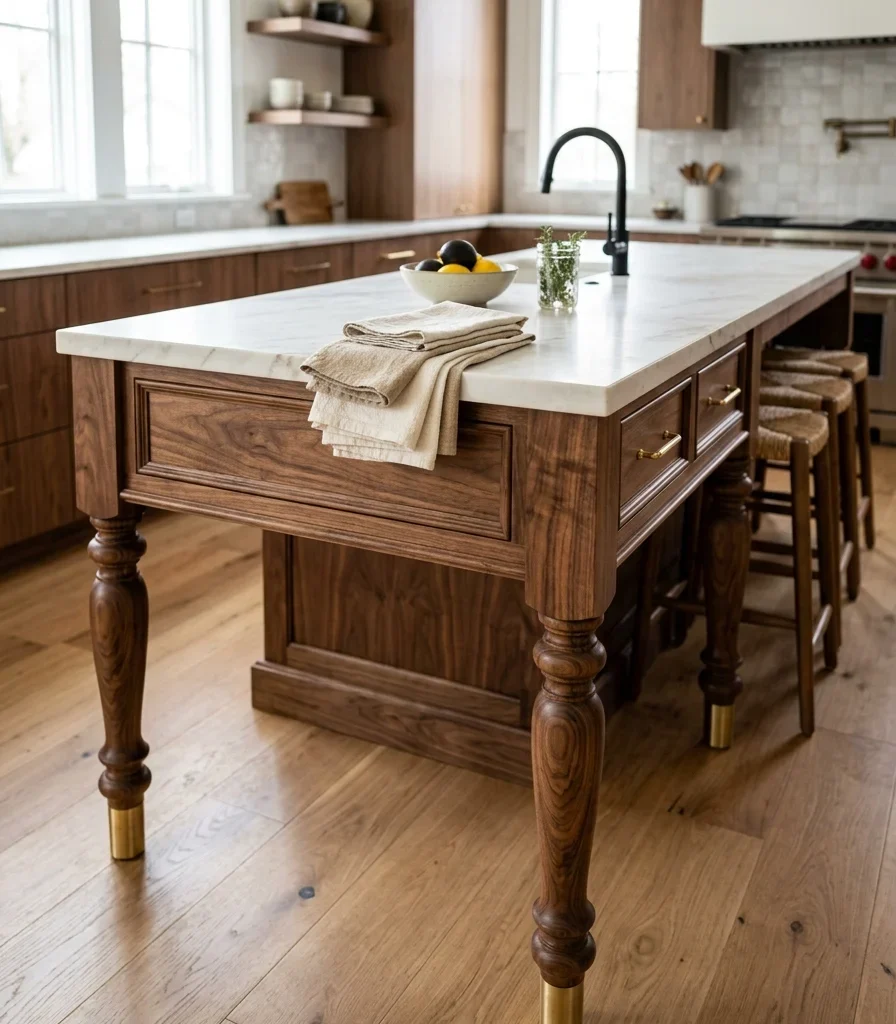
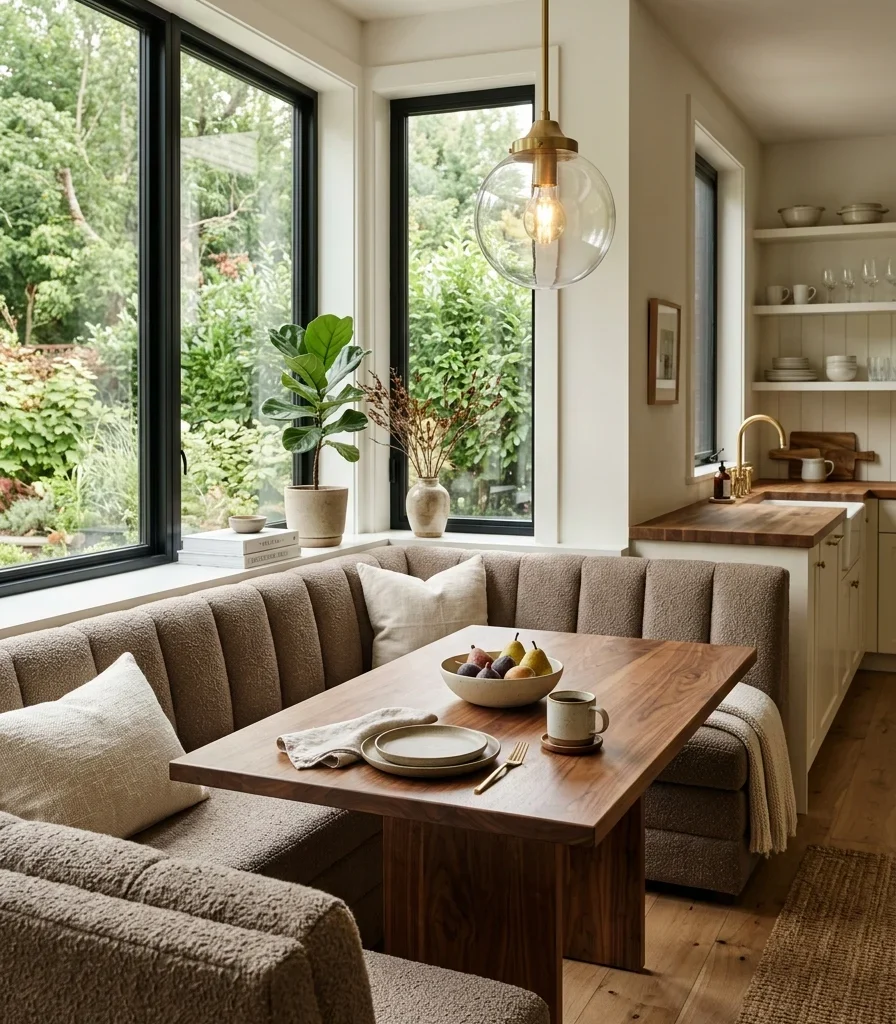
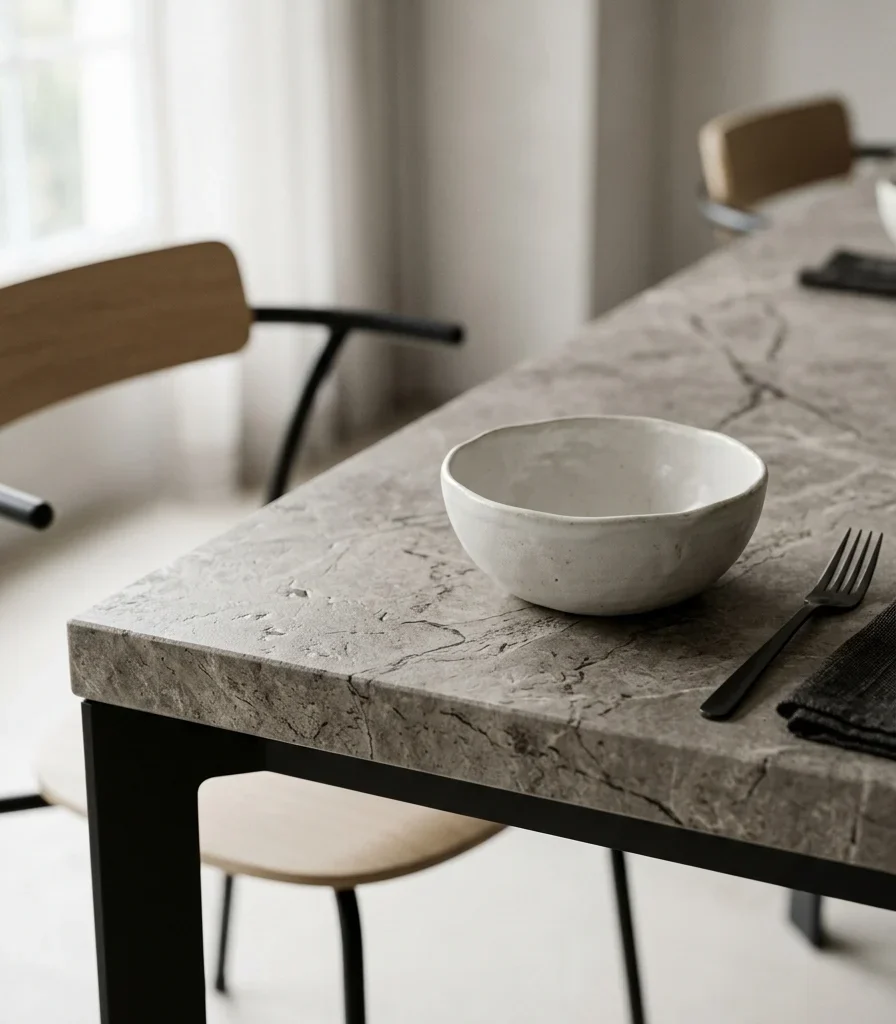
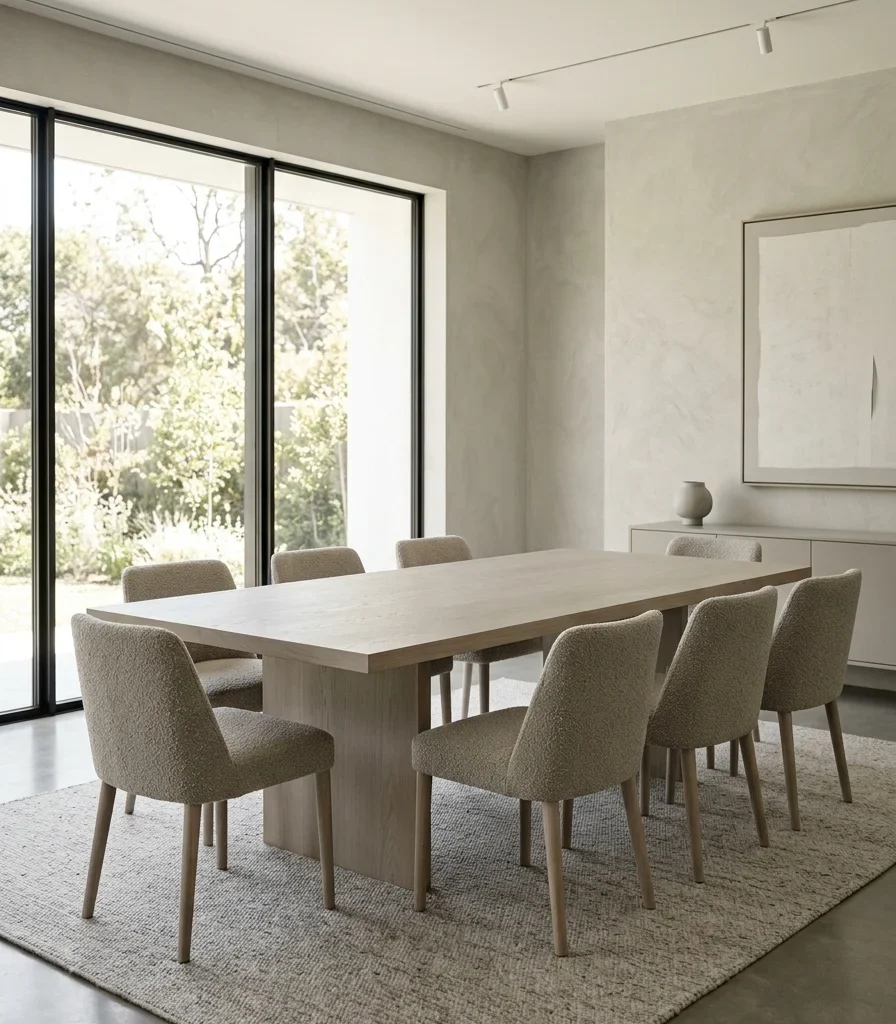
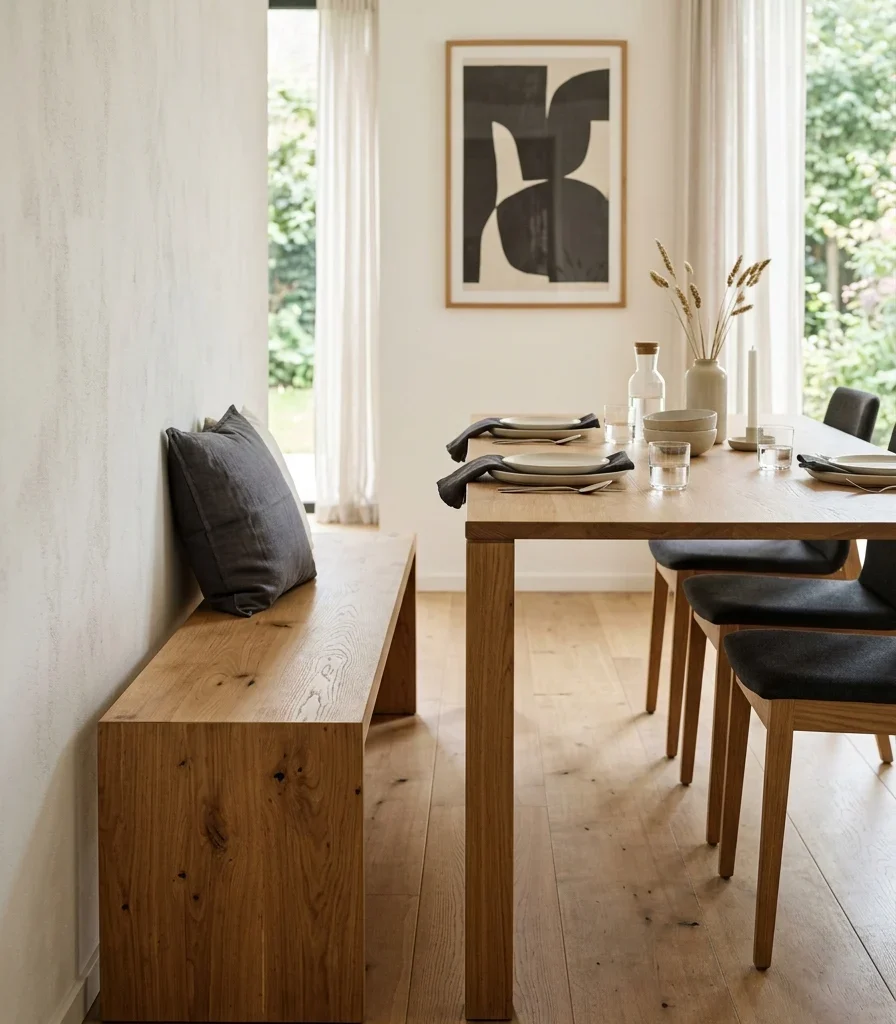
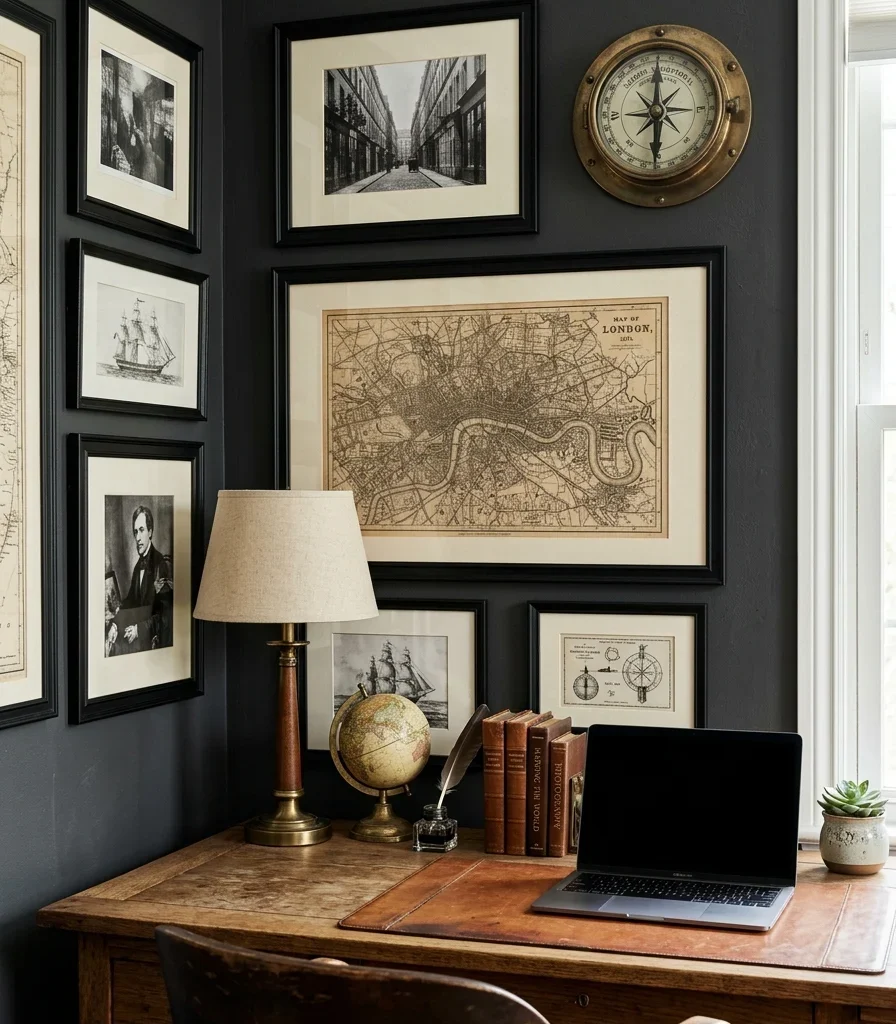
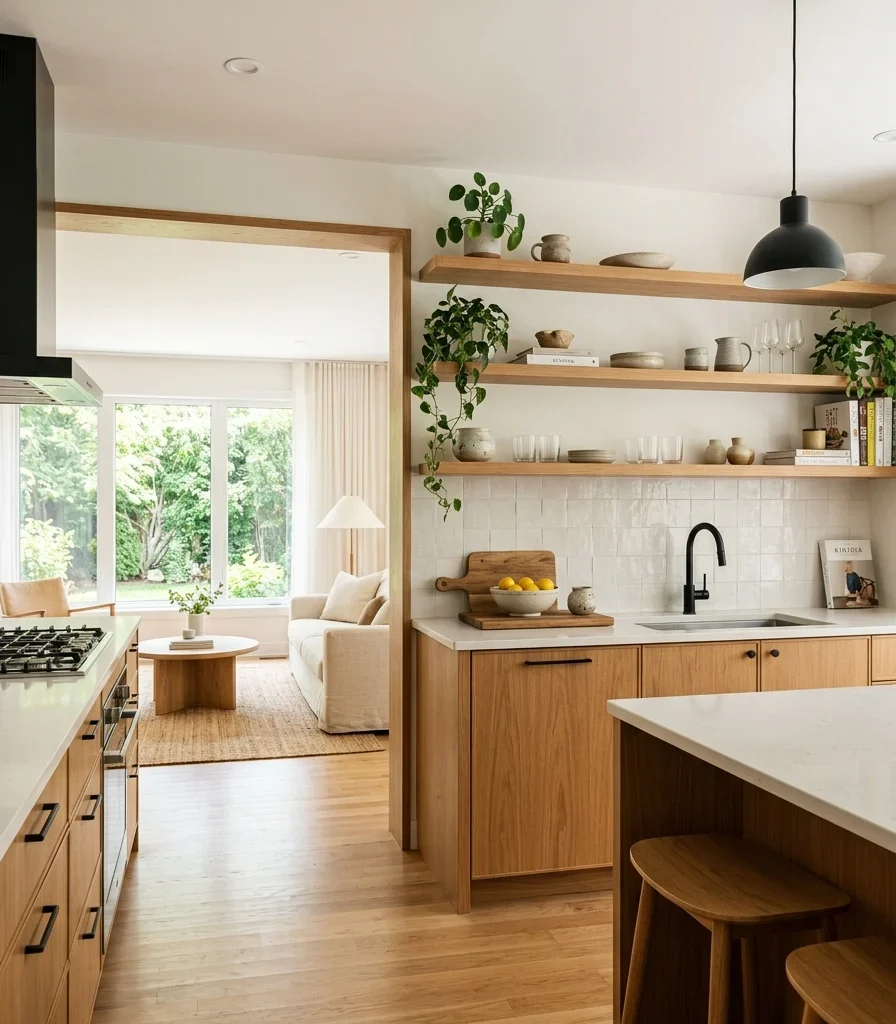
Core tones run warm-neutral to cool-contrast: greige, warm white, charcoal, and black used as accents rather than backdrops. Materials lean into walnut, white oak, brushed steel, blackened metal, polished concrete, and glass. Nothing is faux — modern decor prizes materials that age visibly and honestly.

Modern home decor is trending again as more people spend time working and living inside their homes and want spaces that feel calm rather than cluttered. Pinterest search data consistently shows rising interest in “quiet luxury” interiors, and modern’s function-first approach fits that mood directly.

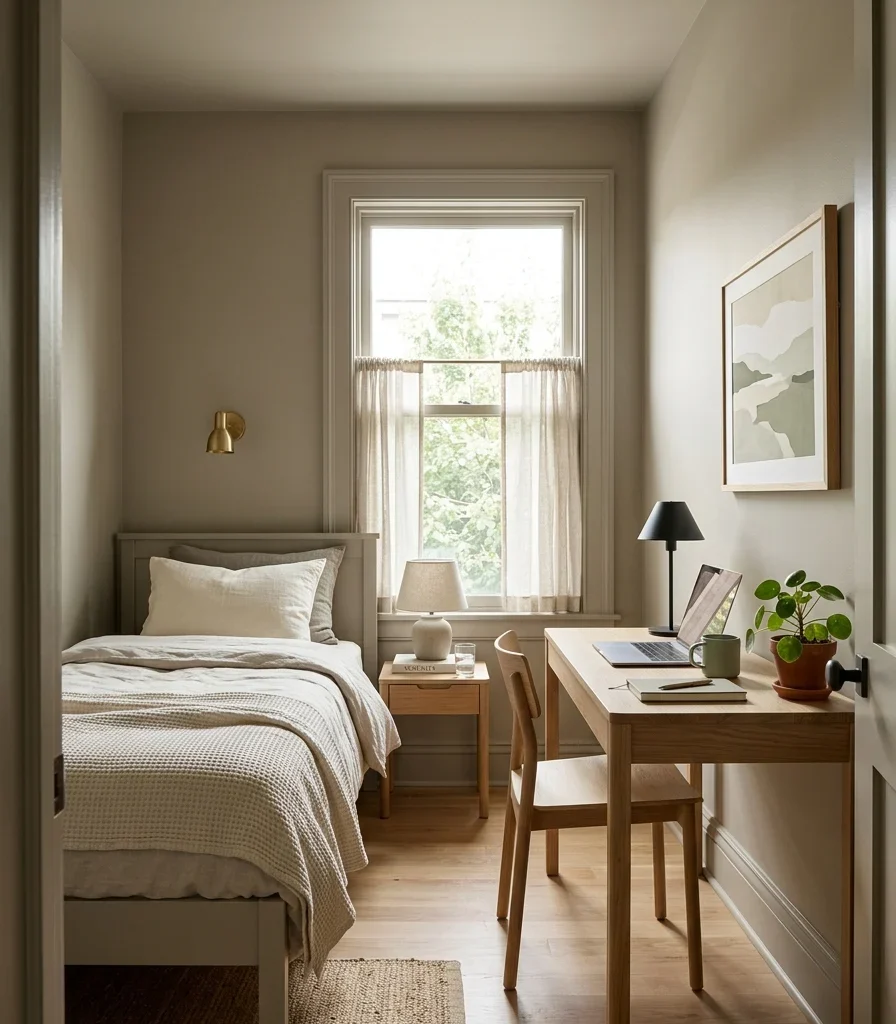
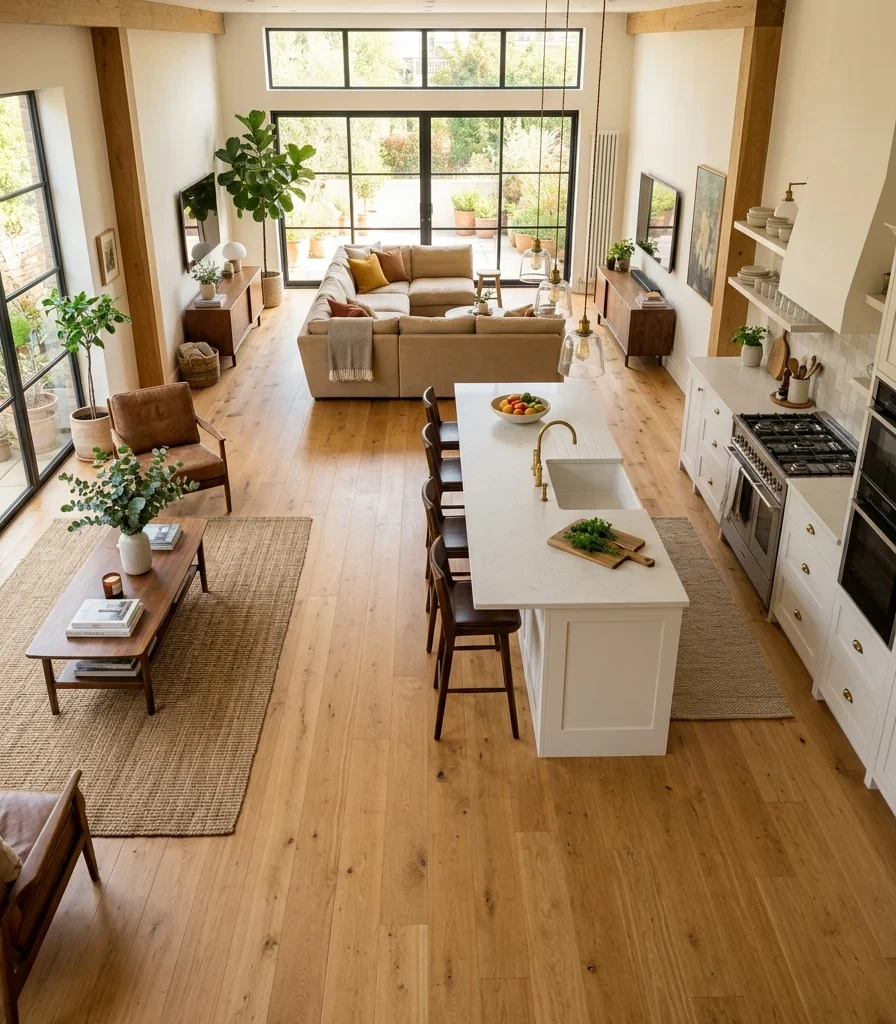
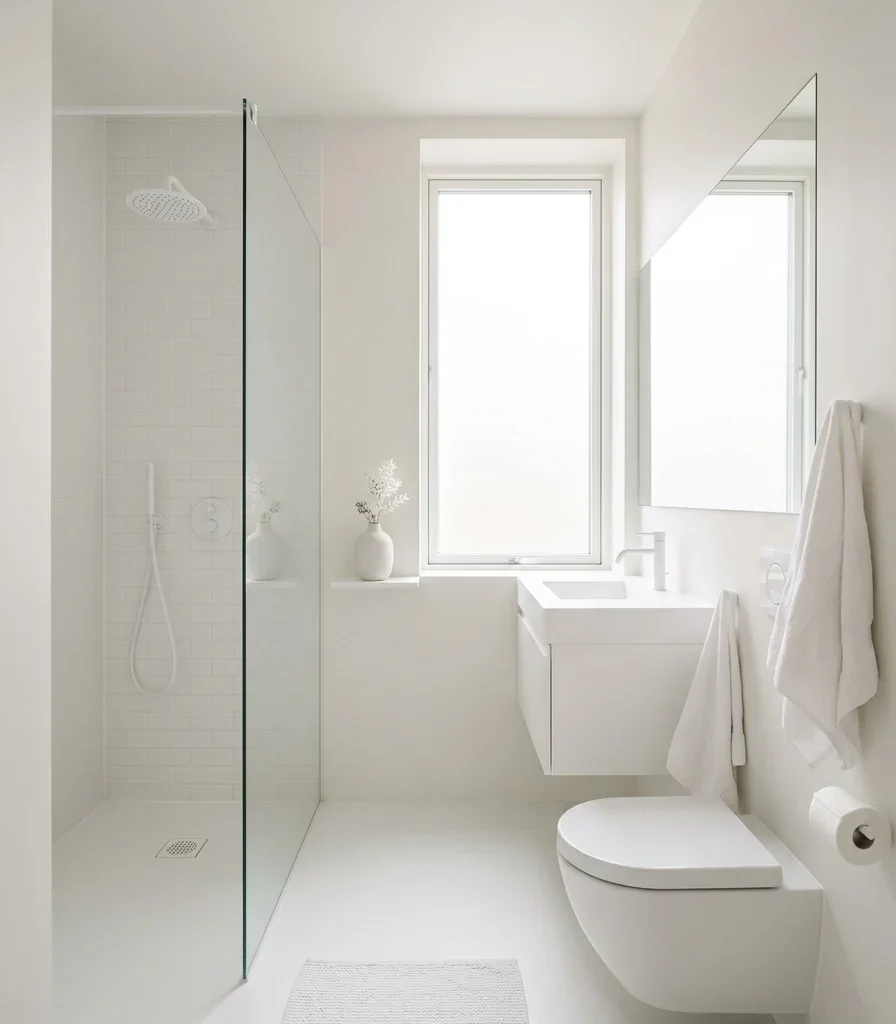
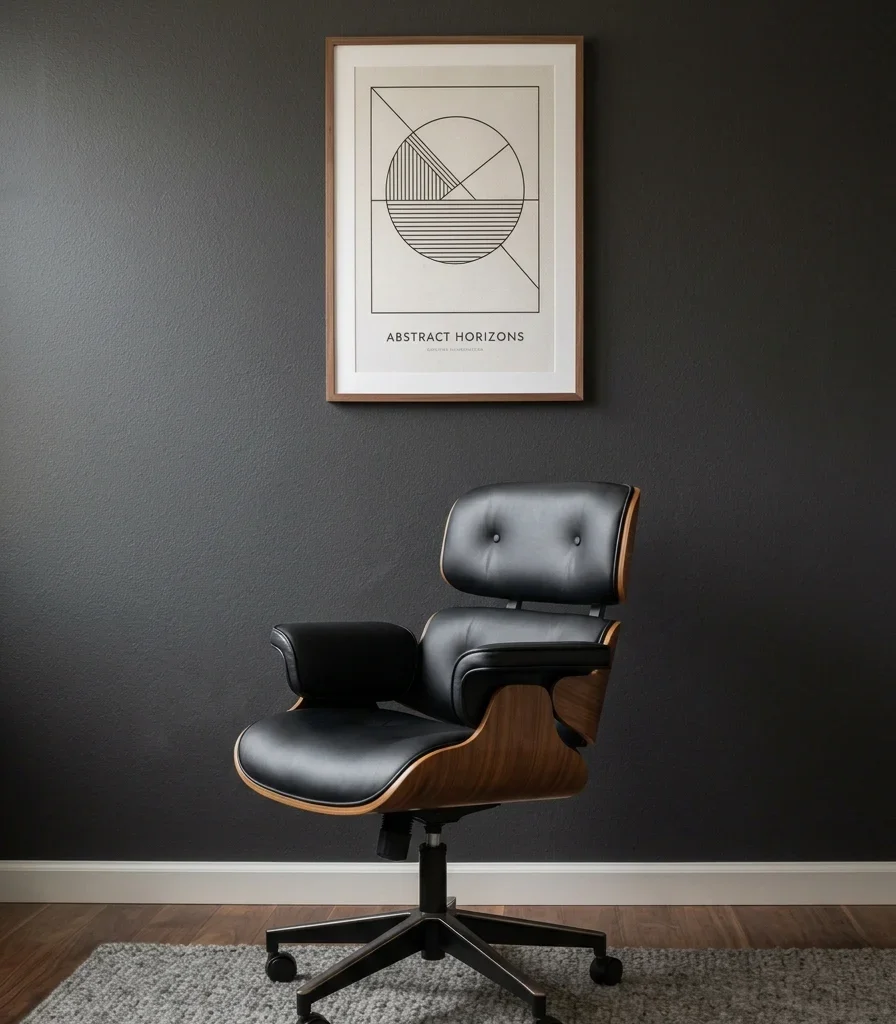
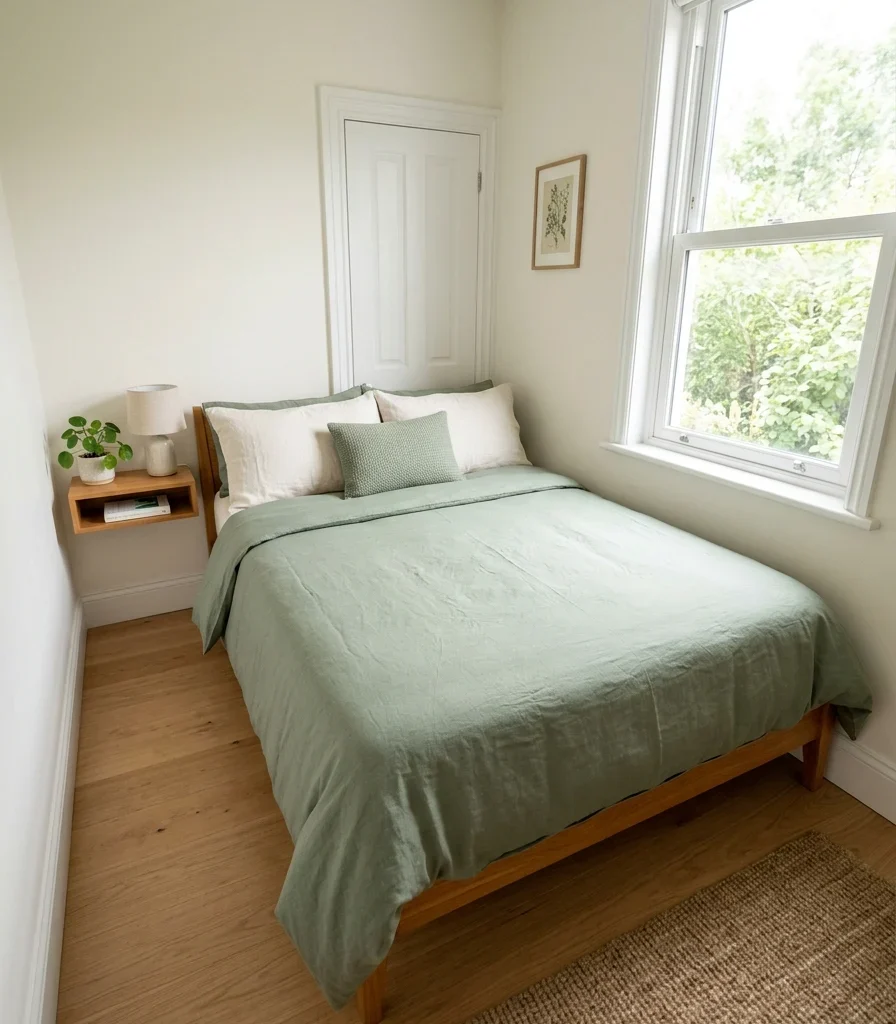
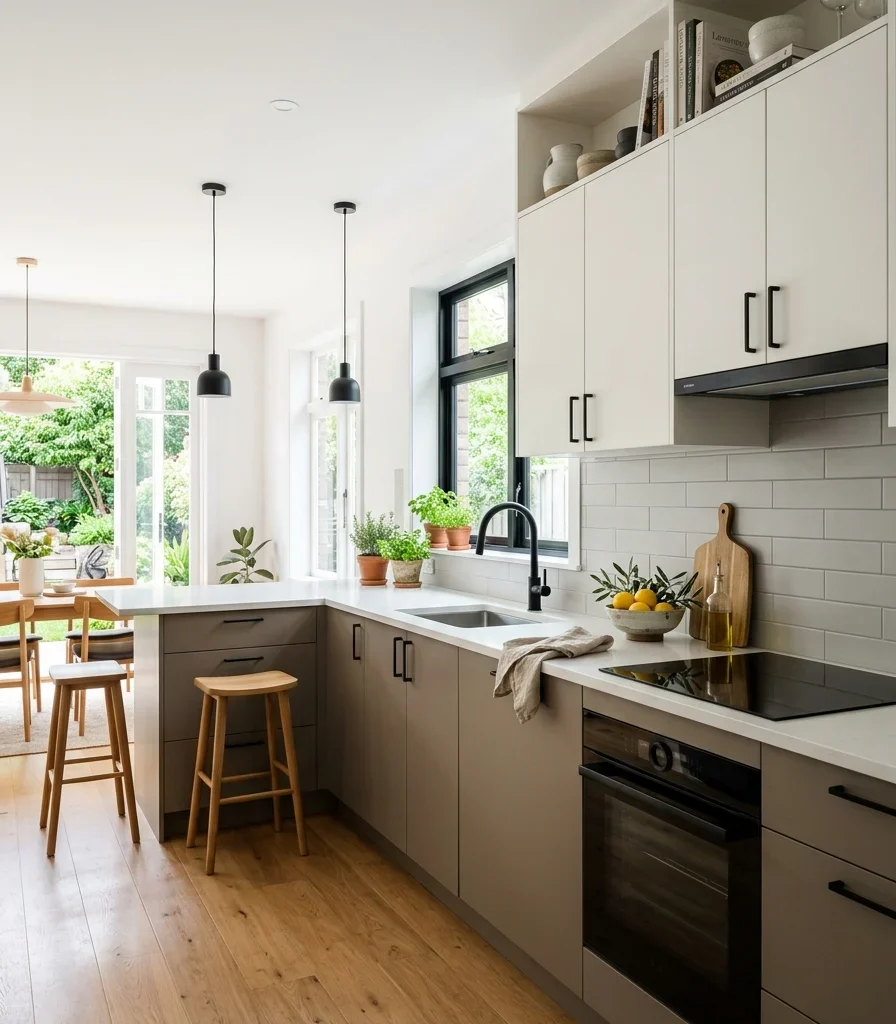
Small spaces can absolutely achieve this style — arguably better than most, since modern decor already values negative space. Prioritize one or two anchor pieces with real presence (a sculptural chair, a substantial pendant light) rather than filling every surface, and let the walls stay mostly bare.

Style at a Glance

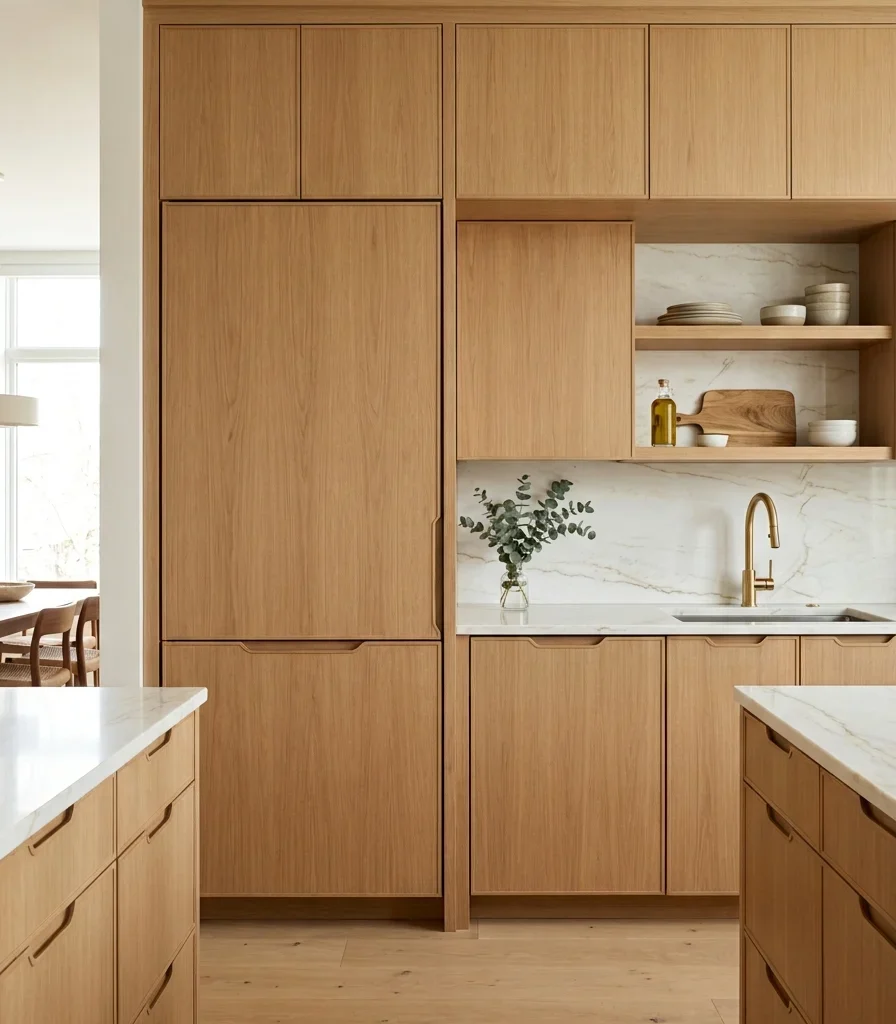
ElementDescription
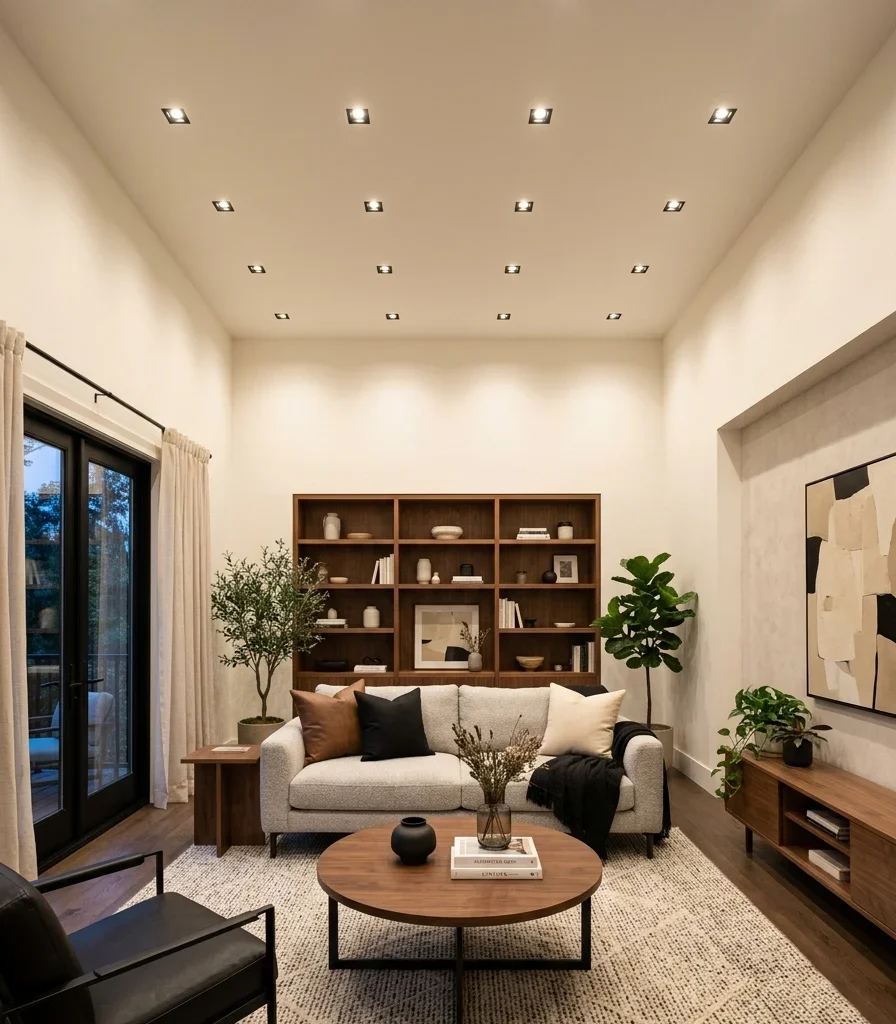
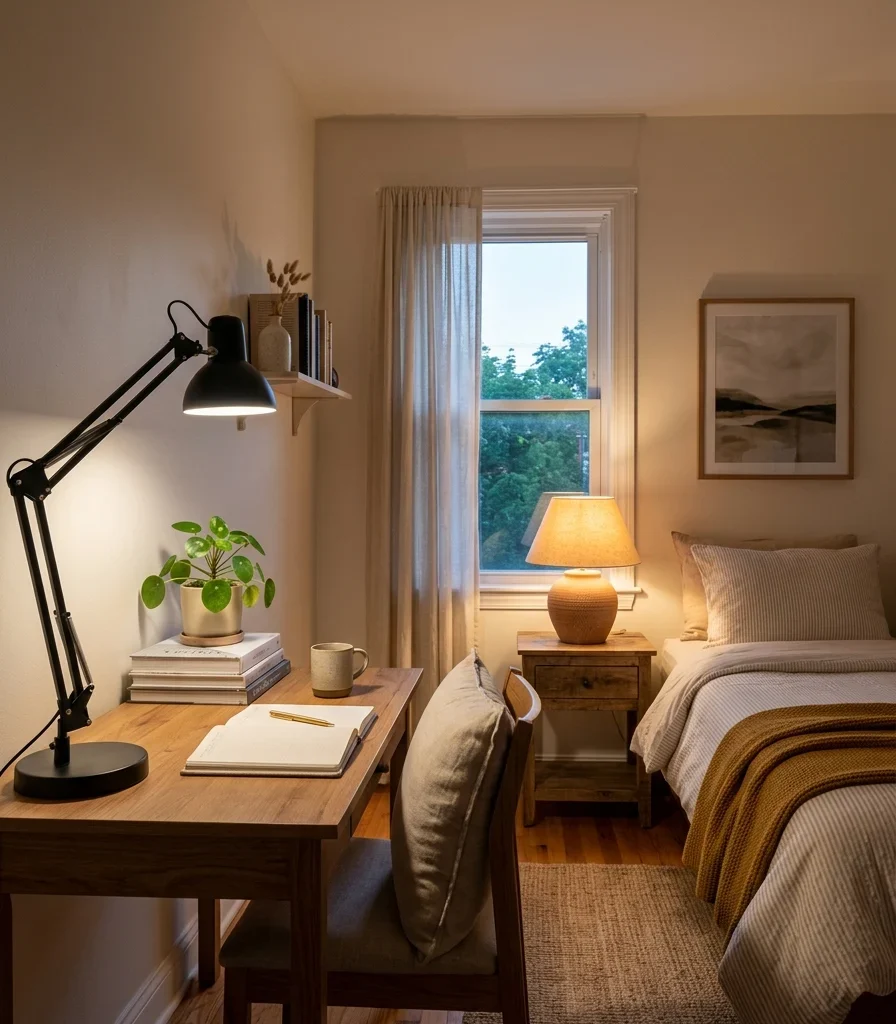
PhilosophyForm follows function; every piece earns its place
Key MaterialsWalnut, white oak, brushed steel, blackened metal, glass, polished concrete
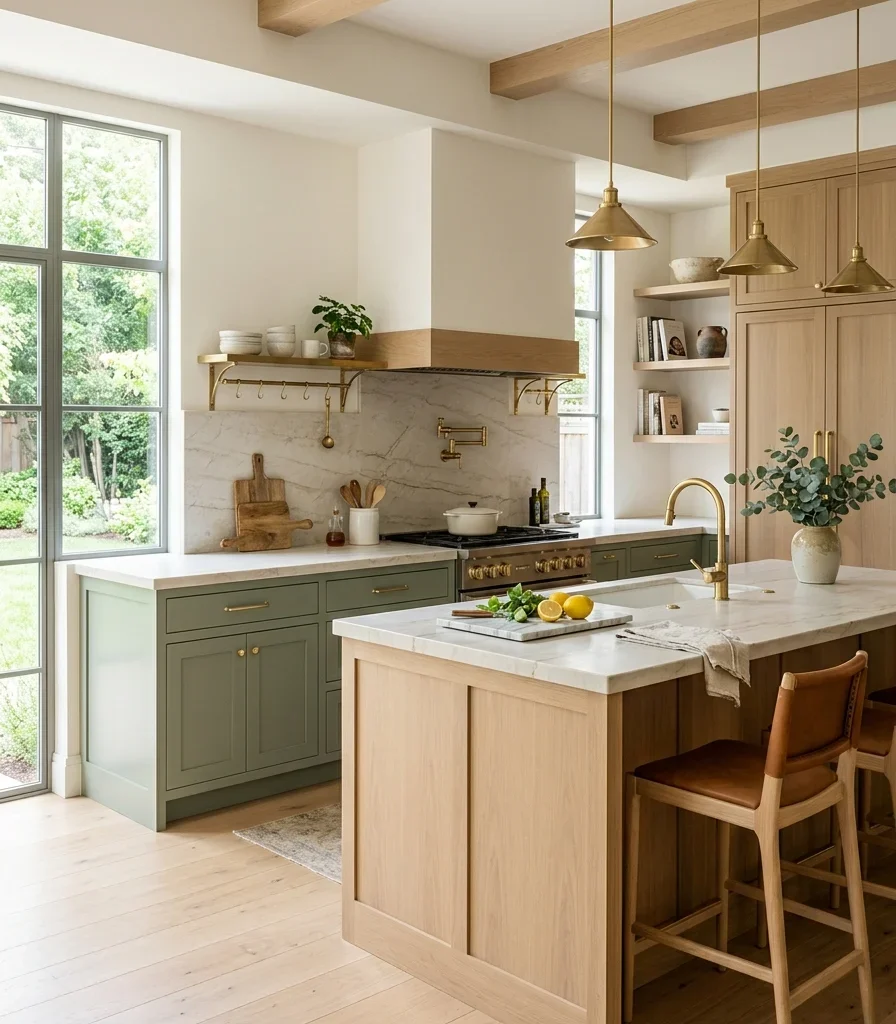
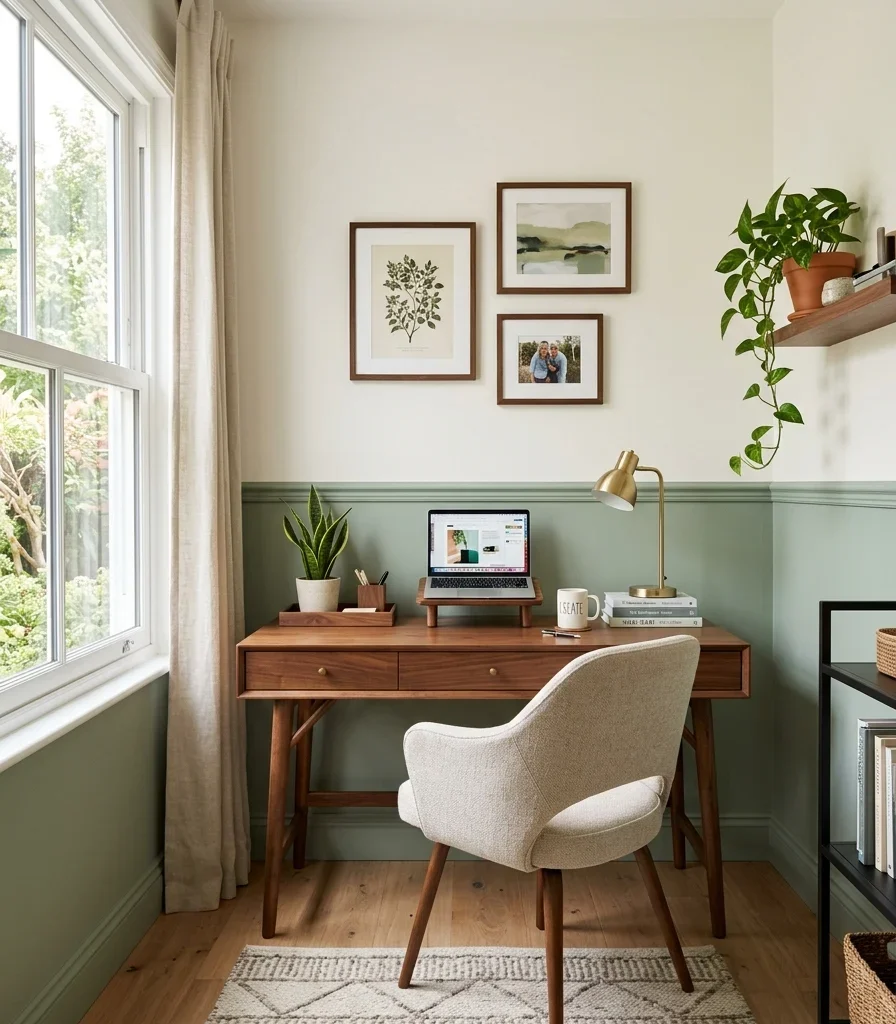
Key ColorsGreige, warm white, charcoal, black, sage green accent

═══════════════════════════════════

15 Modern Home Decor Ideas

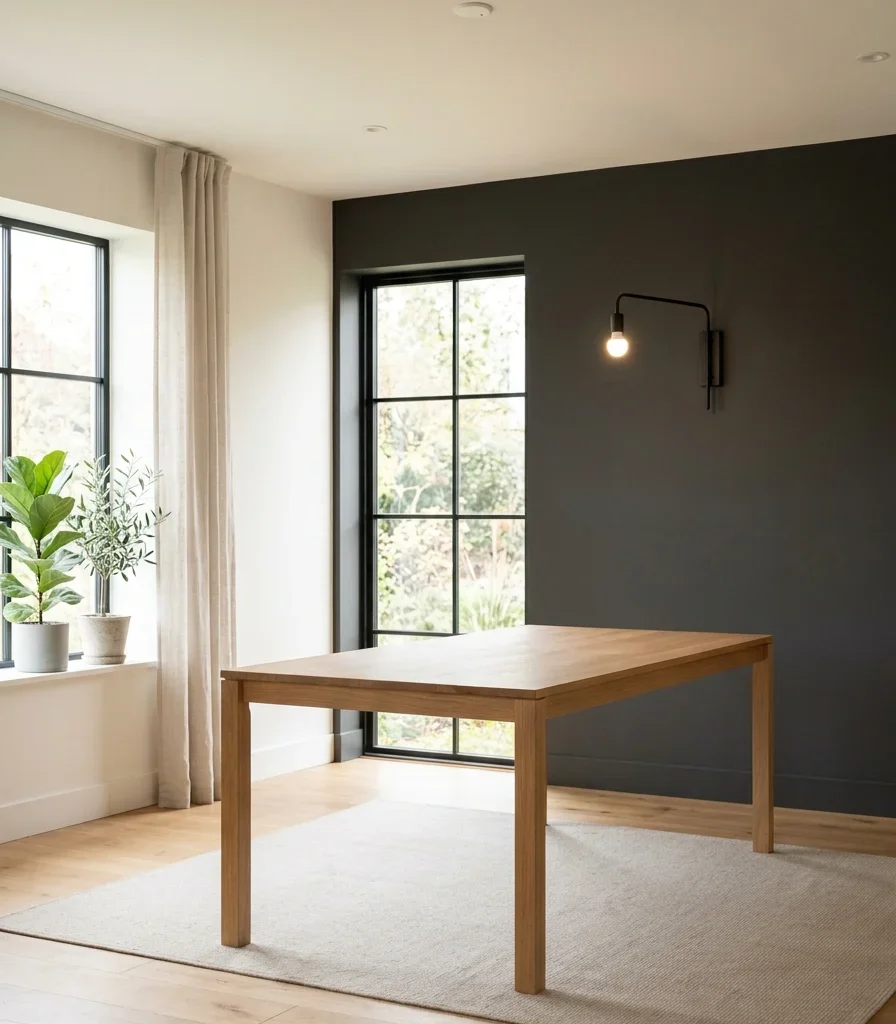
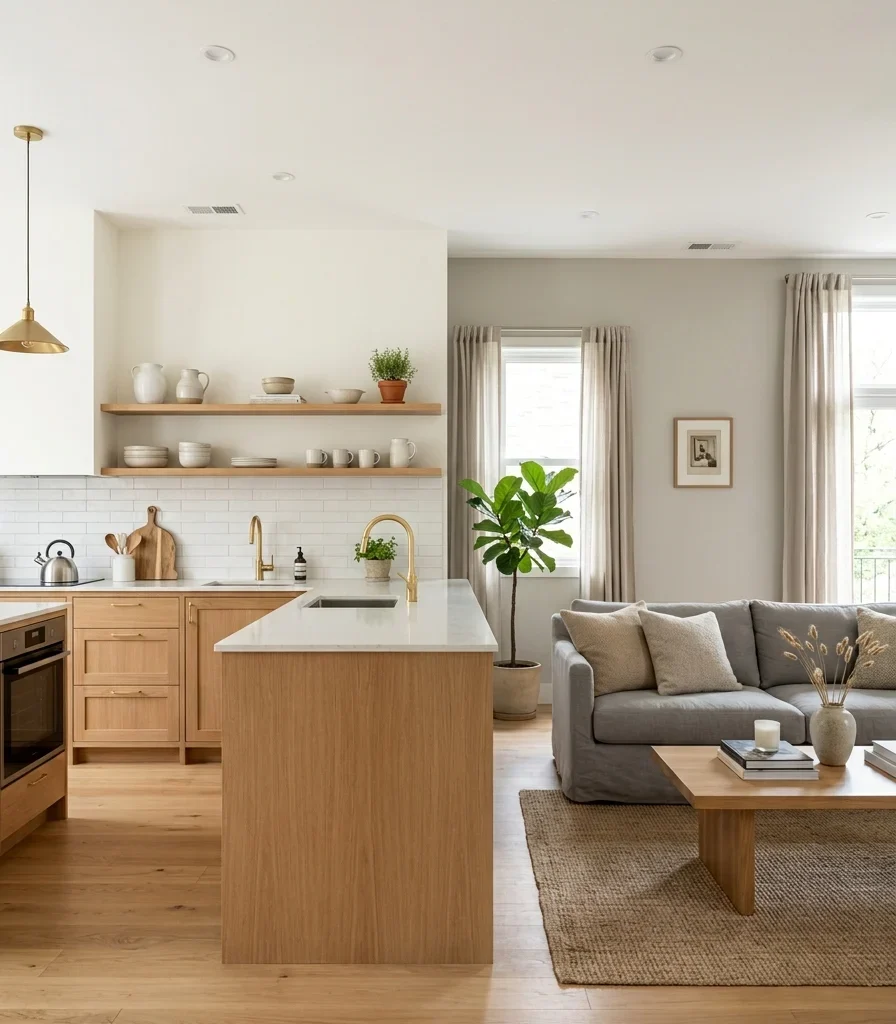
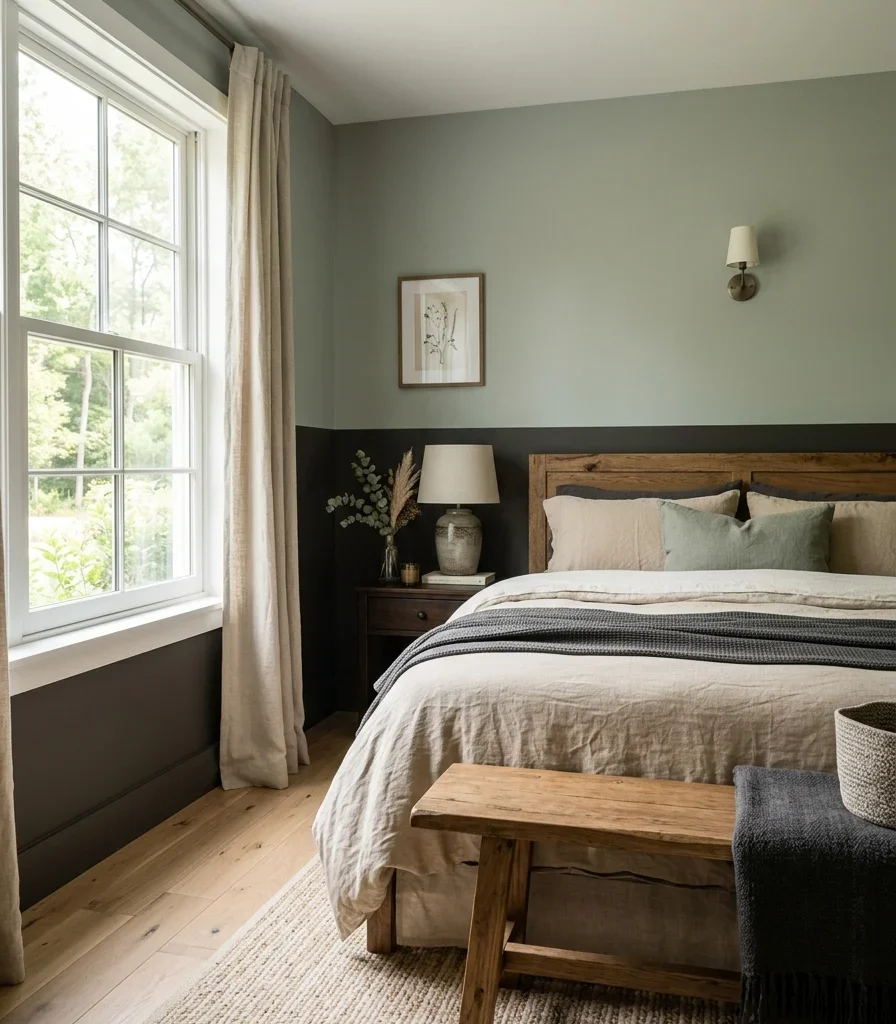
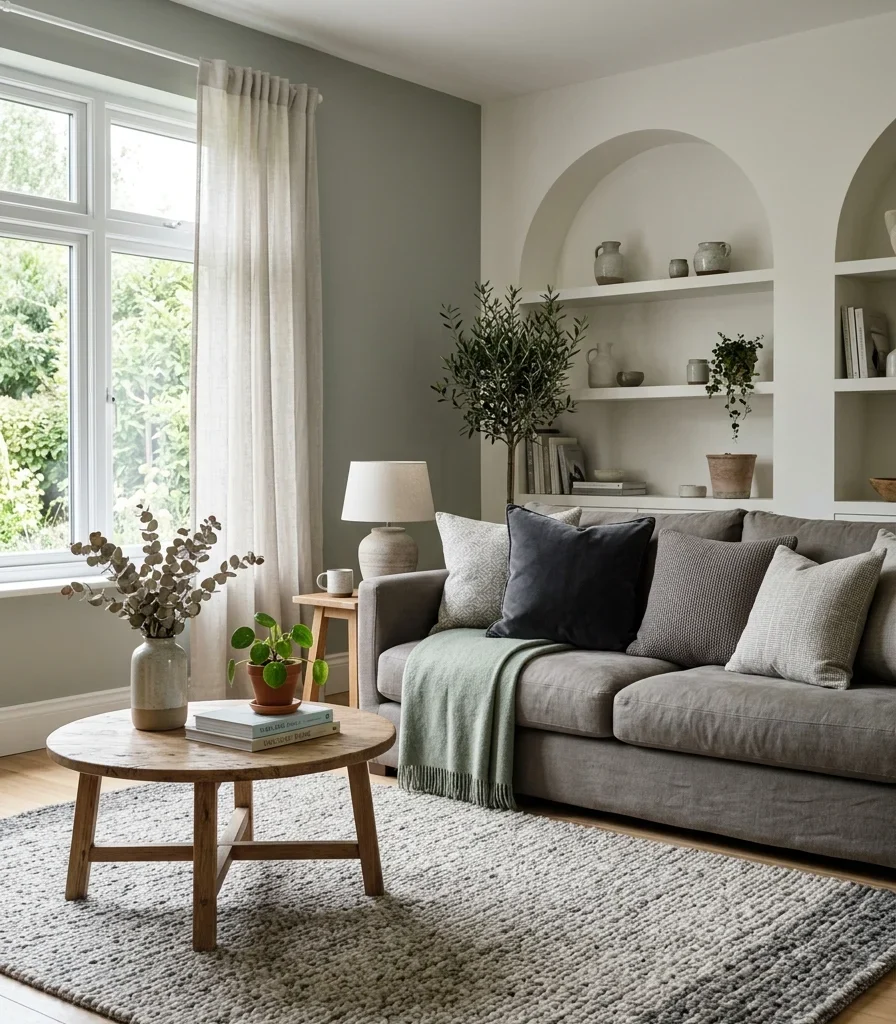
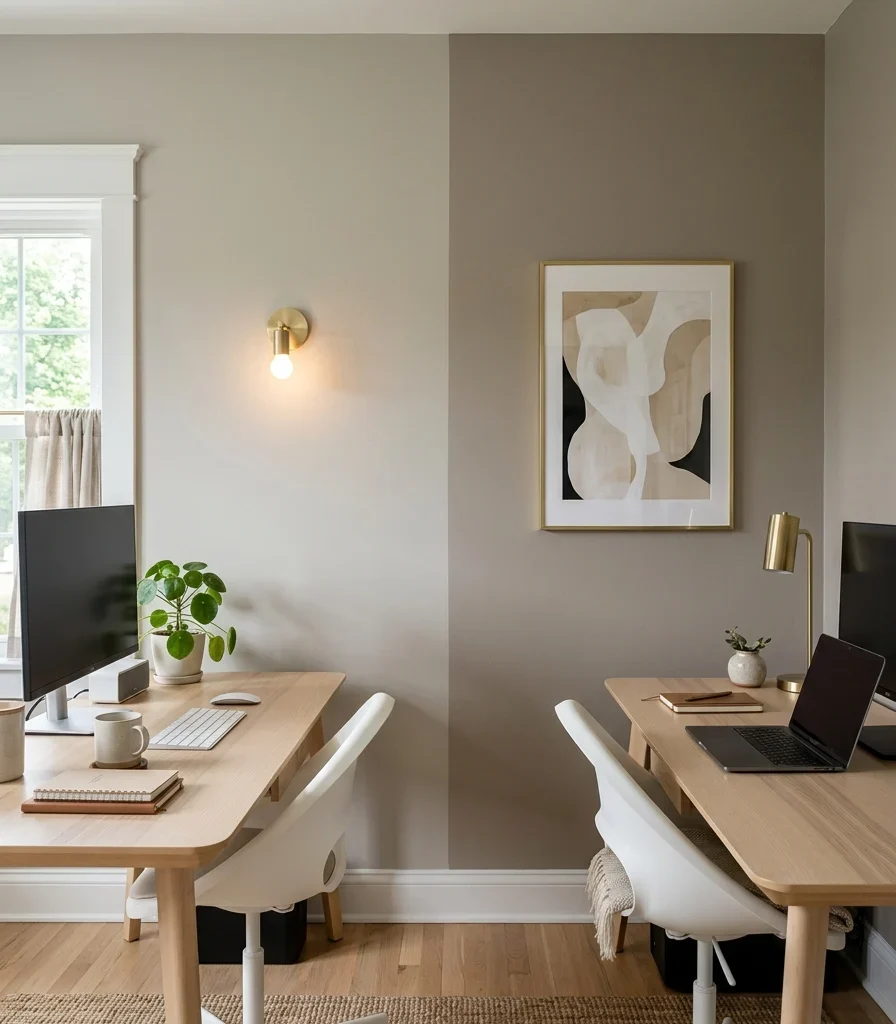
1. Warm Neutral Palette: Greige Walls with Charcoal Accents

1. Warm Neutral Palette: Greige Walls with Charcoal Accents

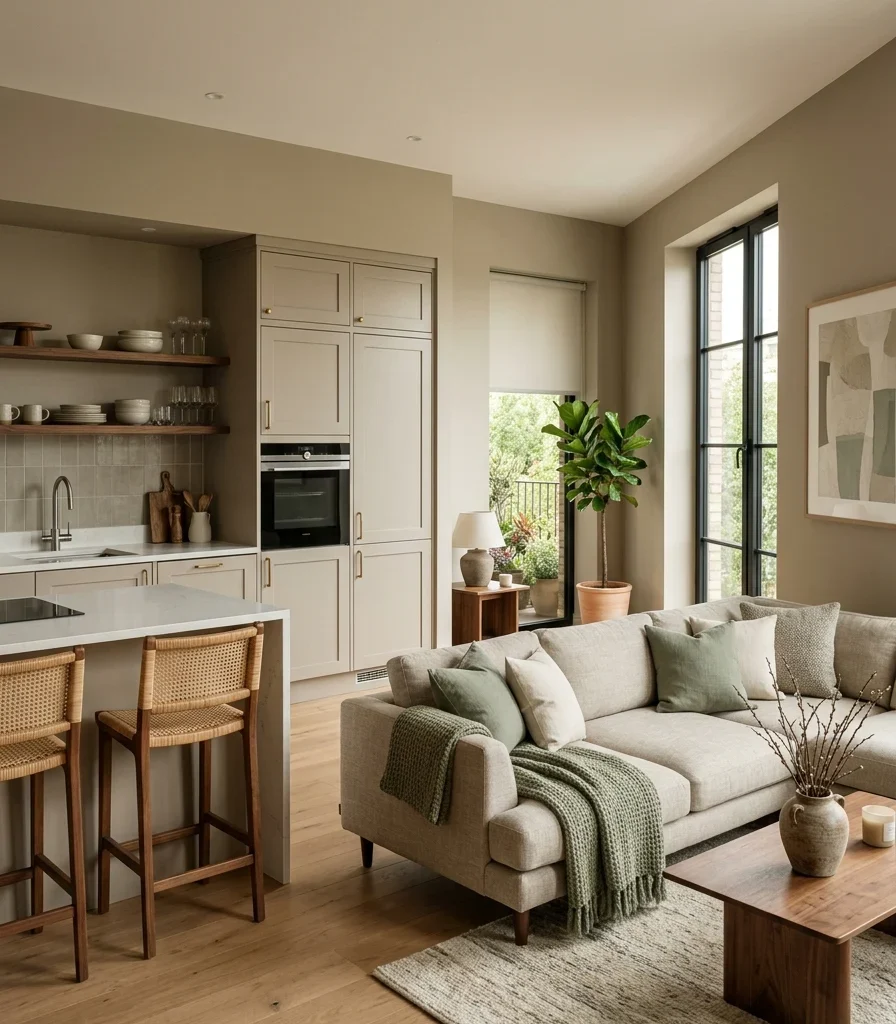
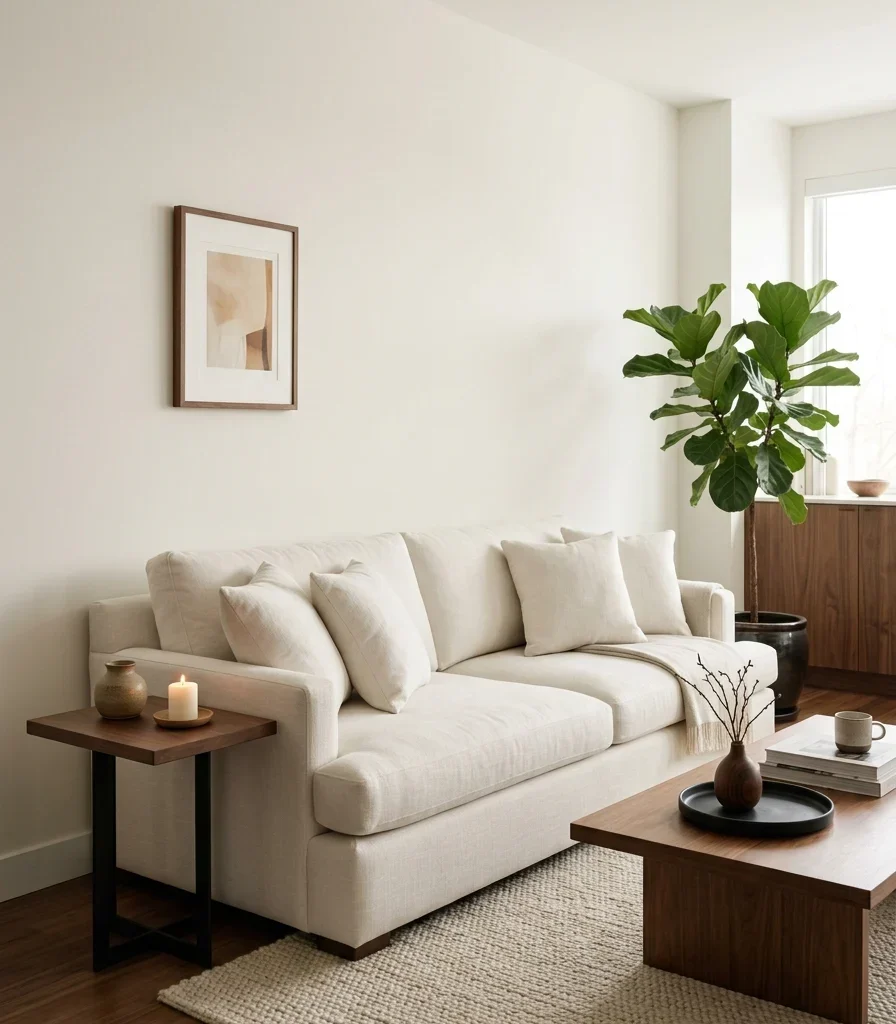
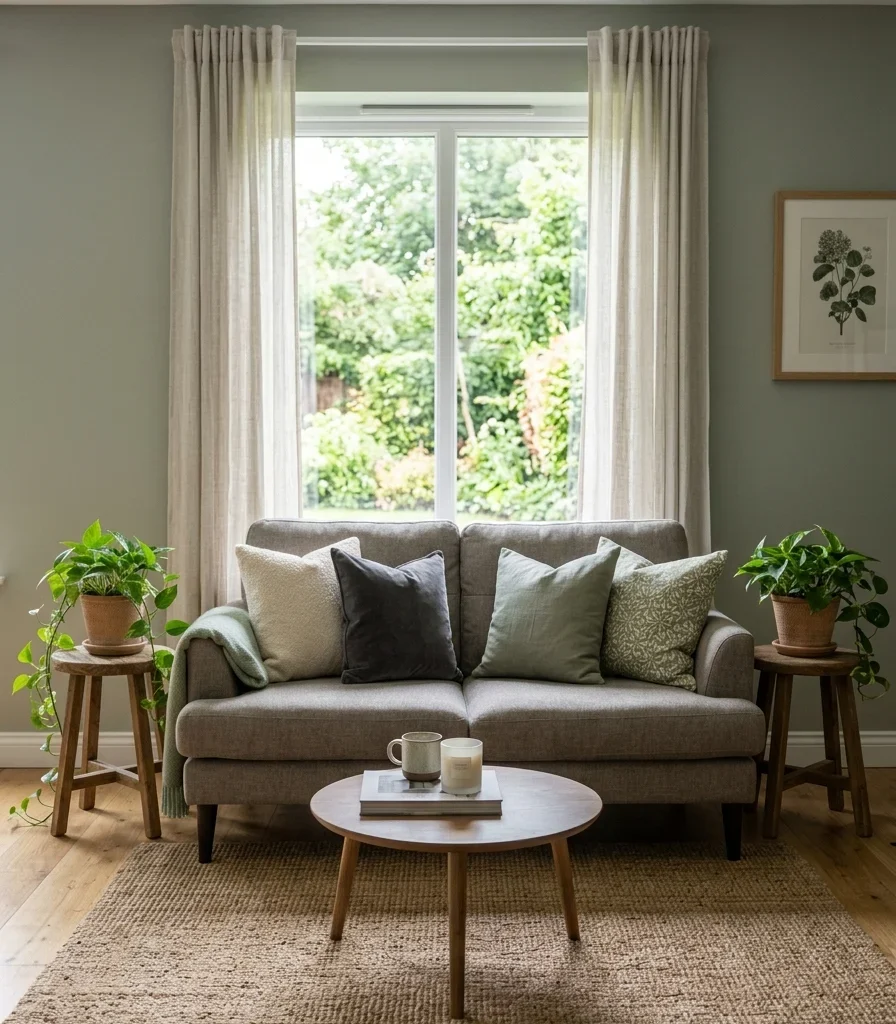
Vibe: The room feels grounded, like it’s holding still under soft daylight.

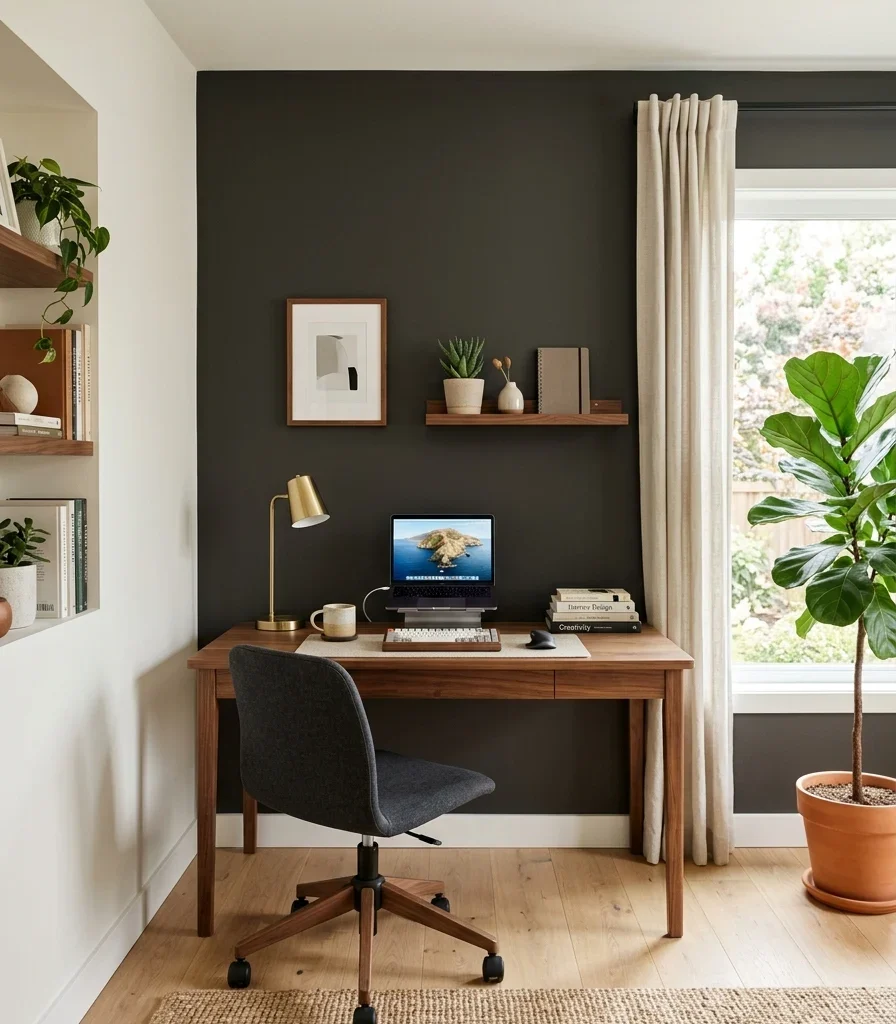
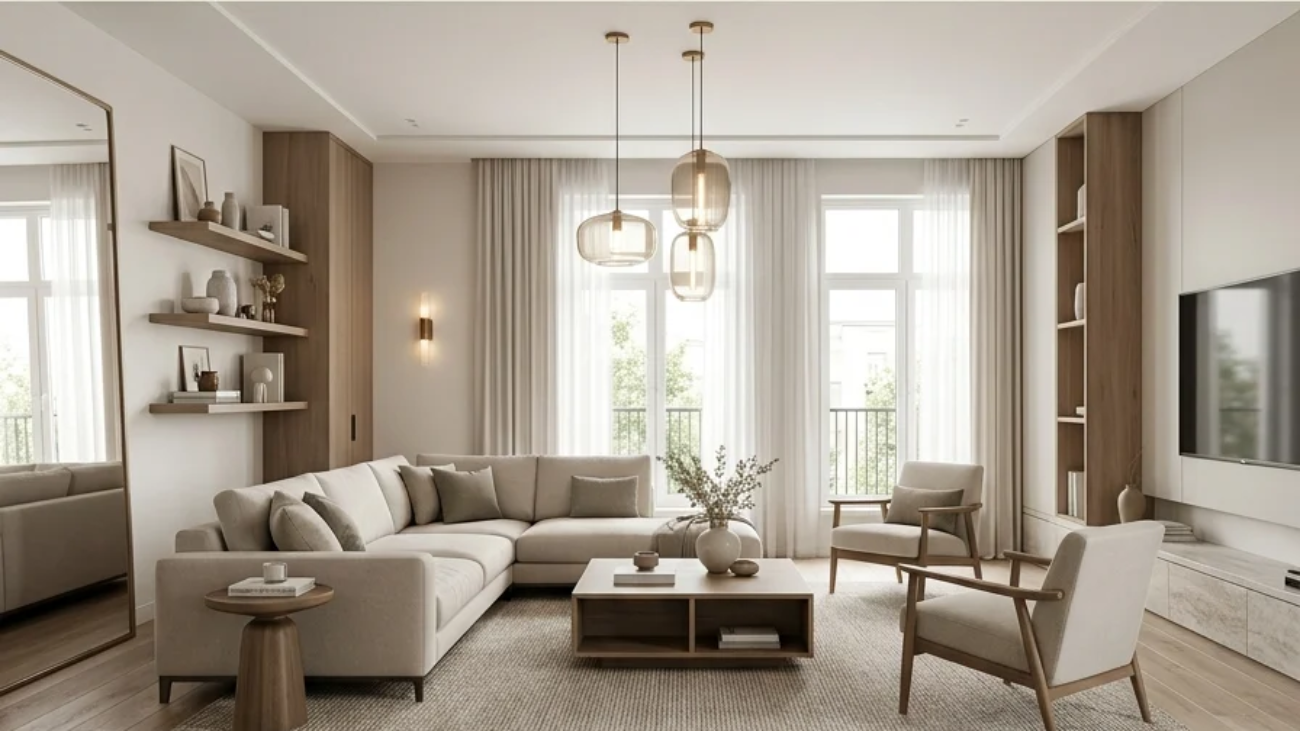
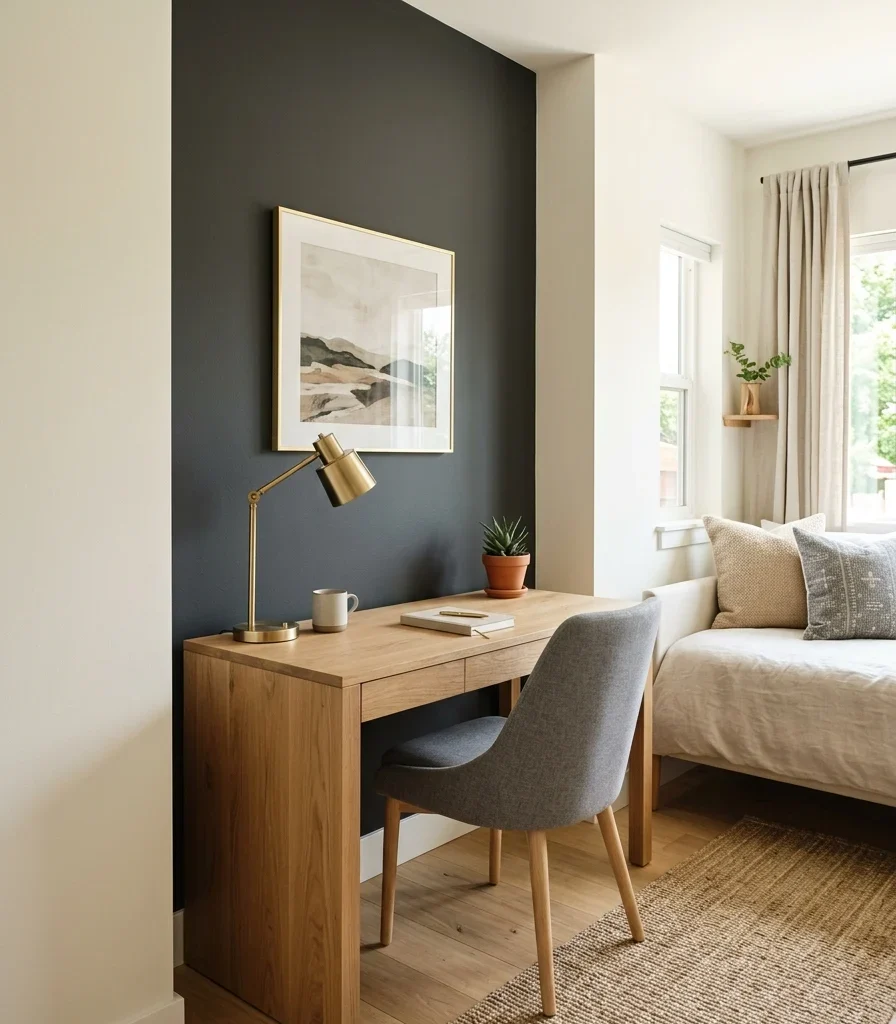
Why it works: Greige splits the difference between beige’s warmth and gray’s cool restraint, so it reads as neutral without going flat. Charcoal accents create visual weight low in the room — sofas, rugs, frames — which keeps the eye anchored while walls stay quiet. This is contrast through value, not color, which is a hallmark of modern home decor.

How to get it: Paint walls in a true greige (test swatches in your room’s actual light before committing, since greige shifts warm or cool depending on exposure), then introduce charcoal only through one or two large-scale pieces so it reads as intentional weight, not gloom.

💡 Quick Win: A charcoal linen throw folded over the sofa arm delivers the contrast instantly without repainting anything.

Shop The Look

  • Greige matte interior wall paint sample set
  • Charcoal boucle throw pillow covers set
  • Matte black gallery picture frame set
  • Warm white ceramic bud vase minimalist
  • Taupe wool blend area rug modern

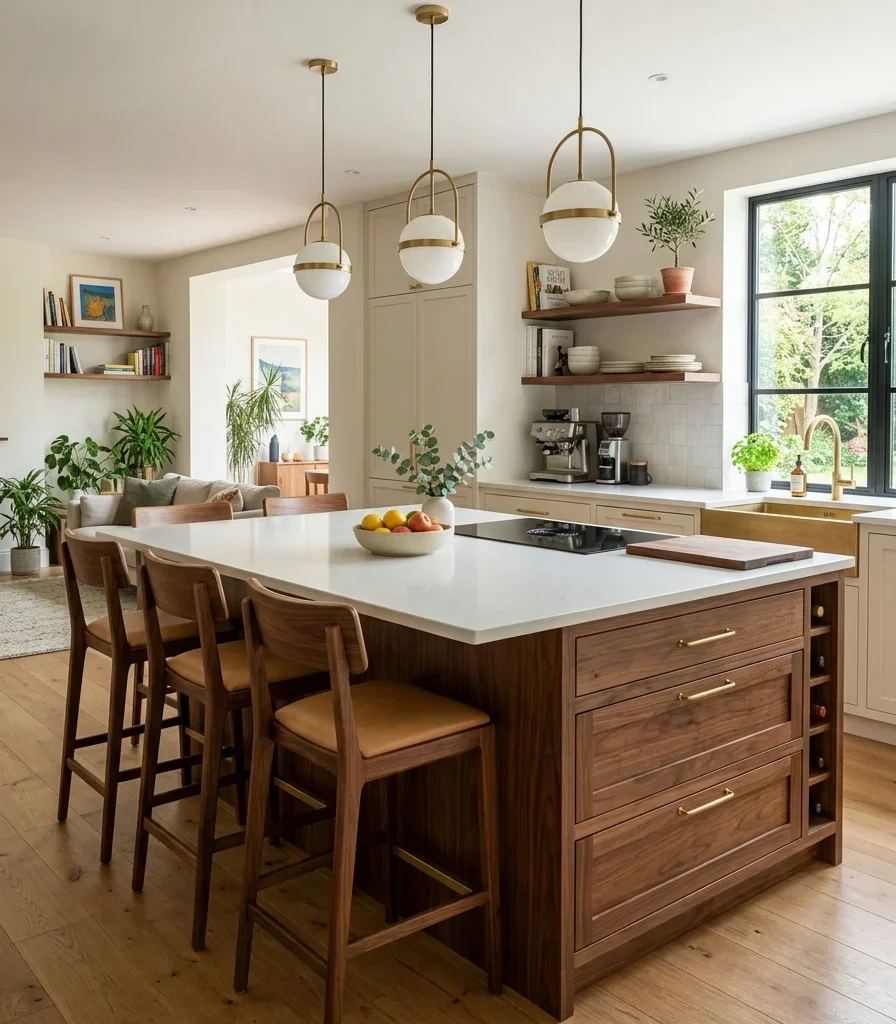
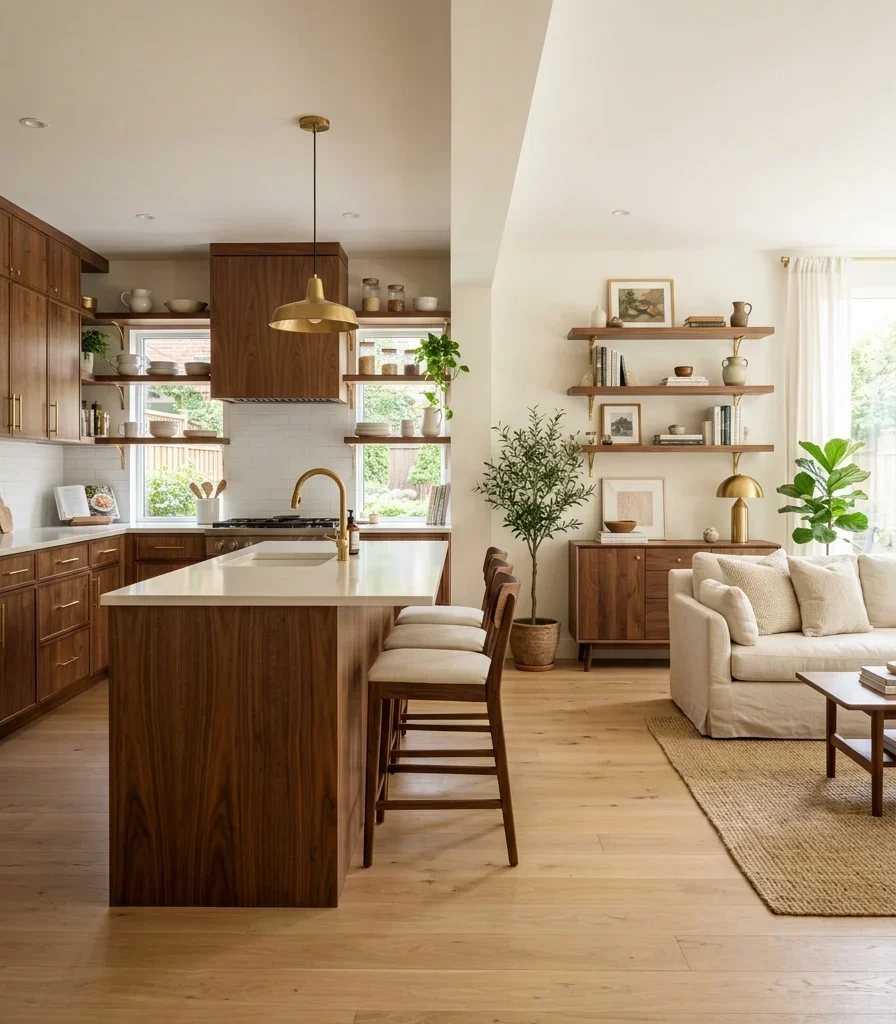
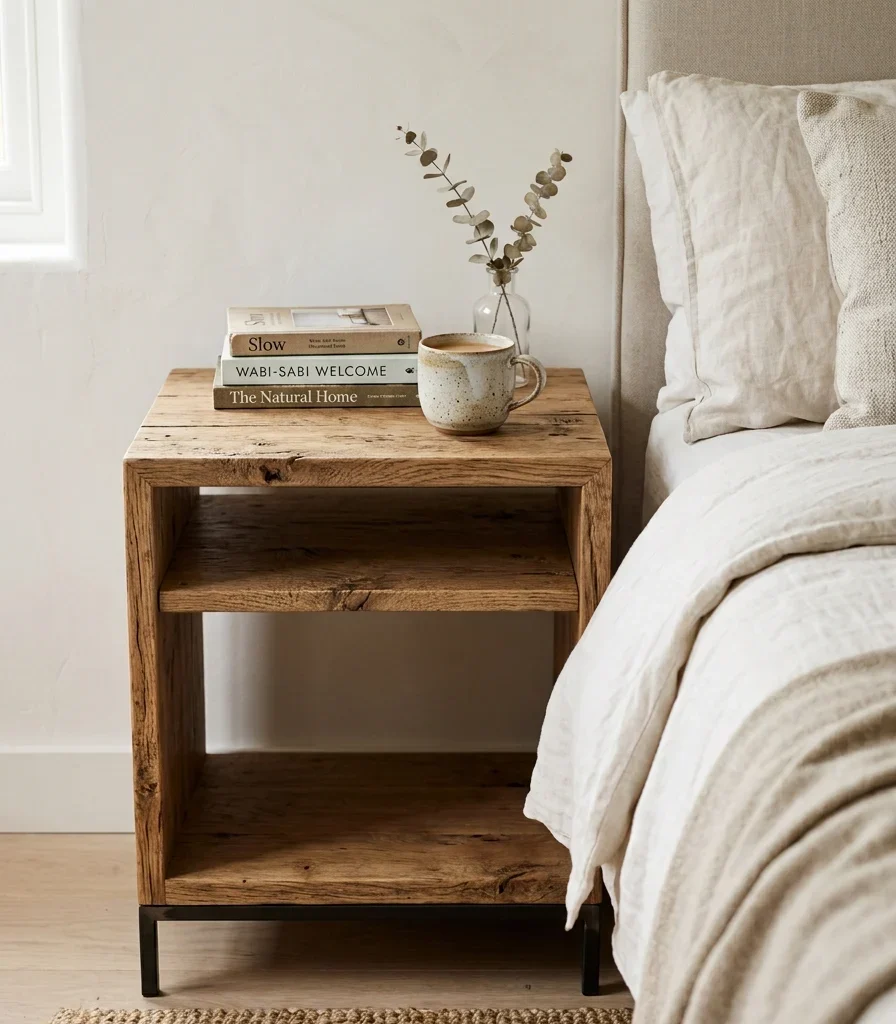
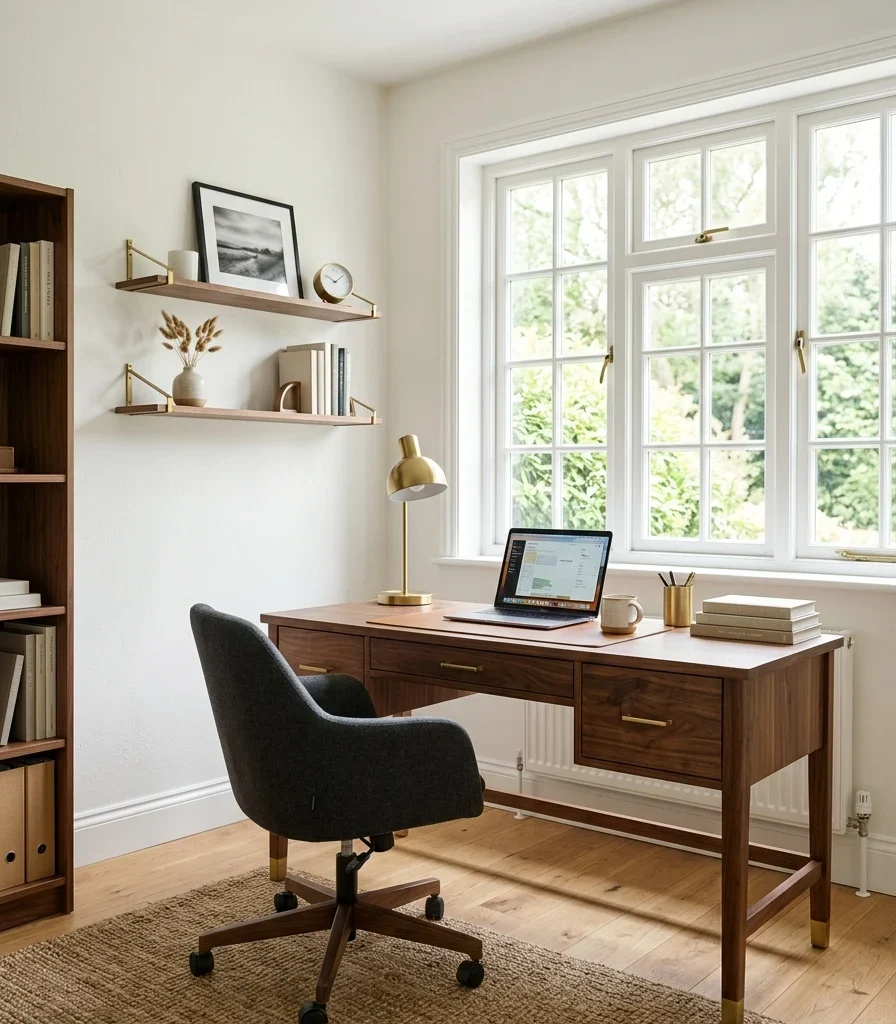
2. Walnut Wood Paired with Brushed Steel for a Modern Material Palette

2. Walnut Wood Paired with Brushed Steel for a Modern Material Palette

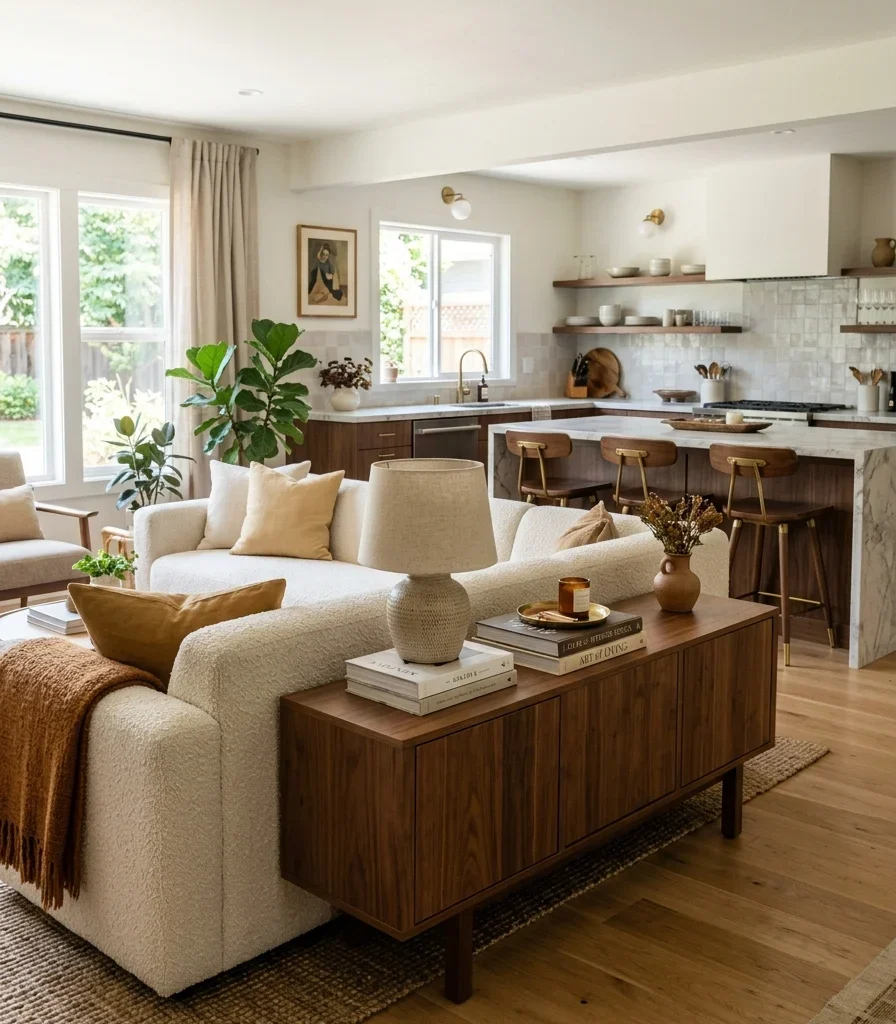
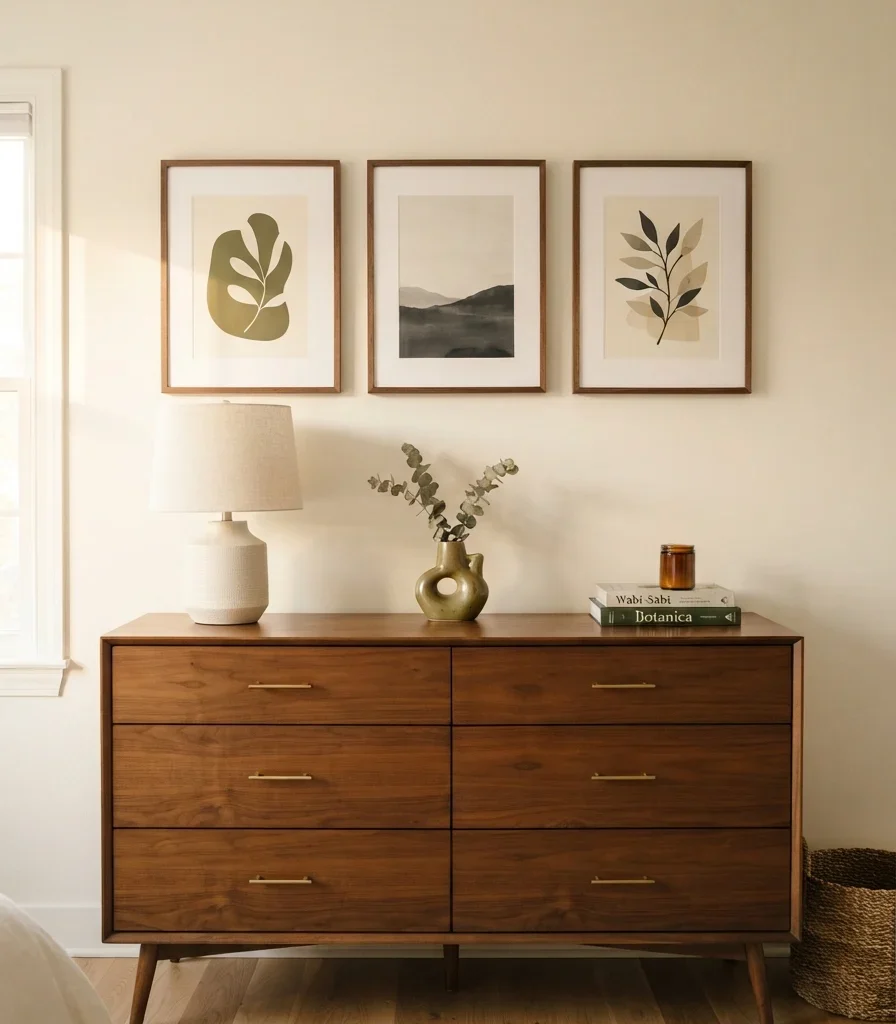
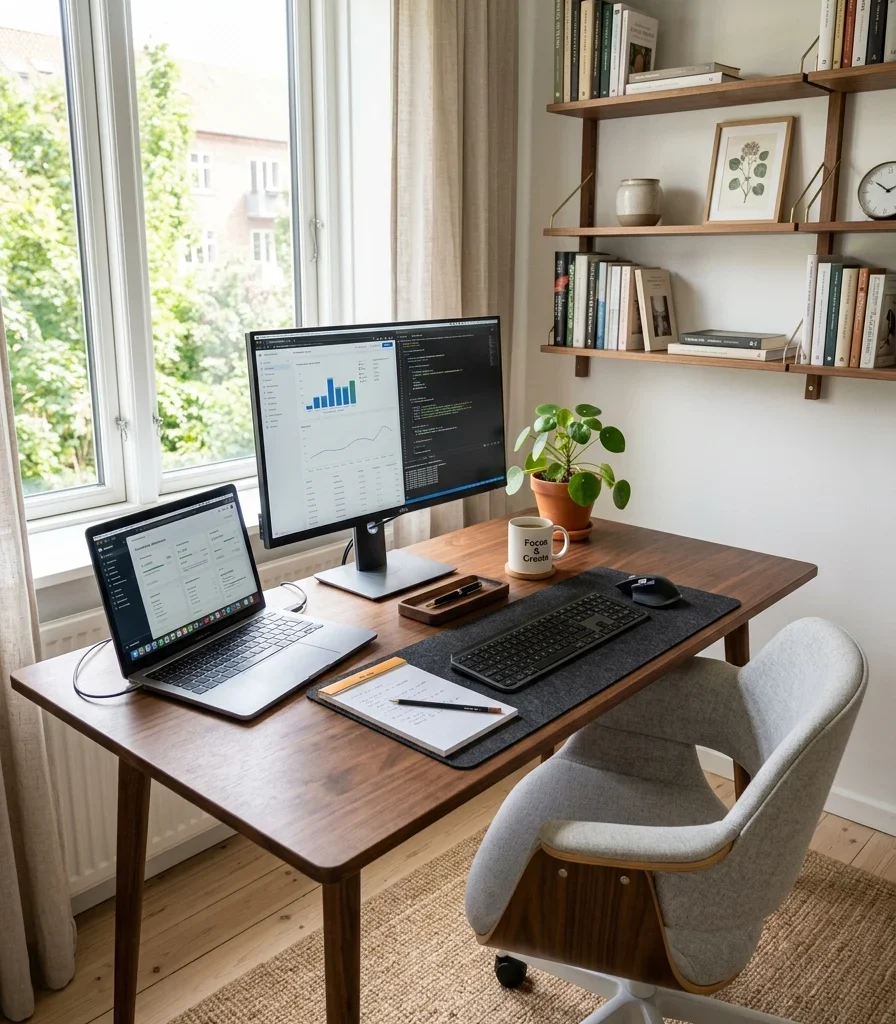
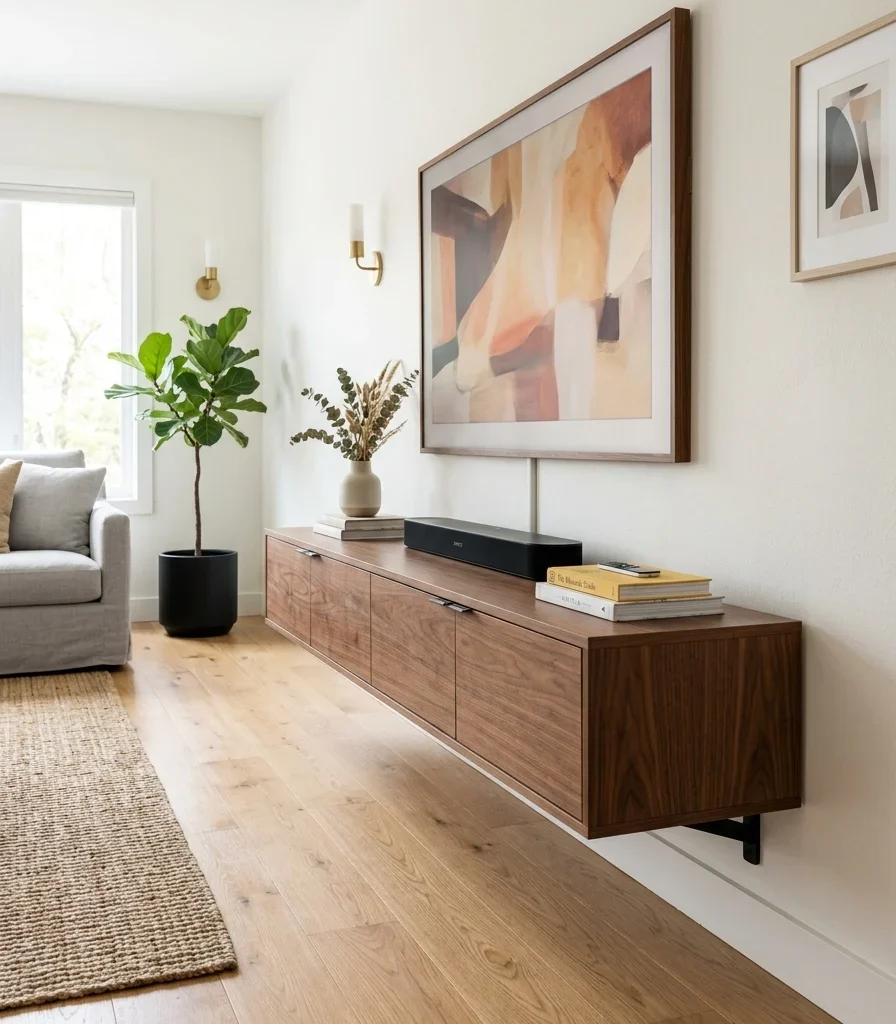
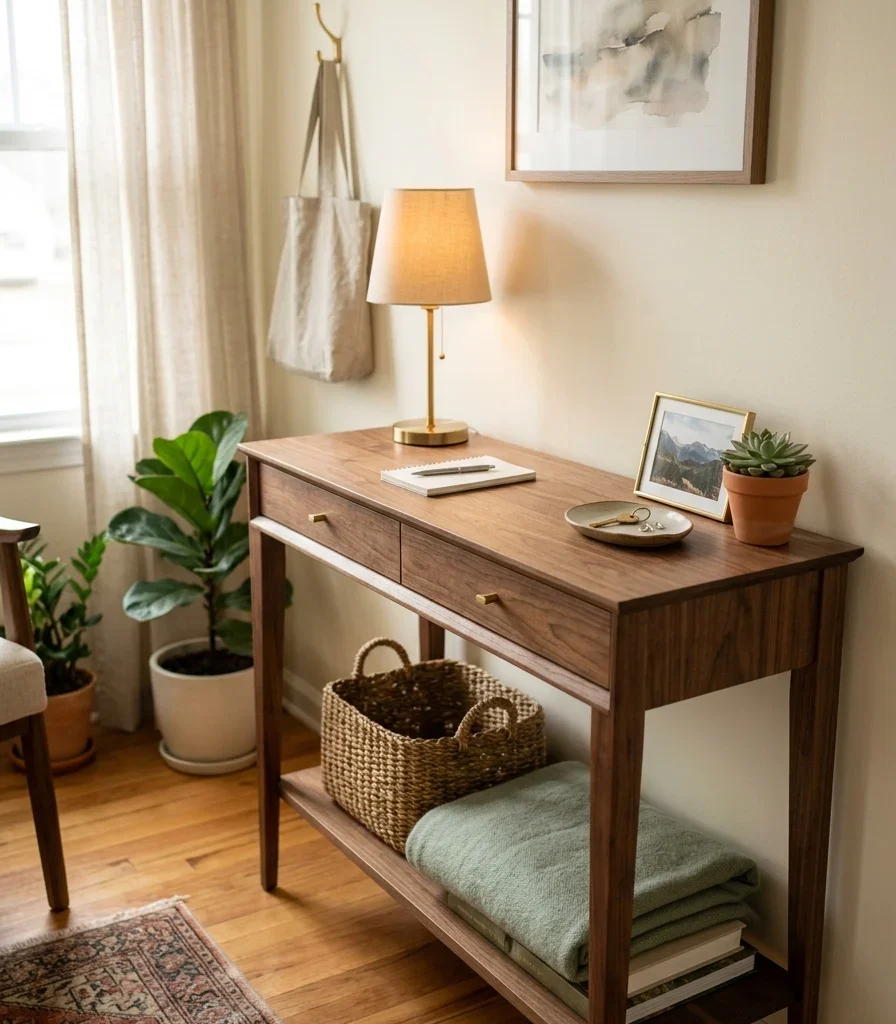
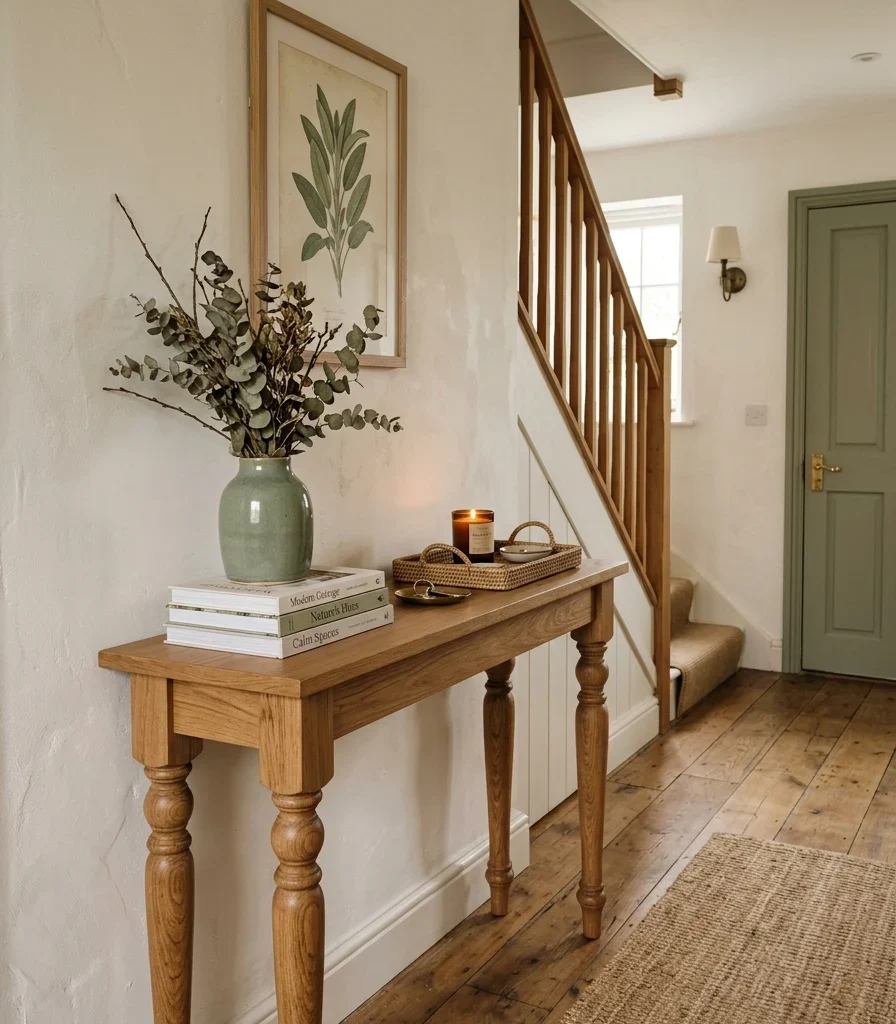
Vibe: The console feels warm despite the cool metal running through it.

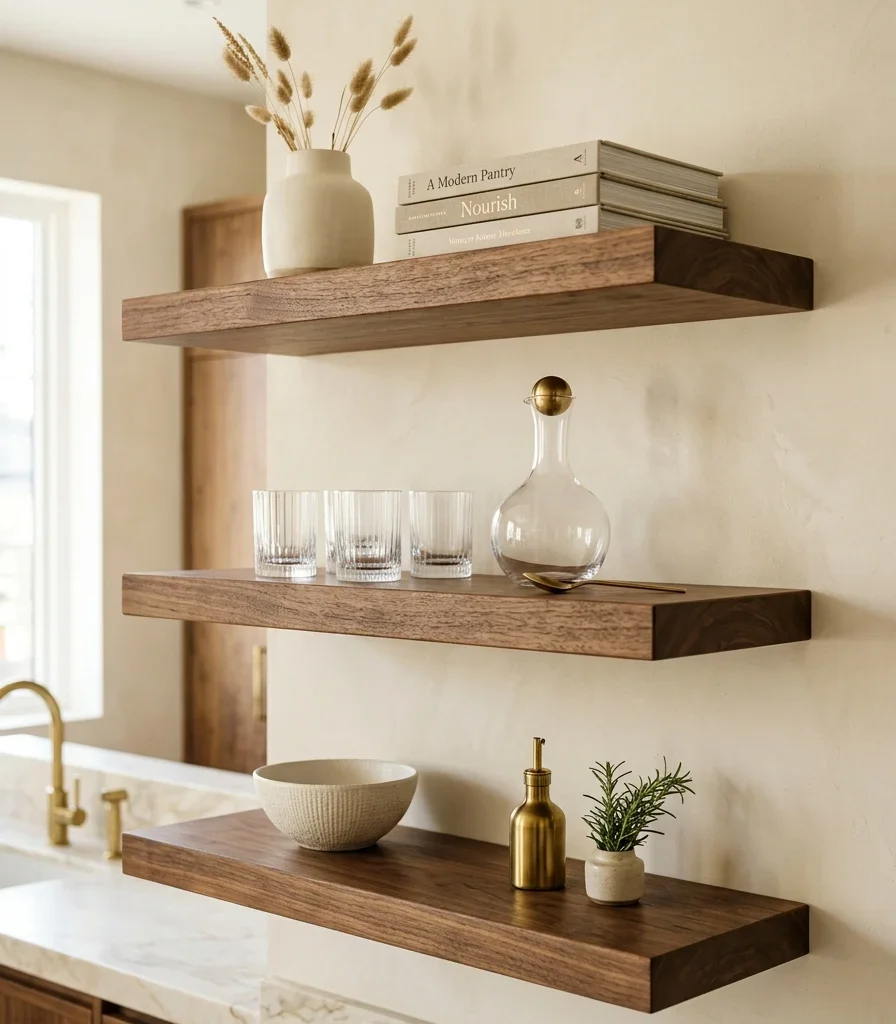
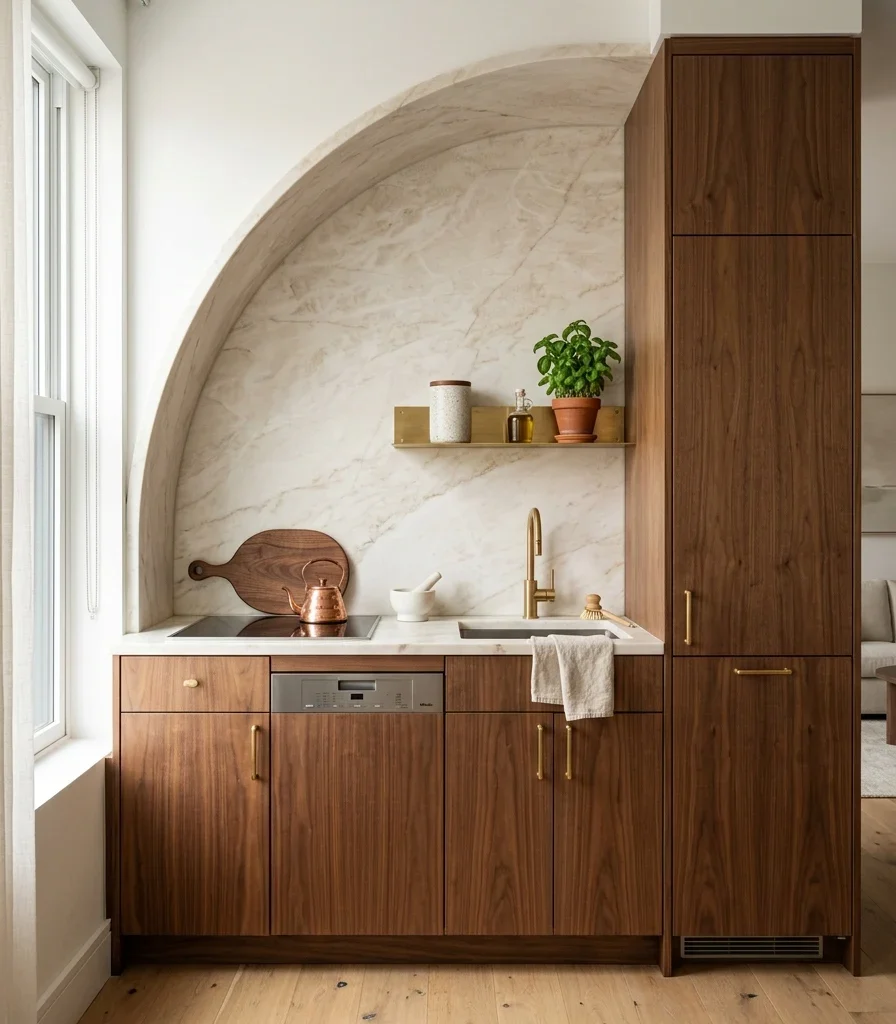
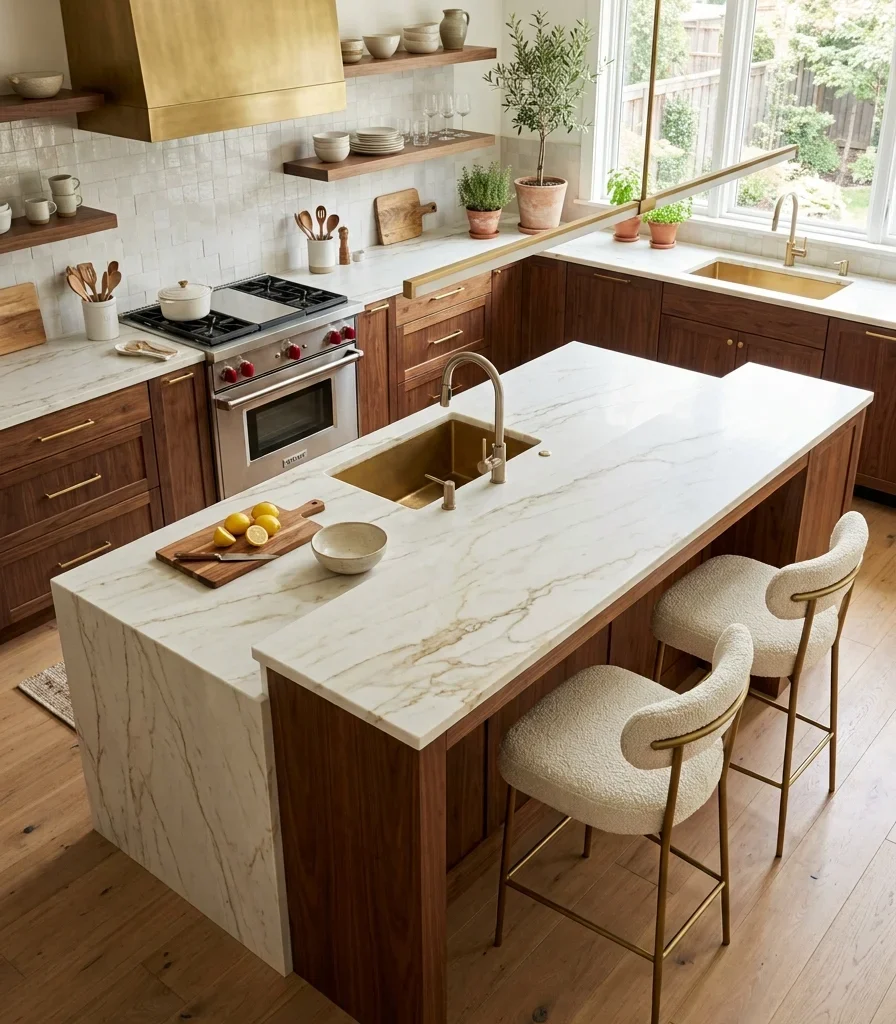
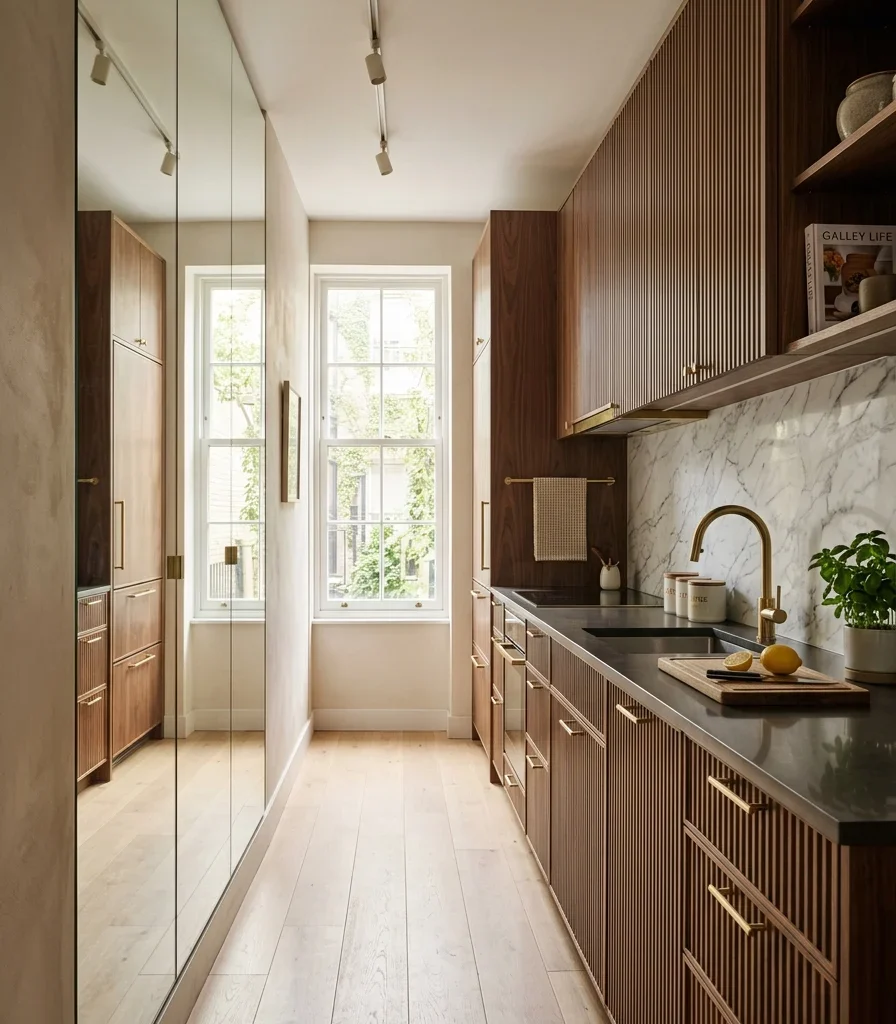
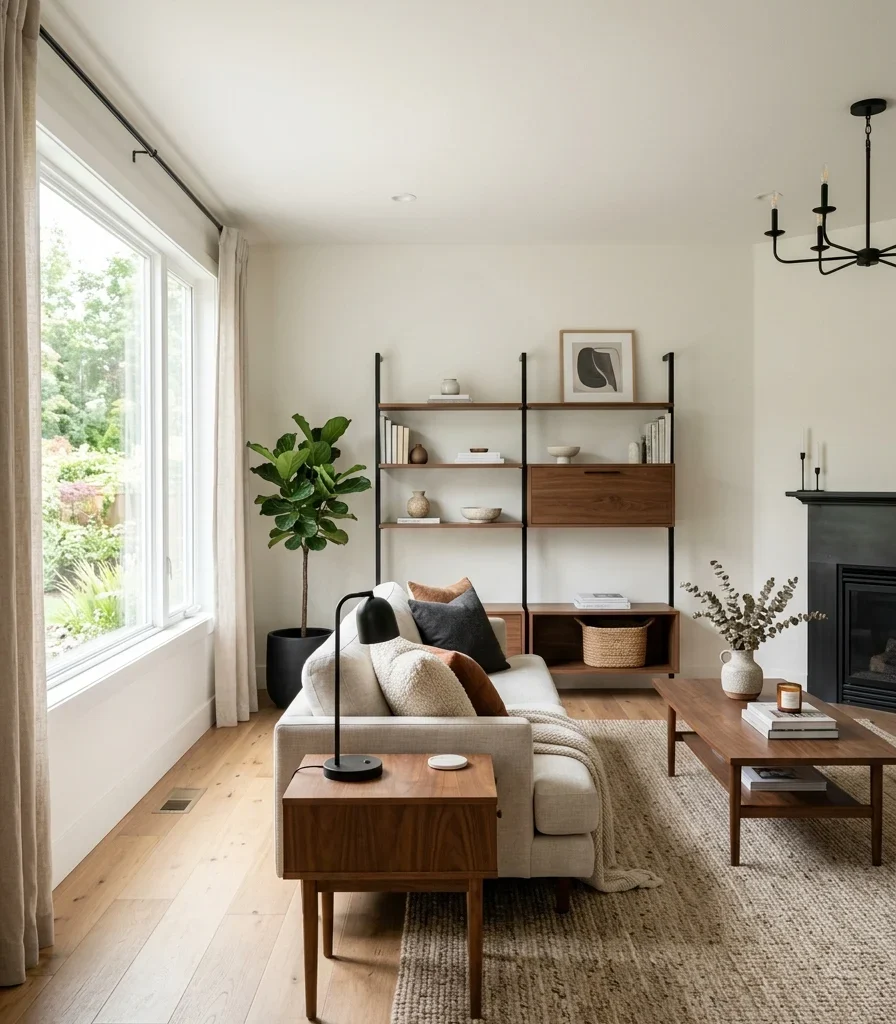
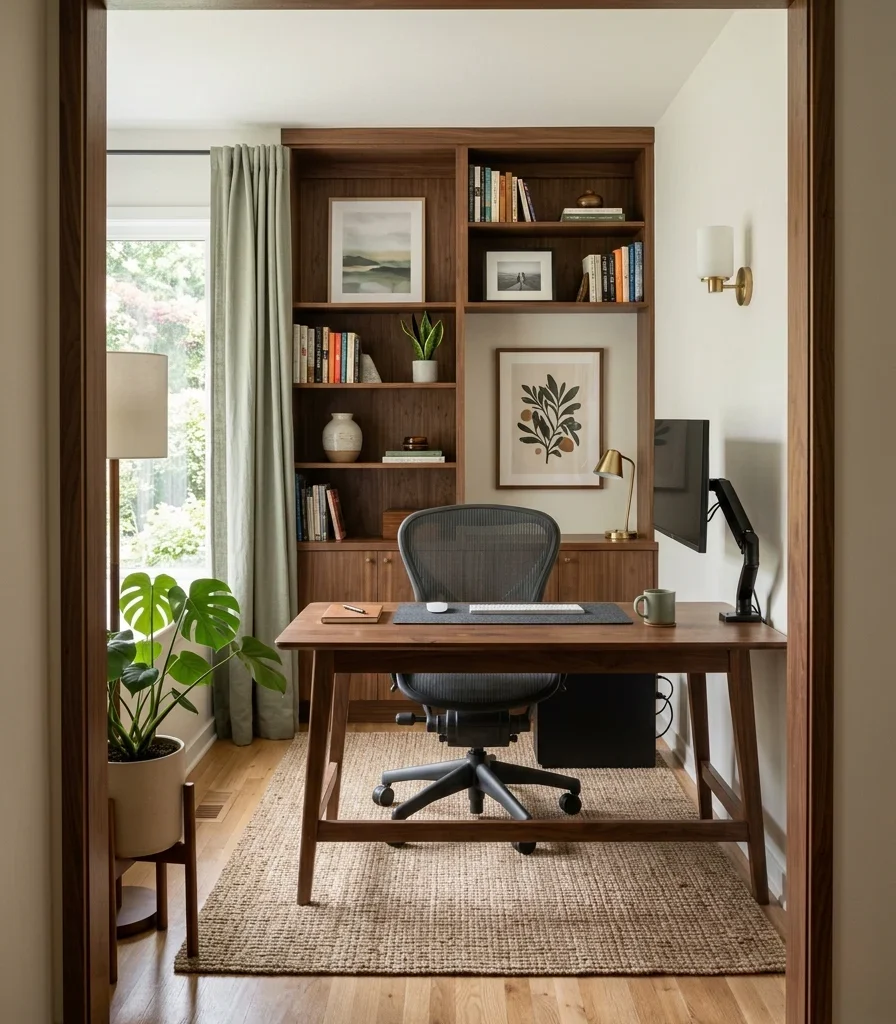
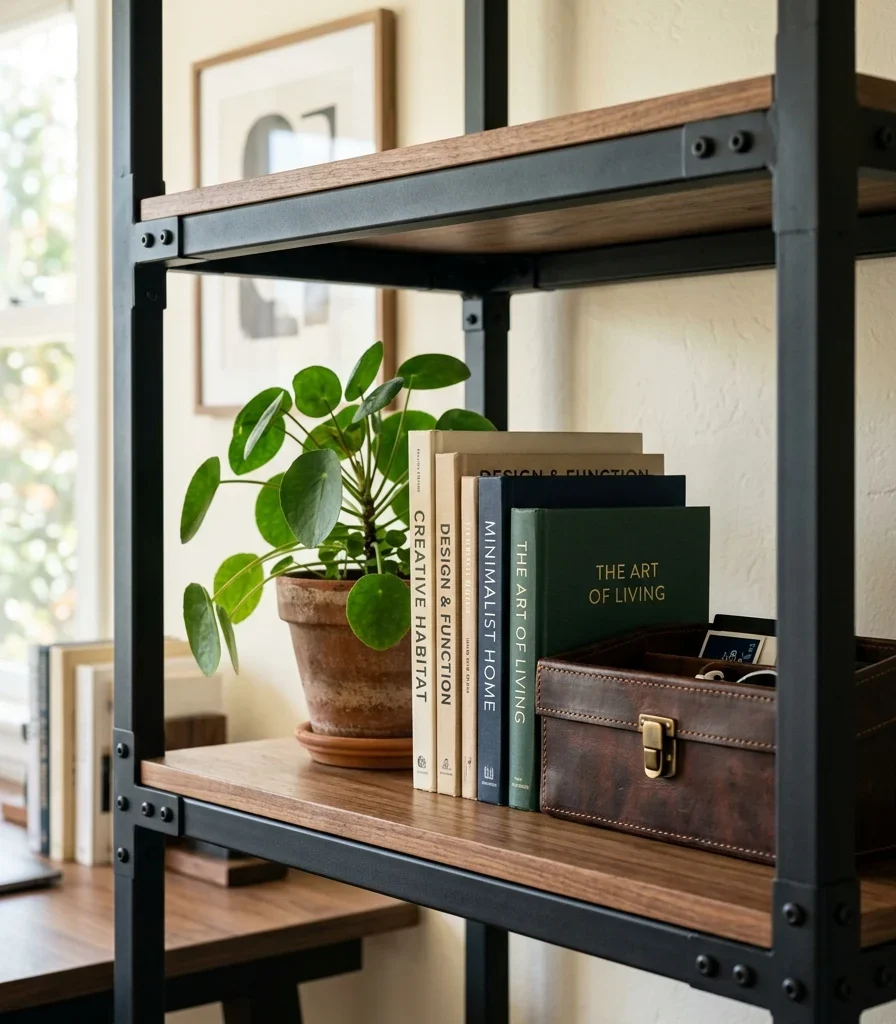
Why it works: This pairing works because of temperature contrast — walnut’s amber warmth against steel’s cool gray keeps the material story from feeling one-note. It’s a material layering technique: one warm organic surface, one cool industrial one, balanced roughly 70/30 so wood still leads.

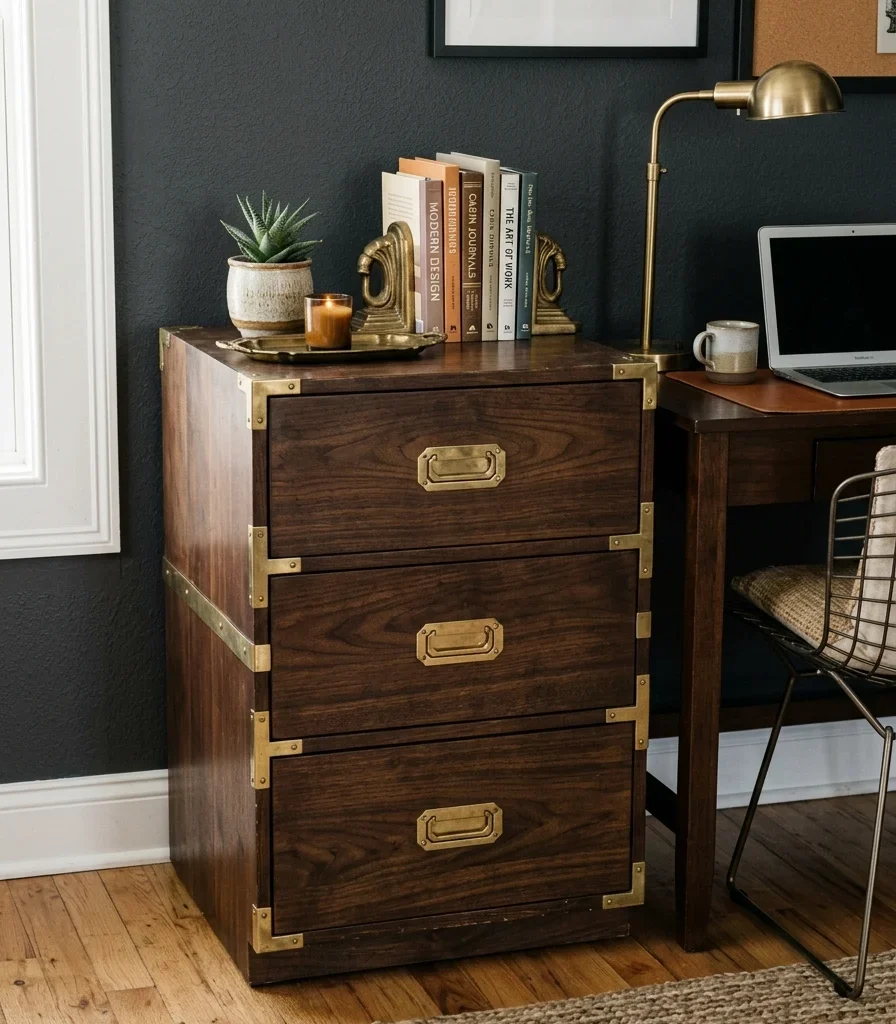
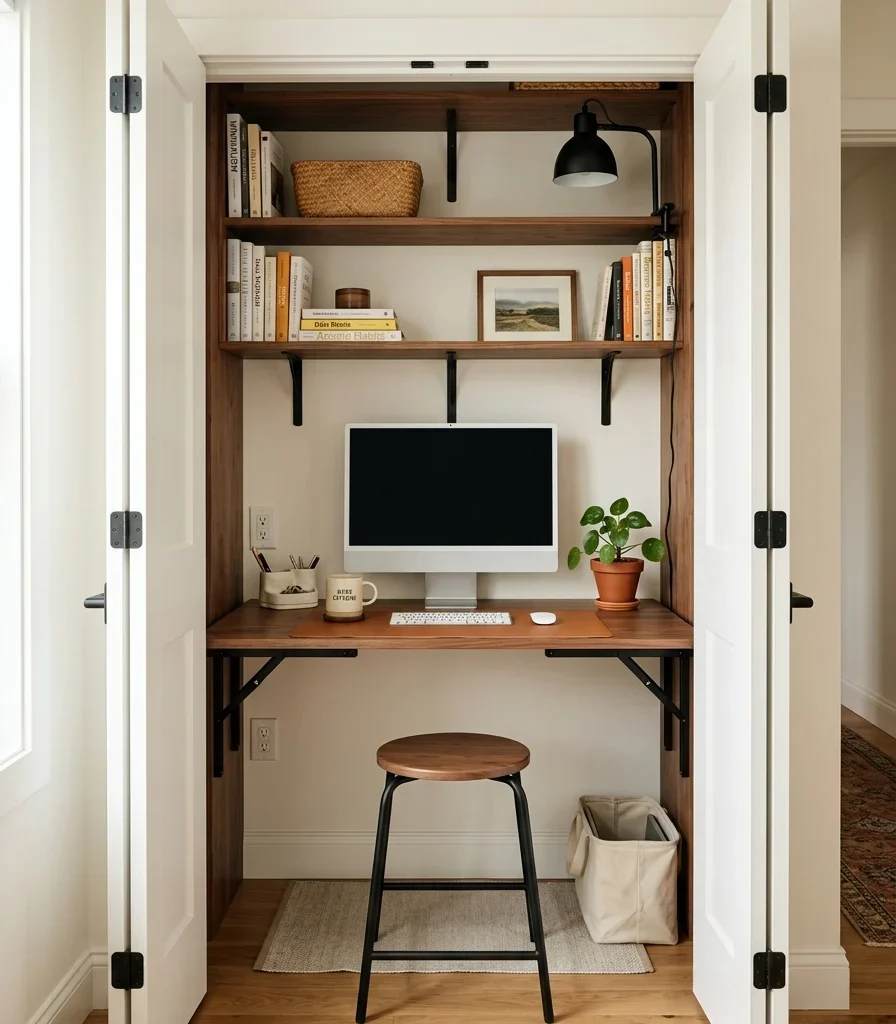
How to get it: Choose furniture where walnut veneer or solid wood covers the visible surfaces and steel appears only at hardware — drawer pulls, table legs, shelf brackets — so the metal reads as structure, not decoration.

Shop The Look

  • Walnut wood media console brushed steel legs
  • Brushed steel drawer pull hardware set
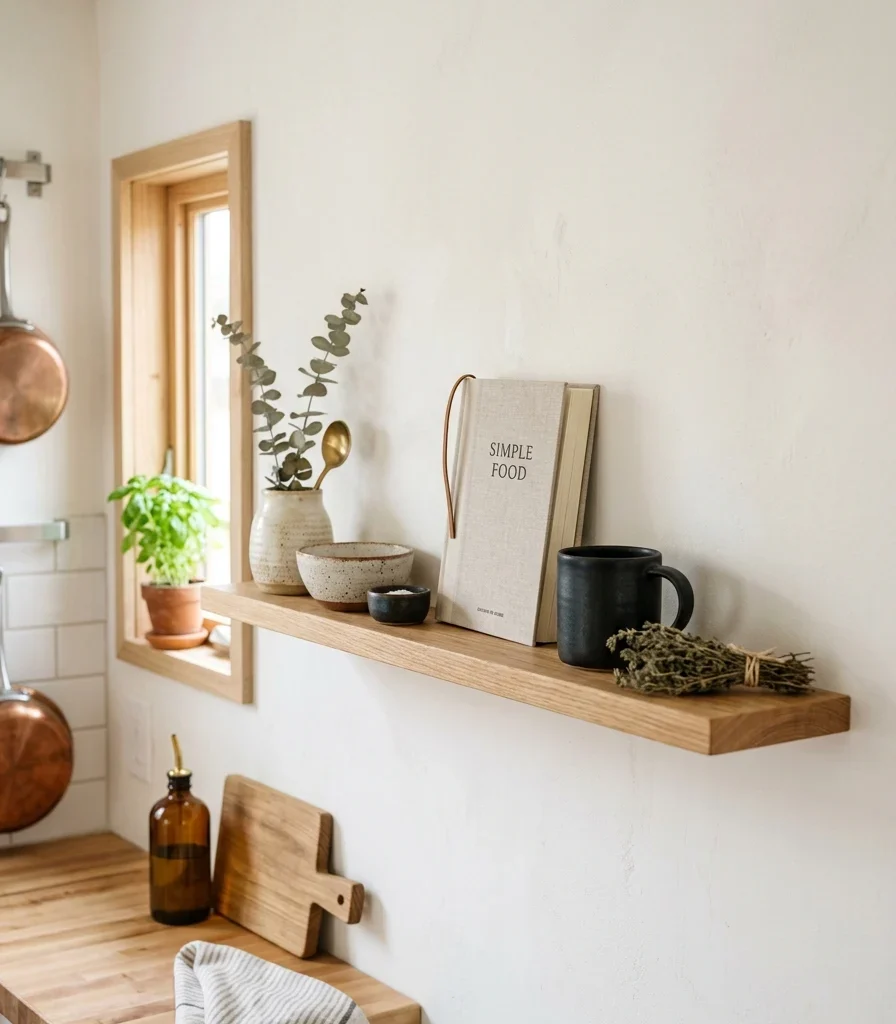
  • Matte ceramic decorative bowl neutral
  • Stoneware planter pot walnut stand
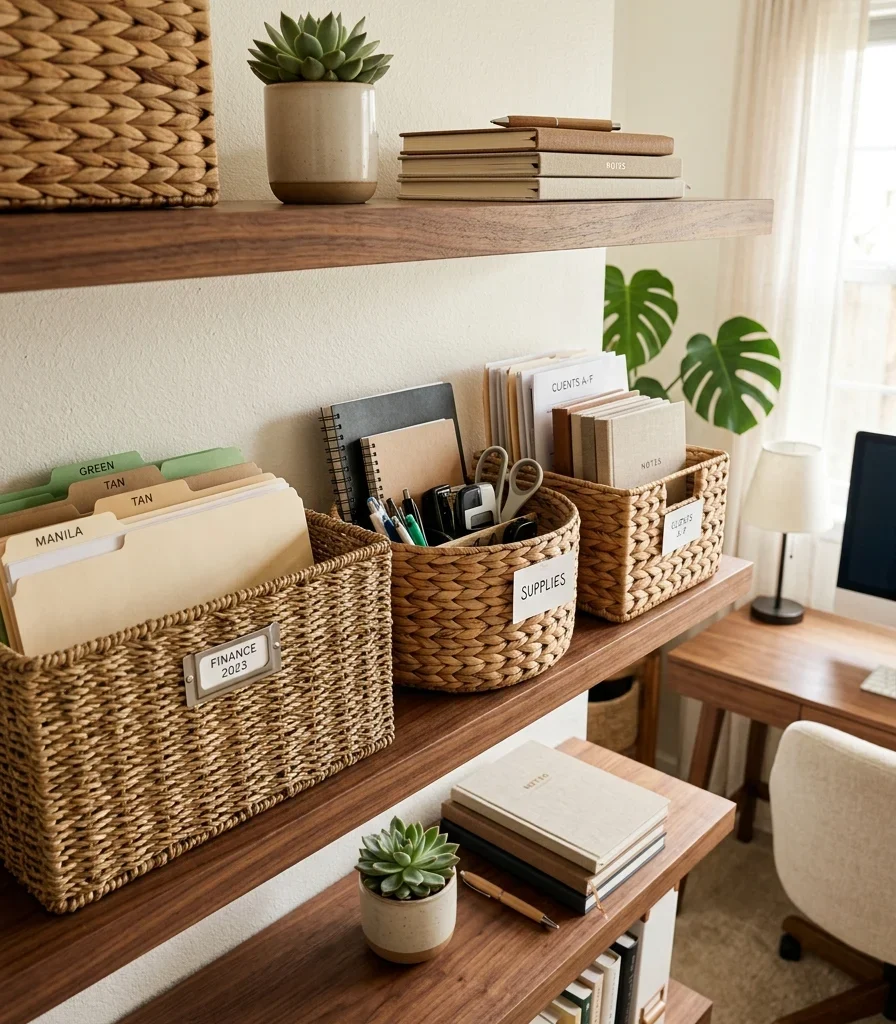
  • Woven jute basket storage modern

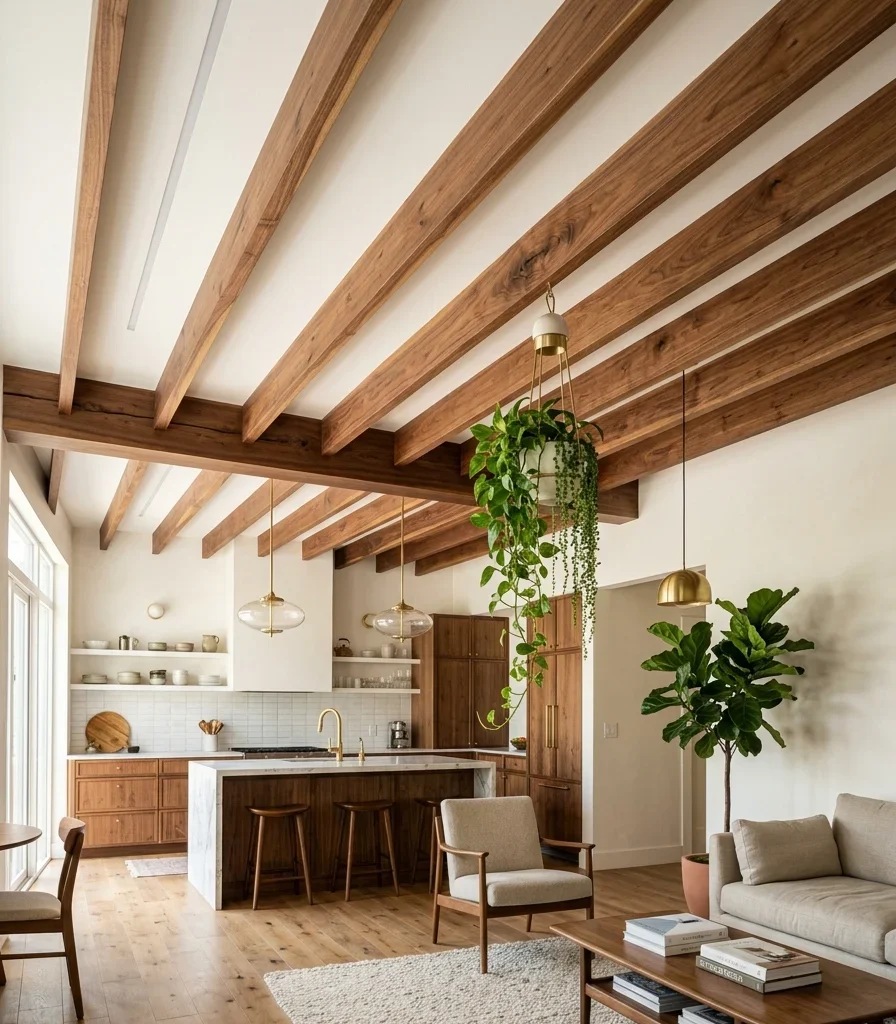
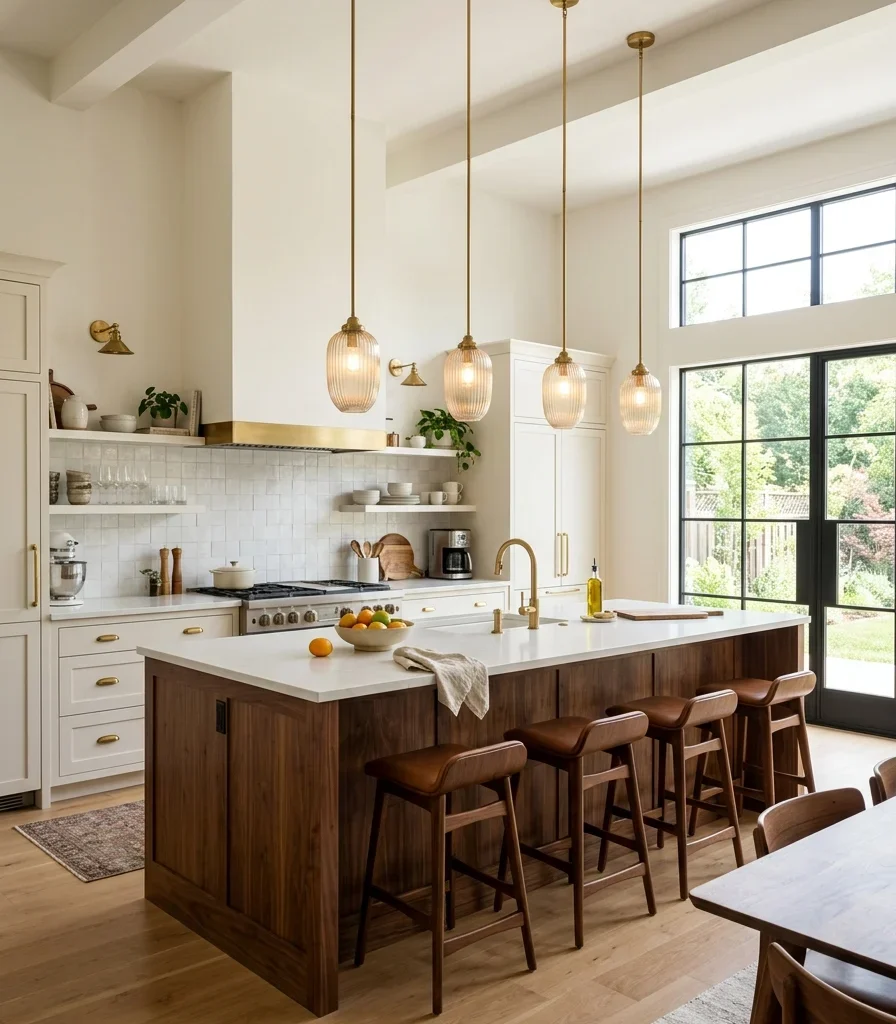
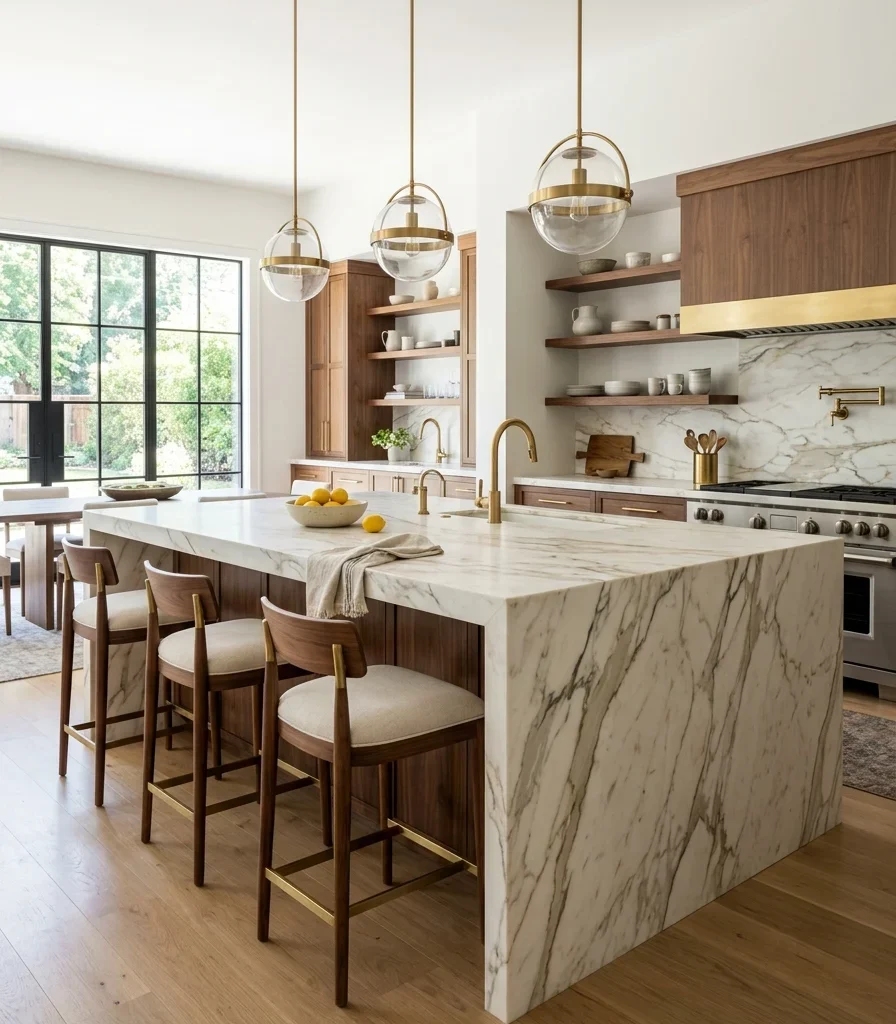
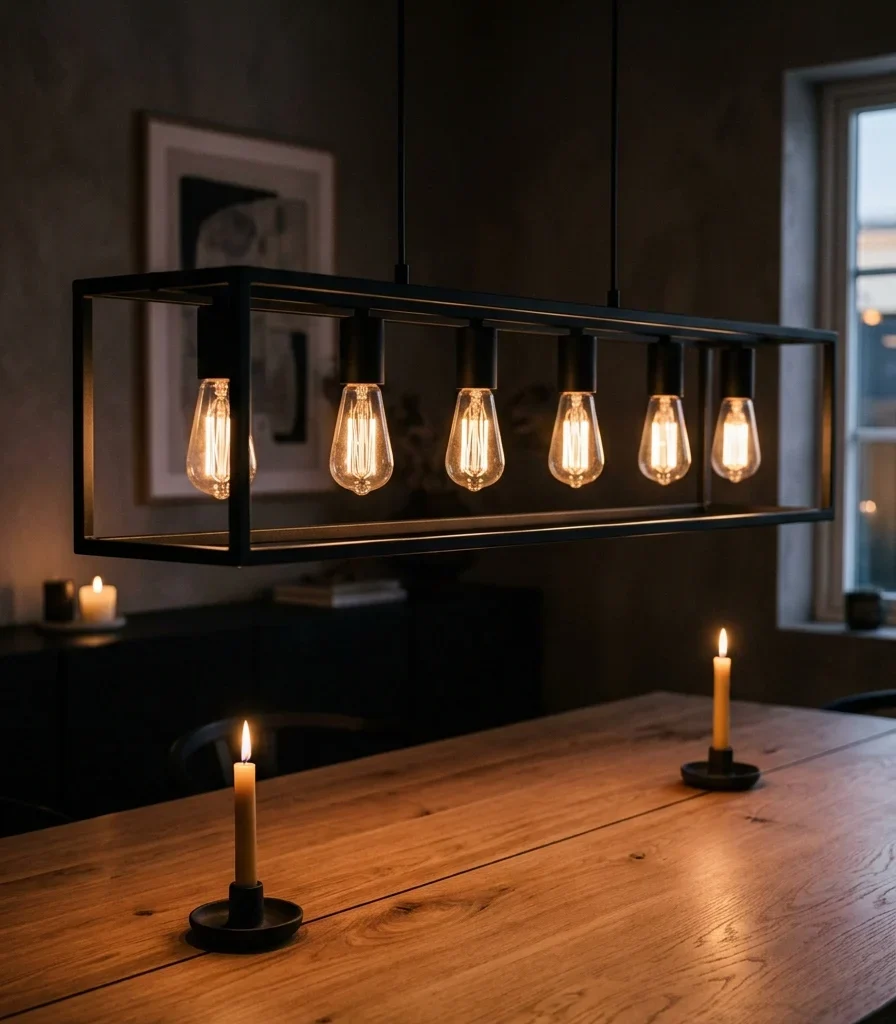
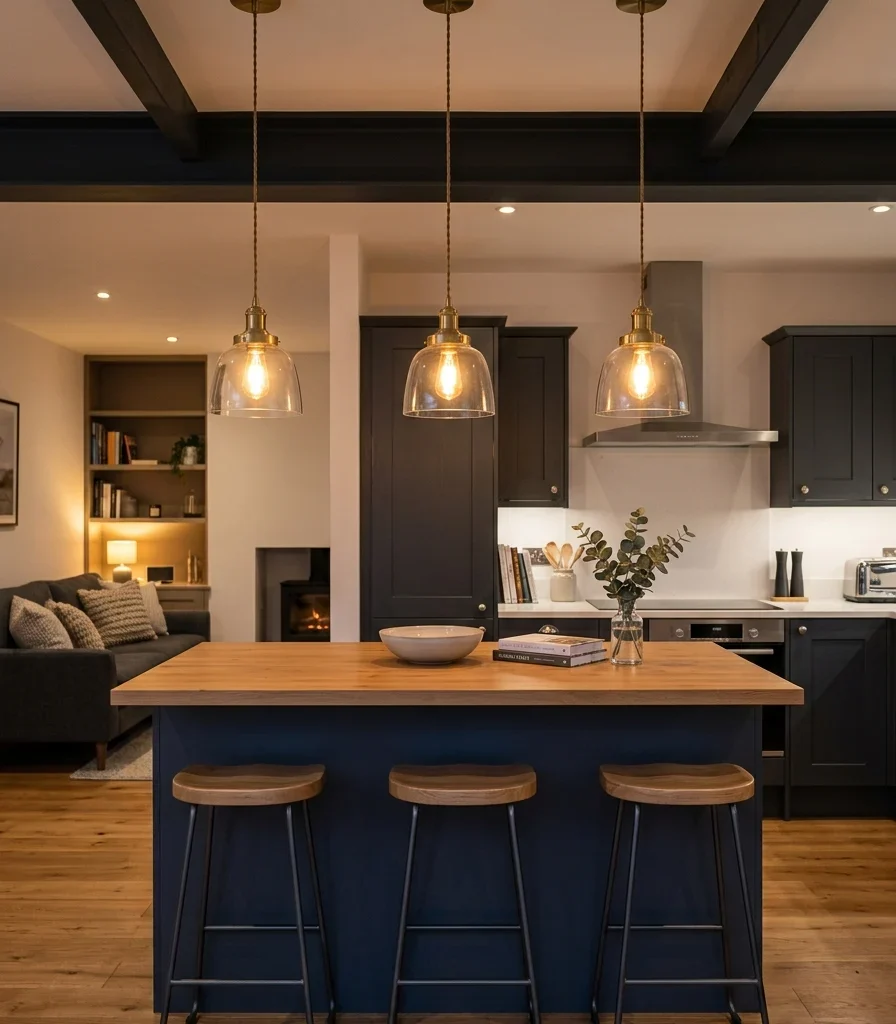
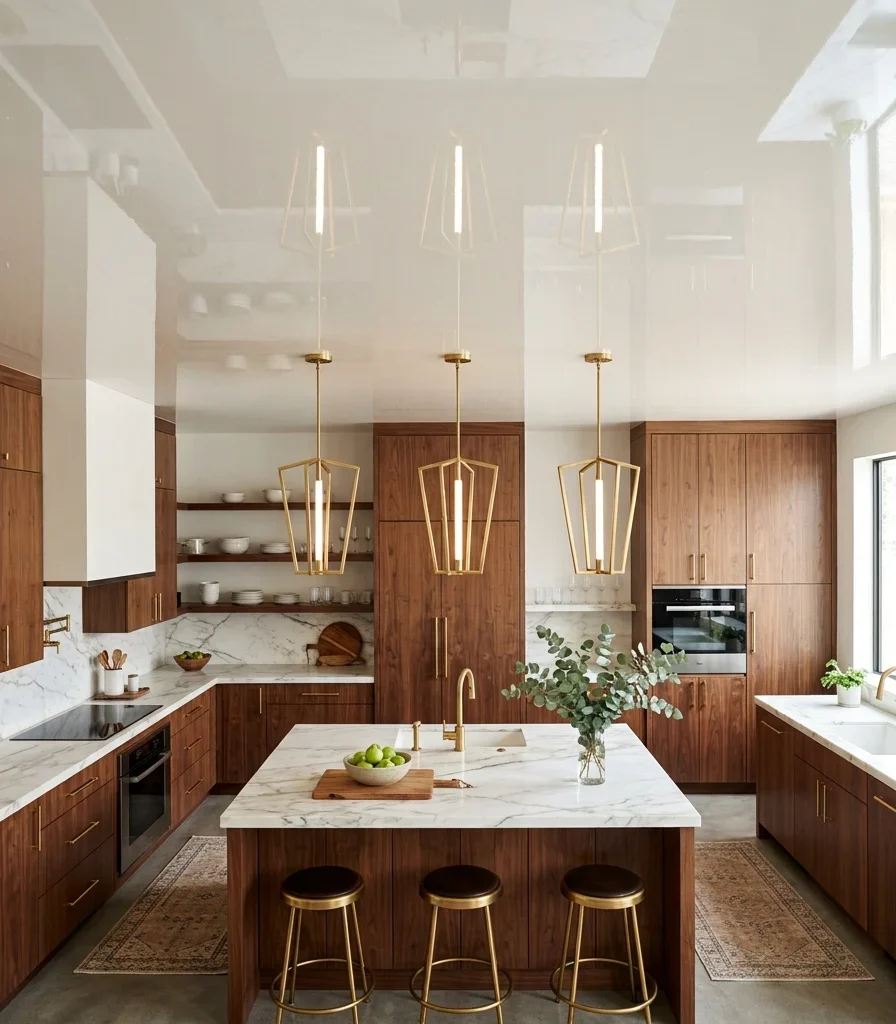
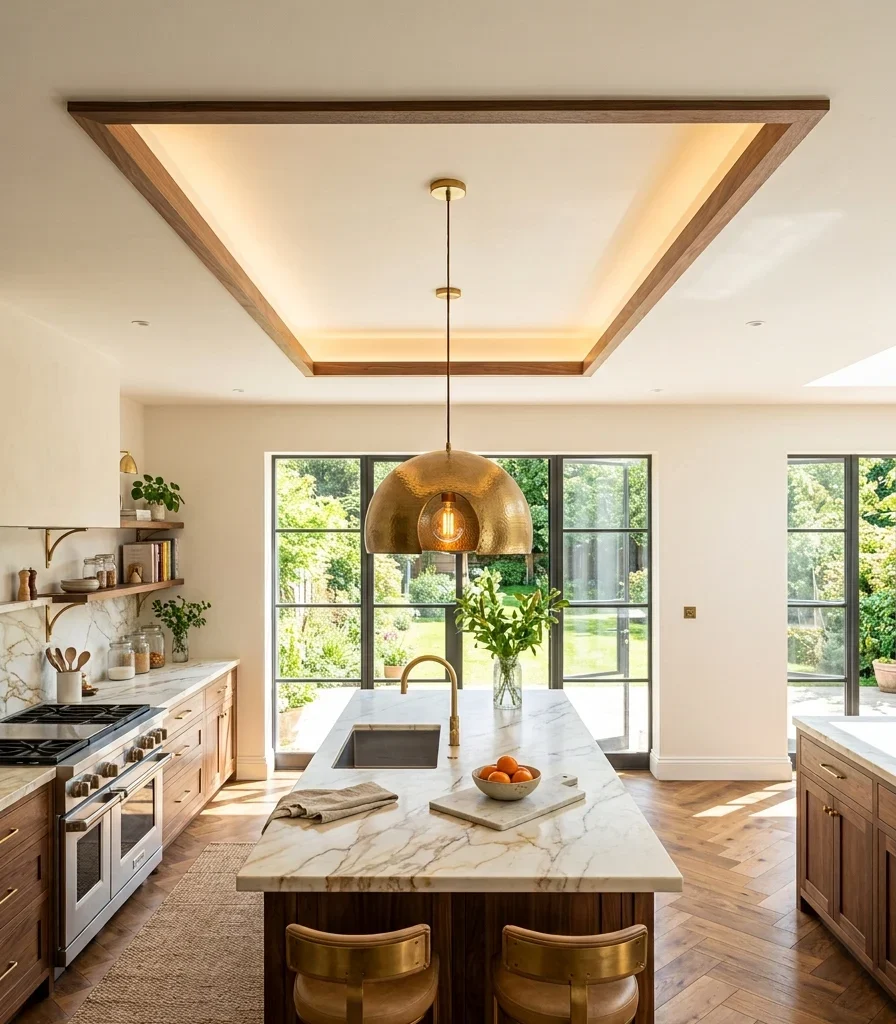
3. Statement Pendant Lighting Over Key Zones

3. Statement Pendant Lighting Over Key Zones

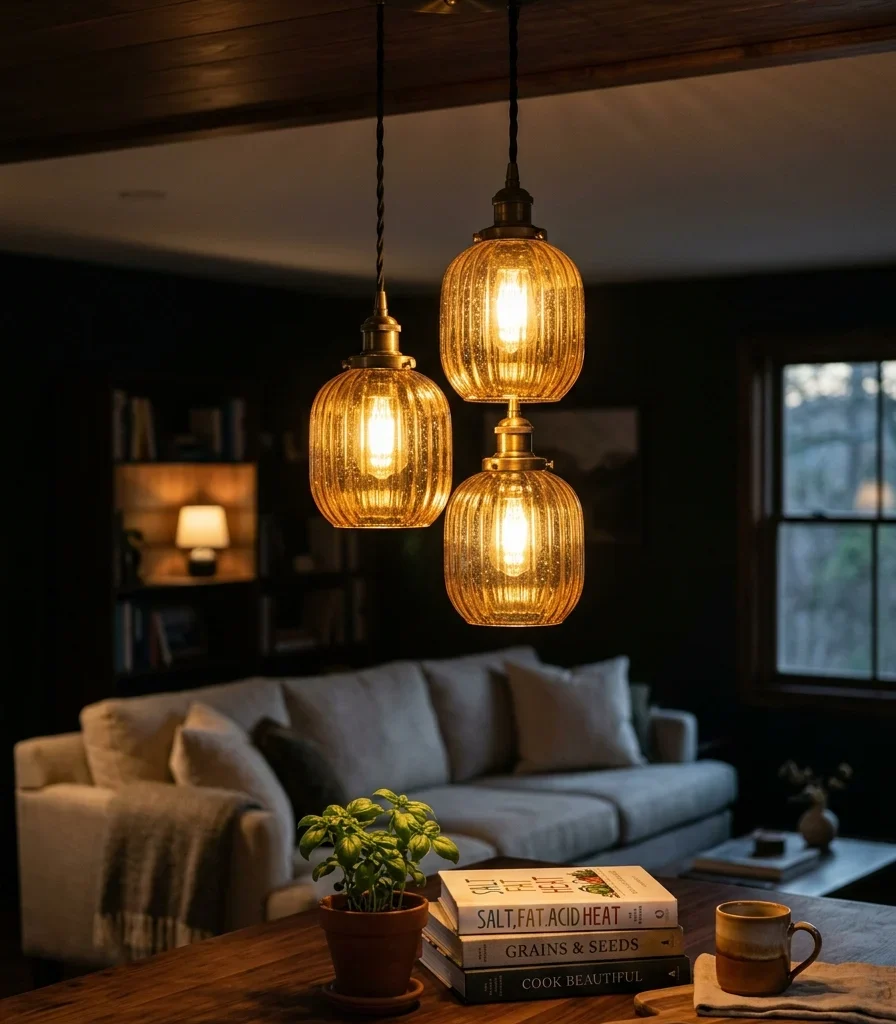
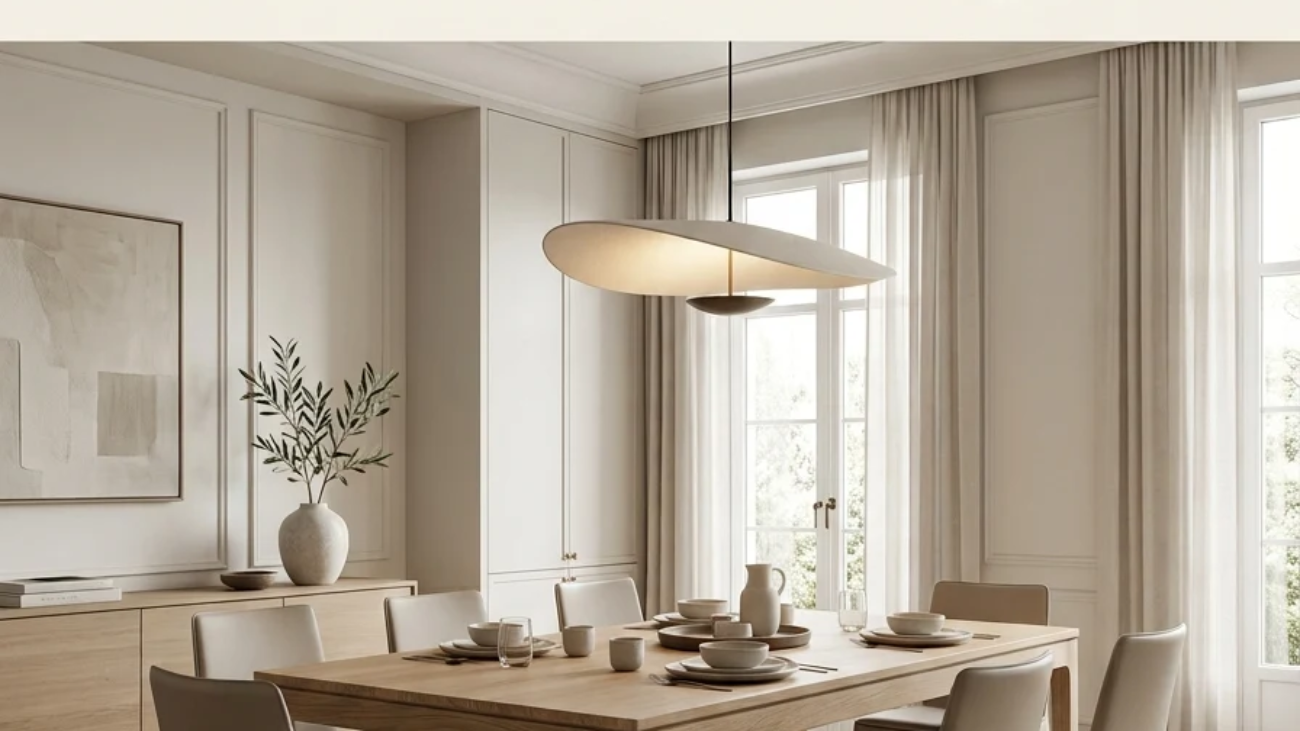
Vibe: The table feels intimate, pulled into a pool of warm light.

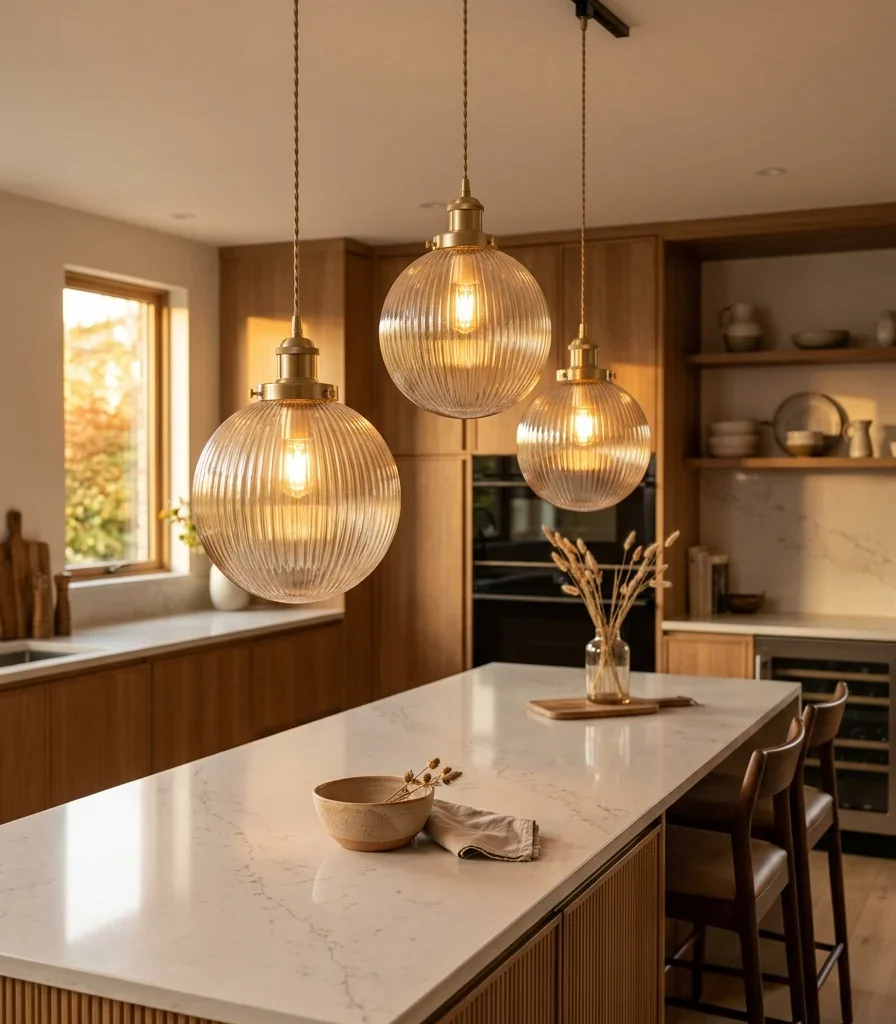
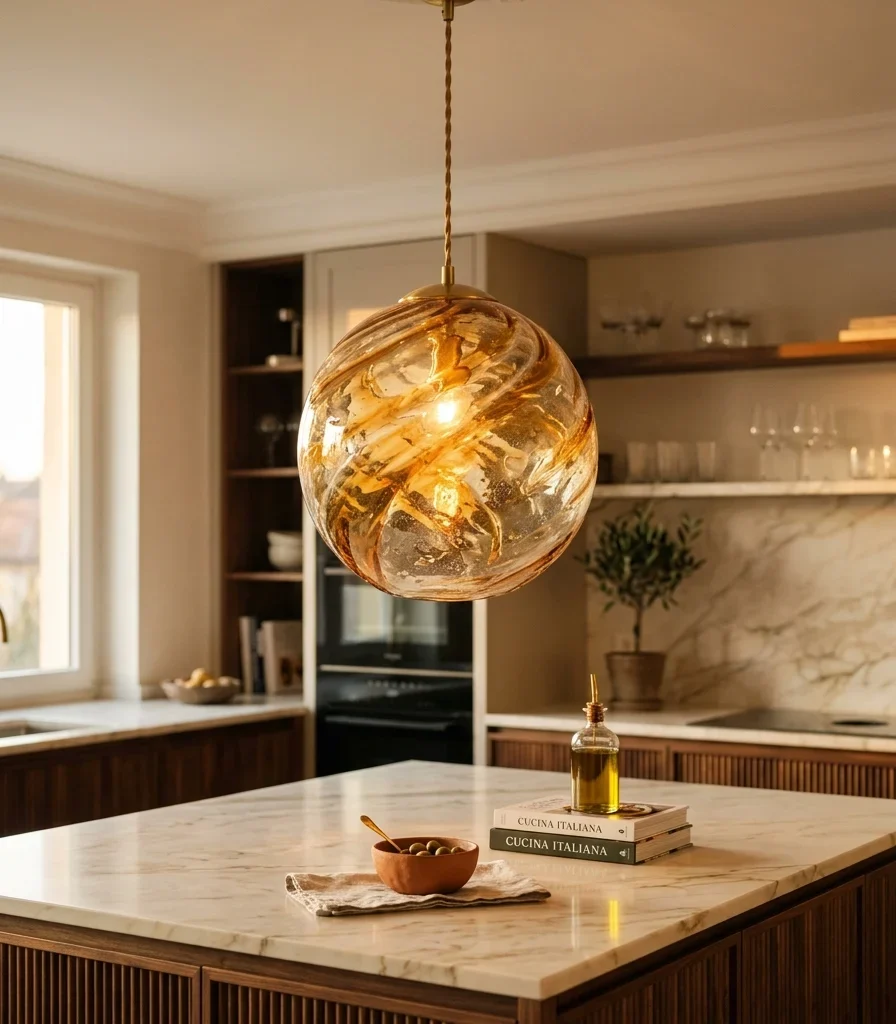
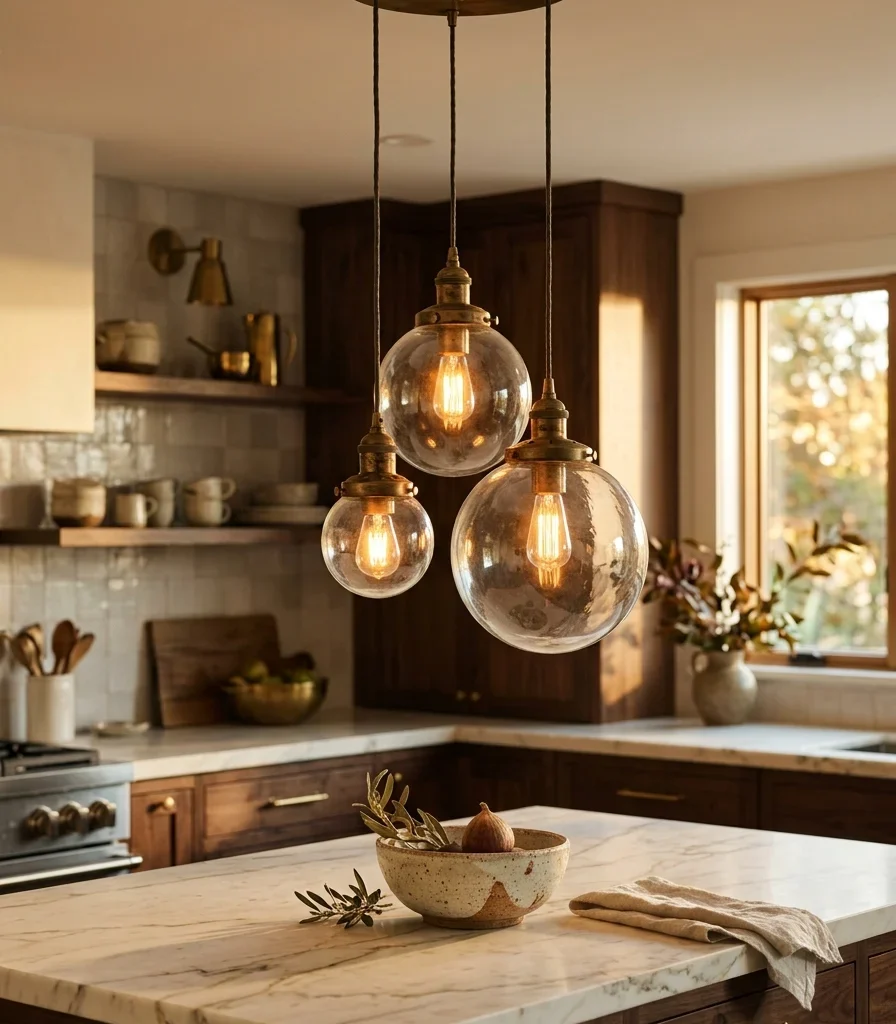
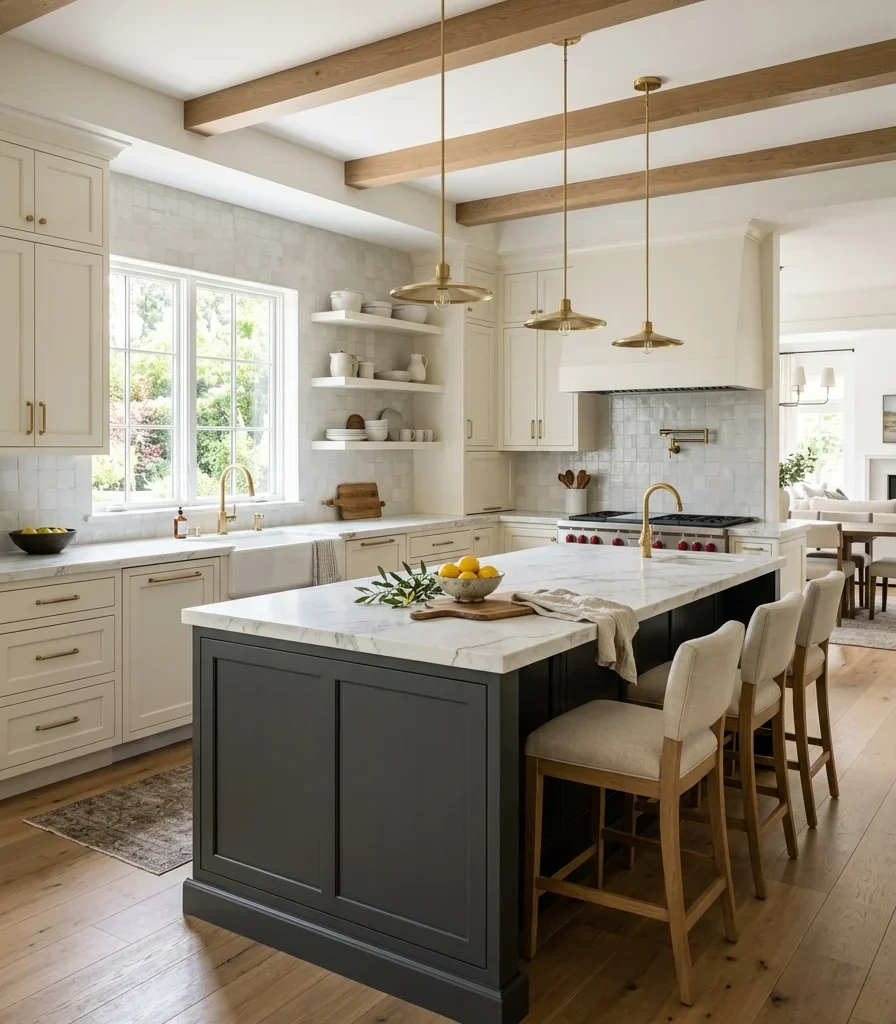
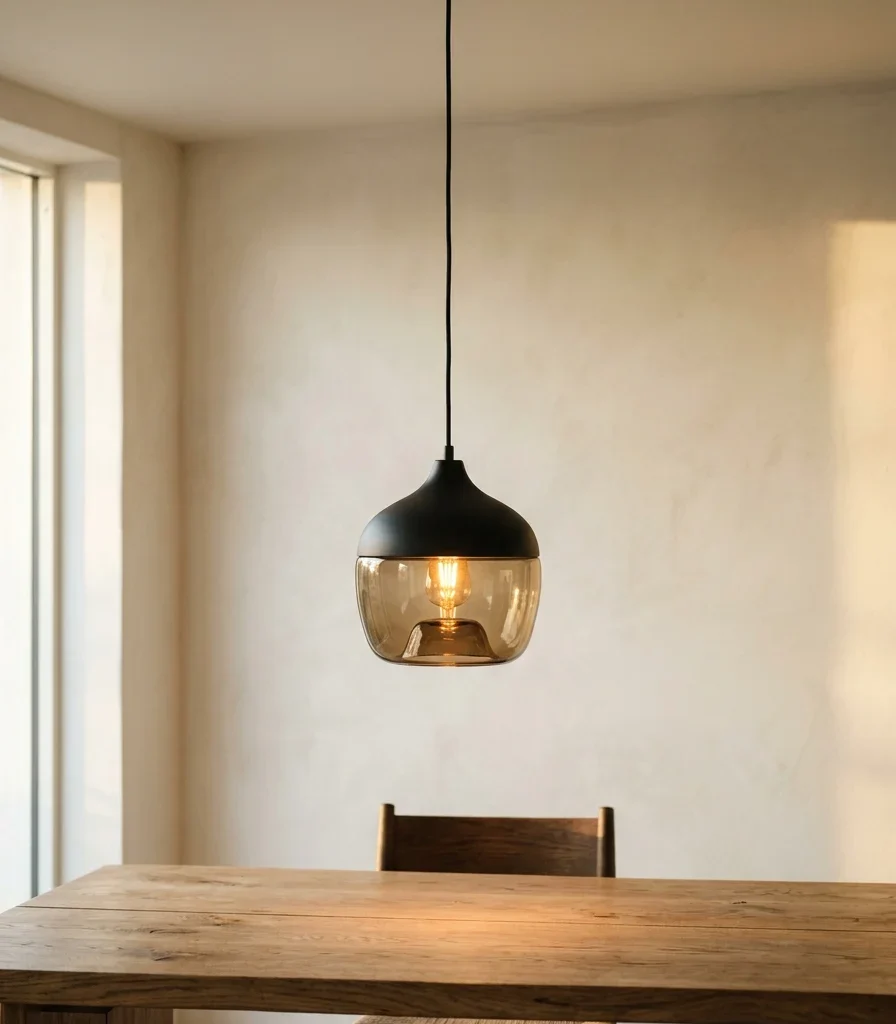
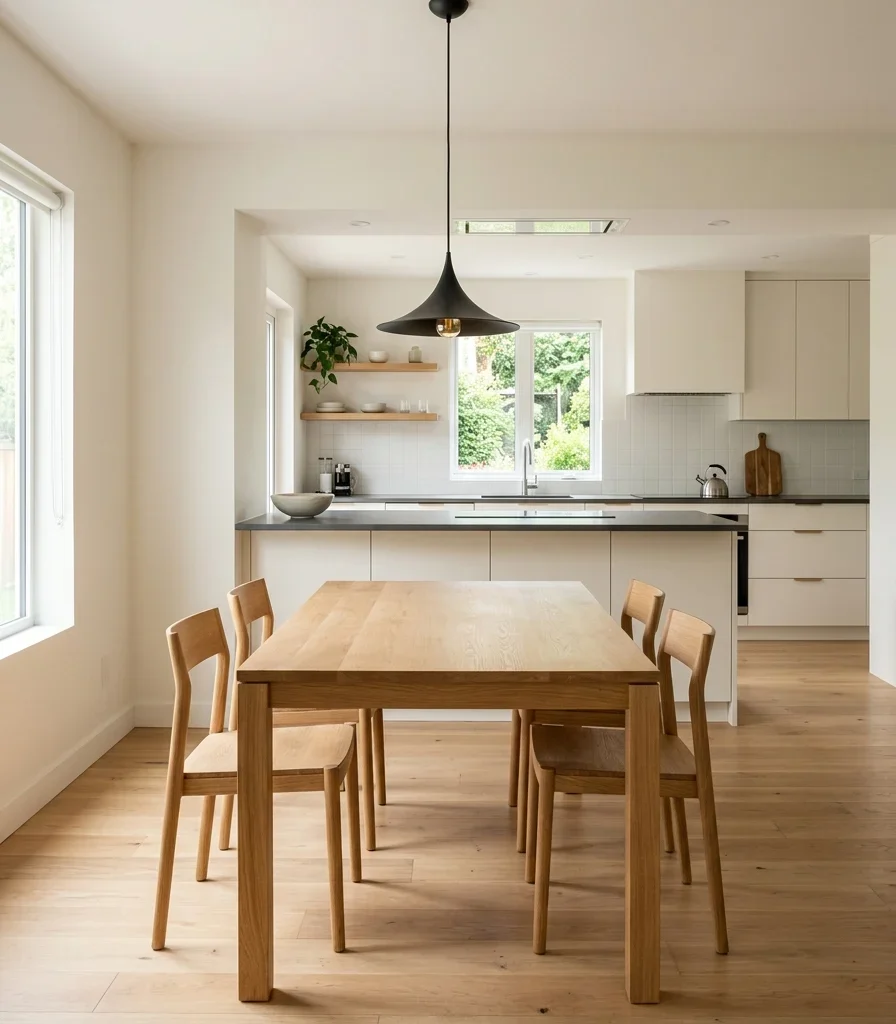
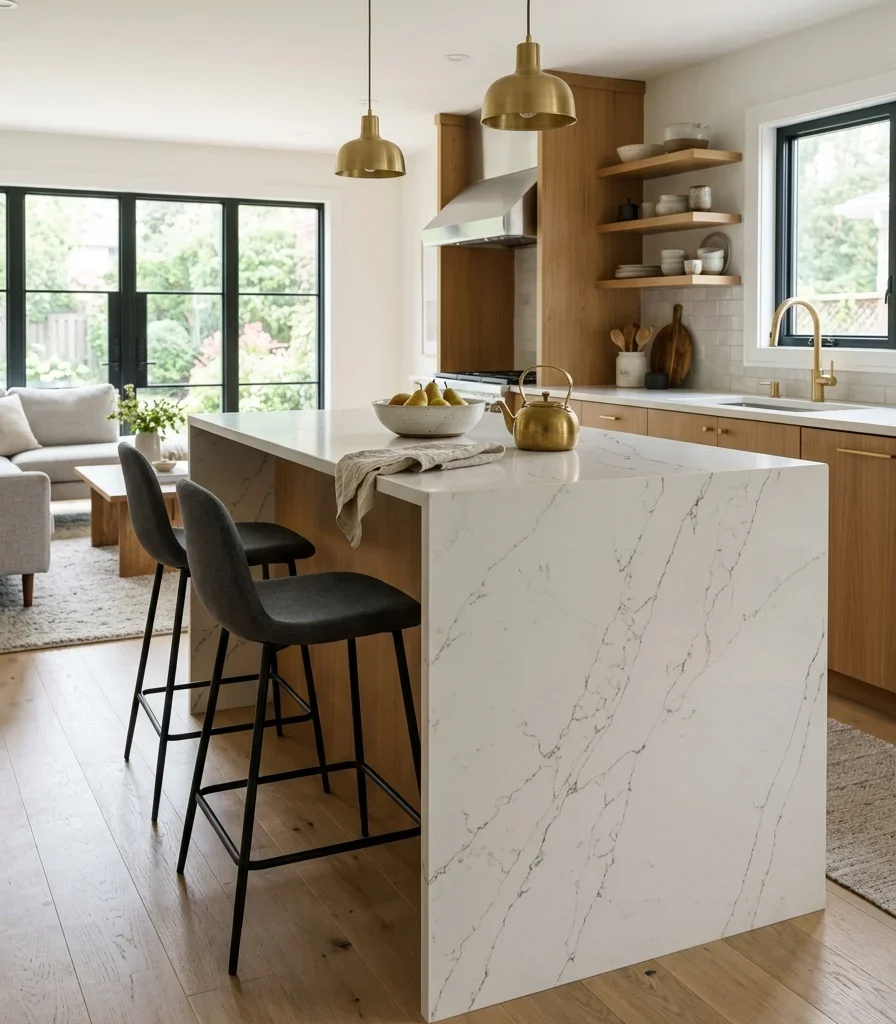
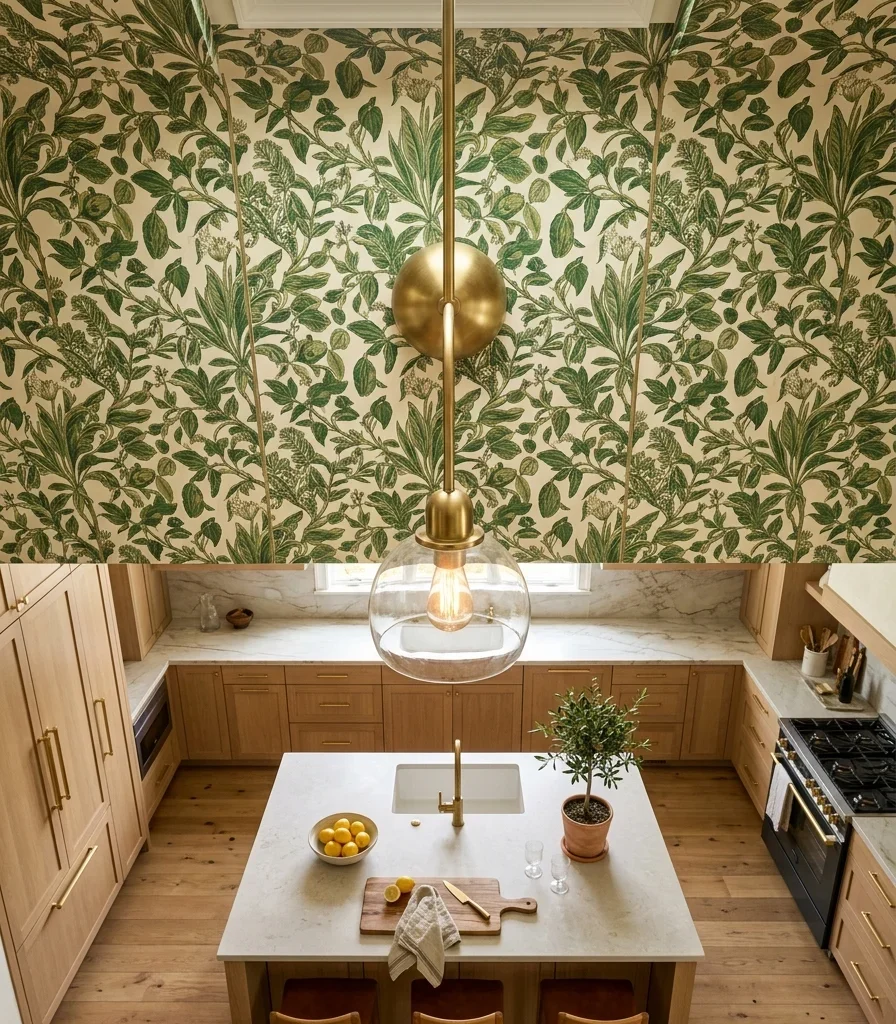
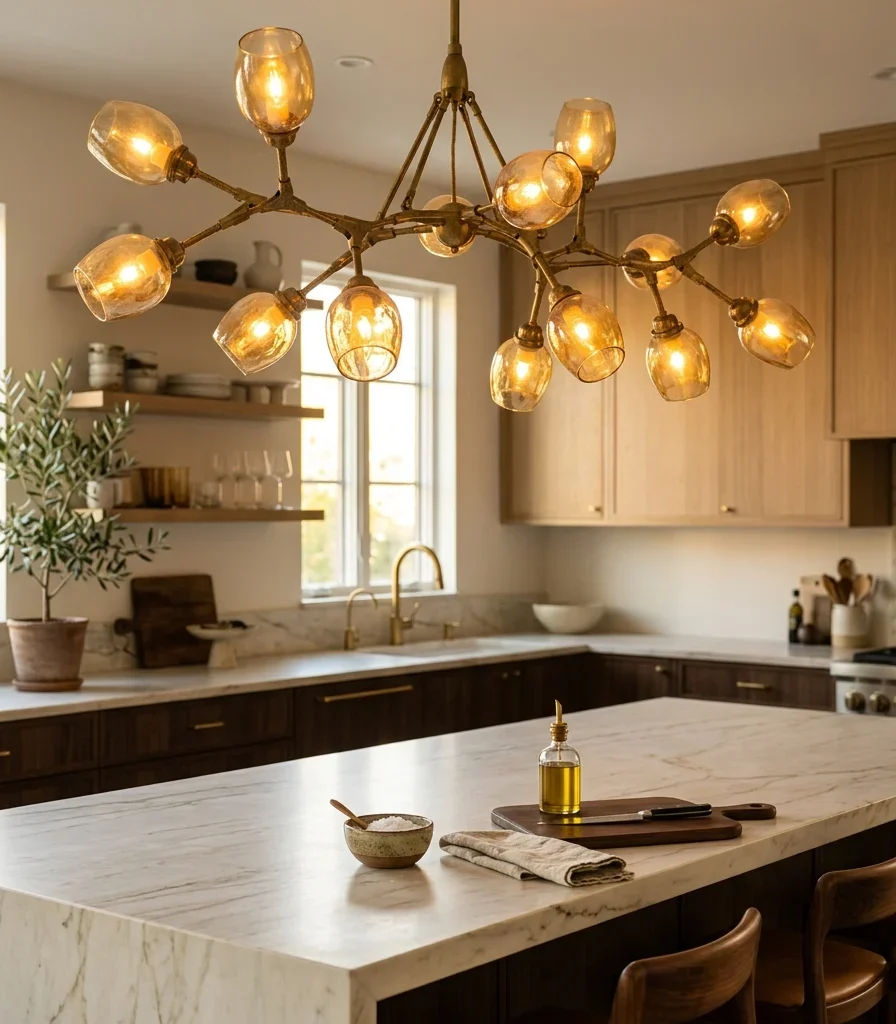
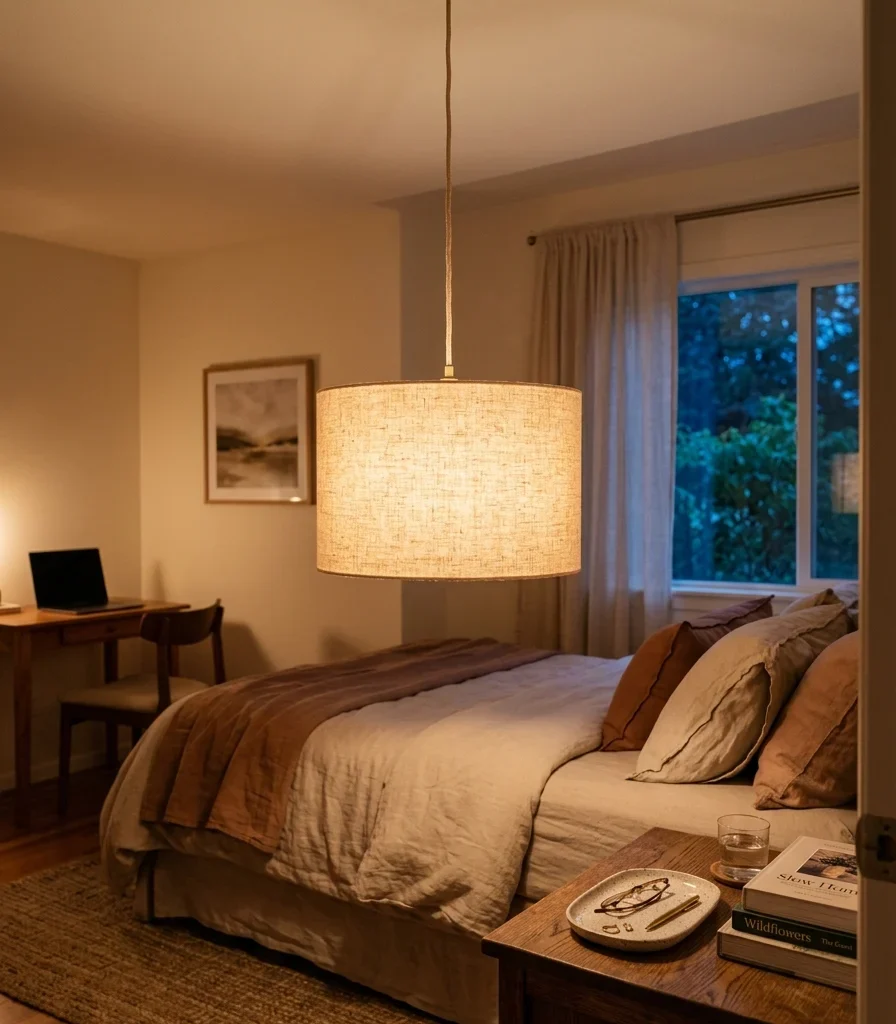
Why it works: Modern lighting design treats fixtures as sculpture, not just function — a single oversized pendant creates a visual anchor point that smaller, scattered lights can’t achieve. Hanging it low (roughly 30 inches above the table surface) also lowers the room’s visual ceiling, making tall spaces feel more intimate.

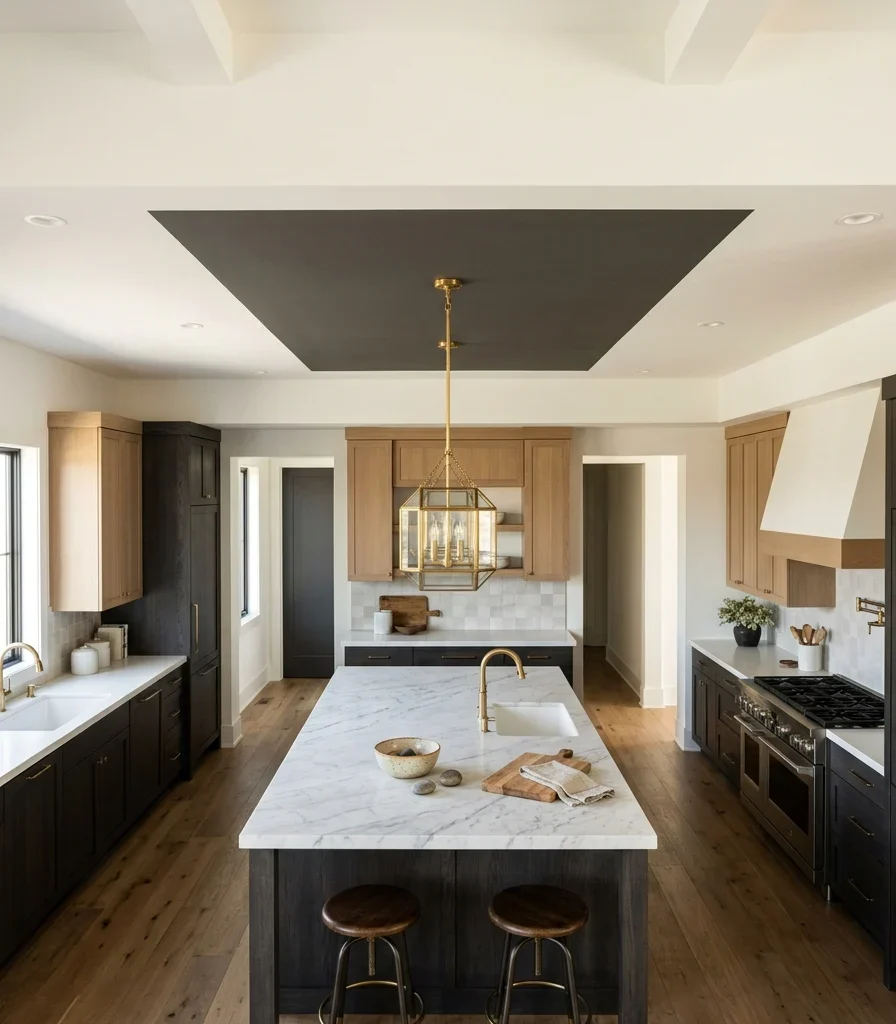
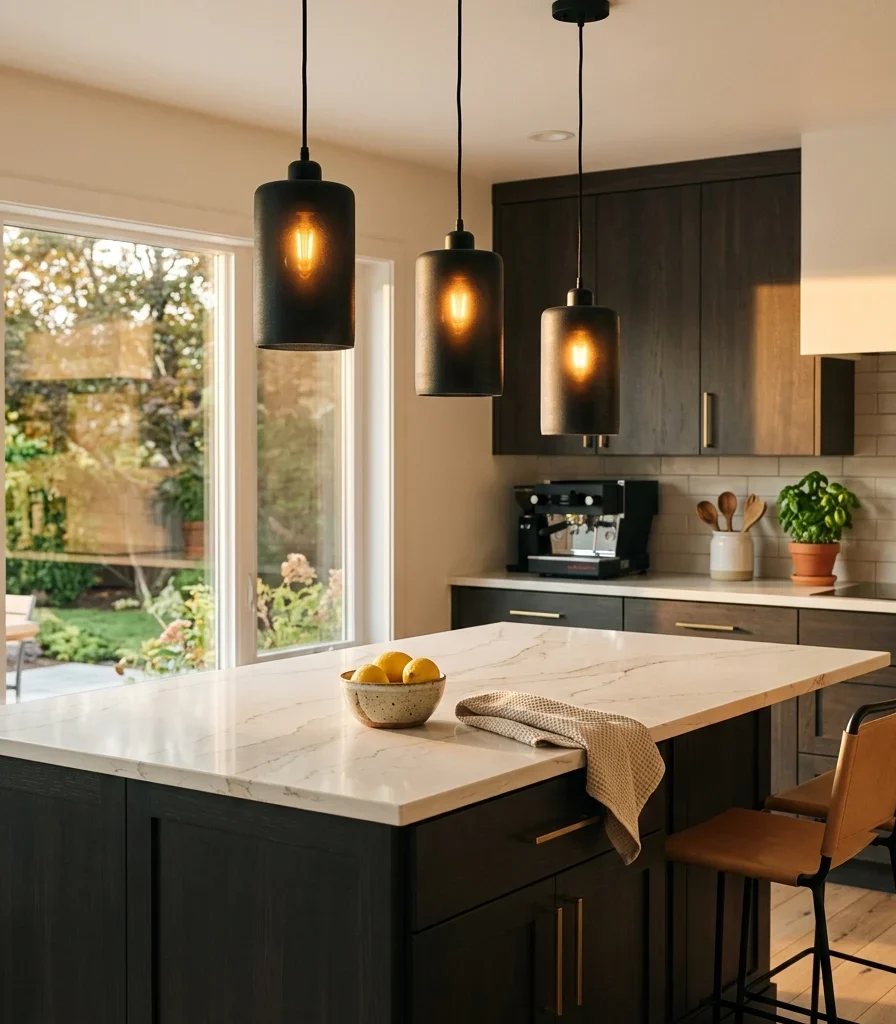
How to get it: Choose one dramatic pendant in matte black or aged brass, size it to roughly two-thirds the width of your table, and hang it 28–32 inches above the surface rather than centering it at standard ceiling height.

💡 Quick Win: Swap a builder-grade dining fixture for a single dome pendant — it’s often the fastest, highest-impact update in the entire home.

Shop The Look

  • Matte black dome pendant light fixture
  • Linen table runner neutral modern
  • Stoneware dinnerware set matte glaze
  • Amber glass bud vase single stem
  • Dimmer switch kit for pendant lighting

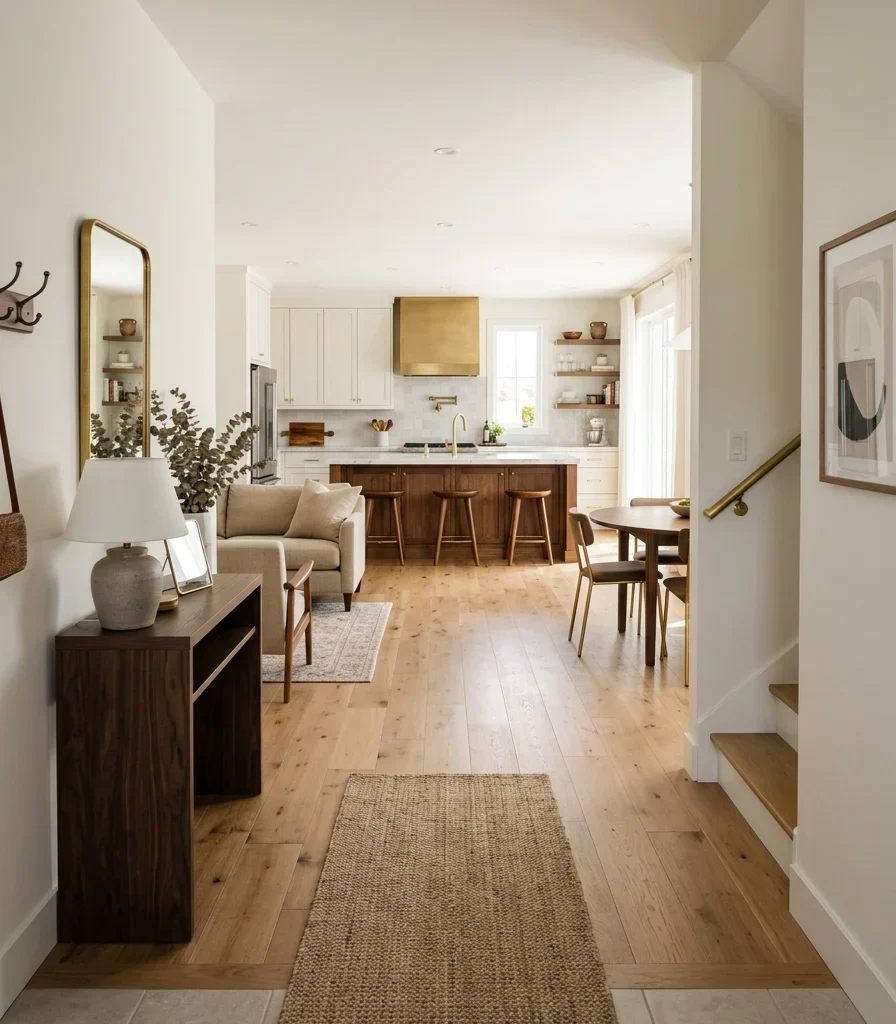
4. Bold Monochrome Moments — Black and White Contrast

4. Bold Monochrome Moments — Black and White Contrast

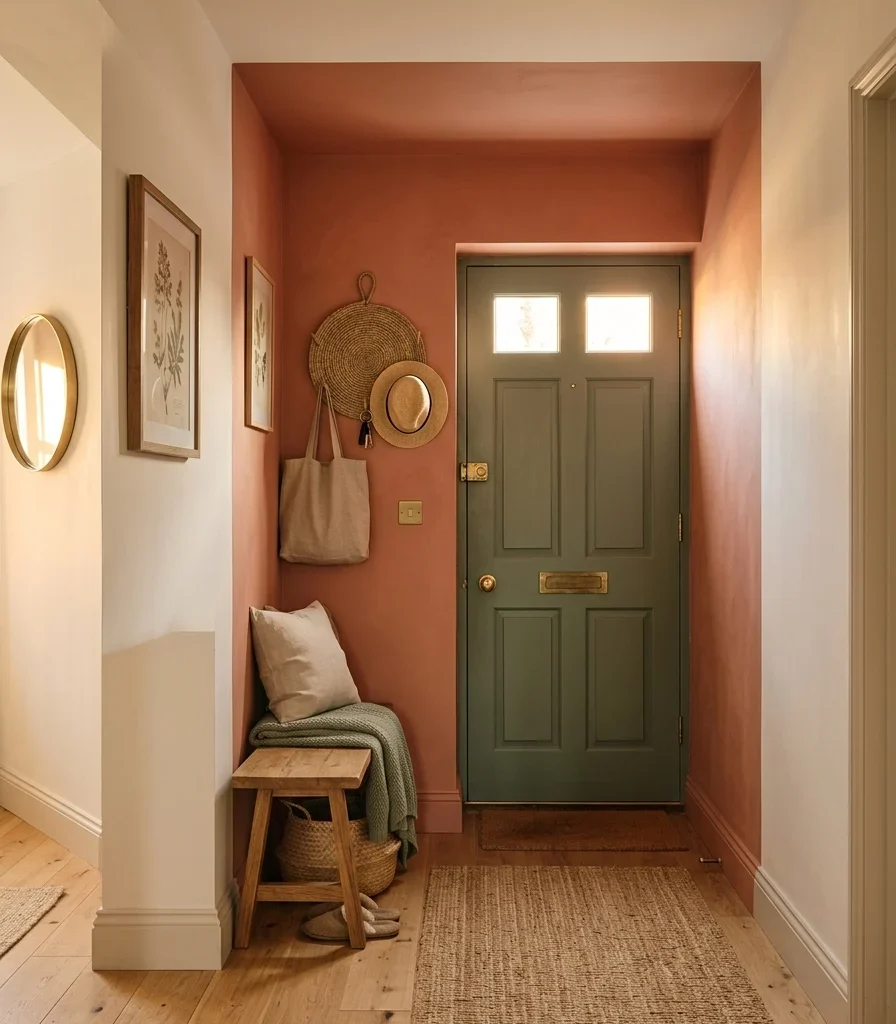
Vibe: The entryway feels crisp, like a clean first impression.

Why it works: High-contrast black and white uses value extremes to create instant visual clarity — the eye reads the space quickly because there’s no muddy middle ground competing for attention. This is a proportion technique: keep white as roughly 70–80% of the surface area so black reads as punctuation, not the main event.

How to get it: Paint or select one dominant black element — a mirror frame, a console’s legs, a door — and let every other surface stay a true, unmixed white rather than an off-white, so the contrast stays sharp.

Shop The Look

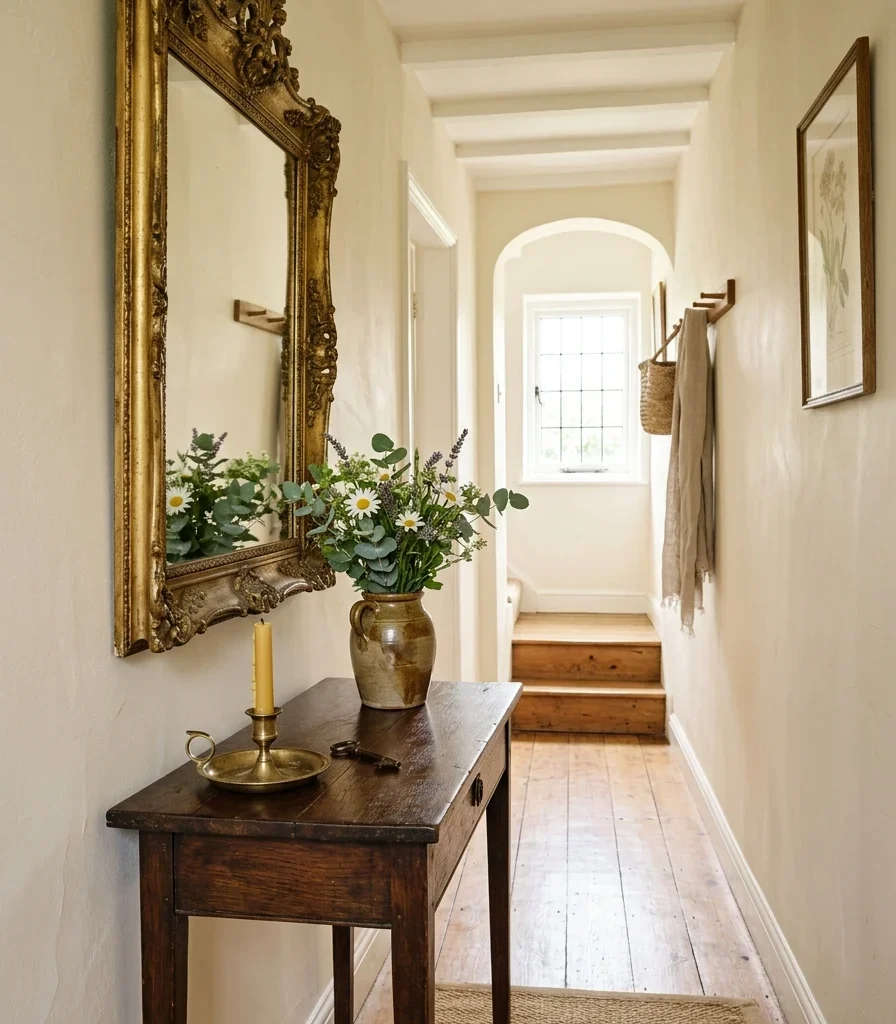
  • Black metal framed wall mirror round
  • Black metal console table entryway
  • Abstract black and white canvas print
  • White ceramic decorative vase minimalist
  • Black metal wall hooks set modern

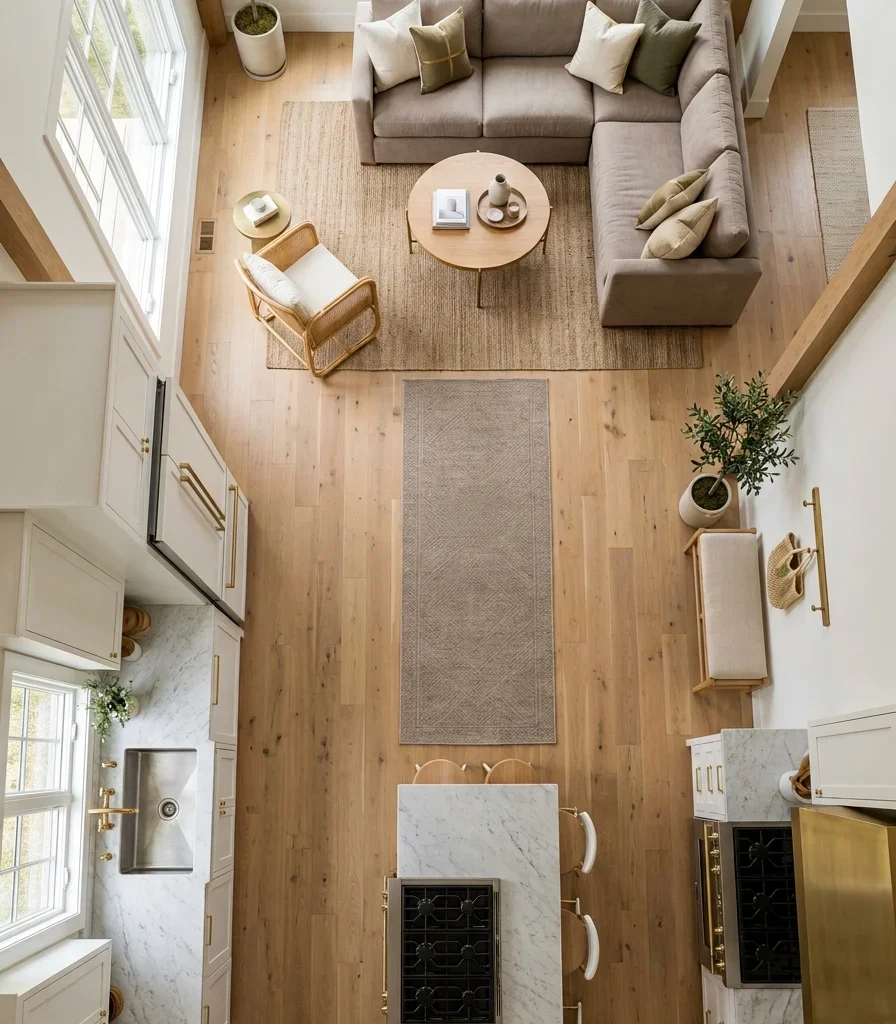
5. Low-Profile Sofas: The Modern Furniture Silhouette

5. Low-Profile Sofas: The Modern Furniture Silhouette

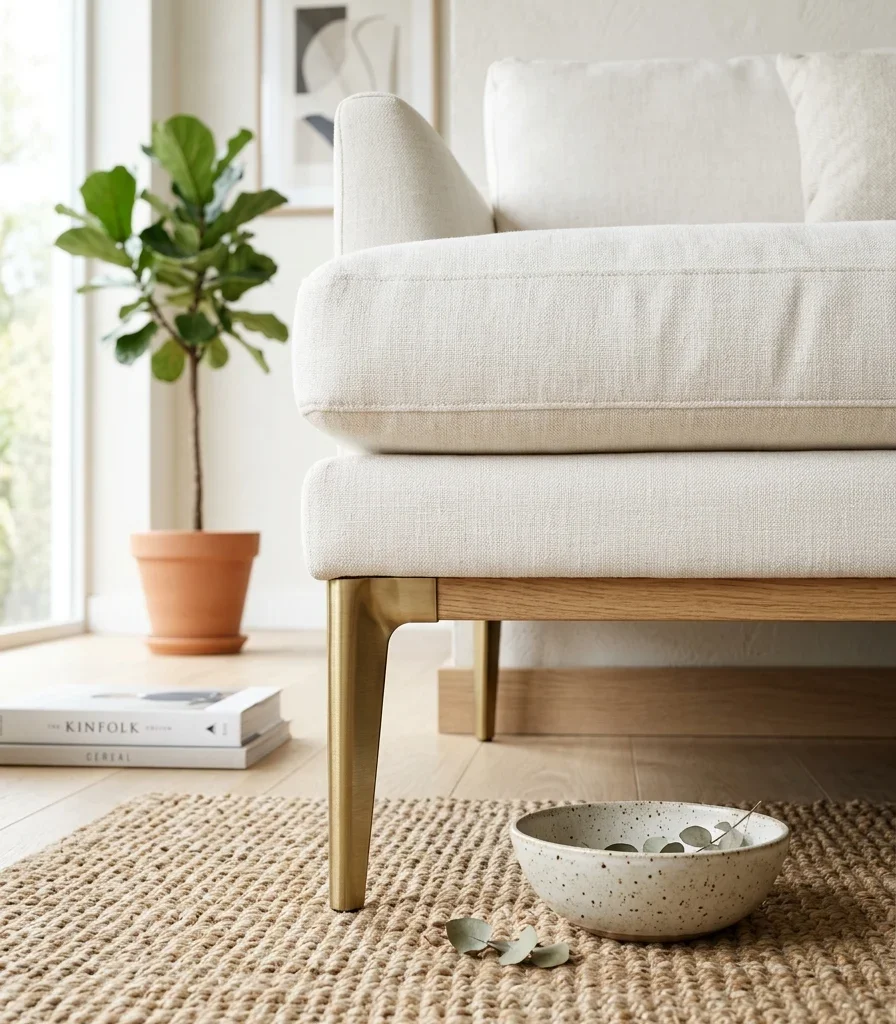
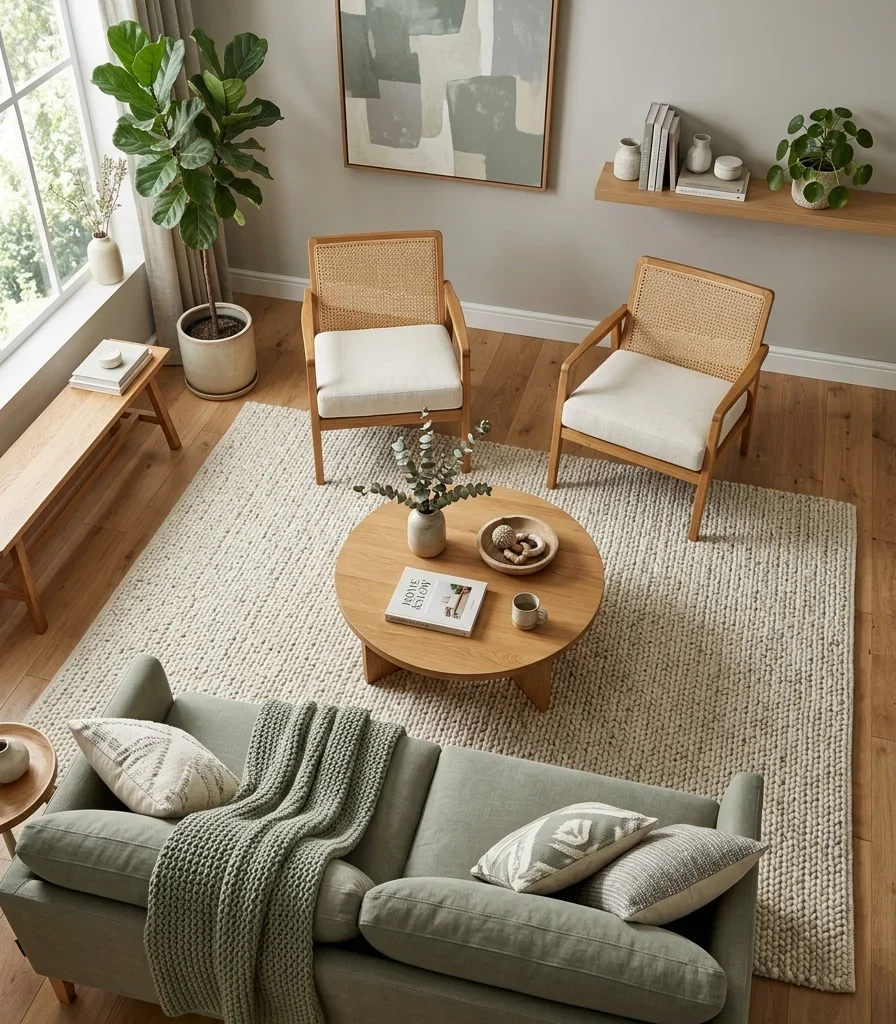
Vibe: The room feels spacious, even though the sofa is large.

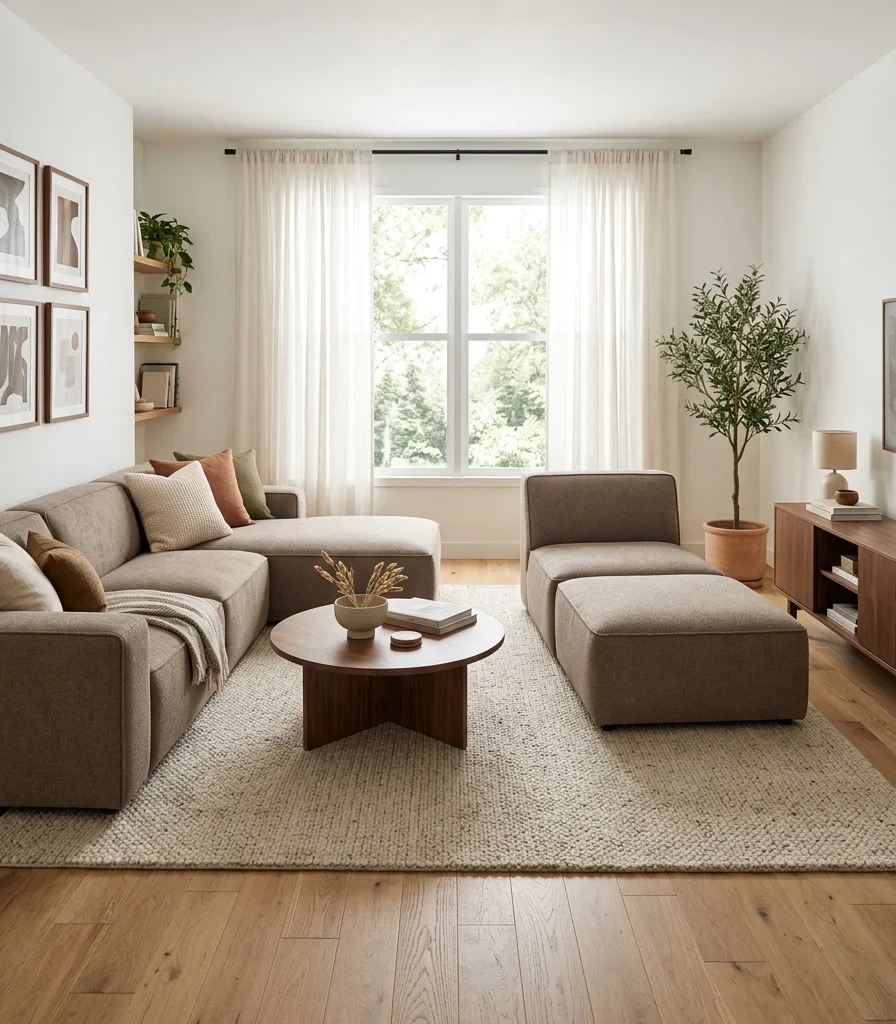
Why it works: Low-profile furniture with track arms and tapered legs reduces visual mass — you can see floor beneath and around the piece, which tricks the eye into reading the room as larger. This is a scale and proportion principle: lower seat heights (around 16–17 inches) also lower the room’s overall visual ceiling.

How to get it: Choose sofas with exposed, tapered legs rather than skirted bases, and keep arm height low and track-style instead of rolled, so light and sightlines pass underneath and around the piece.

💡 Quick Win: Even an existing sofa can borrow this look by removing a skirt and adding simple tapered wood legs sold separately.

Shop The Look

  • Low-profile track arm sofa modern
  • Tapered wood furniture legs replacement set
  • Neutral linen throw pillow covers set
  • Round wood low coffee table
  • Fiddle leaf fig artificial floor plant

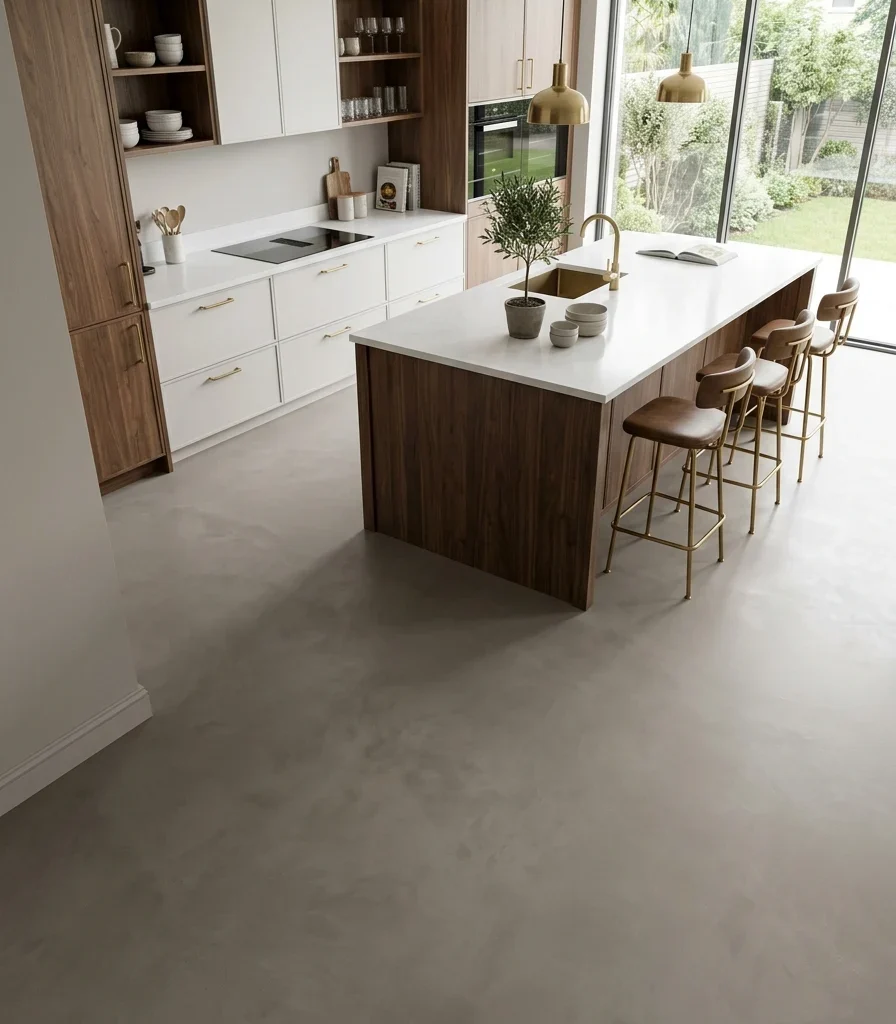
6. Polished Concrete and Glass Surfaces

6. Polished Concrete and Glass Surfaces

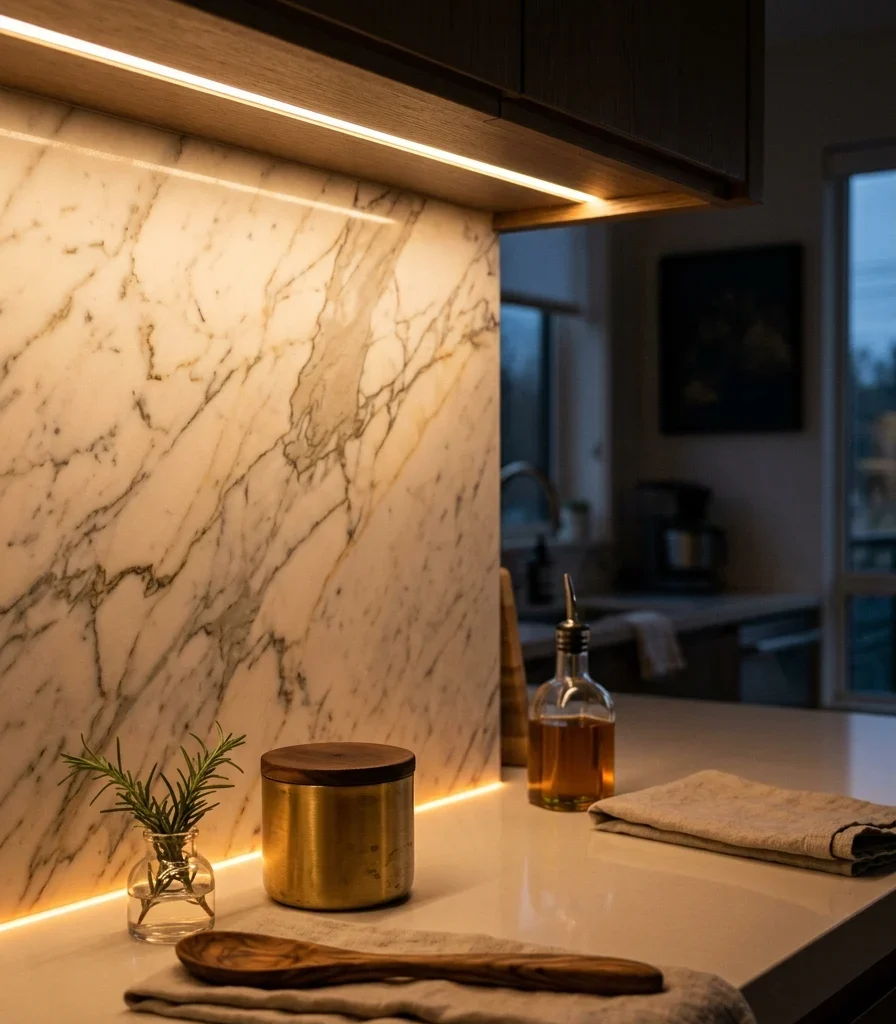
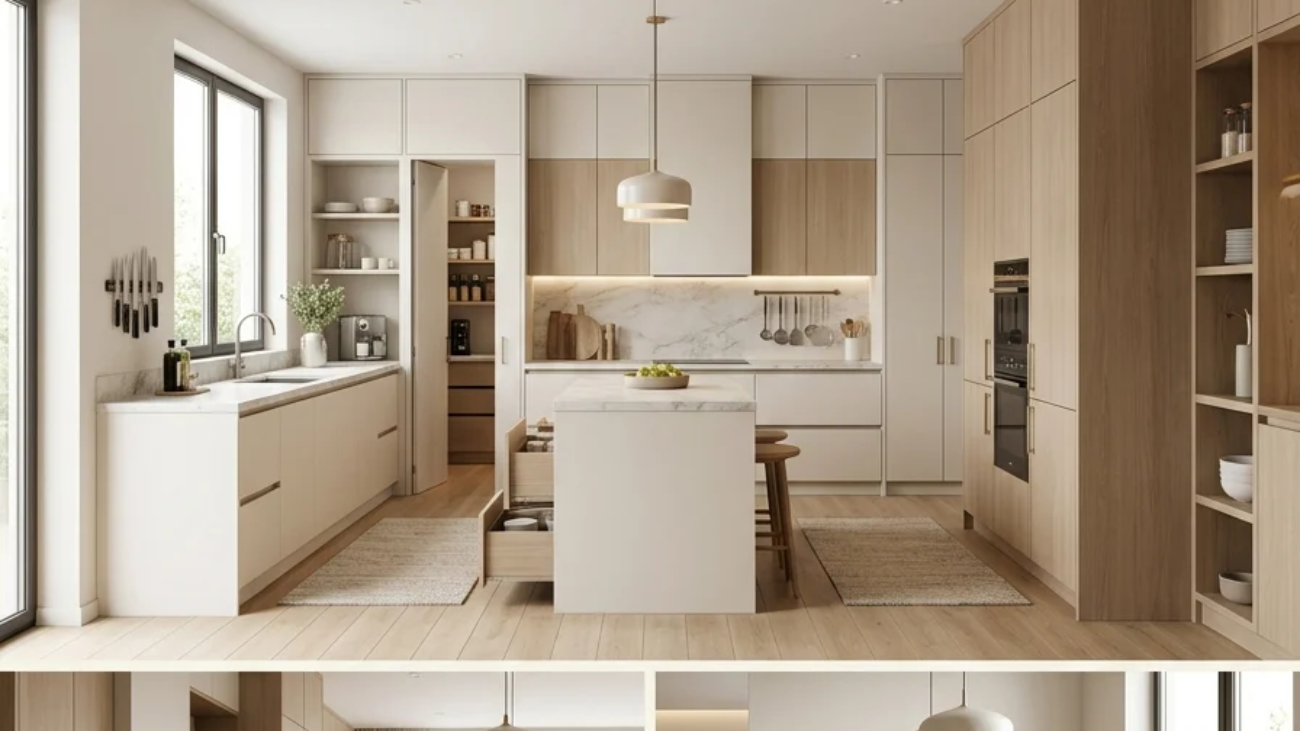
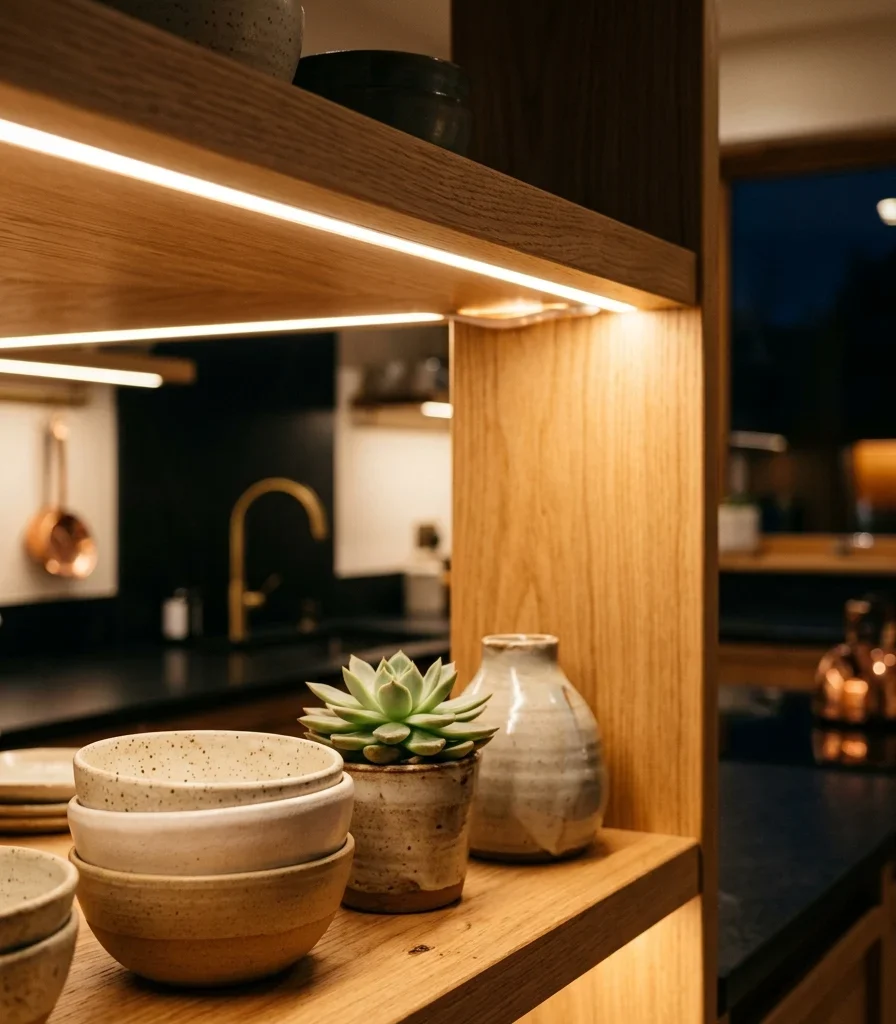
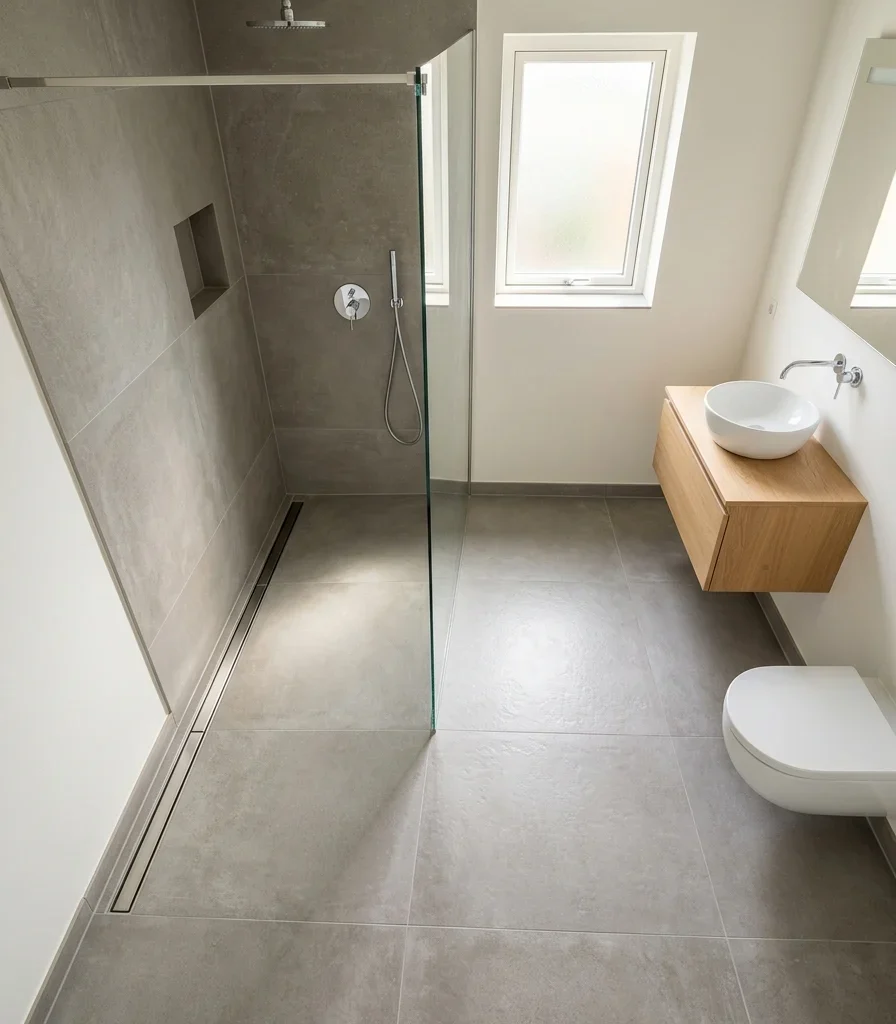
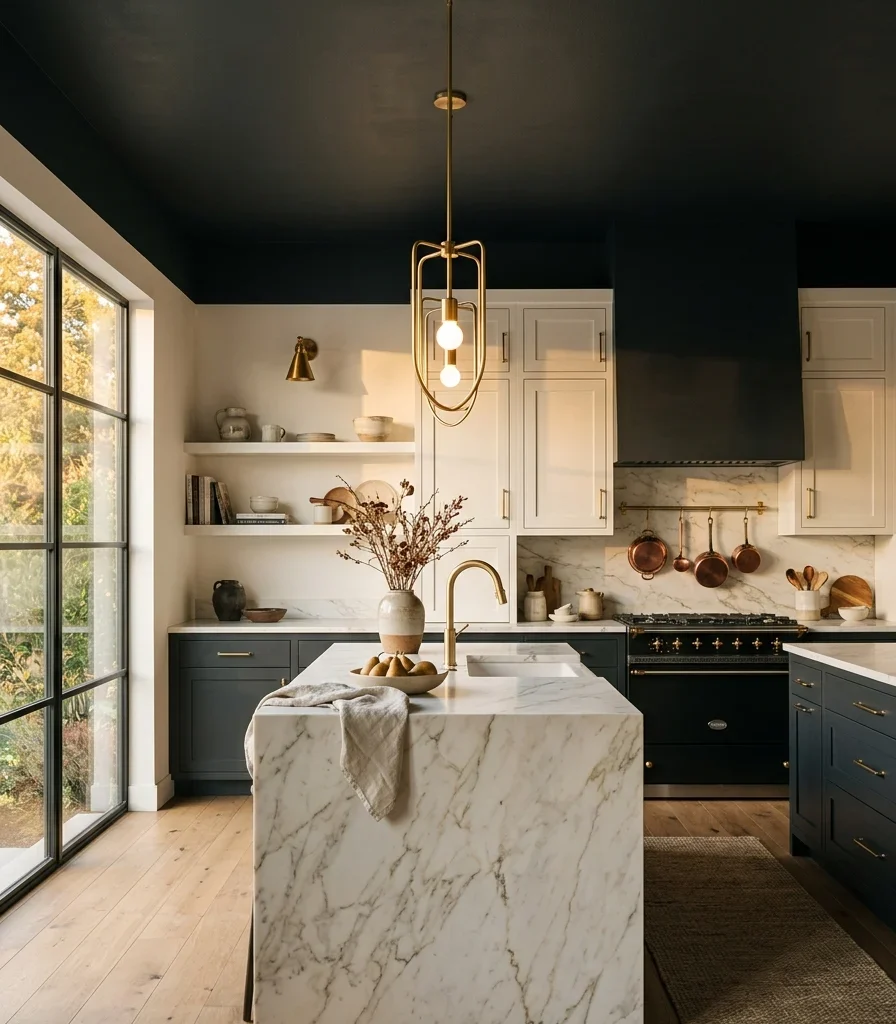
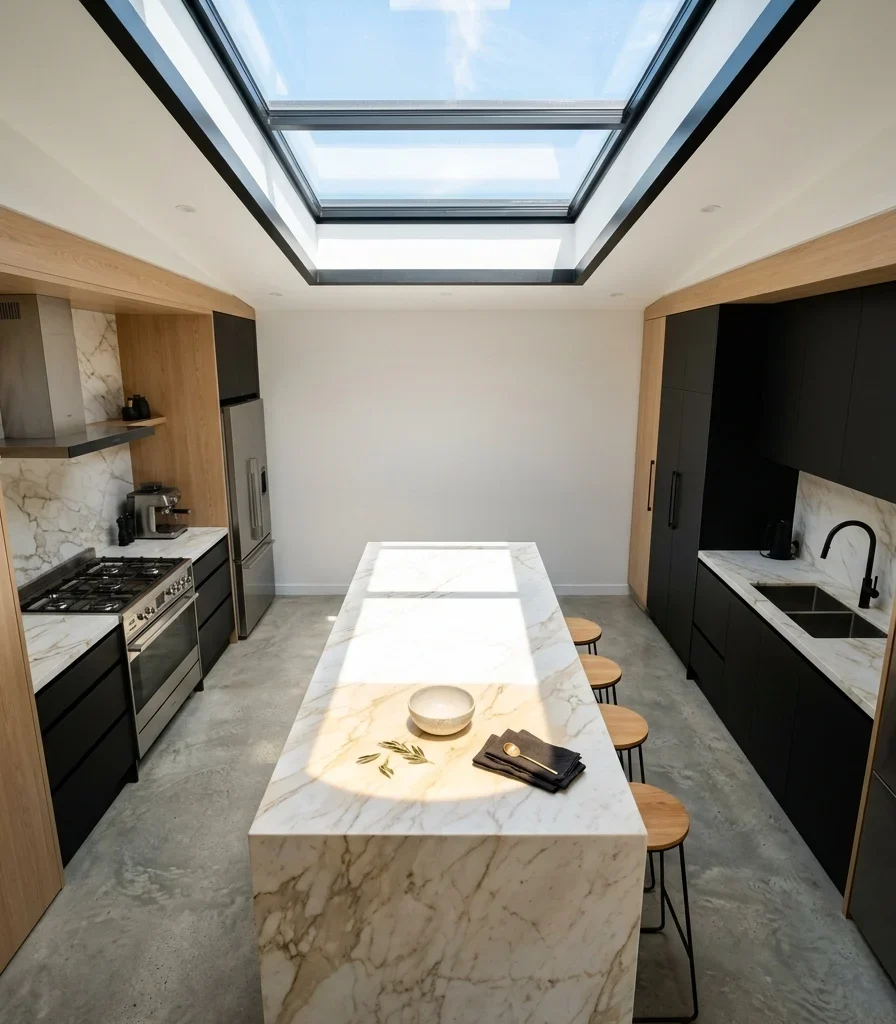
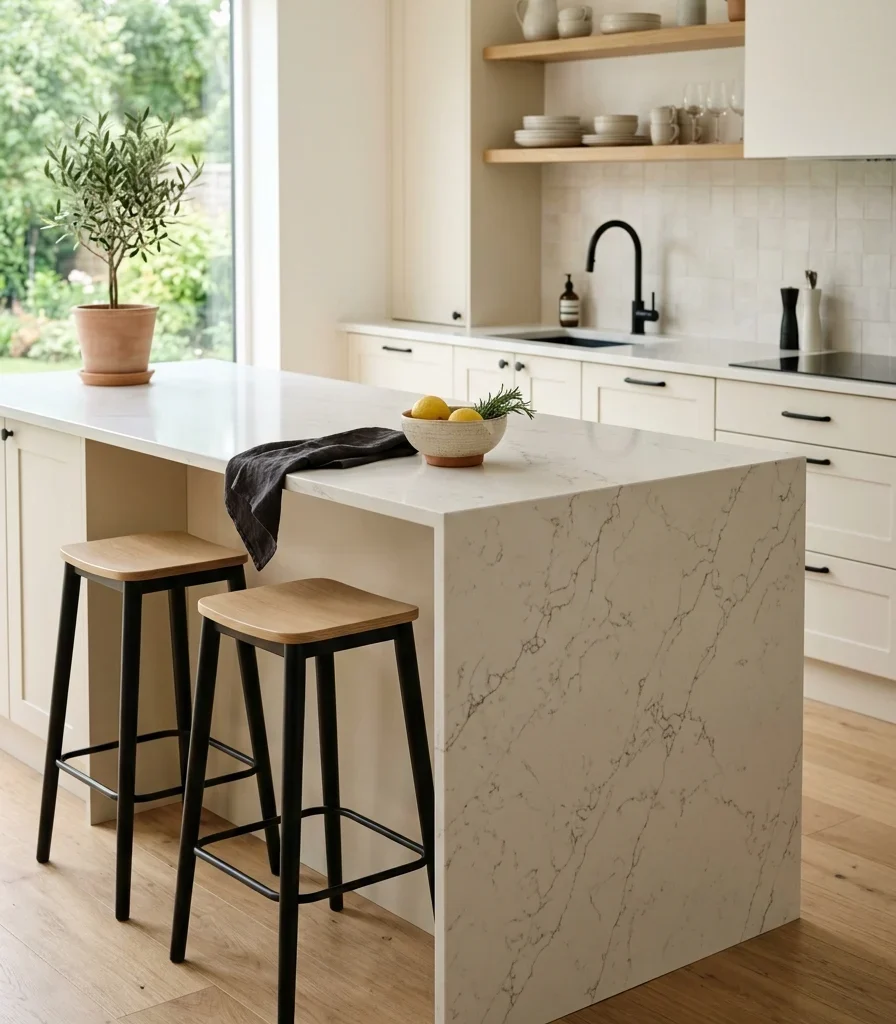
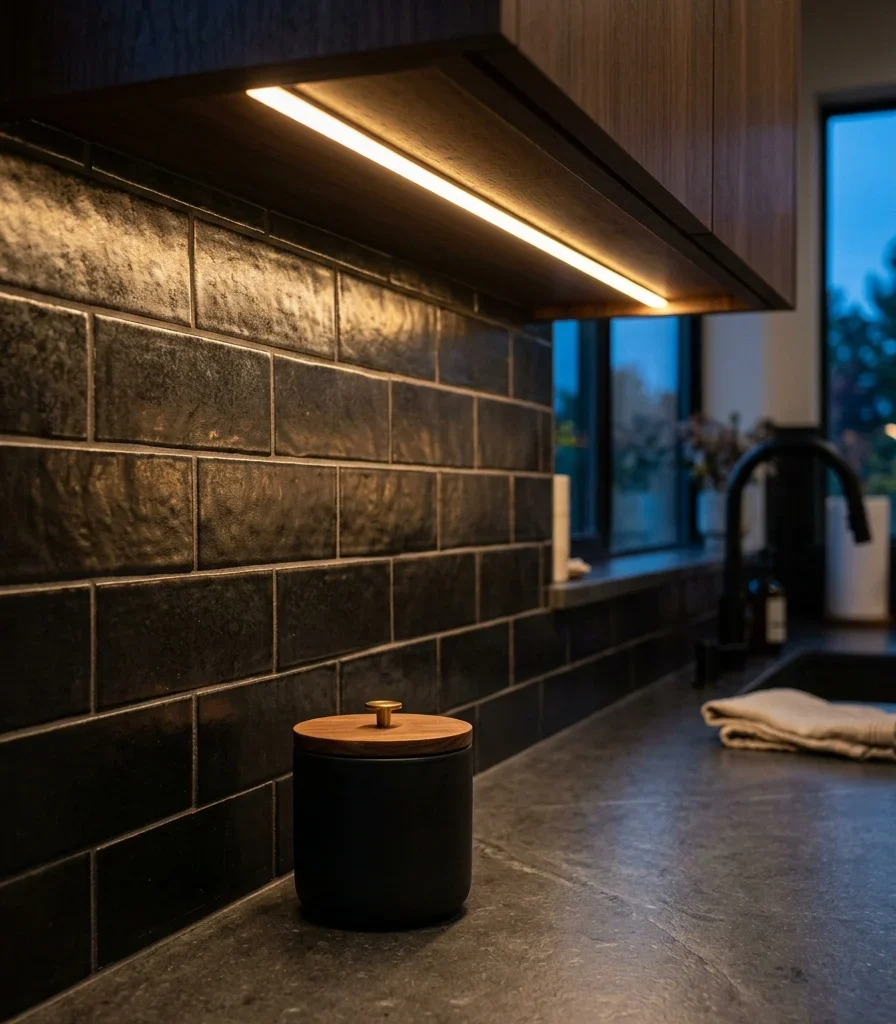
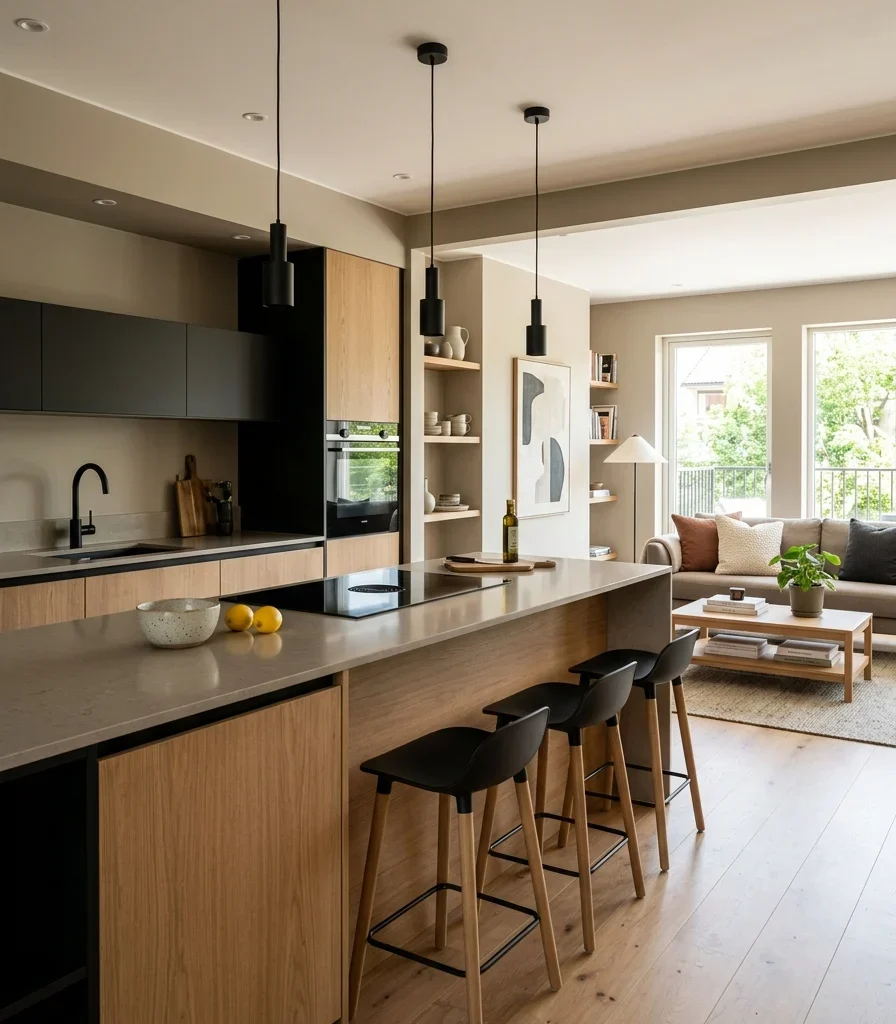
Vibe: The kitchen feels cool and unfussy, like a gallery where you can cook.

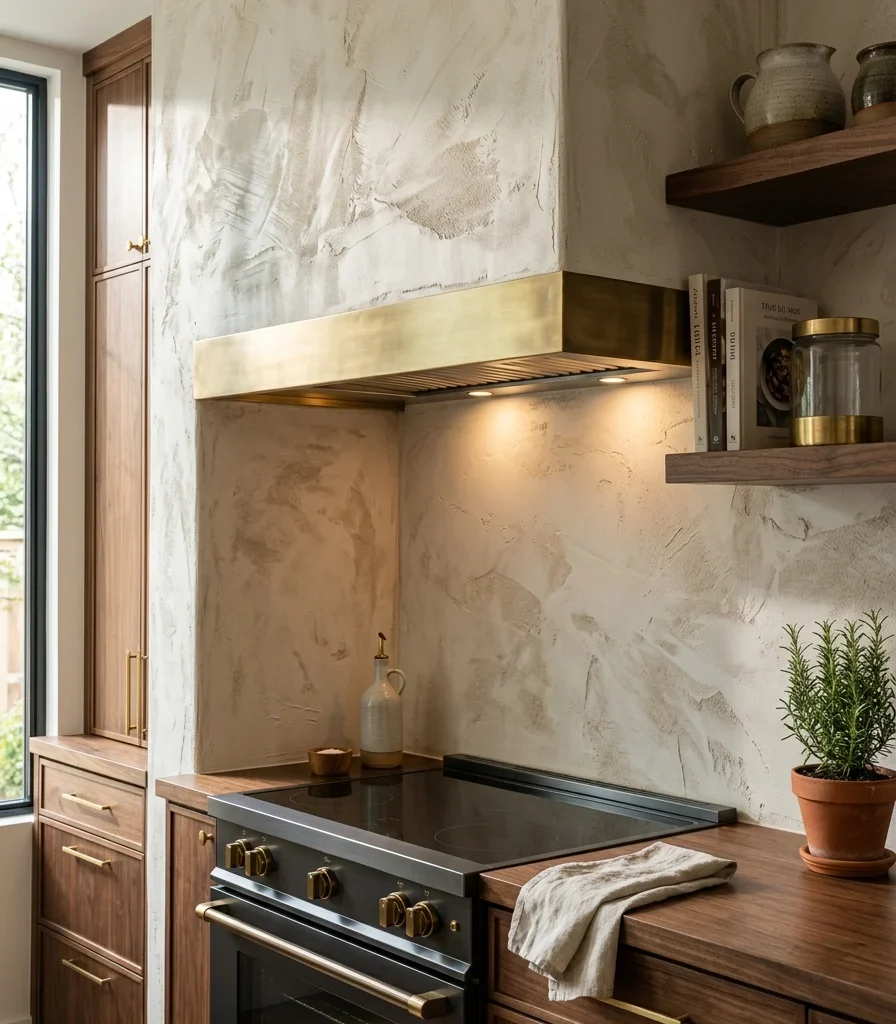
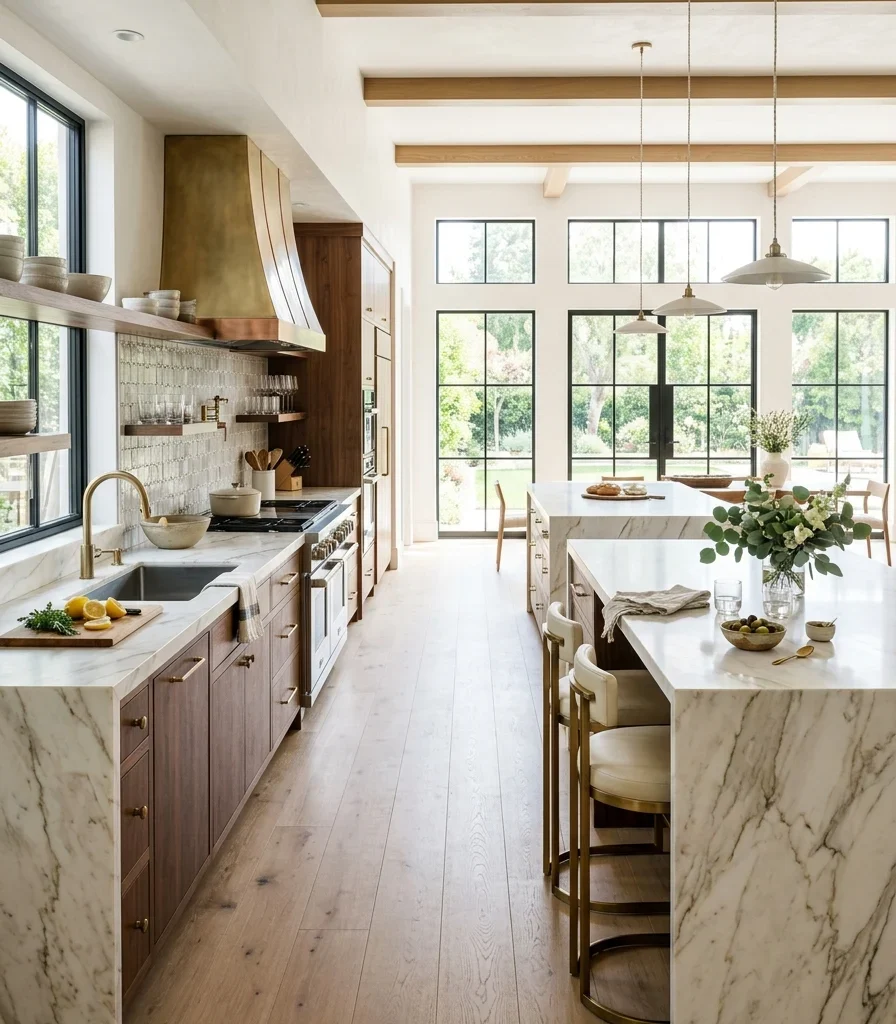
Why it works: Concrete and glass both reflect and absorb light differently than wood or fabric, creating a layered material story that reads as refined rather than cold when paired with warmer accents nearby. Concrete’s subtle texture also keeps the surface from feeling sterile despite its industrial origin.

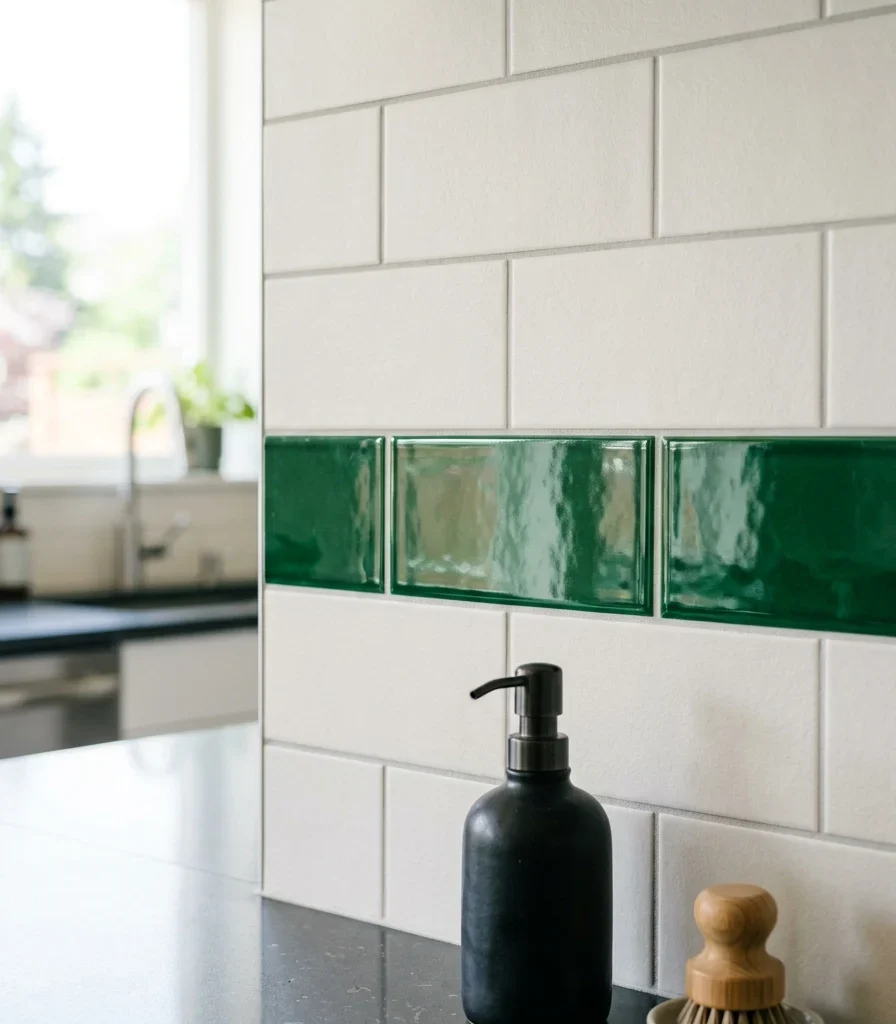
How to get it: If replacing countertops isn’t realistic, introduce the look through a concrete-finish backsplash tile or a poured concrete side table, then balance the cool material with warm brass or wood accessories close by.

Shop The Look

  • Concrete effect side table round modern
  • Clear glass pendant light fixture set
  • Ceramic fruit bowl matte finish
  • Linen napkin set neutral stripe
  • Brushed brass canister set kitchen

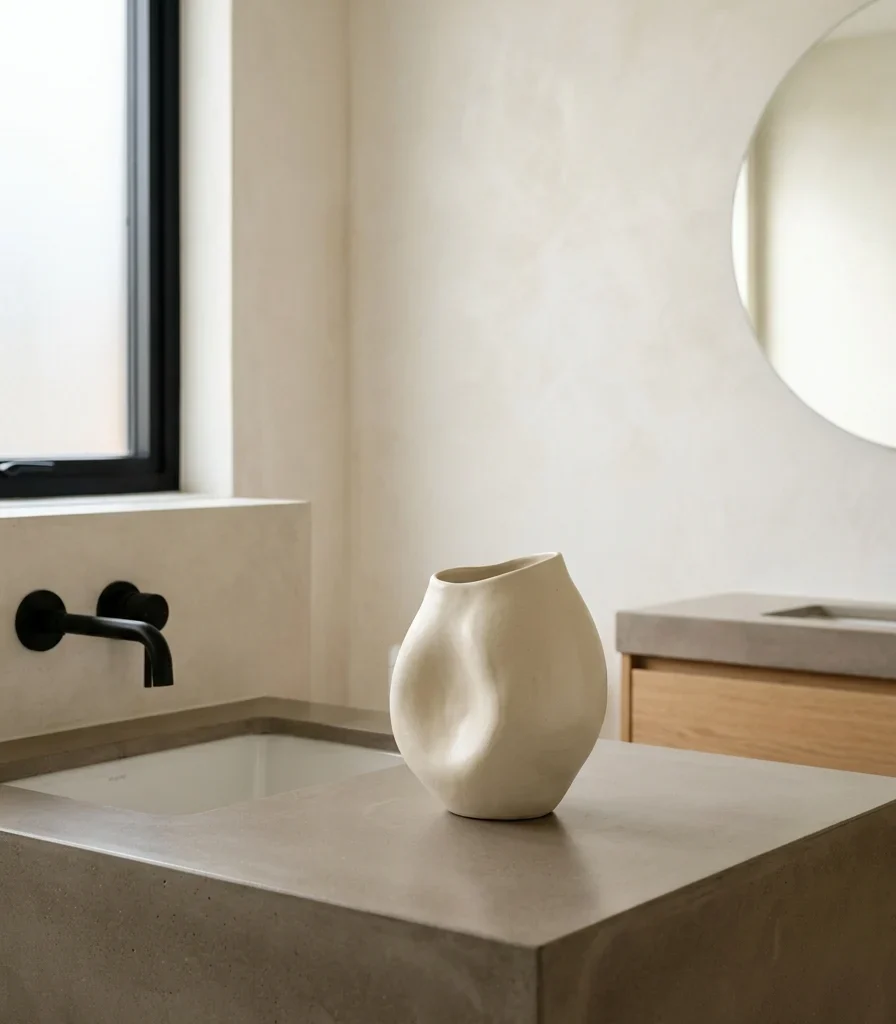
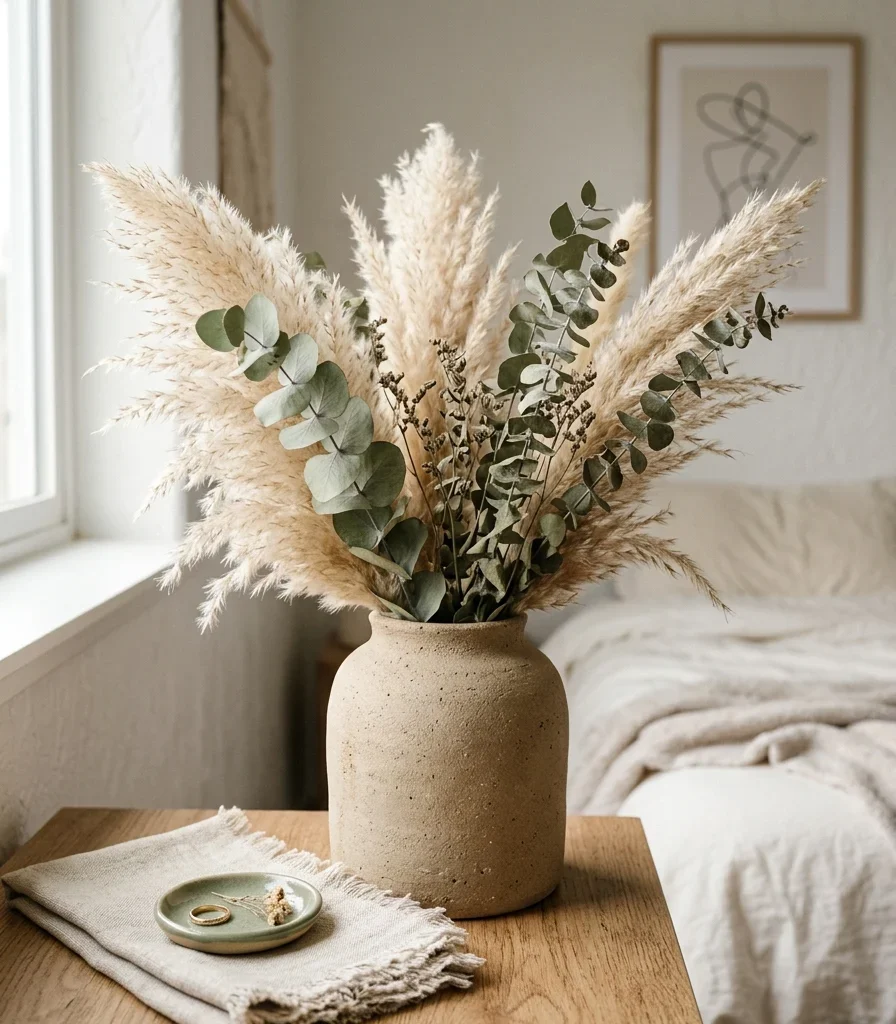
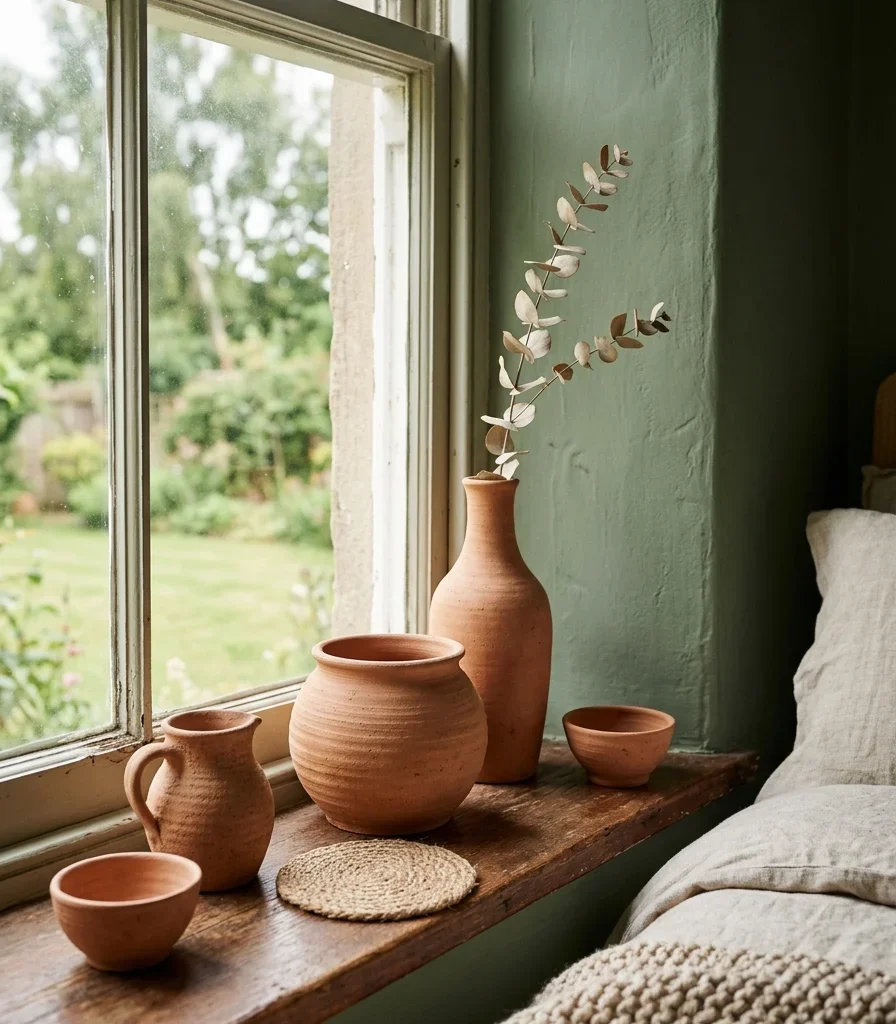
7. Sculptural Ceramic Vases as Focal Points

7. Sculptural Ceramic Vases as Focal Points

Vibe: The mantel feels curated, like a small gallery arrangement.

Why it works: Grouping objects in odd numbers with varied height creates asymmetric balance — a core styling principle where visual weight is distributed unevenly but still feels resolved. Matte ceramic glazes also diffuse light softly instead of reflecting it, which keeps the grouping from competing with a nearby window.

How to get it: Cluster three vases in a triangle formation with heights that step down roughly two inches at a time, and keep the glaze finishes matte rather than glossy so they read as one cohesive family.

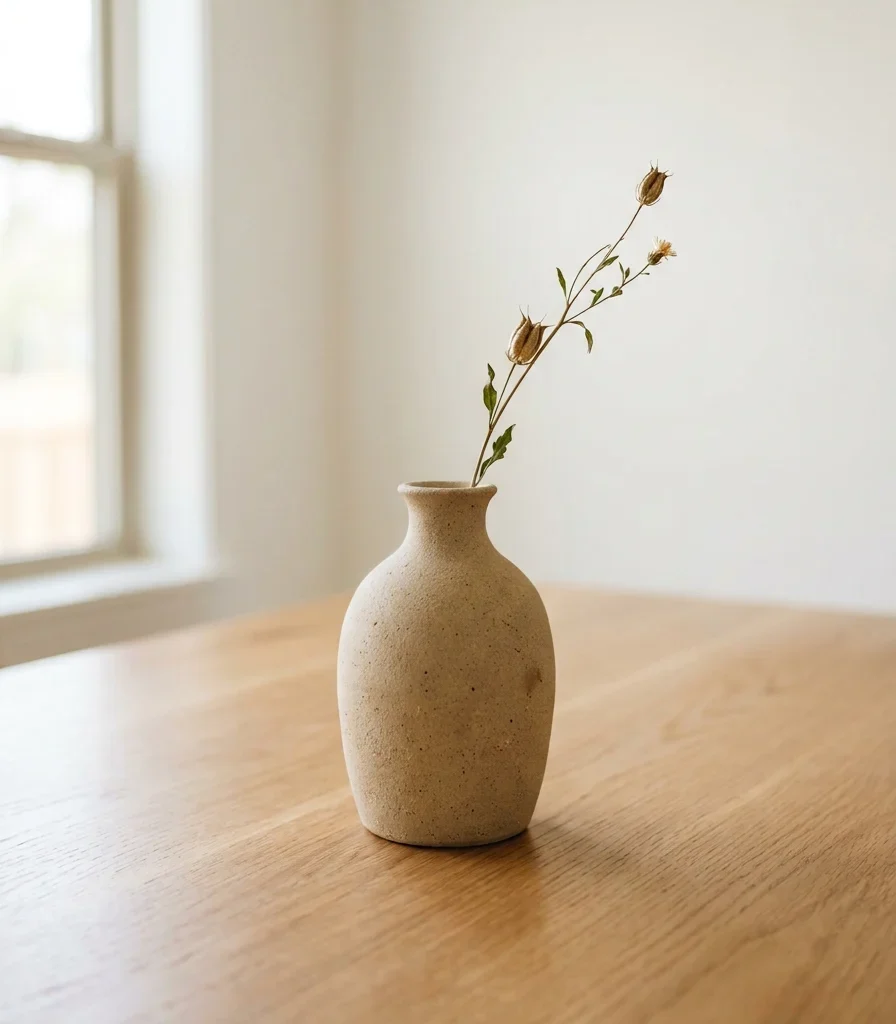
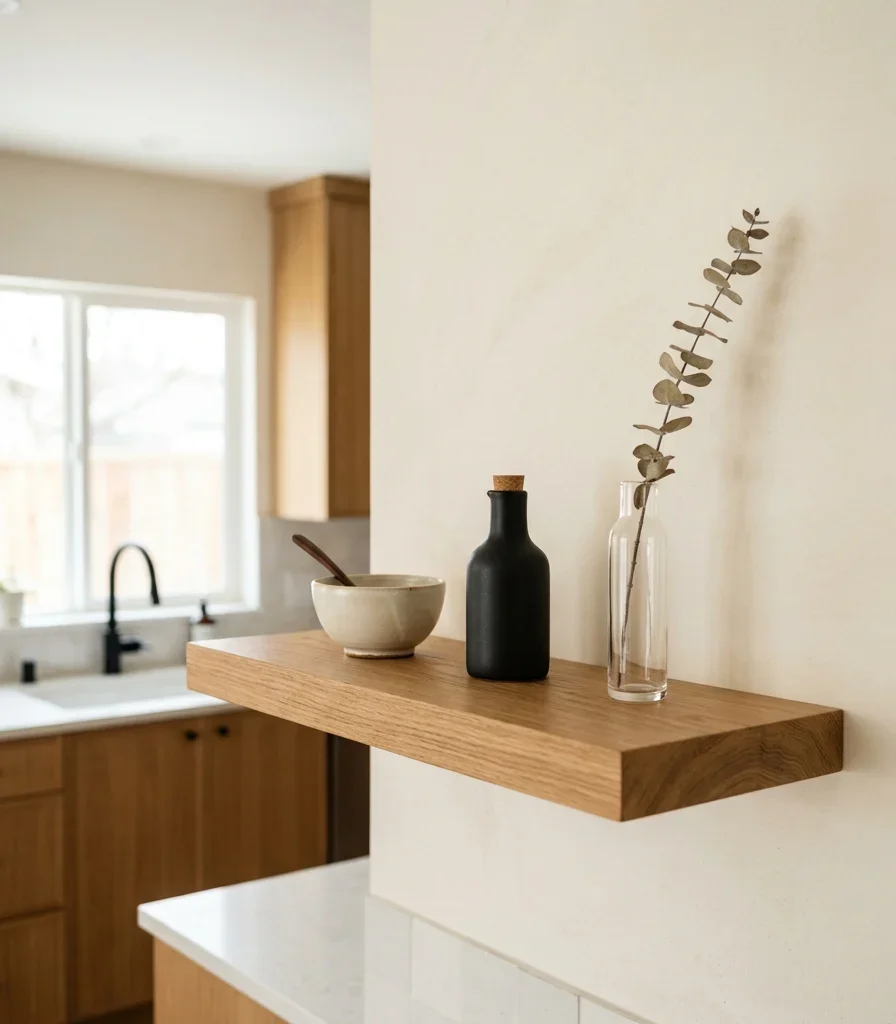
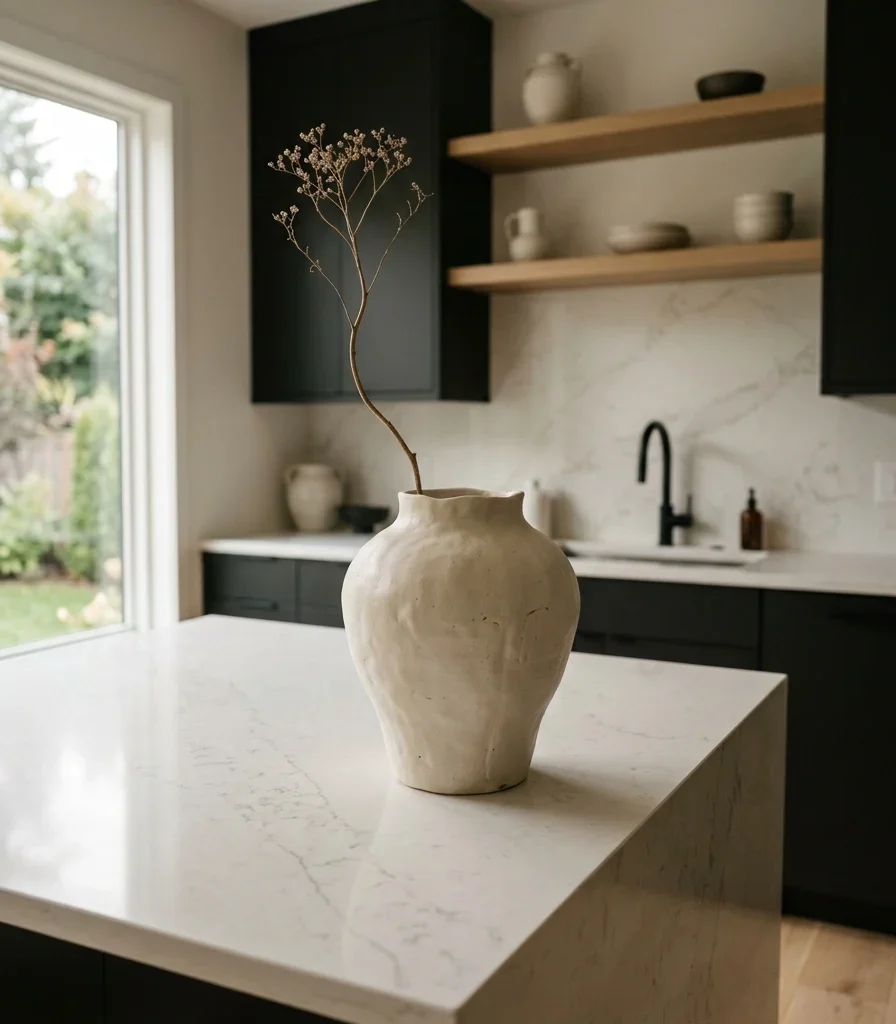
💡 Quick Win: One tall vase with a single dried stem does the same visual job as a full grouping if your surface is small.

Shop The Look

  • Matte ceramic vase set of three
  • Dried pampas grass stems natural
  • Terracotta ceramic bud vase small
  • Stack of neutral linen-bound art books
  • Sand-colored ceramic decorative bowl

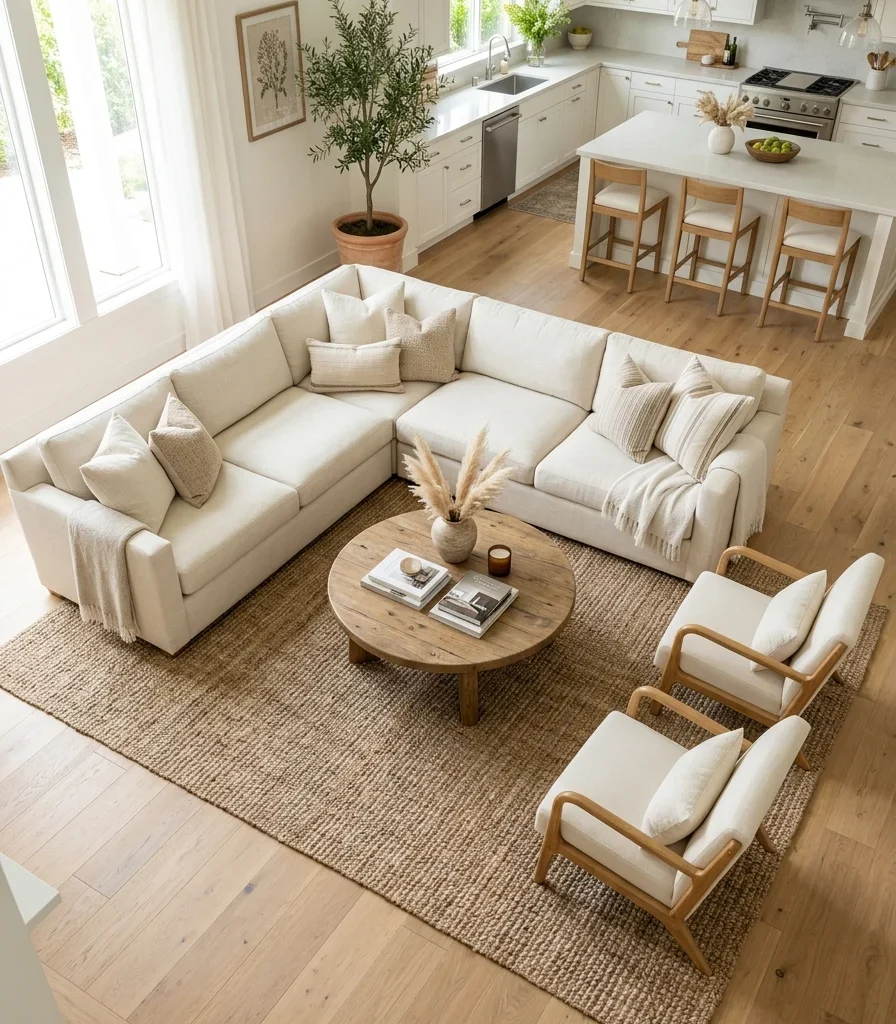
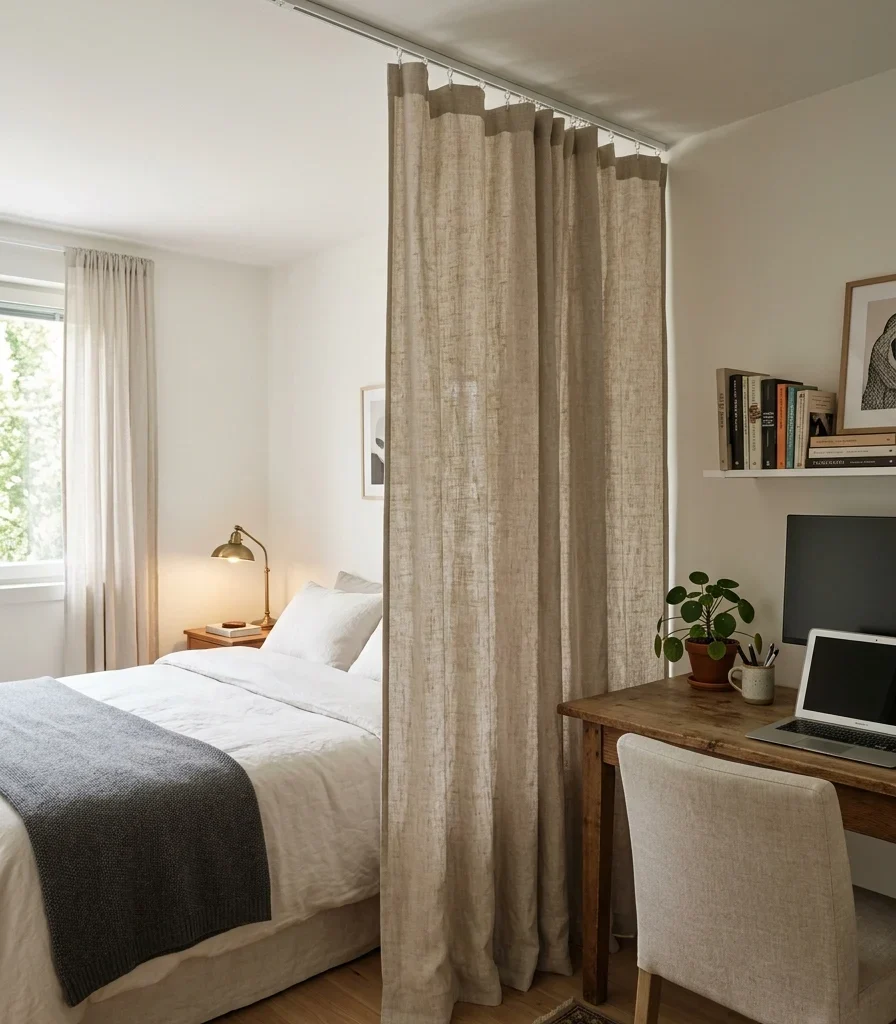
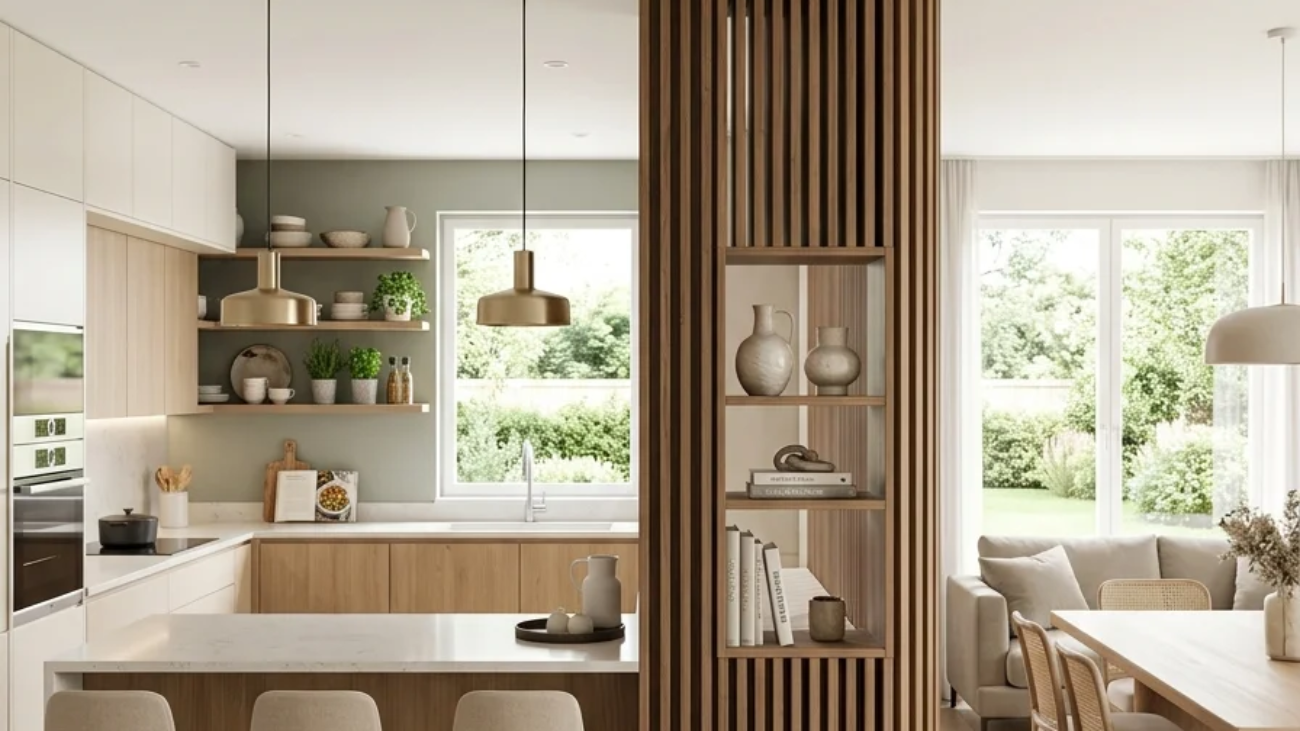
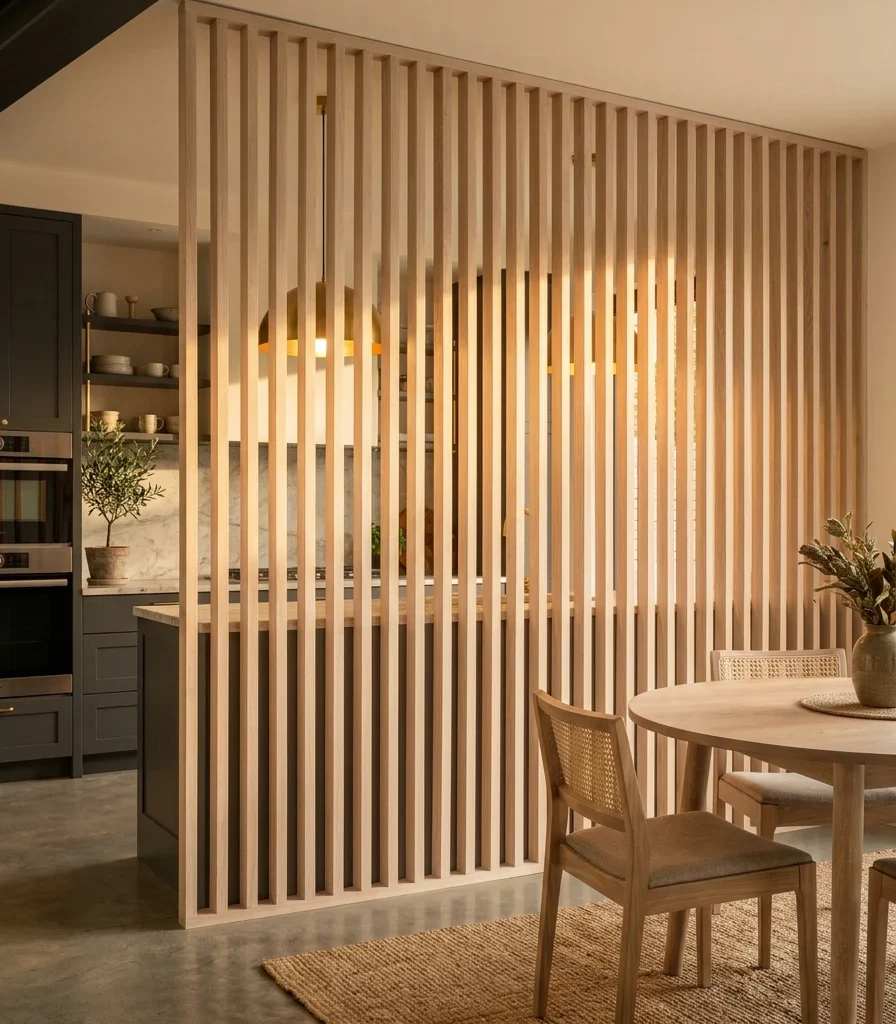
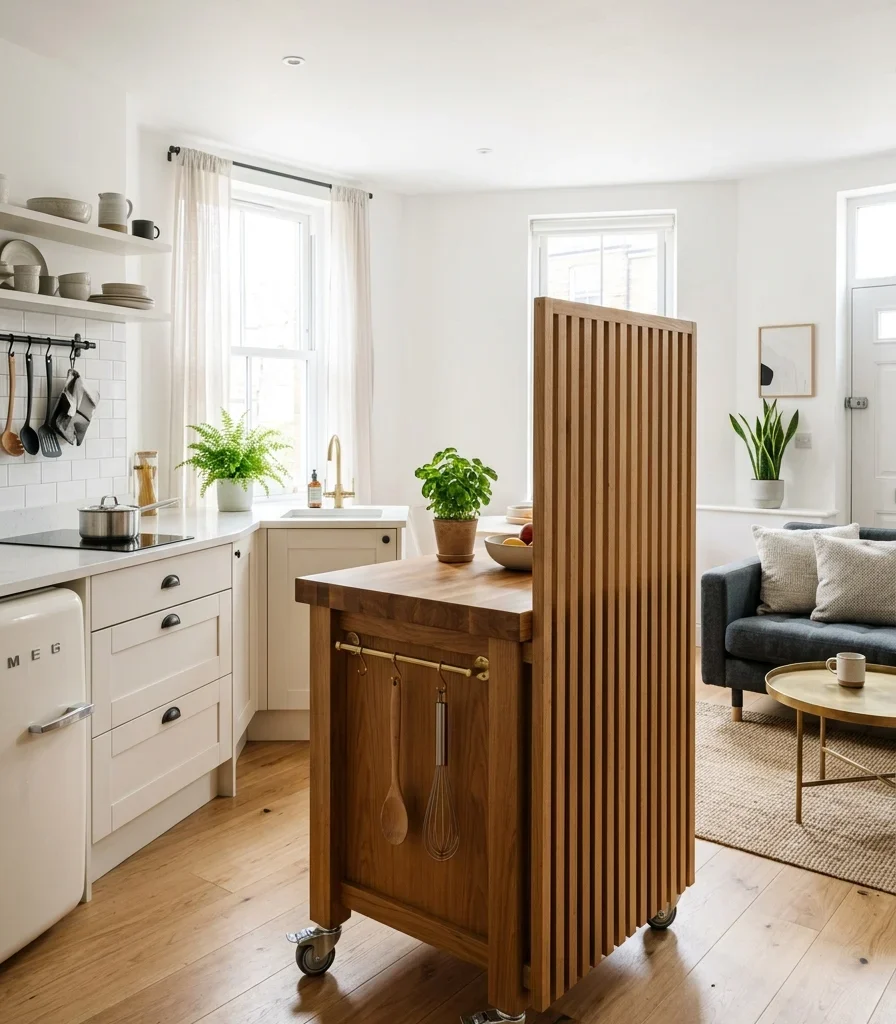
8. Open-Concept Zoning with Furniture Placement

8. Open-Concept Zoning with Furniture Placement

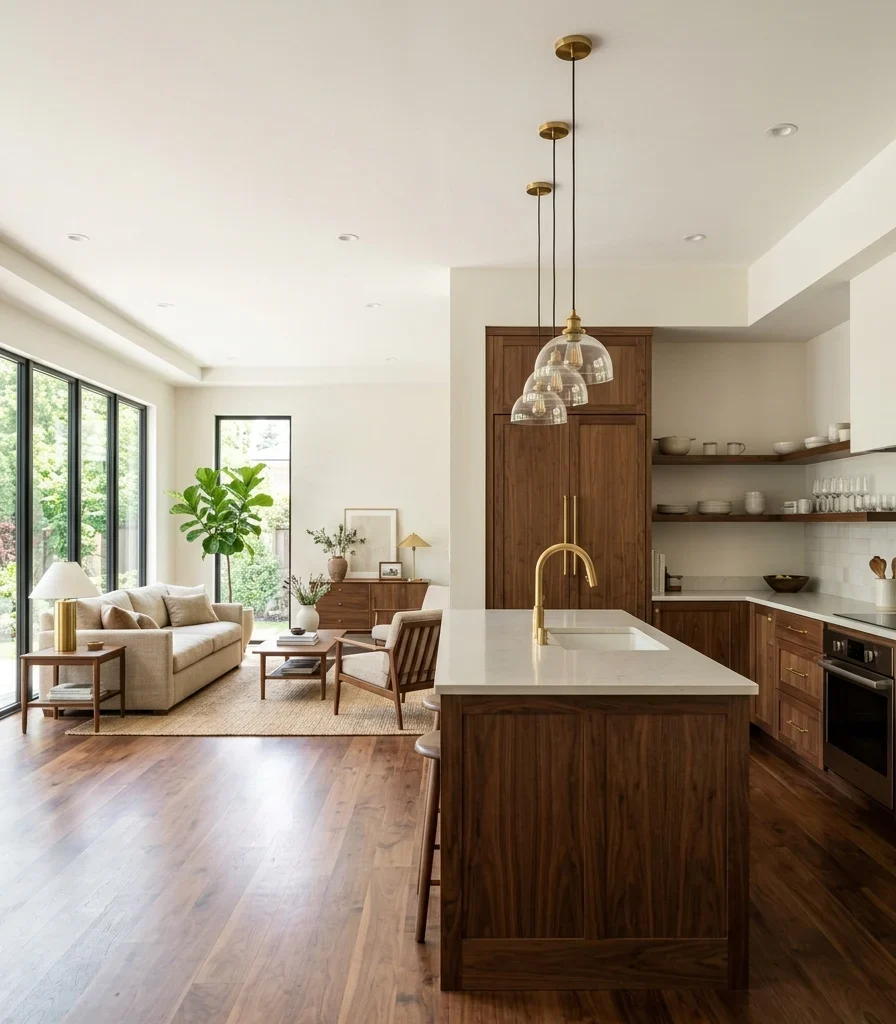
Vibe: The open floor feels organized instead of sprawling.

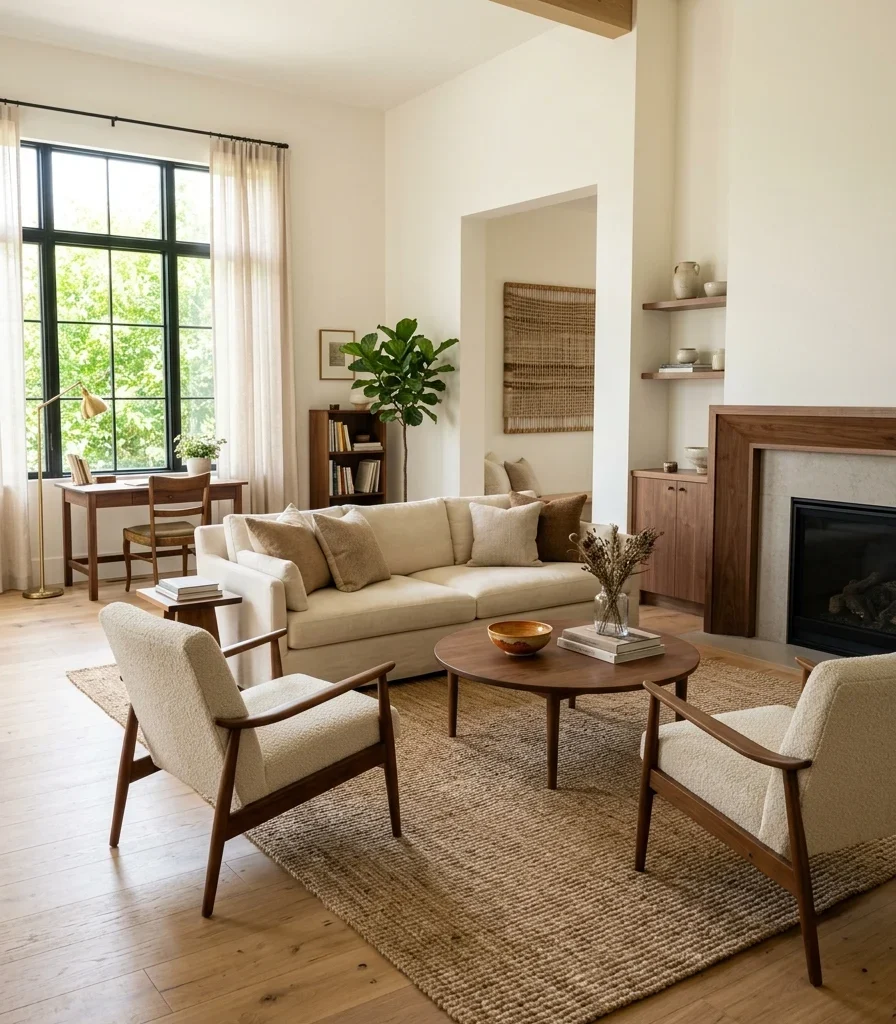
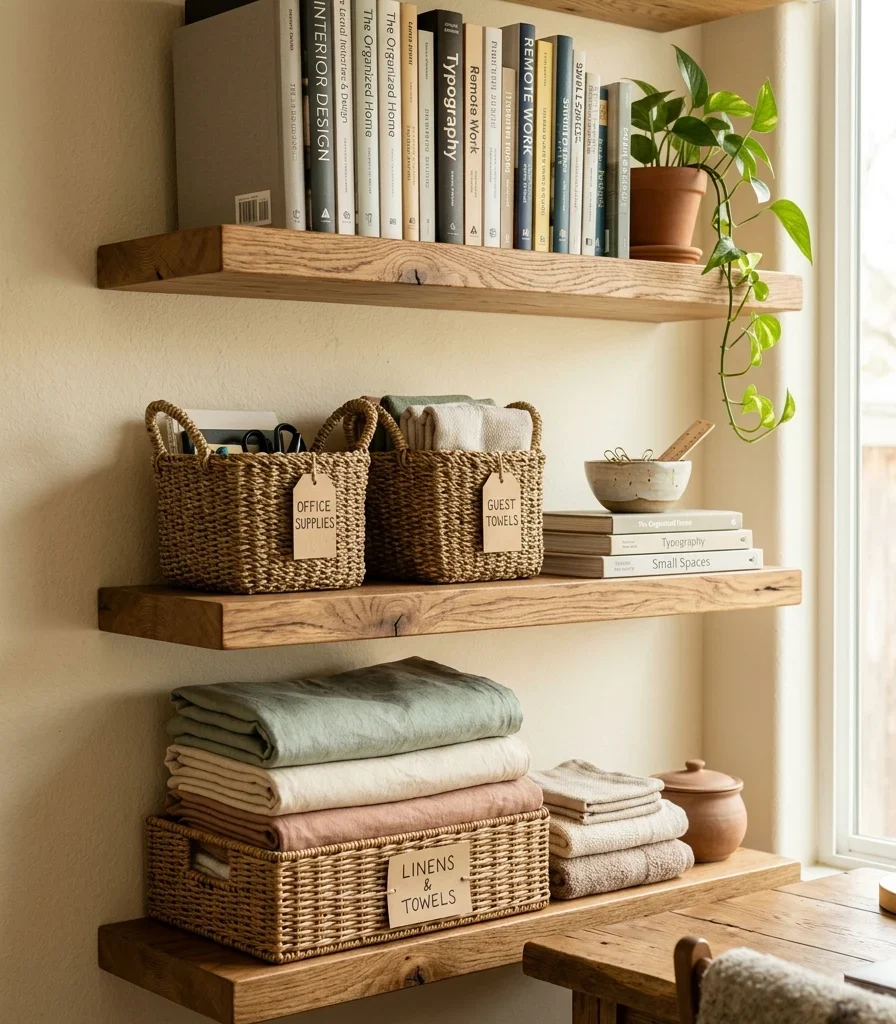
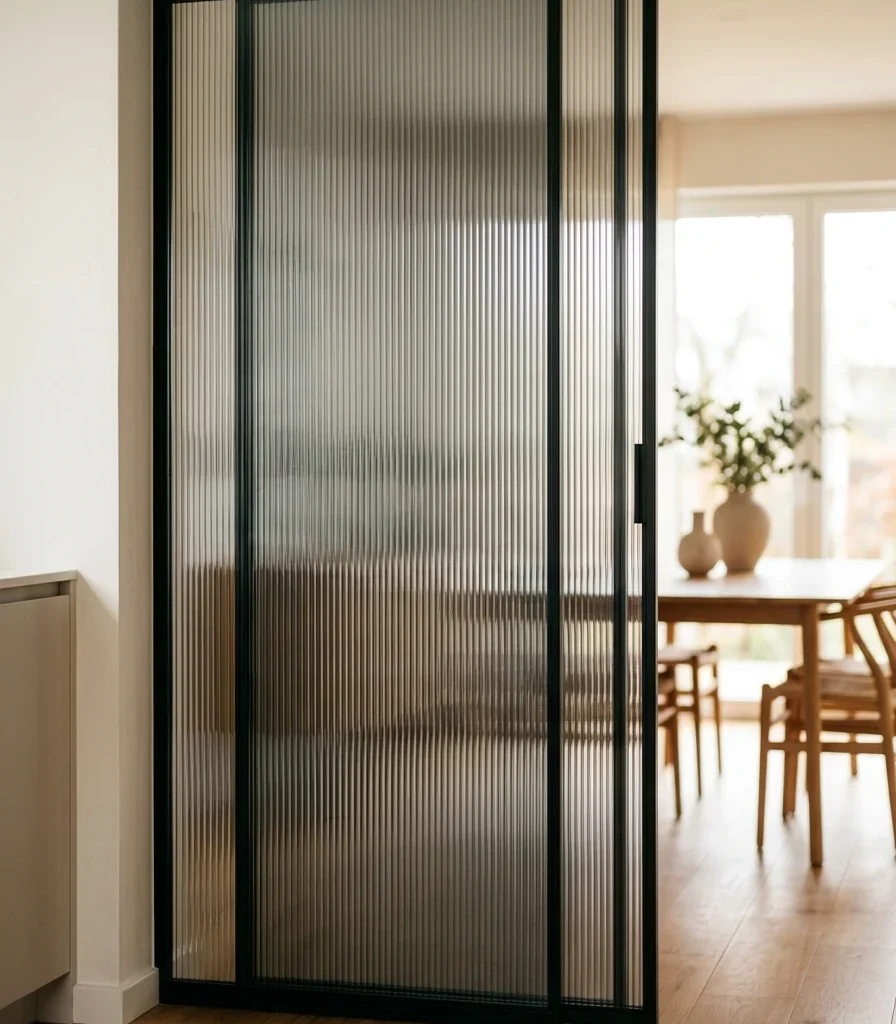
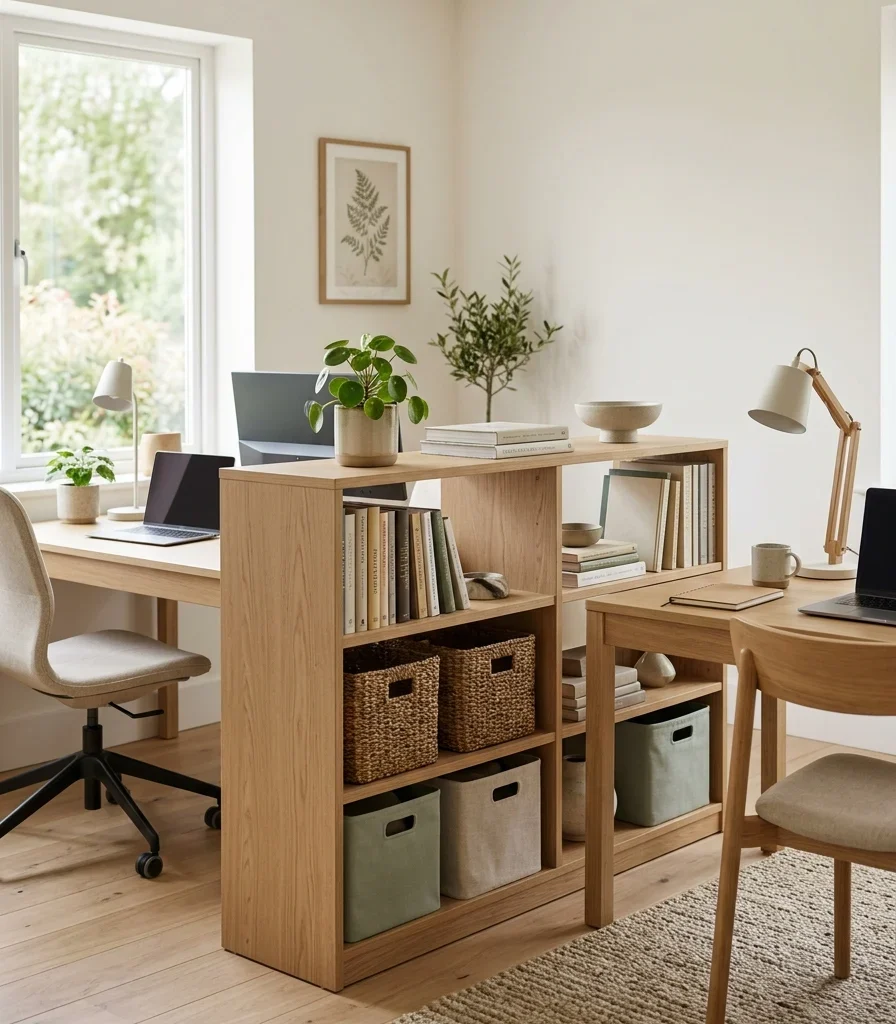
Why it works: Open floor plans lose definition without visual anchors, so furniture placement becomes the wall you don’t have. A low bookshelf under 36 inches tall divides zones without blocking sightlines, while distinct area rugs signal “this is a room” through boundary alone — a technique called soft zoning.

How to get it: Place a low, open-backed shelf perpendicular to a main walkway to separate living and dining zones, and anchor each zone with its own rug sized so all furniture legs sit on it, not just the front two.

Shop The Look

  • Low open-back bookshelf room divider
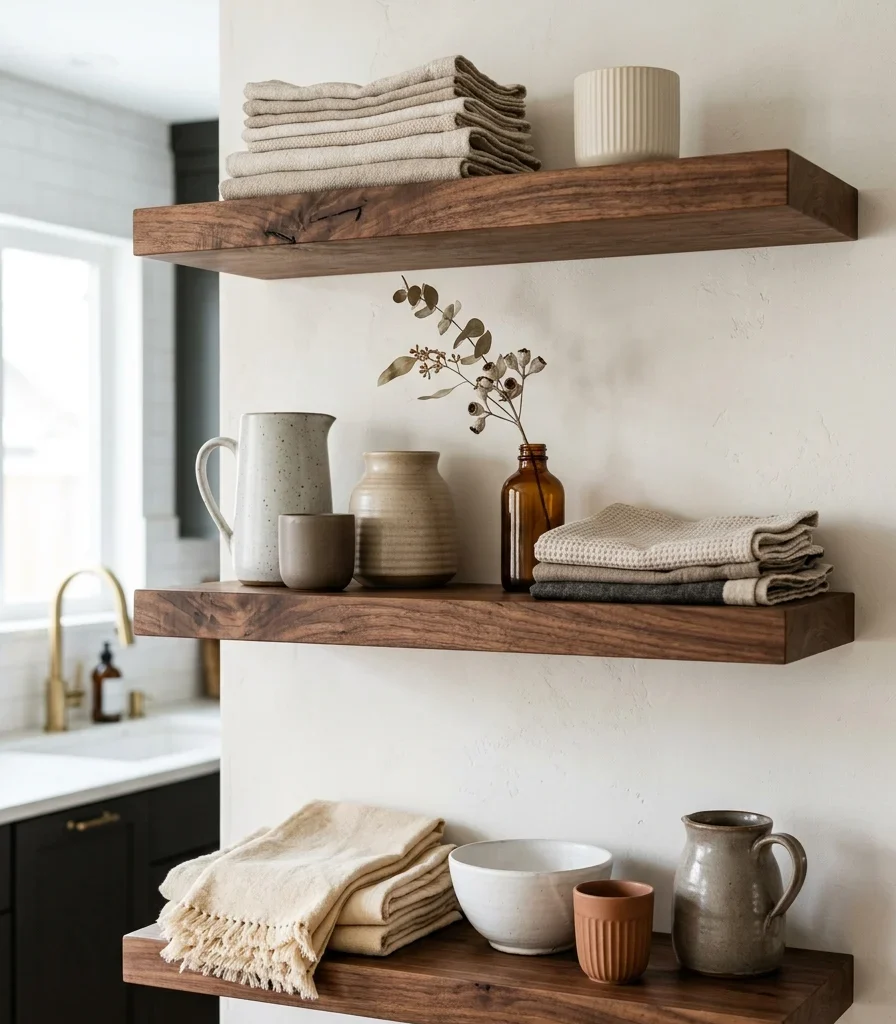
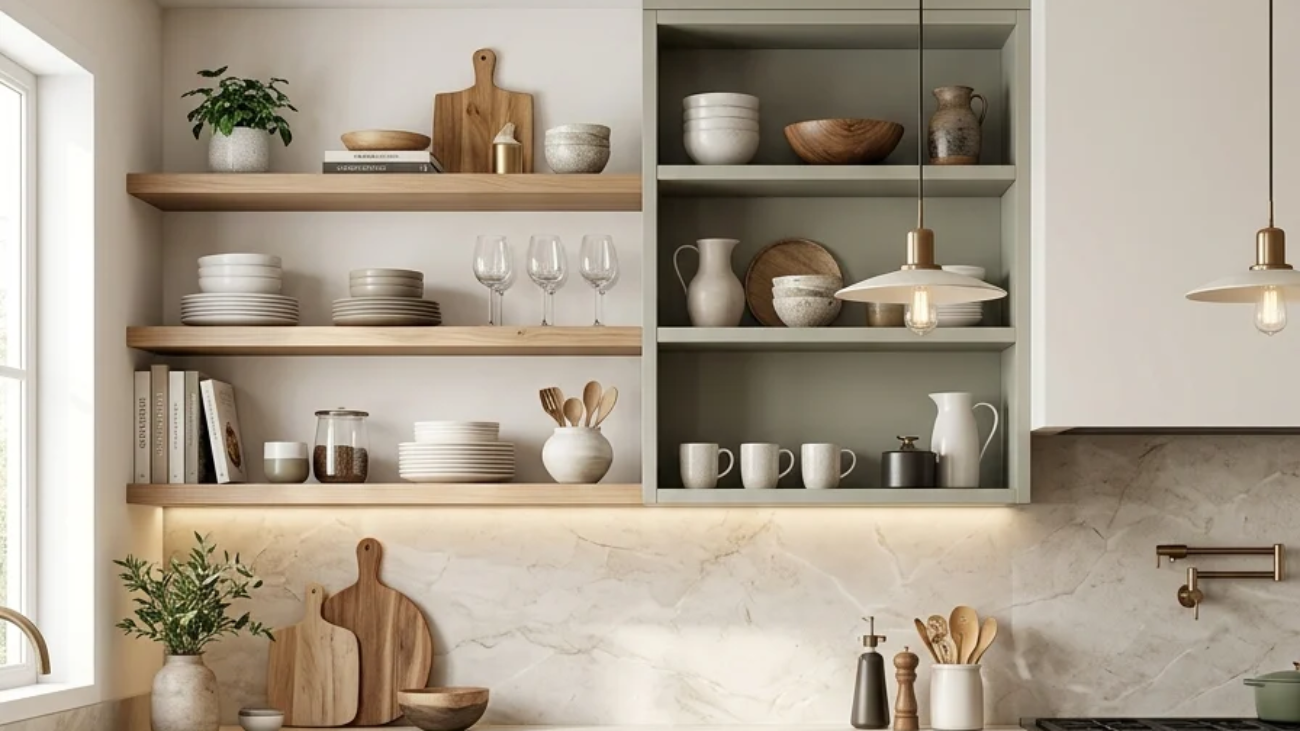
  • Walnut wood floating shelf unit
  • Wool blend area rug living room
  • Ceramic decorative tray coffee table
  • Woven storage basket modern neutral

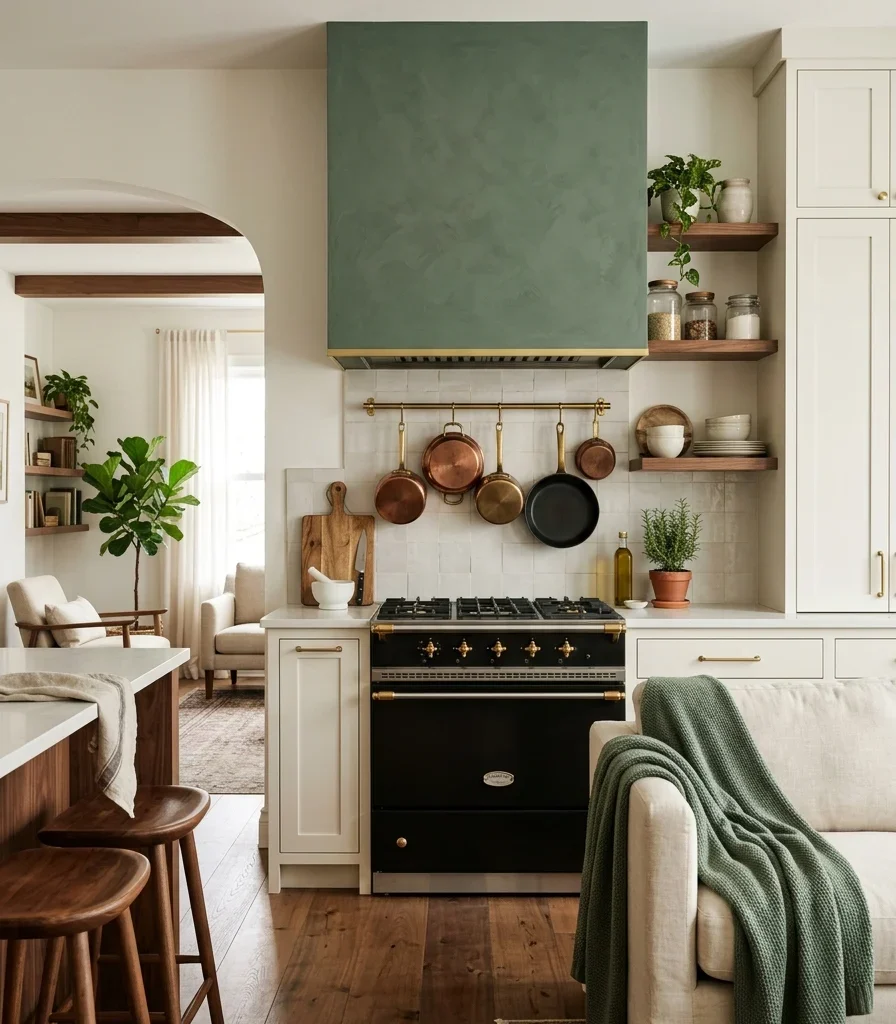
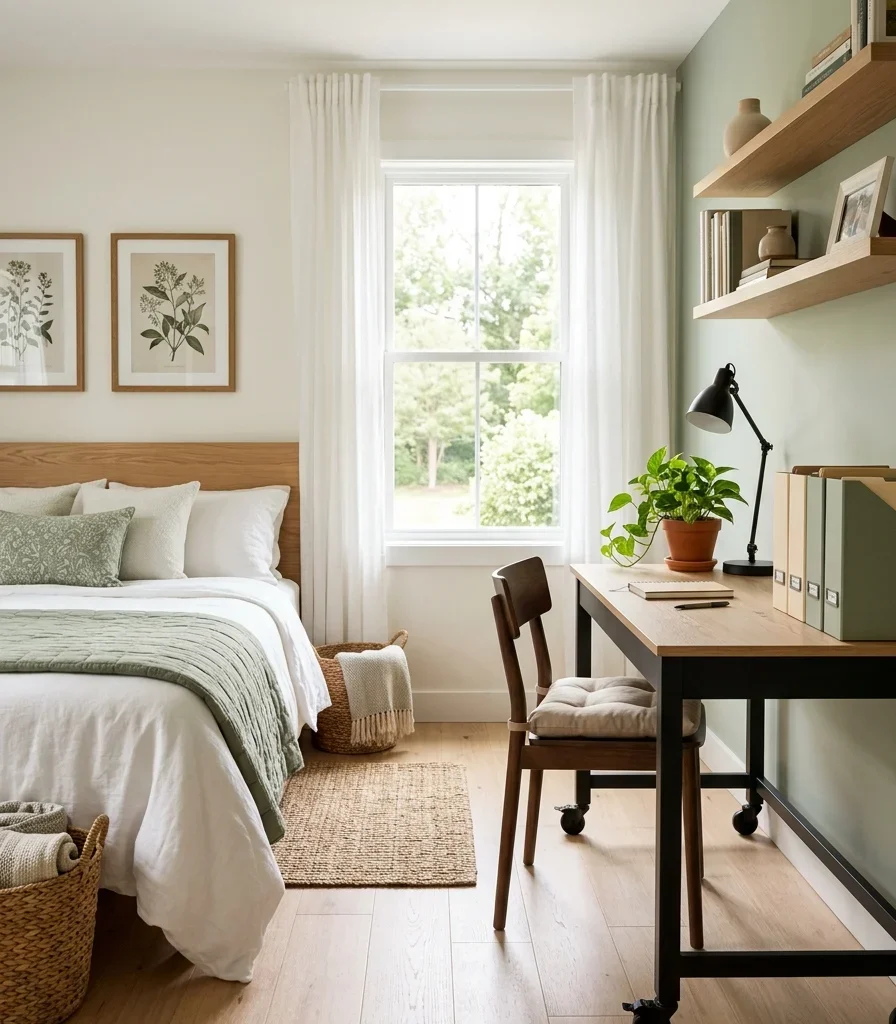
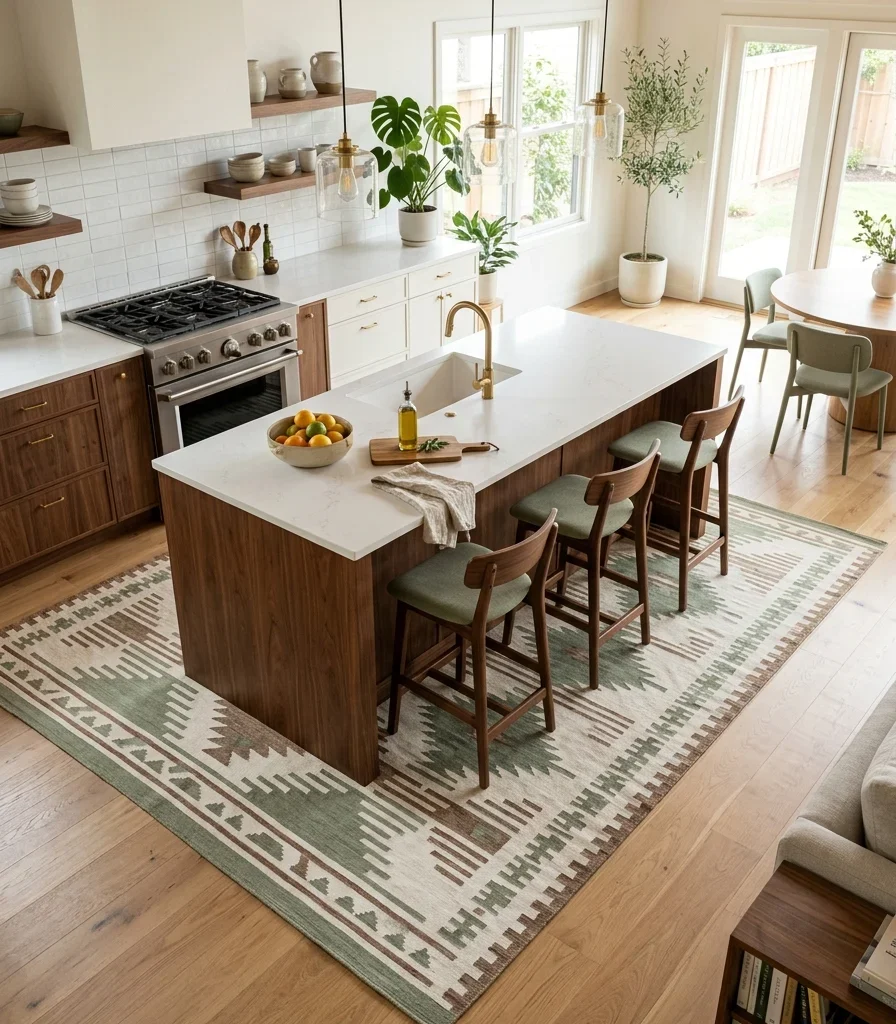
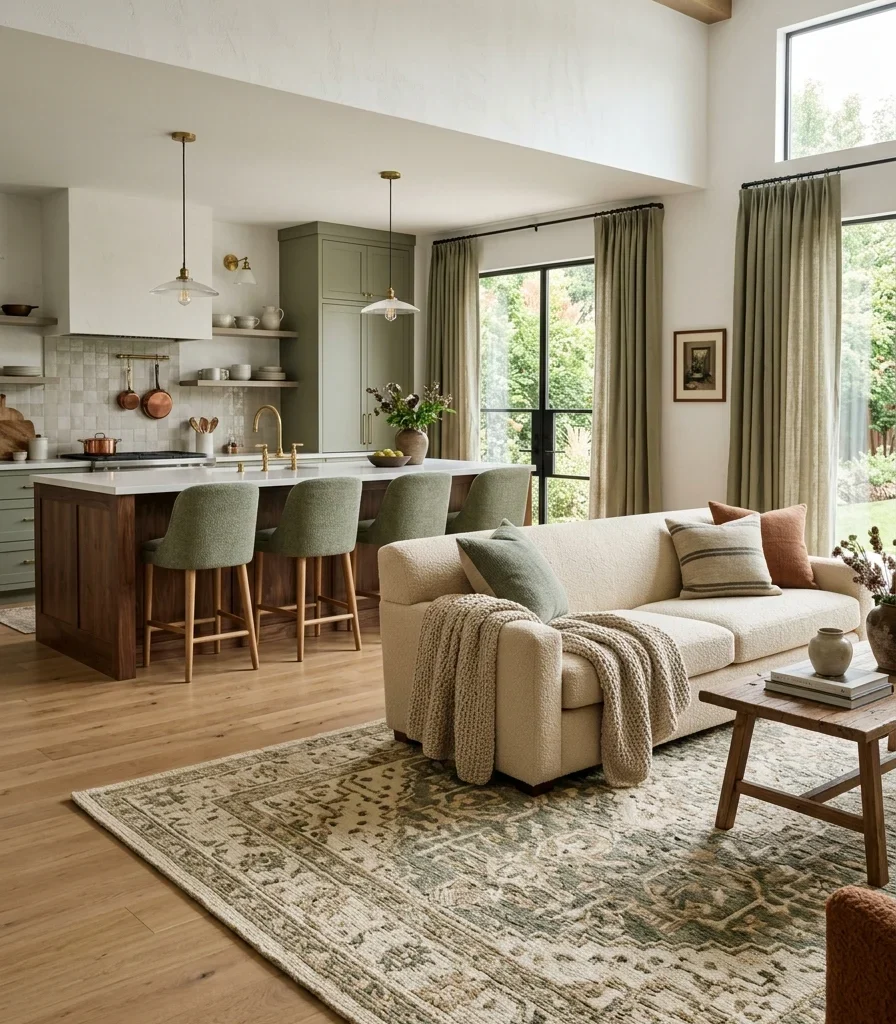
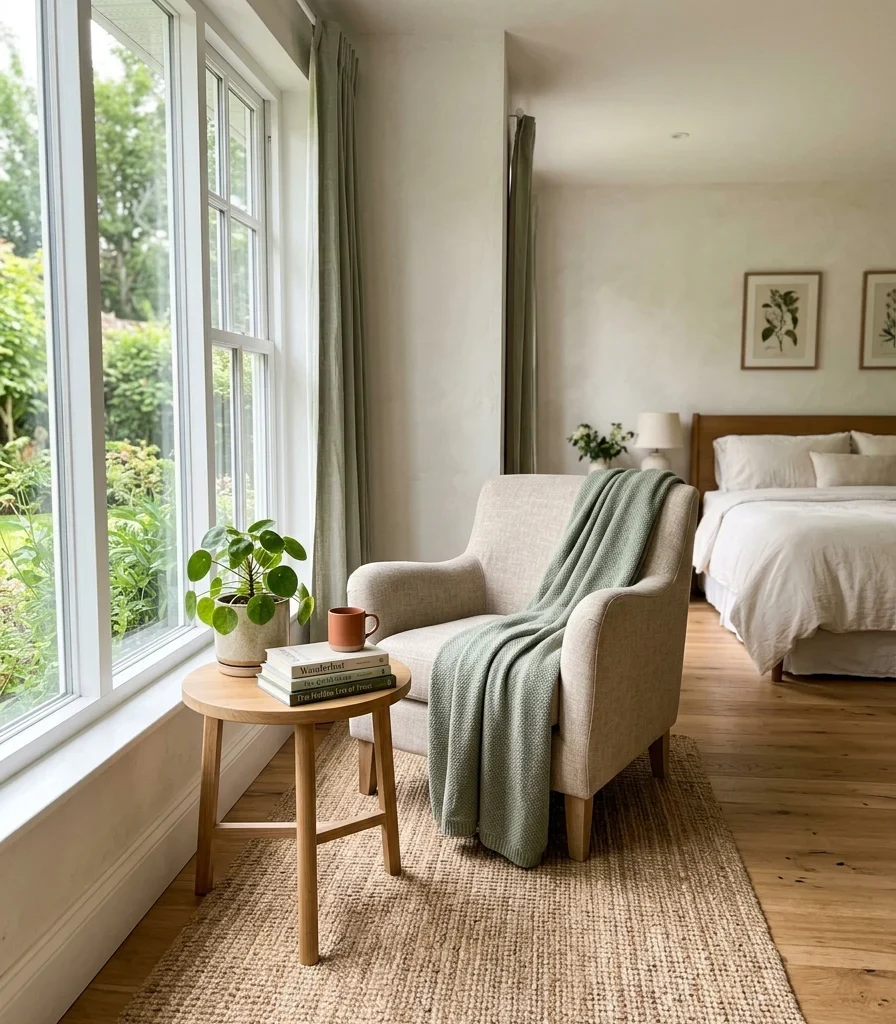
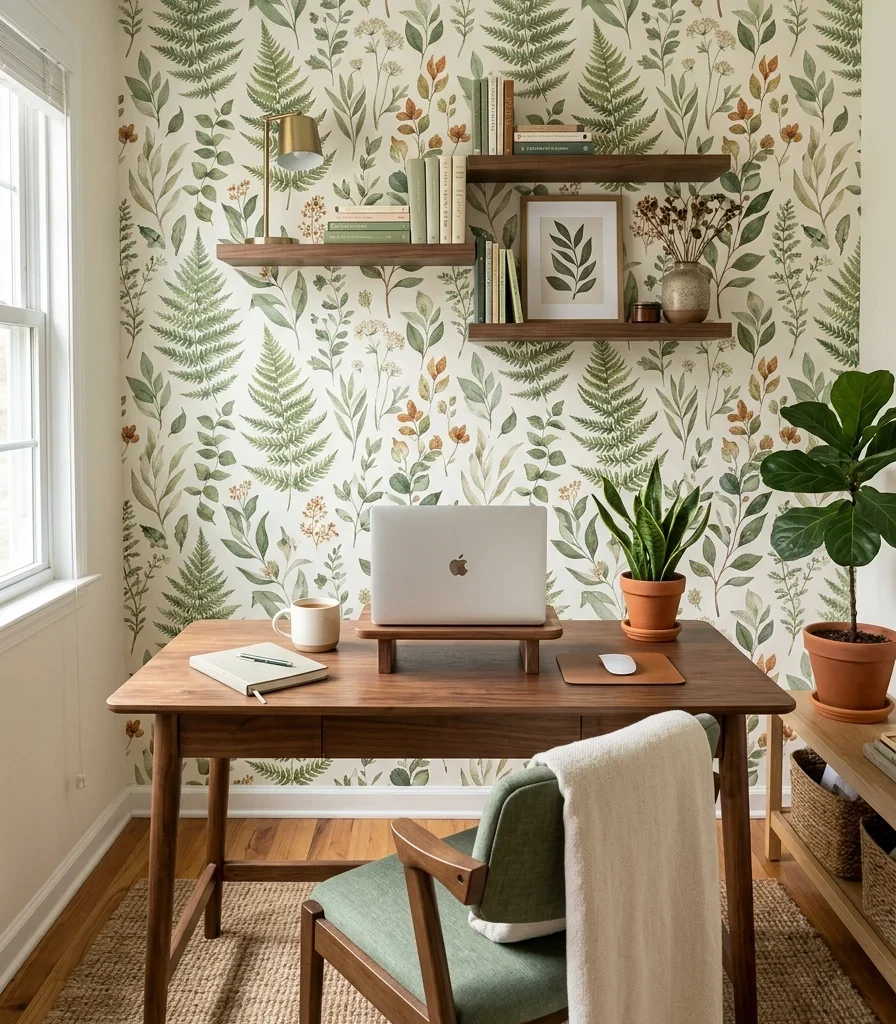
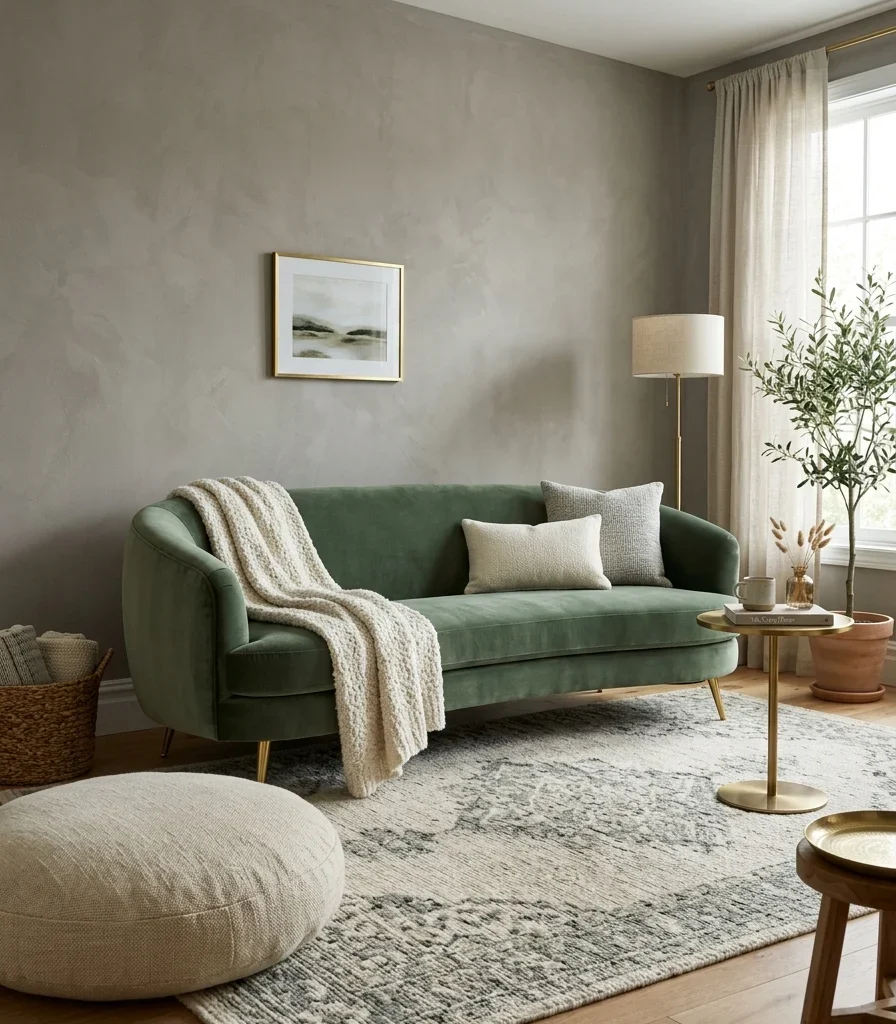
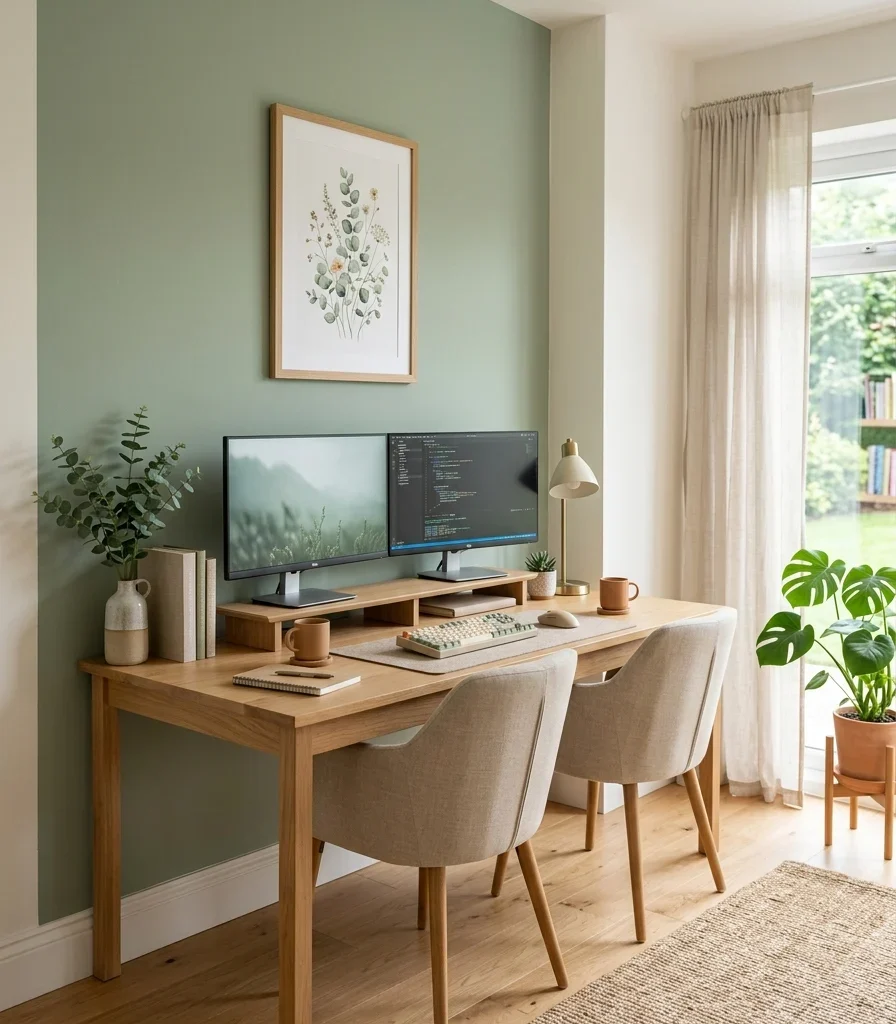
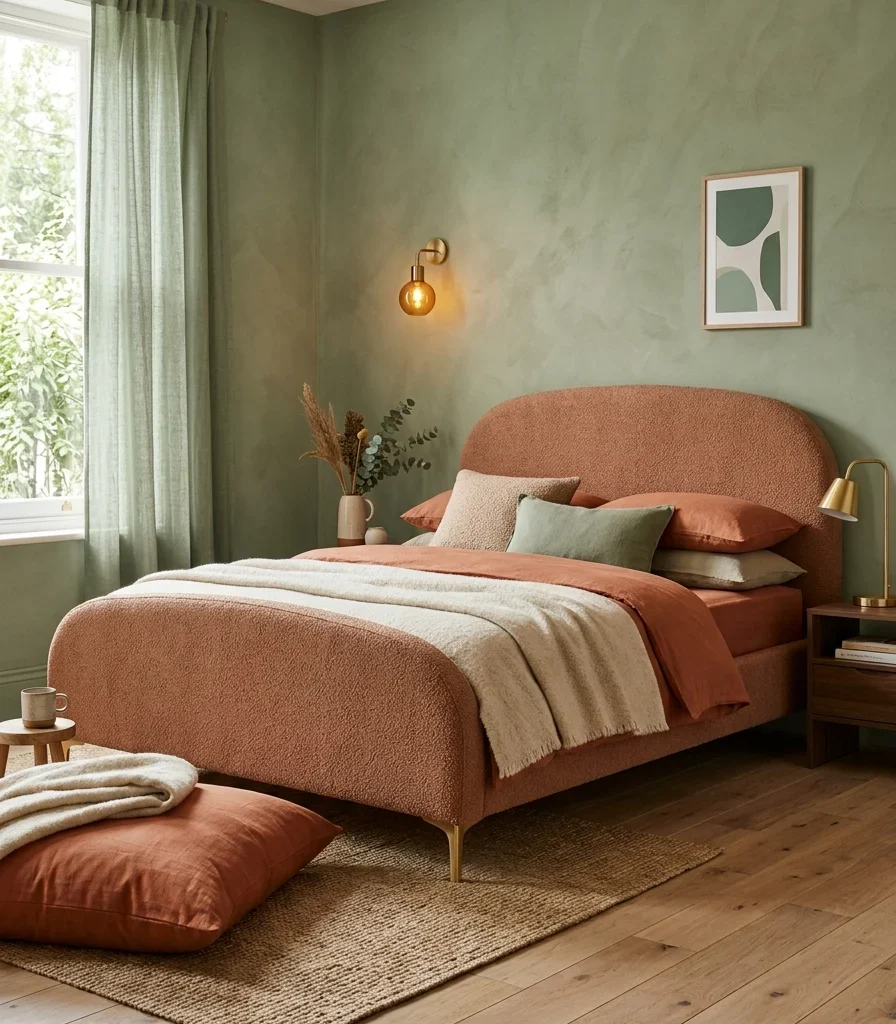
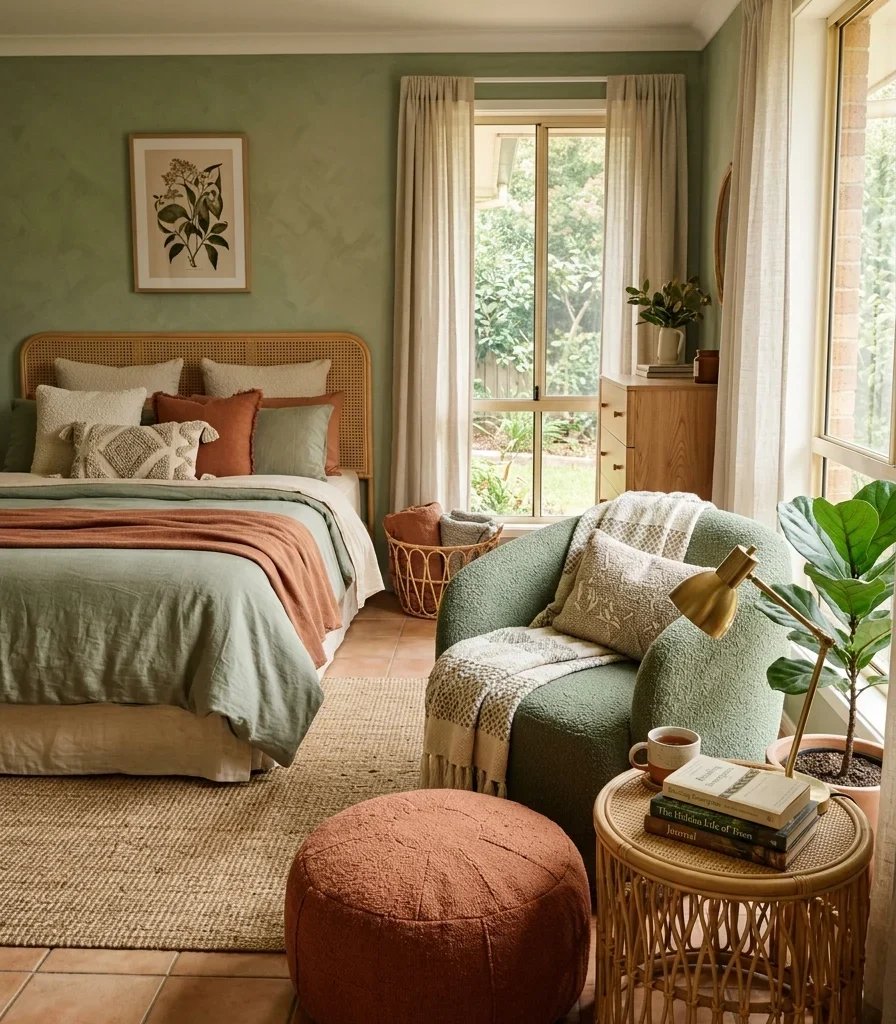
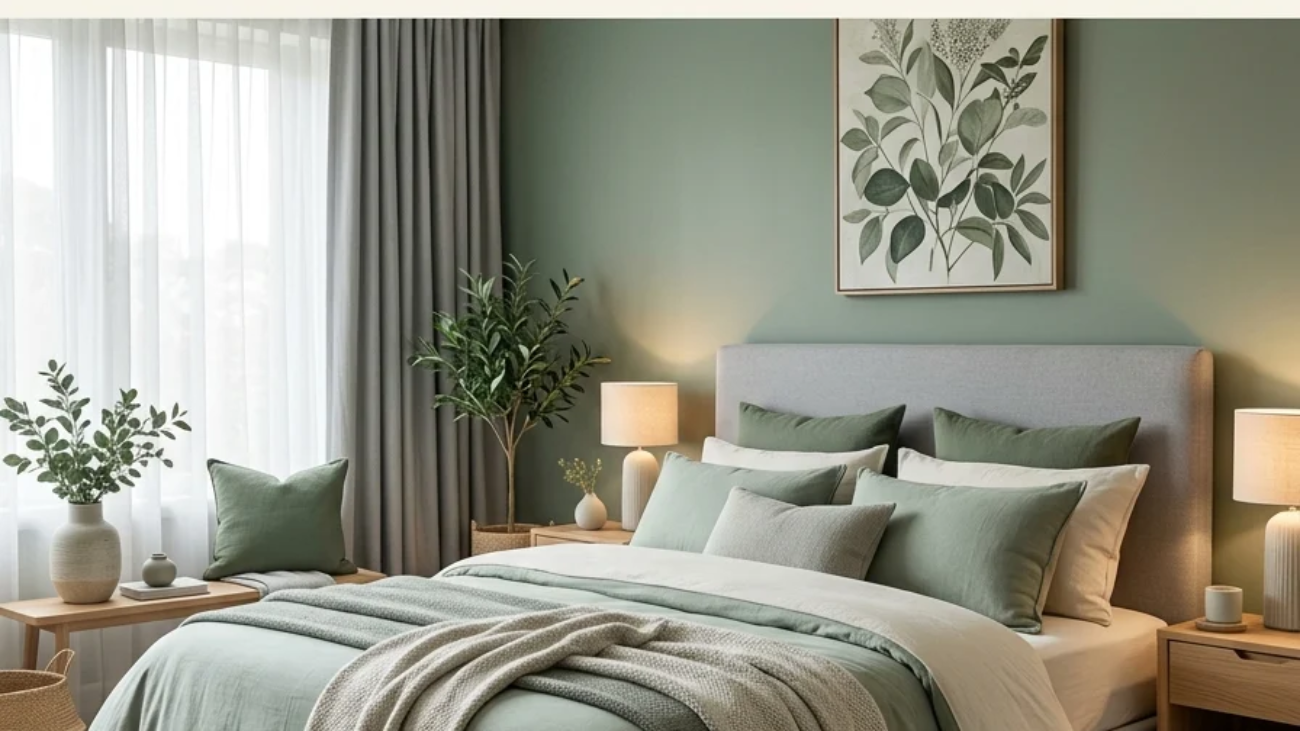
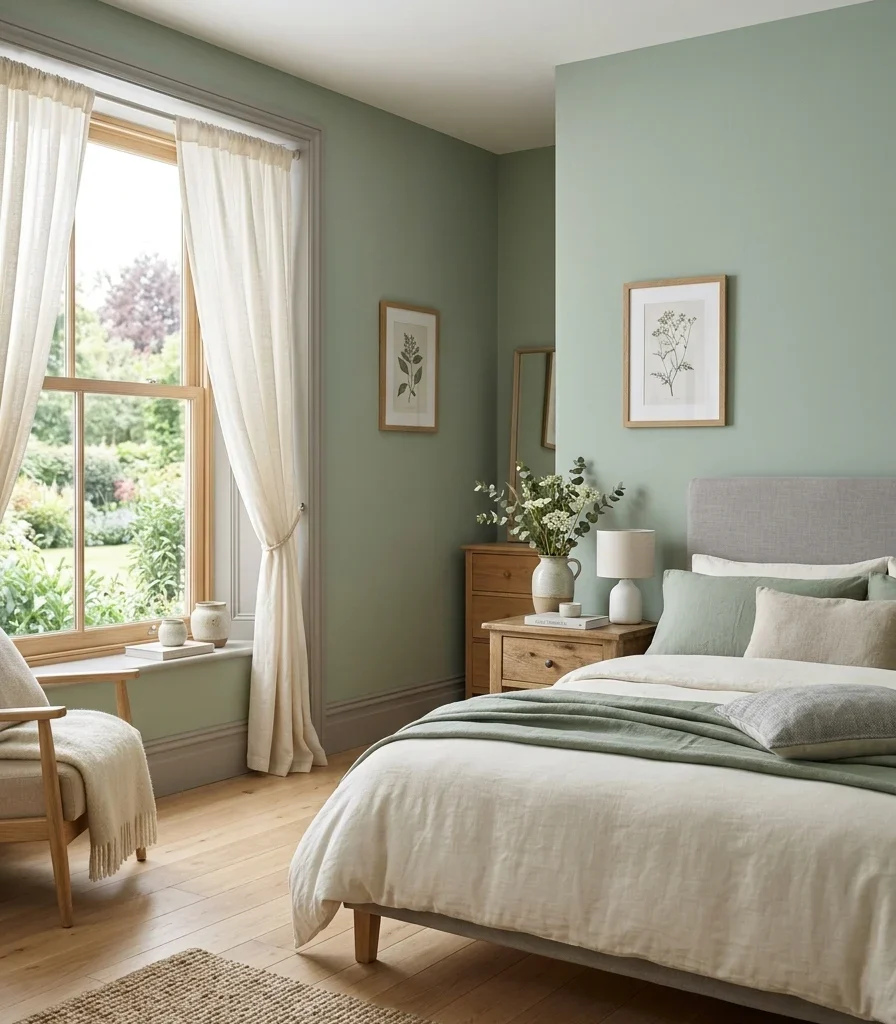
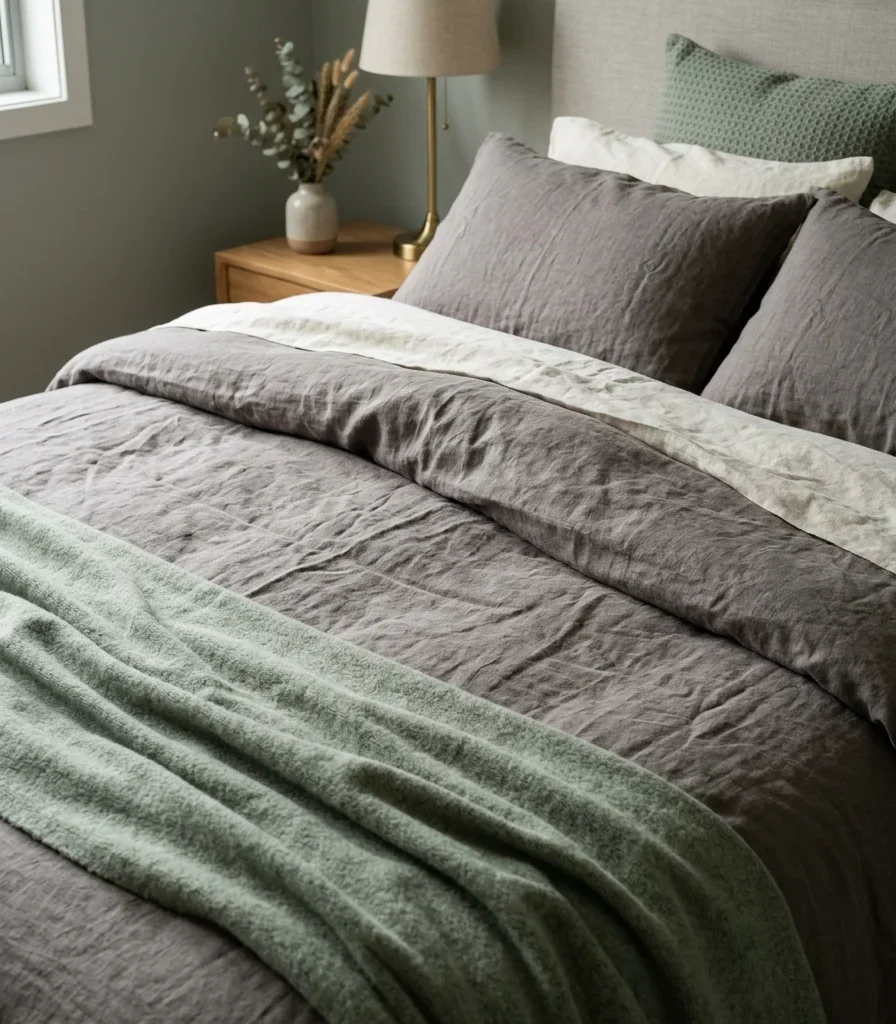
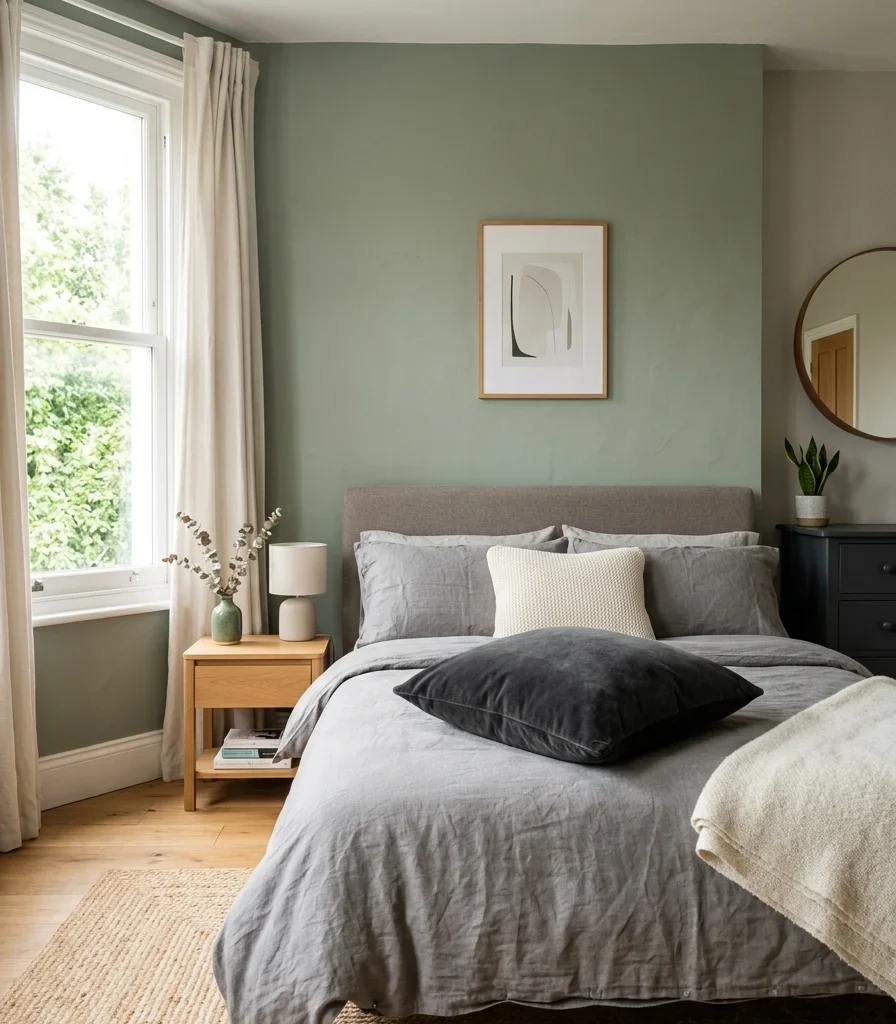
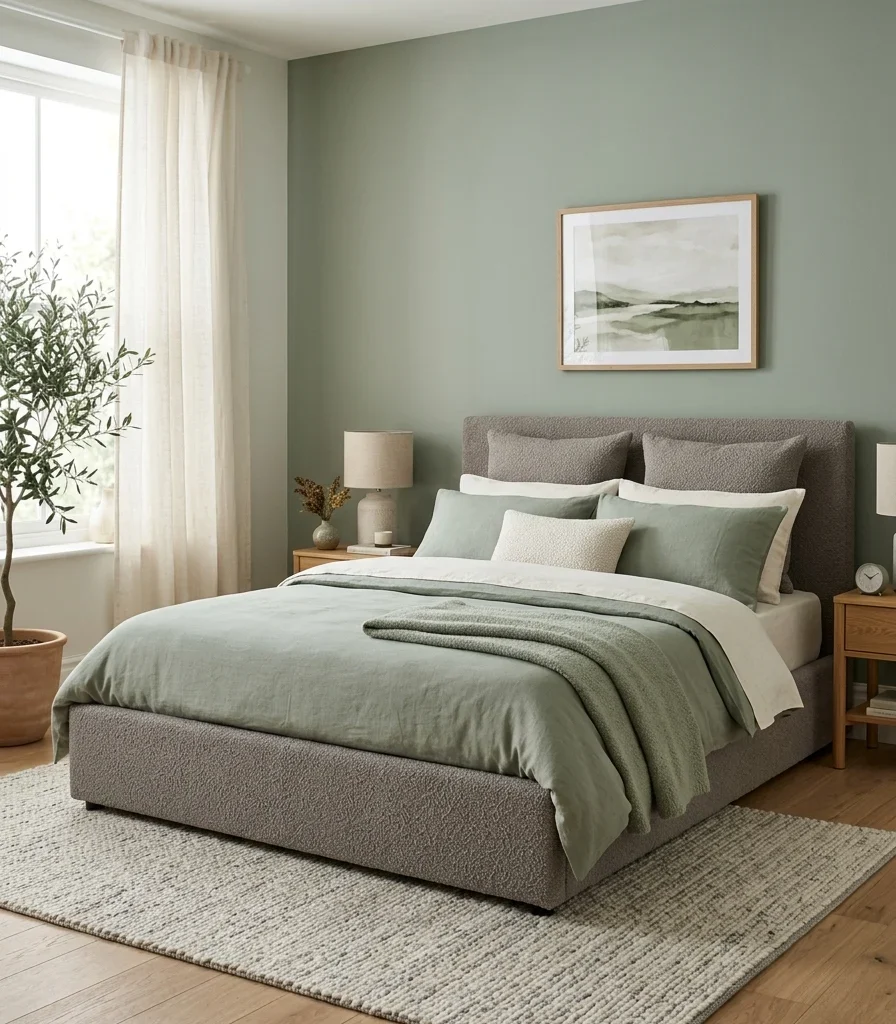
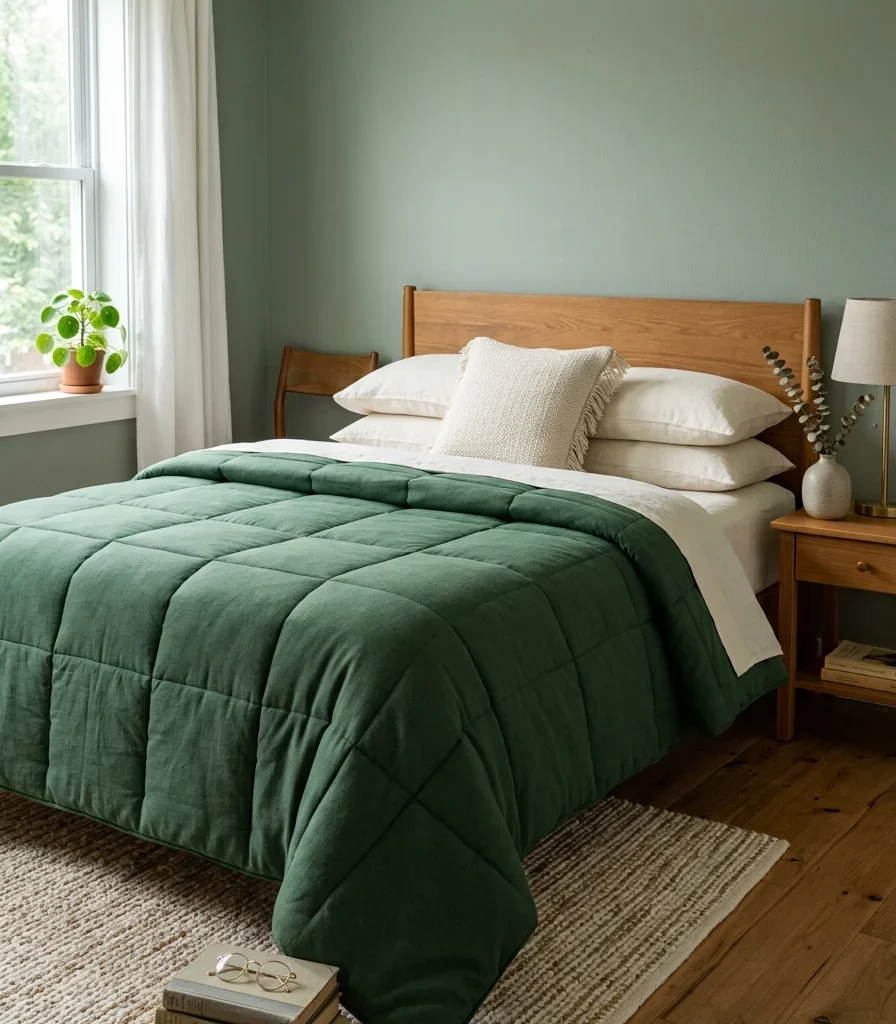
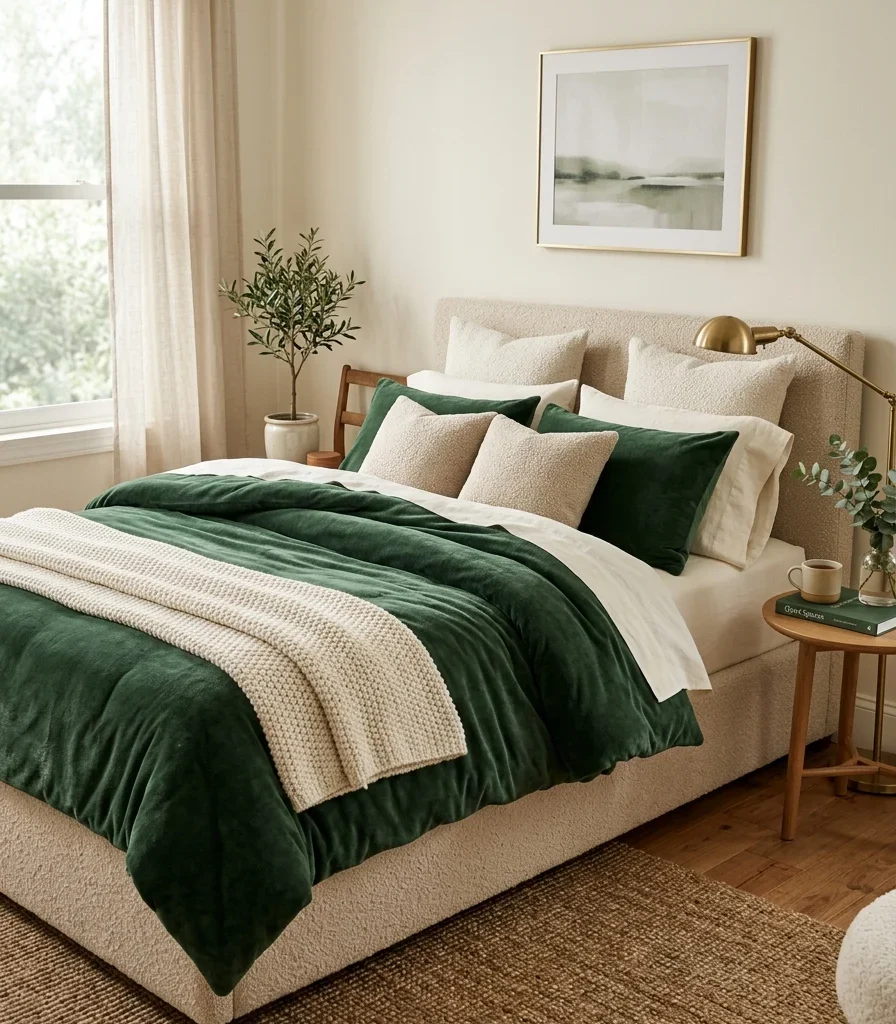
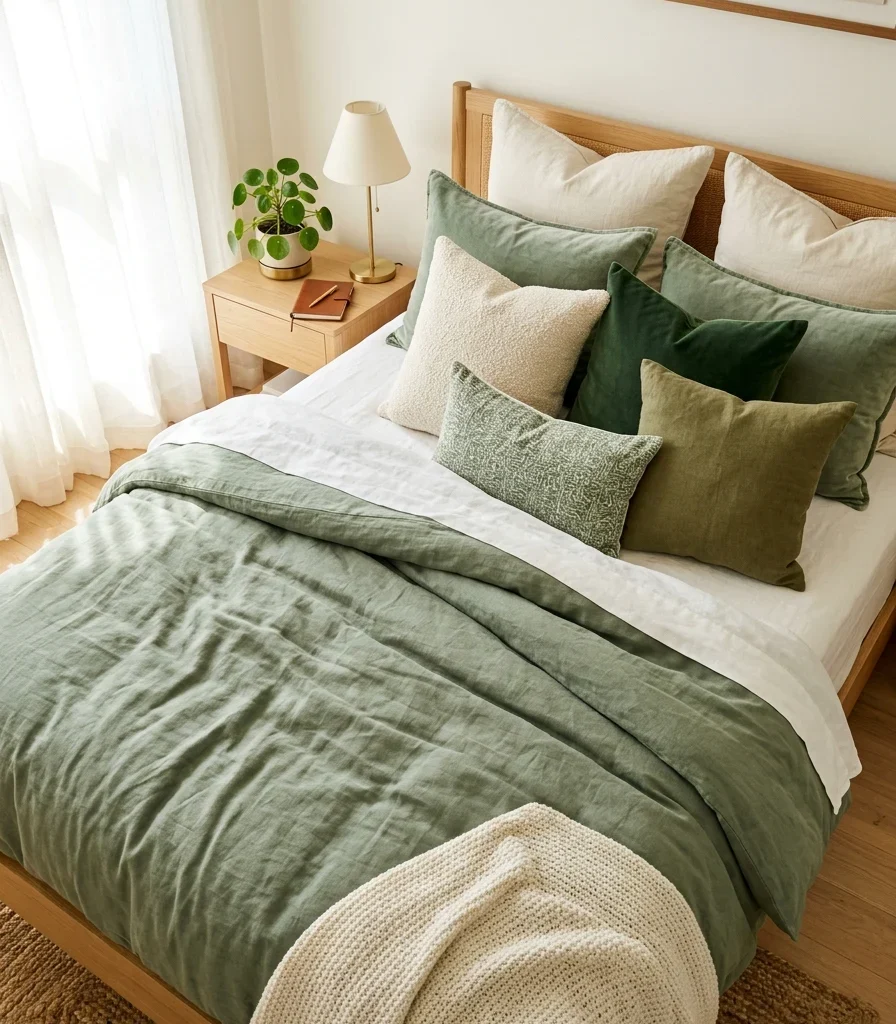
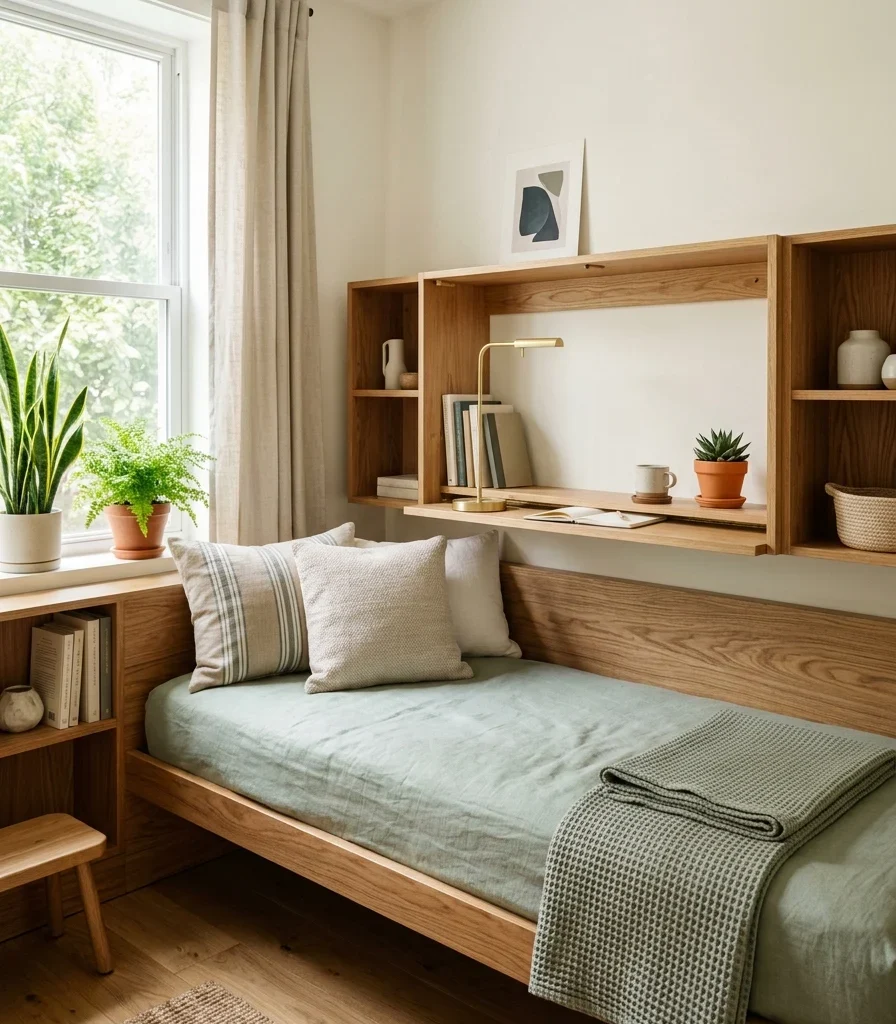
9. Sage Green as a Grounding Accent

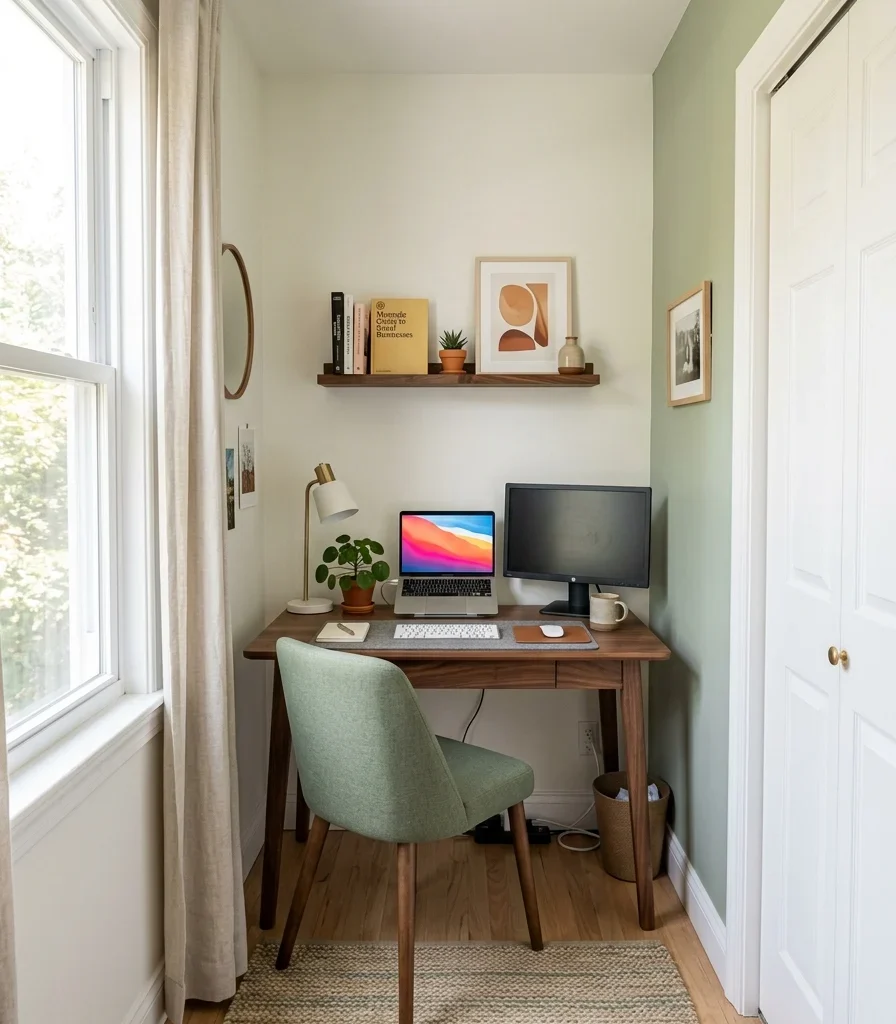
9. Sage Green as a Grounding Accent

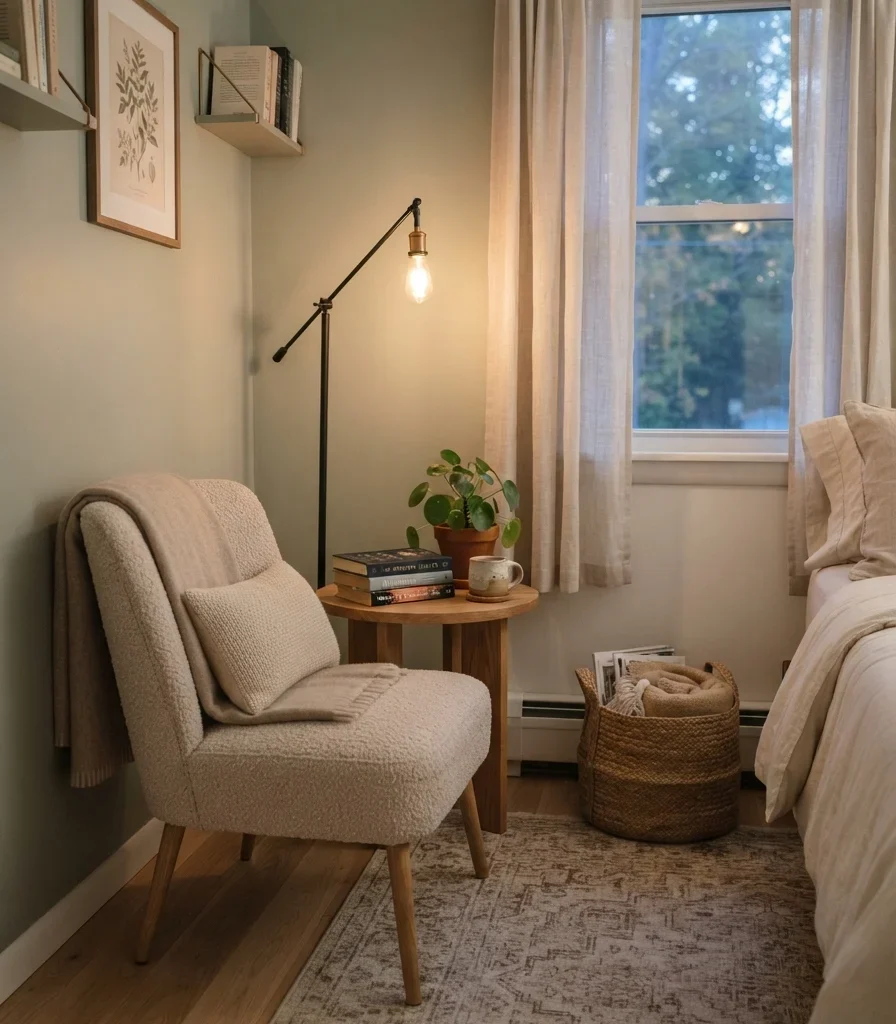
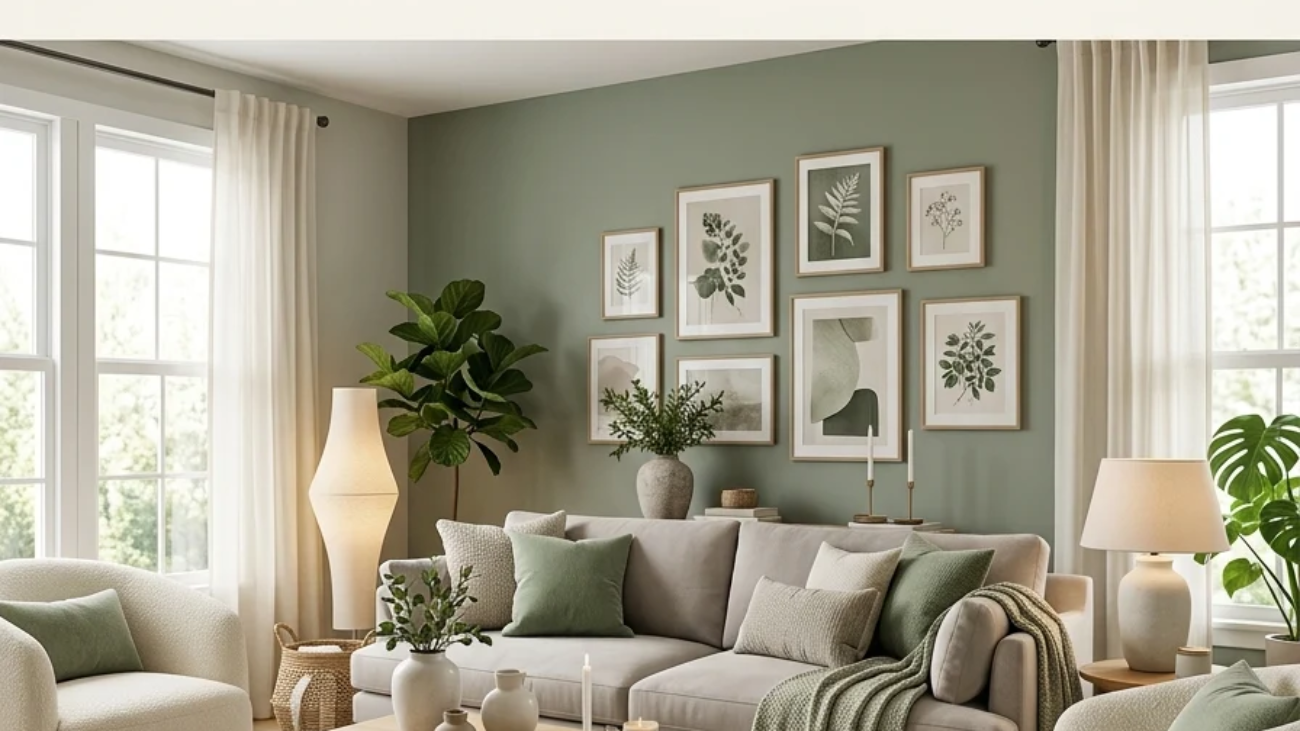
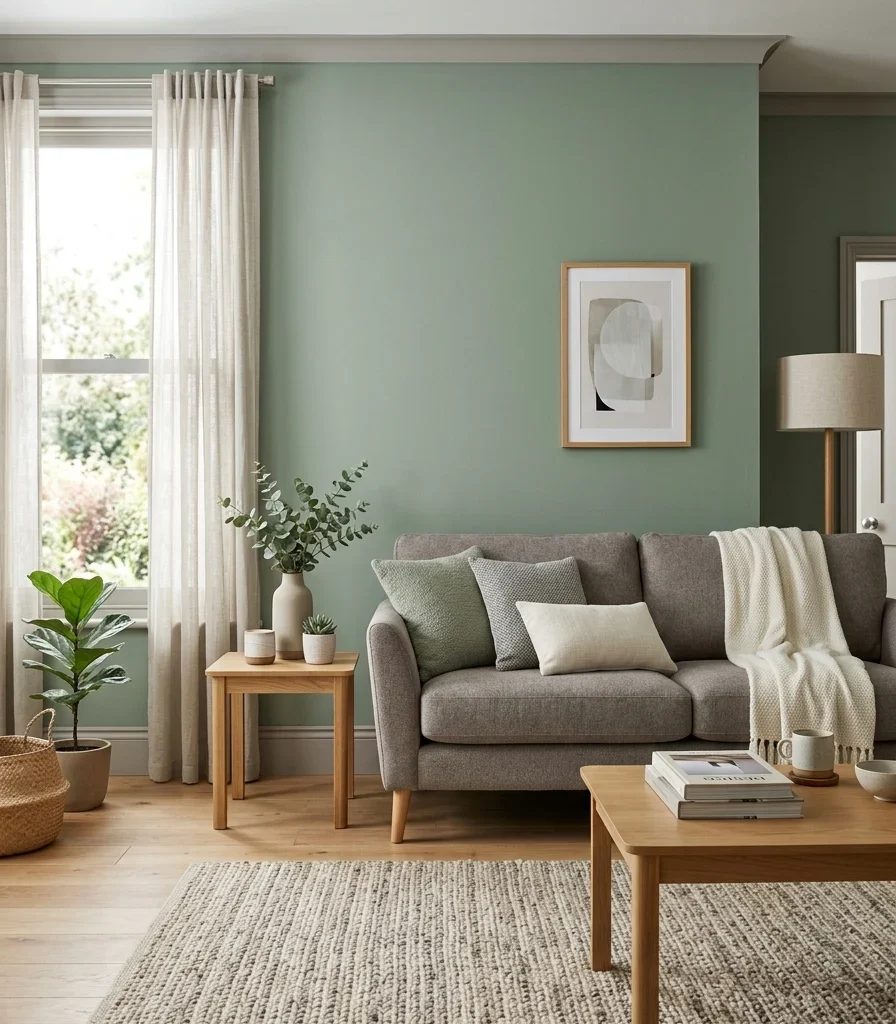
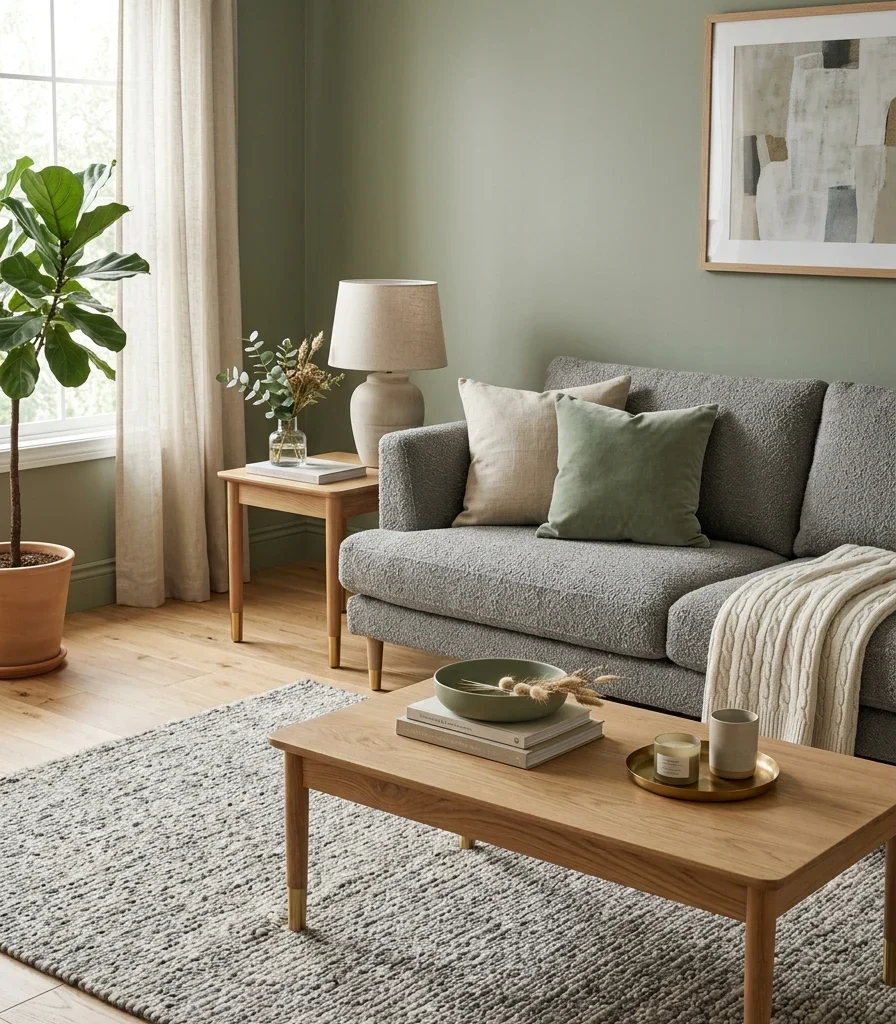
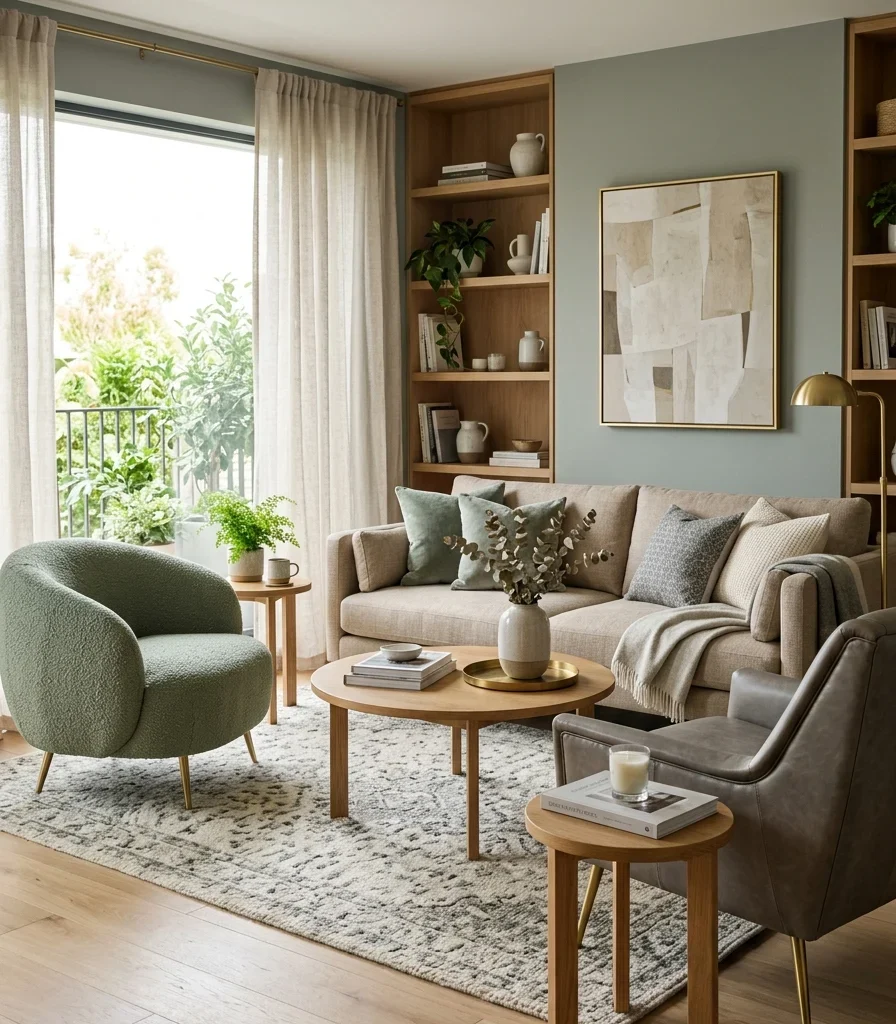
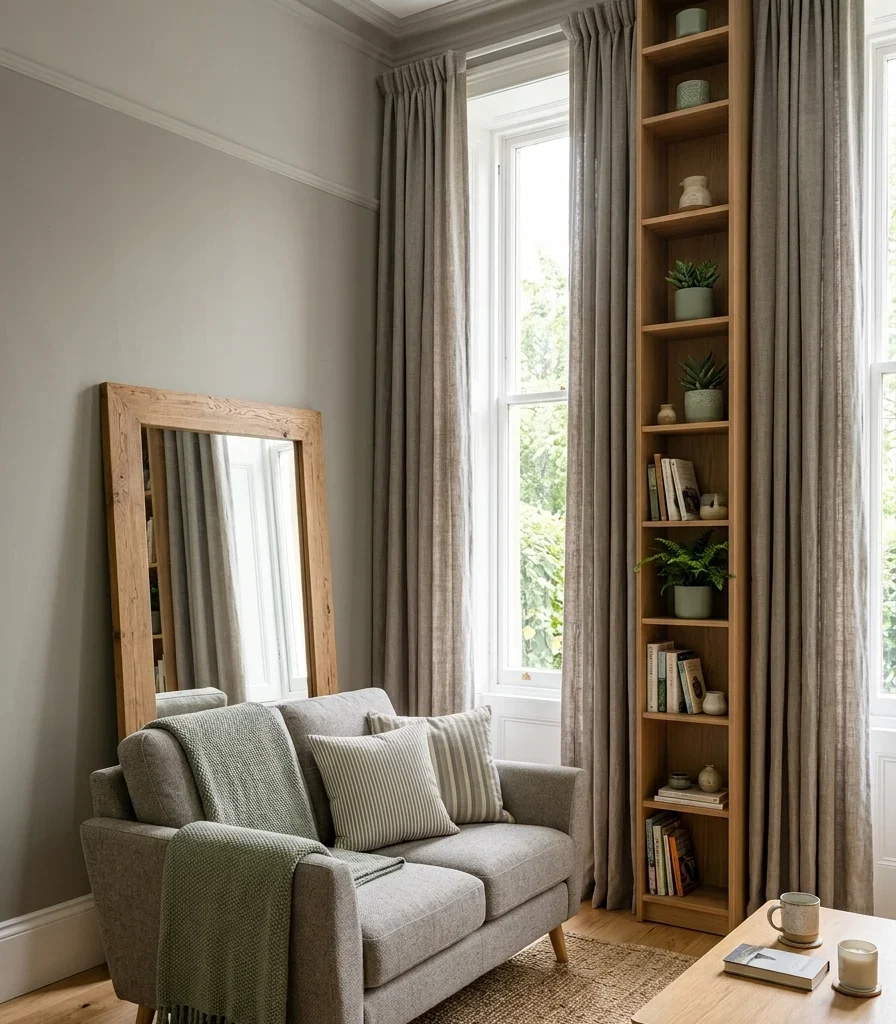
Vibe: The corner feels hushed, like a quiet exhale.

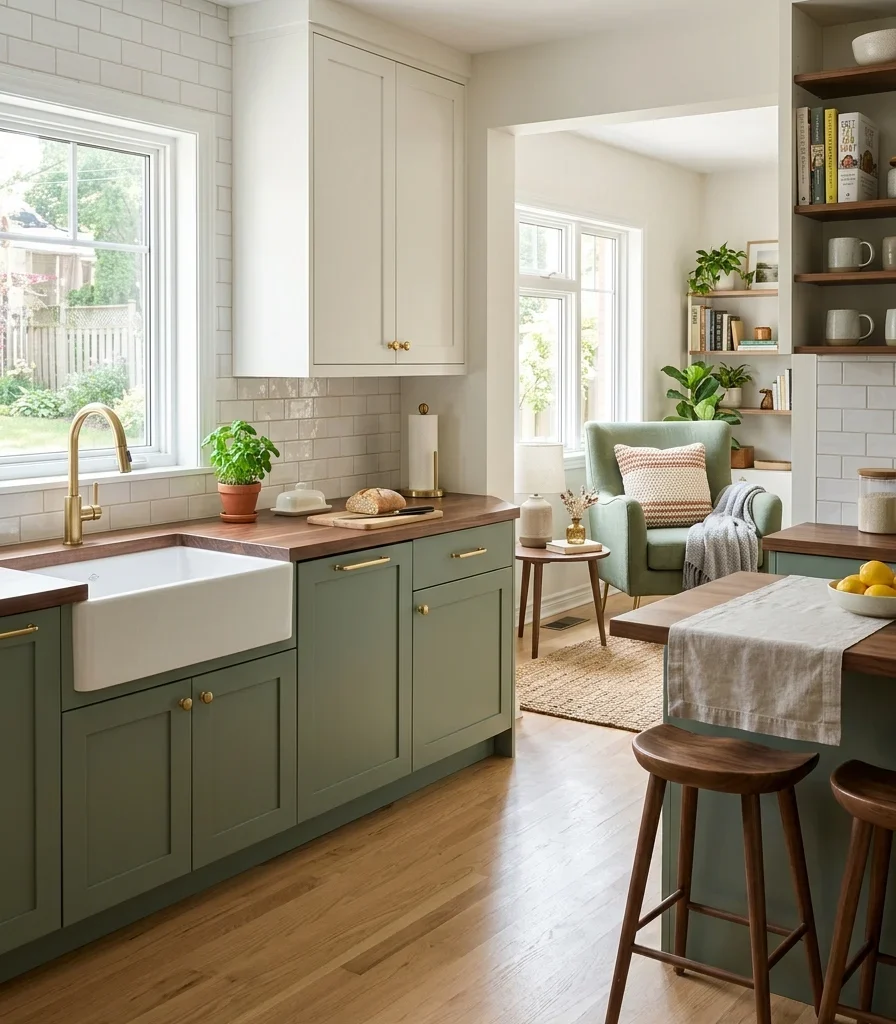
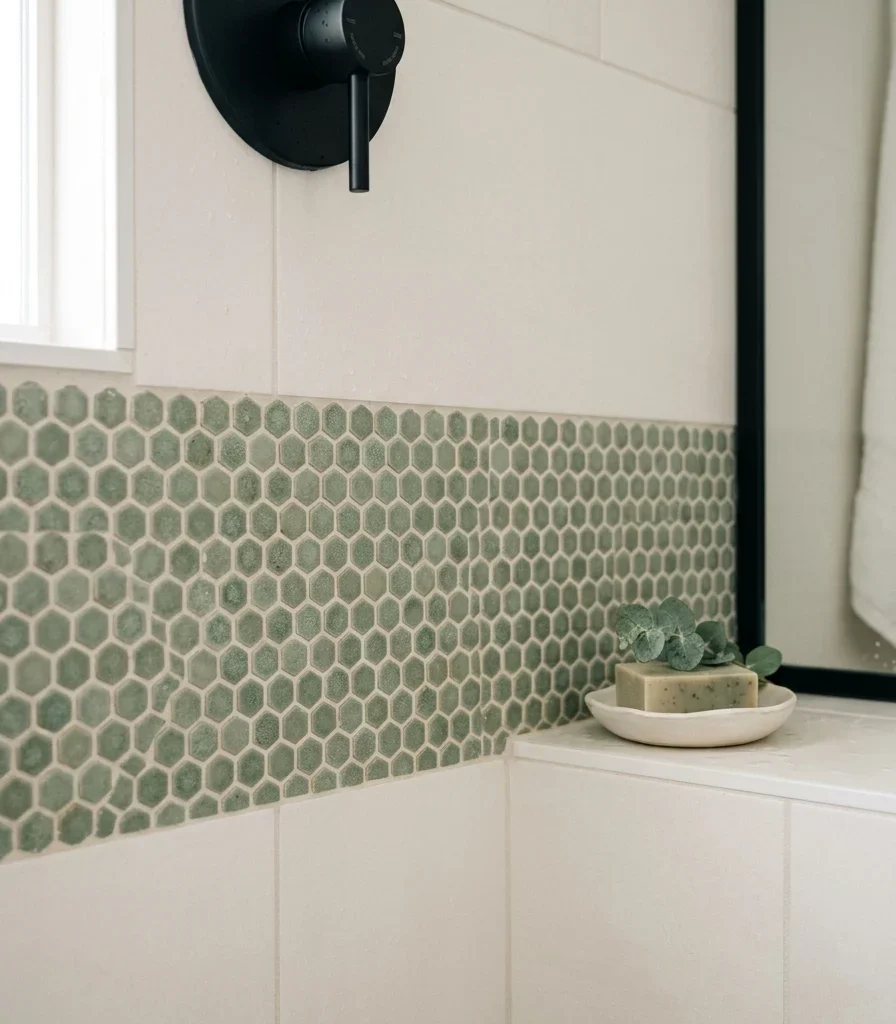
Why it works: Sage green sits close to neutral on the color wheel, which is why it reads as calming rather than bold — it has enough gray undertone to behave like a neutral while still adding color. Using it on a single upholstered piece keeps the accent controlled rather than overwhelming the room.

How to get it: Introduce sage green through one substantial piece — an accent chair or a sofa — rather than paint, so the color feels curated and can be balanced against warm white and walnut without dominating the palette.

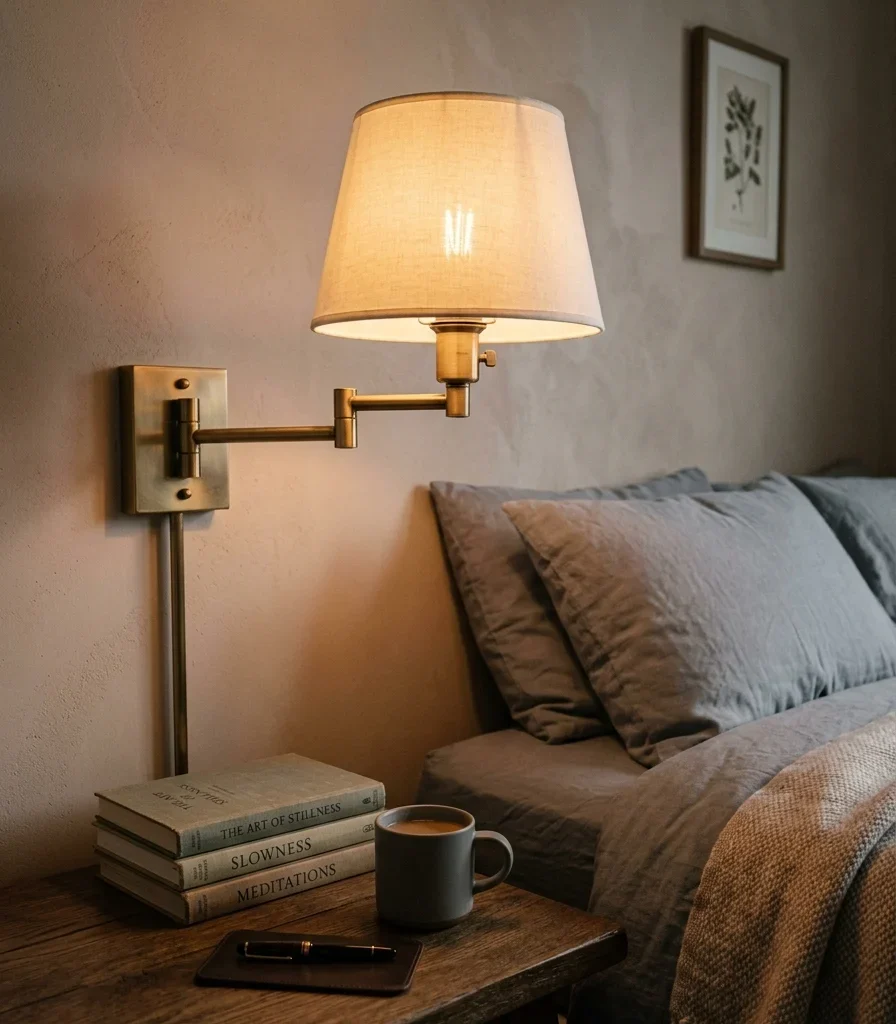
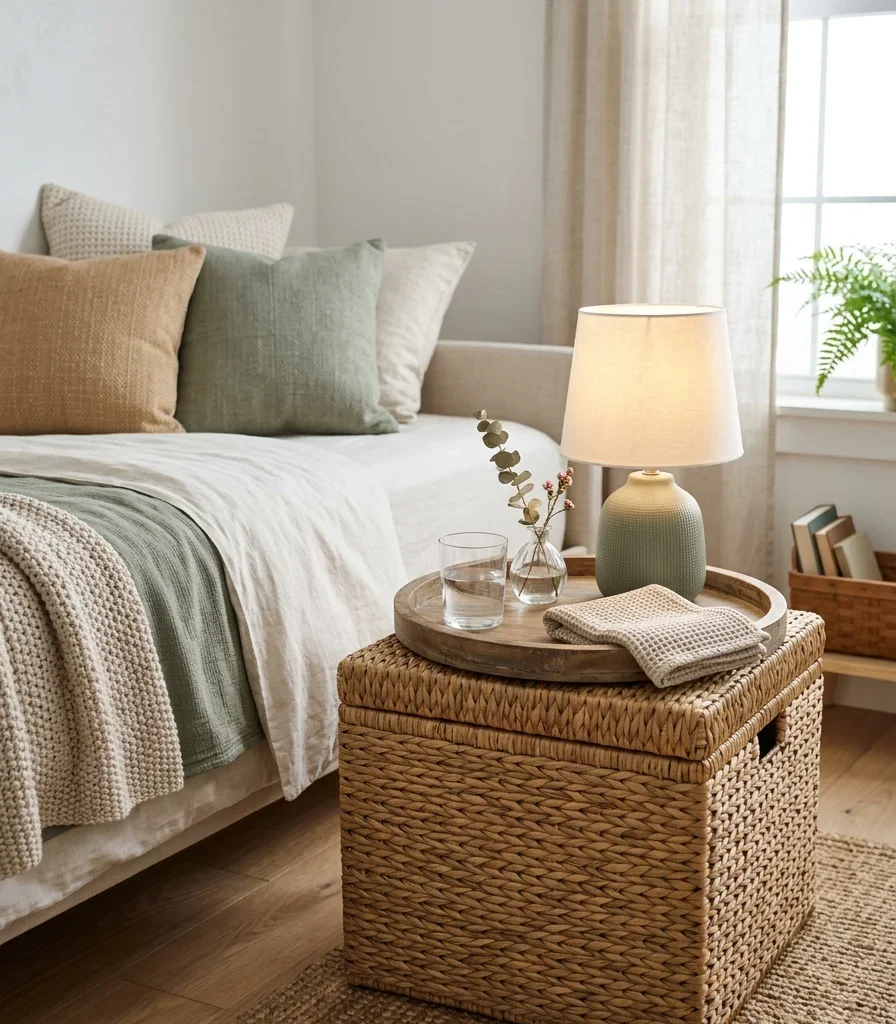
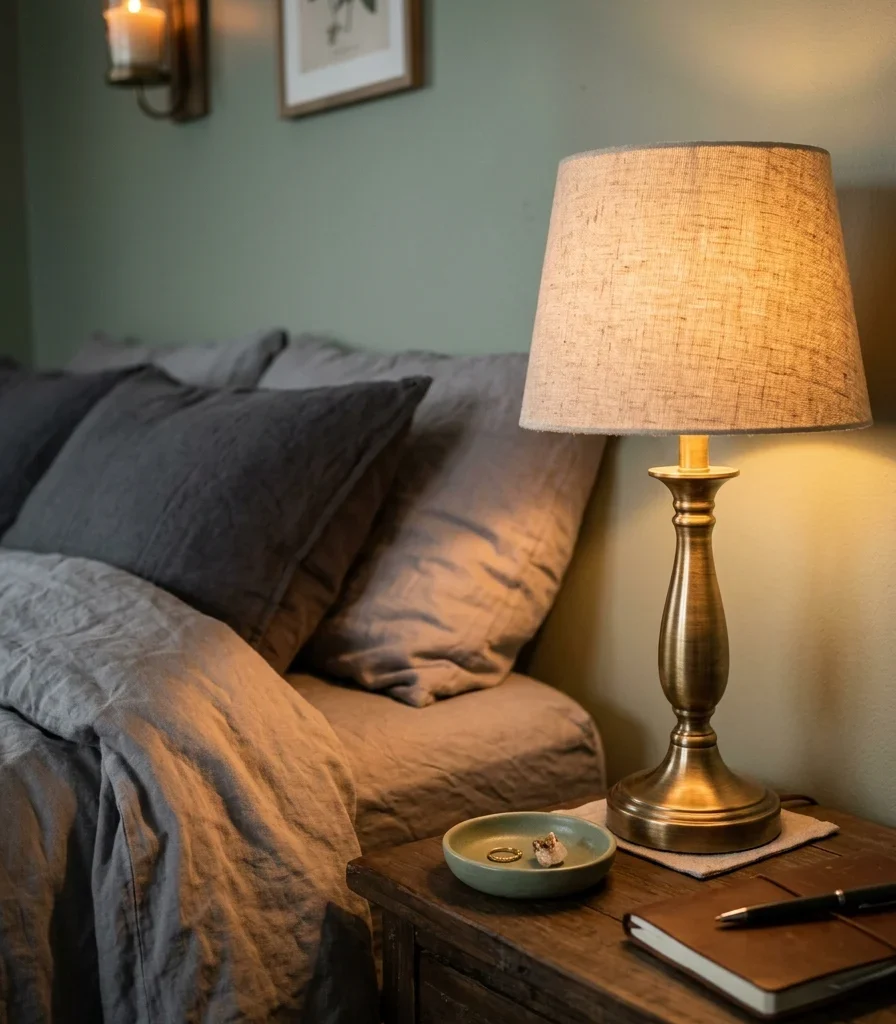
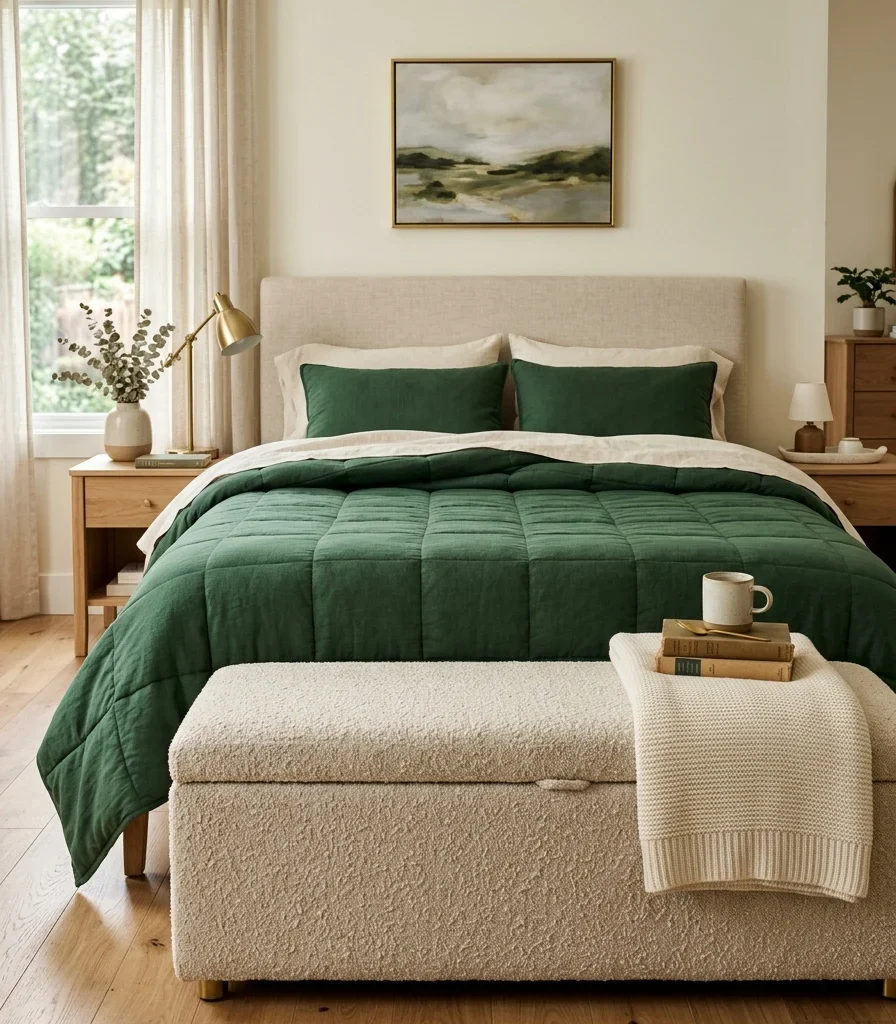
💡 Quick Win: A sage green ceramic table lamp base delivers the same calming effect at a fraction of the commitment.

Shop The Look

  • Sage green bouclé accent chair walnut legs
  • Cream cotton knit throw blanket
  • Walnut round side table modern
  • Sage green ceramic table lamp base
  • Linen drum lamp shade neutral

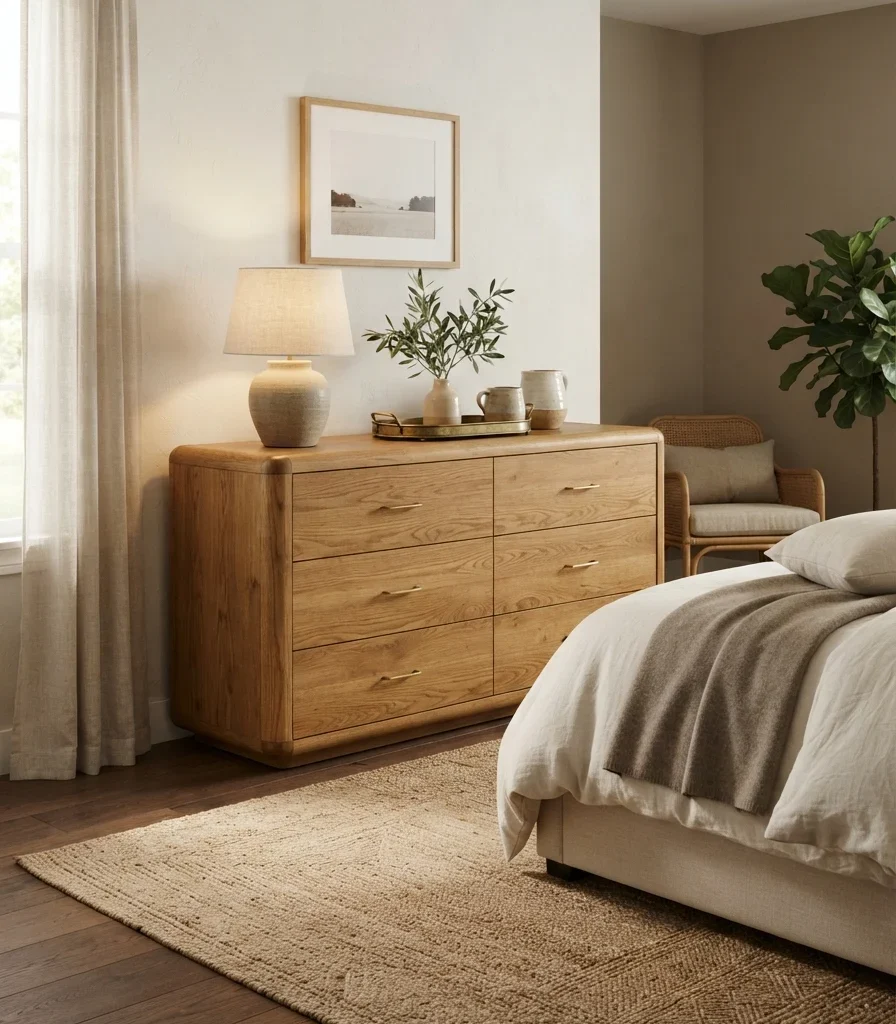
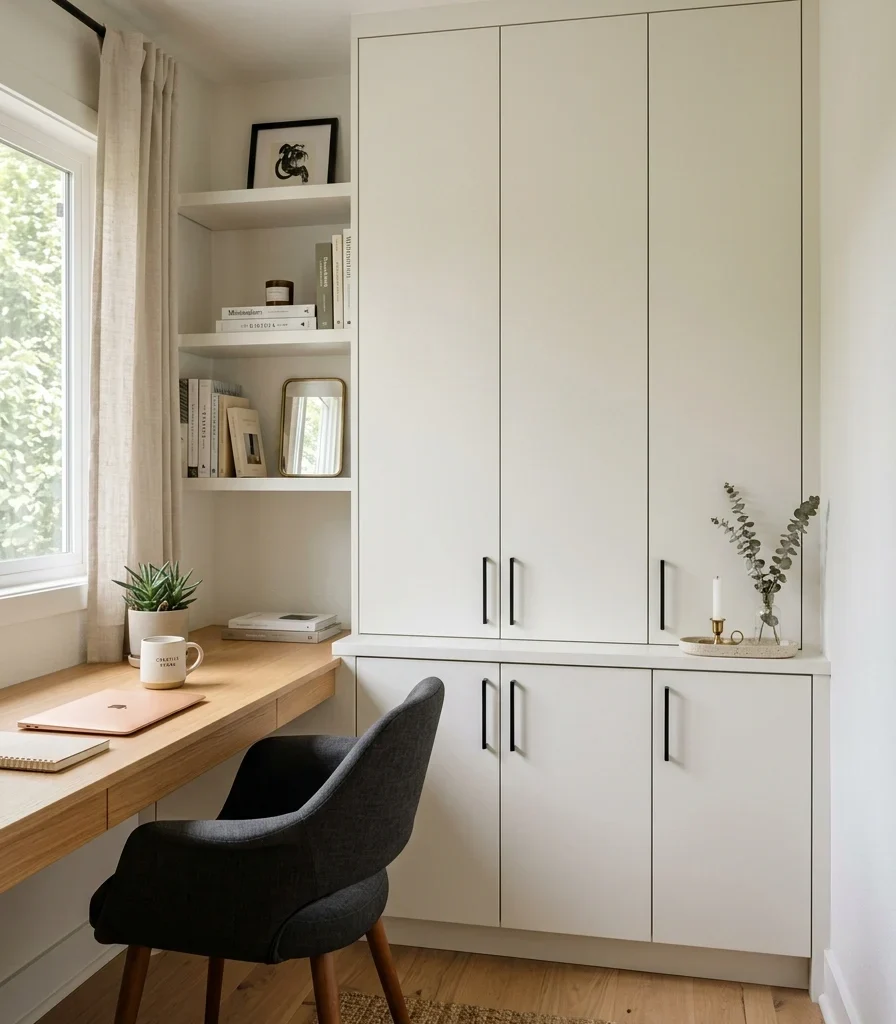
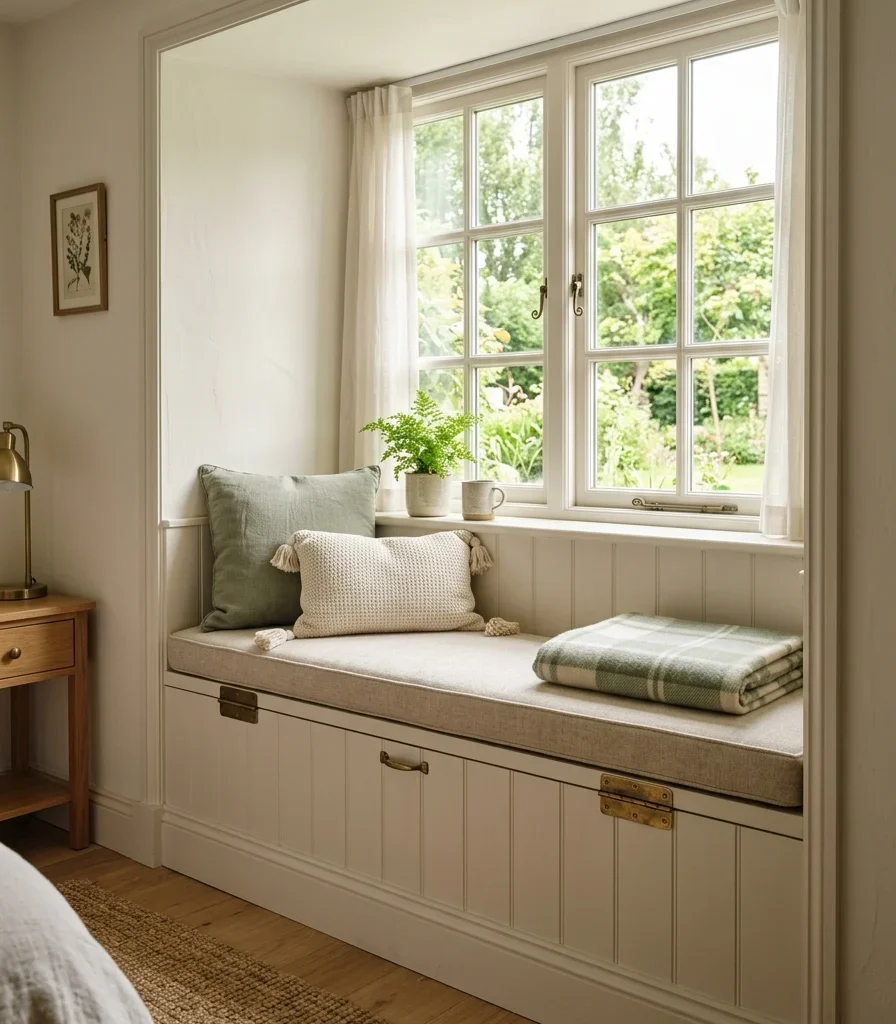
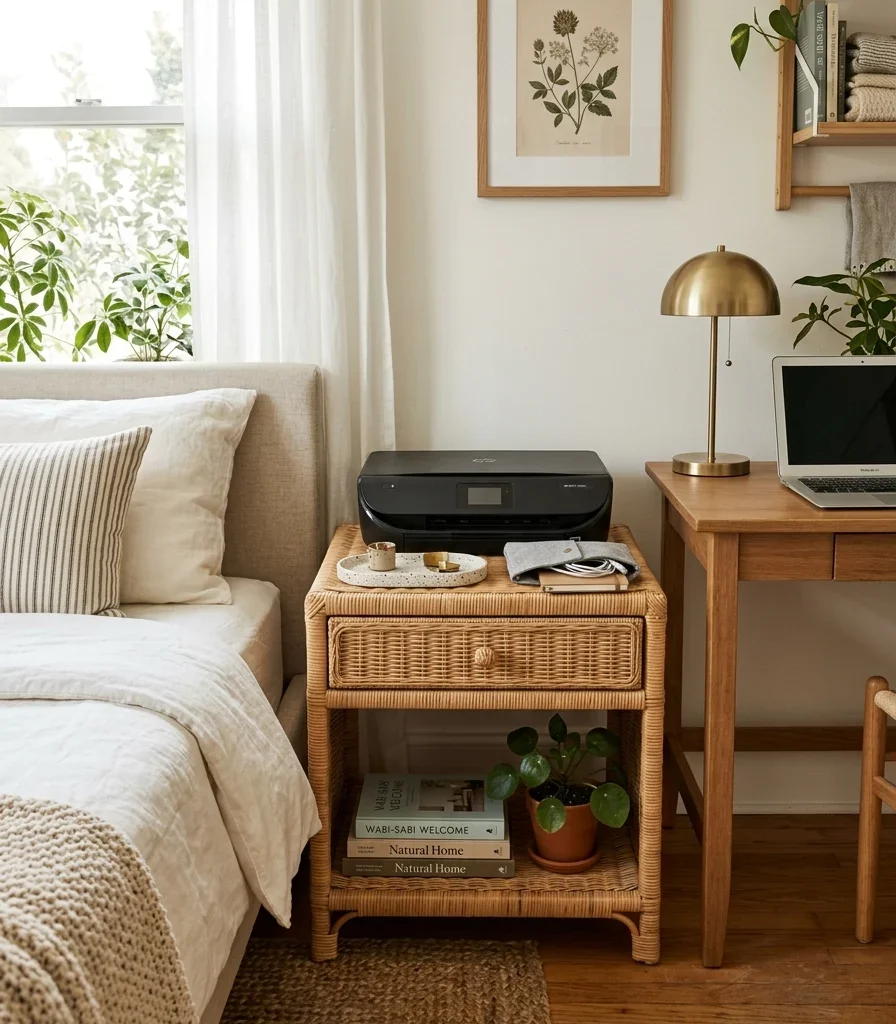
10. Streamlined Storage: Modern Furniture That Hides Its Function

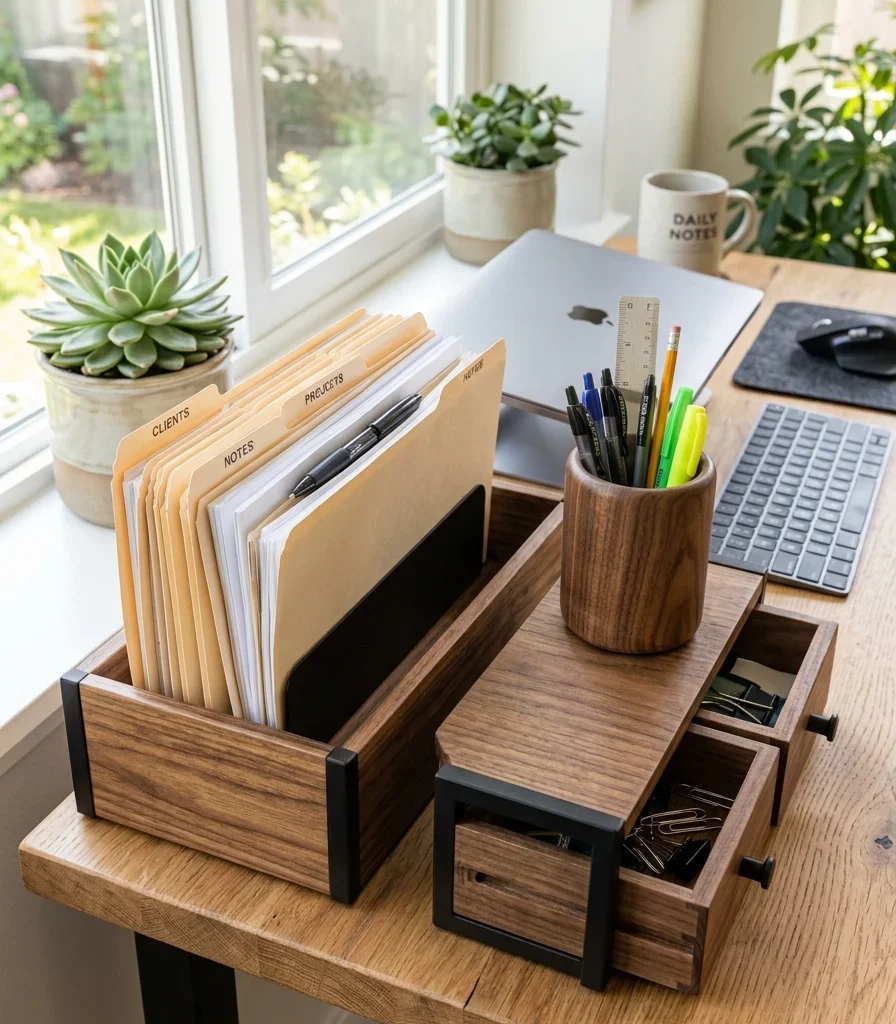
10. Streamlined Storage: Modern Furniture That Hides Its Function

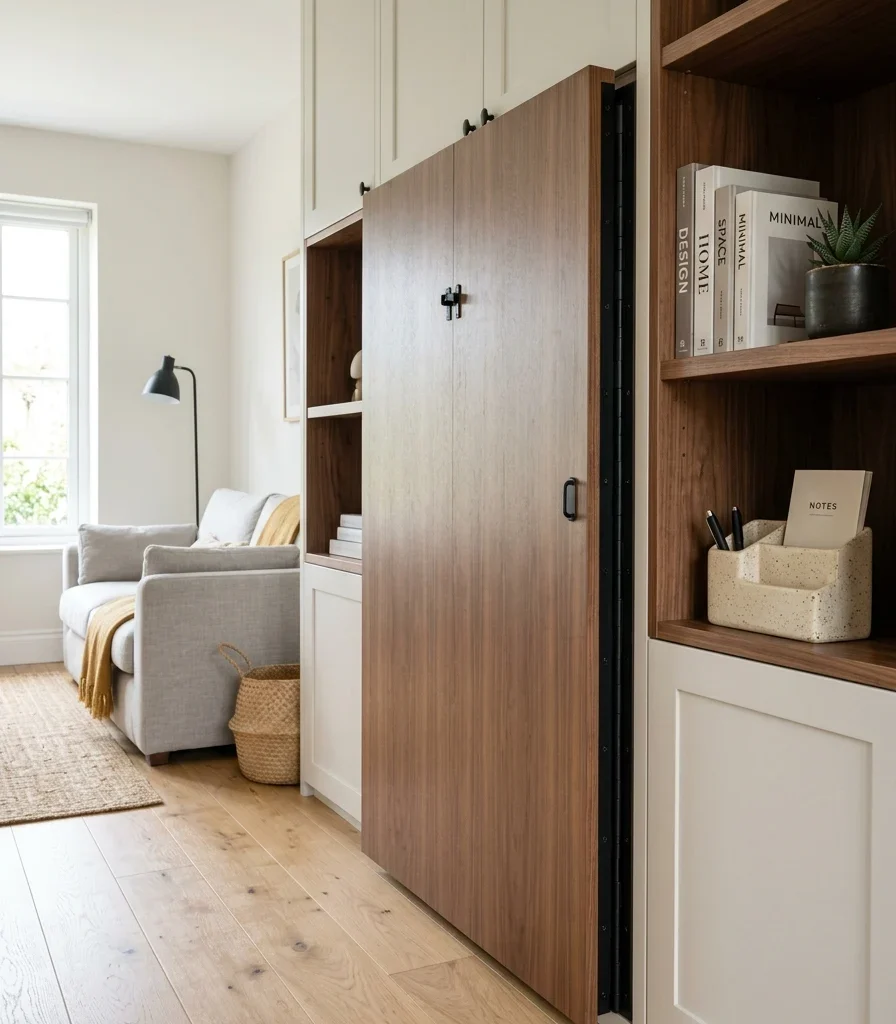
Vibe: The room feels clean because nothing announces itself as storage.

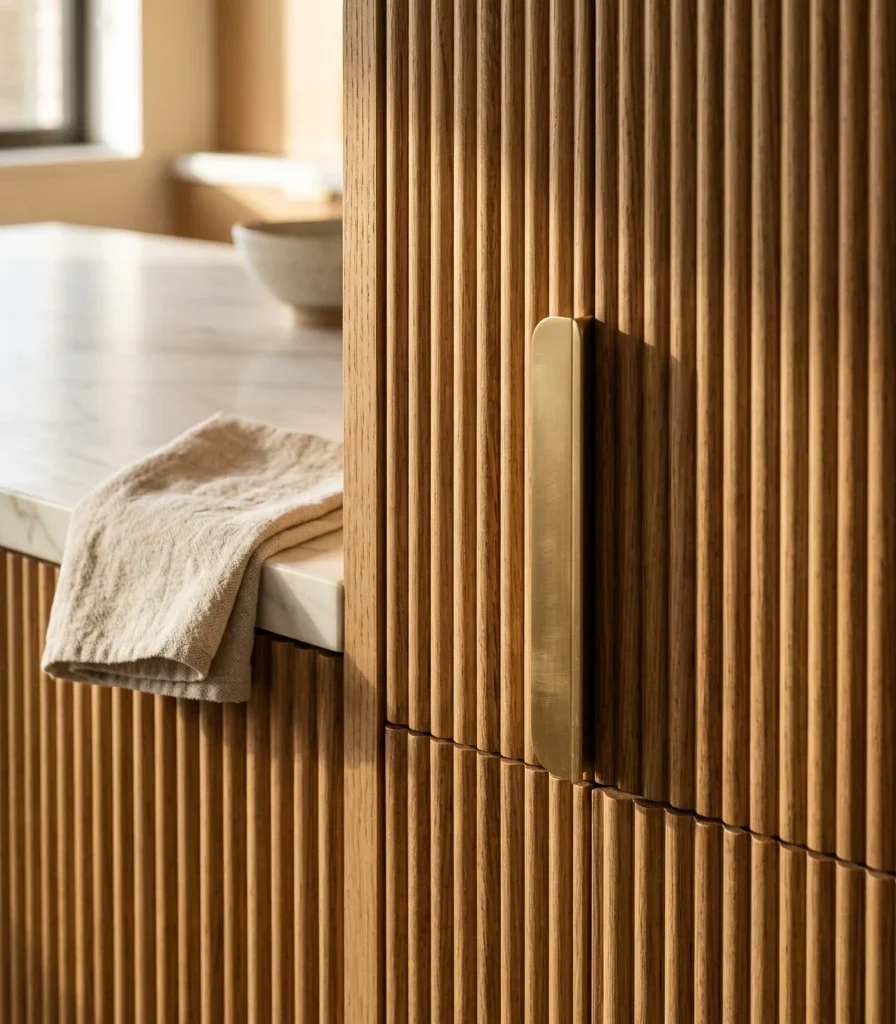
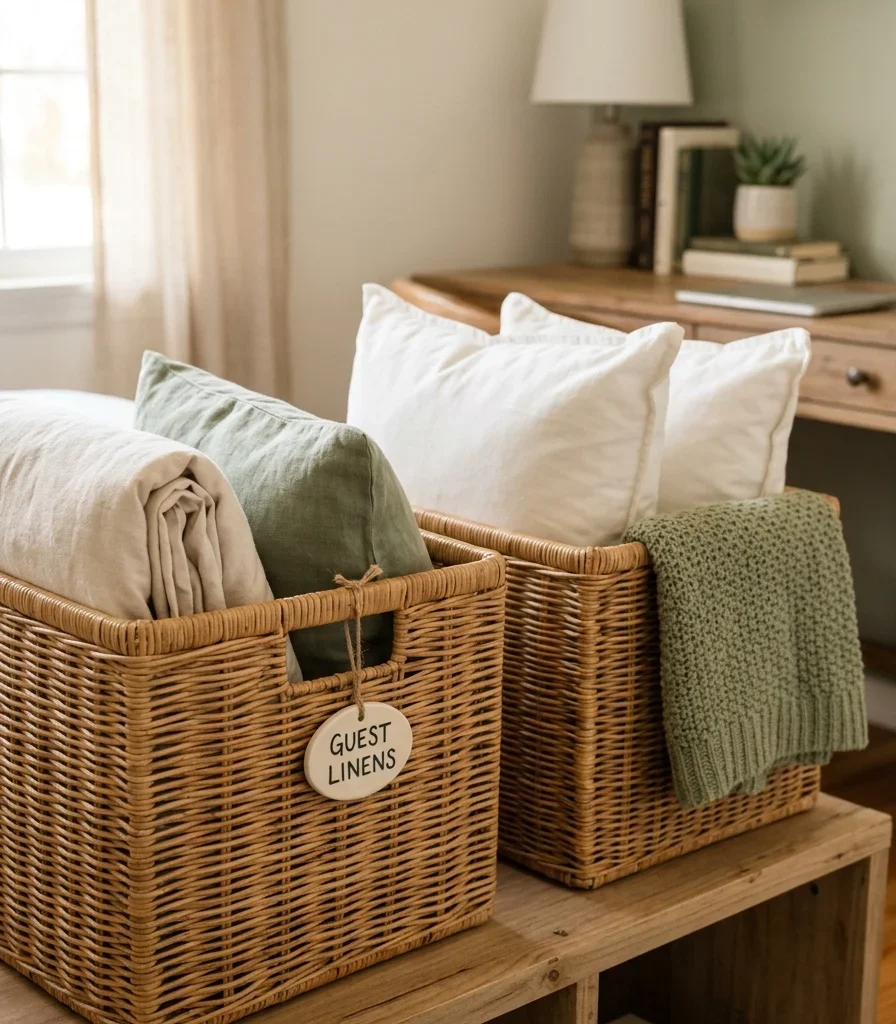
Why it works: Modern home decor treats visual clutter as a design failure, so storage pieces are engineered to disappear — push-to-open mechanisms and flush paneling remove the hardware details that usually catch the eye. This keeps the furniture’s silhouette uninterrupted, reinforcing the clean-line principle the whole style is built on.

How to get it: Choose storage furniture with push-latch or finger-pull channel hardware instead of visible knobs or pulls, and match the wood finish to nearby furniture so the piece reads as one continuous surface rather than a separate object.

Shop The Look

  • White oak storage bench push-open drawers
  • Charcoal wool knit throw blanket
  • Ceramic sculptural object decorative accent
  • Flush finger-pull cabinet hardware set
  • Woven seagrass storage basket lidded

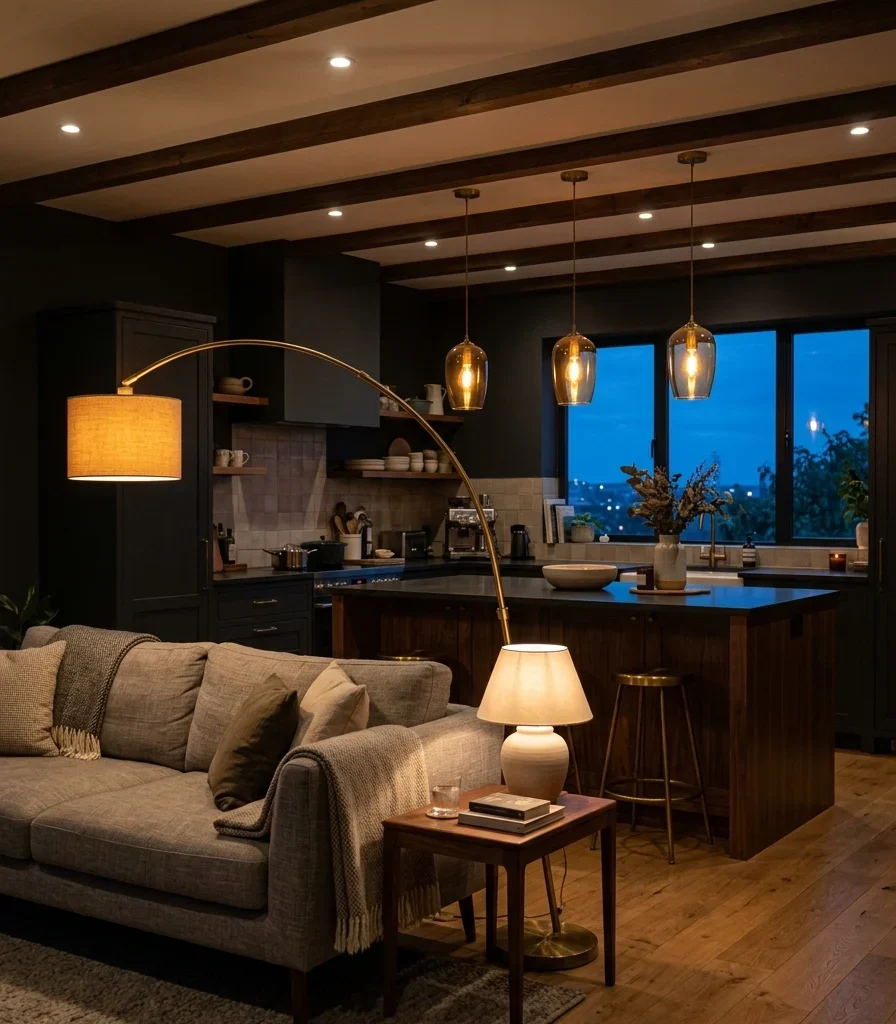
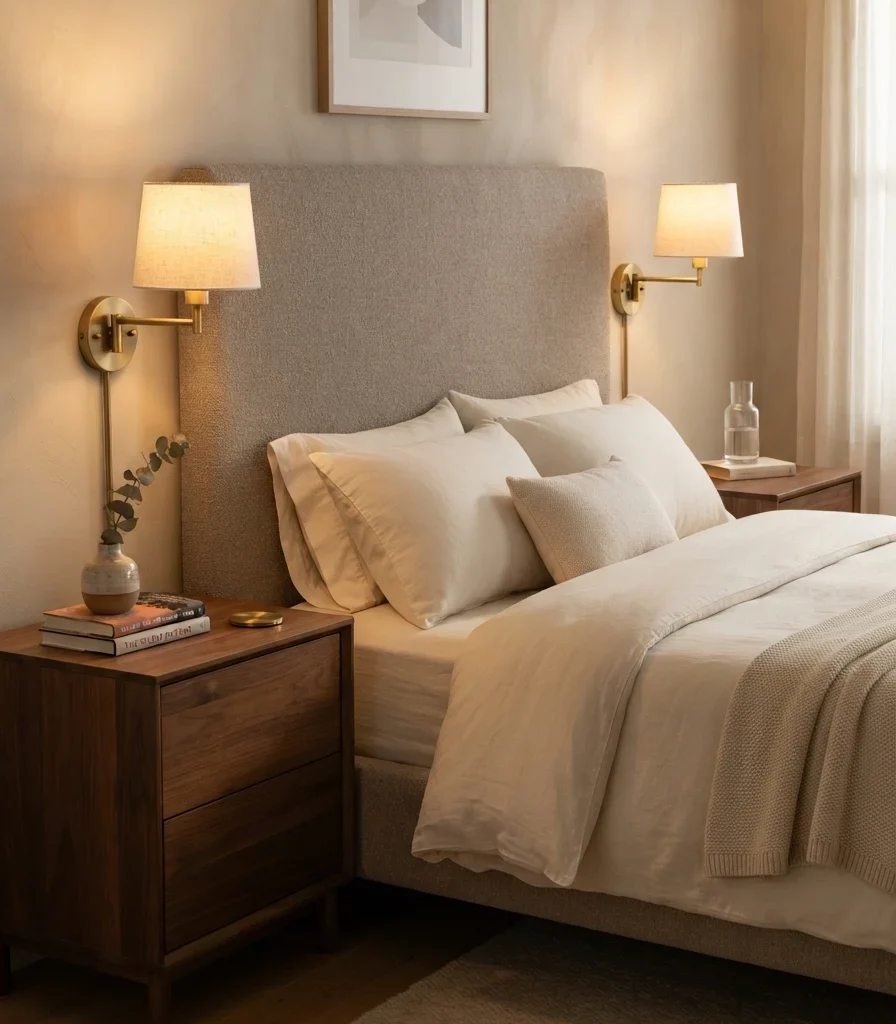
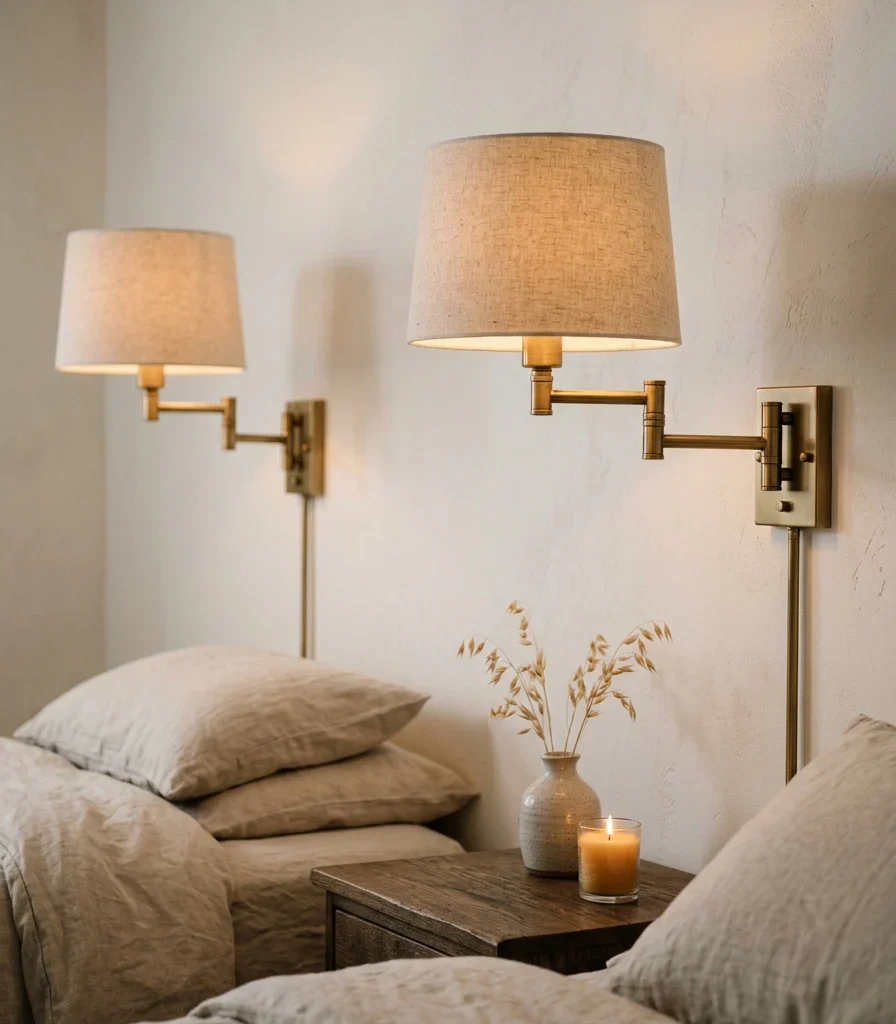
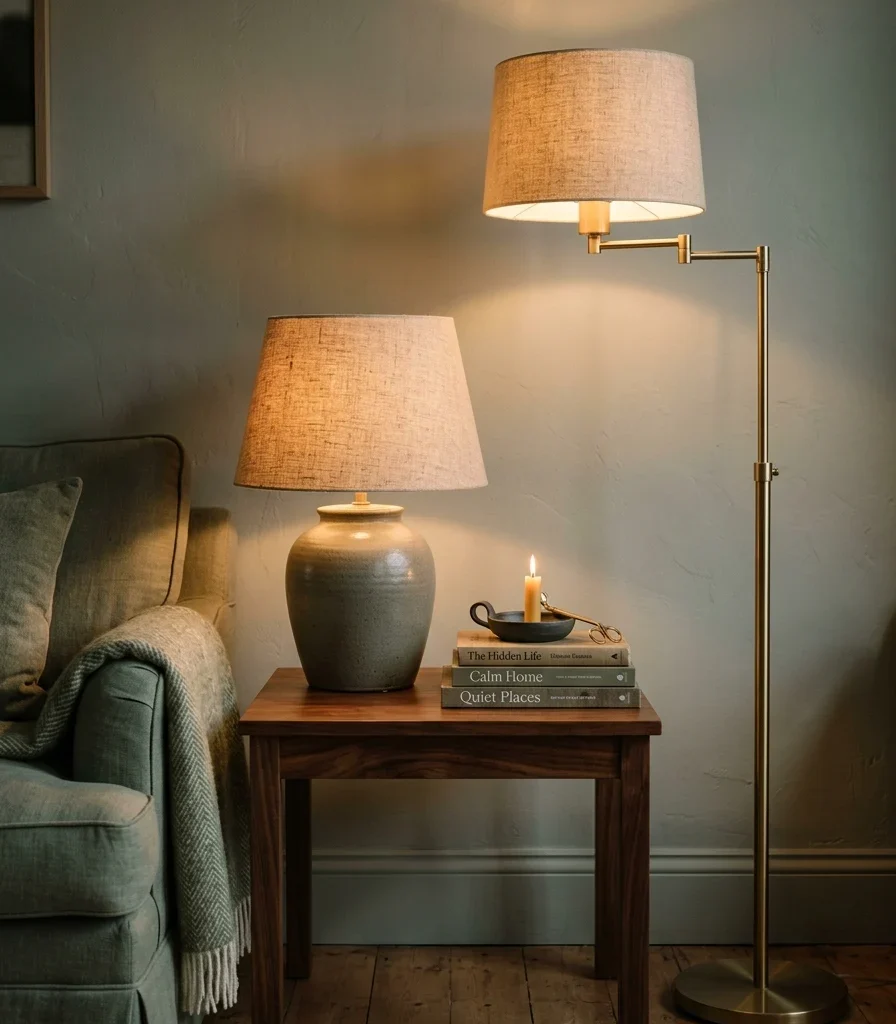
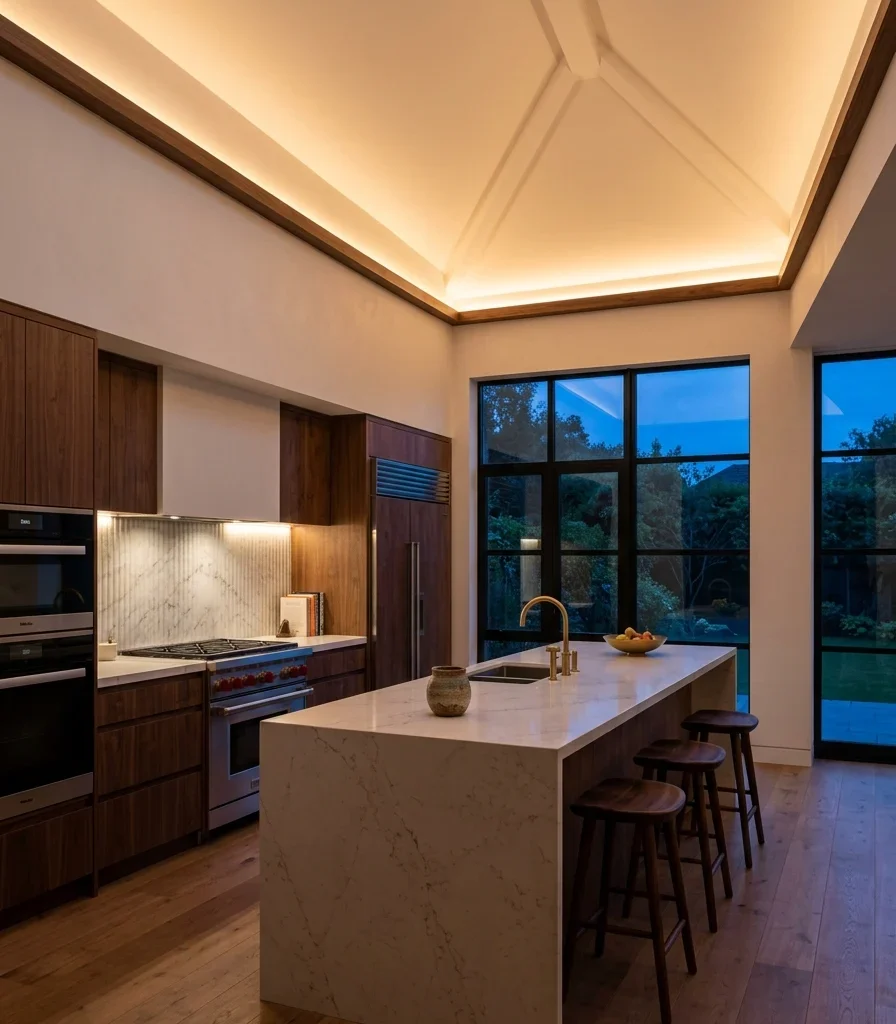
11. Layered Lighting: Ambient, Task, and Accent

11. Layered Lighting: Ambient, Task, and Accent

Vibe: The room feels warm and layered rather than flatly lit.

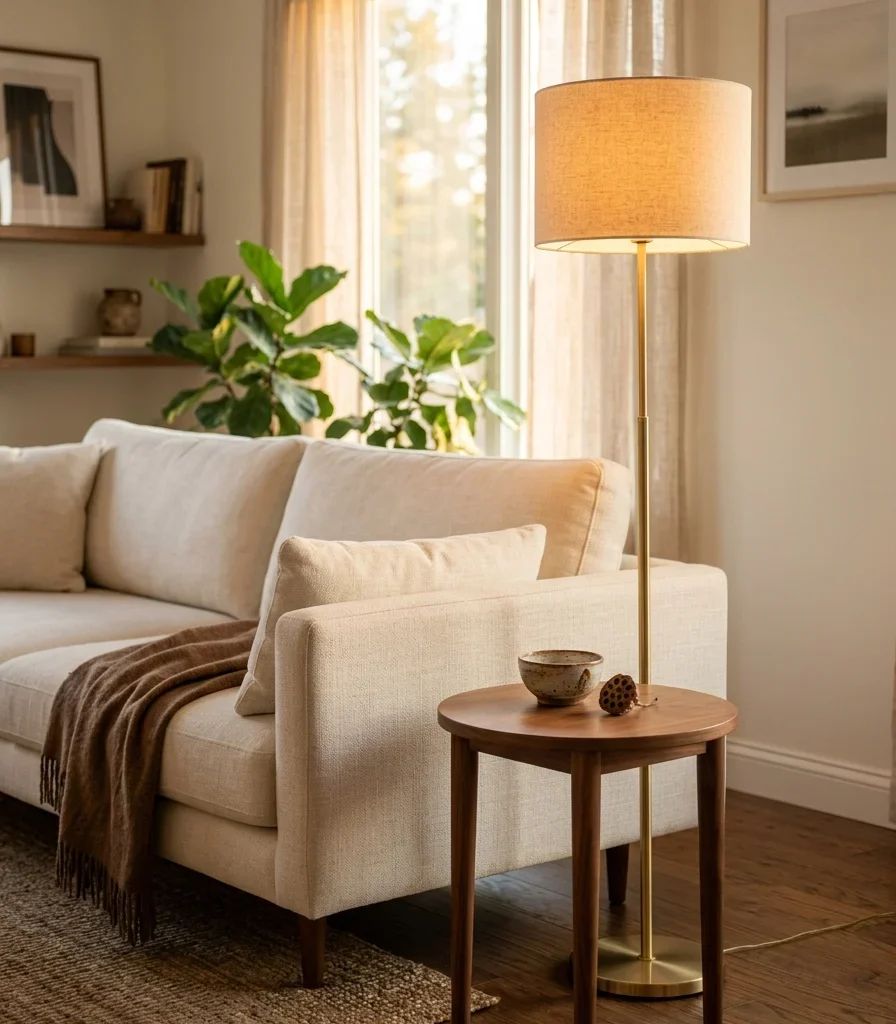
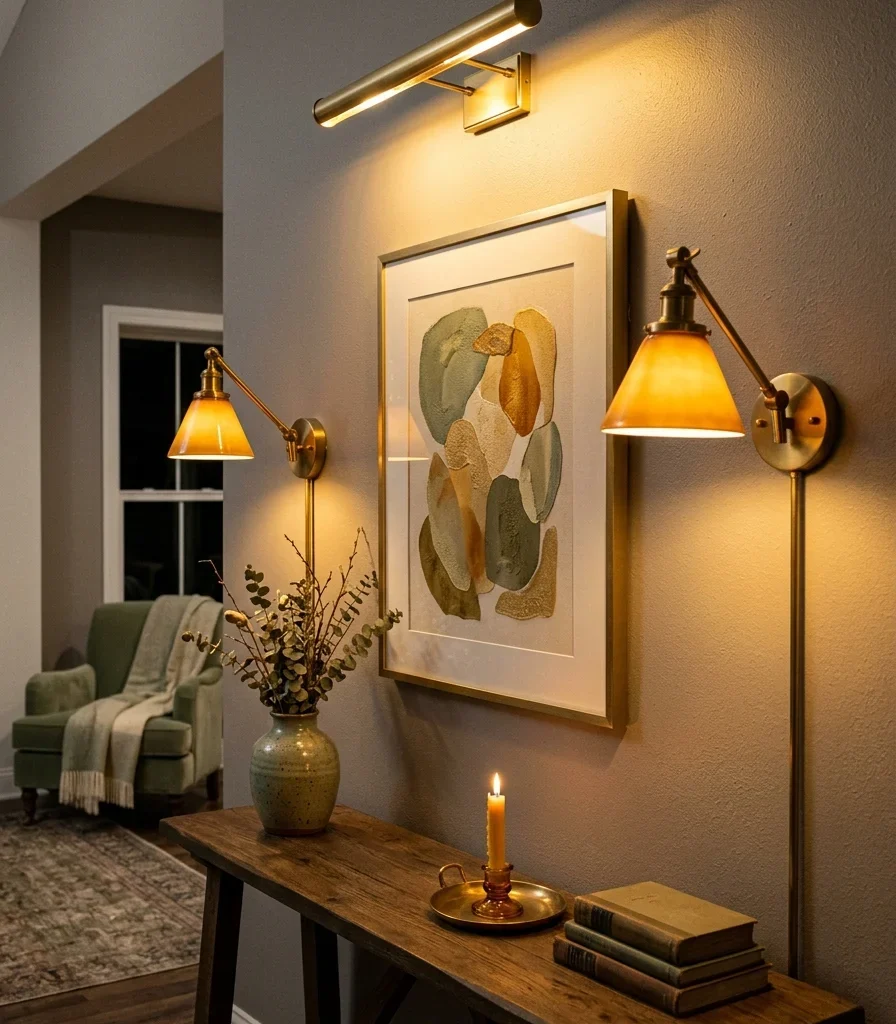
Why it works: A single overhead source creates flat, shadowless light that flattens texture and depth. Layering ambient (ceiling), task (reading lamp), and accent (a smaller decorative light) creates pools of light at different heights, which is how professional interiors avoid the “showroom” look.

How to get it: Install at least three light sources per room at three different heights — overhead, mid-level table lamp, and low floor lamp — and put each on its own switch or dimmer so you can adjust the mix by time of day.

💡 Quick Win: Adding one warm-toned floor lamp (2700K bulb) to a room lit only by ceiling fixtures instantly softens the whole space.

Shop The Look

  • Brushed brass arc floor lamp
  • Ceramic table lamp linen shade
  • Warm white LED bulb 2700K set
  • Plug-in dimmer switch lamp cord
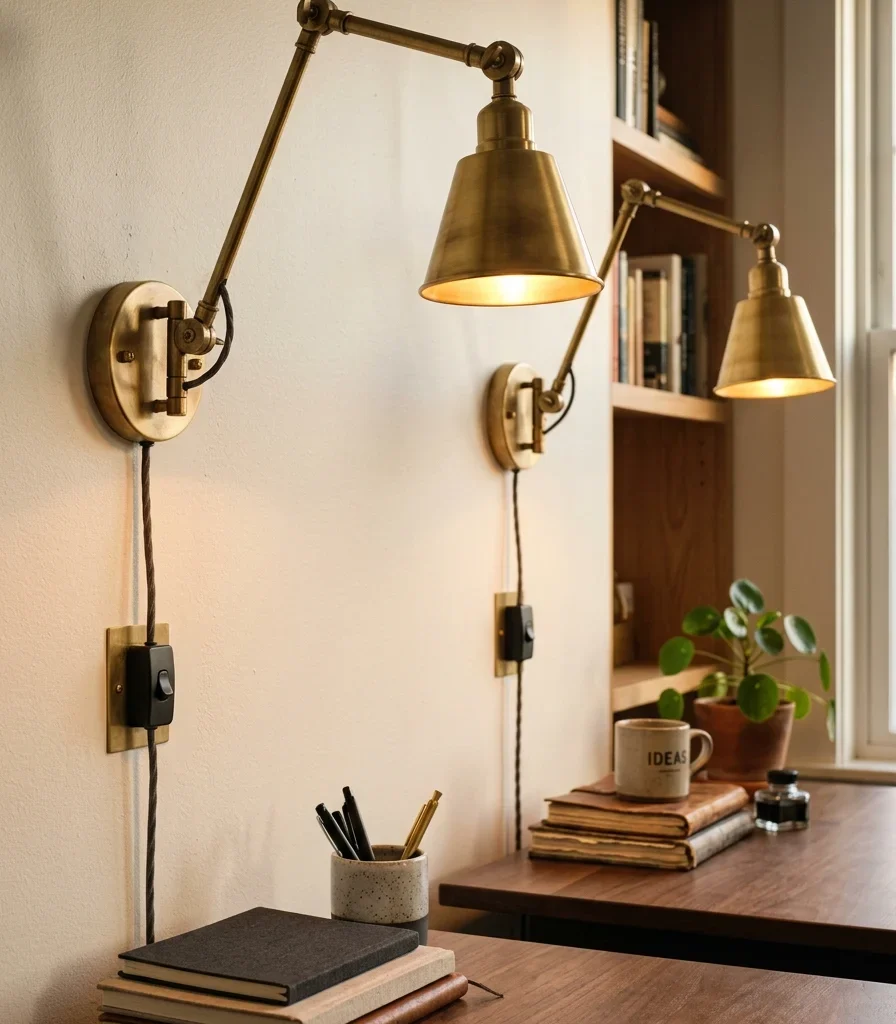
  • Wall sconce brushed brass modern

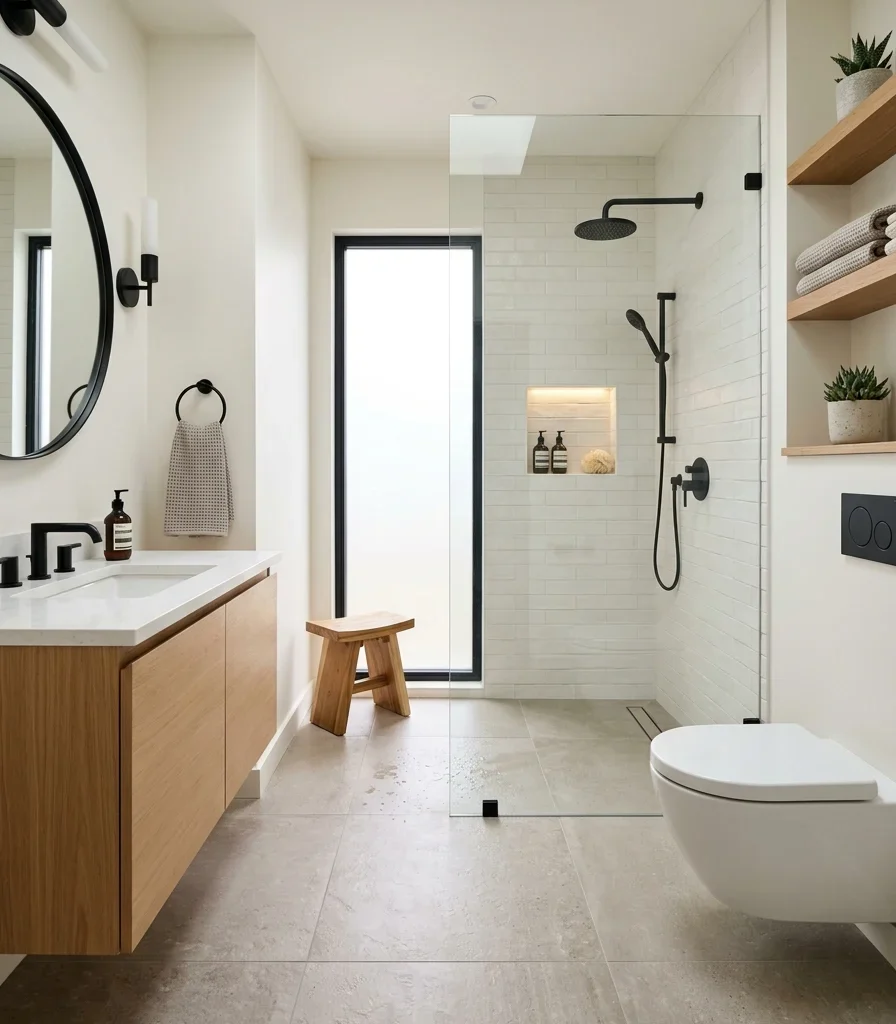
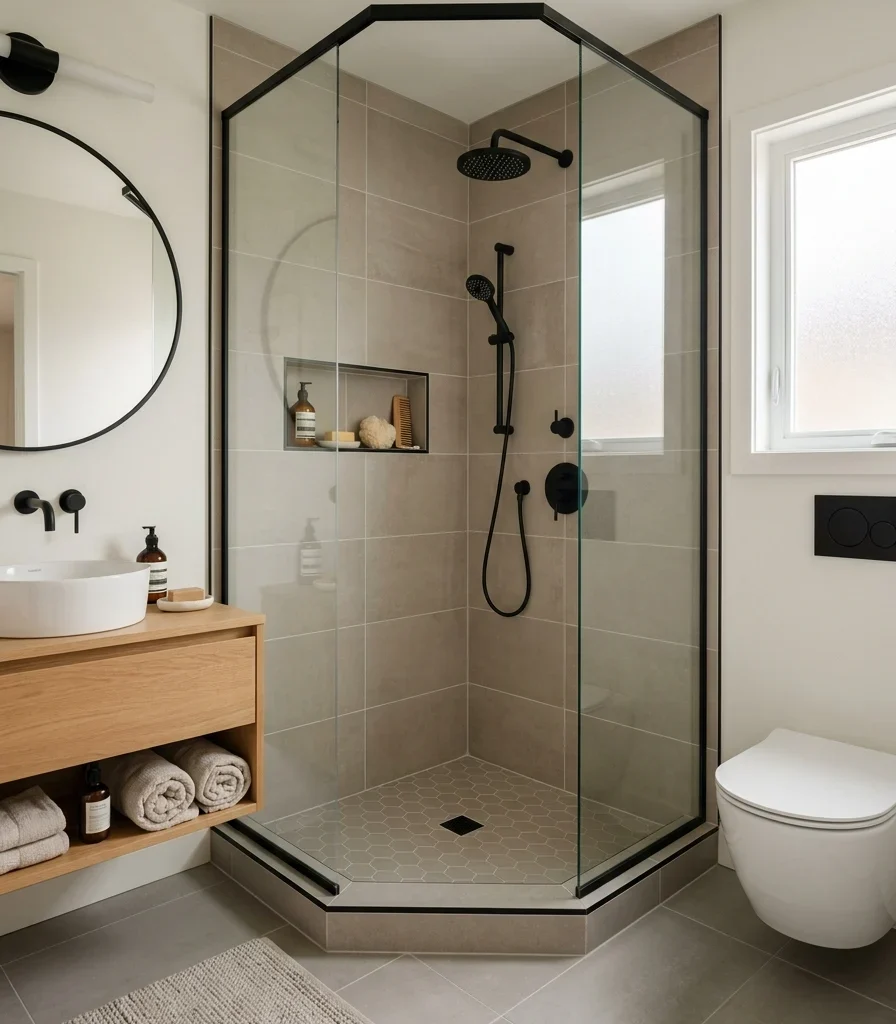
12. Matte Black Metal Fixtures

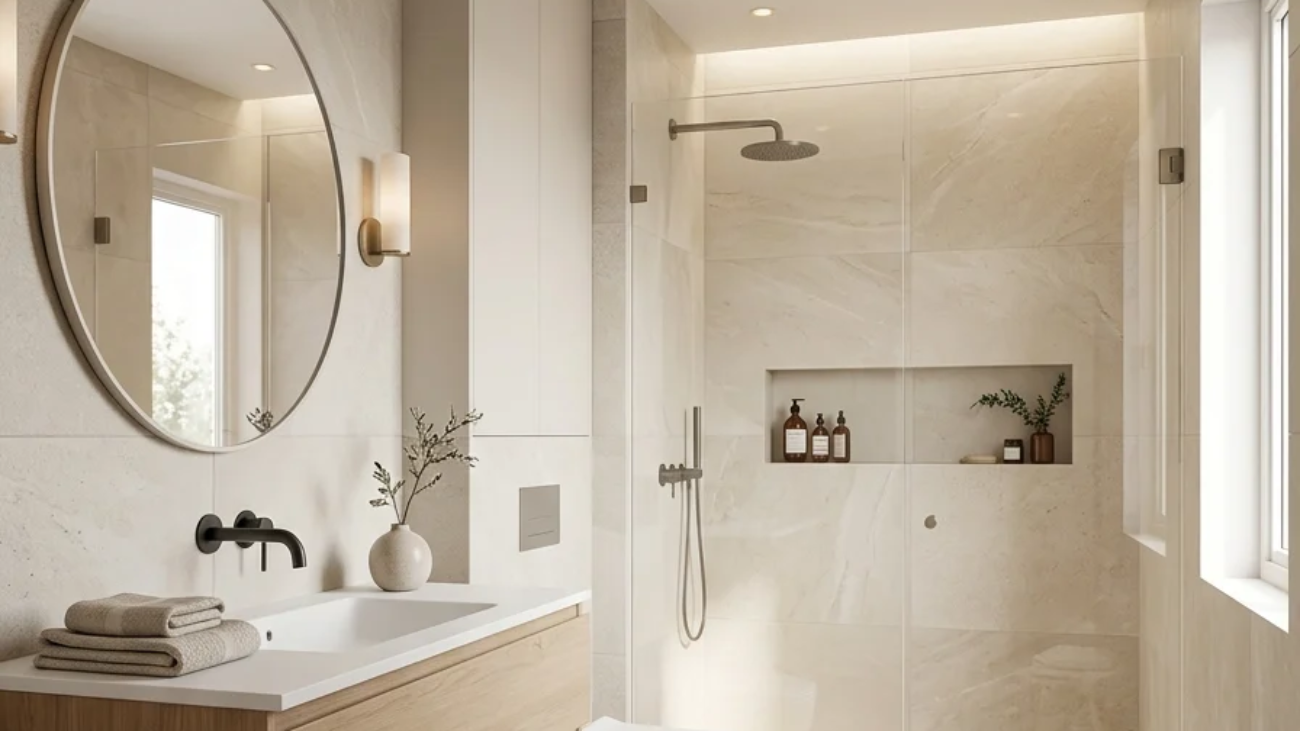
12. Matte Black Metal Fixtures

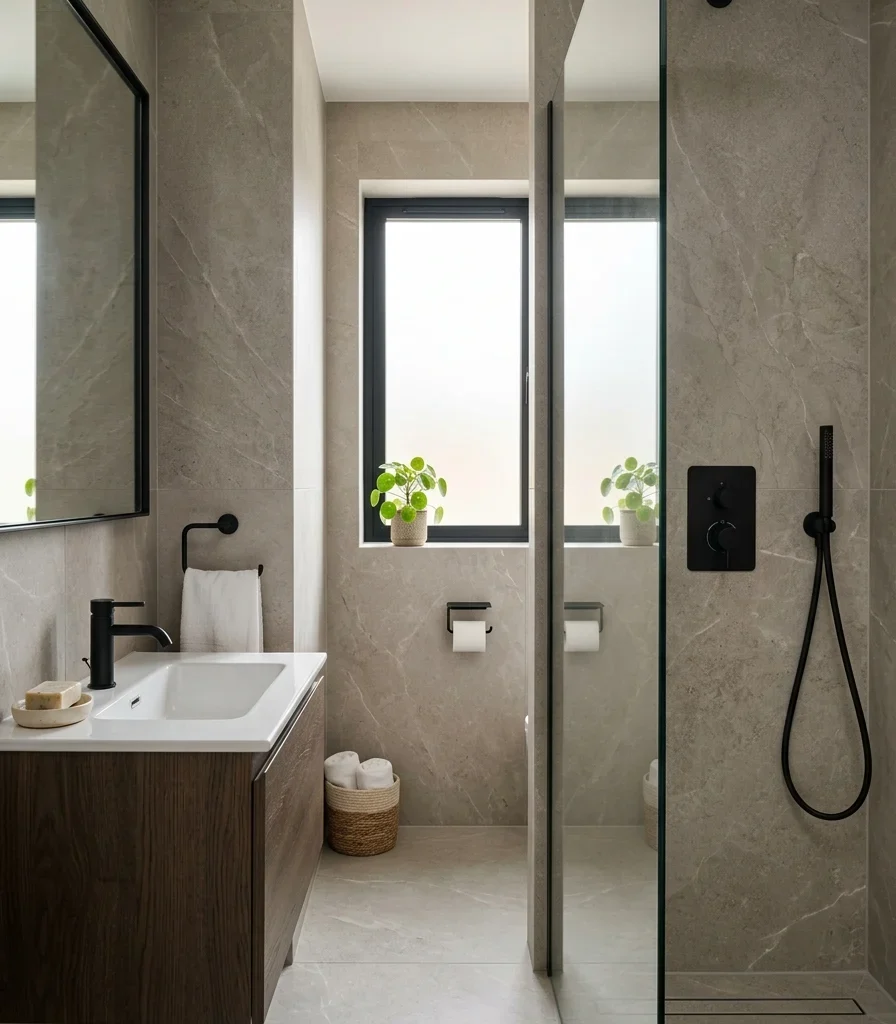
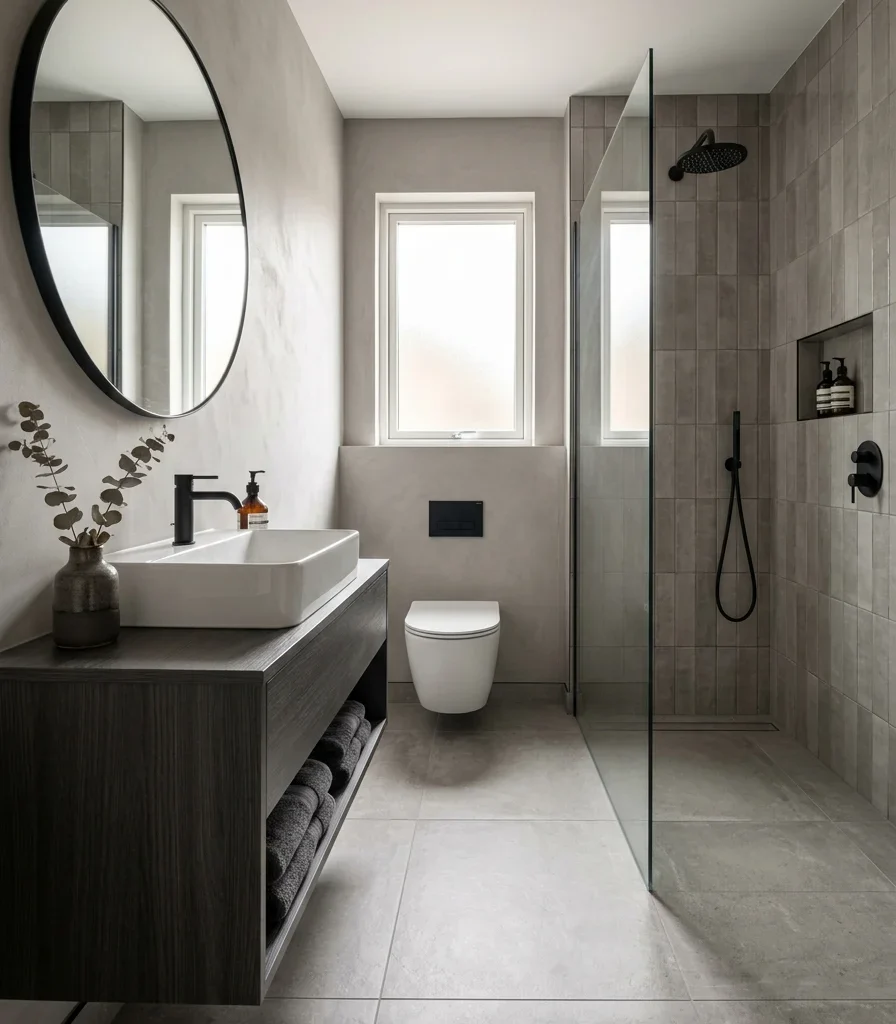
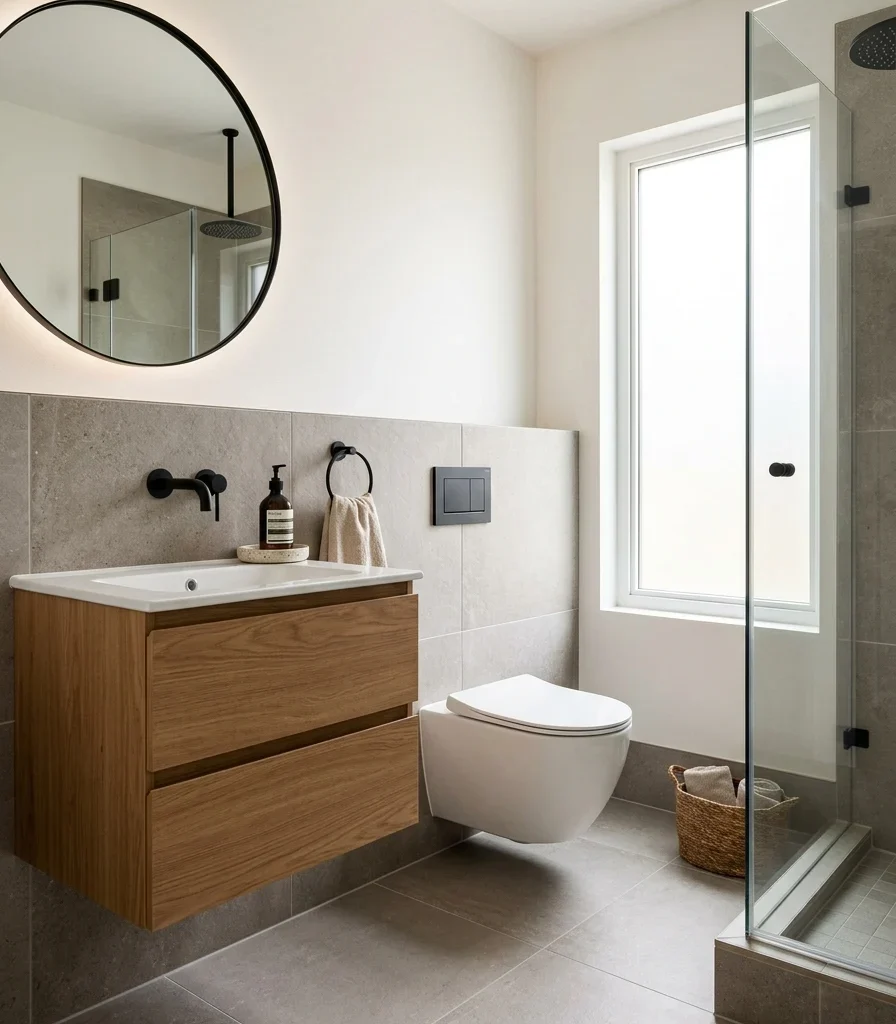
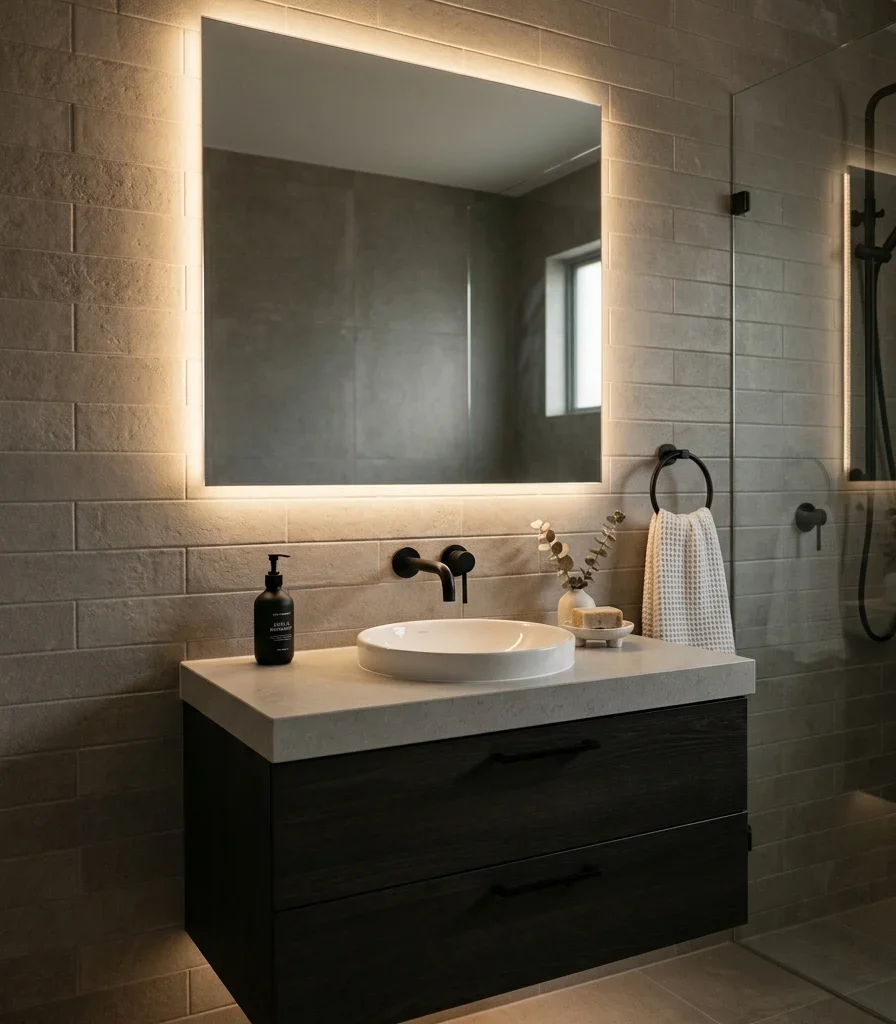
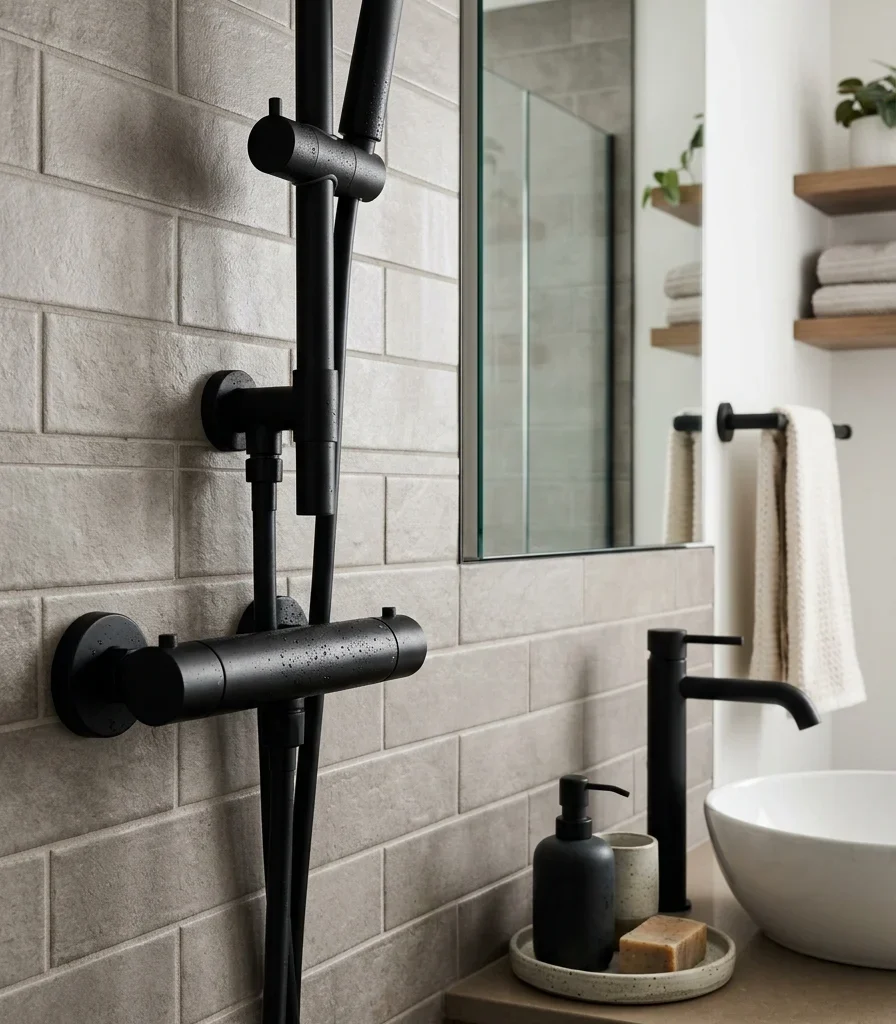
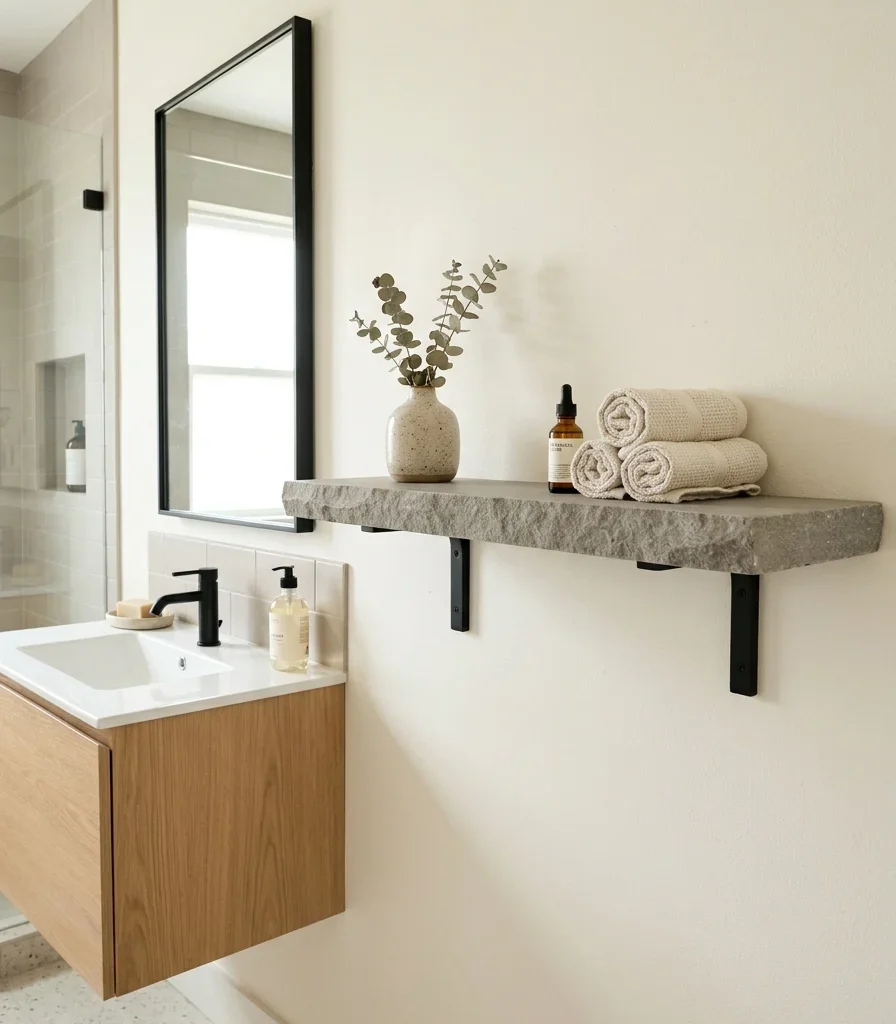
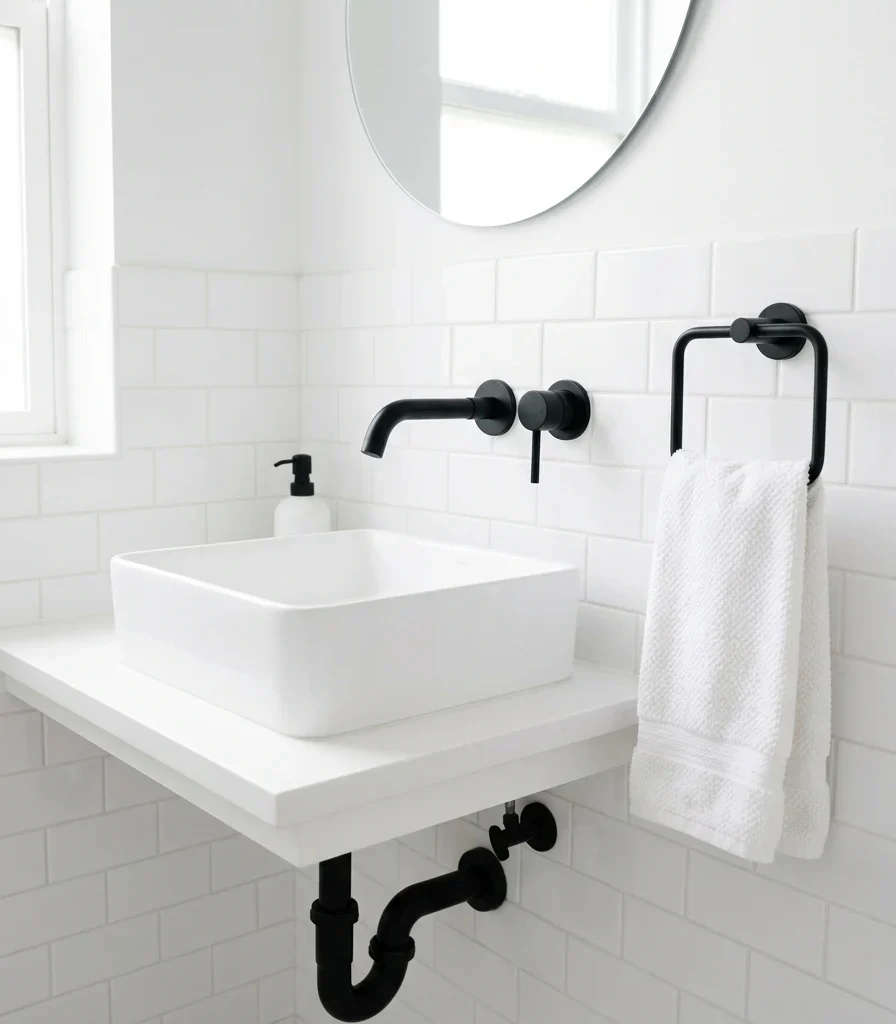
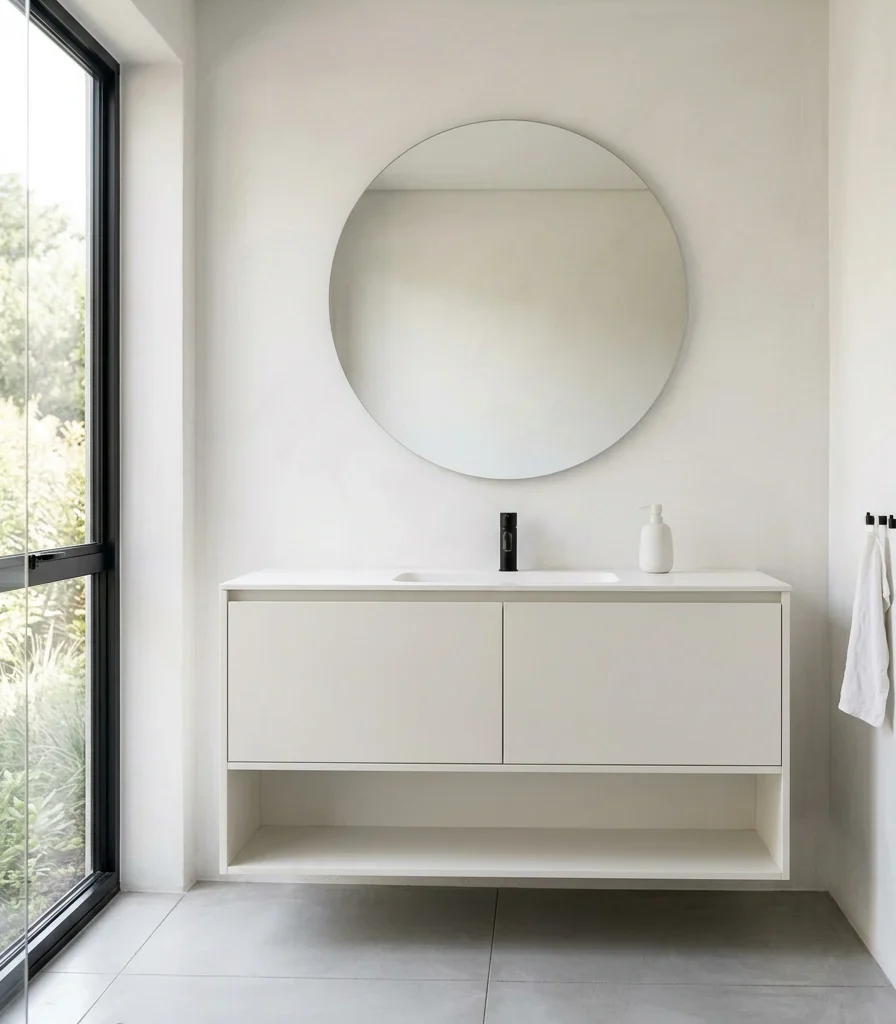
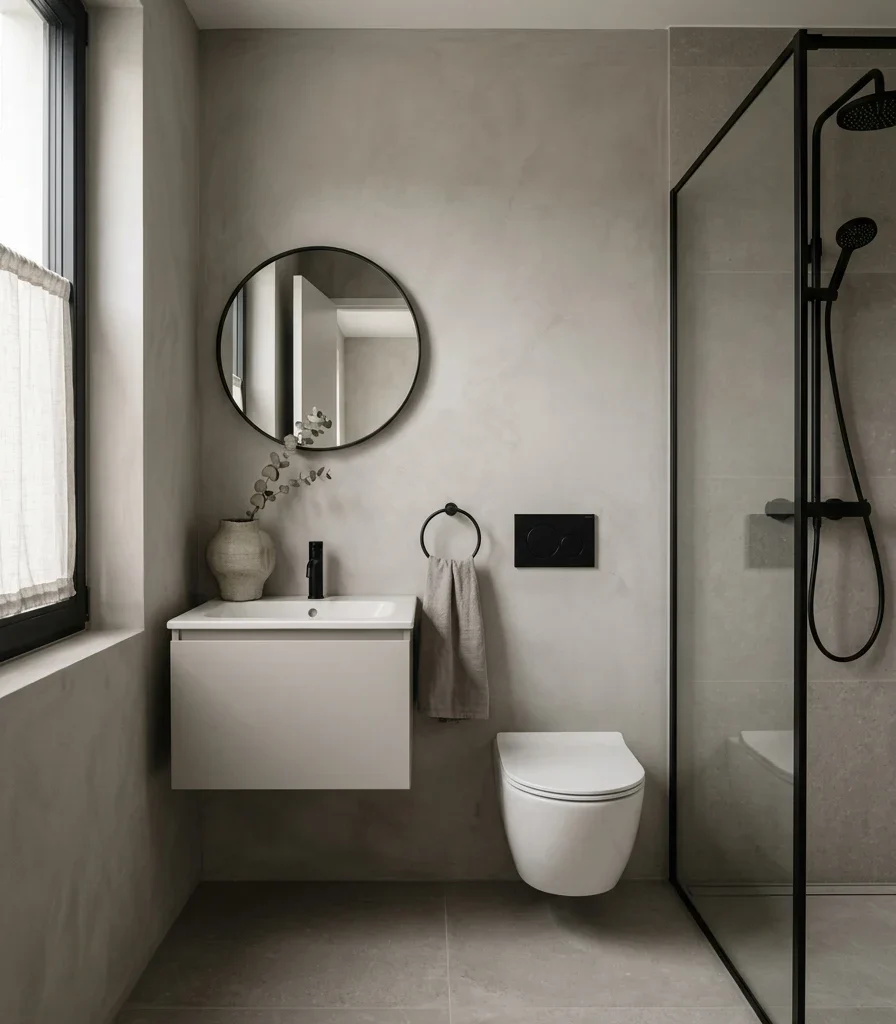
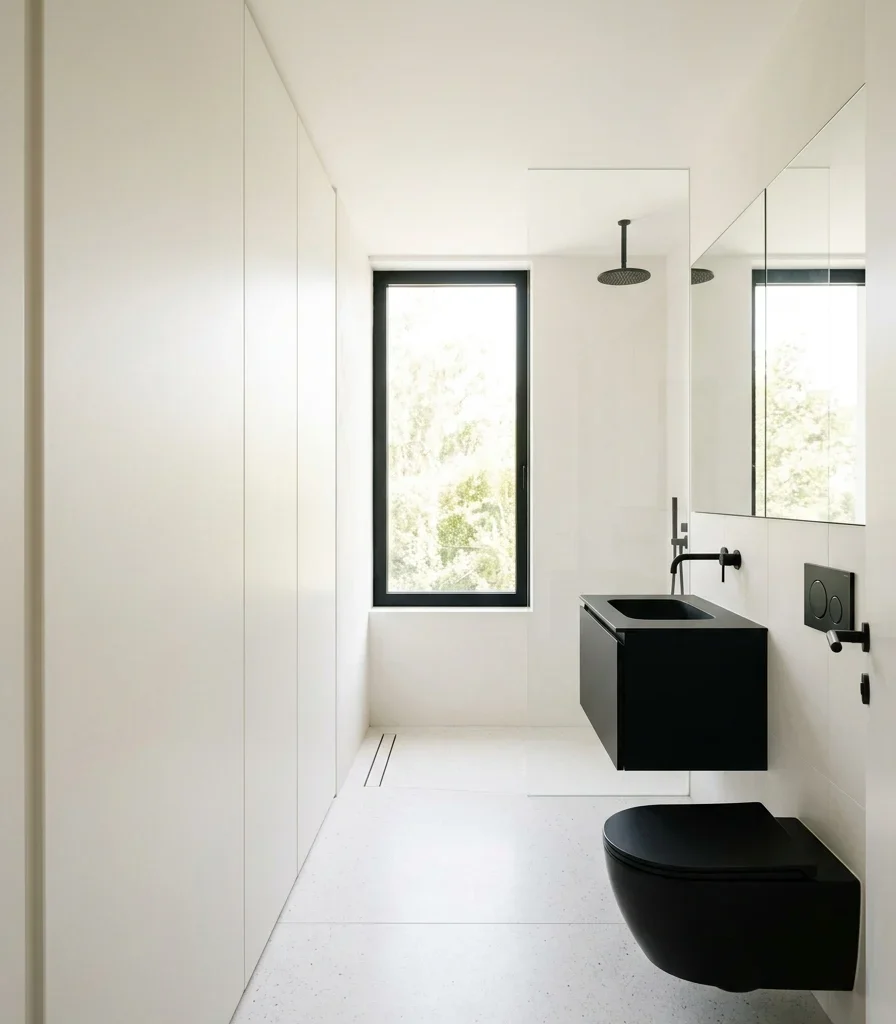
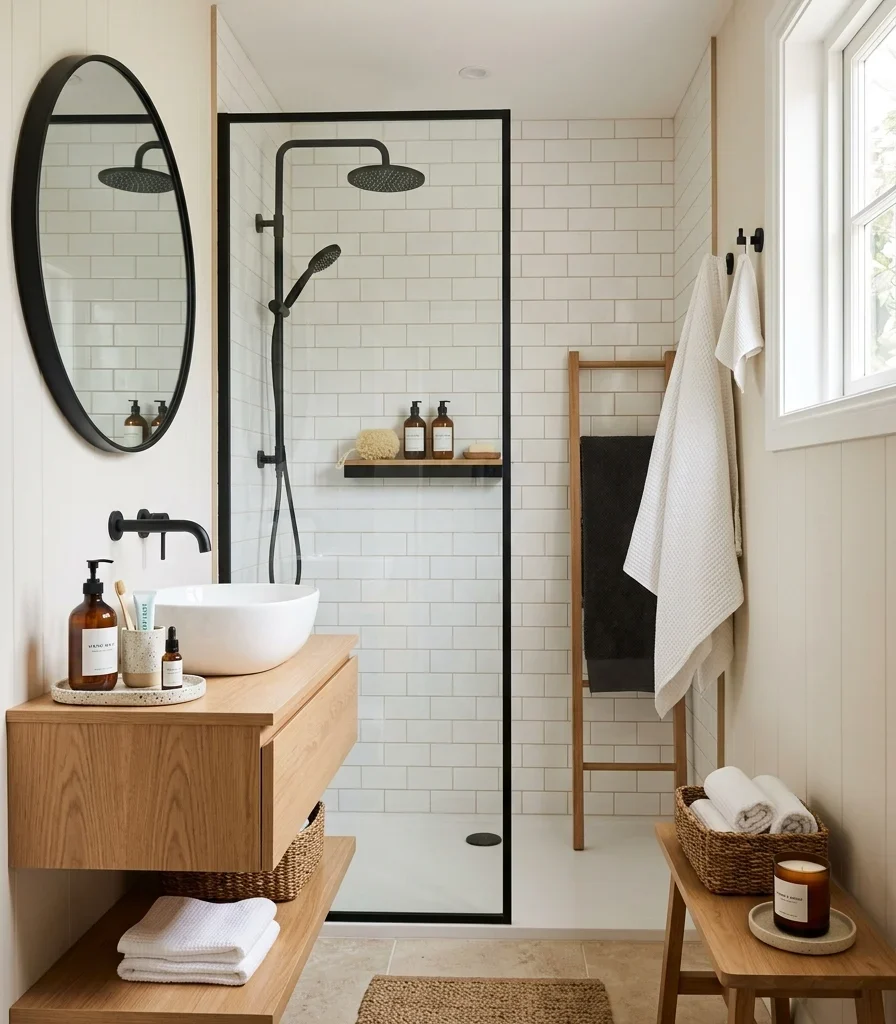
Vibe: The vanity feels crisp, like a small architectural detail.

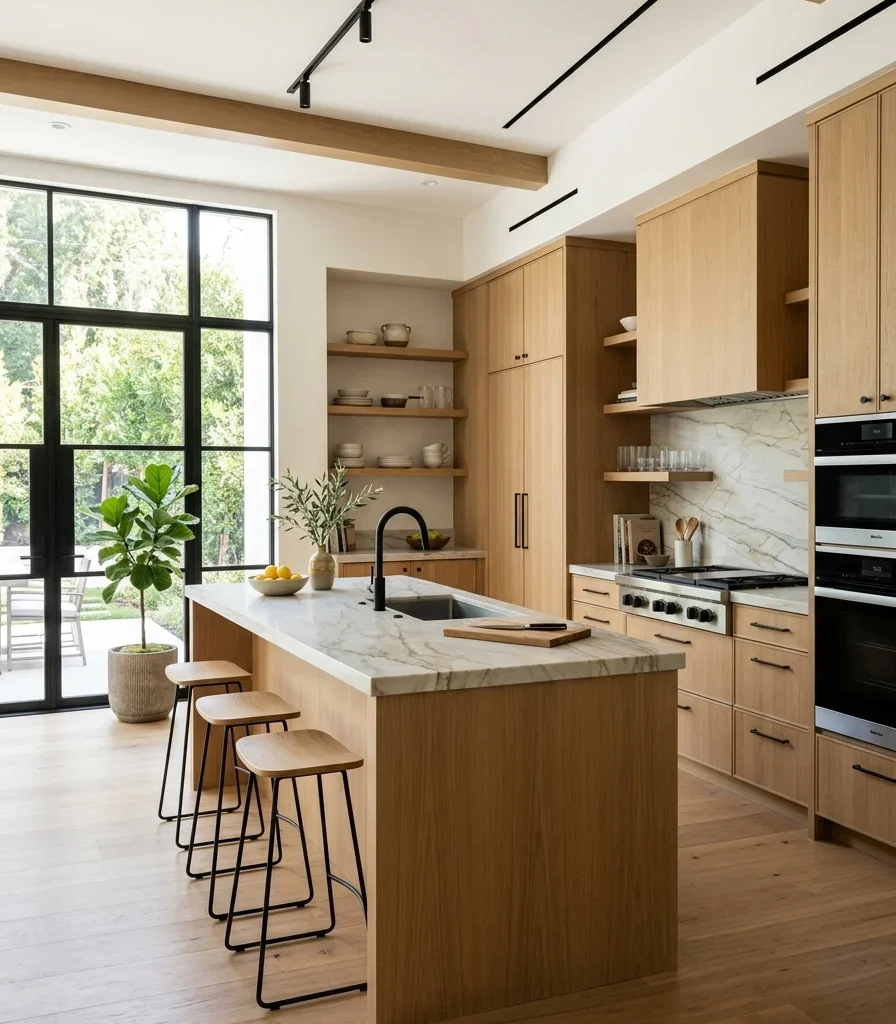
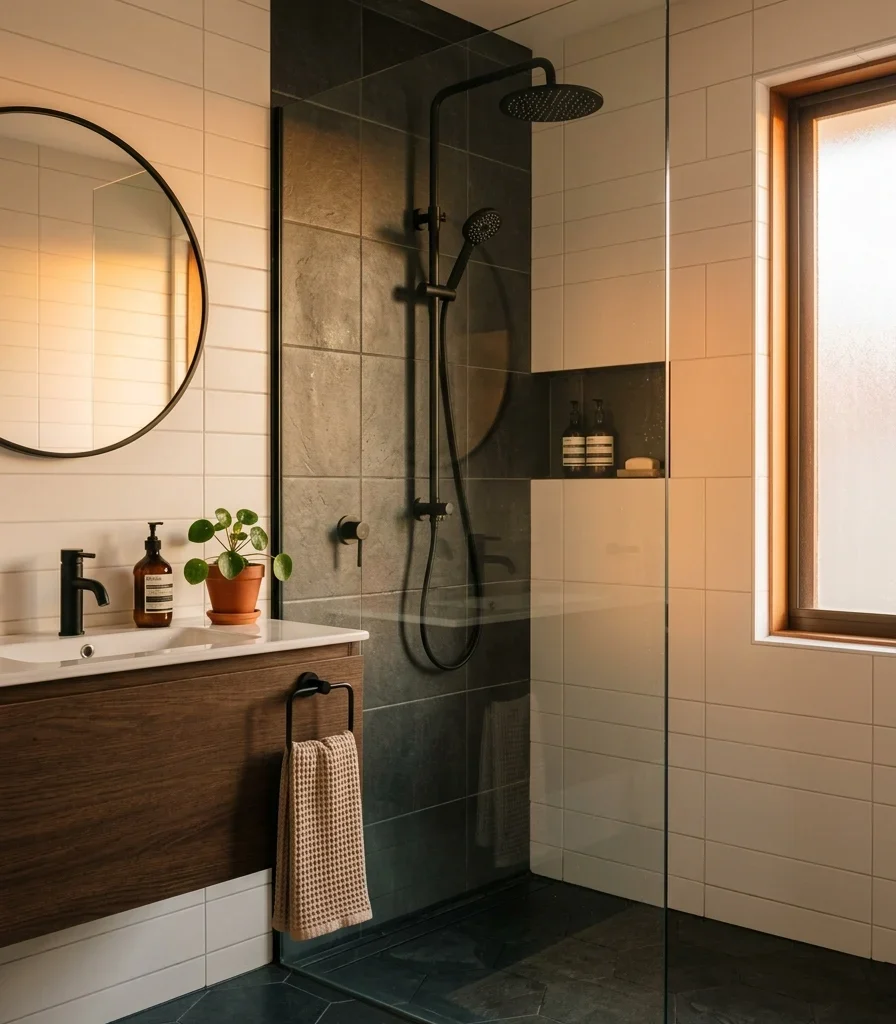
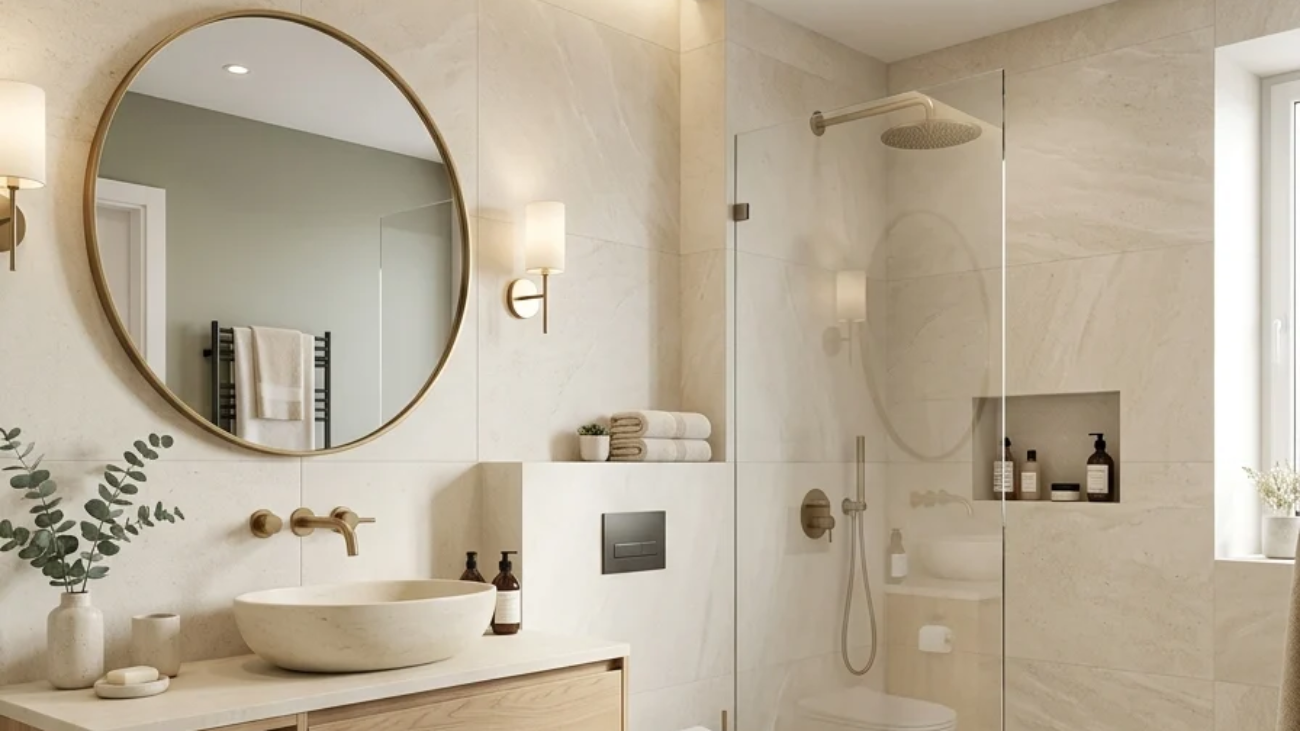
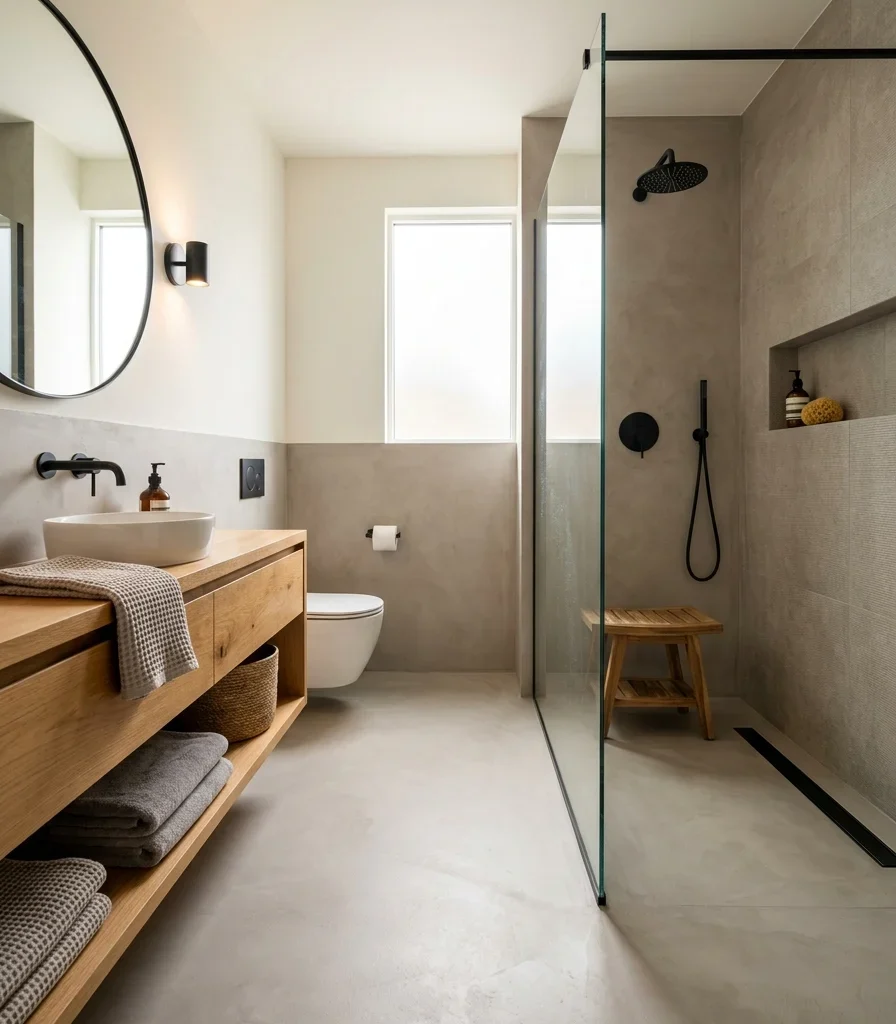
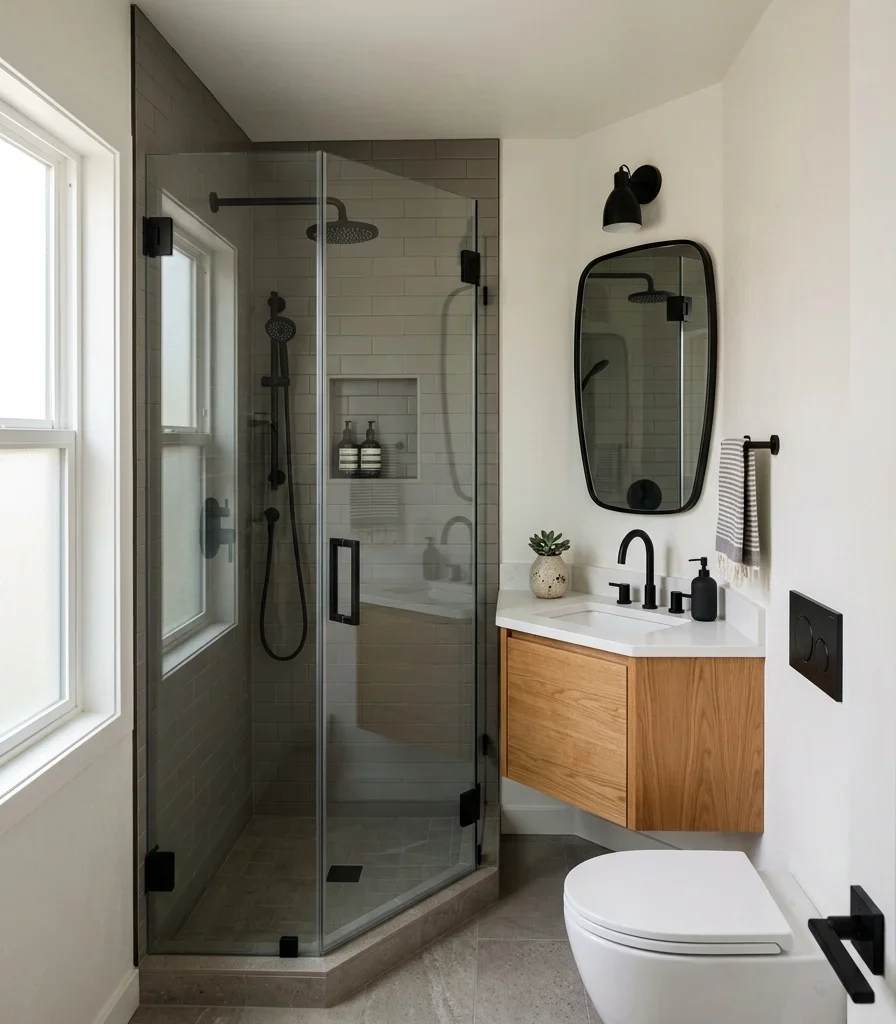
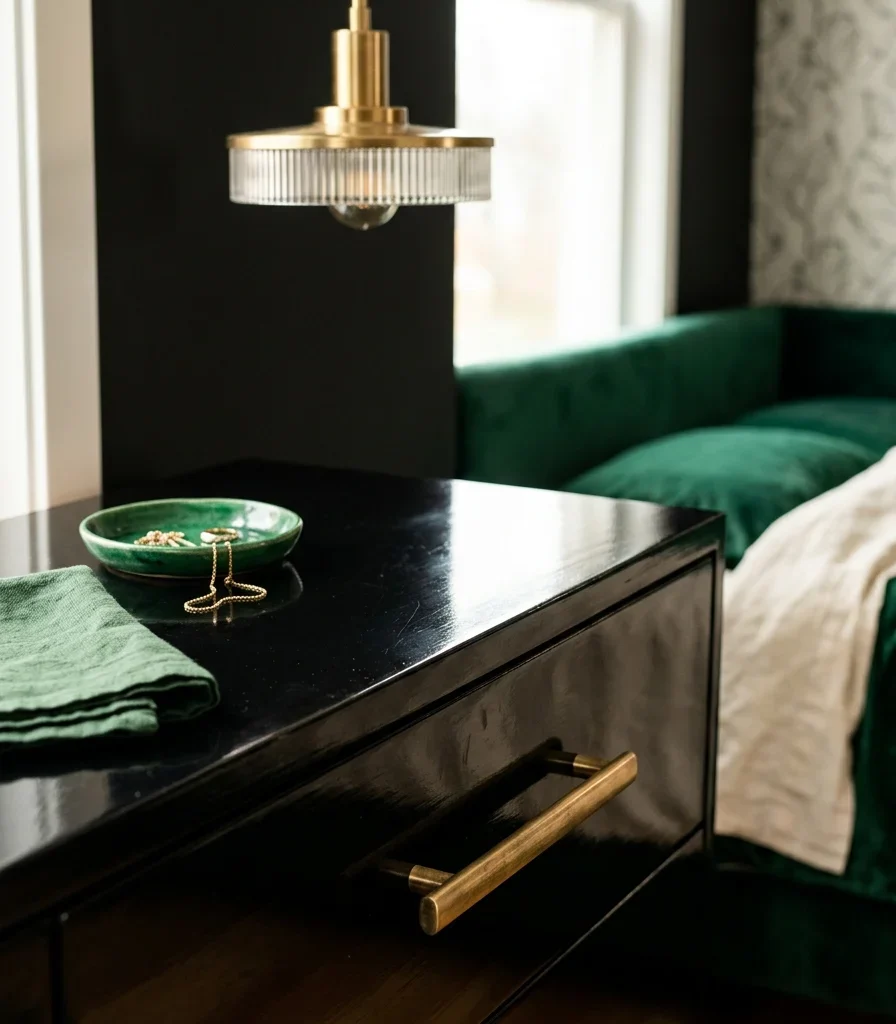
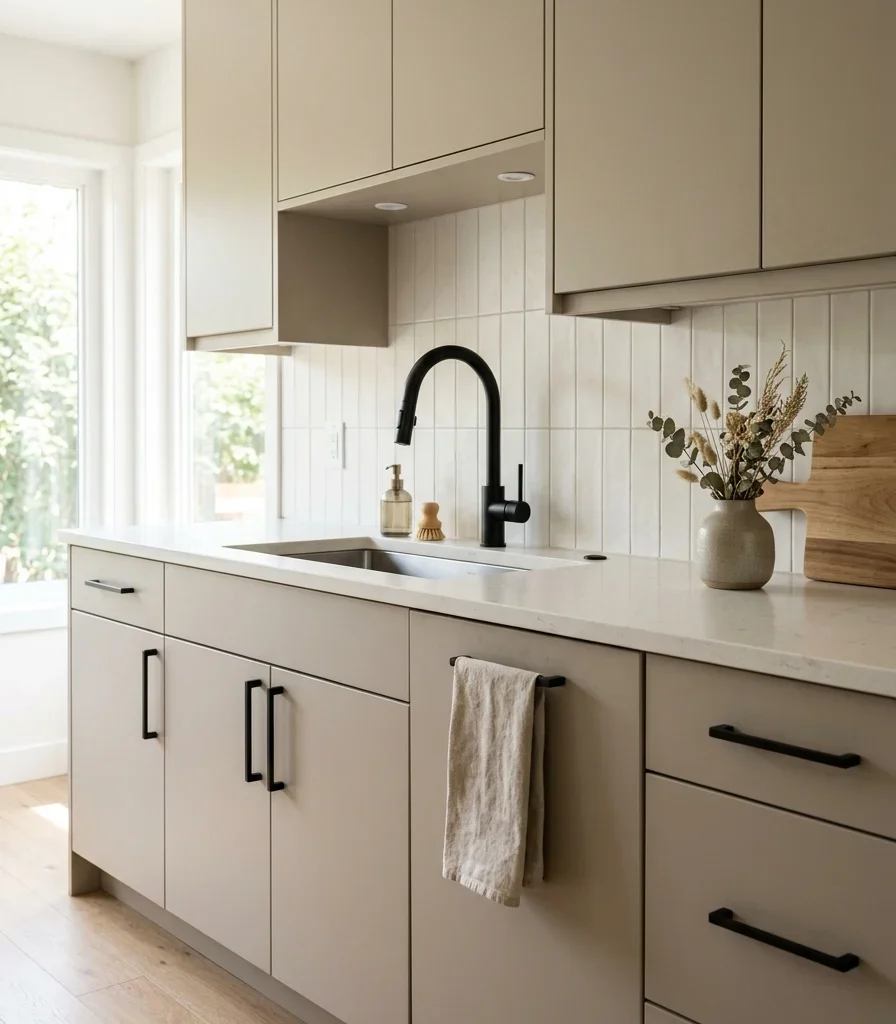
Why it works: Matte black absorbs light rather than reflecting it, which is why it reads as more refined than polished chrome under bright daylight — it creates defined edges instead of glare. Against light wood like white oak, it functions the same way charcoal accents do on walls: contrast through value.

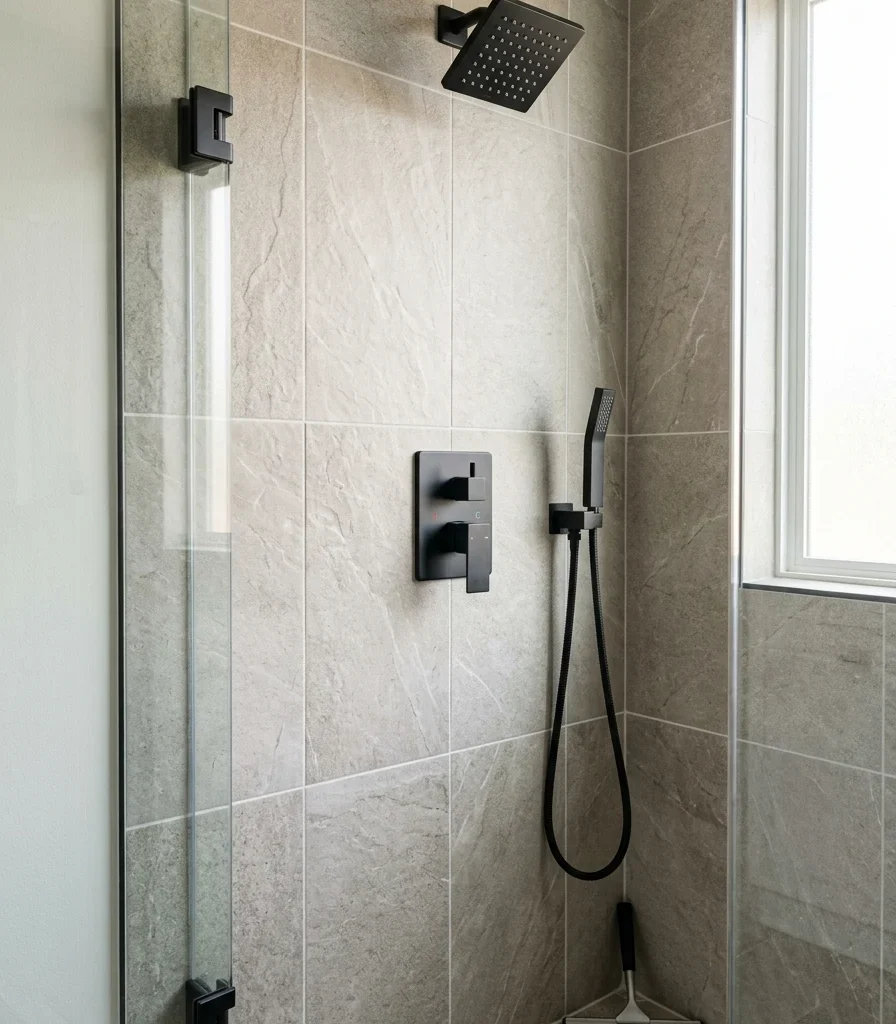
How to get it: Replace faucets, cabinet pulls, and towel bars as a matched matte black set rather than mixing finishes, since consistency across all metal hardware in one space is what makes the update read as intentional.

Shop The Look

  • Matte black bathroom faucet single handle
  • Matte black cabinet pull hardware set
  • Matte black towel bar wall mount
  • White ceramic soap dish minimalist
  • White waffle weave hand towel set

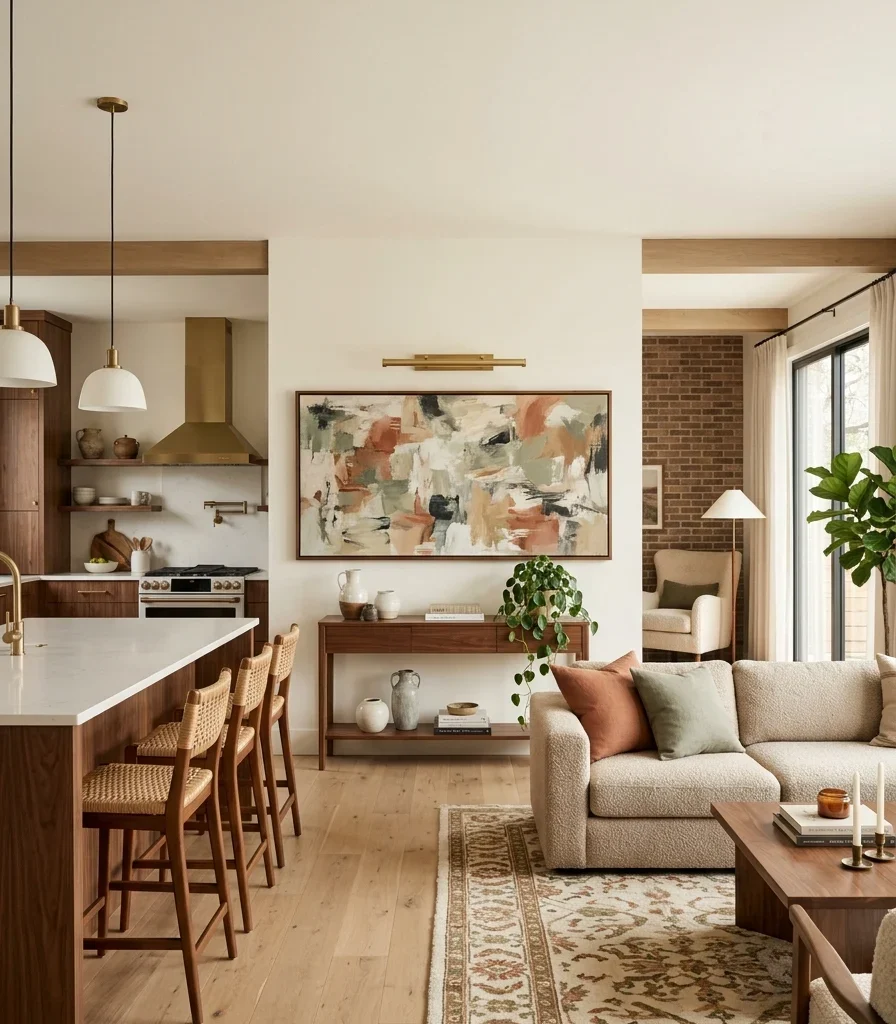
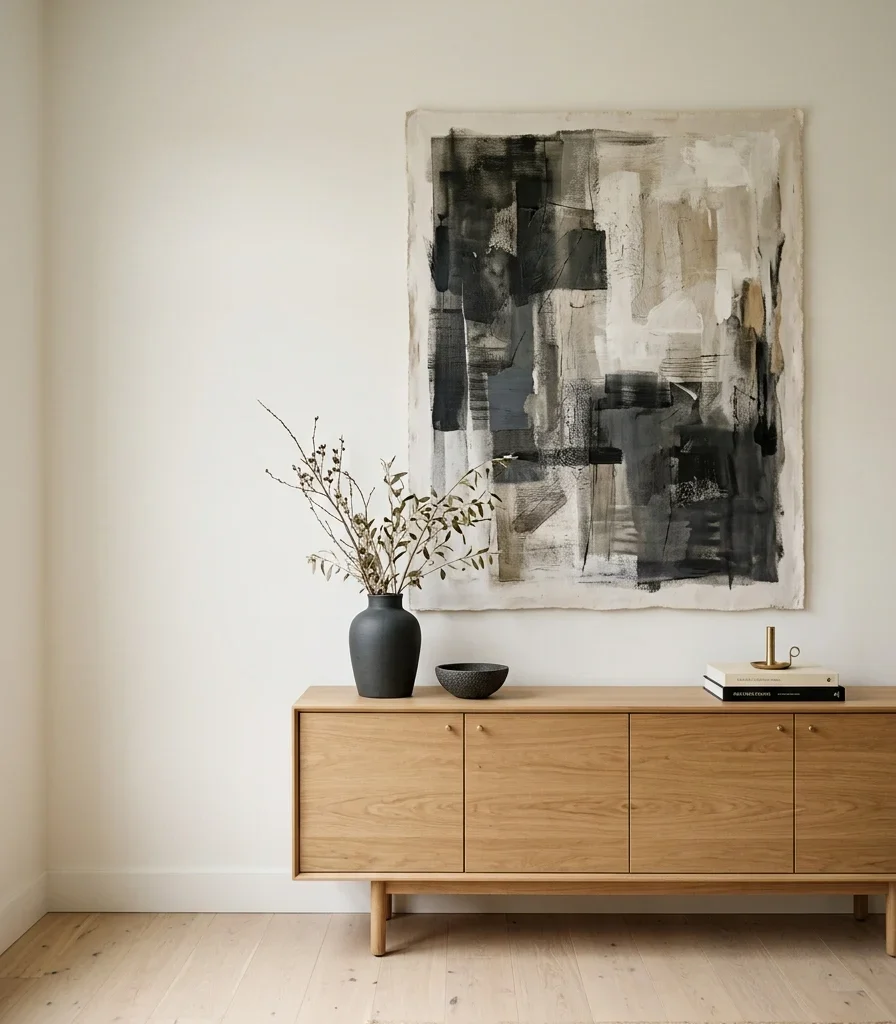
13. Abstract Wall Art in Neutral Frames

13. Abstract Wall Art in Neutral Frames

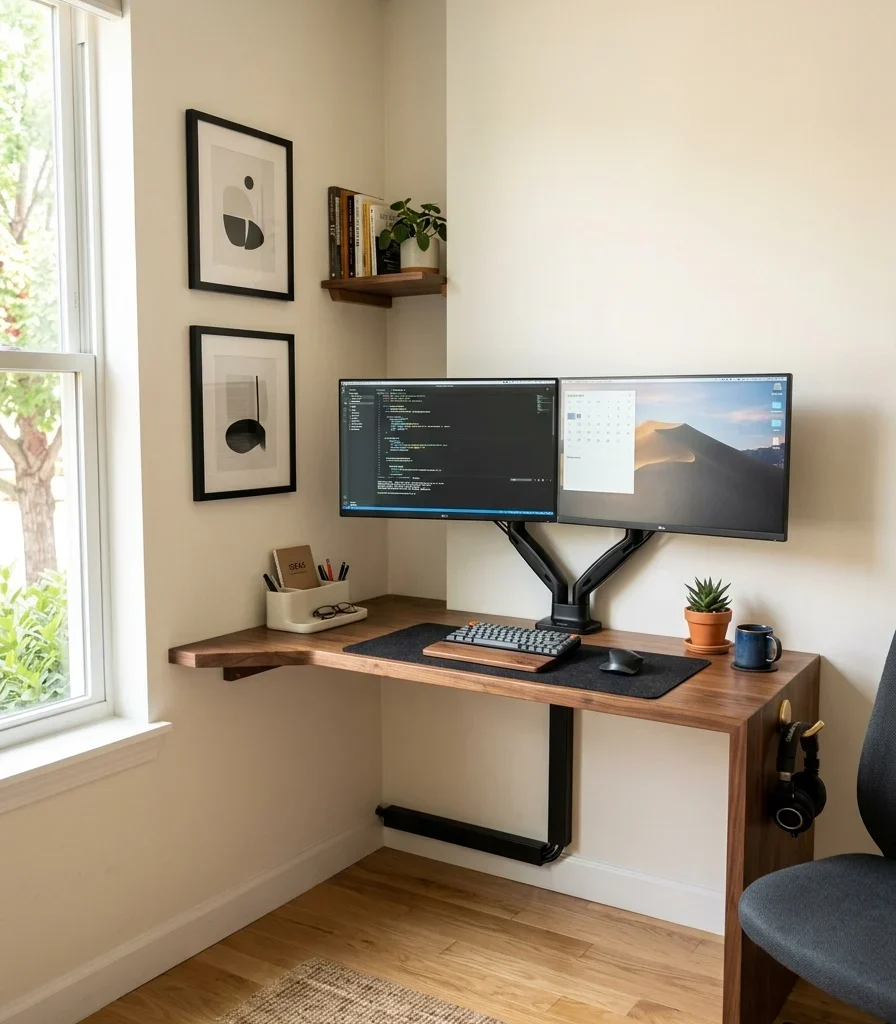
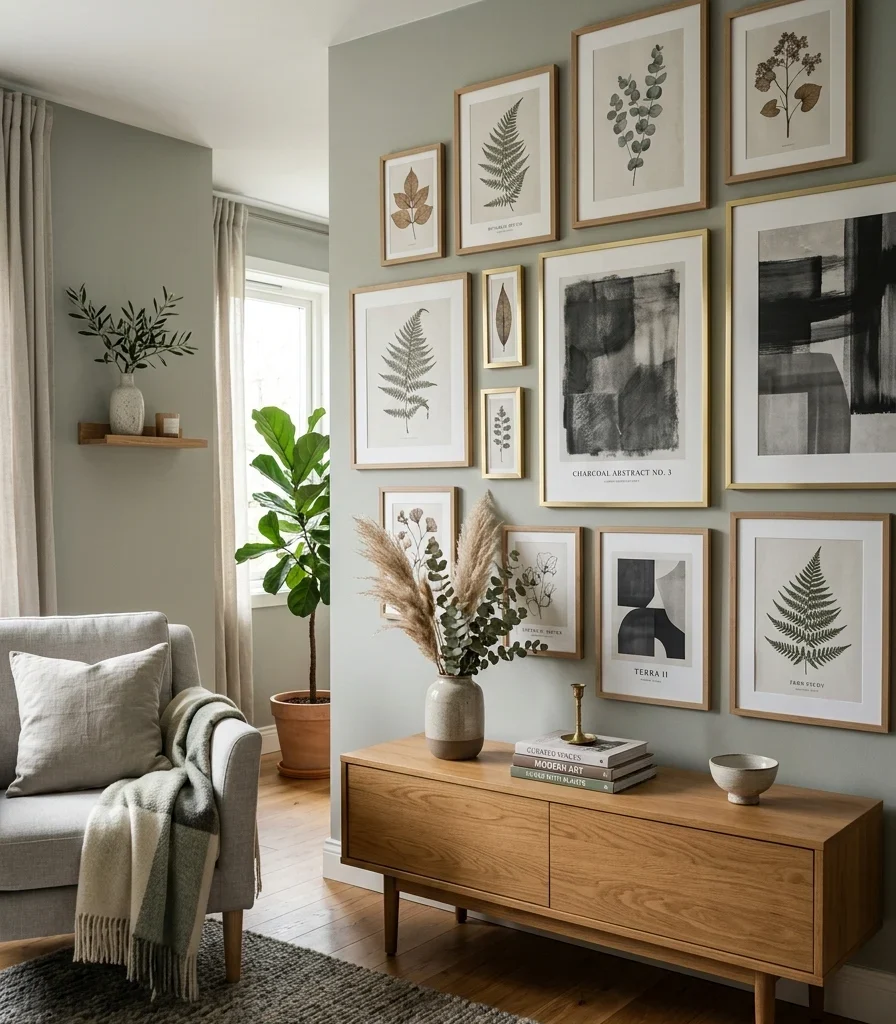
Vibe: The wall feels composed, like a single deliberate statement.

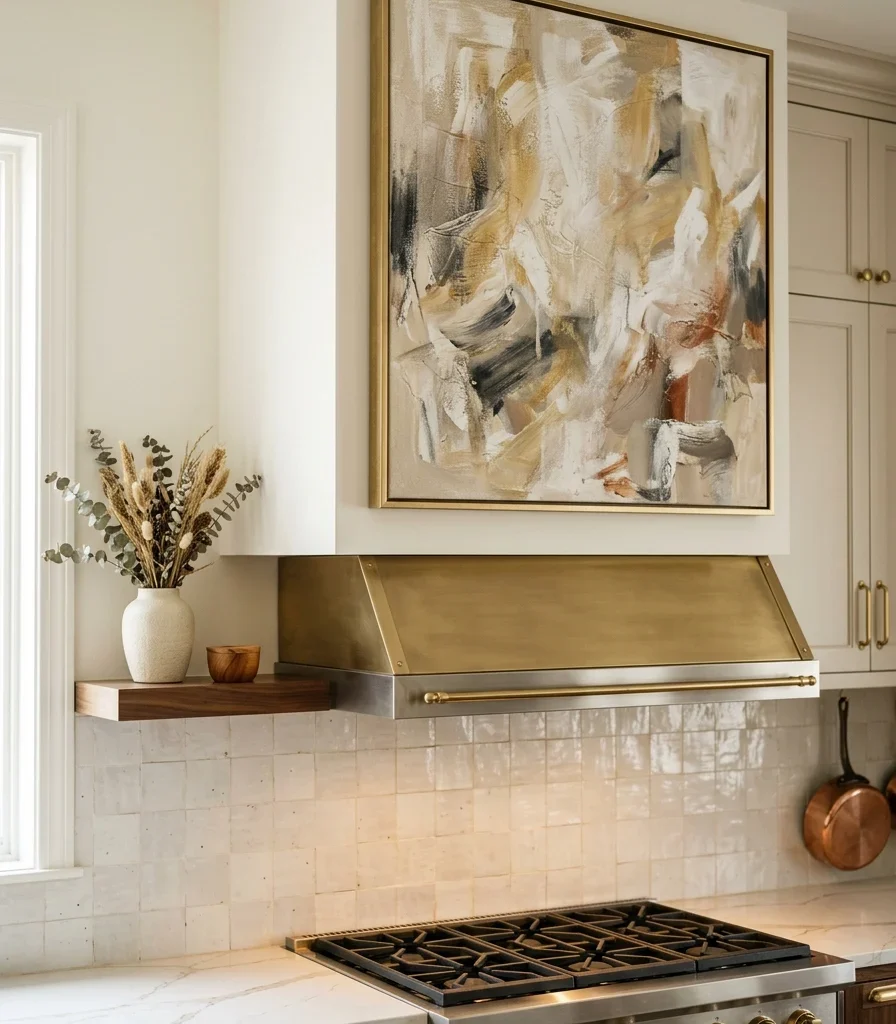
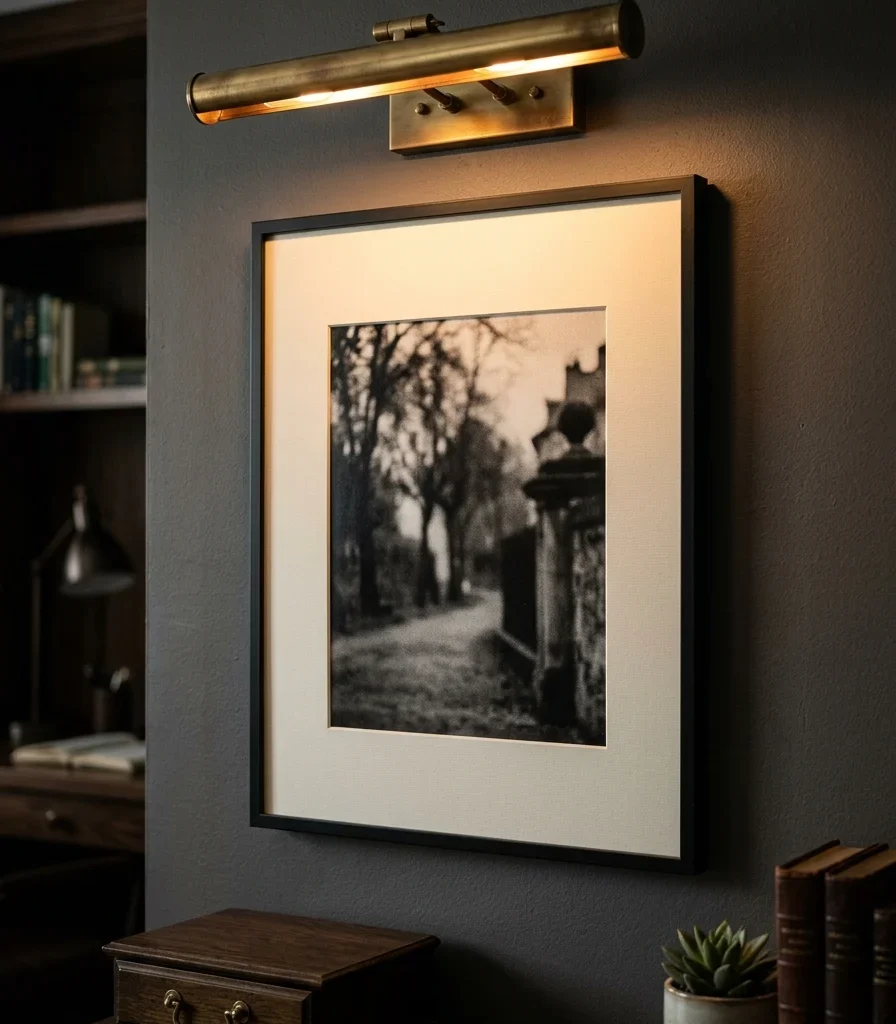
Why it works: One oversized piece of art creates a stronger focal point than a gallery wall in modern spaces, because modern home decor relies on negative space to give each element room to register. Abstract, tonal artwork also avoids competing narratives with the room’s existing color story.

How to get it: Choose one canvas sized to roughly two-thirds the width of the furniture beneath it, keep the palette within your room’s existing neutrals, and hang it with the center at standard eye level, around 57 inches from the floor.

💡 Quick Win: An unframed raw canvas print leans against the wall for an effortless, editorial feel that requires no hanging hardware.

Shop The Look

  • Abstract canvas wall art neutral tones
  • Thin black metal picture frame large
  • Ceramic sculptural decor object neutral
  • Trailing pothos artificial plant vine
  • Low wood console table modern

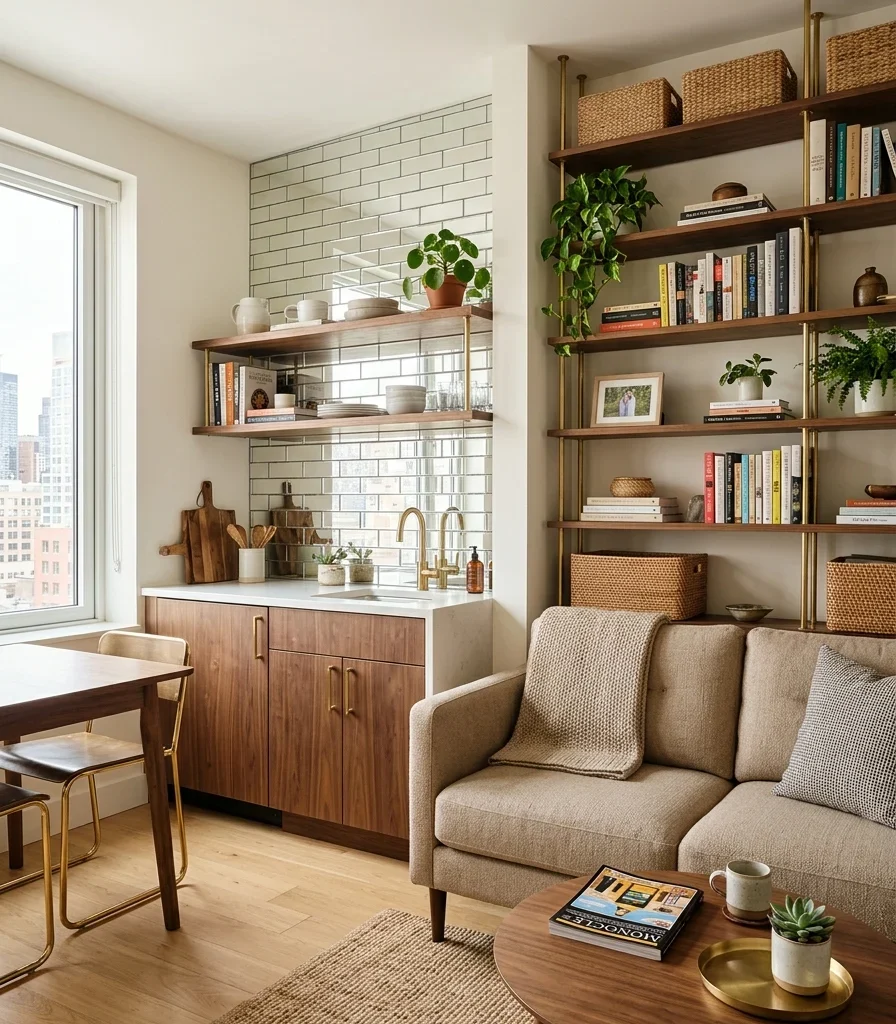
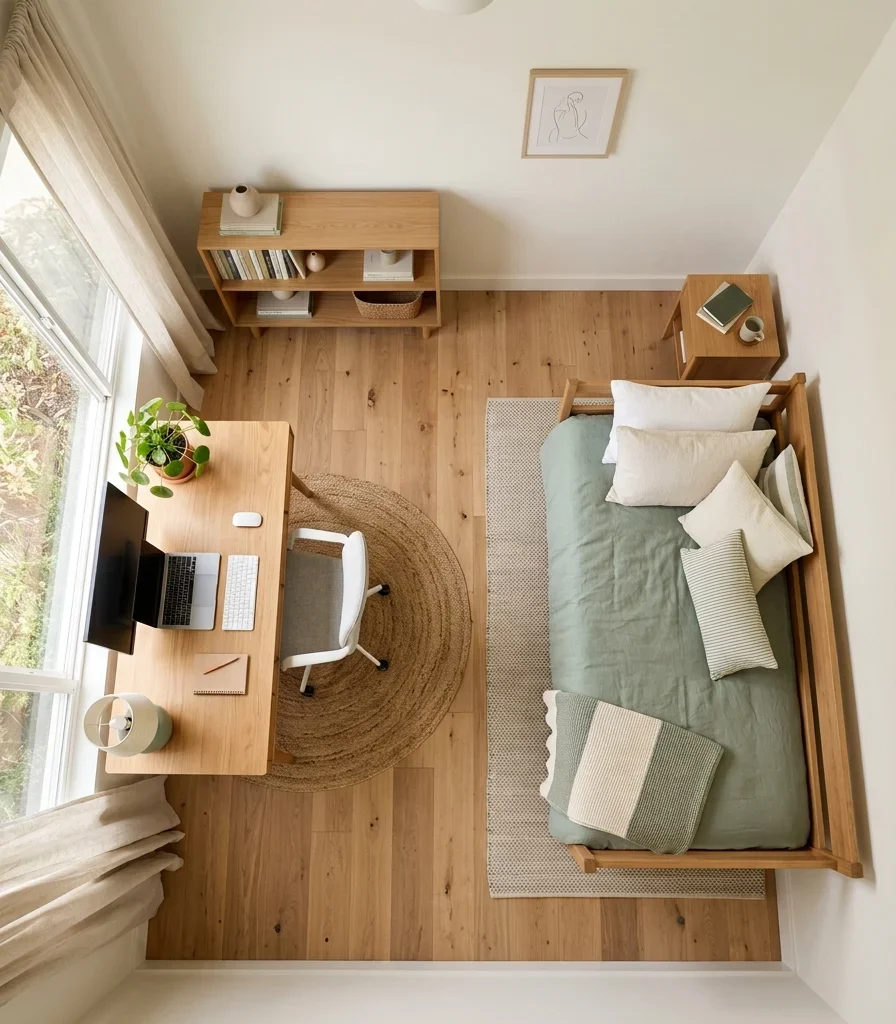
14. Multi-Functional Furniture for Small Modern Homes

14. Multi-Functional Furniture for Small Modern Homes

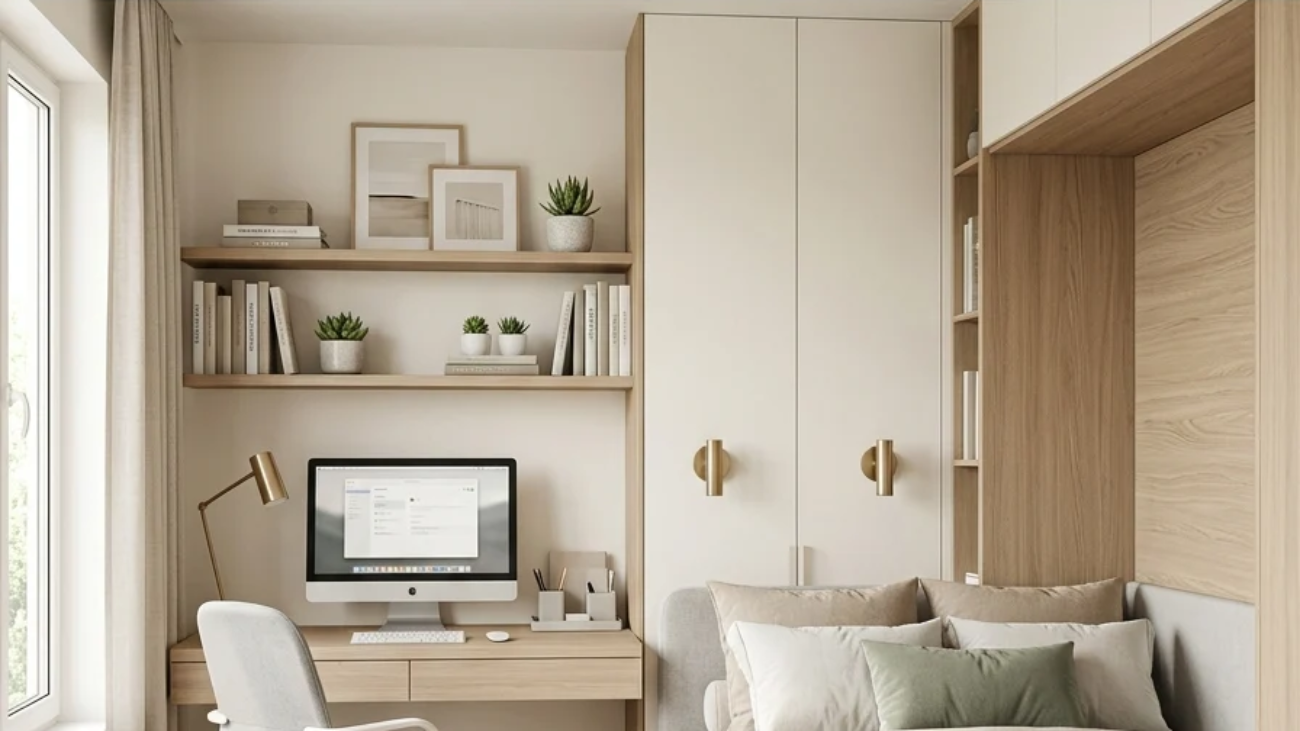
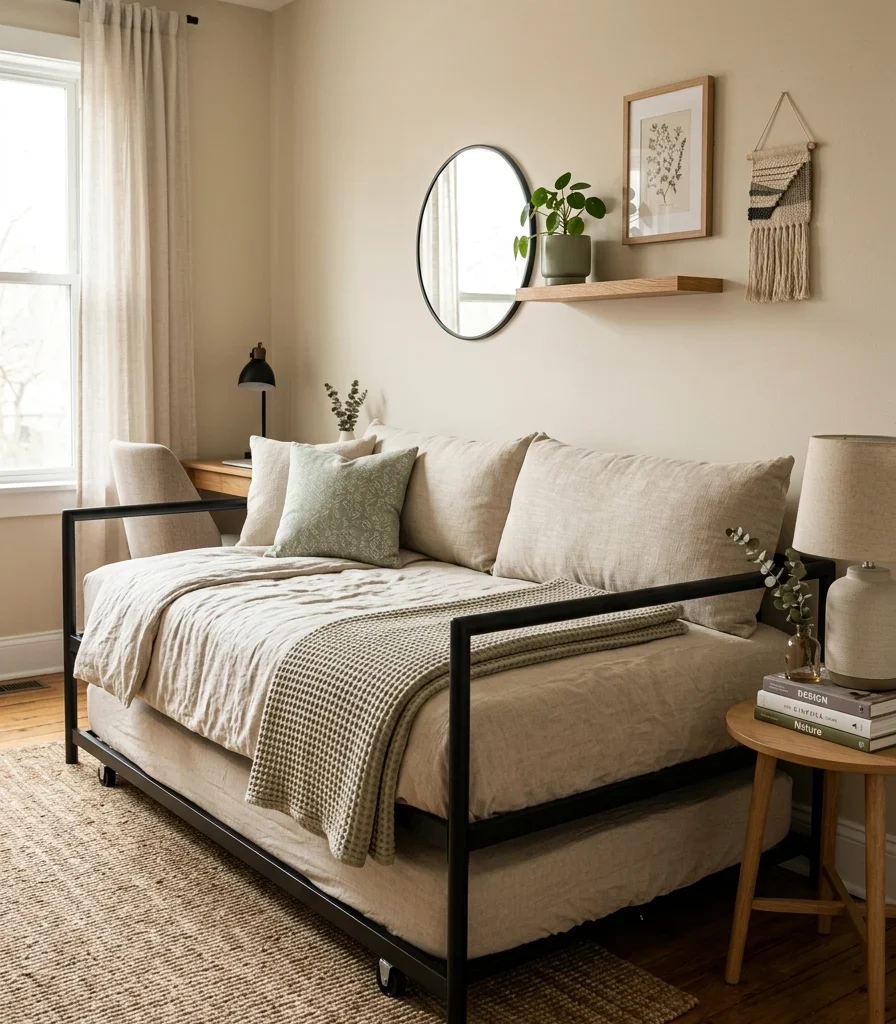
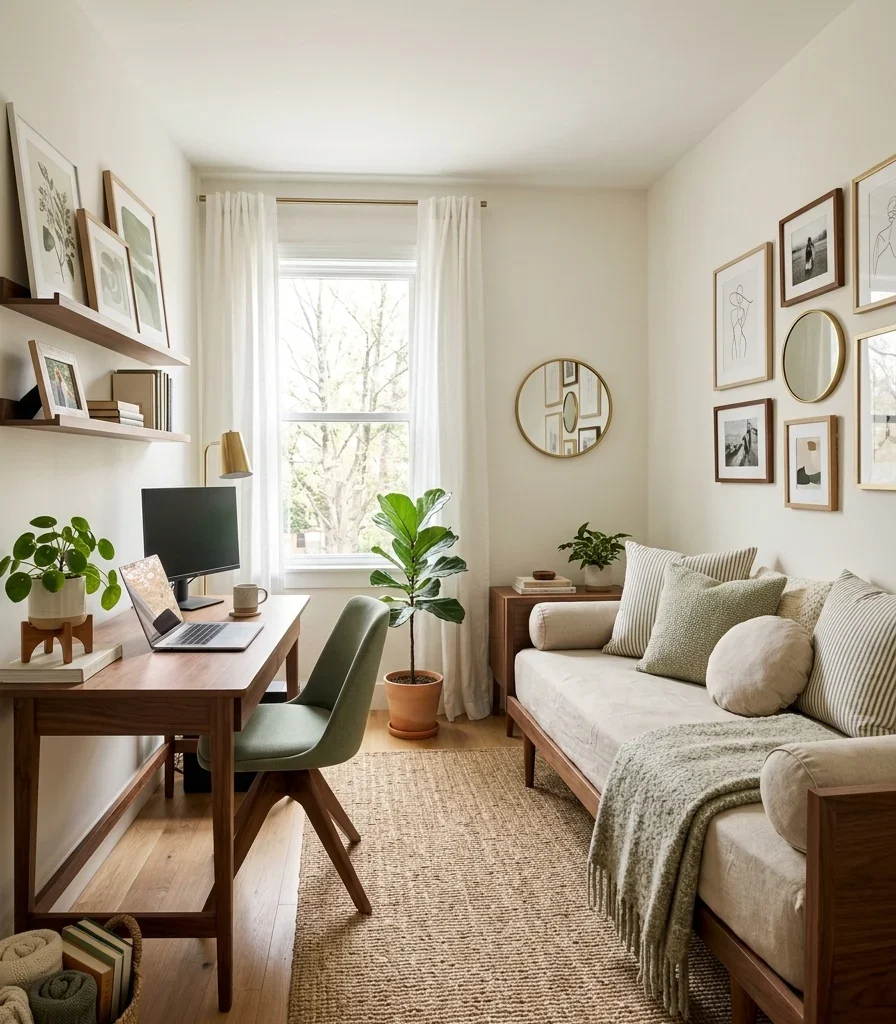
Vibe: The small room feels efficient, not cramped.

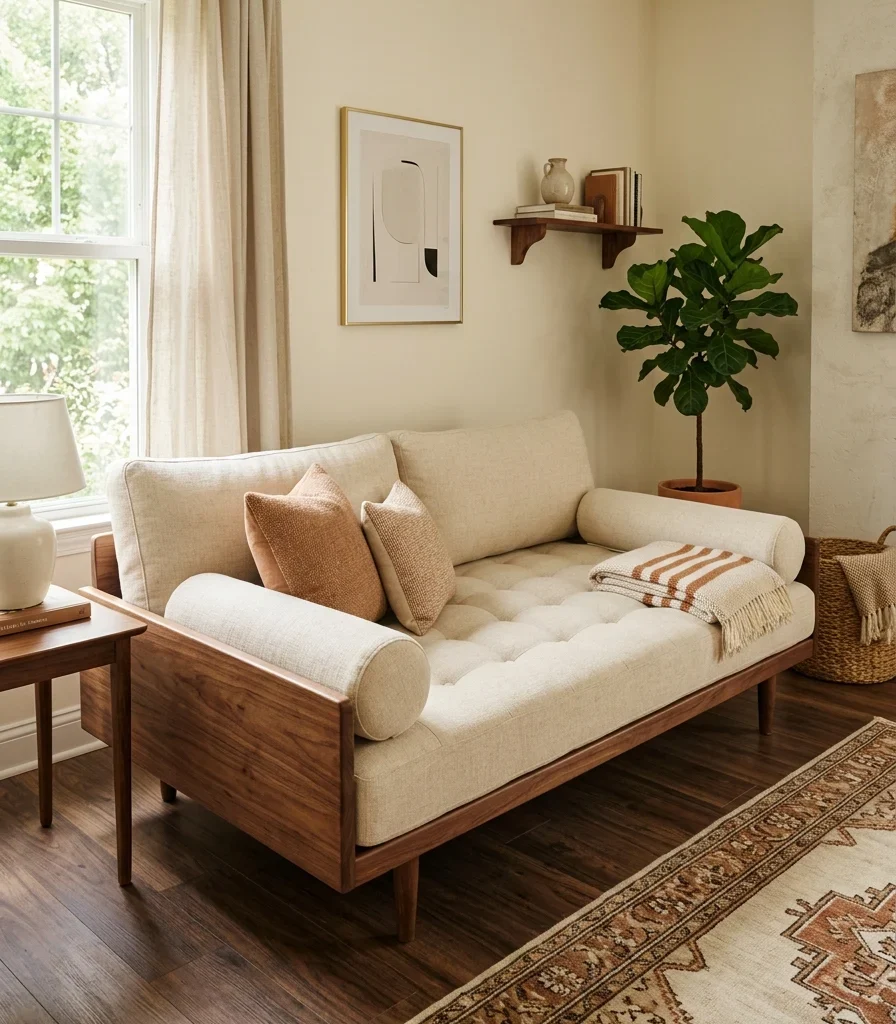
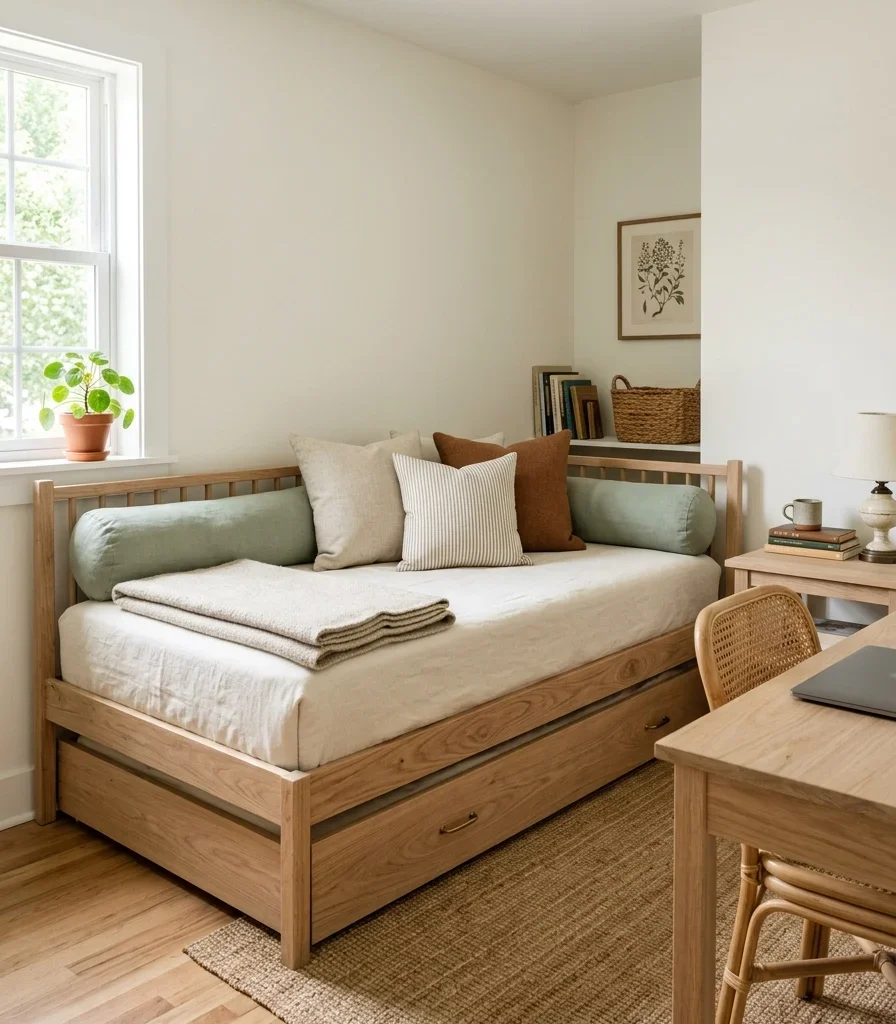
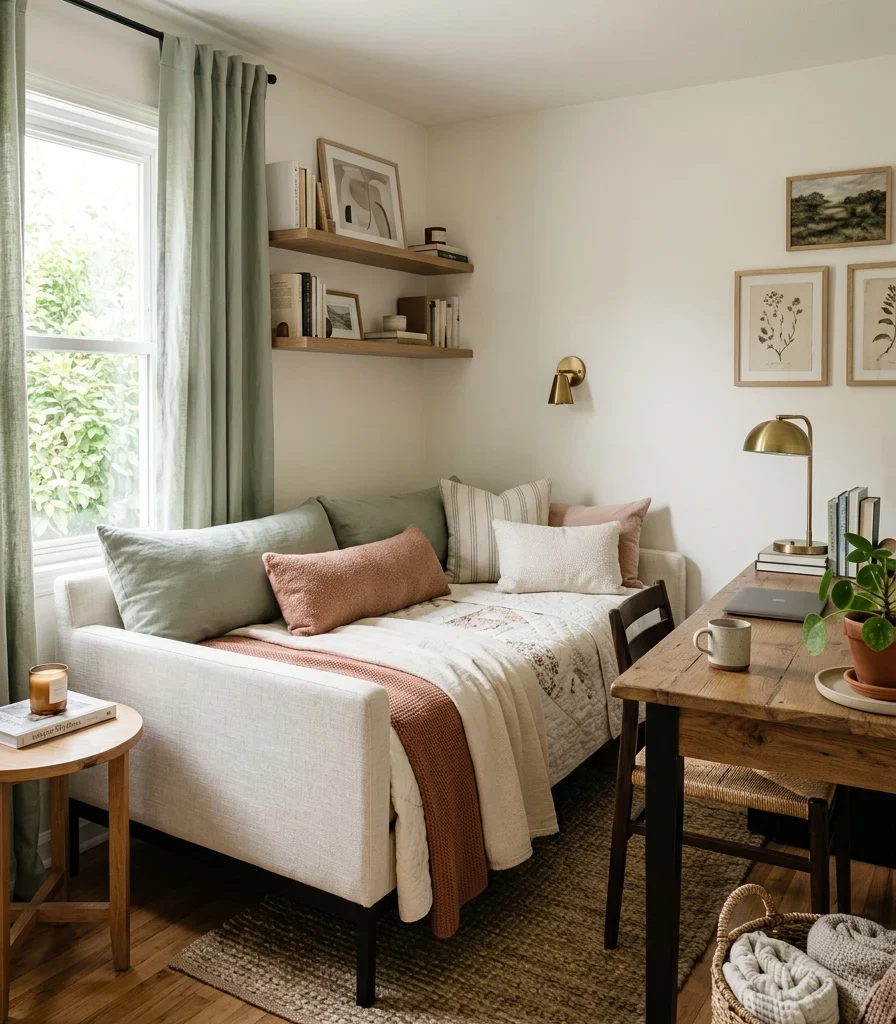
Why it works: Furniture that serves two purposes — a daybed as sofa and guest bed, nesting tables that expand only when needed — reduces the total number of objects in a small footprint. Fewer objects mean more visible floor, and visible floor is what makes a small modern room read as spacious rather than tight.

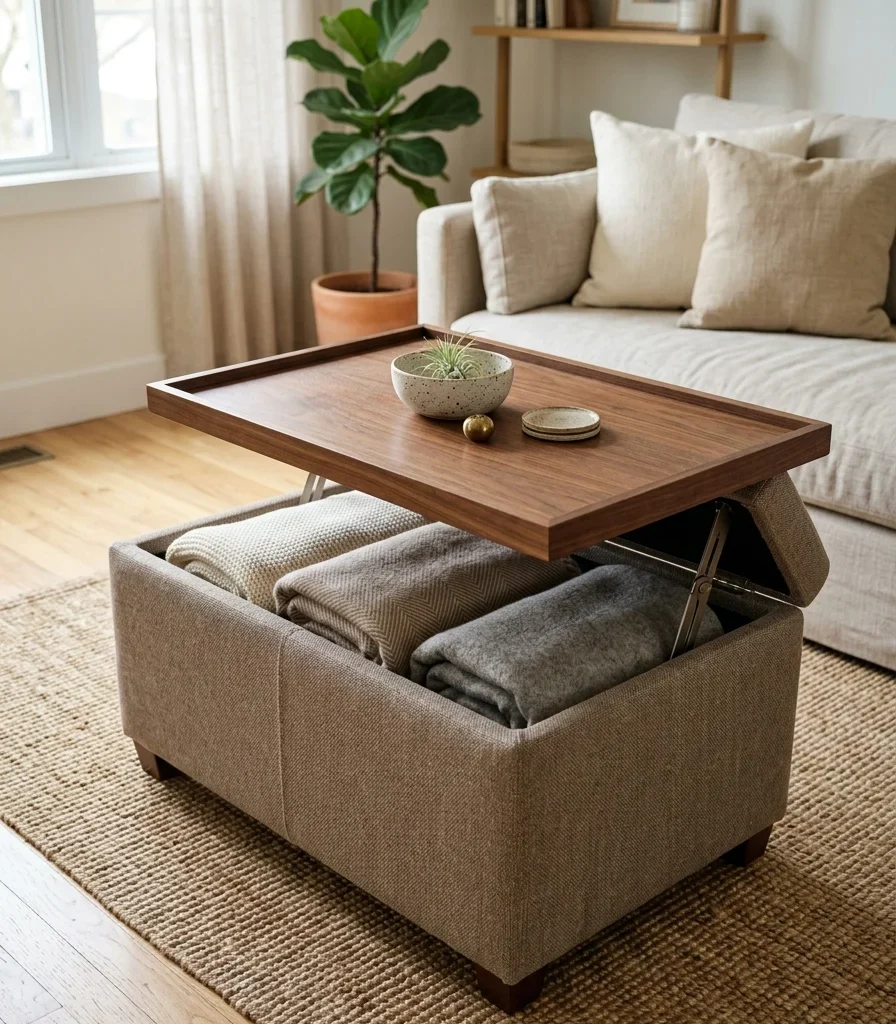
How to get it: Choose one or two multi-functional anchor pieces (a daybed, a set of nesting tables, an ottoman with storage) rather than separate single-purpose furniture for each need, and keep every leg exposed rather than skirted to preserve sightlines to the floor.

Shop The Look

  • Slim daybed frame with trundle storage
  • Nesting coffee table set of two
  • Storage ottoman faux leather modern
  • Woven seagrass basket small
  • Neutral bolster pillow daybed set

15. Negative Space as a Design Element

15. Negative Space as a Design Element.

Vibe: The corner feels still, like a held breath.

Why it works: Negative space is not empty space — it’s a deliberate design choice that gives surrounding objects room to be noticed individually instead of competing for attention. In modern home decor, leaving a wall bare next to a single striking piece increases that piece’s visual weight far more than surrounding it with additional decor would.

How to get it: Pick one room or corner and remove roughly a third of what’s currently displayed there, then resist refilling it — let the empty wall or floor space stand as its own element rather than a gap to fix.

💡 Quick Win: Before adding anything new to a room, try removing one object first and living with the space for a week.

Shop The Look

  • Sculptural accent chair with walnut frame
  • Small round side table minimal
  • Single stem ceramic bud vase
  • Walnut floor lamp, slim profile
  • Neutral bouclé floor cushion modern

═══════════════════════════════════

How to Start Your Modern Home Decor Transformation

Start with your wall color. A true greige or warm white on the main living space anchors every other decision — furniture, art, and metal finishes all read differently against a neutral base, so getting this one choice right first prevents costly mismatches later.

The most common mistake is over-decorating: filling every shelf and surface because space feels unfinished. This breaks modern decor’s core principle, which relies on negative space to let each piece register. Fix it by removing items in rounds — pull a third of what’s on display, live with it for a week, then decide what actually earns its way back.

Budget entry points under $50: a single stem of dried pampas grass in a matte black ceramic bud vase, a set of brushed brass drawer pulls to swap onto existing furniture, and one warm-white (2700K) LED bulb pack for a floor or table lamp you already own.

A realistic starter update — new paint, hardware swaps, and one statement light — takes a single weekend and roughly $200–$400. A full room transformation with new furniture typically runs $2,000–$6,000 and takes 4–8 weeks to source and style properly. Larger furniture pieces, especially solid wood, often have longer lead times than expected.

═══════════════════════════════════

Frequently Asked Questions About Modern Home Decor

What is the difference between modern and contemporary home decor?

Modern refers to a specific historical design movement from the early-to-mid-20th century, defined by clean lines, minimal ornament, and honest materials like walnut and steel. Contemporary describes whatever is currently trending, which shifts every decade. A modern living room today looks essentially the same as one styled in the 1960s, while contemporary decor changes with the times.

What colors work best for modern home decor?

Warm white, greige, and charcoal form the neutral base, with black used sparingly as an accent for hardware and frames. Sage green and terracotta blush are the most common color accents layered in through a single furniture piece or textile. Avoid pastels and heavily patterned color schemes, since they compete with the style’s minimal-contrast philosophy.

How much does it cost to decorate a room in modern style?

A budget starter update using paint, hardware, and lighting swaps typically costs $200–$400 and can be done in a weekend. A fuller room refresh with one or two new furniture pieces runs $800–$2,000, while a complete room transformation with new furniture, lighting, and rugs generally falls between $2,000 and $6,000 depending on materials chosen.

Does modern home decor work with an older or traditional house?

Yes, though it requires more intentional contrast. Pairing modern furniture’s clean lines against original architectural details like crown molding or wood floors often creates a more interesting result than a fully modern shell, since the juxtaposition itself becomes a design feature. The key is keeping wall colors neutral so the architecture and furniture don’t visually compete.

What lighting works best for a modern home?

Layered lighting is essential — at least one ambient ceiling source, one task lamp, and one accent light per main room, ideally on separate switches or dimmers. Warm white bulbs around 2700K keep the space feeling inviting rather than clinical. A single oversized pendant over a dining table or island is the most common statement lighting choice in modern interiors.

═══════════════════════════════════

Ready to Create Your Dream Modern Home?

These 15 ideas span color, material, lighting, layout, and furniture proportion, but you don’t need to tackle all of them at once. Starting small — one wall color, one hardware swap, one statement light — is not a compromise; it’s exactly how a considered modern space actually comes together. Today, pick the single easiest idea from this list, like swapping in matte black drawer pulls or adding one warm-toned lamp, and do just that. Once the room settles into its cleaner lines and quieter palette, it will feel less like a finished project and more like a place where you can finally exhale. Save your favorite ideas now, so when you’re ready for the next step — that walnut console, that oversized pendant — they’re right where you left them.

18 Rustic Home Decor Ideas to Bring Warmth to Every Room

18 Rustic Home Decor Ideas to Bring Warmth to Every Room

Rustic home decor is built on heavy timber, raw stone, and leather aged by use, drawing from log cabin and mountain lodge building traditions rather than a decorated look applied on top. This article gives you 18 rustic home decor ideas, from beams to lighting to layout, built to work across an entire home.

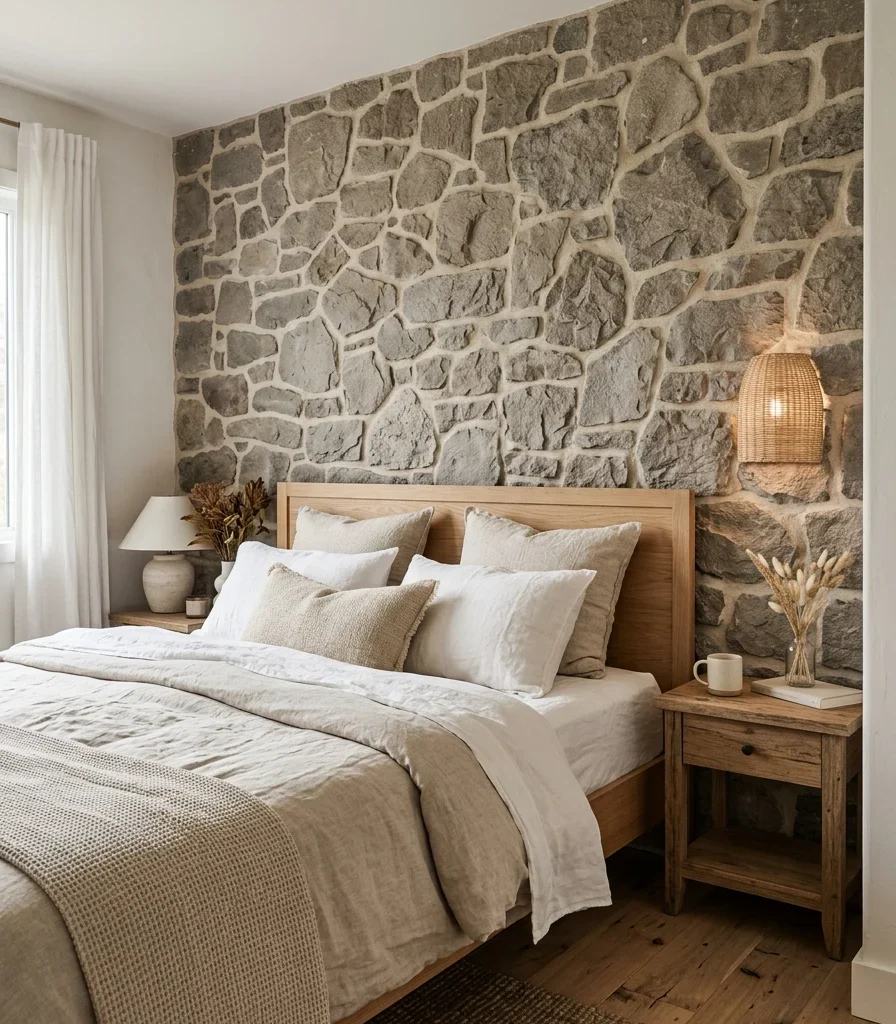
The feeling is unmistakable: firelight catching a fieldstone surround, the weight of a live-edge table under your hands, a home that feels grounded no matter the season outside. Rustic decor doesn’t chase polish; it chases material honesty and warmth. Here are 18 ideas worth saving and stealing.

Why Rustic Home Decor Ideas Work So Well

What is it? Rustic decor traces to American log cabin and frontier building traditions alongside European Alpine chalet architecture, later romanticized through early-20th-century National Park lodge design like the Old Faithful Inn, which set the template for the timber-and-stone great rooms rustic decor still references today. What separates it from farmhouse decor is weight, rustic leans on heavy timber and rough stone rather than farmhouse’s lighter shiplap and whitewashed finishes.

What are its core materials and colors? The palette runs warm charcoal, cognac, deep forest green, and rust, layered against warm cream. Materials stay heavy and tactile: reclaimed barnwood, exposed timber beams, fieldstone, wrought iron, and cognac leather. Nothing is delicate; every material is chosen for how solid and lived-in it reads.

Why is it trending now? The “cabin-core” aesthetic has held strong Pinterest search interest as people seek homes that feel grounded and screen-free, a continuation of the post-pandemic desire for tactile, restorative spaces. Sustainability concerns have also kept reclaimed barnwood and timber reuse relevant rather than trend-dependent.

Can small spaces achieve this style? Yes, with a real limit, heavy timber and stone can overwhelm a small room quickly, so prioritize one textural material (a wood-paneled wall) and a lighter wall color to keep the room from feeling closed in.

ElementPhilosophyKey Materials
Core valueMaterial weight and honestyReclaimed barnwood, fieldstone
Color approachWarm, deep, groundedWarm charcoal, cognac, rust

18 Rustic Home Decor Ideas

1. Reclaimed Barnwood Accent Wall in the Main Living Space

1. Reclaimed Barnwood Accent Wall in the Main Living Space

Vibe: The wall feels raw, weathered grain doing what paint or wallpaper never could.

Why it works: Reclaimed barnwood carries genuine saw marks and weathering from decades of prior use, a material-honesty principle that separates authentic rustic texture from a distressed-finish reproduction. The wood’s variation in tone across individual planks is what gives the wall real depth rather than a uniform pattern.

How to get it: Source reclaimed barnwood planks in mixed widths and tones, installed with visible gaps rather than tightly fitted seams, and seal with a matte wax finish that preserves the weathered surface rather than glossing over it.

💡 Quick Win: Reclaimed wood veneer panels achieve a similar weathered look at a lower material and installation cost than full-thickness barnwood.

Shop the Look

Product
Reclaimed barnwood wall plank kit
Iron wall sconce candle style
Ceramic storage jar with lid
Chunky wool throw blanket
Matte wax wood sealer

2. Warm Charcoal and Cognac Leather Palette

2. Warm Charcoal and Cognac Leather Palette

Vibe: The room feels enveloping, with dark walls holding warmth rather than reflecting it away.

Why it works: Warm charcoal walls paired with cognac leather use value contrast the way a moody dining room would, but here the pairing also references the actual material palette of a hunting lodge or study. The leather’s warm undertone keeps the dark wall from reading as cold or industrial.

How to get it: Paint walls in a warm-toned charcoal such as Benjamin Moore’s Wrought Iron 2124-10, and choose leather seating in a natural cognac tan rather than a cooler brown, so the pairing stays warm rather than austere.

Shop the Look

Product
Warm charcoal matte wall paint
Cognac leather sofa nailhead trim
Iron lantern table accent
Wool throw blanket cream
Honey oak floor rug pad

3. Wagon-Wheel-Inspired Iron Chandelier as a Focal Fixture

3. Wagon-Wheel-Inspired Iron Chandelier as a Focal Fixture

Vibe: The table feels anchored, one heavy fixture holding the room’s whole visual weight overhead.

Why it works: A wagon-wheel-style iron chandelier references rustic decor’s frontier and lodge origins directly, and its horizontal spoke structure spans wider than a typical pendant, giving proper proportion to a substantial dining table beneath it. Exposed filament bulbs also keep the fixture’s mechanism visible rather than hidden behind a shade.

How to get it: Choose a wrought iron chandelier sized to roughly two-thirds the width of the table, hung 30–34 inches above the surface, fitted with warm Edison-style bulbs.

💡 Quick Win: Swapping only the bulbs in an existing chandelier to warm filament-style Edison bulbs shifts the mood without new hardware.

Shop the Look

Product
Wagon wheel style iron chandelier
The Edison filament bulb is set to warm
Live-edge wood dining table
Ceramic jug decorative
Wool table runner natural

4. Antler and Wood Sculptural Accents on Open Shelving

4. Antler and Wood Sculptural Accents on Open Shelving

Vibe: The shelf feels grounded, organic form doing what a framed print usually would.

Why it works: A faux antler or carved wood sculpture introduces genuinely irregular, organic lines against a shelf’s straight edges, the same contrast principle a live-edge table brings to a dining room but scaled down to a single decorative object. This reads as sculptural rather than themed when kept to one piece per shelf rather than several.

How to get it: Choose one faux antler sculpture or hand-carved wood object per shelf section, paired with a single ceramic jar rather than multiple smaller collectibles crowding the same surface.

Shop the Look

Product
Faux antler sculpture decorative
Hand-carved wood decorative object
Ceramic storage jar with lid
Dried branch stem bundle
Wood floating shelf set

5. Live-Edge Dining Table as the Home’s Anchor Piece

5. Live-Edge Dining Table as the Home's Anchor Piece

Vibe: The table feels raw, a slice of tree still visibly a tree at the center of the room.

Why it works: A live-edge slab introduces organic, irregular lines into a room otherwise built on straight architectural lines, creating the contrast principle that keeps a heavily timbered rustic home from feeling monotonous. Iron trestle legs beneath keep the substantial tabletop from reading as overly heavy at floor level.

How to get it: Choose a single-slab live-edge table in walnut or oak with the natural bark edge left untreated, set on iron trestle or hairpin legs rather than a solid wood base.

💡 Quick Win: A live-edge wood slab used as a mantel shelf achieves a similar organic focal point at a smaller scale and lower cost.

Shop the Look

Product
Live-edge wood dining table with iron legs
Ceramic jug decorative
Wool table runner
Iron candle holder set
Wood mantel shelf live-edge

6. Deep Forest Green Cabinetry in the Kitchen

6. Deep Forest Green Cabinetry in the Kitchen

Vibe: The kitchen feels grounded, deep green settling into the room like a forest floor.

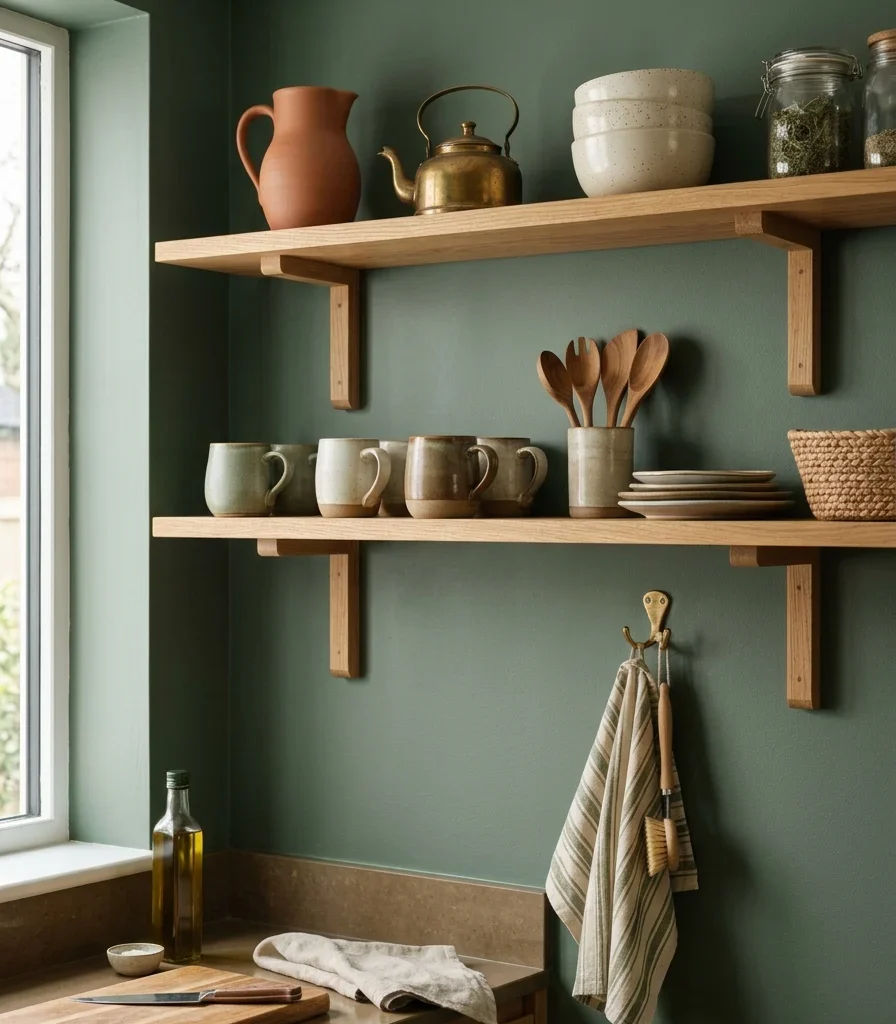
Why it works: Deep forest green sits dark enough to carry real visual weight while still reading as a natural, organic color rather than a stark black or charcoal, which is why it pairs so naturally with brass hardware and wood countertops in a rustic kitchen. Confining it to lower cabinets keeps the room from feeling closed in.

How to get it: Paint lower cabinets in a deep forest green, such as Farrow & Ball’s Studio Green No. 93, keeping upper walls and any open shelving in warm cream for contrast.

Shop the Look

Product
Deep forest green cabinet paint
Brass cabinet pull set
Ceramic kitchen crock
Dried herb bundle natural
Warm cream interior wall paint

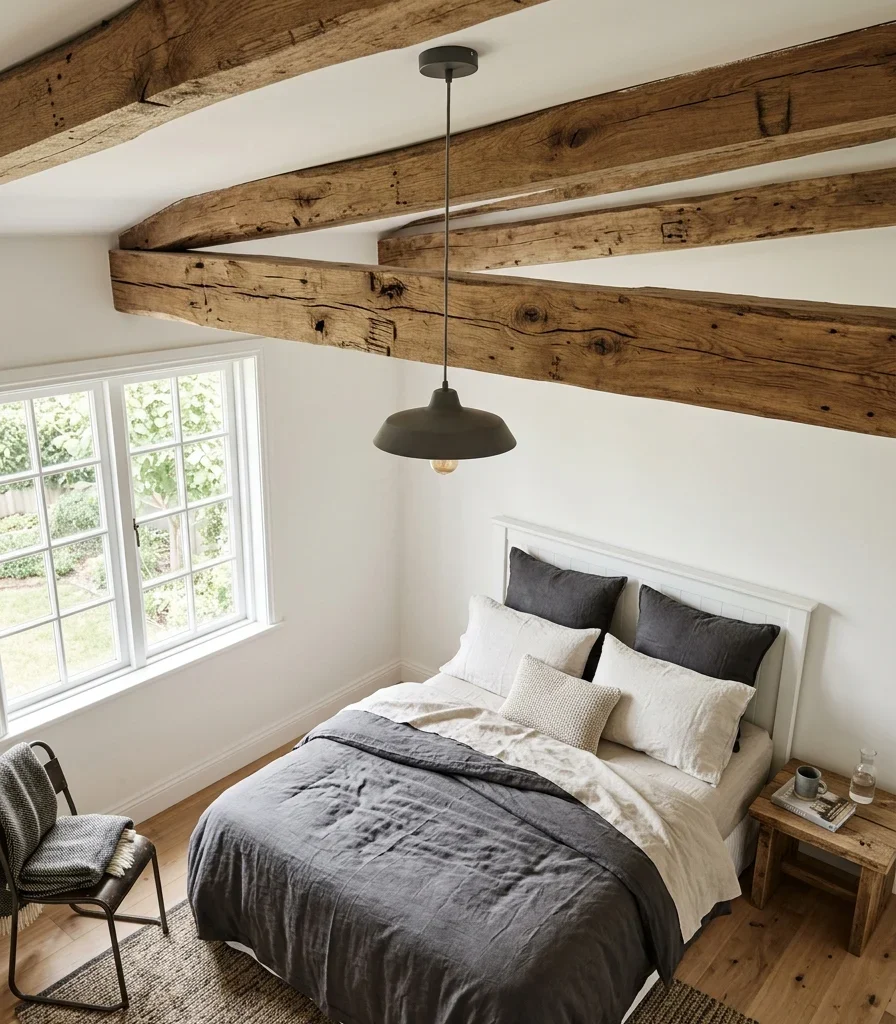
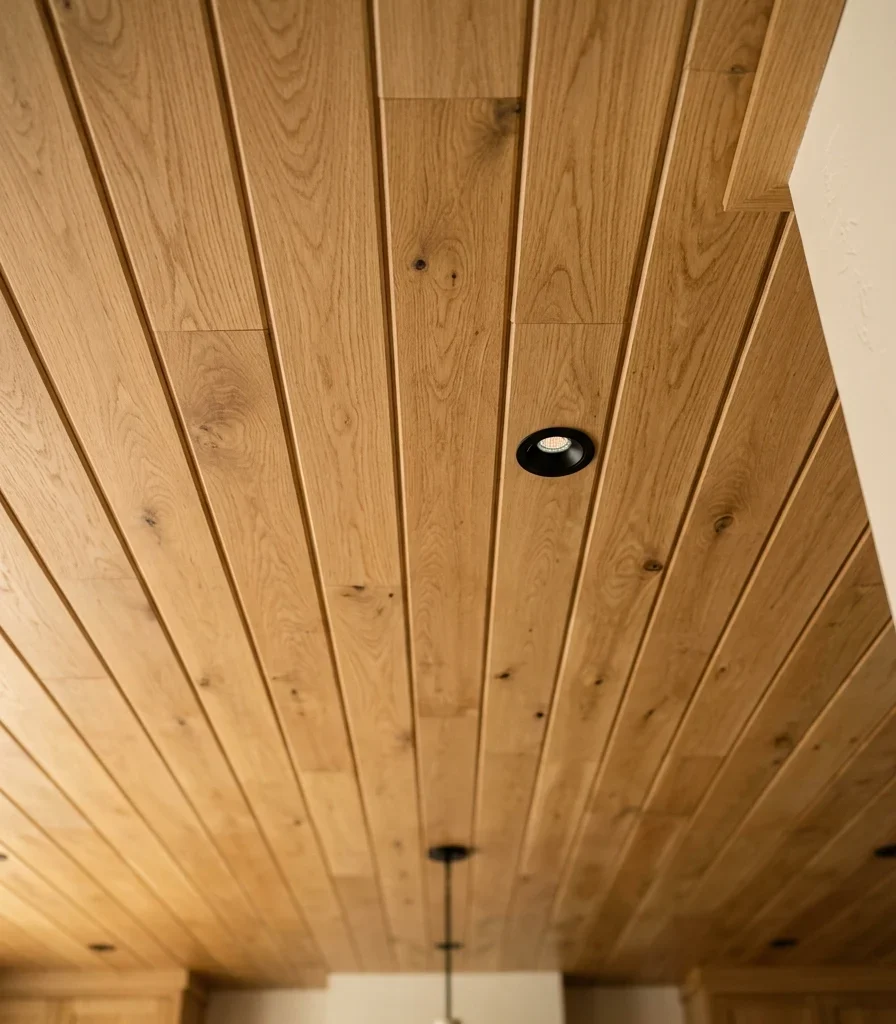
7. Exposed Wood Beam Ceilings Throughout Connected Rooms

7. Exposed Wood Beam Ceilings Throughout Connected Rooms

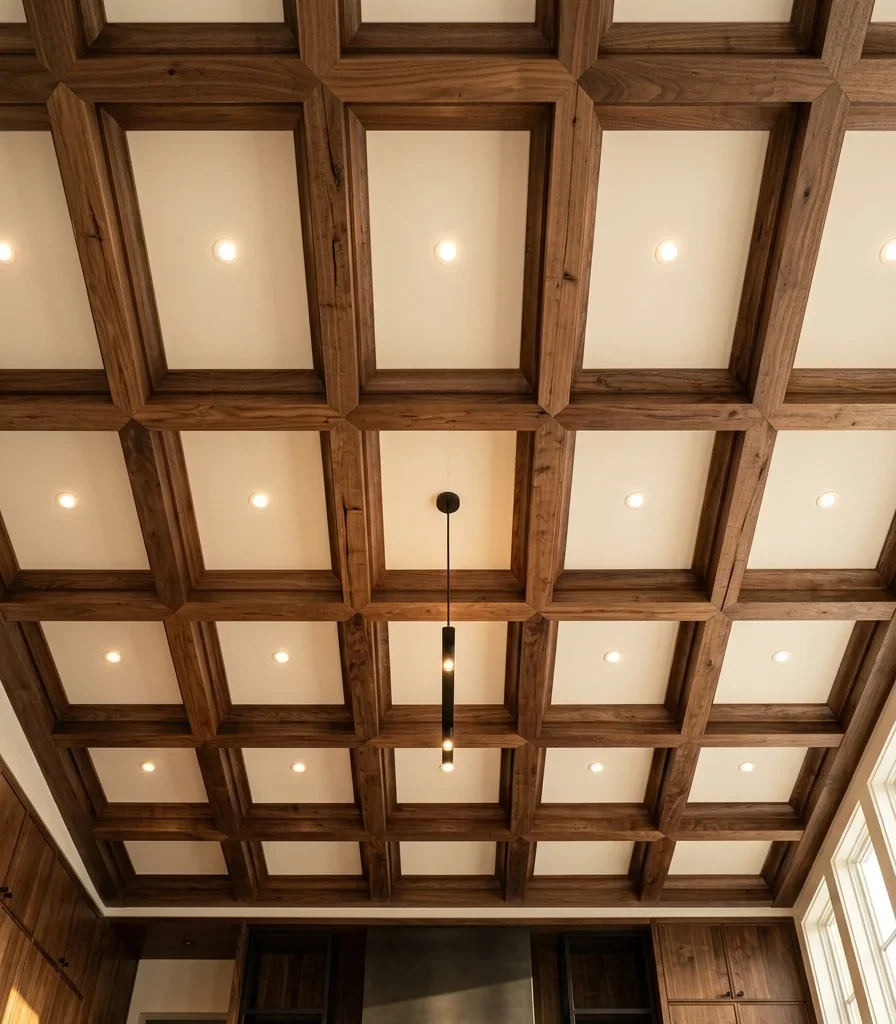
Vibe: The ceiling feels continuous, one architectural detail carrying through connected rooms.
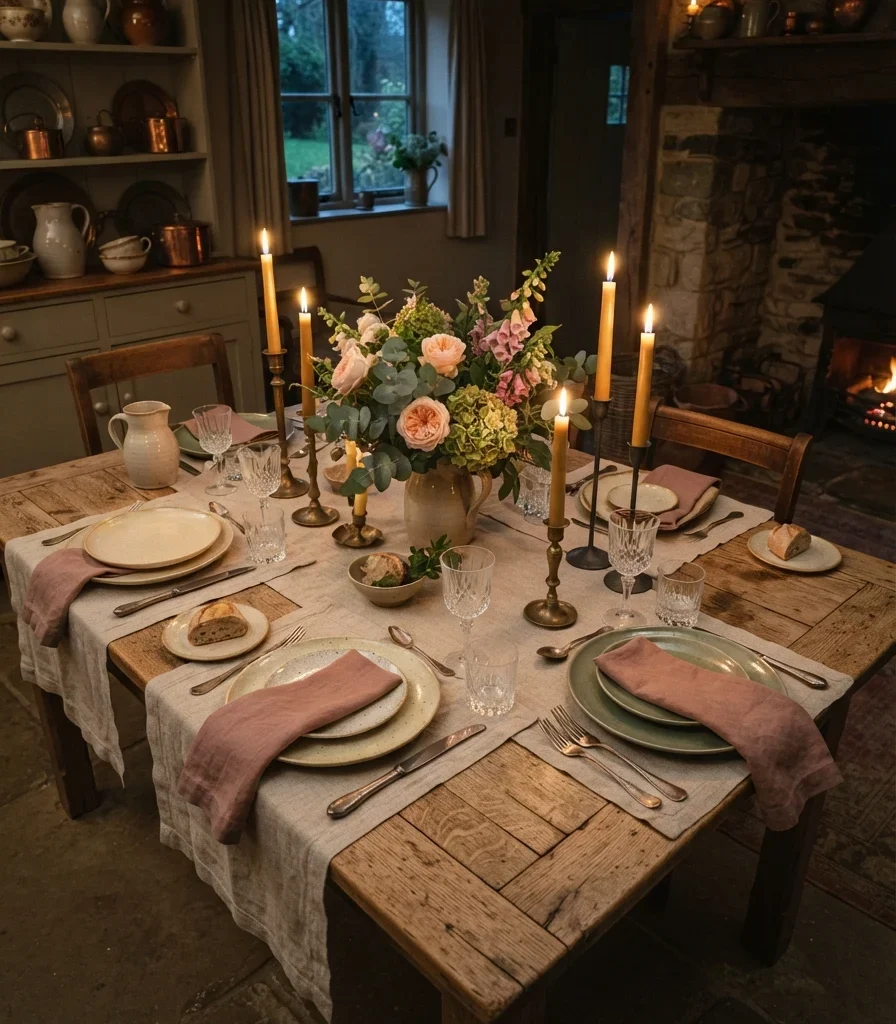
Why it works: Running the same exposed beam structure through adjoining rooms creates architectural continuity at the ceiling plane, the same connective principle a consistent flooring material provides at the floor level, reinforcing that the whole home shares one material language rather than each room being separately decorated.

How to get it: Install faux or reclaimed wood beam wraps at consistent spacing across connected ceiling planes, leaving the ceiling itself in warm cream so the beams remain the visible architectural feature.

💡 Quick Win: A single beam centered over the main seating area gives the effect in one room without the cost of wrapping every connected ceiling.

Shop the Look

Product
Reclaimed wood faux ceiling beam
Iron pendant light fixture
Cognac leather armchair
Warm cream ceiling paint
Wool area rug natural

8. Great-Room Layout Anchored by a Stone Fireplace

8. Great-Room Layout Anchored by a Stone Fireplace

Vibe: The room feels grounded, every seat oriented toward the same warm, weighty center.

Why it works: Arranging seating in a loose semicircle around a stone fireplace uses the fireplace as a true compositional focal point, a layout principle borrowed directly from lodge great-room architecture, where the hearth was historically both the literal and social center of the home.

How to get it: Position your largest seating pieces no more than 8–10 feet from the fireplace, angled slightly inward rather than facing it head-on, so conversation flows as naturally as the view of the fire.

Shop the Look

Product
Fieldstone veneer fireplace surround kit
Iron fireplace tool set
Cognac leather sofa
Wool throw blanket
Wood log holder rack

9. Plaid Wool Throws Layered Across Multiple Rooms

9. Plaid Wool Throws Layered Across Multiple Rooms

Vibe: The home feels layered, one recurring plaid pattern carrying warmth from room to room.

Why it works: Repeating a plaid wool throw in a consistent color family across the living room and bedroom creates a textile thread that ties the home together, the same connective-color principle used in other whole-home styles but applied here through pattern rather than solid tone, which suits rustic decor’s cozier, more textured character.

How to get it: Choose plaid wool throws in the same rust-and-charcoal color family for at least two rooms, varying the specific plaid scale between them so the pattern doesn’t feel identically repeated.

Shop the Look

Product
Plaid wool throw blanket rust
Plaid wool throw blanket charcoal
Ceramic mug with warm glaze
Wool cushion cover
Wood blanket ladder rack

10. Rust and Terracotta Textile Accents

10. Rust and Terracotta Textile Accents

Vibe: The sofa feels sun-warmed, textile color echoing the leather’s own warm undertone.

Why it works: Rust and terracotta sit close enough to cognac leather’s natural tone that the combination reads as tonal layering rather than color contrast, reinforcing warmth without introducing a competing hue. This tonal closeness is what keeps a rustic room’s textiles from clashing with its dominant leather and wood materials.

How to get it: Choose cushion covers in rust and terracotta cotton or wool blends, avoiding a glossy synthetic finish that would look out of place against matte leather and raw wood.

💡 Quick Win: A single terracotta throw pillow added to an existing neutral sofa introduces the color story without a full cushion swap.

Shop the Look

Product
Rust wool cushion cover
Terracotta cotton cushion cover
Iron candle holder set
Dried branch stem bundle
Cognac leather sofa

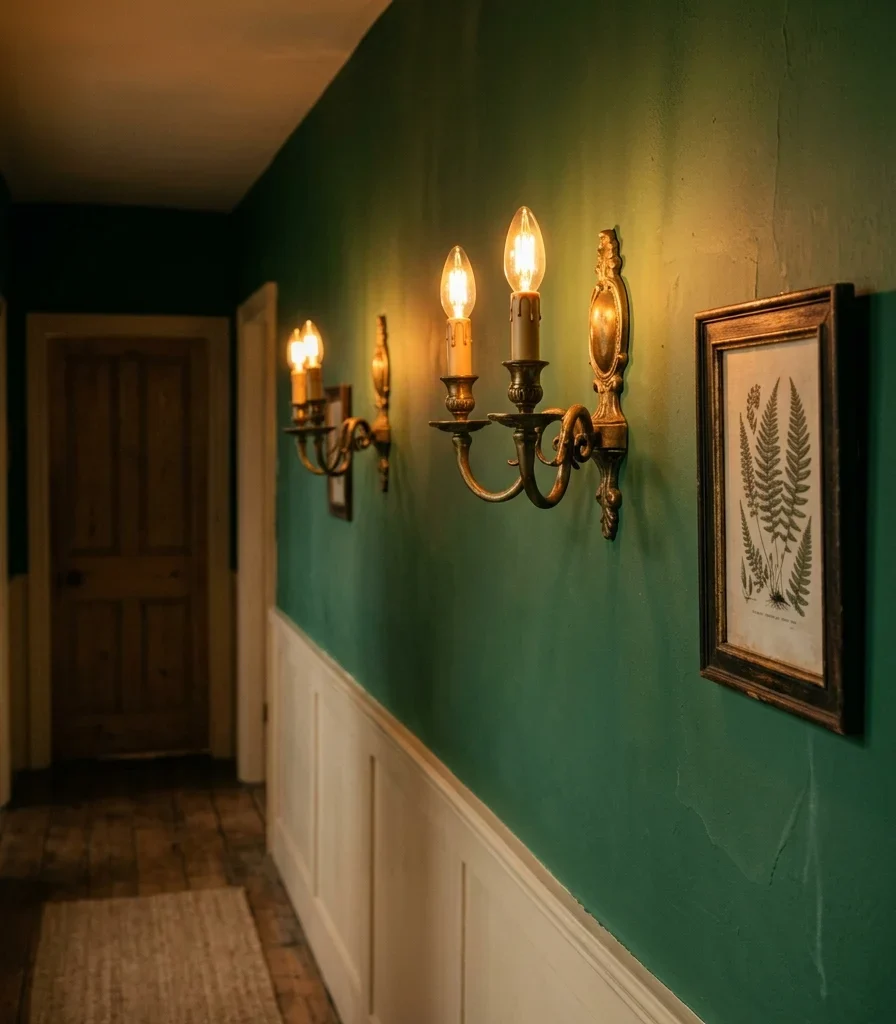
11. Iron Lantern Sconces Along a Hallway

11. Iron Lantern Sconces Along a Hallway

Vibe: The hallway feels warm, with repeated light fixtures creating rhythm along an otherwise plain passage.

Why it works: Iron lantern sconces spaced evenly along a hallway create a repeating visual rhythm that turns a purely functional passage into a considered part of the home, applying the same repetition principle as a gallery wall would, but through lighting instead of art. The lantern form also references rustic decor’s historical dependence on oil and candle lighting before electricity.

How to get it: Install lantern-style sconces every 6–8 feet along the hallway at 60 inches from the floor, fitted with warm 2400K bulbs on a shared dimmer circuit.

💡 Quick Win: Battery-operated lantern sconces avoid any wiring and can be mounted with adhesive strips for a rental-friendly update.

Shop the Look

Product
Iron lantern wall sconce set
Warm 2400K LED bulb
Battery-operated lantern sconce
Dimmer switch plate
Wall mounting hardware kit

12. Cognac Leather Seating with Nailhead Trim

12. Cognac Leather Seating with Nailhead Trim

Vibe: The chair feels lived-in, with leather that will only look better as it ages.

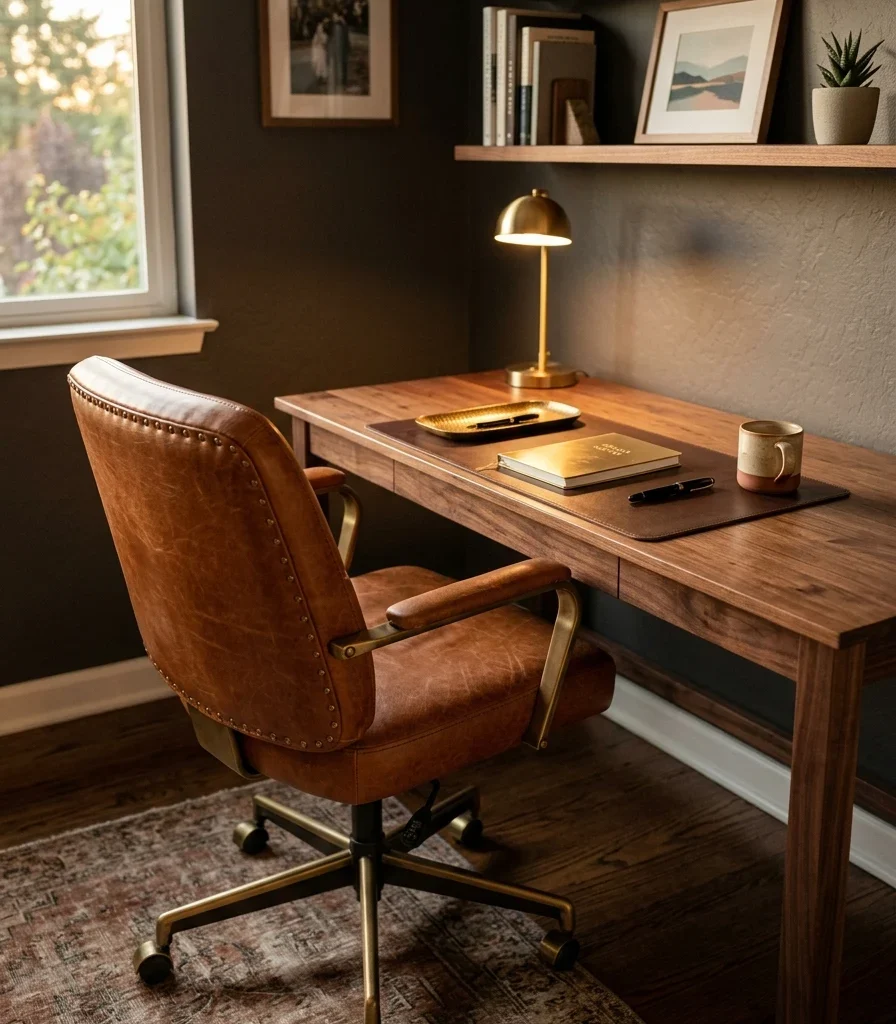
Why it works: Genuine leather develops visible creasing and patina with use, a material-honesty quality central to rustic decor’s preference for things that show real wear rather than staying artificially pristine. Brass nailhead trim adds a decorative detail rooted in traditional upholstery craft rather than a purely modern embellishment.
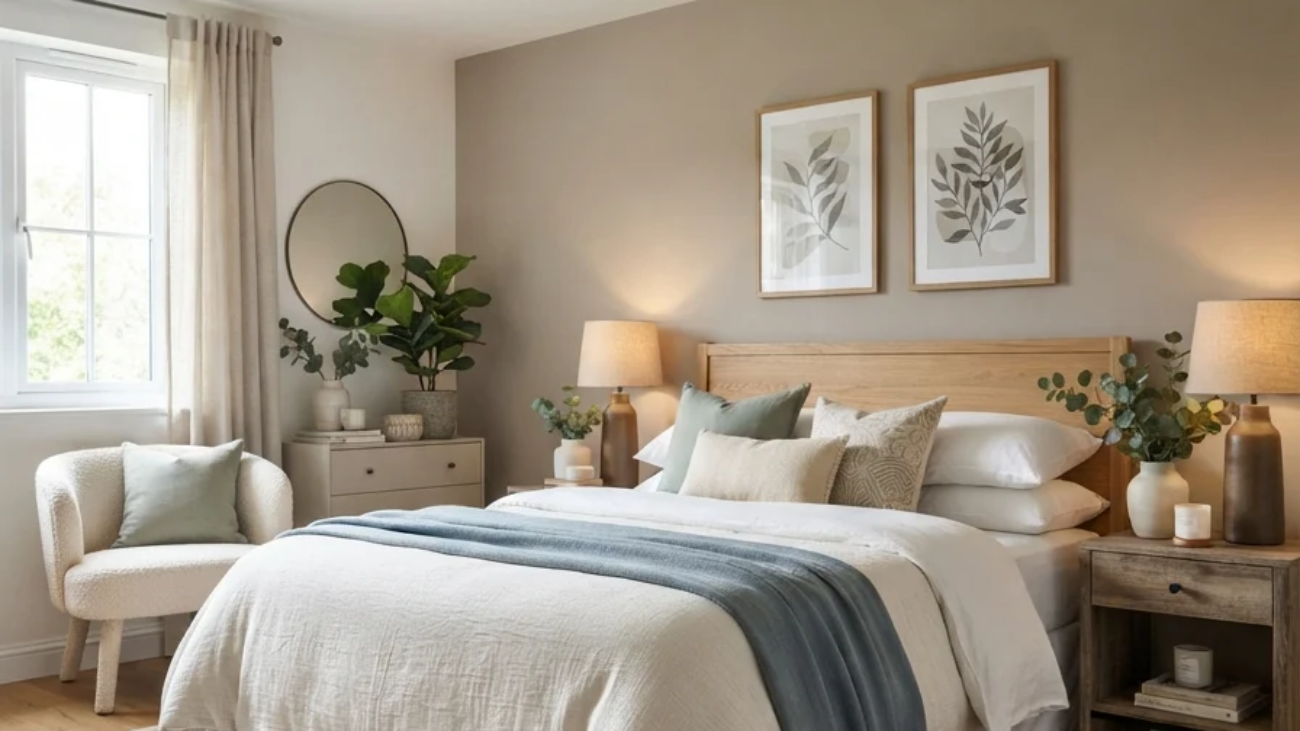
How to get it: Choose top-grain or full-grain cognac leather rather than bonded leather, which won’t develop the same natural patina, and look for nailhead trim in a warm brass rather than a cool nickel finish.

Shop the Look

Product
Cognac leather armchair nailhead trim
Wool throw blanket
Ceramic mug with warm glaze
Leather conditioning cream
Wood side table round

13. Fieldstone Fireplace Surround as a Textural Anchor

13. Fieldstone Fireplace Surround as a Textural Anchor

Vibe: The fireplace feels weighty, texture doing more than any single decorative object could.

Why it works: Fieldstone’s naturally varied shapes and sizes create genuine textural depth without any additional decoration needed, which is why a stone fireplace often functions as a room’s single strongest focal point in rustic decor. Full floor-to-ceiling coverage rather than a partial surround also reinforces its scale and presence.

How to get it: Choose a fieldstone veneer with mixed stone sizes rather than a uniform-cut stone product, extended floor-to-ceiling, and finish the mortar joints in a warm grey rather than a stark white.

💡 Quick Win: A stone veneer panel applied over an existing brick fireplace surround updates the material without a full demolition.

Shop the Look

Product
Fieldstone veneer panel kit
Wood mantel shelf reclaimed
Iron fireplace tool set
Wool throw blanket
Ceramic candle holder set

14. Woven Wool Rugs in Southwestern-Inspired Pattern

14. Woven Wool Rugs in Southwestern-Inspired Pattern

Vibe: The floor feels grounded, pattern doing what a plain rug never could for the room’s warmth.

Why it works: A Southwestern-inspired geometric wool rug introduces the room’s boldest pattern at floor level, where it can anchor a space without competing with wall decor or furniture. This is the same restraint logic minimalism applies to gallery walls, adapted here to keep the pattern confined to one surface.

How to get it: Choose a wool rug in a rust-and-charcoal geometric pattern sized so all major furniture legs sit at least partially on it, avoiding a rug so large it reaches wall to wall.

Shop the Look

Product
Southwestern pattern wool area rug
Wool throw blanket
Ceramic storage jar
Cognac leather sofa
Rug pad non-slip

15. Warm Cream Walls to Balance Dark Wood Tones

15. Warm Cream Walls to Balance Dark Wood Tones

Vibe: The room feels balanced, pale walls keeping heavy wood and leather from closing the space in.

Why it works: Warm cream walls reflect more light than a darker tone would, directly offsetting the visual weight of exposed beams, stone, and leather that define rustic decor’s material palette. Without this lighter counterbalance, a fully timbered room can quickly read as cave-like rather than cozy.

How to get it: Paint walls in a warm cream such as Benjamin Moore’s Navajo White, reserving darker tones exclusively for cabinetry, an accent wall, or furniture rather than the main wall surfaces.

Shop the Look

Product
Warm cream interior wall paint
Iron wall sconce
Wool throw blanket
Cognac leather armchair
Wood floating shelf

16. Distressed Wood Console with Iron Hardware

16. Distressed Wood Console with Iron Hardware

Vibe: The console feels weathered, hardware and wood both showing genuine wear rather than a uniform finish.

Why it works: Iron strap hardware on a distressed wood console references traditional blacksmith joinery techniques rather than purely decorative pulls, reinforcing the material honesty rustic decor depends on the hardware’s function (reinforcing joints) and its visual role work together rather than being purely ornamental.

How to get it: Choose a console with genuinely distressed wood (not a uniform factory-distressed finish) and black iron strap hinges or pulls rather than brushed nickel, which reads as too refined for the material pairing.

💡 Quick Win: Swapping plain knobs on an existing console for black iron strap-style pulls updates the hardware detail for under $30.
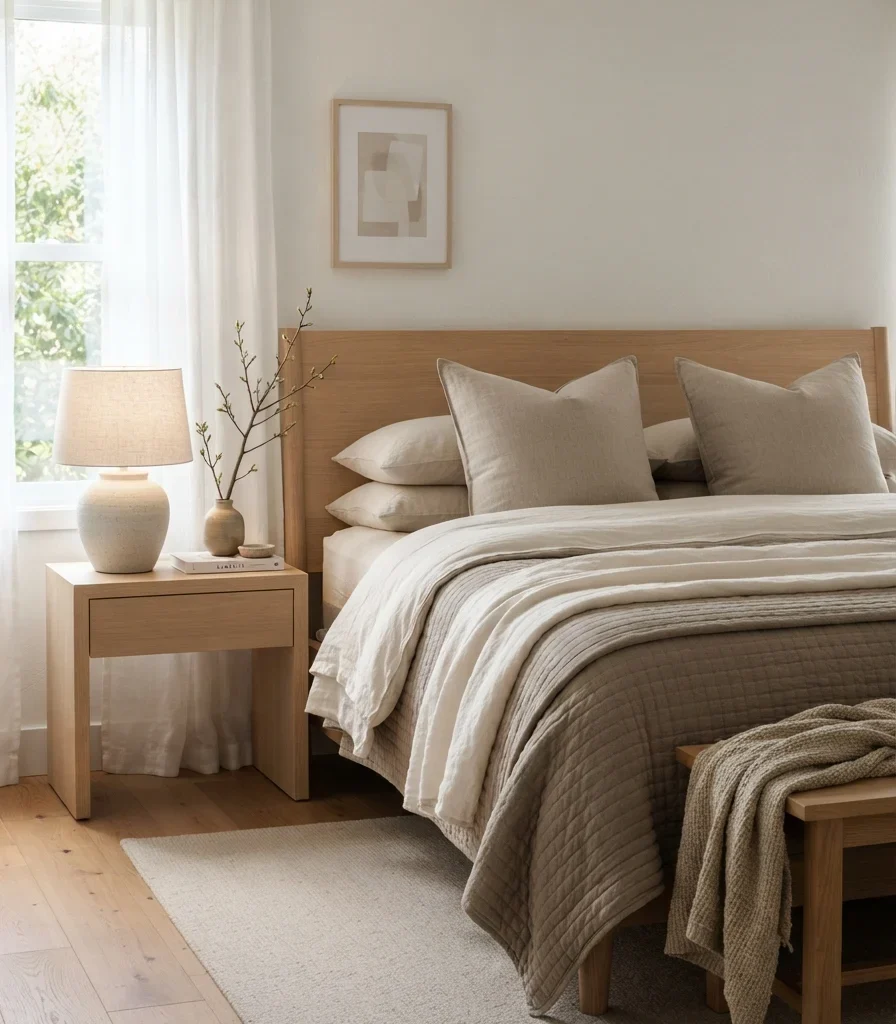
Shop the Look

Product
Distressed wood console table
Black iron strap hardware set
Ceramic decorative jug
Wool table runner
Dried branch stem bundle

17. Birch Bark Candles for Ambient Evening Glow

17. Birch Bark Candles for Ambient Evening Glow

Vibe: The mantel feels warm, with birch texture catching the same light the flame gives off.

Why it works: Birch bark-wrapped candles bring an actual forest material into the home’s lighting, extending rustic decor’s outdoor connection into a functional object rather than a purely decorative one. Grouped at varying heights on a mantel, they create the same layered candlelight effect other cozy styles rely on, but with a material detail specific to rustic decor’s woodland references.
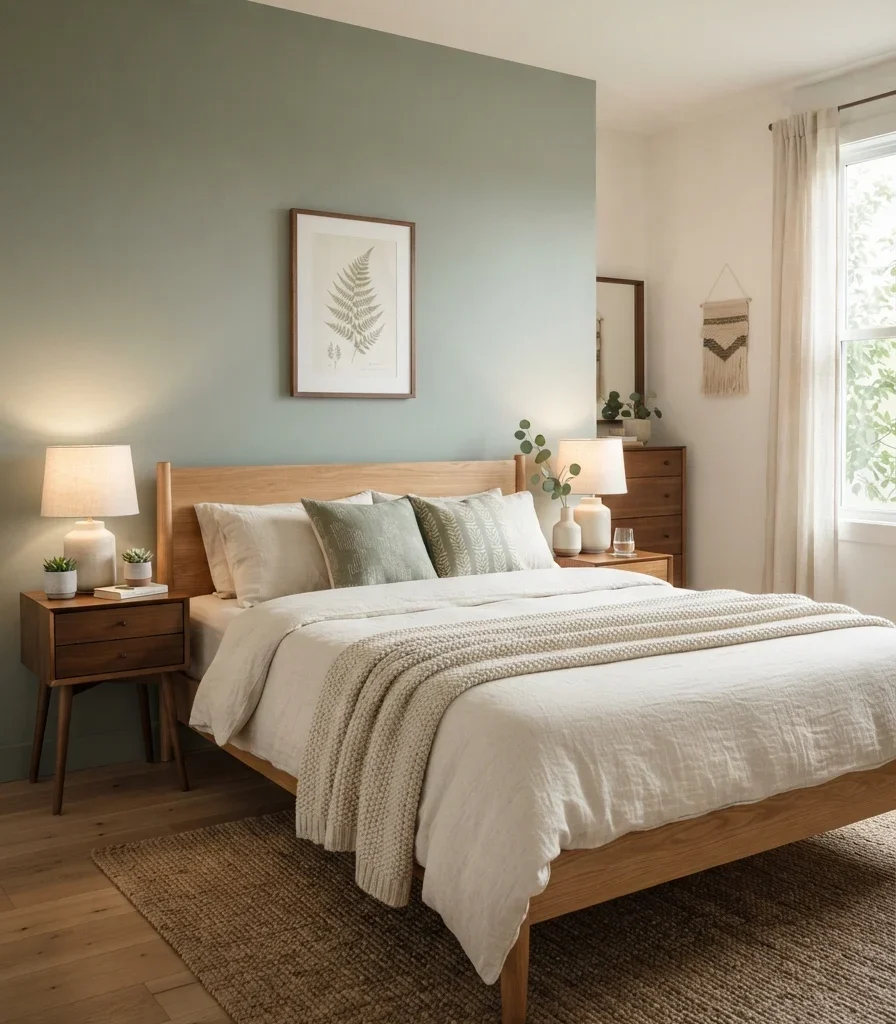
How to get it: Group three to five birch bark candles of varying heights on a mantel or console, choosing unscented candles so the material, not fragrance, carries the styling.
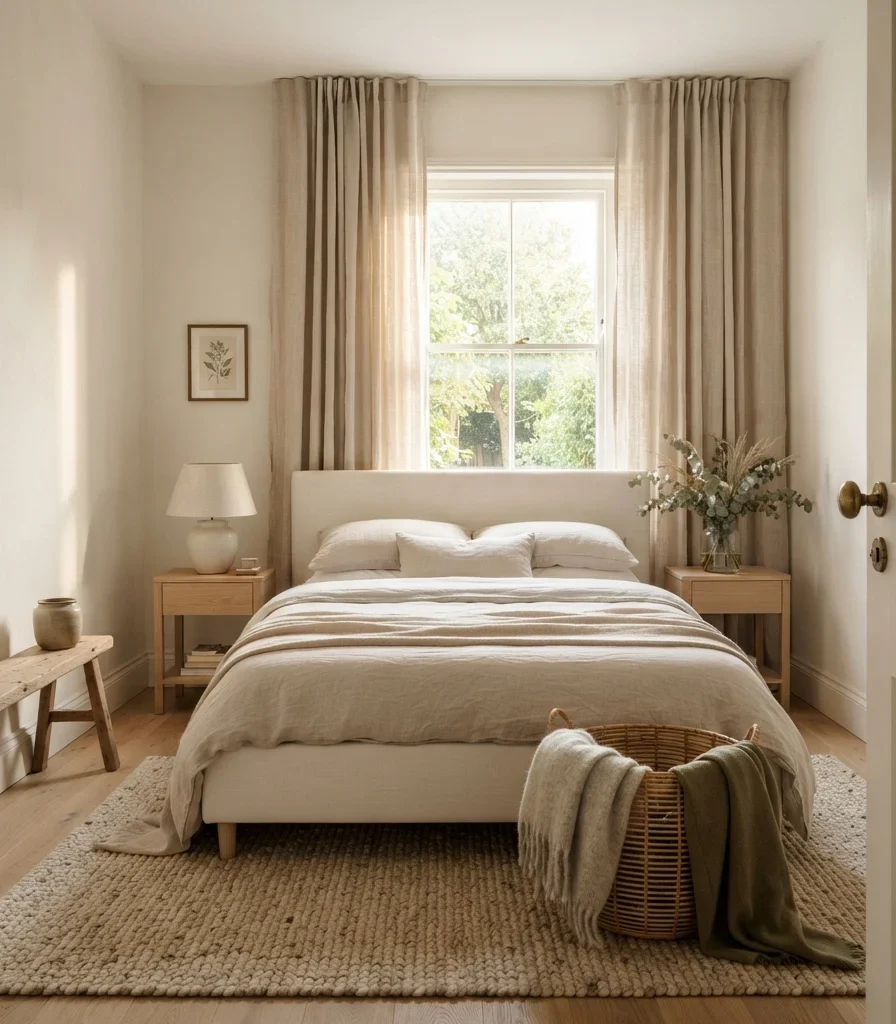
Shop the Look

Product
Birch bark wrapped pillar candle set
Ceramic candle tray
Dried pine sprig bundle
Wood mantel shelf
Matches holder ceramic

18. Vertical Log-Style Wall Paneling to Add Texture Without Bulk

18. Vertical Log-Style Wall Paneling to Add Texture Without Bulk

Vibe: The small room feels textured without feeling closed in, one wall carrying the rustic weight the rest of the room doesn’t need to.

Why it works: Vertical log-style paneling on a single wall delivers the rounded, timbered texture rustic decor depends on without requiring a full log-cabin build-out, a small-space adaptation that concentrates the style’s heaviest material choice to one contained surface while keeping the rest of the room light enough not to feel cramped.

How to get it: Apply thin-profile log-style wood paneling to one wall only, keeping the ceiling and remaining walls in warm cream, so the vertical grain reads as a deliberate accent rather than a full room commitment.

Shop the Look

Product
Vertical log-style wood wall paneling
Iron wall sconce small
Wool throw blanket
Warm cream interior wall paint
Wood floating shelf small

How to Start Your Rustic Home Transformation

Start with one hero material, not paint. A live-edge coffee table or a single reclaimed barnwood wall is the piece that establishes the home’s material weight and tone, because every other wood, stone, and leather choice afterward gets selected to sit correctly against it.

The most common mistake is mixing too many different wood species and finishes in one room  a honey oak table beside a grey-washed console beside a dark walnut shelf. This breaks the material honesty rustic decor depends on; fix it by choosing one dominant wood tone and limiting other wood pieces to complementary, not competing, finishes.

Three items under $50 that create immediate impact: a birch bark candle set for the mantel, a plaid wool throw in rust and charcoal, and a set of black iron strap pulls for an existing console.

A full rustic home transformation with new beams, stone, and furniture realistically takes 3–6 months and costs $15,000–$40,000. A weekend refresh using textiles, lighting, and one accent wall costs $200–$600 and shifts the atmosphere immediately, before any structural work begins.

Frequently Asked Questions About Rustic Home Decor

What’s the difference between rustic and farmhouse home decor?

Rustic decor leans on heavier, rougher materials, such as exposed timber beams, fieldstone, and cognac leather, while farmhouse favors lighter shiplap, whitewashed wood, and linen. A rustic living room typically reads darker and more lodge-like; a farmhouse living room reads brighter and more cottage-like, even though both share a preference for natural materials over synthetic ones.

What color palette works best for rustic home decor?

Warm charcoal, cognac, and deep forest green form the base accent palette, balanced against warm cream walls. Benjamin Moore’s Wrought Iron 2124-10 and Farrow & Ball’s Studio Green No. 93 are common reference points. Avoid cool, blue-based greys, which clash with the warm wood and leather tones central to the style.

How much does a rustic home decor makeover cost?

A budget refresh using textiles and lighting typically runs $200–$700. A mid-range update adding a live-edge table and leather seating costs $4,000–$10,000. A full transformation, including exposed beams, a stone fireplace, and reclaimed wood walls, can reach $25,000–$45,000, depending on square footage and how much material is sourced from reclaimed versus new.

Does rustic decor work with a modern or industrial home?

Yes, rustic blends naturally with industrial through shared materials like iron and reclaimed wood, often called “rustic industrial.” It pairs less easily with strict modern minimalism, where rustic’s heavy texture and warm color palette conflict with modern design’s cooler tones and cleaner lines; if combining the two, keep the modern elements to the furniture silhouette only.

What’s the most important element in rustic home decor?

Material weight and honesty are the most important elements, more than any single color choice, whether the wood, stone, and leather in a room show genuine age and texture, which separates authentic rustic decor from a themed reproduction. A room with the right color palette but uniform, factory-distressed materials will still feel staged rather than lived-in.

Ready to Create Your Dream Rustic Home?

These 18 ideas move through heavy timber, warm color, layered candlelight, and small-space texture tricks, showing that rustic home decor comes together through material choices that carry real weight and history rather than a single decorated look. Starting with one reclaimed wood wall or a single live-edge table is not a lesser version of the transformation; it’s exactly the kind of foundational material choice this style rewards. Today, group three birch bark candles on your mantel and light them once evening sets in. Done well, the home will start to feel grounded in a way that has nothing to do with square footage, warmth settling into every room the fire touches. Save the ideas that matched your own materials and your own walls that fieldstone surrounds, that cognac leather chair, because rustic home decor rewards the space built slowly, one honest material at a time.

Eco Friendly Bamboo Home Decor: 9 Stunning Ways to Style Every Room

Bamboo grows up to three feet in a single day, making it one of the most renewable materials on the planet. That rapid regrowth means your decor choices actually matter for the environment—without sacrificing style.
From sculptural light fixtures to woven storage baskets, eco friendly bamboo home decor brings warmth, texture, and a clear conscience to any space.

Why Bamboo Beats Other Sustainable Materials

Bamboo isn’t just fast-growing—it’s remarkably strong. It has a higher tensile strength than steel, which means bamboo furniture and accents last for decades.
Unlike hardwoods that take 30 to 50 years to mature, bamboo reaches harvest readiness in three to five years. It also absorbs more carbon dioxide and releases more oxygen than equivalent tree stands.
The material requires no pesticides or fertilizers to thrive. That translates to cleaner soil, cleaner water, and a cleaner product in your home.

The Best Rooms for Bamboo Accents

Living rooms benefit most from larger bamboo statement pieces. Think a 36-inch round bamboo mirror above your sofa or a bent bamboo accent chair in warm honey tones.
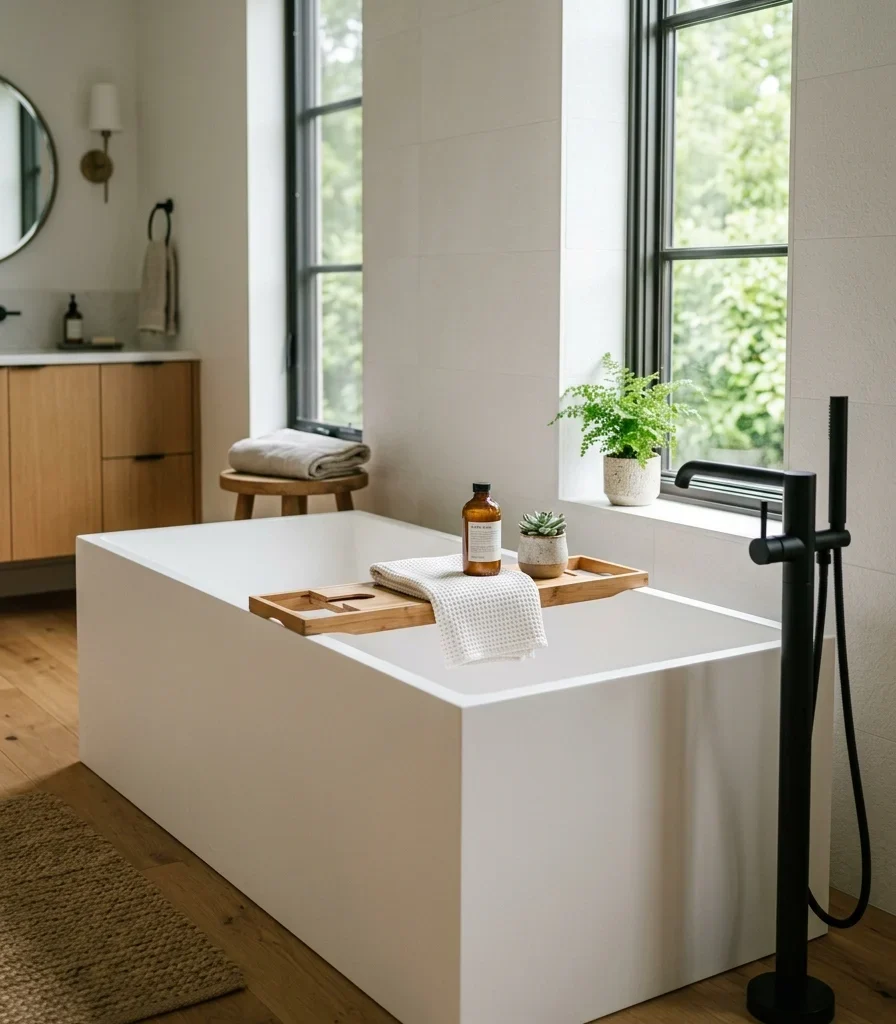
Bathrooms showcase bamboo’s natural water resistance. Bamboo bath trays, soap dispensers, and countertop organizers handle humidity better than most woods.
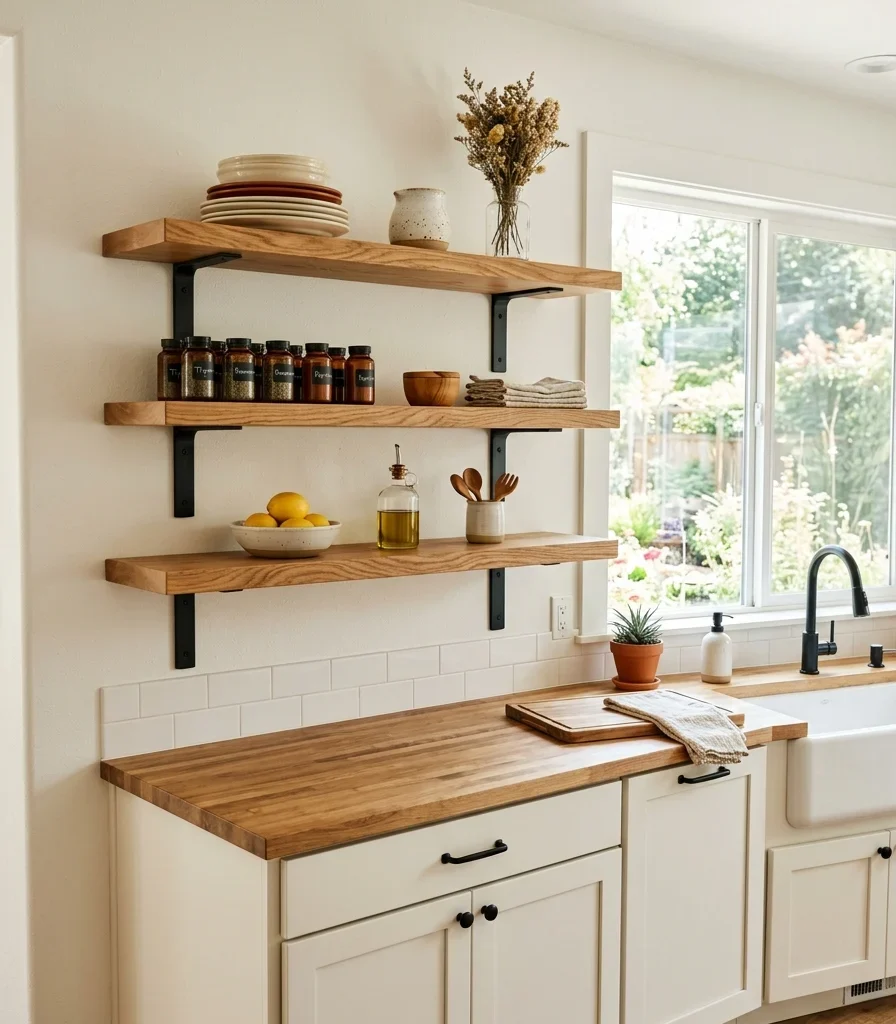
Kitchens come alive with bamboo cutting boards, utensil holders, and open shelving. The pale golden color pairs beautifully with white subway tile and matte black hardware.
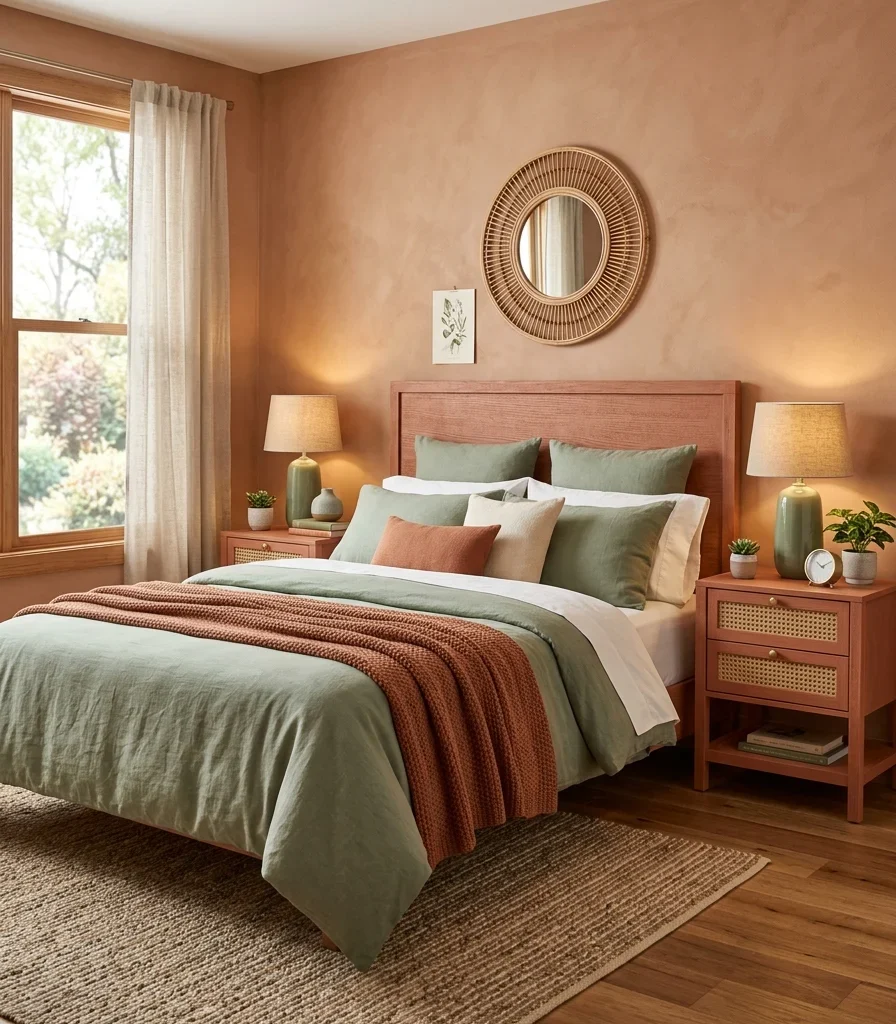
Bedrooms feel calmer with bamboo nightstands or a woven bamboo headboard. The organic texture softens modern spaces without adding visual clutter.

Sustainable Bamboo Furniture Worth the Investment

A bamboo bookshelf does double duty as storage and a room divider. Look for models with natural joinery rather than metal brackets—they’re more authentic and often sturdier.
Bamboo coffee tables with hairpin legs bridge mid-century and bohemian styles. The light wood tone keeps small living rooms from feeling heavy.
Dining chairs with bent bamboo frames add instant warmth to a neutral kitchen. Pair four bamboo chairs with a white oak table for a Scandinavian-meets-tropical look.

What to Check Before Buying

Always verify that furniture uses solid bamboo rather than bamboo veneer over particleboard. Solid pieces resist wear and can be refinished years later.
Check for FSC certification or similar sustainability credentials. This ensures the bamboo was harvested responsibly and workers were treated fairly.

Small Bamboo Decor That Makes a Big Impact

You don’t need to overhaul your furniture to embrace sustainable bamboo decor. Smaller accents create the same organic feel.
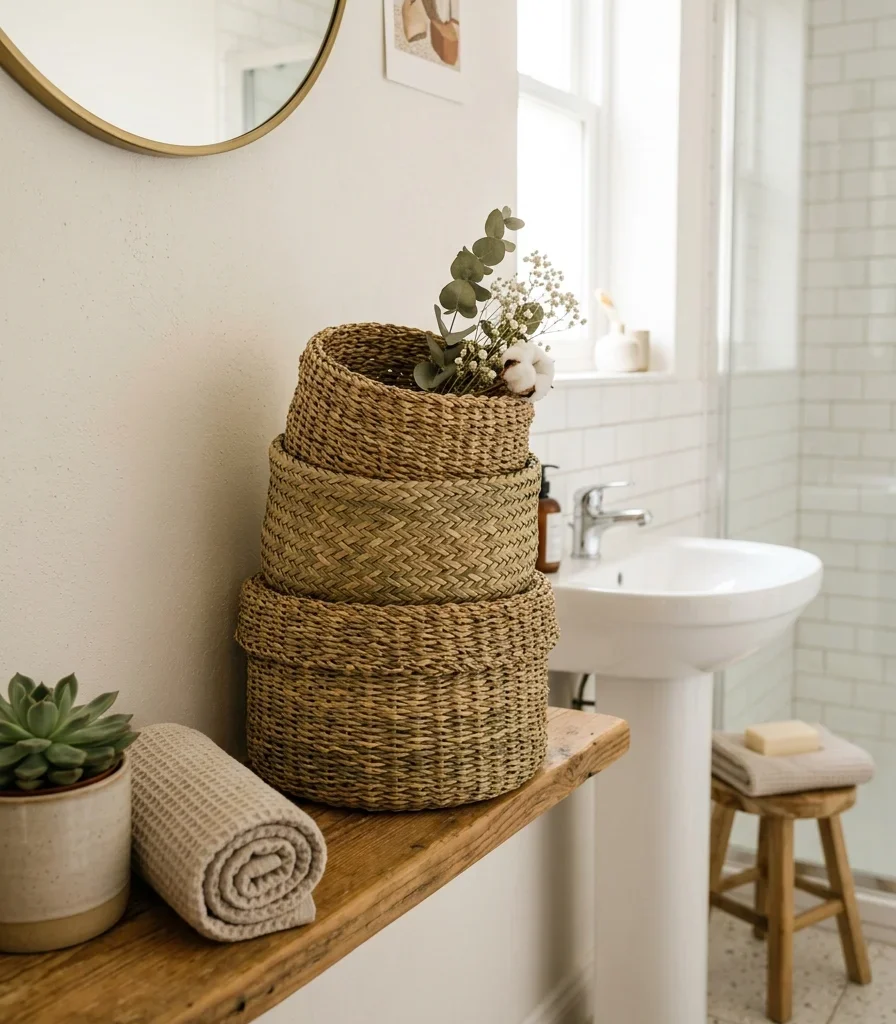
Woven bamboo baskets in varying sizes organize blankets, magazines, or kids’ toys. Stack three graduated sizes beside your sofa for instant texture.
Bamboo picture frames in natural finishes warm up gallery walls. Mix them with white frames for contrast, or go all-bamboo for a cohesive coastal vibe.
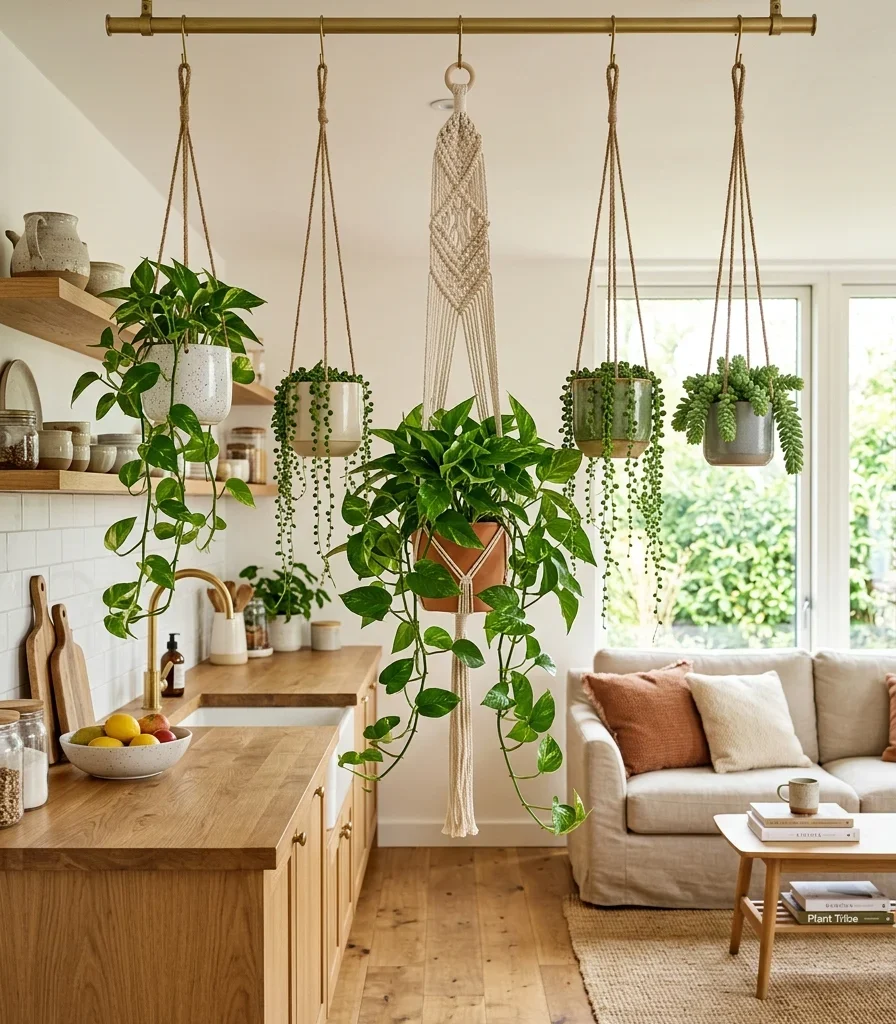
Bamboo plant stands at different heights create dimension in empty corners. A 30-inch stand with a trailing pothos becomes an instant focal point.
Tabletop bamboo trays corral remotes, candles, and small succulents. The 12×8-inch size works perfectly on most coffee tables.

How to Mix Bamboo With Other Materials

Bamboo pairs naturally with linen, jute, and raw cotton. These textures share the same relaxed, earth-forward energy.
Combine bamboo accents with matte ceramics in cream, sage, or terracotta. The contrast between smooth and textured surfaces keeps rooms interesting.
Metal mixing works too—just keep it deliberate. Brushed brass or matte black hardware complements bamboo’s warmth without competing.

Materials to Avoid

High-gloss lacquered pieces clash with bamboo’s natural aesthetic. The shiny surface fights the organic matte finish.
Avoid pairing bamboo with too much gray-toned wood. The undertones compete rather than complement, making spaces feel disjointed.

Eco Friendly Bamboo Lighting Options

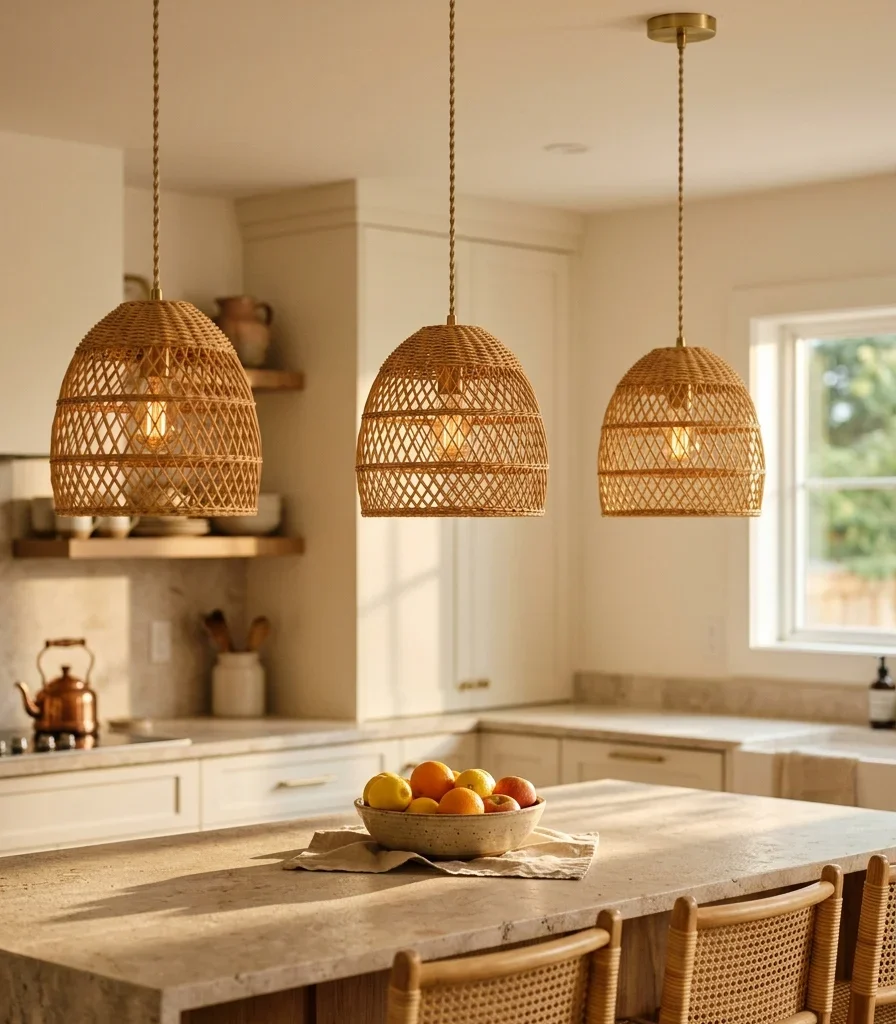
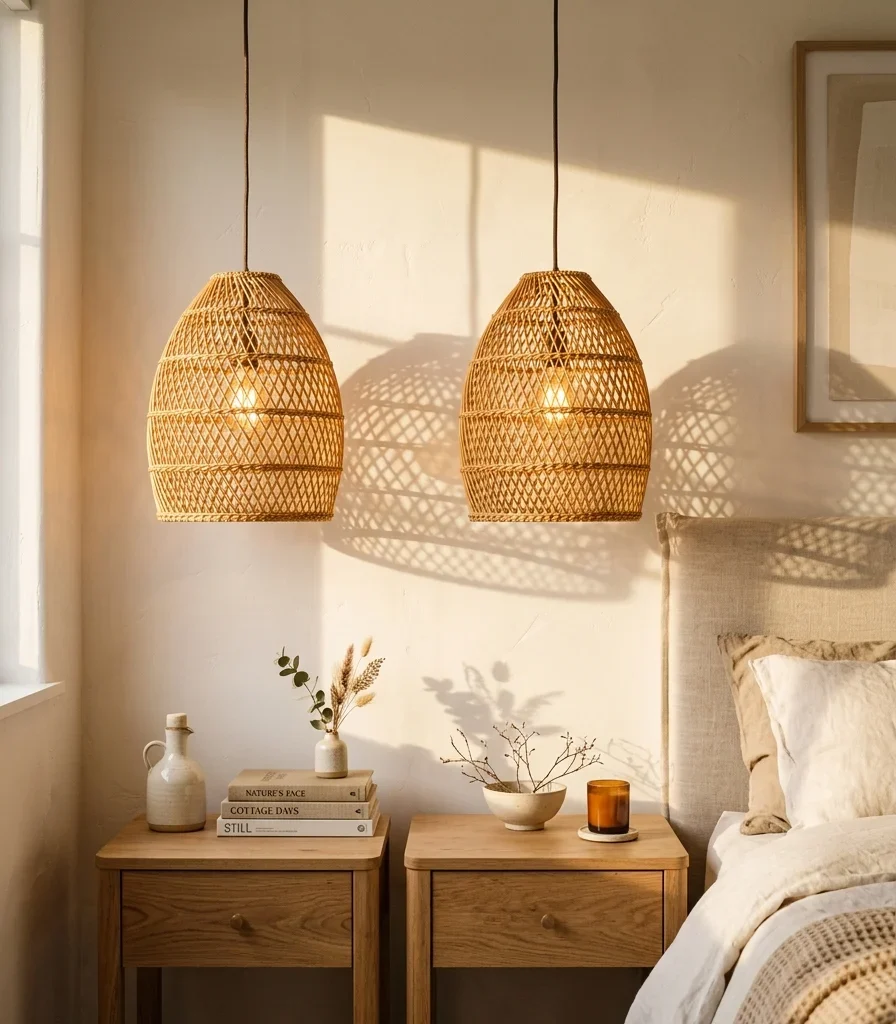
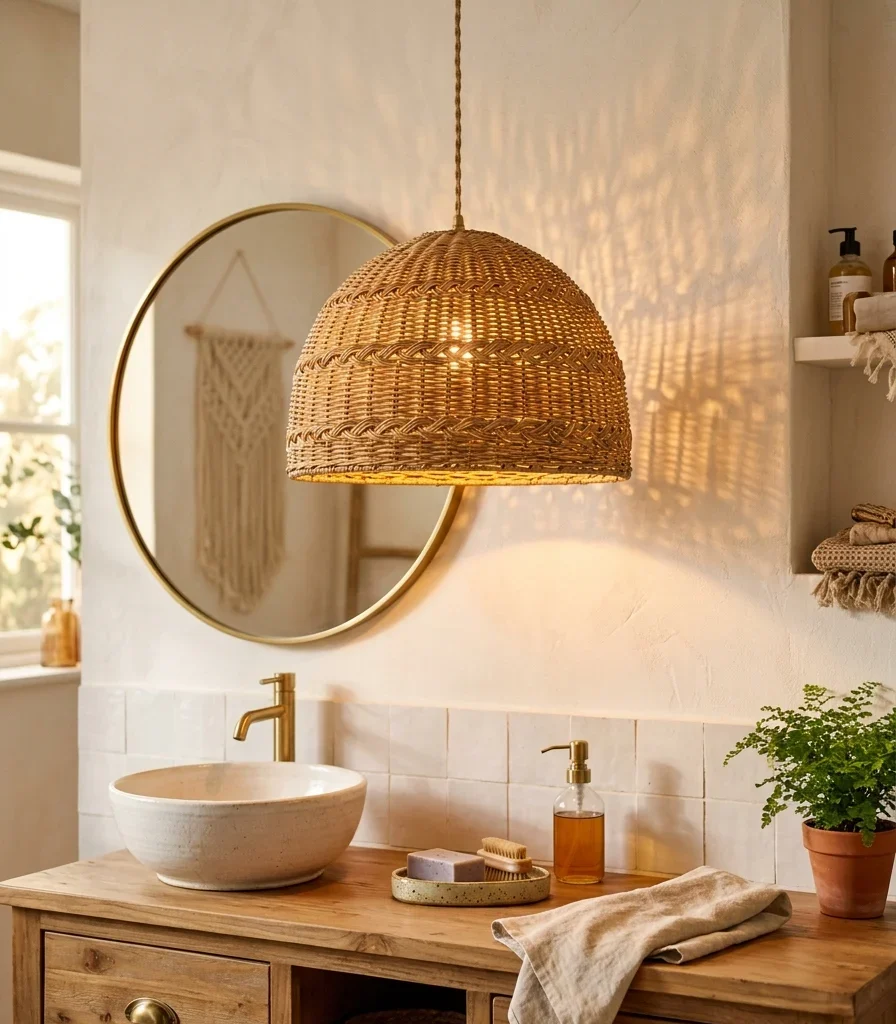
Bamboo pendant lights create drama without heaviness. A 16-inch woven bamboo shade over a dining table casts beautiful shadows at night.
Bamboo table lamps with linen shades soften bedside lighting. The warm glow filters through the natural fibers for a cozy effect.
Floor lamps with bamboo tripod bases anchor reading nooks. Look for designs that use natural rope joinery for added artisan appeal.
Designers often recommend clustering two to three bamboo pendants at varying heights over kitchen islands. This creates visual interest while keeping the look cohesive.

Caring for Your Bamboo Decor

Dust bamboo pieces weekly with a soft, dry cloth. This prevents buildup in the natural grain patterns.
For deeper cleaning, use a damp cloth with mild soap, then dry immediately. Standing water causes bamboo to swell and crack over time.
Keep bamboo away from heating vents and direct sunlight. Both cause drying and fading within months.

Extending the Lifespan

Apply a thin coat of mineral oil every six months to sealed bamboo. This maintains the protective finish and enhances the natural color.
For outdoor bamboo pieces, use a UV-protective sealant annually. This prevents graying and surface degradation from sun exposure.

Where to Find Quality Bamboo Home Goods

Specialty sustainable brands like Bamboozle and Totally Bamboo focus exclusively on eco-friendly bamboo products. Their quality control tends to be more rigorous.
Etsy artisans offer handcrafted bamboo pieces with unique character. Search for “handwoven bamboo decor” to find small-batch makers.
West Elm and Crate & Barrel carry curated bamboo collections that meet mainstream style standards. Their pieces blend seamlessly with existing furniture.
HomeGoods and TJ Maxx occasionally stock bamboo finds at lower price points. The selection varies, so check back often.

The Bottom Line on Decorating With Bamboo

Choosing bamboo home accents means your space looks beautiful and your environmental impact shrinks. Every woven basket, sculptural lamp, and natural wood frame represents a material that regenerates rather than depletes.
Start with one piece that speaks to you—maybe a bamboo tray for your entryway or a pendant light for your kitchen. Layer in more natural bamboo elements over time, and watch your rooms develop that warm, grounded character you’re after.
Sustainable style doesn’t require a complete makeover. One thoughtful bamboo piece is enough to begin.


Is bamboo decor durable enough for everyday use?

Yes, bamboo is extremely durable thanks to its dense fiber structure. Quality bamboo furniture often outlasts traditional hardwood pieces when properly maintained, making it ideal for high-traffic areas like living rooms and kitchens.

Does bamboo decor work with modern minimalist interiors?

Absolutely—bamboo’s clean lines and neutral tones complement minimalist spaces beautifully. Choose pieces with sleek silhouettes and avoid overly ornate weaving patterns to maintain that streamlined aesthetic.

How can I tell if bamboo products are truly eco friendly?

Look for FSC certification, Rainforest Alliance seals, or transparency about sourcing on the brand’s website. Avoid products using formaldehyde-based adhesives, and choose items made from solid bamboo rather than composite materials.

Will bamboo decor clash with my existing wood furniture?

Bamboo’s golden undertones mix well with most warm-toned woods like oak, walnut, and teak. The key is maintaining consistent undertones—avoid pairing bamboo with gray-washed or heavily cool-toned pieces.

Can I use bamboo decor in humid spaces like bathrooms?

Bamboo naturally resists moisture better than most woods, making it excellent for bathrooms. Just ensure proper ventilation and wipe down pieces after heavy steam exposure to maximize their lifespan.


Meta Description: Discover eco friendly bamboo home decor ideas for every room. Learn styling tips, care advice, and where to find sustainable bamboo furniture and accents.

2. Warm White Walls with Greige Trim

15 Modern Farmhouse Living Room Ideas

Modern farmhouse is the pairing of rustic, weathered textures with clean, minimal lines rough wood next to crisp white walls, iron hardware against soft linen. This article gives you 15 modern farmhouse living room ideas, from paint colors to lighting to layout tricks, that you can actually use.

The feeling is unmistakable: sun through sheer curtains landing on a worn wood floor, the quiet weight of a stone fireplace, linen that’s soft from washing, not from trying. It’s a room that looks lived-in on day one and feels calmer every year after. Modern farmhouse doesn’t shout it settles. Here are 15 ideas worth saving and stealing.

Why Modern Farmhouse Works So Well

What is it? Modern farmhouse blends two opposing traditions: the utilitarian, hand-built aesthetic of 19th-century American and European farmhouses, and the restrained, uncluttered lines of contemporary minimalism. It borrows shiplap and barn-door hardware from rural vernacular architecture, then strips away the ornate florals and heavy antiques that defined traditional country decor. The result sits between rustic and refined — worn but never messy, simple but never cold.

What are its core materials and colors? The palette leans on warm white, greige, soft charcoal, and terracotta blush, with black or bronze as the grounding accent. Materials are tactile and imperfect: whitewashed shiplap, unfinished white oak, reclaimed barnwood, linen upholstery, wrought iron, and woven jute. Nothing is glossy. Everything has a slight texture your hand wants to touch.

Why is it trending now? Search interest in “modern farmhouse” has stayed high on Pinterest for nearly a decade, but the current wave is driven by post-pandemic nesting — people want homes that feel handmade and durable rather than showroom-perfect. The sustainability movement has also pushed reclaimed wood and natural fiber back into favor over synthetic, mass-produced finishes.

Can small spaces achieve this style? Yes, with one condition: restraint. Small farmhouse rooms fail when every surface gets a “rustic touch.” Prioritize one hero material (a wood beam, a shiplap wall) and keep everything else quiet and pale so the room doesn’t feel cluttered.

ElementTrait 1Trait 2
PhilosophyRustic texture, minimal clutterFunction before ornamentation
MaterialsWhitewashed shiplap, white oakWrought iron, linen, jute
Color paletteWarm white, greigeCharcoal, terracotta blush

15 Modern Farmhouse Living Room Ideas

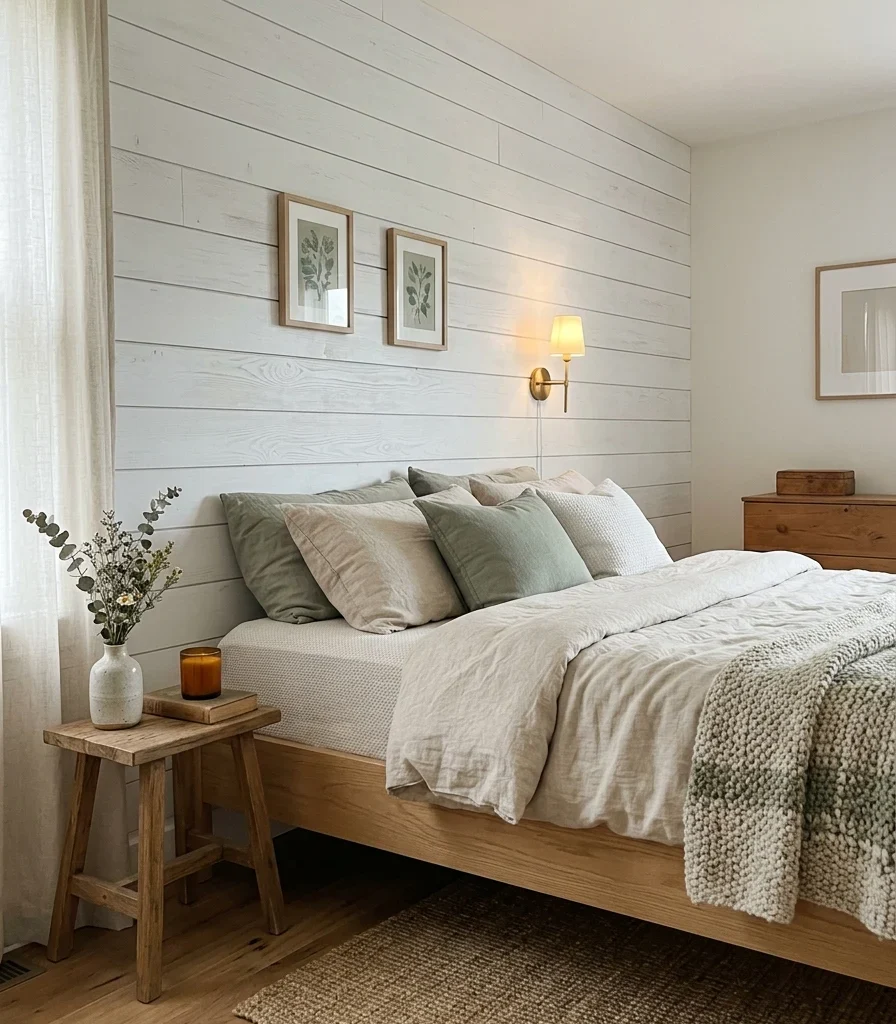
1. Whitewashed Shiplap Accent Wall

1. Whitewashed Shiplap Accent Wall

Vibe: The wall feels raw, like reclaimed barn siding softened by paint.

Why it works: Shiplap creates horizontal texture and shadow lines that add depth to an otherwise flat wall — a classic technique for adding visual interest without adding color. The whitewash keeps the grain visible, which is what separates an authentic farmhouse from a flat white paint job.

How to get it: Install pine shiplap boards, then apply a diluted white paint-to-water wash (roughly 1:1 ratio) with a rag, wiping with the grain so wood texture stays visible underneath.

💡 Quick Win: Peel-and-stick shiplap wallpaper panels achieve 80% of the look in an afternoon, no nail gun required.

Shop the Look

Product
Whitewashed pine shiplap wall panel kit
Ivory linen 3-seat slipcovered sofa
Matte black round wall mirror 30 inch
Cream ceramic vase ribbed textured
Chunky knit wool throw blanket, oatmeal

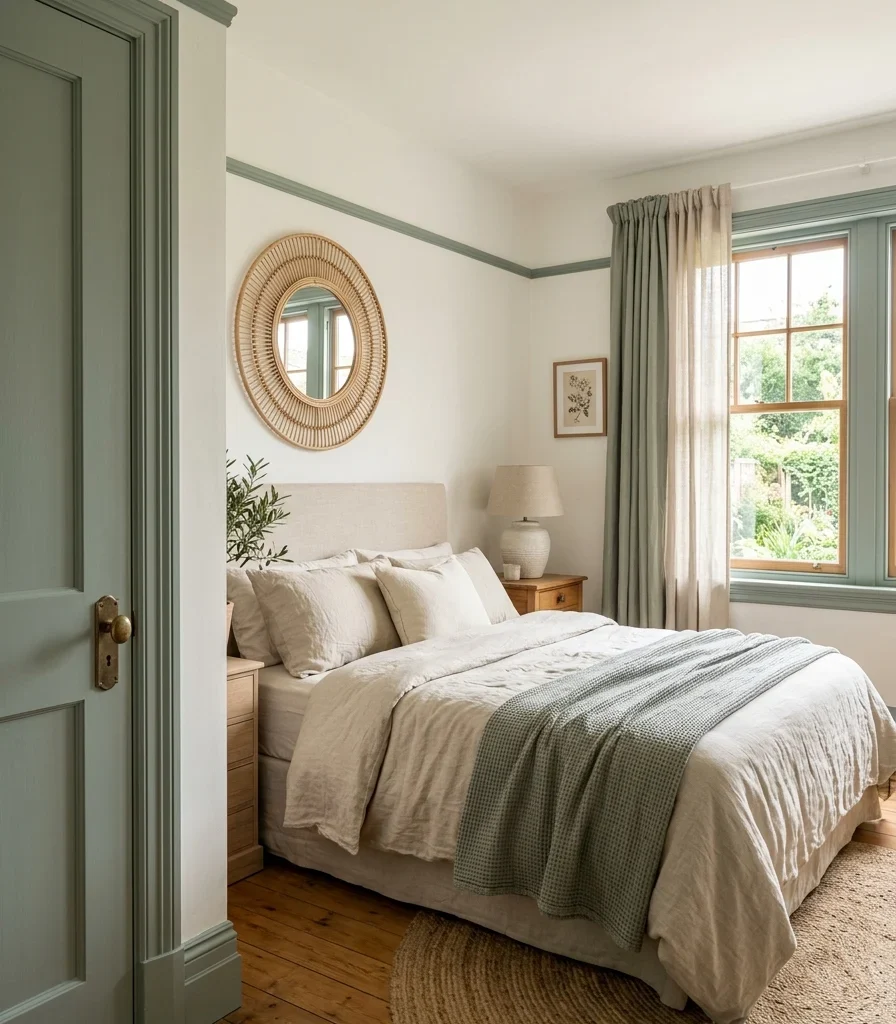
2. Warm White Walls with Greige Trim

2. Warm White Walls with Greige Trim

Vibe: The room feels luminous, like a page that hasn’t been written on yet.

Why it works: Pairing a warm white wall with a slightly darker greige trim uses tonal contrast rather than color contrast, which reads as sophisticated instead of stark. This is the same low-contrast layering technique used in Scandinavian interiors, adapted with warmer undertones.

How to get it: Paint walls in a warm white with a yellow-beige undertone, then paint trim, baseboards, and window casings two shades darker in a warm greige to define the architecture without introducing a new hue.

Shop the Look

Product
Woven seagrass storage basket set
Natural linen curtain panels 84 inch
Oak wood picture ledge shelf
Neutral linen-bound decorative books set
Cream boucle accent pillow cover 20×20

3. Oversized Iron Chandelier

3. Oversized Iron Chandelier

Vibe: The room feels grounded, anchored by one dark, weighty shape overhead.

Why it works: A single oversized fixture creates visual weight at ceiling height, balancing heavier furniture below it — a proportion rule where the light fixture should span roughly one-third to one-half the width of the seating area it hangs over. Wrought iron adds the rustic material note without darkening the walls.

How to get it: Choose a ring or candelabra-style iron chandelier with exposed Edison bulbs, and hang it 30–34 inches above the coffee table for proper scale.

💡 Quick Win: Swap only the bulbs in your existing fixture to warm 2700K Edison-style bulbs for an instant mood shift before buying new hardware.

Shop the Look

Product
Black wrought iron ring chandelier
Edison filament bulbs warm 2700K set
Sheepskin throw rug ivory
Brass taper candlestick holders set
Honey oak round coffee table

4. Layered Vintage-Inspired Textiles

4. Layered Vintage-Inspired Textiles

Vibe: The sofa feels welcoming, the kind of texture layering that invites you to sit down without asking.

Why it works: Mixing pillow sizes (one 22-inch, one 18-inch, one lumbar) and fabrics within one tonal family creates depth without visual noise — a principle called tonal layering, where texture does the work color usually does. A folded quilt across the arm breaks the sofa’s straight lines.

How to get it: Choose three pillow covers in linen, waffle-weave cotton, and a small block-print pattern, all within warm white to terracotta tones, and drape a vintage-style quilt diagonally across one arm.

Shop the Look

Product
Linen throw pillow cover set of 3
Waffle weave cotton lumbar pillow cover
Block print quilted throw blanket
Dried wheat stem bundle decor
Ceramic stoneware mug with earthy glaze

5. Slipcovered Sectional with Turned Legs

5. Slipcovered Sectional with Turned Legs

Vibe: The seating feels relaxed, like it was made to be sat on, not photographed.

Why it works: Slipcovered upholstery softens what could otherwise be a boxy, oversized sectional silhouette, and exposed turned wood legs add a furniture-making detail that keeps the piece from reading as purely modern. Visible legs also lighten a large sofa’s visual weight by letting light pass underneath.
How to get it: Look for a sectional with a relaxed linen or cotton-blend slipcover and turned or tapered oak legs rather than upholstered skirting, which hides the floor and makes the room feel heavier.

💡 Quick Win: If reupholstering isn’t in the budget, a slipcover kit over an existing sectional achieves the same silhouette for a fraction of the cost.

Shop the Look

Product
Linen slipcover sectional sofa turned legs
Woven jute pouf ottoman round
Honey oak coffee table trestle base
Ceramic decorative bowl, neutral glaze
Neutral linen-bound coffee table books set

6. Charcoal Black Accent Wall

6. Charcoal Black Accent Wall

Vibe: The wall feels intimate, pulling the eye inward like a held breath.

Why it works: A single dark wall behind a focal point uses contrast in reverse — instead of lighting a small room, it deepens one, making the fireplace or built-in the undeniable visual anchor. Matte black also absorbs light rather than reflecting it, which keeps the mood warm instead of stark.

How to get it: Paint only the fireplace or built-in wall in a warm-toned matte charcoal black, and keep the surrounding walls in warm white so the dark wall reads as intentional, not overwhelming.

Shop the Look

Product
Brass wall sconce candle holder set
Linen upholstered armchair natural
Dried pampas grass stems are tall
Wood mantel shelf unfinished oak
Black iron fireplace tool set

7. Reclaimed Wood Beam Ceiling

7. Reclaimed Wood Beam Ceiling

Vibe: Looking up feels grounding, like the room has a visible skeleton.

Why it works: Exposed beams add architectural texture at a plane most rooms leave untouched, drawing the eye upward and making ceilings feel taller by contrast against the white plane around them. Reclaimed wood’s saw marks and knots read as authentic in a way new lumber can’t replicate.

How to get it: Install faux or reclaimed wood beam wraps along the ceiling’s structural joists, spaced evenly, and leave the ceiling itself painted white so the beams stay the clear focal point.

💡 Quick Win: A single beam centered over the seating area gives the effect without the cost of wrapping the whole ceiling.

Shop the Look

Product
Reclaimed wood faux ceiling beam wrap
Black iron pendant light fixture
Ivory linen 3-seat sofa
White matte ceiling paint gallon
Woven wood tray decorative

8. Open-Concept Zoning with Area Rugs

8. Open-Concept Zoning with Area Rugs

Vibe: The room feels open but not aimless, each zone quietly defined.

Why it works: In open floor plans, a large-format rug acts as a floor-level boundary, telling the eye where the living zone starts and stops without walls — a layout principle called anchoring, where furniture legs sit at least partially on the rug to visually “claim” the space.

How to get it: Size the rug so all front legs of the sofa and chairs sit on it, extending 12–18 inches beyond the furniture on each side, and choose a natural jute or wool weave to keep the zone visually lighter than a solid dark rug would.

Shop the Look

Product
Taupe jute area rug 8×10
Ivory linen sofa track arm
Honey oak round coffee table
Woven seagrass storage basket
Natural fiber runner rug hallway

9. Gallery Wall of Botanical Prints

9. Gallery Wall of Botanical Prints

Vibe: The wall feels curated, as it grew there slowly over the years.

Why it works: An asymmetric gallery wall uses varied frame sizes and generous negative space between pieces to avoid looking cluttered, following the rule of keeping 2–3 inches of breathing room between frames so the eye can rest between images. Matching frame color (all black) unifies mismatched art subjects.

How to get it: Use uniform black wood frames in three sizes, arrange botanical or line-art prints with a shared cream matting, and lay the arrangement out on the floor first before hanging.

💡 Quick Win: Free printable botanical line art paired with $10 frames from a craft store achieves the look for under $60.

Shop the Look

Product
Black wood picture frame set, assorted sizes
Botanical line art print set
Wood console table narrow
Ceramic bud vase matte finish
Dried eucalyptus stem bundle

10. Terracotta and Cream Palette

10. Terracotta and Cream Palette

Vibe: The room feels sun-warmed, like clay left out in late afternoon light.

Why it works: Terracotta functions as a warm neutral rather than a bold accent, which is why it layers so easily with cream and oak without competing for attention — the earthy undertone in both keeps the palette cohesive rather than contrasting. This is a shift from the cooler, greige-heavy farmhouse palettes of a few years ago.

How to get it: Introduce terracotta through two or three items — a ceramic lamp base, one accent pillow, a woven wall hanging — rather than paint, so the warmth reads as intentional accent, not overwhelming color.

Shop the Look

Product
Terracotta ceramic table lamp base
Cream boucle throw pillow cover
Woven macrame wall hanging natural
Honey oak side table round
Ivory linen curtain panels

11. Layered Task and Ambient Lighting

11. Layered Task and Ambient Lighting

Vibe: The room feels hushed, lit in pools instead of one flat wash.

Why it works: Relying on a single overhead fixture flattens a room’s depth; layering ambient, task, and accent light at three different heights creates pools of light and shadow that make the space feel larger and more dimensional after dark. This is a lighting design principle borrowed directly from hospitality interiors.

How to get it: Add a brushed brass floor lamp beside the reading chair, a table lamp on the console, and dimmable overhead lighting set to warm 2700K so no single source does all the work.

💡 Quick Win: A $10 plug-in dimmer switch on an existing lamp gives you controllable ambient light without rewiring anything.

Shop the Look

Product
Brushed brass floor lamp arc
Ceramic table lamp, warm white shade
Plug-in lamp dimmer switch
Linen upholstered armchair
Chunky wool throw blanket cream

12. Live-Edge Coffee Table as Anchor

12. Live-Edge Coffee Table as Anchor

Vibe: The table feels raw, a slice of tree still visibly a tree.

Why it works: A live-edge slab introduces organic, irregular lines into a room otherwise built on straight furniture edges, creating contrast that keeps the space from feeling too uniform. Pairing it with thin black iron hairpin legs keeps the piece visually light despite its solid top.

How to get it: Choose a single-slab live-edge table in walnut or oak with exposed grain and knots left untreated, and set it on hairpin or trestle legs rather than a solid wood base to keep the silhouette light.

Shop the Look

Product
Live-edge wood coffee table hairpin legs
Ceramic decorative tray oval
Stacked hardcover coffee table books neutral
Small potted plant faux olive
Woven coaster set, natural fiber

13. Woven Rattan and Jute Textures

13. Woven Rattan and Jute Textures

Vibe: The corner feels light, with a woven texture doing what a bold pattern usually would.

Why it works: Rattan and jute add texture-based visual interest without introducing new color, which keeps a neutral farmhouse palette from feeling flat or sterile. The open weave of rattan also reads as visually lighter than solid wood, useful for balancing heavier upholstered pieces nearby.

How to get it: Add one rattan-framed accent chair and one jute-wrapped mirror or lampshade in the same seating area so the woven texture repeats without becoming the room’s only focus.

💡 Quick Win: A jute-wrapped mirror frame kit can be added to an existing plain mirror for under $30.

Shop the Look

Product
Rattan woven accent chair natural
Jute-wrapped round wall mirror
Linen seat cushion cover natural
Wood side table round small
Woven rattan pendant lampshade

14. Multi-Functional Console Behind Sofa

14. Multi-Functional Console Behind Sofa

Vibe: The space feels efficient, every inch doing double duty without feeling tight.

Why it works: In small living rooms, a narrow console behind the sofa creates a defined back edge to the seating zone while adding hidden storage in woven baskets underneath — solving both a layout and a storage problem with one piece. A mirror above it also bounces natural light deeper into the room.

How to get it: Choose a console no deeper than 14 inches so it doesn’t crowd walking space, and add two woven baskets underneath for blankets or media instead of an open shelf that collects visual clutter.

Shop the Look

Product
Narrow wood console table 14 inch depth
Woven storage basket set of two
Round wall mirror with a black frame
Ceramic table lamp small
Ceramic catchall bowl entry

15. Sage Green Accent Pillows and Throws

15. Sage Green Accent Pillows and Throws

Vibe: The sofa feels still, a quiet green settling into a warm neutral room.

Why it works: Muted sage sits close enough to the room’s neutral palette in tone and saturation that it reads as an extension of the natural materials, not a competing color — unlike a saturated green, which would pull focus away from the wood and linen. It also echoes the botanicals typically styled nearby.

How to get it: Add sage through two pillow covers and one folded throw only, choosing a matte, slightly greyed sage rather than a bright kelly green to keep it in the same muted family as the rest of the room.

💡 Quick Win: A single sage green throw draped over one armrest updates a neutral sofa seasonally without buying new pillows.

Shop the Look

Product
Sage green linen throw pillow cover
Sage green wool throw blanket
Small potted plant faux fern
Wood serving tray round
Ceramic stoneware mug sage glaze

How to Start Your Modern Farmhouse Transformation

Start with paint, not furniture. A single gallon of warm white on your main wall — something with a slight yellow-beige undertone rather than a stark cool white — anchors every other decision, because your furniture, trim, and accent colors are chosen to sit against that base tone.

The most common beginner mistake is mixing cool-toned “farmhouse grey” with warm wood furniture. Cool undertones clash against honey oak and reclaimed wood, making the whole room feel visually off, even when every individual piece is correct. Fix it by testing paint swatches next to your actual wood tones before buying.

Three items under $50 that create immediate impact: a single stem of dried pampas grass in a matte black ceramic vase, a set of black iron curtain rod finials, and a chunky knit throw blanket in oatmeal wool blend draped over one armrest.

A starter refresh — paint, textiles, and lighting swaps — is realistically a weekend project costing $150–$400. A full room transformation with new furniture, shiplap, and beams takes 4–8 weeks and typically runs $2,500–$6,000, depending on whether furniture is reupholstered or replaced.

Frequently Asked Questions About Modern Farmhouse Living Rooms

What’s the difference between modern farmhouse and traditional farmhouse style?

Traditional farmhouse leans into heavier antiques, florals, and ornate details, while modern farmhouse strips decor down to clean lines and minimal accessories. Modern farmhouse also favors matte black hardware and iron over the brass and lace typical of traditional country decor. Think fewer knick-knacks, more negative space.

What color should I paint a modern farmhouse living room?

Warm white with a yellow-beige undertone, such as a shade in the Sherwin-Williams Alabaster or Benjamin Moore White Dove family, is the most common base wall color. Trim is typically painted two shades darker in greige for subtle contrast. Avoid cool, blue-based whites, which clash with warm wood tones.

How much does it cost to get a modern farmhouse living room?

A budget refresh using paint, textiles, and a few new accessories can run $200–$500. A mid-range update adding a slipcovered sofa and lighting typically costs $1,500–$3,000. A full renovation with shiplap, beams, and new furniture can reach $5,000–$10,000, depending on labor costs.

Does modern farmhouse work with other styles like boho or industrial?

Yes — modern farmhouse blends easily with boho through woven jute and rattan textures, and with industrial through black iron fixtures and exposed wood. The key is keeping one dominant material language (wood and linen) so the mix doesn’t feel like two unrelated rooms fighting for attention.

What’s the most important element in a modern farmhouse living room?

Texture layering is the single most important element — the mix of matte wood, woven fiber, and soft linen is what makes the style read as authentic rather than a paint color alone. A room with the “right” white walls but no textural variety will still look flat and generic.

Ready to Create Your Dream Modern Farmhouse Living Room?

These 15 ideas cover the full range from paint undertones and accent colors to lighting layers, furniture profiles, and small-space console tricks. You don’t need to do all of it at once, and starting with one wall or one lamp is genuinely the right way to begin. Tonight, pick up a sample pot of warm white paint and test it against your existing wood furniture before committing to a full gallon. Once the layers come together, the room will feel less like a showroom and more like a quiet place you actually want to sit still in. Save the ideas that pulled at you that whitewashed wall, that terracotta lamp because modern farmhouses reward the slow build, not the one-day overhaul.