
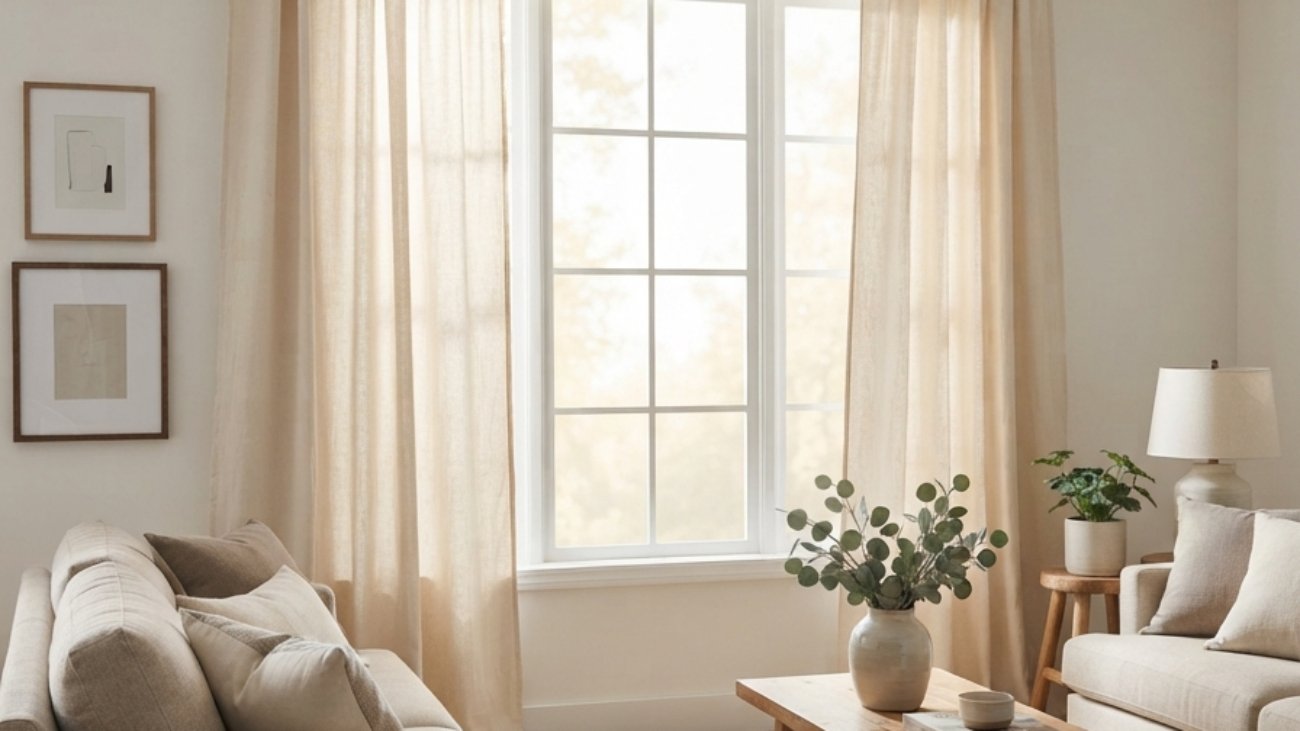
No-sew drop cloth curtains are budget-friendly window treatments made from cotton canvas painter’s cloths, using finished edges and curtain clips instead of a sewing machine. These 13 How to Make No Sew Drop Cloth Curtains ideas show different ways to measure, soften, hang, style, and adapt canvas drop cloths for farmhouse, cottage, rustic, and relaxed modern interiors.
The result is wonderfully tactile: sunlight filters across a slightly irregular canvas weave, heavy fabric settles into relaxed folds, and warm ivory tones make a room feel settled without adding another busy pattern. There is something especially satisfying about turning an ordinary hardware-store material into a finished window treatment that looks intentional rather than improvised. Depending on the drop cloth weight and installation, the curtains can provide privacy, soften hard architectural lines, and add useful visual height. The beauty of the project is that the fabric does most of the decorating work. Here are 13 ideas worth saving and stealing.
Why Learning How to Make No Sew Drop Cloth Curtains Works So Well
No-sew drop cloth curtains belong to the practical farmhouse and cottage-DIY tradition, where inexpensive utility materials are adapted for domestic use. Unlike decorative curtains manufactured specifically for windows, painter’s drop cloths are cotton canvas sheets designed for durability, so their appeal comes from honest material texture rather than elaborate construction. Modern versions borrow from farmhouse, rustic, cottage, and relaxed organic interiors while using contemporary installation tricks such as ceiling-height rods and clip rings. Existing DIY tutorials commonly use 6×9-foot or larger canvas cloths with clip rings, avoiding both sewing and complicated rod-pocket construction.
The core materials are straightforward: cotton canvas drop cloths, metal curtain-clip rings, a sturdy rod, brackets, and basic measuring tools. Common weights include approximately 8-ounce canvas, with heavier 10- and 12-ounce options available when more opacity and substantial drape are wanted. The most versatile color is natural canvas, usually a warm ivory, oatmeal, or greige rather than a crisp optical white.
The idea remains relevant because it combines DIY affordability with the current preference for natural-looking textiles and practical decorating. Instead of purchasing custom-length drapery, homeowners can repurpose a large piece of canvas and adjust the visible length through folding at the top. That flexibility is especially useful for tall windows, rentals, large openings, and rooms where expensive custom treatments are difficult to justify.
Small spaces can use drop cloth curtains particularly well, but there are limits. Heavy canvas can visually overwhelm a tiny window or block more daylight than expected, so narrow windows often benefit from a single panel, a cafe-style treatment, or a lighter canvas weight. For larger windows, the important priorities are enough total fabric width, correct rod placement, and a clean floor relationship; simply hanging one oversized cloth from a short rod can make the window feel crowded rather than finished.
Style at a Glance
| Element | Core Trait 1 | Core Trait 2 |
| Philosophy | Utility transformed into decor | Relaxed, lived-in texture |
| Materials | Cotton canvas, iron, wood | Linen, jute, aged brass accents |
| Color palette | Natural ivory, oatmeal, greige | Warm white, taupe, soft brown |
1. Start with Two 6×9 Drop Cloths for a Classic Full Window

Category: Material
Vibe: Grounded. The substantial canvas gives the window a calm, architectural presence.
Why it works: Two 6×9-foot drop cloths are a practical starting point for many standard-to-large windows because each panel provides generous vertical length and substantial fabric width. The finished edges also eliminate the need for a sewn side or bottom hem, making the installation genuinely no-sew. DIY examples commonly use 6×9-foot panels for this reason.
How to get it: Measure from your planned rod position to the floor before purchasing, then compare that measurement with the 9-foot panel length. If the cloth is too long, fold excess fabric at the top rather than cutting it; this preserves the finished edges and gives you a way to fine-tune the drop later.
💡 Quick Win: For a standard window, begin with two washed 6×9-foot canvas drop cloths and approximately 12–14 clip rings per panel instead of attempting a complicated custom curtain pattern.
Shop The Look
| Product | Purpose |
| 6×9-foot natural cotton canvas drop cloth | Main curtain fabric |
| Matte black curtain rod, 72–144 inches | Supports wide installation |
| Black metal curtain clip rings | Creates the no-sew attachment |
| Heavy-duty curtain rod brackets | Supports substantial canvas |
| 60-inch measuring tape | Helps establish exact panel length |
2. Wash the Canvas First for a Softer Ivory Finish

Category: Color
Vibe: Soft. The canvas loses some of its stiff utility-cloth character and settles into relaxed folds.
Why it works: Washing changes the visual character of untreated cotton canvas, making it feel more like a home textile and less like workshop material. The natural ivory tone also becomes easier to coordinate with linen, unfinished oak, cream paint, and jute because the palette remains warm rather than introducing stark white contrast.
How to get it: Wash the drop cloth according to its care instructions before installation, then dry it completely and inspect the dimensions before deciding where to fold the top. Avoid assuming every canvas will shrink identically; measure the washed fabric rather than relying on its original package dimensions.
Shop The Look
| Product | Purpose |
| Natural cotton canvas drop cloth 8 oz | Soft neutral curtain base |
| Gentle fragrance-free laundry detergent | Cleans canvas before use |
| Large-capacity garment drying rack | Supports oversized fabric |
| Handheld garment steamer | Releases stubborn folds |
| Ivory linen-look cushion cover | Coordinates with washed canvas |
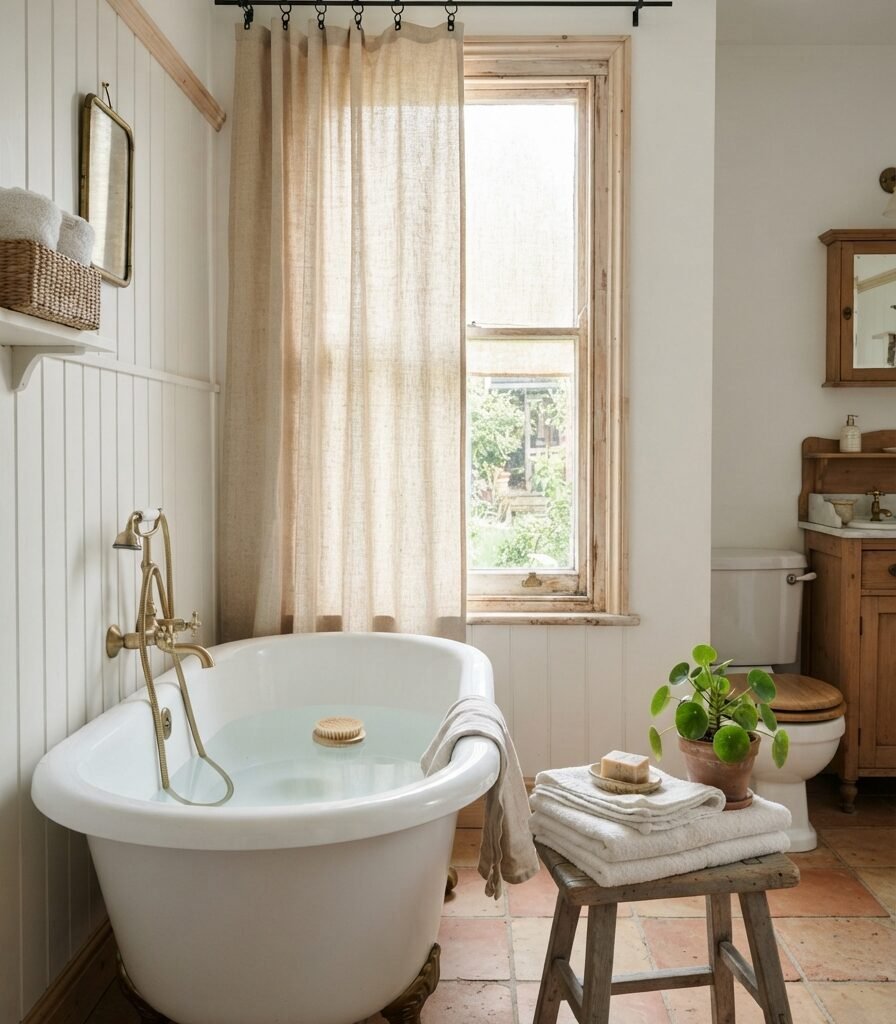
3. Use a Single Panel for a Narrow Window
Category: Lighting
Vibe: Airy. The single panel softens incoming daylight without visually crowding the small opening.
Why it works: A narrow window does not always need two curtain panels. Splitting a relatively small opening into multiple thick canvas sections can create unnecessary visual weight, while one panel can be pushed completely aside when maximum daylight is wanted. Canvas curtains can provide privacy while still being movable when natural light is needed.
How to get it: Use one drop cloth only when its finished width provides enough coverage for your window plus your desired gathering. Mount the rod several inches beyond the window on the opening side so the panel can stack away from the glass instead of covering it when open.
💡 Quick Win: If your bathroom, laundry room, or small bedroom window is under roughly 36 inches wide, test one panel first rather than automatically buying a pair.
Shop The Look
| Product | Purpose |
| 6×9-foot cotton canvas single drop cloth | Full single-panel curtain |
| Small matte black cafe curtain rod | Compact window hardware |
| Black clip rings with 1-inch clips | Easy fabric attachment |
| Brass curtain holdback hook | Keeps the panel off the glass |
| Woven cotton bathroom basket | Completes the rustic texture |
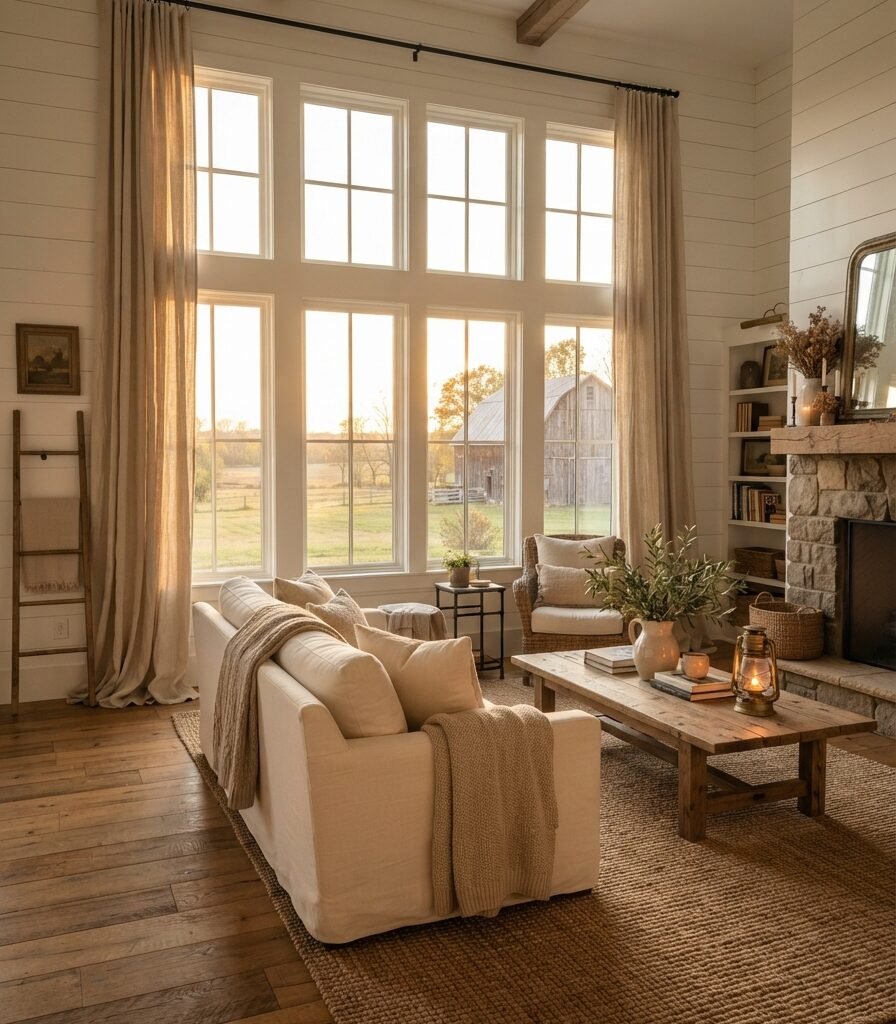
4. Hang Them High and Long in the Living Room
Category: Furniture
Vibe: Expansive. The curtains pull the eye upward and make the window wall feel taller.
Why it works: Curtain height is a proportion tool, not just an installation detail. Mounting the rod close to the ceiling creates a stronger vertical line, while long canvas panels visually connect the upper wall to the floor. HomeDreamStyle uses the same vertical-proportion principle repeatedly in its curtain content because it changes perceived window and ceiling scale without structural work.
How to get it: Position the rod close to ceiling height where the architecture allows, then measure the finished drop from the rod to the floor. Fold the excess at the top instead of cutting it so the curtain can be adjusted later.
Shop The Look
| Product | Purpose |
| 9×12-foot natural canvas drop cloth | Extra-long living-room panel |
| Extra-long black iron curtain rod | Supports high installation |
| Heavy-duty ceiling curtain brackets | Provides secure mounting |
| Reclaimed wood curtain finials | Adds farmhouse character |
| Natural jute 8×10 area rug | Grounds the window treatment |
5. Create Soft Pleats with Clip Rings

Category: Accessories
Vibe: Layered; the fabric forms gentle vertical rhythms instead of hanging as one flat sheet.
Why it works: Clip-ring spacing controls the rhythm of the curtain. Rings placed too far apart create irregular sagging, while closer spacing produces more consistent folds and distributes the heavy canvas more evenly. Existing no-sew tutorials commonly use around 7 clips per panel for smaller setups and roughly 12–14 clips for larger panels.
How to get it: Mark the top edge at approximately 8–12-inch intervals before attaching the clips, then adjust slightly to divide the panel evenly from end to end. Keep the first and last clip several inches inward from each edge so the corners do not pull awkwardly.
💡 Quick Win: Lay the drop cloth flat and mark clip positions with removable painter’s tape before climbing a ladder; this makes the finished folds much easier to balance.
Shop The Look
| Product | Purpose |
| Antique brass clip curtain rings | Creates warm hardware contrast |
| Decorative brass curtain rod | Supports the clipped panels |
| Painter’s masking tape roll | Marks even clip placement |
| 12-inch metal ruler | Helps maintain spacing |
| Natural linen table runner | Echoes the canvas texture |
6. Turn a Small Window into a Cafe-Style Treatment

Category: Small Space
Vibe: Intimate. The small-scale treatment gives privacy without shutting down daylight.
Why it works: Full-length canvas can be excessive for a small kitchen window where the main goal is lower-window privacy. A cafe-style drop cloth uses less material, keeps the upper glass open, and allows sunlight to reach the room while still screening the most exposed part of the window.
How to get it: Cut only if the drop cloth’s finished dimensions make it unavoidable; otherwise, fold the canvas to the required height and clip it to a tension rod or slim cafe rod. Keep the bottom edge around the lower half or lower two-thirds of the glass,s depending on privacy needs.
Shop The Look
| Product | Purpose |
| Natural cotton canvas remnant drop cloth | Cafe curtain fabric |
| Slim black tension curtain rod | No-drill mounting |
| Mini black curtain clip rings | Compact attachment |
| Terracotta herb planter | Adds farmhouse color |
| Wooden kitchen utensil crock | Reinforces natural materials |
7. Use a Warm White Canvas Look for a Cleaner Farmhouse Room
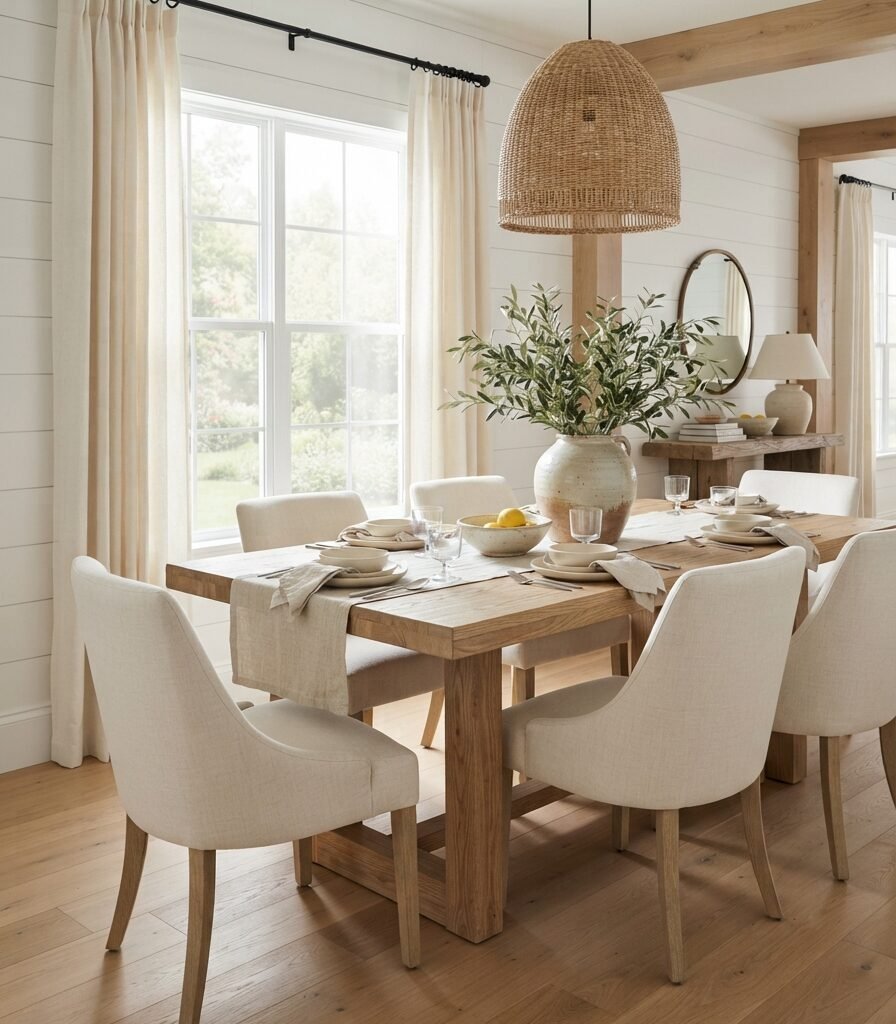
Category: Color Vibe: Free
VibeFreere the canvas becomes a quiet backdrop instead of a heavy rustic statement.
Why it works: Natural drop cloth color can vary from cream to beige-grey depending on manufacturer and finish. A warmer white treatment creates a cleaner farmhouse effect while maintaining the canvas texture that prevents the window from looking like generic white polyester curtains.
How to get it: If you want a lighter appearance, test a small section with a compatible fabric treatment rather than treating the entire cloth immediately. Keep the rod and furniture materials simple so the brighter curtain remains connected to the farmhouse palette.
💡 Quick Win: If your existing drop cloths look too beige, pair them with warm white walls and ivory upholstery rather than trying to bleach the fabric immediately; the surrounding colors can visually lighten the canvas.
Shop The Look
| Product | Purpose |
| Warm white cotton canvas drop cloth | Cleaner curtain foundation |
| Matte black farmhouse curtain rod | Provides definition |
| Ivory upholstered dining chair | Softens the palette |
| White ceramic oversized vase | Reinforces the lighter scheme |
| Pale oak woven-seat dining chair | Adds natural warmth |
8. Choose 8-Ounce Canvas for Easier Draping

Category: Material
Vibe: Supple; the fabric has enough body to feel substantial without becoming rigid.
Why it works: Canvas weight changes both drape and light control. An 8-ounce drop cloth is commonly used for DIY curtains and offers a useful middle ground, while 10- or 12-ounce versions provide greater opacity and weight but may hang more rigidly. Trimaco, for example, lists 8-ounce canvas alongside heavier 10- and 12-ounce options.
How to get it: Choose medium-weight canvas for bedrooms and living rooms where you want visible folds rather than a rigid panel. Reserve heavier canvas for privacy-focused applications where substantial fabric weight is more important than a soft drape.
Shop The Look
| Product | Purpose |
| 8-ounce cotton canvas drop cloth | Flexible curtain material |
| Natural wood curtain rings with clips | Softer rustic hardware |
| Linen-blend duvet cover in flax | Complements canvas |
| Woven wool-look bedroom rug | Adds tactile layering |
| Oak wood curtain rod | Warms the material palette |
9. Use Drop Cloths as a No-Sew Room Divider
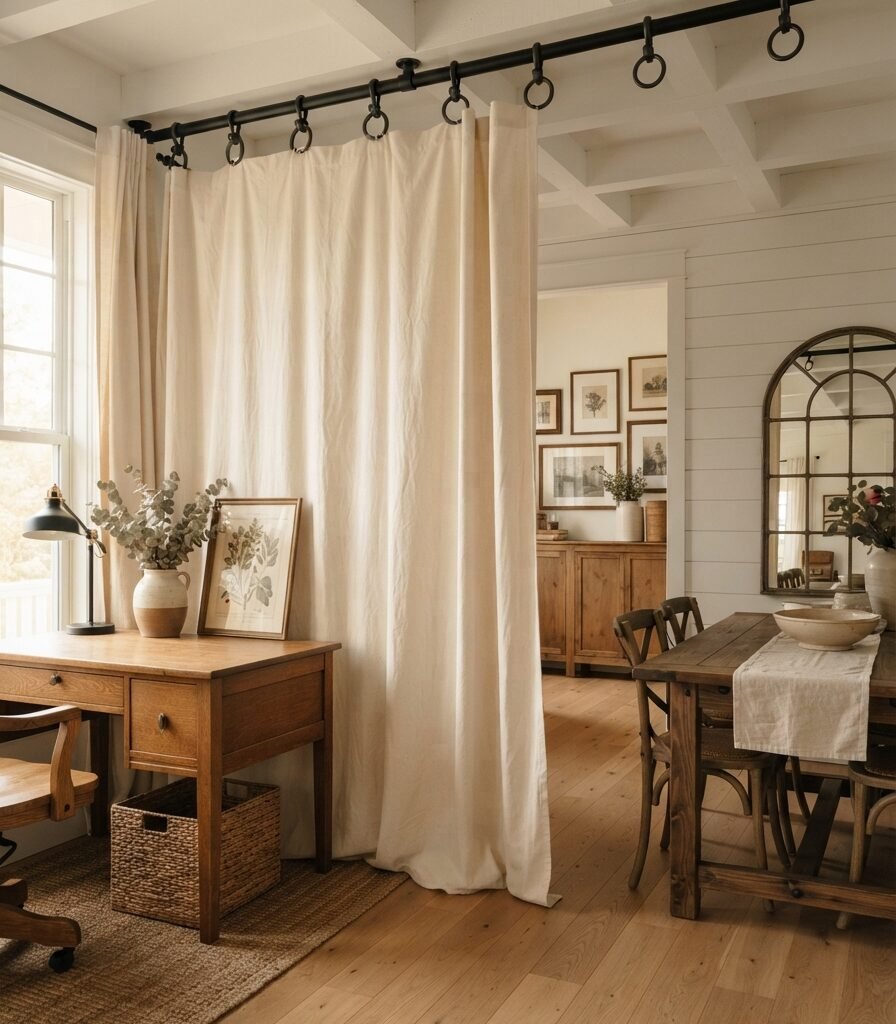
Category: Furniture
Vibe: Sheltered; the canvas creates privacy without constructing a permanent wall.
Why it works: Canvas drop cloths are not limited to windows; their large finished surfaces can create temporary zones in open interiors. The design principle is soft zoning: fabric visually separates activities while remaining movable, unlike a framed wall or fixed partition.
How to get it: Install a properly rated ceiling track or rod across the opening and distribute clips evenly across the canvas. Leave enough clearance at the bottom for the fabric to move without dragging excessively across the floor.
Shop The Look
| Product | Purpose |
| 4×15-foot natural canvas drop cloth | Wide room-divider panel |
| Heavy-duty ceiling curtain track | Supports movable partition |
| Industrial roller curtain hooks | Allows smooth movement |
| Matte black ceiling track brackets | Secure installation |
| Walnut writing desk | Defines the office side |
10. Mount the Rod Above the Window to Increase Perceived Height
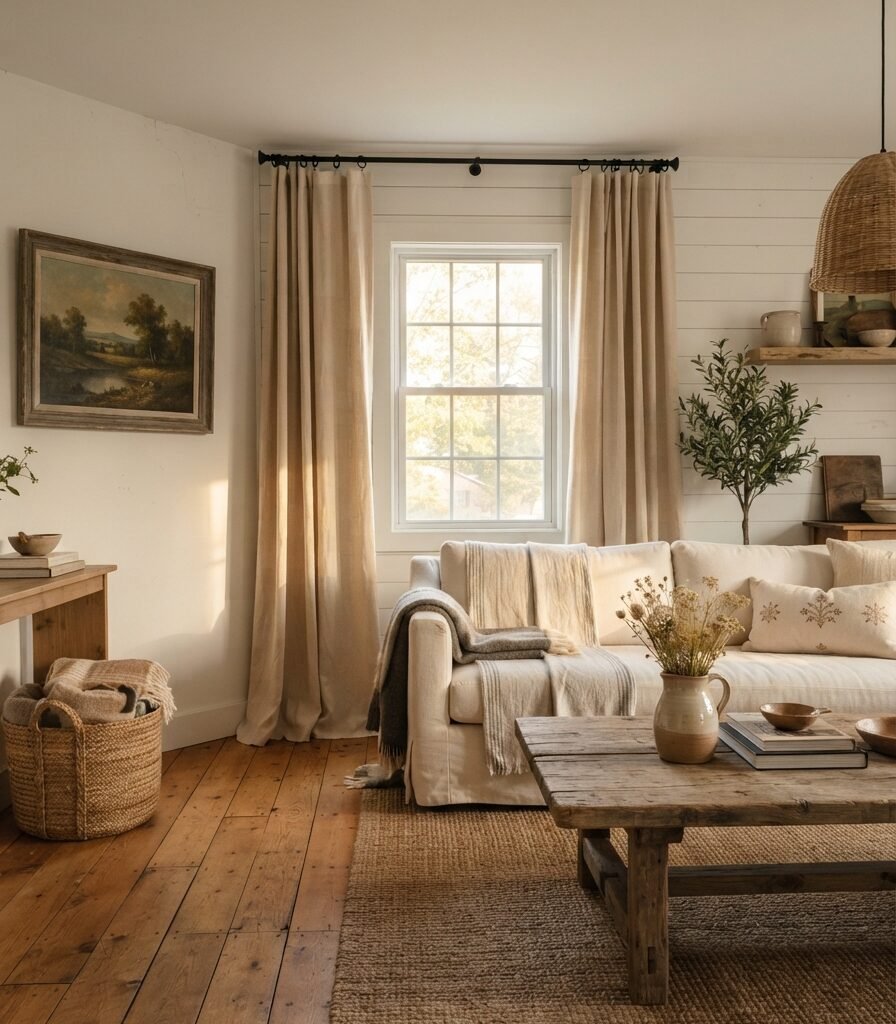
Category: Layout
Vibe: Lofty. The curtain line encourages the eye to read the full wall height.
Why it works: The rod position changes perceived architecture. HomeDreamStyle’s current curtain guidance repeatedly recommends mounting rods close to ceiling height and extending them beyond the window because the continuous vertical fabric line makes the window appear larger and the ceiling higher.
How to get it: Mount the rod within roughly 2 inches of the ceiling or molding where possible, and extend it around 12 inches beyond each side of the window when wall space allows. Measure the required panel length from the actual rod position, not from the window frame.
Shop The Look
| Product | Purpose |
| Extra-long black steel curtain rod | Enables wider installation |
| Extension curtain rod brackets | Moves hardware away from frame |
| Natural canvas 9×12 drop cloth | Provides long vertical drop |
| Black iron clip ring set | Creates adjustable folds |
| Matte black wall anchors | Supports high-mounted hardware |
11. Add Simple Tiebacks Instead of Heavy Valances

Category: Accessories
Vibe: Sun-warmed; the tied-back panels frame the window while allowing the daylight to dominate.
Why it works: Heavy canvas can visually cover a large portion of a window when pushed aside, so a restrained tieback keeps the fabric controlled. Jute, leather, iron, or simple cotton ties work because they repeat the natural-material vocabulary instead of adding decorative fuss.
How to get it: Position each tieback roughly one-third up from the bottom of the visible curtain drop rather than immediately beside the sill. Keep both sides at matching heights so the window composition remains balanced.
💡 Quick Win: Twist 3–4 feet of natural jute rope into a simple loop and secure it with a discreet wall hook for an inexpensive farmhouse tieback.
Shop The Look
| Product | Purpose |
| Natural jute rope curtain tiebacks | Adds organic texture |
| Antique brass wall hooks | Secures the tiebacks |
| Leather curtain holdback loops | Offers a darker alternative |
| Woven cotton tassel tiebacks | Adds softer cottage detail |
| Rustic ceramic pitcher | Complements the gathered window |
12. Use Heavy Canvas for a Screened Porch

Category: Material
Vibe: Sheltered. The canvas makes an open structure feel more intimate and protected.
Why it works: Heavy canvas can provide privacy and reduce the visual exposure of an open porch while adding softness to a structure dominated by wood, screens, and hard edges. Canvas drop cloth curtains have been used for indoor rooms as well as screened patios and outdoor privacy applications.
How to get it: Select a heavier canvas and use hardware appropriate for the location rather than assuming an indoor curtain rod will withstand outdoor movement. Leave enough room for the panels to move and avoid treating ordinary untreated canvas as waterproof fabric.
Shop The Look
| Product | Purpose |
| 10-ounce natural canvas drop cloth | Heavier outdoor curtain fabric |
| Outdoor-rated black curtain rod | Supports porch installation |
| Rust-resistant stainless clip rings | Handles humid conditions |
| Outdoor jute-look tieback | Controls moving panels |
| Weather-resistant striped cushion | Adds porch color |
13. Layer a Drop Cloth with a Sheer for Better Light Control
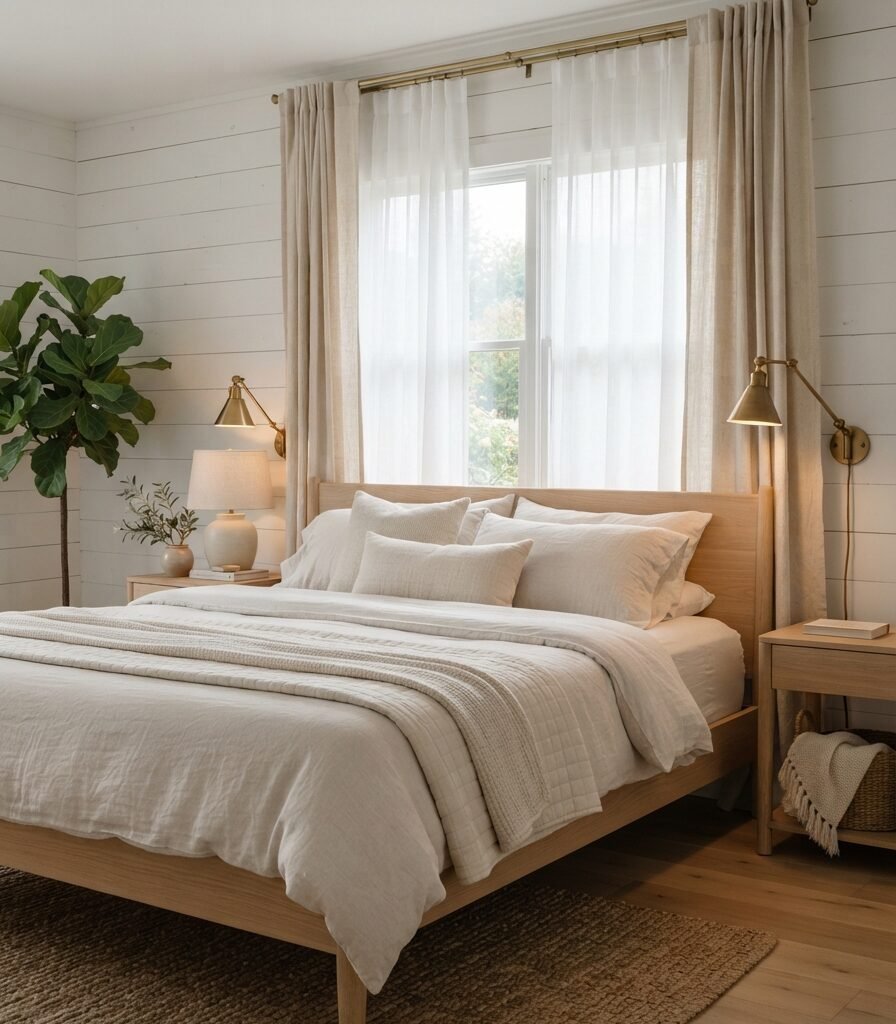
Category: Lighting
Vibe: Filtered daylight becomes softer while the heavier canvas remains available for privacy.
Why it works: Canvas can block or substantially reduce daylight because of its density, so layering it with a sheer creates two distinct light conditions. The sheer filters direct sunlight while the drop cloth provides a more opaque privacy layer when closed; this gives you more control than using canvas alone.
How to get it: Install a double curtain rod with the sheer panel on the window-facing track and the canvas on the outer track. Keep the sheer warm white or ivory, so it disappears visually against the window while the canvas supplies the stronger textural layer.
💡 Quick Win: If your existing canvas curtains feel too dark during the day, add inexpensive ivory sheers behind them before replacing the drop cloths.
Shop The Look
| Product | Purpose |
| Double curtain rod in aged brass | Holds two textile layers |
| Ivory voile sheer curtain panels | Diffuses daylight |
| Natural canvas drop cloth panels | Provides privacy |
| Brass double-rod brackets | Supports layered installation |
| Warm white linen-look sheer tiebacks | Keeps inner panels controlled |
How to Start Your No-Sew Drop Cloth Curtain Transformation
Start with one 6×9-foot, medium-weight cotton canvas drop cloth and one window. This is the simplest way to test the fabric’s color, weight, shrinkage, opacity, and drape before purchasing enough material for the entire house. Wash it, dry it, and measure it again before deciding how much to fold at the top.
The most common mistake is buying the cloth based only on the window width and forgetting the rod width, fullness, and finished drop. A panel can technically cover the glass but still look skimpy when closed. Plan for enough total fabric to create relaxed folds, and remember that heavy canvas does not behave exactly like lightweight linen.
Three useful items under $50 are black clip rings, a 6×9-foot canvas drop cloth, and a handheld fabric steamer. Those three purchases can take you from raw material to a functioning window treatment without a sewing machine.
A basic pair can often be completed in an afternoon once the rod is installed, while measuring and mounting several windows may take a full weekend. A starter project can remain around 50–150 for one window, while multiple large windows with long rods, brackets, rings, and heavier canvas can move into the 200–600 range. Custom tracks, extensive hardware, or outdoor-rated systems will increase the budget.
Frequently Asked Questions About How to Make No Sew Drop Cloth Curtains
What are no sew drop cloth curtains and how are they different from regular curtains?
No sew drop cloth curtains use cotton canvas painter’s cloths as curtain fabric without constructing traditional hems or rod pockets. The fabric is usually attached with clip rings and hung from a curtain rod, making the project accessible without a sewing machine. Many DIY versions use 6×9-foot drop cloths because their finished edges can remain intact.
What color drop cloth is best for farmhouse curtains?
Natural canvas in warm ivory, oatmeal, or soft greige is the easiest choice for farmhouse interiors. It pairs naturally with warm white walls, unfinished oak, black iron, jute, and cream upholstery. If your room already contains bright white trim, test the canvas beside it first because natural cotton can look noticeably warmer.
How much does it cost to make no-sew drop cloth curtains?
A single DIY panel can be relatively inexpensive because the main fabric is a painter’s canvas rather than purpose-made drapery fabric. Older DIY examples have used individual drop cloths costing around 10–16, although current prices vary significantly by size, weight, retailer, and region. For a more realistic current project budget, allow roughly 50–150 for one basic window after adding rings and hardware.
Can you use no-sew drop cloth curtains in a modern home?
Yes. The final appearance depends heavily on hardware, fullness, rod placement, and surrounding materials. Use clean black or aged-brass hardware, fewer decorative accessories, and warm white walls to move the canvas away from a strongly rustic look. A simple 8-ounce canvas panel can read closer to relaxed linen when paired with contemporary furniture.
Which drop cloth size is best for making curtains?
A 6×9-foot drop cloth is a common starting point for standard windows, while 6×12-foot and 4×15-foot options can work better for taller installations. The correct size depends on both the finished drop and total curtain width, so measure from the planned rod to the floor before purchasing. For wide windows, two panels may be more practical than forcing one cloth to cover the entire opening.
Ready to Create Your Dream No Sew Drop Cloth Curtains?
These 13 How to Make No Sew Drop Cloth Curtains ideas cover canvas weight, color, light control, furniture relationships, clip-ring styling, small windows, room dividers, rod placement, tiebacks, outdoor applications, and layered treatments. You do not need to transform every window at once; starting with one 6×9-foot panel is the most sensible way to understand how the fabric behaves in your own light. Today, measure one window from the proposed rod position to the floor and write down both the width and height before buying anything. Once the canvas settles into its relaxed folds, the room gains a tactile, grounded quality that feels practical rather than over-designed. Save or pin your favorite version now, especially the ceiling-height, clip-ring, and layered-sheer variations, so your next no-sew curtain project starts with a clear plan.
You Might Also Like
- 20 Home Styling Ideas That Make a Room Feel Finished
- 20 DIY Home Decor Ideas You Can Actually Make Yourself
- 20 Budget Home Decor Ideas That Actually Look Expensive
- 15 Home Makeover Ideas for a Real Before-and-After Transformation
- 13 Minimalist Home Decor Ideas for a Calm, Clutter-Free Space
- 10 Stylish Shelf Decor Ideas for Every Room