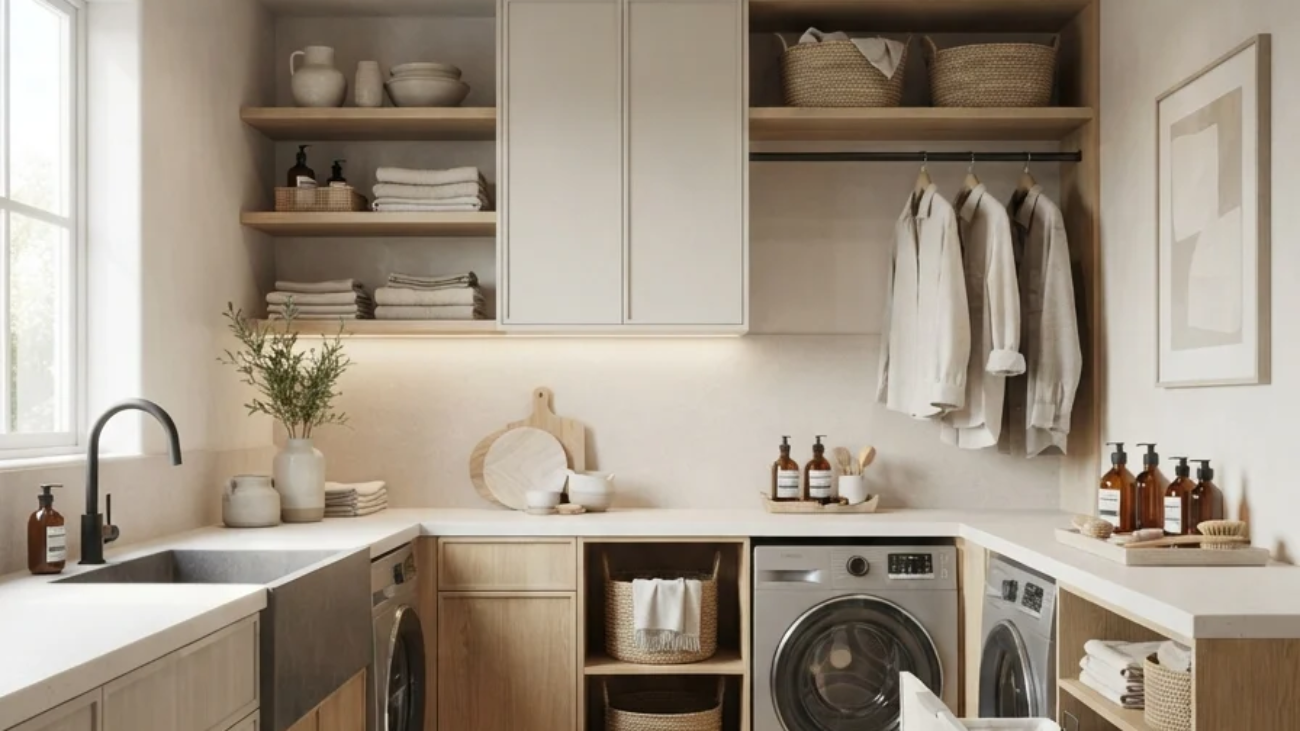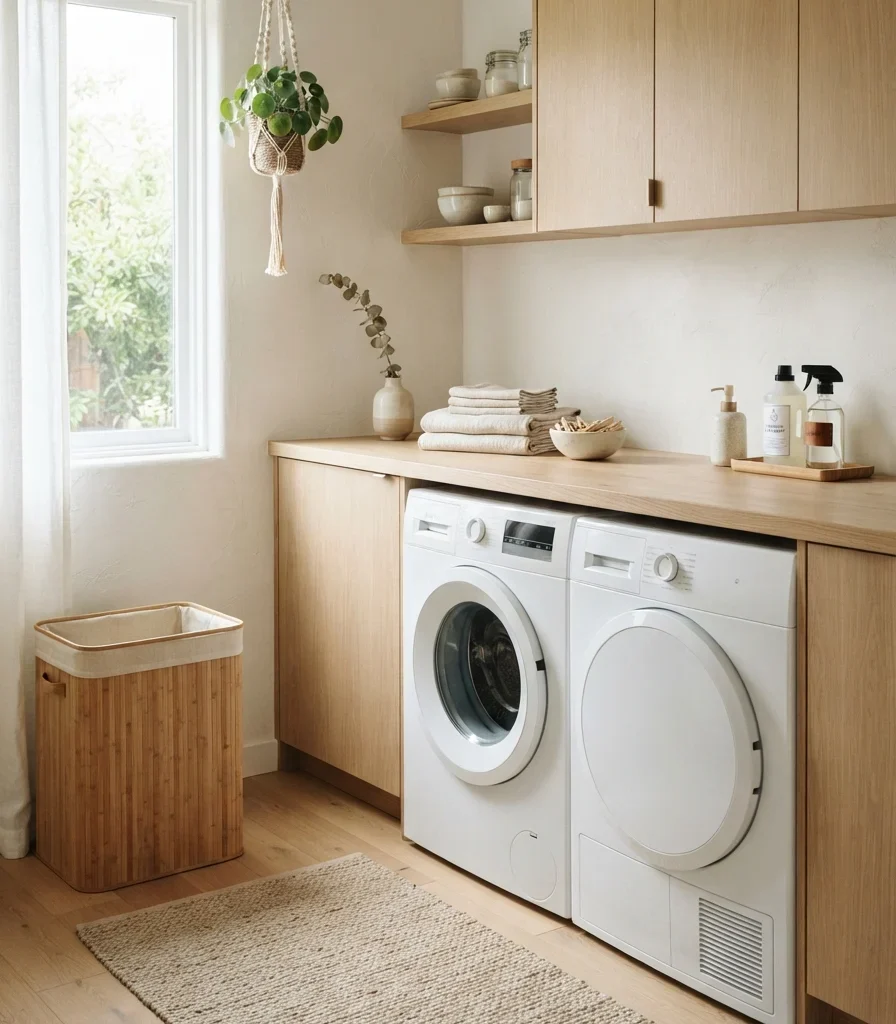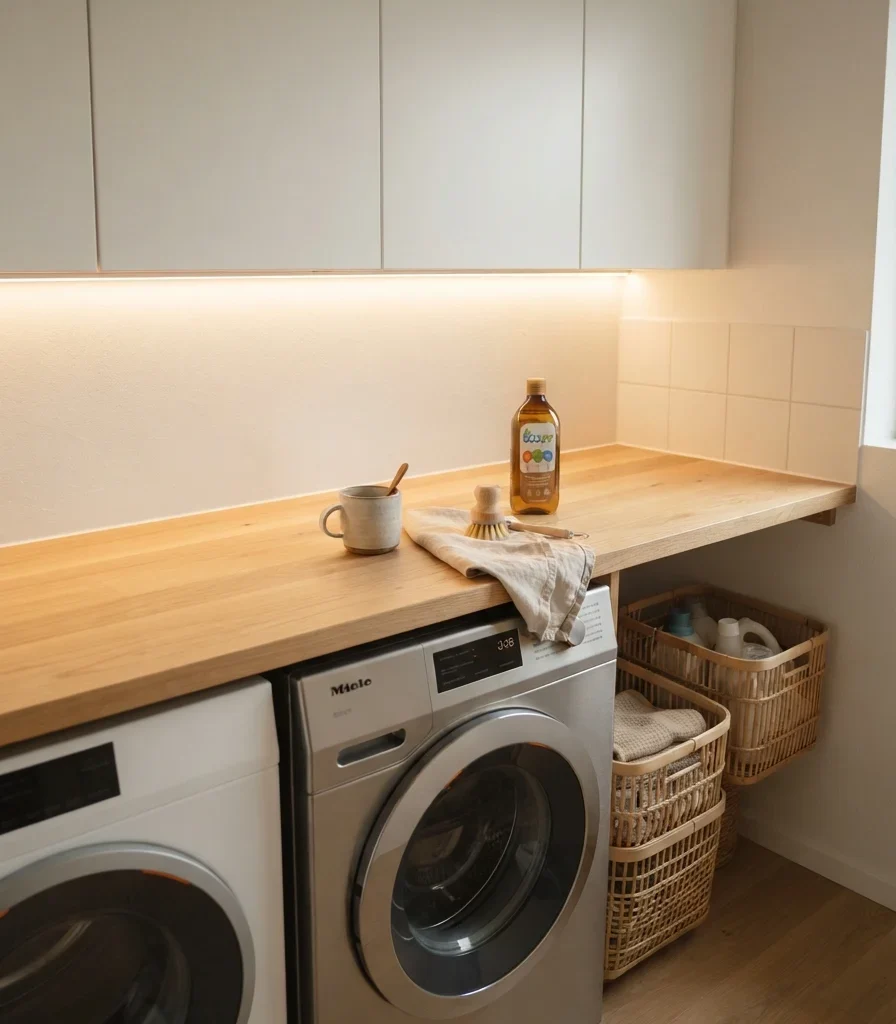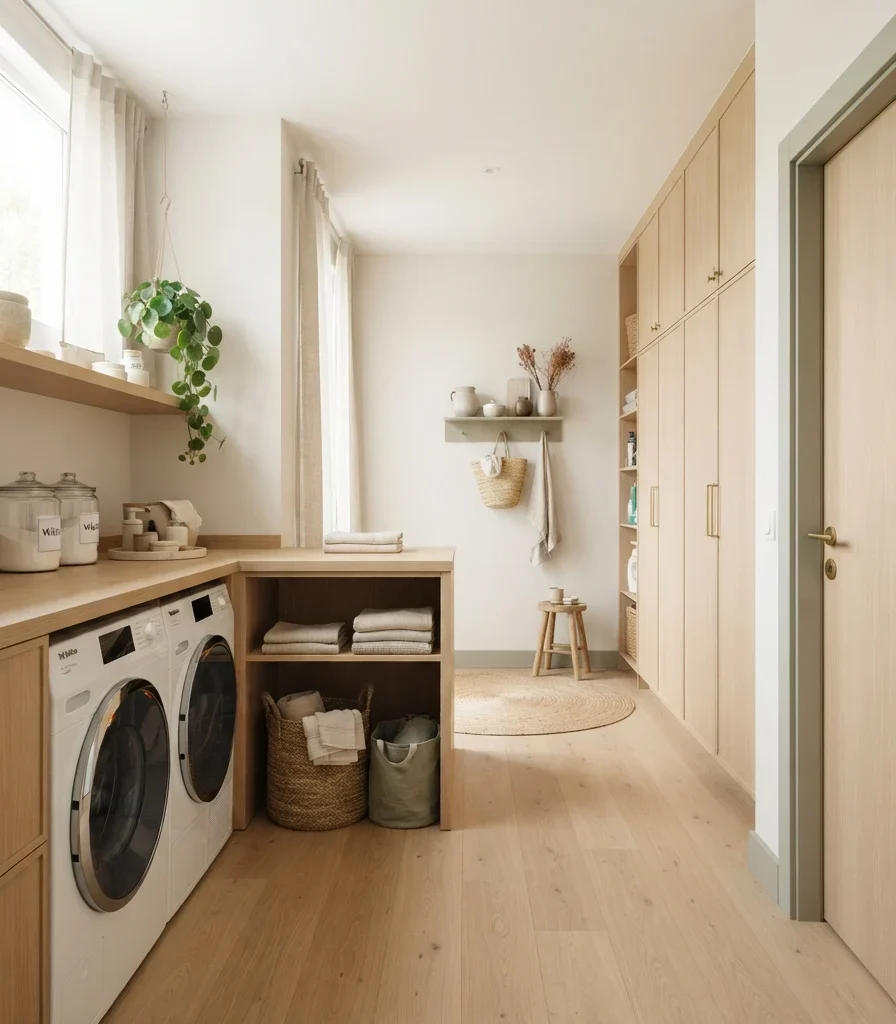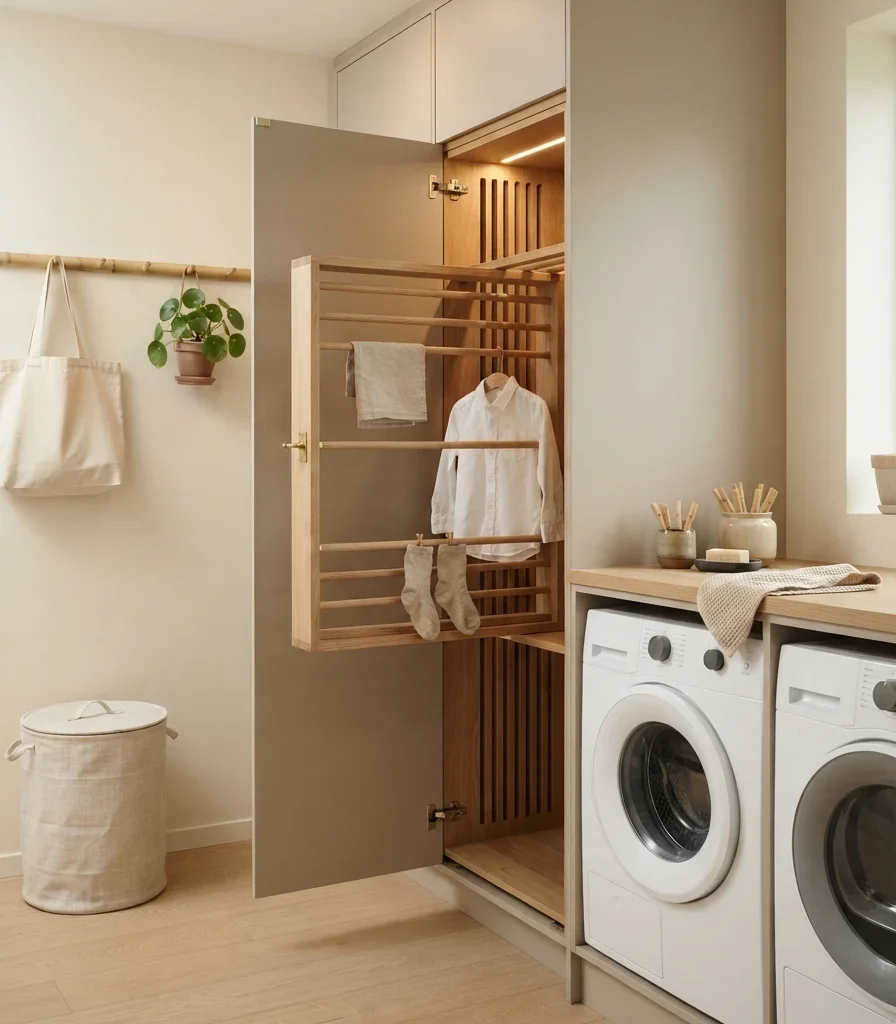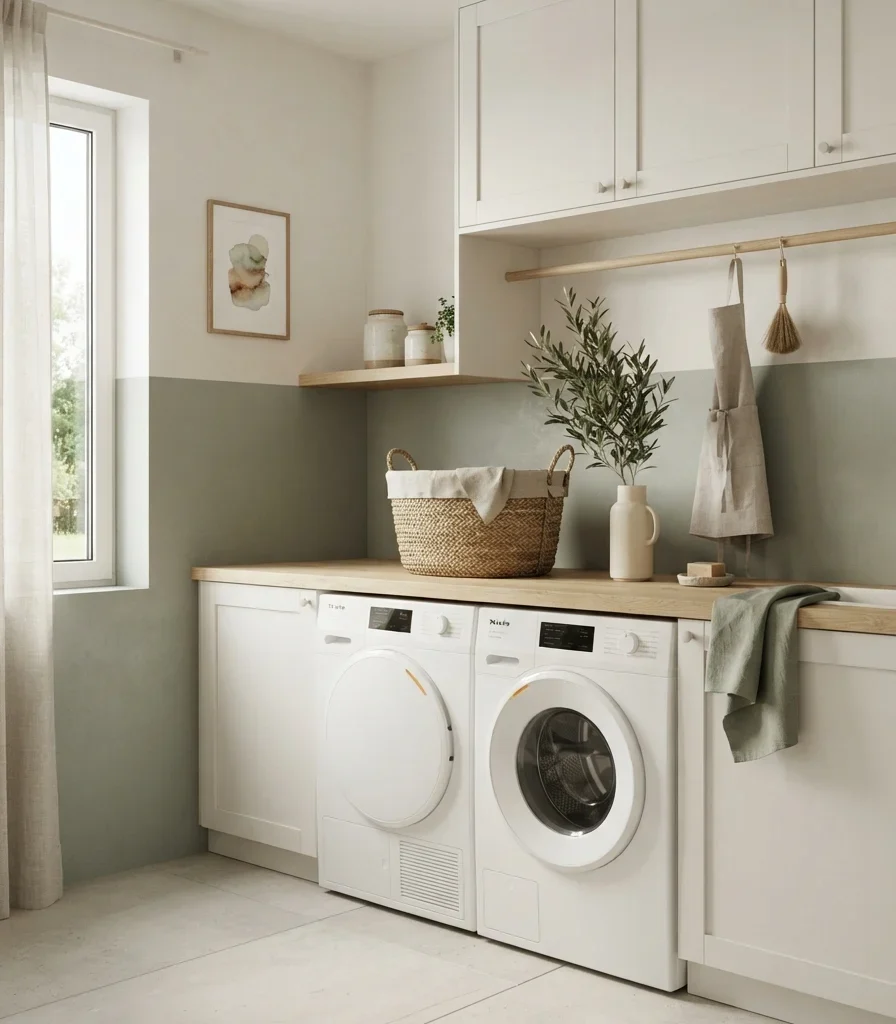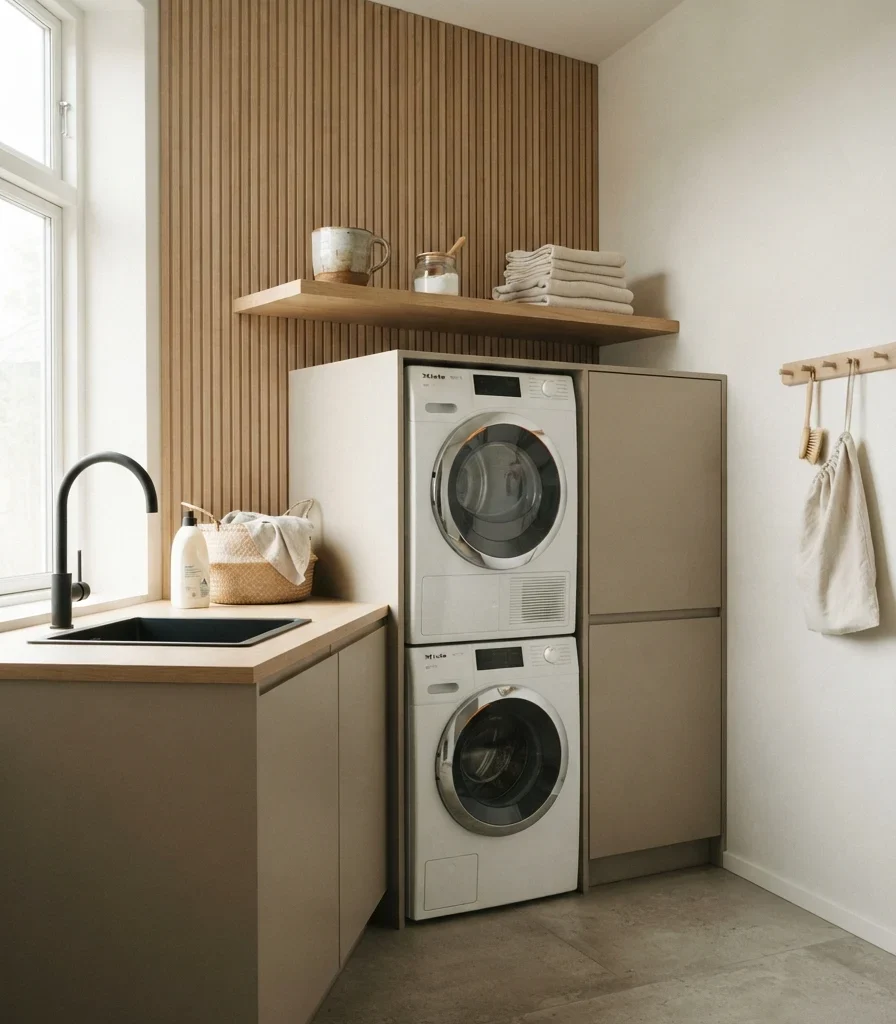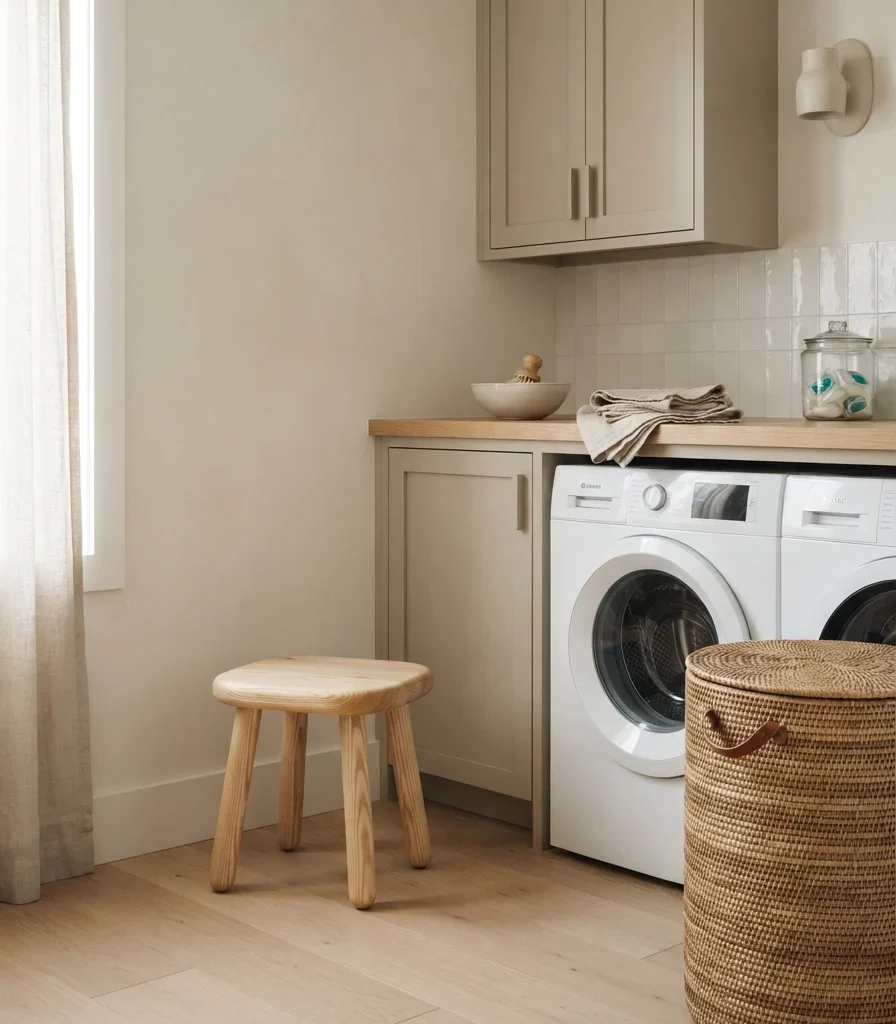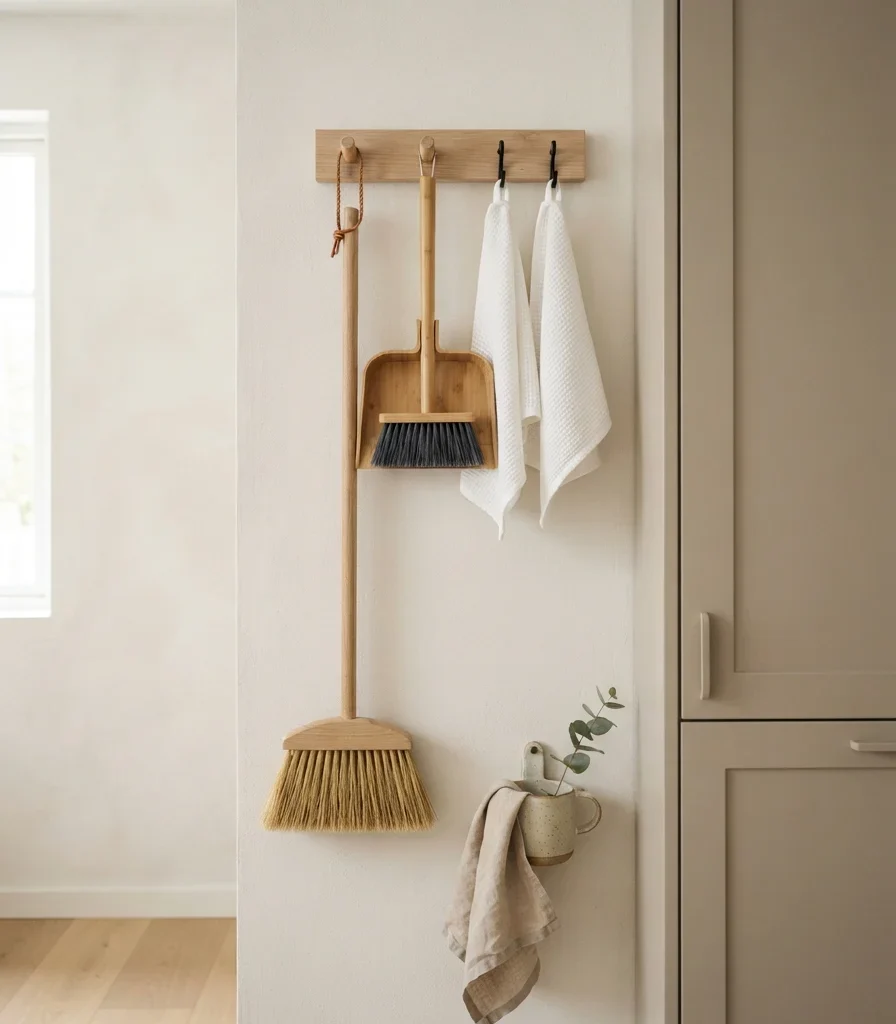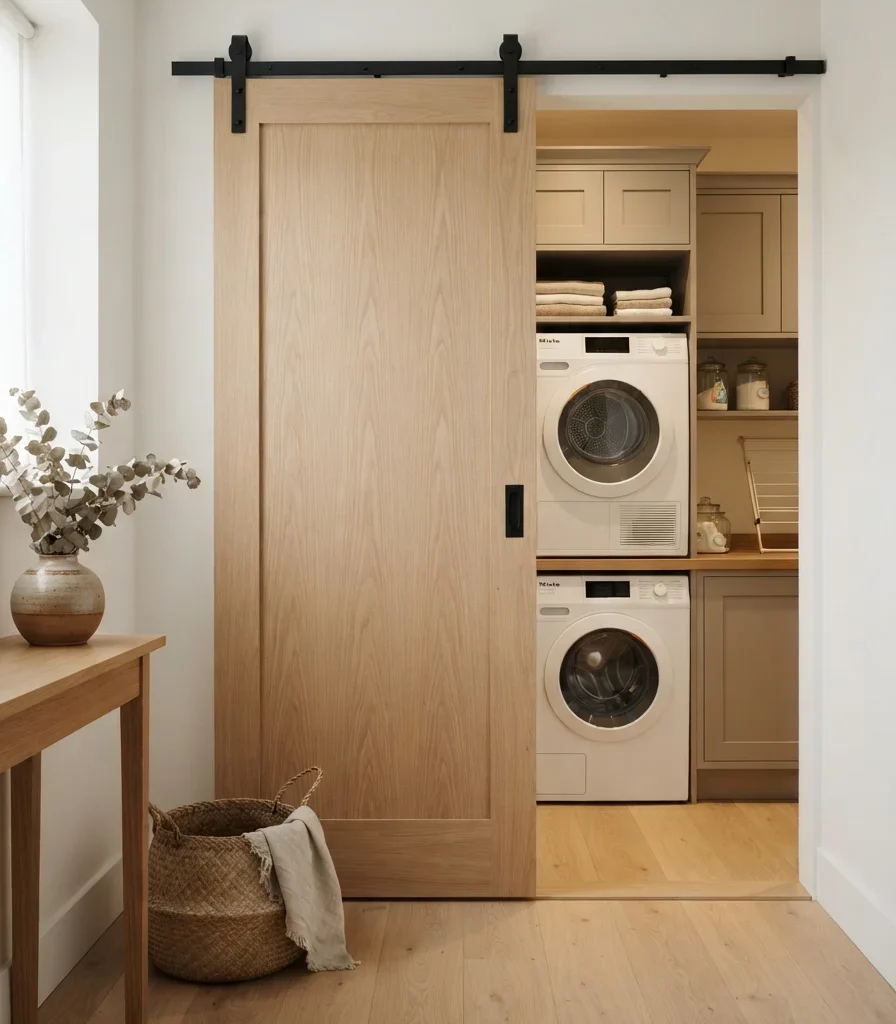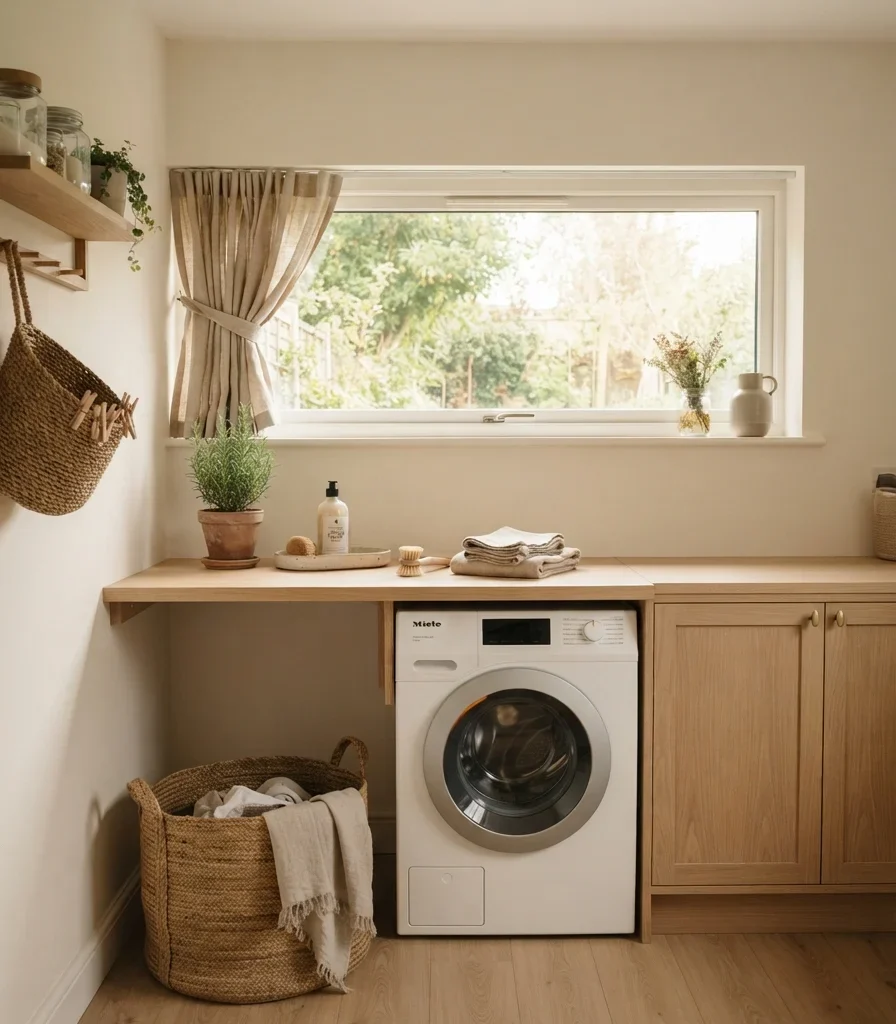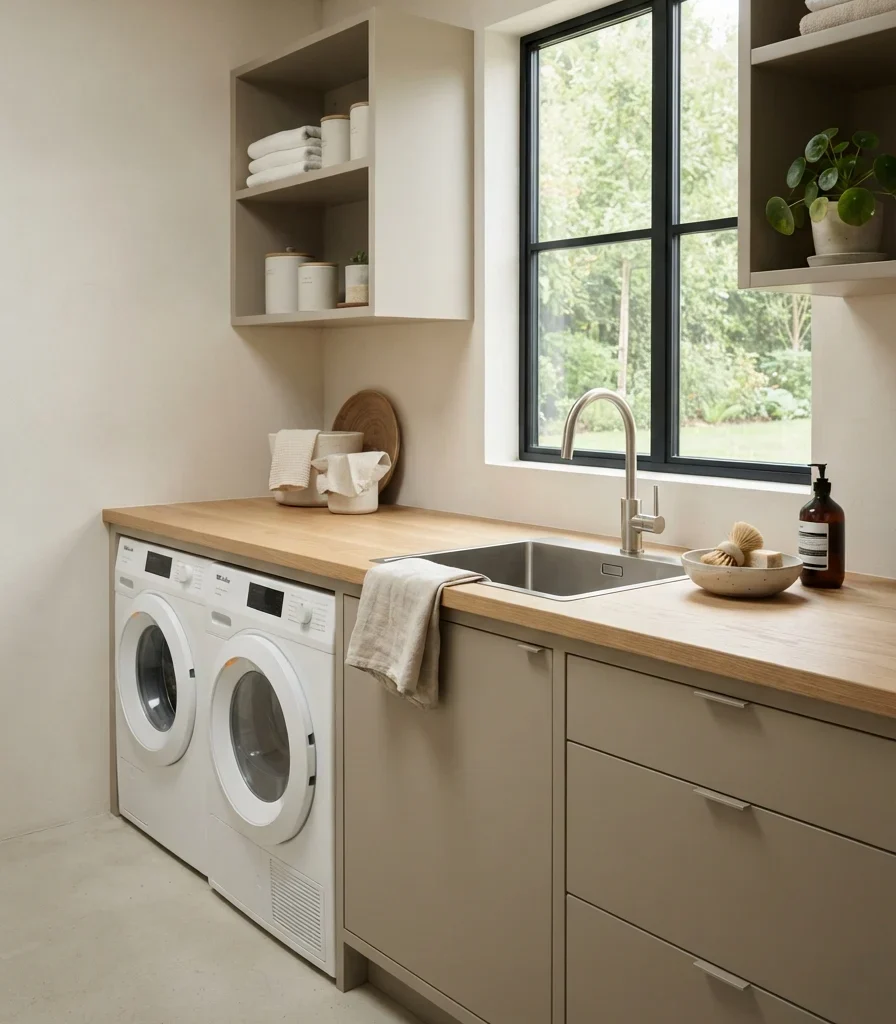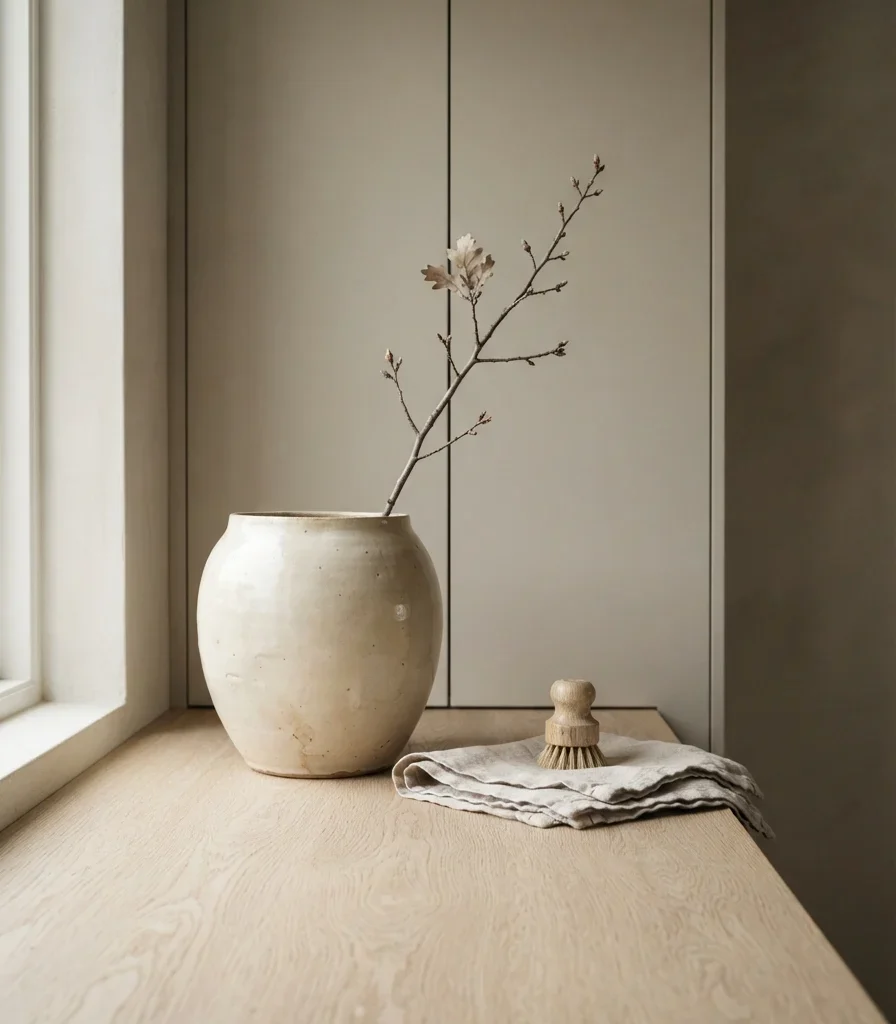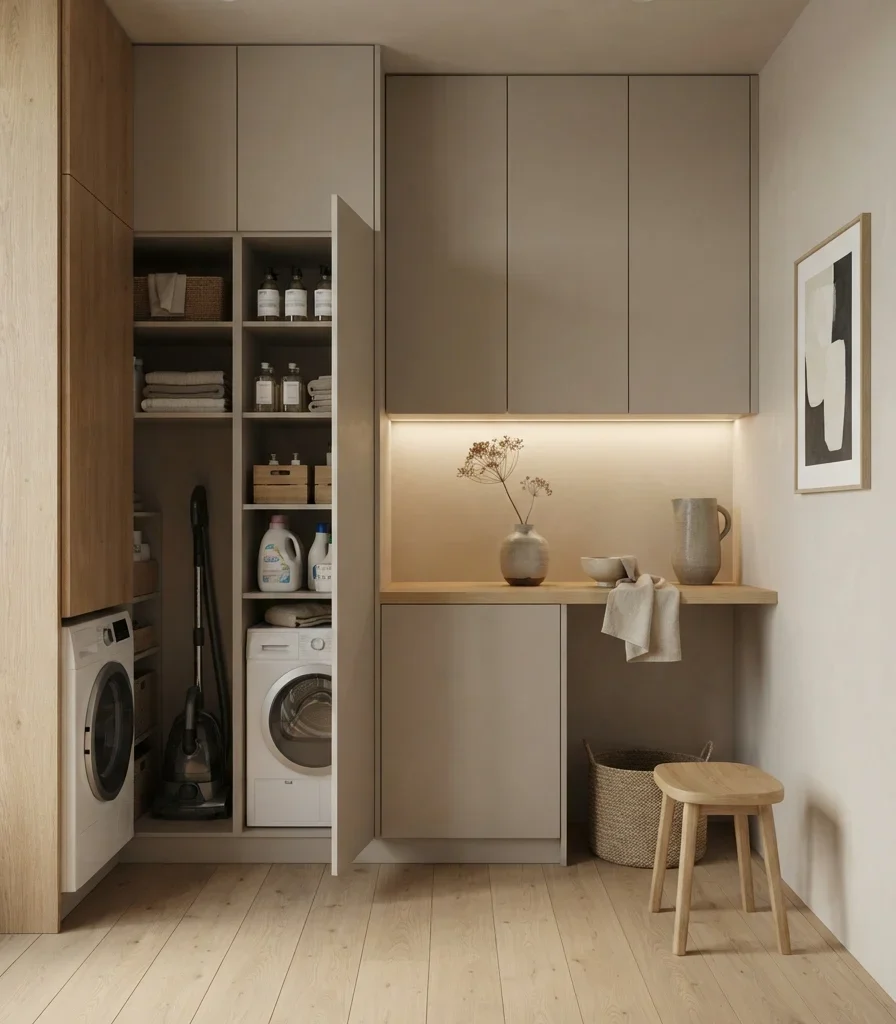

Japandi style is a meeting point between Japanese restraint and Scandinavian warmth, combining natural materials, purposeful simplicity, and generous breathing room.
These 21 Japandi style mudroom ideas show how to create an entry space that handles shoes, coats, bags, and daily clutter while still feeling calm, tactile, and intentionally designed.
Morning light falls across pale oak while woven baskets hold the things that usually collect beside the door. A muted clay bench feels warm beneath your hand, and every hook, cubby, and shelf has a reason to exist. Japandi mudrooms are not about making an entrance look empty; they are about making everyday life feel less visually noisy. The result should feel grounded, quiet, and effortless without becoming cold or impractical.
Here are 21 ideas worth saving and stealing.
Why Japandi Style Works So Well
Japandi style combines Japanese principles such as wabi-sabi, ma, and material honesty with Scandinavian functionalism and hygge-inspired warmth. Japanese interiors traditionally value restraint, natural materials, asymmetry, and the meaningful use of space, while Scandinavian design emphasizes usability, light, comfort, and uncomplicated forms. Together they create an interior that feels edited rather than sparse.
The material palette is deliberately tactile: white oak, ash, walnut, bamboo, linen, wool, rattan, handmade ceramic, natural stone, and matte black metal all work naturally. Color should remain restrained, using warm white, oatmeal, mushroom, greige, sand, muted taupe, charcoal, and occasional earthy clay or sage. Avoid bright optic white because it can make the combination feel more contemporary and sterile than warm and organic.
Japandi has become especially relevant as homeowners have placed greater emphasis on decluttering, multifunctional rooms, natural materials, and slower domestic routines. A mudroom is particularly suited to the philosophy because it has a demanding practical job: storing the objects that enter and leave the home every day. Good Japandi design makes that function visible without allowing it to dominate the room.
Small mudrooms can absolutely use the style, but restraint has to be strategic. Prioritize one continuous storage system, a slim bench, concealed shoe storage, and one dominant natural material rather than trying to recreate a large Japanese-inspired entry hall. In a narrow space, vertical cabinetry and hooks usually provide more useful storage than bulky freestanding furniture.
Style at a Glance
| Element | Japandi Mudroom Direction |
| Philosophy | Purposeful simplicity, wabi-sabi, calm functionality |
| Core materials | White oak, ash, walnut, bamboo, linen, wool, ceramic, stone |
| Color palette | Warm white, oatmeal, greige, mushroom, taupe, charcoal |
| Furniture | Low-profile benches, clean cabinetry, simple open shelving |
| Texture | Visible wood grain, woven fibers, handmade ceramics, linen |
| Lighting | Soft daylight, 2700K–3000K warm LEDs, diffused fixtures |
| Decor | Minimal botanical branches, ceramic vessels, natural baskets |
The most successful Japandi mudrooms therefore balance storage and negative space. The room should work hard without looking busy.
1. Warm White Walls with Pale Oak Storage
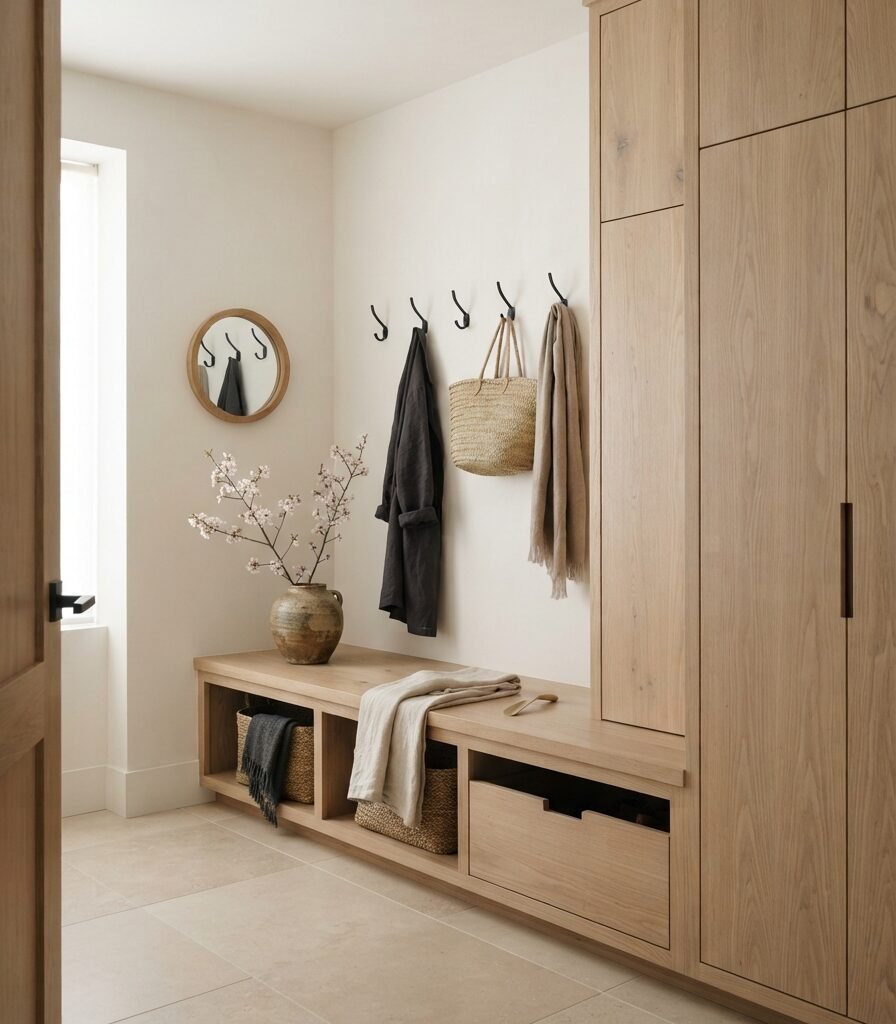
Vibe: The room feels hushed, with pale wood and warm walls creating a soft visual landing zone.
Why it works: The restrained tonal contrast allows the oak grain to become the room’s primary texture rather than competing with colorful decoration. Full-height cabinetry also creates visual continuity, making storage read as architecture instead of furniture.
How to get it: Paint the walls a warm off-white rather than a blue-based white and use unfinished or lightly sealed white oak for the bench and cabinet fronts. Keep the hardware minimal by choosing small matte-black pulls or recessed finger pulls.
💡 Quick Win: Replace visible plastic storage bins with three matching woven seagrass baskets; the repeated natural texture instantly makes open storage feel more intentional.
Shop The Look
- White oak mudroom storage cabinet with doors
- Floating natural oak entryway bench
- Matte black minimalist wall hooks
- Woven seagrass storage basket with handles
- Handmade off-white ceramic bud vase
2. Charcoal Bench for Controlled Contrast
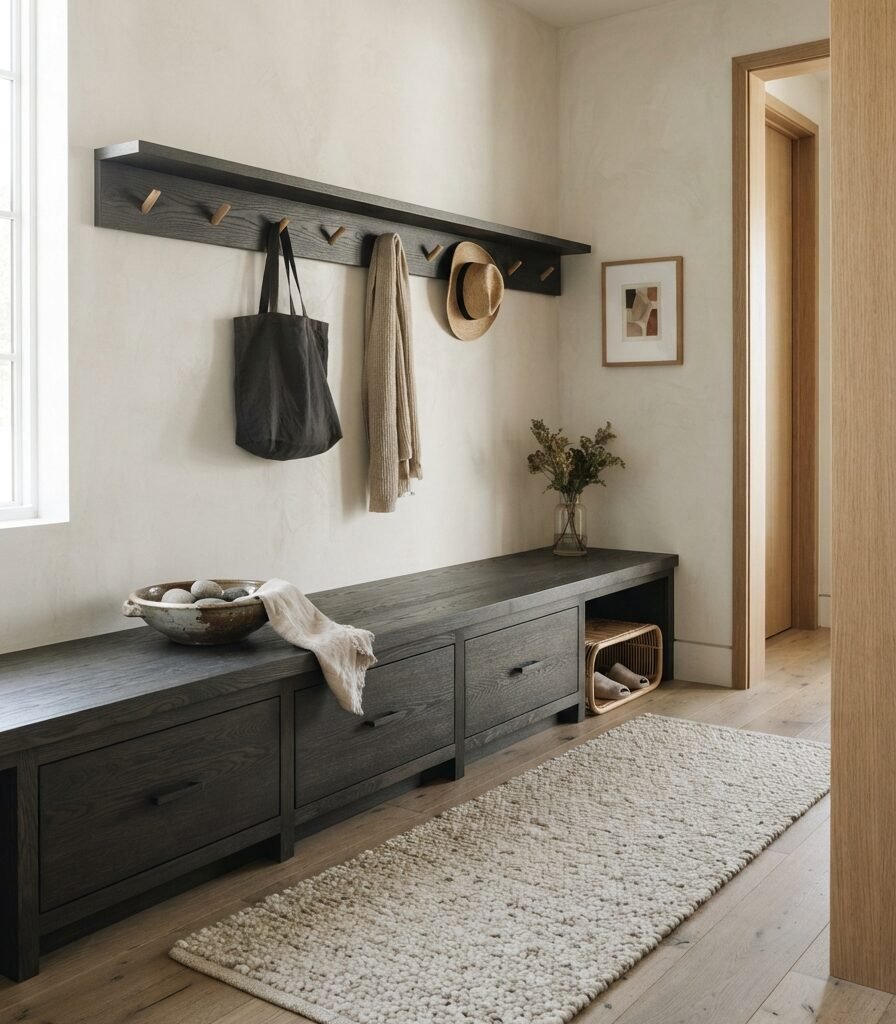
Vibe: The space feels grounded, anchored by one dark element against a lighter envelope.
Why it works: Japandi interiors benefit from controlled contrast rather than complete tonal sameness. A charcoal bench provides visual weight at sitting height while the pale wall and oak storage prevent the dark finish from making the mudroom feel heavy.
How to get it: Choose a charcoal finish with visible grain instead of an opaque black paint. Keep the surrounding cabinetry at least two shades lighter so the bench remains an intentional focal point rather than becoming part of a dark block.
Shop The Look
- Charcoal oak entryway bench
- Natural oak wall hook rail
- Mushroom wool runner rug
- Matte ivory ceramic catchall bowl
- Linen lumbar cushion in oatmeal
3. Paper Lantern Pendant for Soft Evening Light
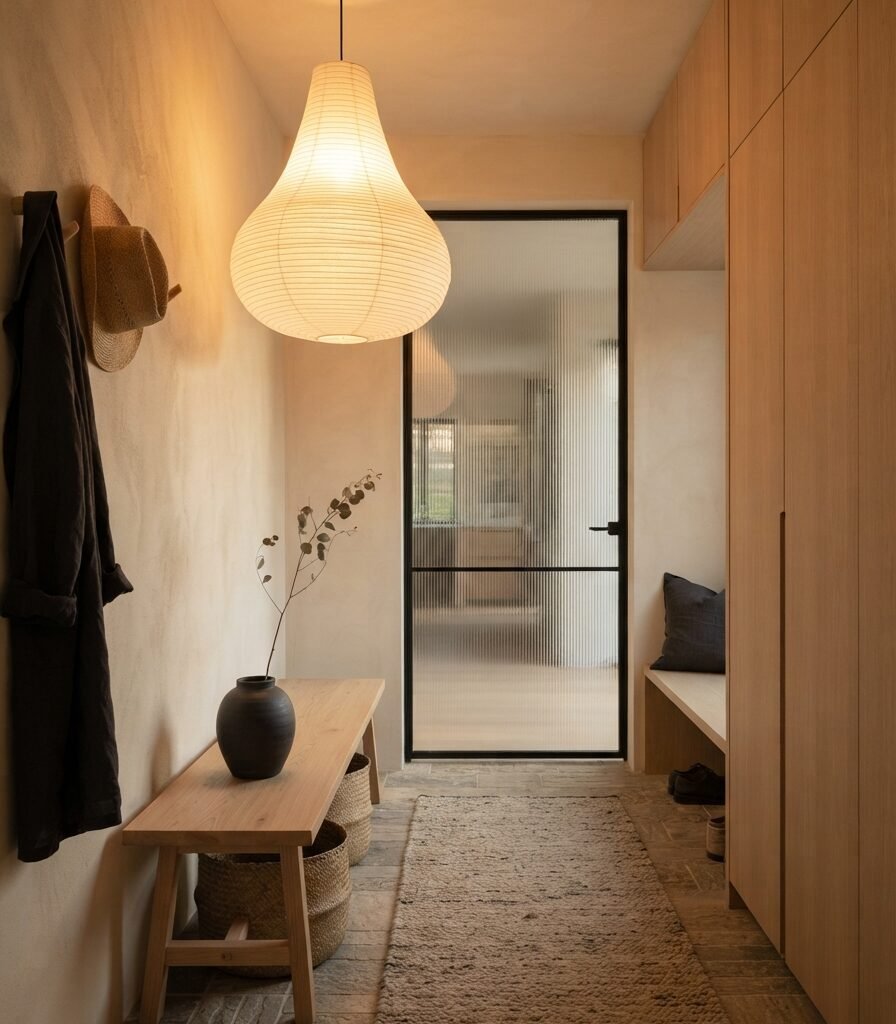
Vibe: The room feels luminous, with the pendant producing a gentle glow rather than a harsh overhead pool.
Why it works: Paper lanterns diffuse light across their entire surface, making them especially compatible with Japandi’s soft material vocabulary. A warm 2700K–3000K lamp also enhances oak, linen, and plaster instead of flattening them under cool white light.
How to get it: Hang the pendant so its bottom sits comfortably above head height and center it over the main circulation zone rather than automatically centering it on the room. Use a dimmable warm-white LED for evening use.
💡 Quick Win: Change the existing mudroom bulb to a 2700K warm-white LED before buying a new fixture; the warmer light can immediately make pale wood and beige textiles feel richer.
Shop The Look
- Japanese rice paper pendant light
- Dimmable 2700K warm white LED bulb
- Natural wood ceiling canopy
- Minimal black cord pendant kit
- Small handmade ceramic pendant accent
4. Built-In Bench with Lift-Up Shoe Storage

Vibe: The mudroom feels ordered, with everyday footwear disappearing into furniture rather than occupying the floor.
Why it works: A built-in bench combines seating and storage while maintaining a single horizontal visual line. The uninterrupted oak surface creates proportion and repetition, while concealed compartments prevent the practical mess of shoes from becoming visual clutter.
How to get it: Build the bench at approximately 18 inches high and 16–20 inches deep, depending on available circulation. Divide the interior into separate shoe zones so everyday footwear can be reached without emptying the entire compartment.
Shop The Look
- White oak storage bench with shoe compartment
- Soft-close lift-up bench hardware
- Natural woven shoe storage baskets
- Neutral indoor-outdoor runner
- Oak shoehorn long handle
5. Clay and Terracotta Accents Against Greige

Vibe: The room feels earthy, with restrained clay tones warming an otherwise neutral palette.
Why it works: Japandi does not require an entirely beige interior; a controlled earth pigment can add depth without introducing visual noise. Greige provides a soft middle value between warm white and oak, while terracotta adds a small amount of chromatic weight.
How to get it: Use muted terracotta only on portable pieces such as a ceramic tray, cushion, or small vase rather than painting an entire wall. Look for dusty clay finishes rather than saturated orange.
💡 Quick Win: Add one matte terracotta catchall bowl to the bench or shelf and remove two smaller decorative objects nearby; the stronger single accent will read more intentionally.
Shop The Look
- Matte terracotta ceramic catchall bowl
- Greige linen cushion cover
- Dusty clay ceramic vase
- Pale oak floating shelf
- Natural fiber runner, muted beige
6. Slatted Oak Wall for Architectural Texture
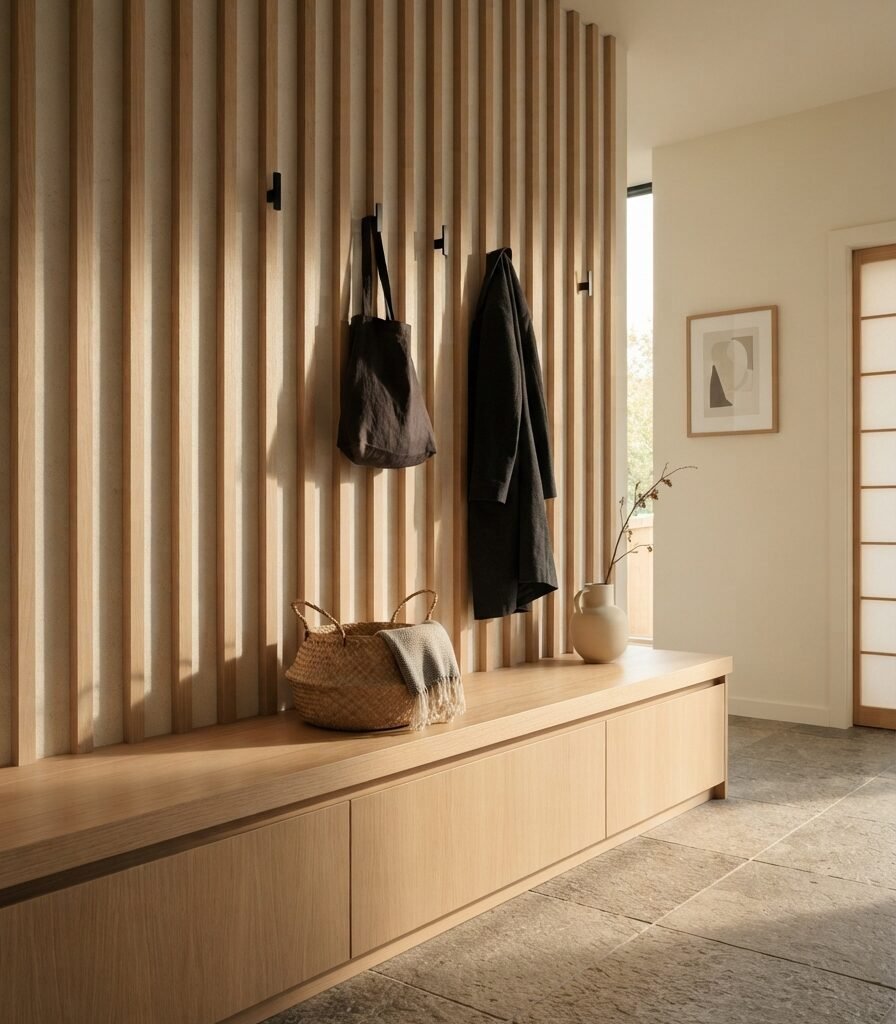
Vibe: The room feels textured, even though the color palette remains deliberately restrained.
Why it works: Repeated vertical slats create rhythm without requiring artwork or decorative pattern. Their shadow lines change throughout the day, giving a mostly neutral wall subtle movement and depth.
How to get it: Use narrow oak battens with consistent spacing, ideally around ¾–1½ inches depending on the wall scale. Continue the same wood species into the bench or cabinetry so the slat wall feels connected to the furniture rather than applied as an unrelated accent.
Shop The Look
- White oak acoustic slat wall panels
- Natural oak floating mudroom bench
- Black metal coat hooks minimalist
- Stone-look porcelain floor tile
- Woven rattan storage basket
7. A Long Runner That Defines the Traffic Path
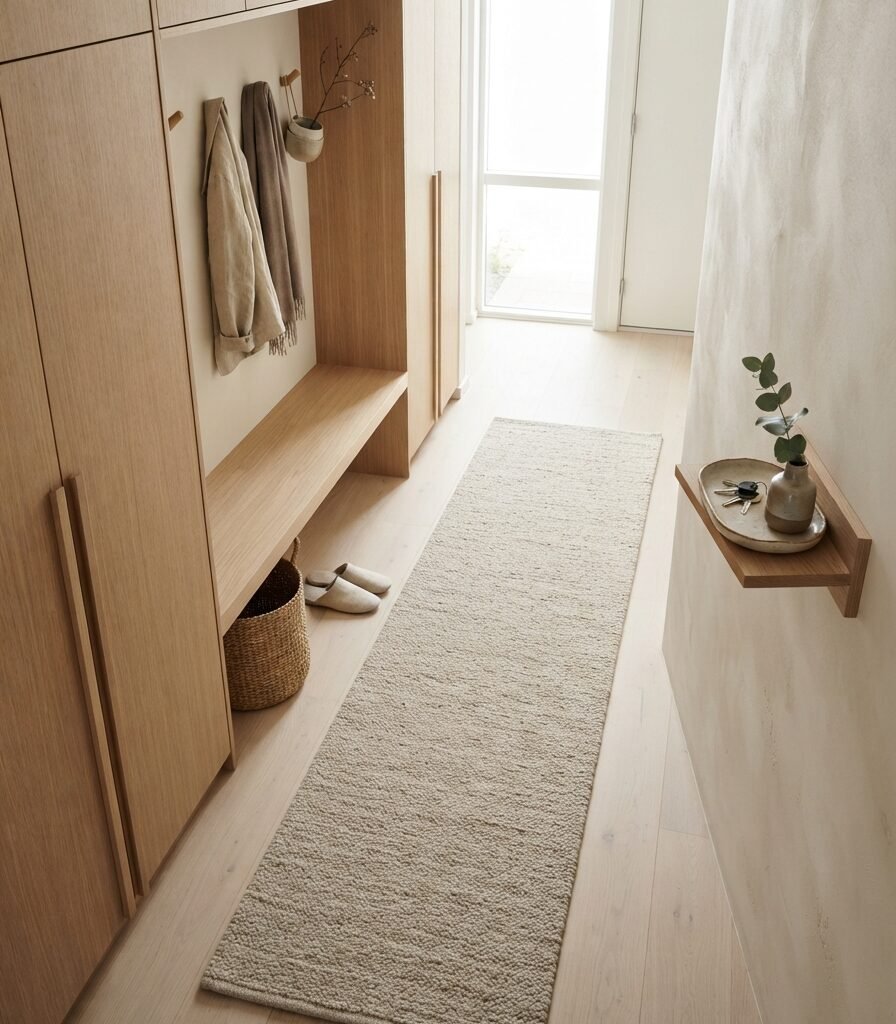
Vibe: The space feels flowing, with the runner quietly directing movement through the room.
Why it works: A runner can function as spatial zoning without adding walls or furniture. Its elongated proportions visually connect the entrance, bench, and storage while softening hard flooring.
How to get it: Choose a runner that leaves roughly 3–6 inches of visible floor along each side rather than filling the entire width. For a busy entry, select a low-pile wool or washable woven option with a subtle tonal pattern.
Shop The Look
- Oatmeal wool runner 2.5 x 8 feet
- Washable neutral hallway runner
- Natural rubber rug pad
- Taupe woven entry basket
- Minimal oak shoe rack
8. Floating Bench to Preserve Negative Space

Vibe: The room feels weightless because the furniture leaves visible floor beneath it.
Why it works: Negative space is a major part of Japandi composition. A floating bench exposes more floor area, allowing a small mudroom to feel less visually compressed while still providing a practical place to sit.
How to get it: Anchor the bench securely into wall studs and keep its depth around 15–18 inches if circulation is tight. Leave most of the space underneath open rather than filling it with baskets.
💡 Quick Win: If replacing a bench is not practical, move your existing storage baskets to one side and leave at least half the floor beneath the bench empty.
Shop The Look
- Floating white oak wall-mounted bench
- Heavy-duty concealed bench brackets
- Oatmeal linen bench cushion
- Small woven storage basket
- Matte black wall hook trio
9. Walnut and White Oak Wood Combination
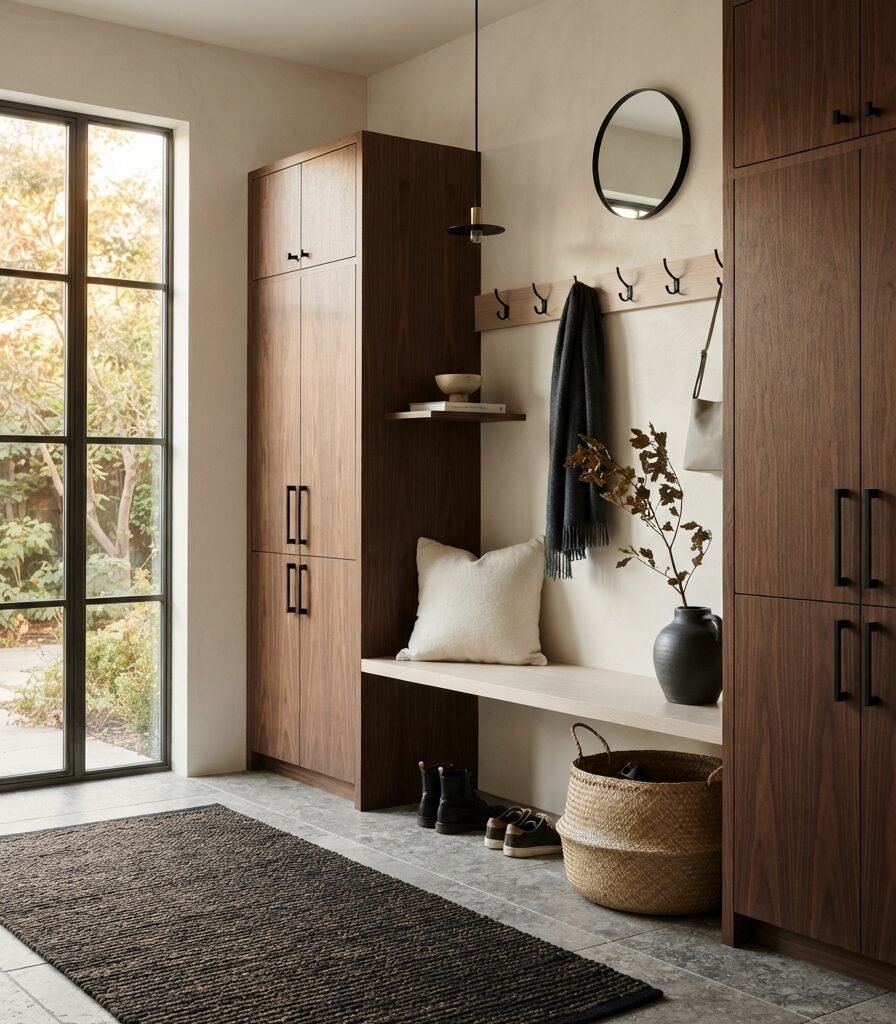
Vibe: The room feels rich, without relying on decorative color.
Why it works: Two wood species can work beautifully when their roles are clearly separated. Walnut supplies depth and visual weight, while white oak keeps the bench and lower portion of the room light.
How to get it: Use walnut for one dominant vertical element such as tall cabinetry and white oak for the bench or hooks. Avoid introducing a third wood species, because three competing grains can quickly make a small mudroom feel visually fragmented.
Shop The Look
- Walnut tall entryway storage cabinet
- White oak mudroom bench
- Walnut wall-mounted coat rack
- Cream ceramic storage vessel
- Black minimalist cabinet pulls
10. Oversized Ceramic Vessel as the One Decorative Object

Vibe: The composition feels still, with one tactile object carrying the decorative responsibility.
Why it works: Japandi often gains strength through editing rather than accumulation. A large ceramic vessel provides scale, texture, and an organic silhouette simultaneously, so several small accessories are unnecessary.
How to get it: Choose a vessel approximately one-third to one-half the width of the shelf it occupies and leave substantial negative space around it. Use one branch rather than a dense bouquet to preserve the asymmetrical Japanese influence.
💡 Quick Win: Remove every object from one mudroom shelf and return only one large ceramic vessel; photograph the result before deciding whether anything else is actually needed.
Shop The Look
- Large handmade cream stoneware vase
- Natural sculptural branch arrangement
- Slim white oak floating shelf
- Folded oatmeal linen hand towel
- Matte ceramic catchall tray
11. Closed Shoe Storage for a Clutter-Free Entrance
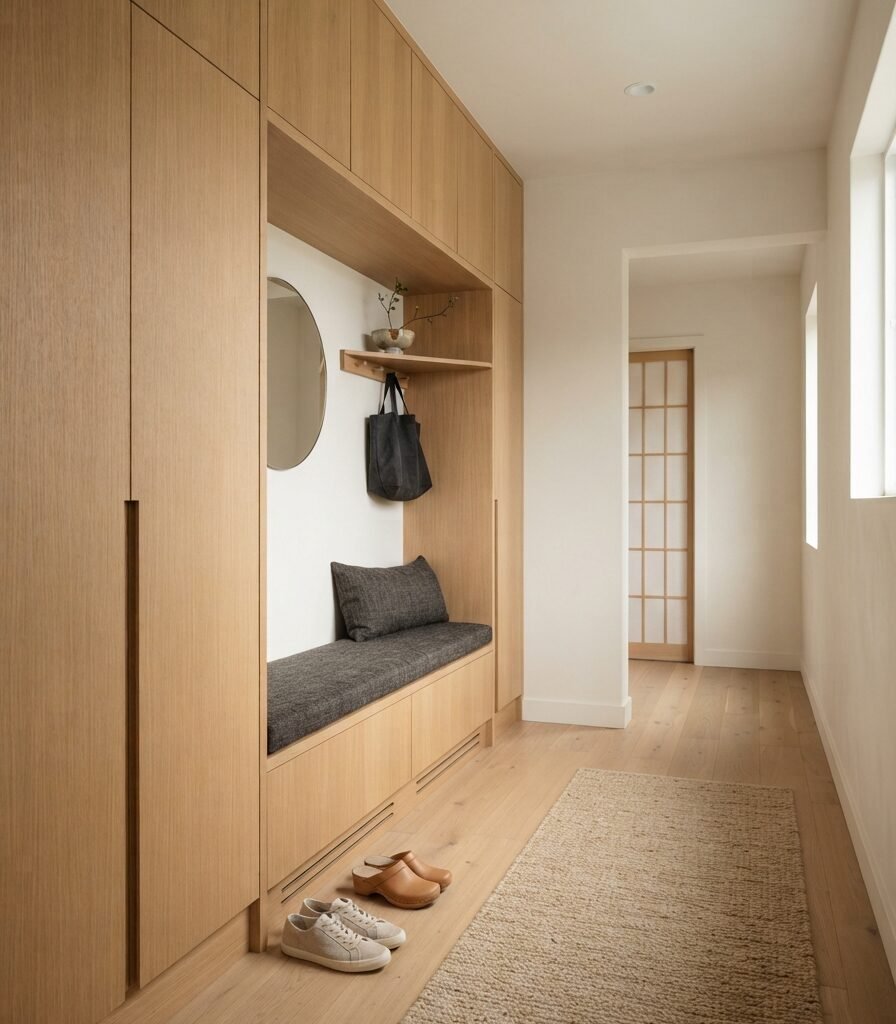
Vibe: The space feels clear because visual clutter is contained behind consistent cabinet fronts.
Why it works: Open shoe storage is convenient but visually noisy when multiple footwear shapes and colors accumulate. Closed cabinetry creates a calm, uninterrupted surface while preserving access through adjustable internal shelves.
How to get it: Reserve the lower cabinet zone for everyday shoes and install adjustable shelves rather than fixed ones. Ventilated doors or discreet ventilation gaps are important if damp footwear will be stored inside.
Shop The Look
- Flush-front oak shoe cabinet
- Adjustable shoe storage shelf system
- Ventilated cabinet door insert
- Minimal push-to-open cabinet hardware
- Slim upholstered oak bench
12. Woven Baskets Under an Open Bench

Vibe: The room feels layered, but the repetition keeps the texture controlled.
Why it works: Identical baskets create visual repetition, which prevents open storage from becoming chaotic. Natural fibers also introduce the tactile softness that hard cabinetry and flooring lack.
How to get it: Use baskets that are approximately the same width and height so the lower bench line reads as one composed unit. Label them discreetly inside rather than attaching large visible tags.
Shop The Look
- Large matching seagrass storage baskets
- Natural oak open bench
- Beige linen bench cushion
- Jute entry mat neutral
- Handmade ceramic key tray
13. Black Hardware Against Warm Oak
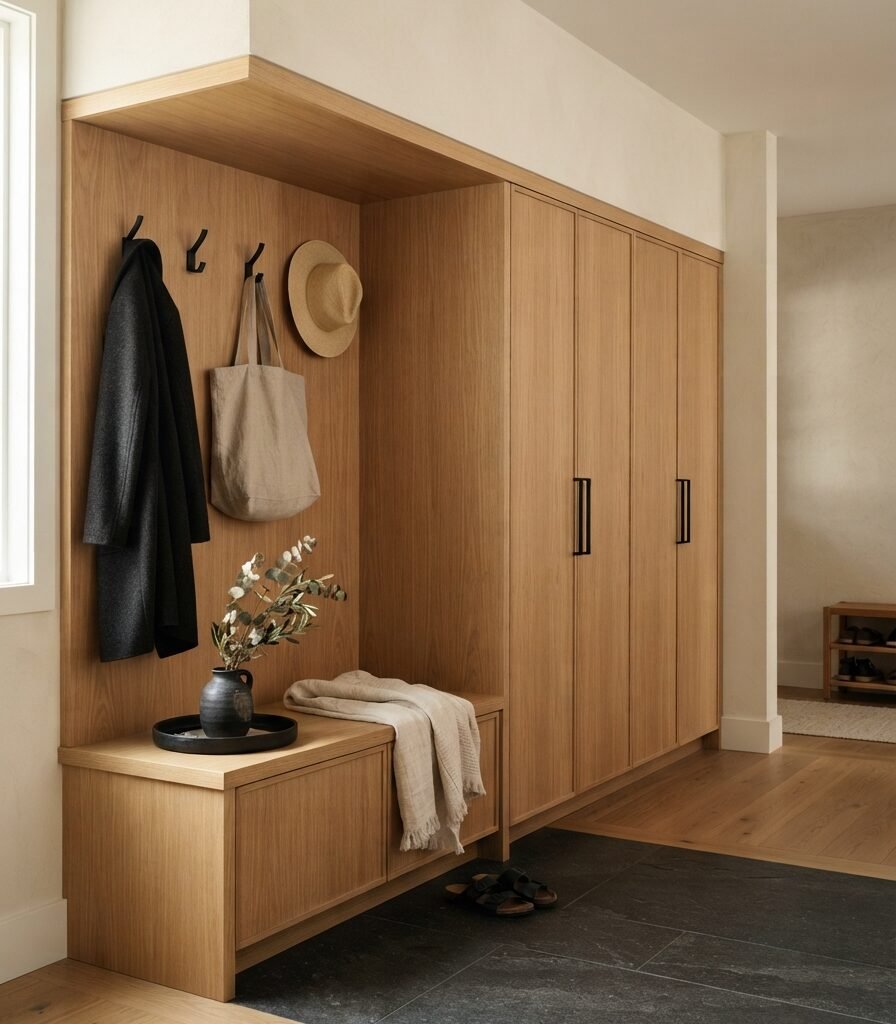
Vibe: The room feels defined, with tiny dark details giving the pale palette structure.
Why it works: Matte black provides a controlled graphic contrast against warm wood without introducing another competing color. Repeating the same finish across hooks, handles, and one small accessory creates cohesion.
How to get it: Select hardware with a simple cylindrical or rectangular profile and repeat it at least three times. Keep the black finish matte rather than glossy to preserve the quiet Japandi material language.
Shop The Look
- Matte black minimalist coat hooks
- Black cabinet pull set simple profile
- Matte black ceramic catchall tray
- Warm oak wall storage cabinet
- Charcoal woven seat cushion
14. Compact Japandi Mudroom Under the Stairs

Vibe: The space feels efficient, turning an awkward architectural pocket into useful storage.
Why it works: Custom cabinetry follows the existing geometry rather than fighting it. The uninterrupted wood surface visually simplifies the irregular staircase profile while converting otherwise wasted volume into drawers and shoe storage.
How to get it: Prioritize shallow drawers and pull-out shoe trays where ceiling height becomes restricted. Keep the tallest storage closest to the tallest part of the stair cavity and use the lower sections for shoes or baskets.
💡 Quick Win: Use two matching shallow woven boxes under an existing bench instead of trying to fill every inch of the awkward space.
Shop The Look
- Custom-look oak under-stair storage drawers
- Slim floating entry bench
- Low-profile woven storage boxes
- Small battery puck lights, warm white
- Minimal black coat hook rail
15. Linen Curtain Concealing Open Storage
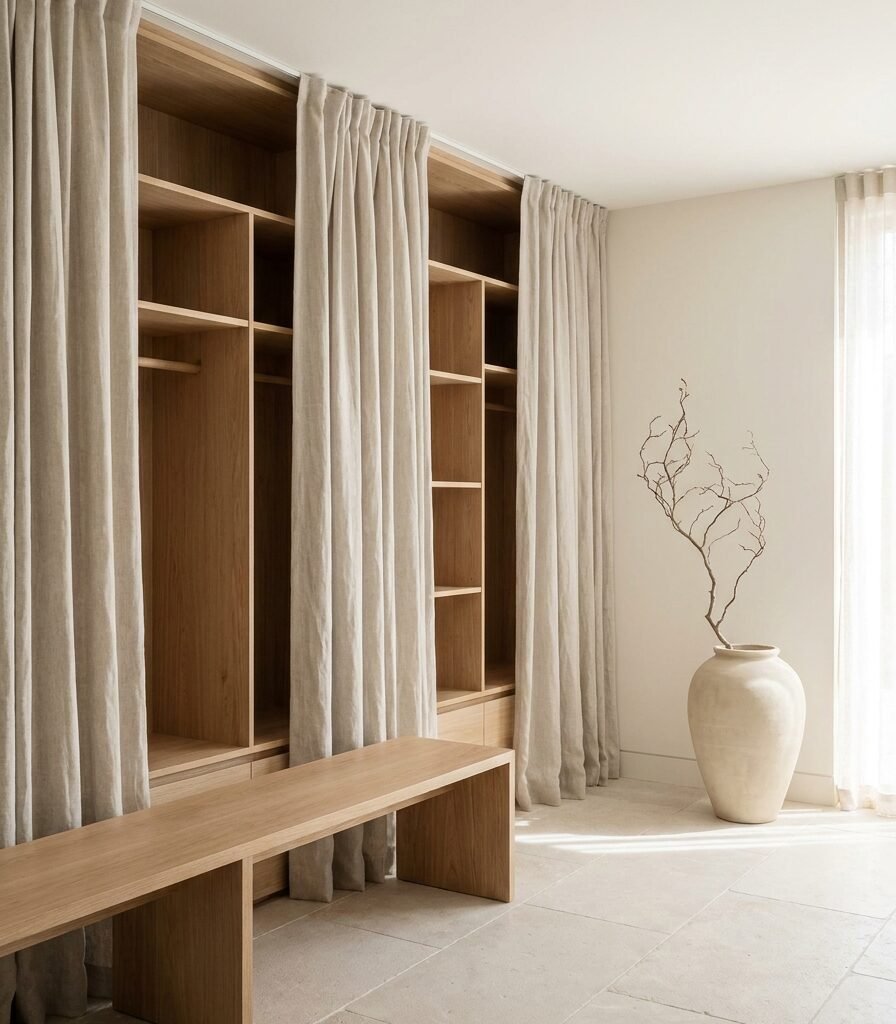
Vibe: The room feels soft because fabric interrupts the harder lines of shelving and cabinetry.
Why it works: Linen curtains hide everyday clutter without introducing the visual heaviness of solid cabinet doors. The fabric also adds vertical movement and tactile contrast to oak and stone.
How to get it: Install a slim ceiling-mounted track and use heavyweight natural linen or linen-look panels with enough fullness to create relaxed folds. Keep the curtain color close to the wall color so it becomes a quiet architectural layer.
Shop The Look
- Oatmeal linen curtain panel
- Ceiling-mounted curtain track
- Natural oak open storage shelf
- Slim wooden bench
- Stoneware floor vase neutral
16. Japanese-Inspired Low Bench with Tatami Texture
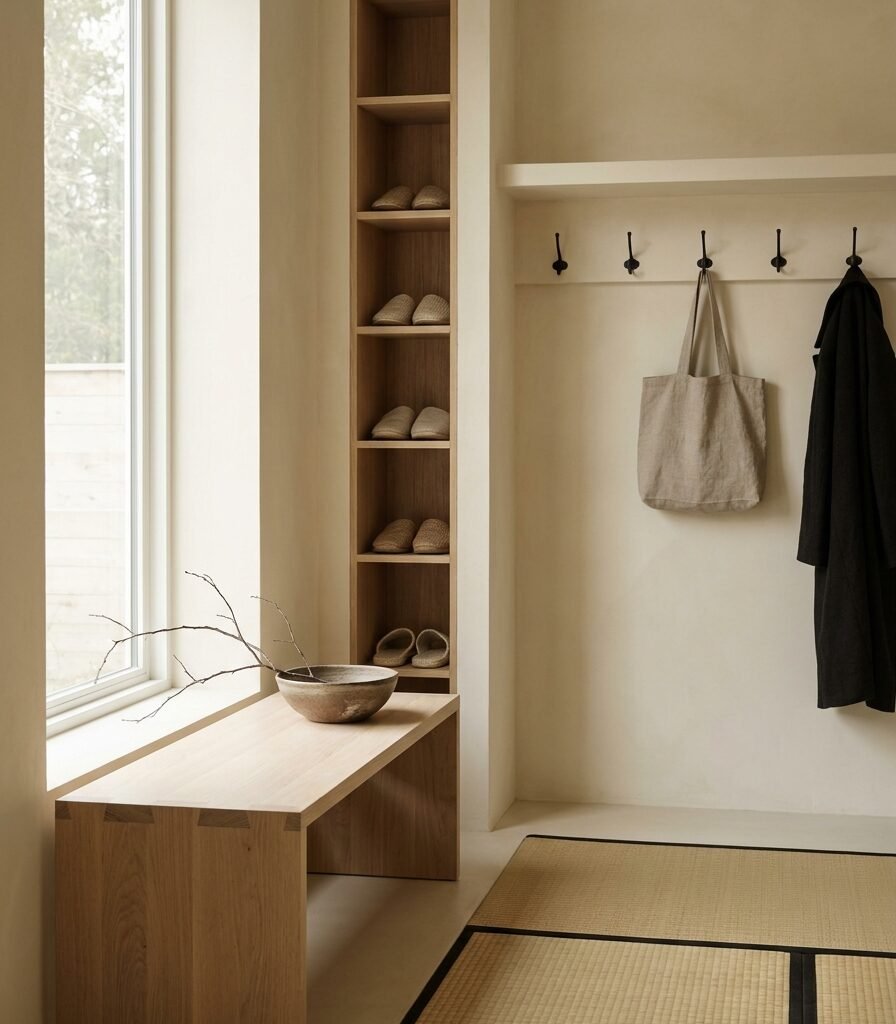
Vibe: The space feels grounded, with low furniture encouraging a slower transition between outside and inside.
Why it works: Lower furniture references traditional Japanese spatial proportions while remaining practical for a contemporary home. The woven floor texture introduces material contrast without requiring additional decorative objects.
How to get it: Use a low bench only if it remains comfortable for the household; practical ergonomics matter more than copying a traditional proportion literally. Pair it with a removable woven mat that can be cleaned easily.
Shop The Look
- Low-profile Japanese-style oak bench
- Tatami-inspired woven floor mat
- Natural straw storage basket
- Handmade Japanese-style ceramic bowl
- Simple black wall hook set
17. Vertical Storage for a Narrow Mudroom

Vibe: The hallway feels airy, despite having substantial storage.
Why it works: Vertical cabinetry uses wall height rather than consuming valuable floor depth. The continuous cabinet fronts also reduce the number of visible seams and objects, which helps narrow spaces feel less crowded.
How to get it: Reserve the lower 18–24 inches for shoes and everyday bags, the middle zone for coats, and the highest cabinets for seasonal items. Use matching fronts from floor to ceiling to make the wall read as one architectural plane.
💡 Quick Win: Install a single vertical rail of five matching hooks rather than scattering individual hooks across the wall; repetition immediately creates order.
Shop The Look
- Tall natural oak entry storage cabinet
- Vertical black coat hook rail
- Slim floating oak bench
- Narrow oatmeal runner
- Woven upper-storage basket
18. Soft Sage Green as the Organic Accent
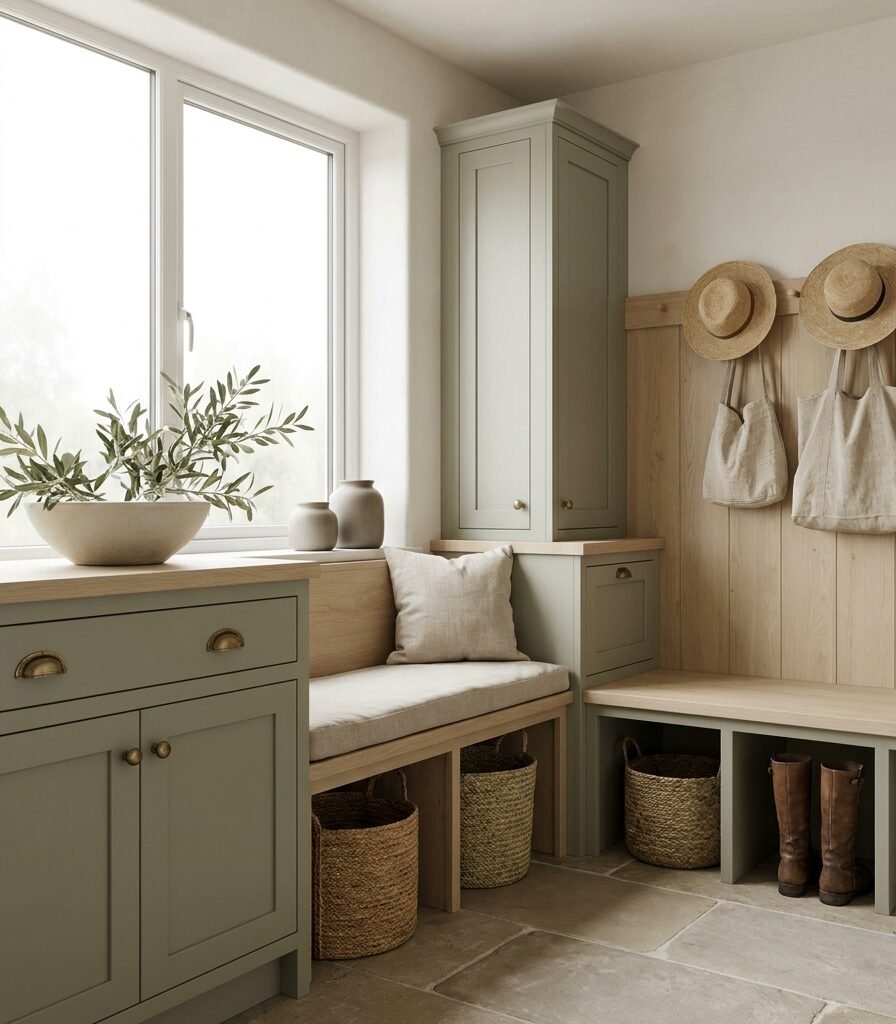
Vibe: The room feels restful, with muted green providing quiet color without visual intensity.
Why it works: Dusty sage works particularly well with oak because both contain natural yellow and brown undertones. Keeping the green muted prevents the room from shifting toward farmhouse or cottage styling.
How to get it: Choose a sage paint or cabinet finish with a gray undertone rather than a bright botanical green. Keep the remaining colors within warm neutrals so the green remains an accent rather than the entire visual story.
Shop The Look
- Dusty sage storage cabinet
- Pale oak entry bench
- Sage linen cushion cover
- Natural olive branch arrangement
- Handmade stoneware bowl green-gray glaze
19. A Built-In Charging Drawer for Everyday Function
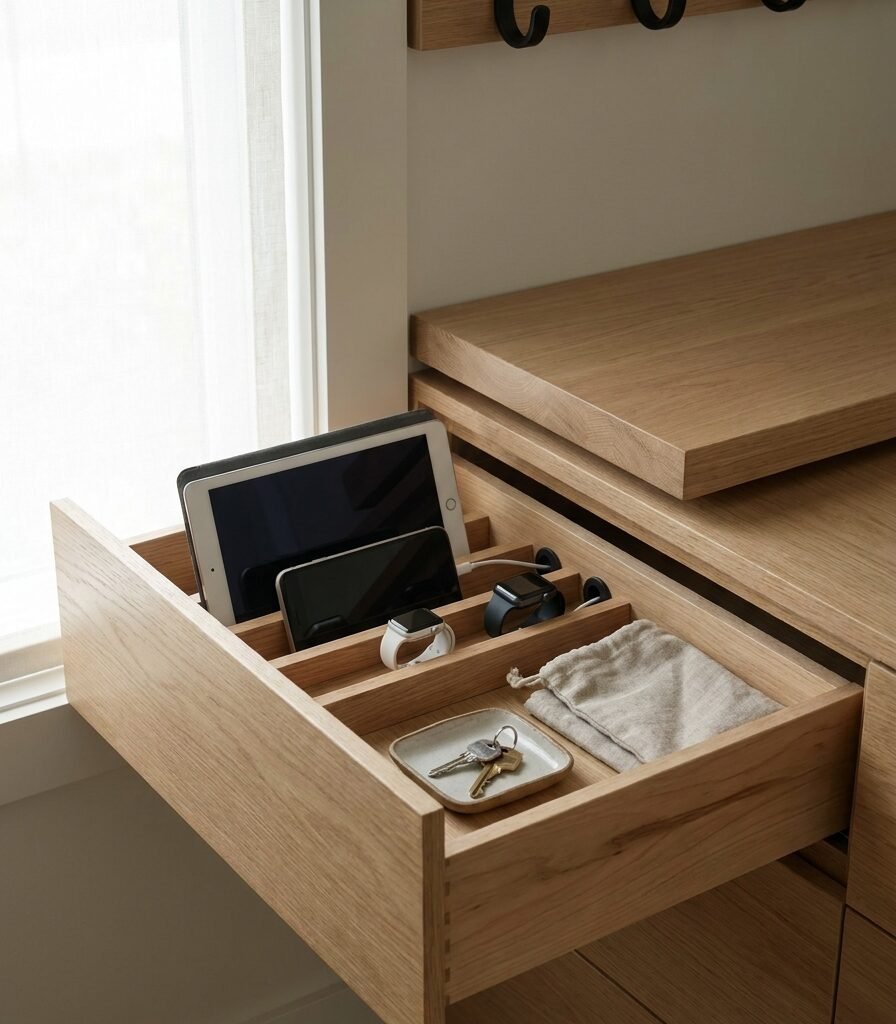
Vibe: The space feels streamlined because technology disappears into the same calm storage system as everything else.
Why it works: Japandi is fundamentally compatible with hidden functionality. A dedicated charging drawer removes cables and devices from counters while keeping them exactly where they are needed during the transition in and out of the house.
How to get it: Use a drawer with an internal power outlet and cable grommet, keeping chargers inside divided compartments. Have electrical work completed by a qualified professional if the installation requires new wiring.
Shop The Look
- Oak charging drawer organizer
- Cable management box natural wood
- Divided bamboo drawer organizer
- Compact USB-C charging station
- Linen cable storage pouch
20. Minimal Botanical Styling on the Entry Shelf
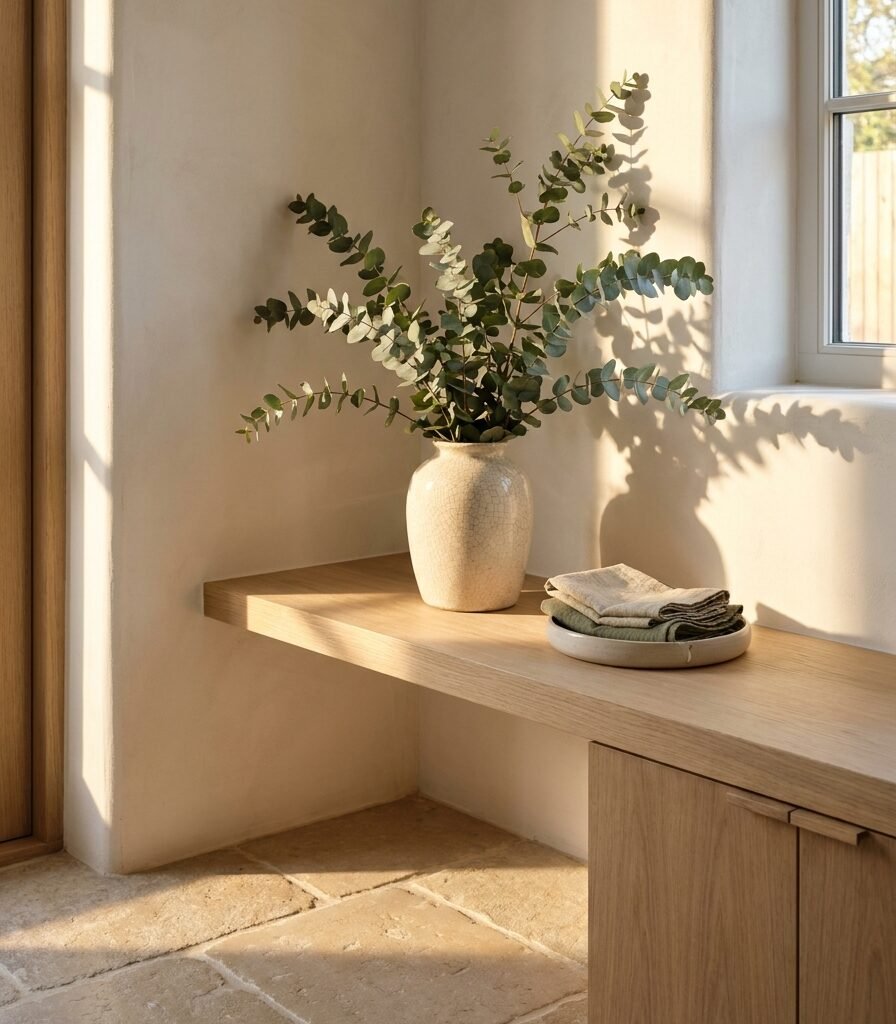
Vibe: The shelf feels organic, with one irregular branch breaking the geometry of the storage wall.
Why it works: Natural botanical forms provide asymmetry, which keeps a minimal arrangement from becoming sterile. One branch also creates vertical movement without the visual density of a large floral arrangement.
How to get it: Select a branch with an uneven silhouette and place it in a heavy ceramic vessel so the composition does not feel top-heavy. Offset the vase from the shelf center and leave at least 50% of the shelf surface empty.
💡 Quick Win: Take a single branch from the garden or use one dried eucalyptus stem in a neutral vase instead of buying a full arrangement.
Shop The Look
- Handmade ivory ceramic bud vase
- Dried eucalyptus branch stems
- Pale oak floating entry shelf
- Natural linen folded hand towel
- Stone ceramic catchall dish
21. The Complete Japandi Mudroom with Hidden Clutter
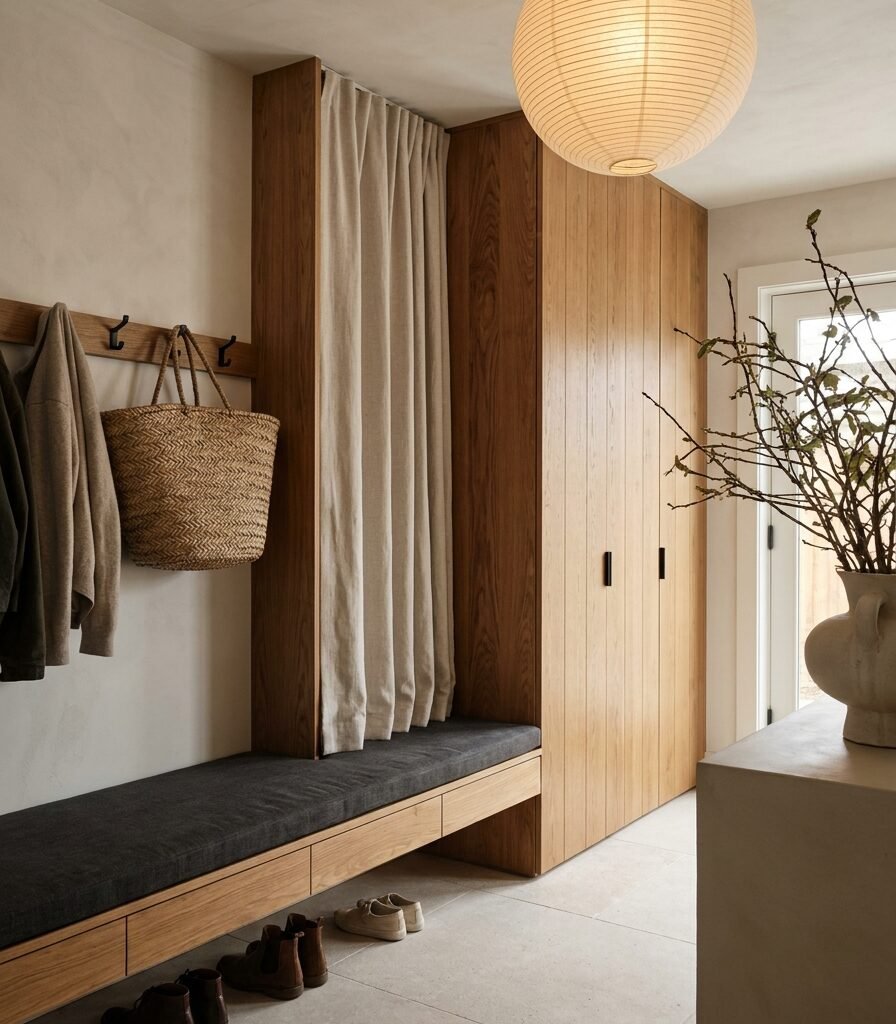
Vibe: The finished mudroom feels settled, as though every object has found its natural place.
Why it works: The strongest Japandi mudrooms combine several small principles rather than relying on one decorative feature: concealed clutter, natural material repetition, restrained contrast, warm lighting, and meaningful negative space. The storage performs the practical work while the limited palette keeps the room visually quiet.
How to get it: Start with the storage architecture before buying accessories. Plan where coats, shoes, bags, cleaning items, and seasonal equipment will actually live, then design the visible surfaces around what remains after those necessities have been concealed.
Shop The Look
- Full-height natural oak mudroom cabinet
- Floating oak bench with storage
- Japanese rice paper pendant
- Large woven seagrass storage basket
- Handmade neutral ceramic statement vase
How to Start Your Japandi Style Mudroom Transformation
Start with warm white walls, because they establish the neutral envelope that allows oak, linen, stone, and black accents to work together. A warm off-white with a slight beige or greige undertone is more forgiving than a stark blue-white and will make natural wood look richer in both daylight and warm evening lighting.
The most common mistake is mixing too many wood tones. White oak, walnut, bamboo, and medium oak can all be attractive individually, but putting four unrelated grains into a small mudroom creates visual competition. Choose one dominant wood and, at most, one supporting species with a clearly different role.
For a budget entry point, three inexpensive changes can establish the direction quickly: a matte ceramic catchall under $25, a pair of woven baskets under $50, and a 2700K warm-white LED bulb under $15. These additions change texture, organization, and light without requiring new cabinetry.
A starter Japandi mudroom can often be refreshed over one weekend for roughly $150–$500 if the existing bench and storage remain usable. A more complete room with custom cabinetry, flooring, lighting, and built-ins can reach $2,000–$8,000+, depending heavily on labor and materials. Accessories can happen in days; custom joinery and electrical work may take several weeks.
Frequently Asked Questions About Japandi Style Mudroom
What is a Japandi mudroom?
A Japandi mudroom combines Japanese-inspired restraint with Scandinavian practicality and warmth. It typically uses natural oak or walnut, neutral colors, simple furniture profiles, concealed storage, and carefully controlled decoration. Unlike a purely minimalist mudroom, it should still feel tactile through materials such as linen, wool, ceramic, and woven fiber. Wabi-sabi also encourages natural variation rather than demanding flawless uniformity.
What colors work best for a Japandi style mudroom?
The safest foundation is warm white, oatmeal, greige, mushroom, or soft taupe. Pale oak pairs particularly well with warm ivory, while walnut can handle deeper charcoal or muted clay accents. Dusty sage can work as a secondary color when you want more personality without losing the quiet character of the style. Avoid using too many accent colors because the palette should allow natural materials to provide most of the visual interest.
How much does it cost to create a Japandi mudroom?
A small cosmetic update can cost approximately $150–$500 when you reuse existing storage and focus on paint, lighting, baskets, hooks, and textiles. A mid-range renovation with a new bench, cabinetry, flooring, and lighting may fall around $2,000–$5,000. Custom built-ins, electrical changes, premium oak, and professional installation can push the project beyond $8,000. The largest cost variable is usually cabinetry and labor rather than decorative accessories.
Can Japandi style work in a very small mudroom?
Yes, and the style can be particularly effective in a narrow entrance because its restraint naturally limits visual clutter. Use vertical storage, a floating bench, concealed shoe cabinets, and a shallow hook rail instead of bulky furniture. Keep the floor visible wherever possible because continuous flooring increases the perception of space. In a very narrow mudroom, prioritize circulation width before adding decorative pieces.
What type of bench works best in a Japandi mudroom?
A simple oak or walnut bench with a low, clean profile is one of the strongest choices. For maximum practicality, choose a bench around 18 inches high with integrated shoe storage or drawers beneath it. A floating bench is useful when the room is small because the visible floor beneath it creates more negative space. Add one oatmeal or natural-linen cushion if additional comfort is needed, but avoid over-layering the seat.
Ready to Create Your Dream Japandi Style Mudroom?
These 21 Japandi style mudroom ideas cover warm neutrals, contrasting woods, hidden storage, lighting, compact layouts, woven textures, botanical accents, and practical built-ins. The transformation does not need to happen all at once; starting with one well-chosen material or storage improvement is often the most faithful way to approach Japandi’s philosophy of intentional simplicity. Today, switch the mudroom’s main bulb to a 2700K warm-white LED and clear one visible surface completely before deciding what deserves to return. As the room becomes quieter, more organized, and more tactile, the daily transition through your doorway can begin to feel slower and more settled. Save your favorite ideas- especially the floating oak bench, paper lantern, and concealed storage combinations- and return to them when you’re ready to build your own calm Japandi entry ritual.