
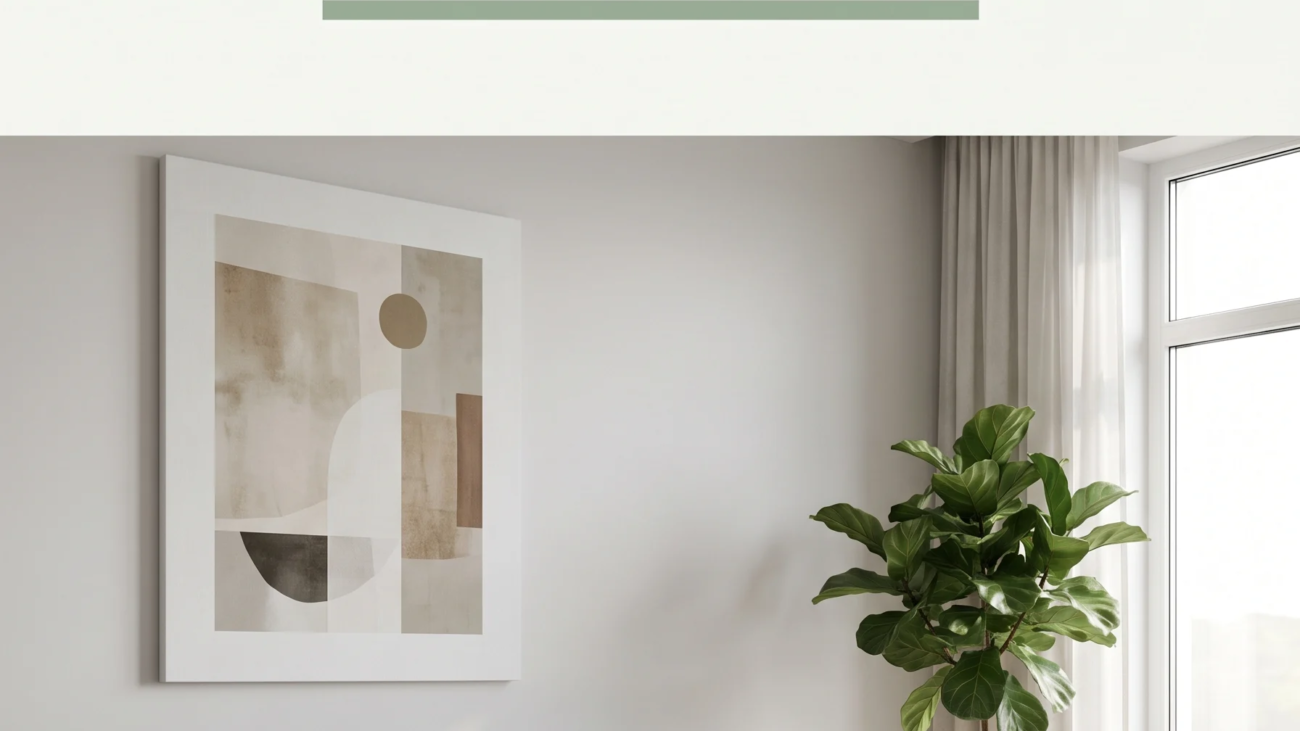
Modern home decor is a style built on clean lines, function-first furniture, and a deliberately restrained color story. This article gives you 15 modern home decor ideas covering color, materials, lighting, furniture, and layout — all rooted in real design principles, not trends that fade by next season.
The feel is unmistakable: light that moves freely across uncluttered surfaces, textures that feel cool and considered, and rooms that breathe instead of shout. Nothing here is accidental — every material, every angle, every negative space is doing a job. Modern home decor rewards restraint the way a well-tailored jacket rewards good fabric. Here are 15 ideas worth saving — and stealing.
Why Modern Home Decor Works So Well
Modern design traces back to early-to-mid-20th-century movements Bauhaus, International Style, and later Scandinavian modernism — all built on the belief that form should follow function. It differs from “contemporary” (which shifts with current trends) because modern refers to a specific, historically fixed design language: geometric forms, minimal ornament, and honest materials shown as themselves rather than disguised.
Core tones run warm-neutral to cool-contrast: greige, warm white, charcoal, and black used as accents rather than backdrops. Materials lean into walnut, white oak, brushed steel, blackened metal, polished concrete, and glass. Nothing is faux — modern decor prizes materials that age visibly and honestly.
Modern home decor is trending again as more people spend time working and living inside their homes and want spaces that feel calm rather than cluttered. Pinterest search data consistently shows rising interest in “quiet luxury” interiors, and modern’s function-first approach fits that mood directly.
Small spaces can absolutely achieve this style — arguably better than most, since modern decor already values negative space. Prioritize one or two anchor pieces with real presence (a sculptural chair, a substantial pendant light) rather than filling every surface, and let the walls stay mostly bare.
Style at a Glance
| Element | Description |
| Philosophy | Form follows function; every piece earns its place |
| Key Materials | Walnut, white oak, brushed steel, blackened metal, glass, polished concrete |
| Key Colors | Greige, warm white, charcoal, black, sage green accent |
═══════════════════════════════════
15 Modern Home Decor Ideas
1. Warm Neutral Palette: Greige Walls with Charcoal Accents
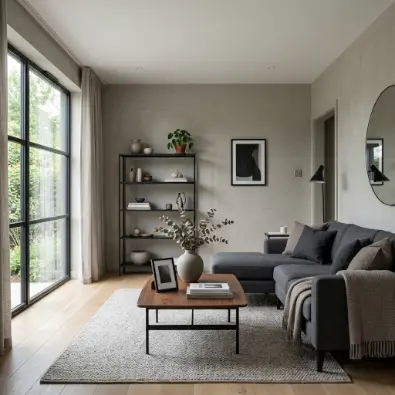
Vibe: The room feels grounded, like it’s holding still under soft daylight.
Why it works: Greige splits the difference between beige’s warmth and gray’s cool restraint, so it reads as neutral without going flat. Charcoal accents create visual weight low in the room — sofas, rugs, frames — which keeps the eye anchored while walls stay quiet. This is contrast through value, not color, which is a hallmark of modern home decor.
How to get it: Paint walls in a true greige (test swatches in your room’s actual light before committing, since greige shifts warm or cool depending on exposure), then introduce charcoal only through one or two large-scale pieces so it reads as intentional weight, not gloom.
💡 Quick Win: A charcoal linen throw folded over the sofa arm delivers the contrast instantly without repainting anything.
Shop The Look
- Greige matte interior wall paint sample set
- Charcoal boucle throw pillow covers set
- Matte black gallery picture frame set
- Warm white ceramic bud vase minimalist
- Taupe wool blend area rug modern
2. Walnut Wood Paired with Brushed Steel for a Modern Material Palette
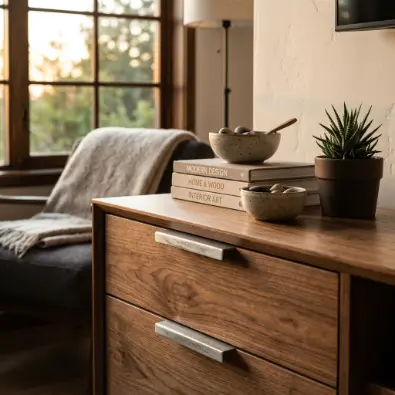
Vibe: The console feels warm despite the cool metal running through it.
Why it works: This pairing works because of temperature contrast — walnut’s amber warmth against steel’s cool gray keeps the material story from feeling one-note. It’s a material layering technique: one warm organic surface, one cool industrial one, balanced roughly 70/30 so wood still leads.
How to get it: Choose furniture where walnut veneer or solid wood covers the visible surfaces and steel appears only at hardware — drawer pulls, table legs, shelf brackets — so the metal reads as structure, not decoration.
Shop The Look
- Walnut wood media console brushed steel legs
- Brushed steel drawer pull hardware set
- Matte ceramic decorative bowl neutral
- Stoneware planter pot walnut stand
- Woven jute basket storage modern
3. Statement Pendant Lighting Over Key Zones
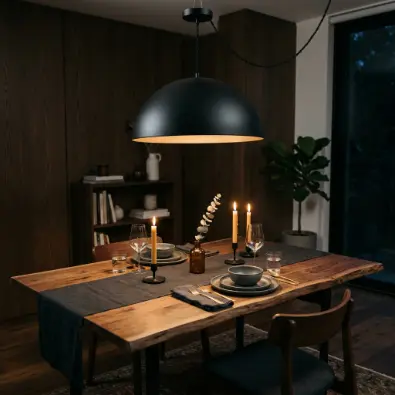
Vibe: The table feels intimate, pulled into a pool of warm light.
Why it works: Modern lighting design treats fixtures as sculpture, not just function — a single oversized pendant creates a visual anchor point that smaller, scattered lights can’t achieve. Hanging it low (roughly 30 inches above the table surface) also lowers the room’s visual ceiling, making tall spaces feel more intimate.
How to get it: Choose one dramatic pendant in matte black or aged brass, size it to roughly two-thirds the width of your table, and hang it 28–32 inches above the surface rather than centering it at standard ceiling height.
💡 Quick Win: Swap a builder-grade dining fixture for a single dome pendant — it’s often the fastest, highest-impact update in the entire home.
Shop The Look
- Matte black dome pendant light fixture
- Linen table runner neutral modern
- Stoneware dinnerware set matte glaze
- Amber glass bud vase single stem
- Dimmer switch kit for pendant lighting
4. Bold Monochrome Moments — Black and White Contrast
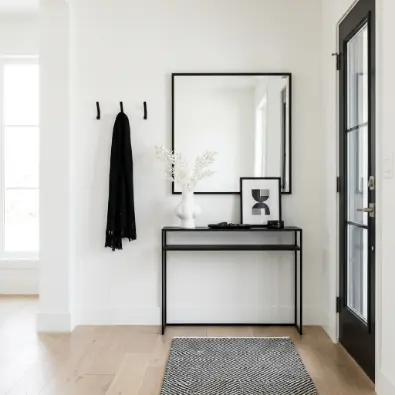
Vibe: The entryway feels crisp, like a clean first impression.
Why it works: High-contrast black and white uses value extremes to create instant visual clarity — the eye reads the space quickly because there’s no muddy middle ground competing for attention. This is a proportion technique: keep white as roughly 70–80% of the surface area so black reads as punctuation, not the main event.
How to get it: Paint or select one dominant black element — a mirror frame, a console’s legs, a door — and let every other surface stay a true, unmixed white rather than an off-white, so the contrast stays sharp.
Shop The Look
- Black metal framed wall mirror round
- Black metal console table entryway
- Abstract black and white canvas print
- White ceramic decorative vase minimalist
- Black metal wall hooks set modern
5. Low-Profile Sofas: The Modern Furniture Silhouette
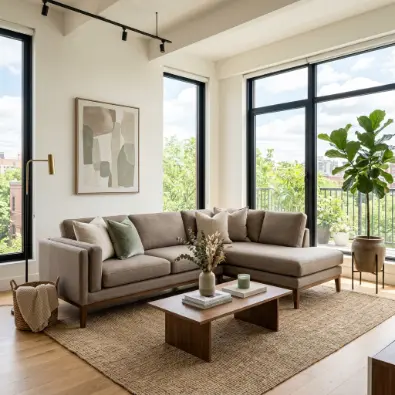
Vibe: The room feels spacious, even though the sofa is large.
Why it works: Low-profile furniture with track arms and tapered legs reduces visual mass — you can see floor beneath and around the piece, which tricks the eye into reading the room as larger. This is a scale and proportion principle: lower seat heights (around 16–17 inches) also lower the room’s overall visual ceiling.
How to get it: Choose sofas with exposed, tapered legs rather than skirted bases, and keep arm height low and track-style instead of rolled, so light and sightlines pass underneath and around the piece.
💡 Quick Win: Even an existing sofa can borrow this look by removing a skirt and adding simple tapered wood legs sold separately.
Shop The Look
- Low-profile track arm sofa modern
- Tapered wood furniture legs replacement set
- Neutral linen throw pillow covers set
- Round wood low coffee table
- Fiddle leaf fig artificial floor plant
6. Polished Concrete and Glass Surfaces
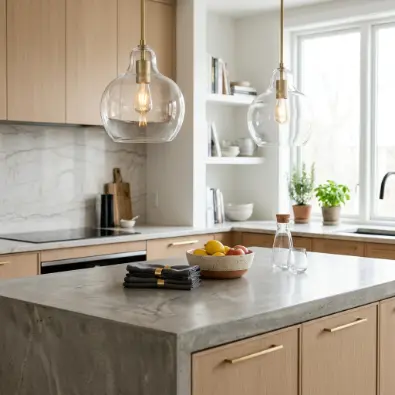
Vibe: The kitchen feels cool and unfussy, like a gallery where you can cook.
Why it works: Concrete and glass both reflect and absorb light differently than wood or fabric, creating a layered material story that reads as refined rather than cold when paired with warmer accents nearby. Concrete’s subtle texture also keeps the surface from feeling sterile despite its industrial origin.
How to get it: If replacing countertops isn’t realistic, introduce the look through a concrete-finish backsplash tile or a poured concrete side table, then balance the cool material with warm brass or wood accessories close by.
Shop The Look
- Concrete effect side table round modern
- Clear glass pendant light fixture set
- Ceramic fruit bowl matte finish
- Linen napkin set neutral stripe
- Brushed brass canister set kitchen
7. Sculptural Ceramic Vases as Focal Points
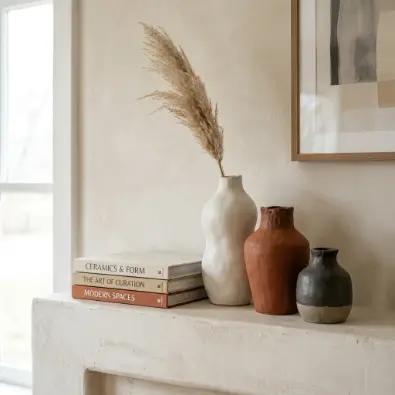
Vibe: The mantel feels curated, like a small gallery arrangement.
Why it works: Grouping objects in odd numbers with varied height creates asymmetric balance — a core styling principle where visual weight is distributed unevenly but still feels resolved. Matte ceramic glazes also diffuse light softly instead of reflecting it, which keeps the grouping from competing with a nearby window.
How to get it: Cluster three vases in a triangle formation with heights that step down roughly two inches at a time, and keep the glaze finishes matte rather than glossy so they read as one cohesive family.
💡 Quick Win: One tall vase with a single dried stem does the same visual job as a full grouping if your surface is small.
Shop The Look
- Matte ceramic vase set of three
- Dried pampas grass stems natural
- Terracotta ceramic bud vase small
- Stack of neutral linen-bound art books
- Sand-colored ceramic decorative bowl
8. Open-Concept Zoning with Furniture Placement
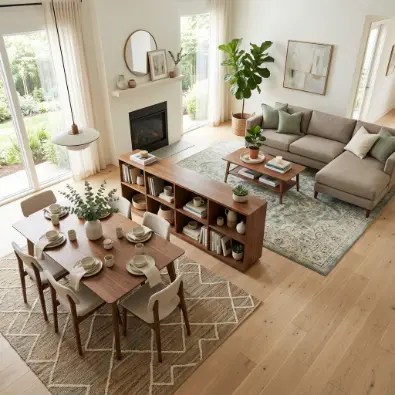
Vibe: The open floor feels organized instead of sprawling.
Why it works: Open floor plans lose definition without visual anchors, so furniture placement becomes the wall you don’t have. A low bookshelf under 36 inches tall divides zones without blocking sightlines, while distinct area rugs signal “this is a room” through boundary alone — a technique called soft zoning.
How to get it: Place a low, open-backed shelf perpendicular to a main walkway to separate living and dining zones, and anchor each zone with its own rug sized so all furniture legs sit on it, not just the front two.
Shop The Look
- Low open-back bookshelf room divider
- Walnut wood floating shelf unit
- Wool blend area rug living room
- Ceramic decorative tray coffee table
- Woven storage basket modern neutral
9. Sage Green as a Grounding Accent
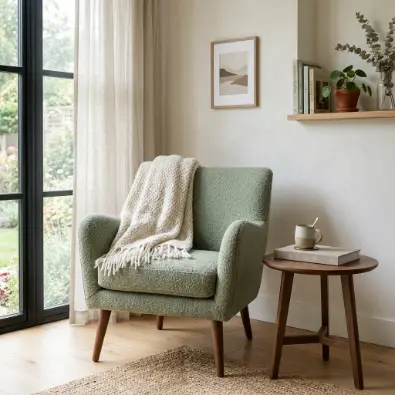
Vibe: The corner feels hushed, like a quiet exhale.
Why it works: Sage green sits close to neutral on the color wheel, which is why it reads as calming rather than bold — it has enough gray undertone to behave like a neutral while still adding color. Using it on a single upholstered piece keeps the accent controlled rather than overwhelming the room.
How to get it: Introduce sage green through one substantial piece — an accent chair or a sofa — rather than paint, so the color feels curated and can be balanced against warm white and walnut without dominating the palette.
💡 Quick Win: A sage green ceramic table lamp base delivers the same calming effect at a fraction of the commitment.
Shop The Look
- Sage green bouclé accent chair walnut legs
- Cream cotton knit throw blanket
- Walnut round side table modern
- Sage green ceramic table lamp base
- Linen drum lamp shade neutral
10. Streamlined Storage: Modern Furniture That Hides Its Function
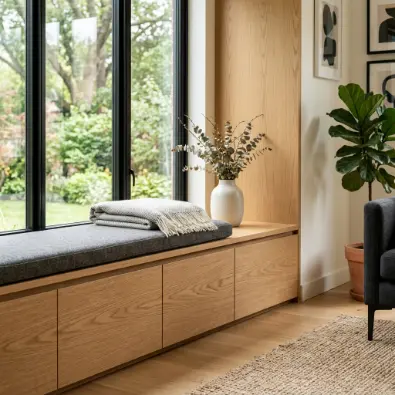
Vibe: The room feels clean because nothing announces itself as storage.
Why it works: Modern home decor treats visual clutter as a design failure, so storage pieces are engineered to disappear — push-to-open mechanisms and flush paneling remove the hardware details that usually catch the eye. This keeps the furniture’s silhouette uninterrupted, reinforcing the clean-line principle the whole style is built on.
How to get it: Choose storage furniture with push-latch or finger-pull channel hardware instead of visible knobs or pulls, and match the wood finish to nearby furniture so the piece reads as one continuous surface rather than a separate object.
Shop The Look
- White oak storage bench push-open drawers
- Charcoal wool knit throw blanket
- Ceramic sculptural object decorative accent
- Flush finger-pull cabinet hardware set
- Woven seagrass storage basket lidded
11. Layered Lighting: Ambient, Task, and Accent
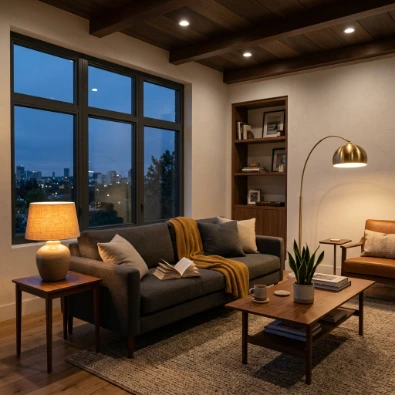
Vibe: The room feels warm and layered rather than flatly lit.
Why it works: A single overhead source creates flat, shadowless light that flattens texture and depth. Layering ambient (ceiling), task (reading lamp), and accent (a smaller decorative light) creates pools of light at different heights, which is how professional interiors avoid the “showroom” look.
How to get it: Install at least three light sources per room at three different heights — overhead, mid-level table lamp, and low floor lamp — and put each on its own switch or dimmer so you can adjust the mix by time of day.
💡 Quick Win: Adding one warm-toned floor lamp (2700K bulb) to a room lit only by ceiling fixtures instantly softens the whole space.
Shop The Look
- Brushed brass arc floor lamp
- Ceramic table lamp linen shade
- Warm white LED bulb 2700K set
- Plug-in dimmer switch lamp cord
- Wall sconce brushed brass modern
12. Matte Black Metal Fixtures
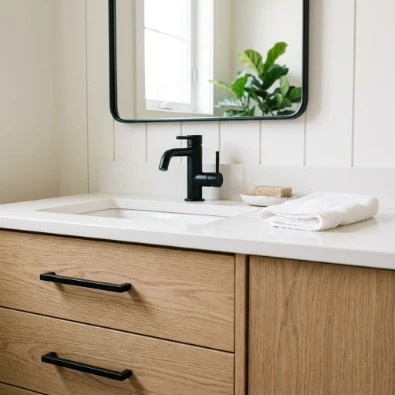
Vibe: The vanity feels crisp, like a small architectural detail.
Why it works: Matte black absorbs light rather than reflecting it, which is why it reads as more refined than polished chrome under bright daylight — it creates defined edges instead of glare. Against light wood like white oak, it functions the same way charcoal accents do on walls: contrast through value.
How to get it: Replace faucets, cabinet pulls, and towel bars as a matched matte black set rather than mixing finishes, since consistency across all metal hardware in one space is what makes the update read as intentional.
Shop The Look
- Matte black bathroom faucet single handle
- Matte black cabinet pull hardware set
- Matte black towel bar wall mount
- White ceramic soap dish minimalist
- White waffle weave hand towel set
13. Abstract Wall Art in Neutral Frames
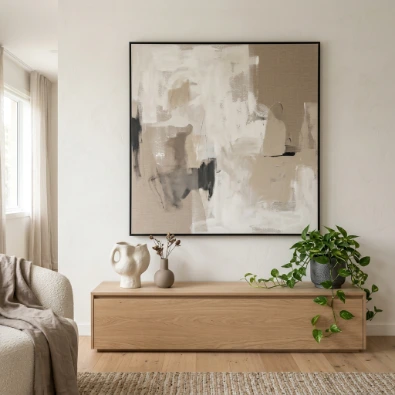
Vibe: The wall feels composed, like a single deliberate statement.
Why it works: One oversized piece of art creates a stronger focal point than a gallery wall in modern spaces, because modern home decor relies on negative space to give each element room to register. Abstract, tonal artwork also avoids competing narratives with the room’s existing color story.
How to get it: Choose one canvas sized to roughly two-thirds the width of the furniture beneath it, keep the palette within your room’s existing neutrals, and hang it with the center at standard eye level, around 57 inches from the floor.
💡 Quick Win: An unframed raw canvas print leans against the wall for an effortless, editorial feel that requires no hanging hardware.
Shop The Look
- Abstract canvas wall art neutral tones
- Thin black metal picture frame large
- Ceramic sculptural decor object neutral
- Trailing pothos artificial plant vine
- Low wood console table modern
14. Multi-Functional Furniture for Small Modern Homes
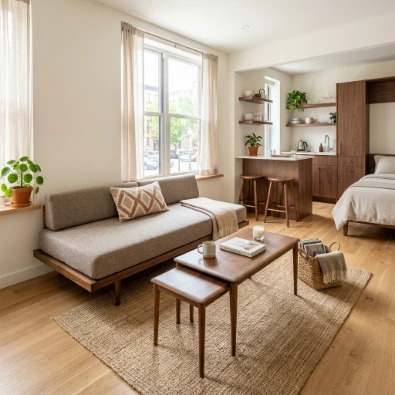
Vibe: The small room feels efficient, not cramped.
Why it works: Furniture that serves two purposes — a daybed as sofa and guest bed, nesting tables that expand only when needed — reduces the total number of objects in a small footprint. Fewer objects mean more visible floor, and visible floor is what makes a small modern room read as spacious rather than tight.
How to get it: Choose one or two multi-functional anchor pieces (a daybed, a set of nesting tables, an ottoman with storage) rather than separate single-purpose furniture for each need, and keep every leg exposed rather than skirted to preserve sightlines to the floor.
Shop The Look
- Slim daybed frame with trundle storage
- Nesting coffee table set of two
- Storage ottoman faux leather modern
- Woven seagrass basket small
- Neutral bolster pillow daybed set
15. Negative Space as a Design Element
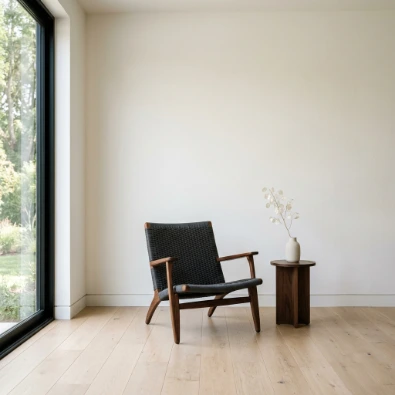
Vibe: The corner feels still, like a held breath.
Why it works: Negative space is not empty space — it’s a deliberate design choice that gives surrounding objects room to be noticed individually instead of competing for attention. In modern home decor, leaving a wall bare next to a single striking piece increases that piece’s visual weight far more than surrounding it with additional decor would.
How to get it: Pick one room or corner and remove roughly a third of what’s currently displayed there, then resist refilling it — let the empty wall or floor space stand as its own element rather than a gap to fix.
💡 Quick Win: Before adding anything new to a room, try removing one object first and living with the space for a week.
Shop The Look
- Sculptural accent chair with walnut frame
- Small round side table minimal
- Single stem ceramic bud vase
- Walnut floor lamp, slim profile
- Neutral bouclé floor cushion modern
═══════════════════════════════════
How to Start Your Modern Home Decor Transformation
Start with your wall color. A true greige or warm white on the main living space anchors every other decision — furniture, art, and metal finishes all read differently against a neutral base, so getting this one choice right first prevents costly mismatches later.
The most common mistake is over-decorating: filling every shelf and surface because space feels unfinished. This breaks modern decor’s core principle, which relies on negative space to let each piece register. Fix it by removing items in rounds — pull a third of what’s on display, live with it for a week, then decide what actually earns its way back.
Budget entry points under $50: a single stem of dried pampas grass in a matte black ceramic bud vase, a set of brushed brass drawer pulls to swap onto existing furniture, and one warm-white (2700K) LED bulb pack for a floor or table lamp you already own.
A realistic starter update — new paint, hardware swaps, and one statement light — takes a single weekend and roughly $200–$400. A full room transformation with new furniture typically runs $2,000–$6,000 and takes 4–8 weeks to source and style properly. Larger furniture pieces, especially solid wood, often have longer lead times than expected.
═══════════════════════════════════
Frequently Asked Questions About Modern Home Decor
What is the difference between modern and contemporary home decor?
Modern refers to a specific historical design movement from the early-to-mid-20th century, defined by clean lines, minimal ornament, and honest materials like walnut and steel. Contemporary describes whatever is currently trending, which shifts every decade. A modern living room today looks essentially the same as one styled in the 1960s, while contemporary decor changes with the times.
What colors work best for modern home decor?
Warm white, greige, and charcoal form the neutral base, with black used sparingly as an accent for hardware and frames. Sage green and terracotta blush are the most common color accents layered in through a single furniture piece or textile. Avoid pastels and heavily patterned color schemes, since they compete with the style’s minimal-contrast philosophy.
How much does it cost to decorate a room in modern style?
A budget starter update using paint, hardware, and lighting swaps typically costs $200–$400 and can be done in a weekend. A fuller room refresh with one or two new furniture pieces runs $800–$2,000, while a complete room transformation with new furniture, lighting, and rugs generally falls between $2,000 and $6,000 depending on materials chosen.
Does modern home decor work with an older or traditional house?
Yes, though it requires more intentional contrast. Pairing modern furniture’s clean lines against original architectural details like crown molding or wood floors often creates a more interesting result than a fully modern shell, since the juxtaposition itself becomes a design feature. The key is keeping wall colors neutral so the architecture and furniture don’t visually compete.
What lighting works best for a modern home?
Layered lighting is essential — at least one ambient ceiling source, one task lamp, and one accent light per main room, ideally on separate switches or dimmers. Warm white bulbs around 2700K keep the space feeling inviting rather than clinical. A single oversized pendant over a dining table or island is the most common statement lighting choice in modern interiors.
═══════════════════════════════════
Ready to Create Your Dream Modern Home?
These 15 ideas span color, material, lighting, layout, and furniture proportion, but you don’t need to tackle all of them at once. Starting small — one wall color, one hardware swap, one statement light — is not a compromise; it’s exactly how a considered modern space actually comes together. Today, pick the single easiest idea from this list, like swapping in matte black drawer pulls or adding one warm-toned lamp, and do just that. Once the room settles into its cleaner lines and quieter palette, it will feel less like a finished project and more like a place where you can finally exhale. Save your favorite ideas now, so when you’re ready for the next step — that walnut console, that oversized pendant — they’re right where you left them.
You Might Also Like
- Eco Friendly Bamboo Home Decor: 9 Stunning Ways to Style Every Room
- 10 Stylish Shelf Decor Ideas for Every Room
- 13 Minimalist Home Decor Ideas for a Calm, Clutter-Free Space
- 12 Small Space Decor Ideas for a Modern Minimalist Home
- 15 Scandinavian Decor Ideas for Simple, Hygge-Inspired Living
- 20 Vintage Home Decor Ideas for a Home Full of Character
[…] Modern Home Decor: 15 Ideas Worth Saving and Stealing […]
[…] Modern Home Decor: 15 Ideas Worth Saving and Stealing […]
[…] Modern Home Decor: 15 Ideas Worth Saving and Stealing […]