
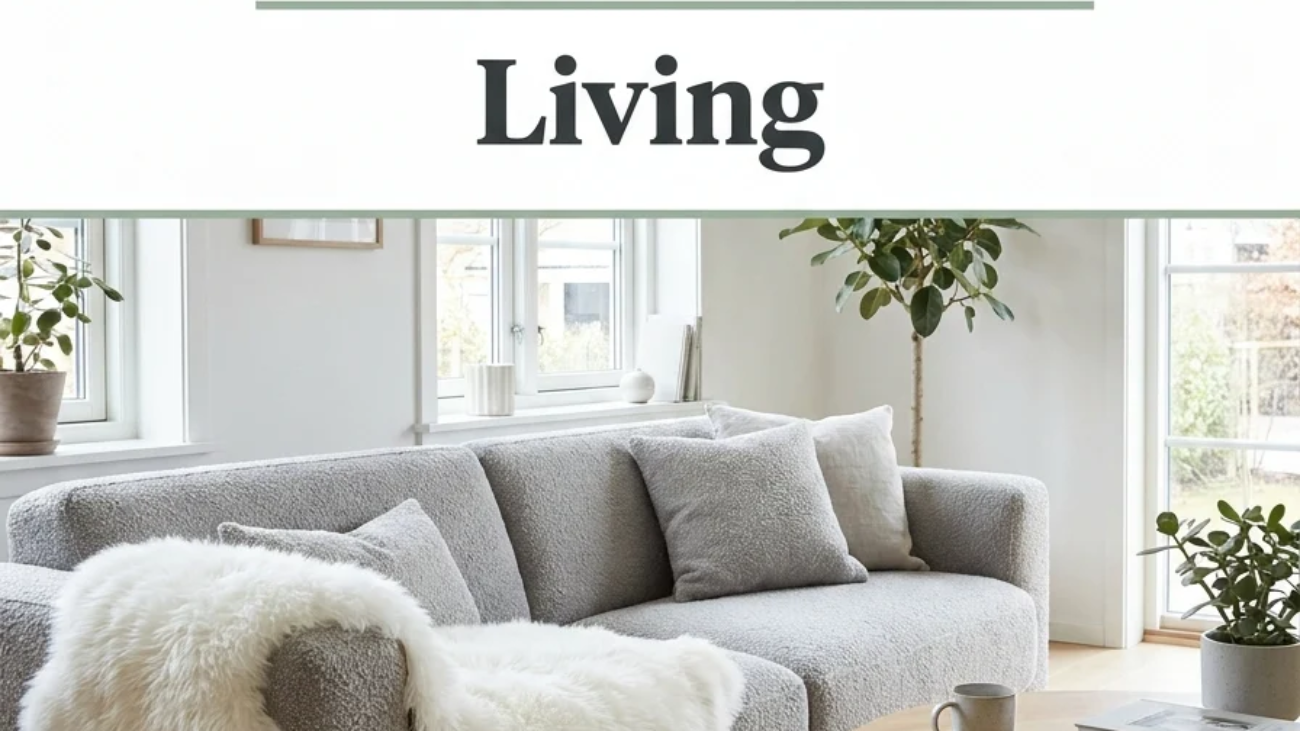
Scandinavian decor is a Nordic design philosophy built around maximizing light and warmth through pale wood, natural texture, and disciplined simplicity. This article gives you 15 Scandinavian decor ideas, from flooring to lighting to layout, that work across an entire home rather than one room alone.
The feeling is unmistakable: pale birch floors catching low winter sun, a wool throw folded over a tapered-leg chair, a room that stays calm no matter how dark it gets outside. Scandinavian decor doesn’t chase minimalism for its own sake; it chases light and comfort in equal measure. Here are 15 ideas worth saving and stealing.
Why Scandinavian Decor Ideas Work So Well
What is it? Scandinavian decor traces to early-20th-century Nordic Functionalism, crystallized at the 1930 Stockholm Exhibition, where Swedish, Danish, and Finnish designers merged Bauhaus functionalist principles with regional craft traditions, including the work of Finnish architect Alvar Aalto. What separates it from generic Nordic minimalism is warmth, Scandinavian decor deliberately layers in hygge coziness and lagom balance rather than pursuing austerity for its own sake.
What are its core materials and colors? The palette runs warm white, soft greige, dusty blue, and sage green, layered against pale wood tones. Materials stay natural and tactile: pale birch or ash flooring, wool, sheepskin, linen, and simply framed black-and-white photography. Nothing is dark or heavily lacquered; every surface is chosen to hold and reflect scarce daylight.
Why is it trending now? Interest in hygge has stayed consistently high on Pinterest since its mid-2010s surge, reinforced by a broader post-pandemic focus on homes built for comfort during long stretches indoors. The sustainability movement has also reinforced Scandinavian decor’s original emphasis on quality natural materials over disposable furnishings.
Can small spaces achieve this style? Yes, Scandinavian design historically developed partly for compact Nordic city apartments, so it suits small spaces naturally. Prioritize pale, light-reflecting wood tones and multi-functional furniture first.
| Element | Philosophy | Key Materials |
| Core value | Light and function paired with warmth | Pale birch, ash, wool |
| Color approach | Warm neutral base, one soft accent | Warm white, dusty blue, sage |
15 Scandinavian Decor Ideas
1. Pale Birch or Ash Wood Flooring Throughout
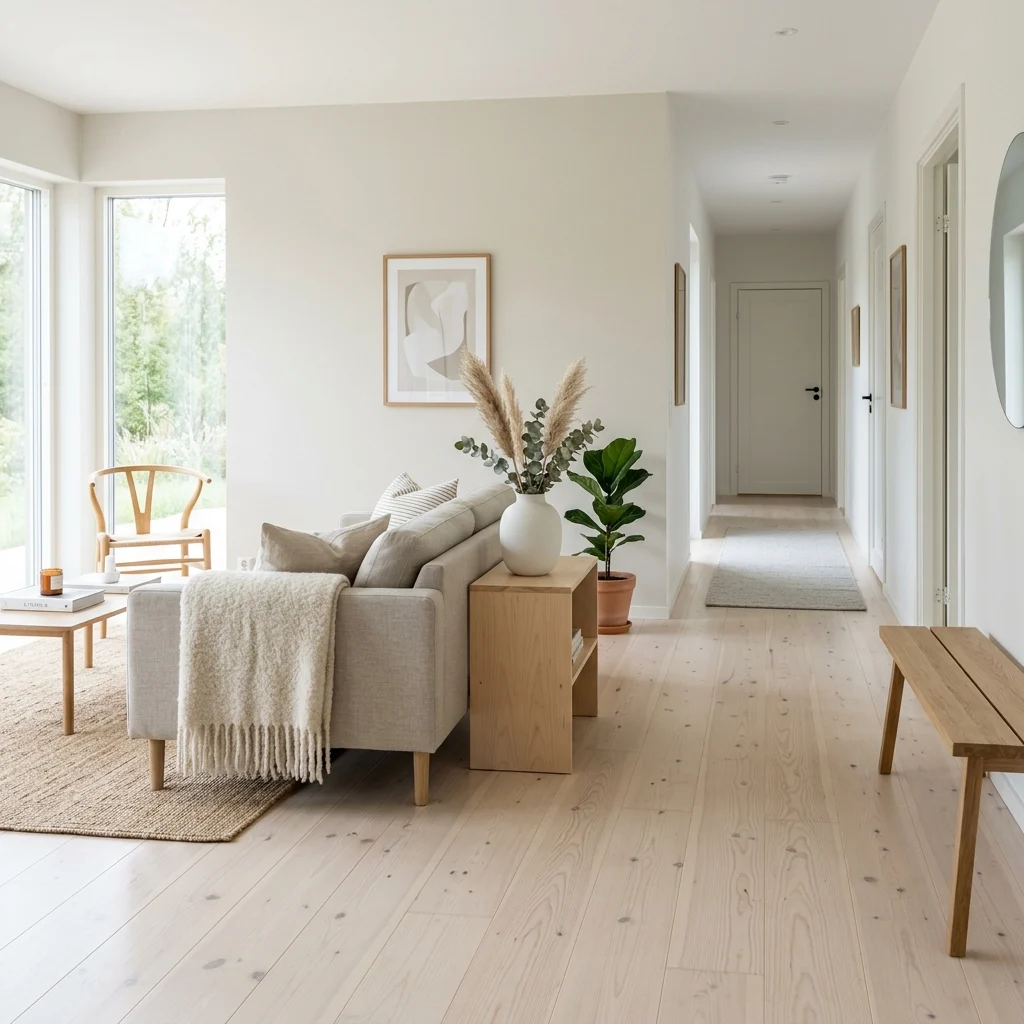
Vibe: The floor feels luminous, light bouncing rather than being absorbed by dark boards.
Why it works: Pale birch or ash reflects significantly more ambient light than a dark walnut or oak floor, a material choice that directly compensates for the limited daylight hours Scandinavian countries experience for much of the year. Running the same flooring unbroken between rooms also removes the visual interruption a material change would create at doorways.
How to get it: Choose a matte or low-sheen finish on pale birch or ash flooring rather than high-gloss, which can read as clinical, and carry the same species through connected living spaces.
💡 Quick Win: A pale wood-look luxury vinyl plank achieves the same light-reflecting tone over existing dark flooring without a full renovation.
Shop the Look
| Product |
| Pale birch engineered wood flooring |
| Wool throw blanket warm white |
| Ceramic vase ribbed white |
| Small potted plant ceramic pot |
| Wood floor cleaning kit natural |
2. Warm White Walls as the Universal Scandinavian Base
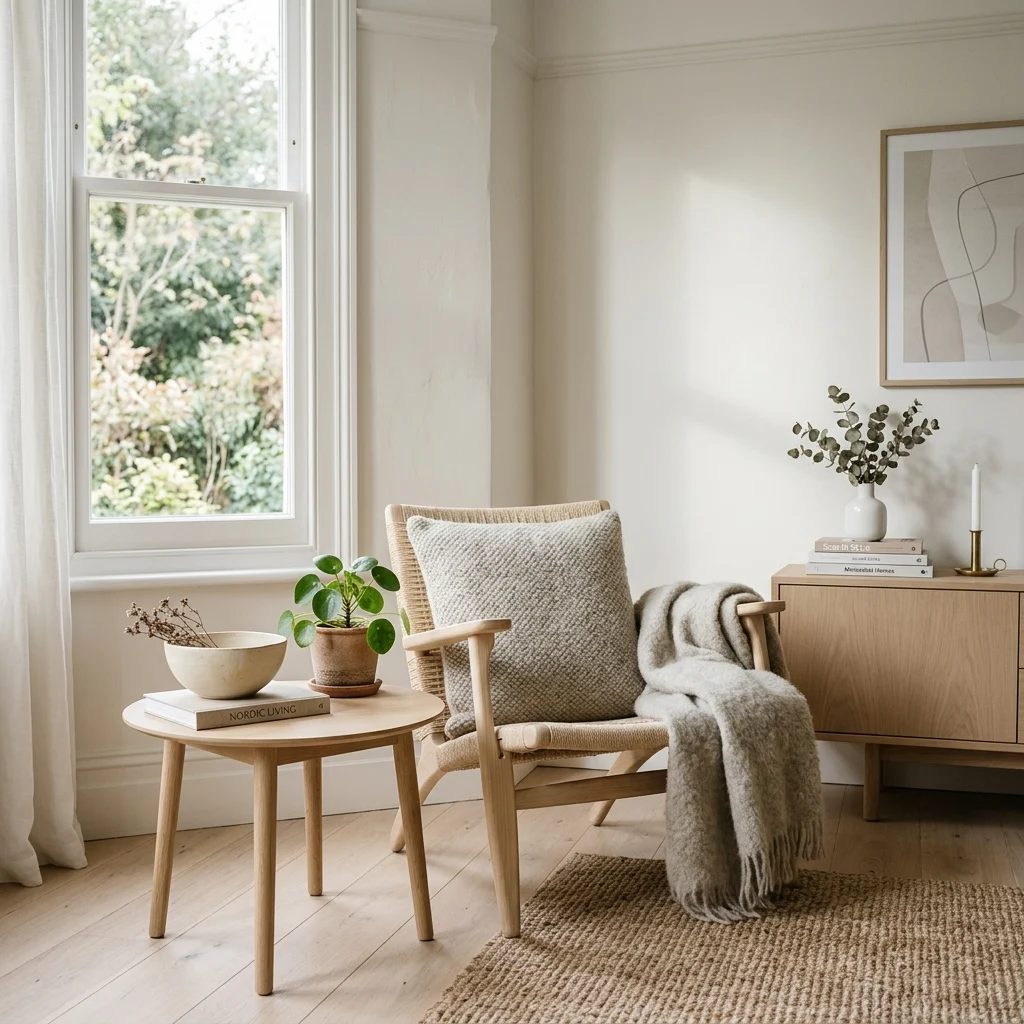
Vibe: The room feels calm, walls doing nothing to compete with the light already in the space.
Why it works: Warm white reflects daylight more effectively than a stark, blue-based white, while still avoiding the cold, clinical read that can come with pure white in a room already low on natural light. This tonal choice is a design principle Scandinavian interiors rely on specifically because of the region’s limited daylight hours.
How to get it: Choose a warm white with a slight yellow undertone, such as Farrow & Ball’s All White or Benjamin Moore’s White Dove, applied in a matte or eggshell finish across all main living spaces.
Shop the Look
| Product |
| Warm white interior wall paint |
| Pale wood console table |
| Ceramic decorative bowl white |
| Wool cushion cover natural |
| Small potted plant ceramic pot |
3. Layered Candlelight for Hygge Warmth During Dark Months
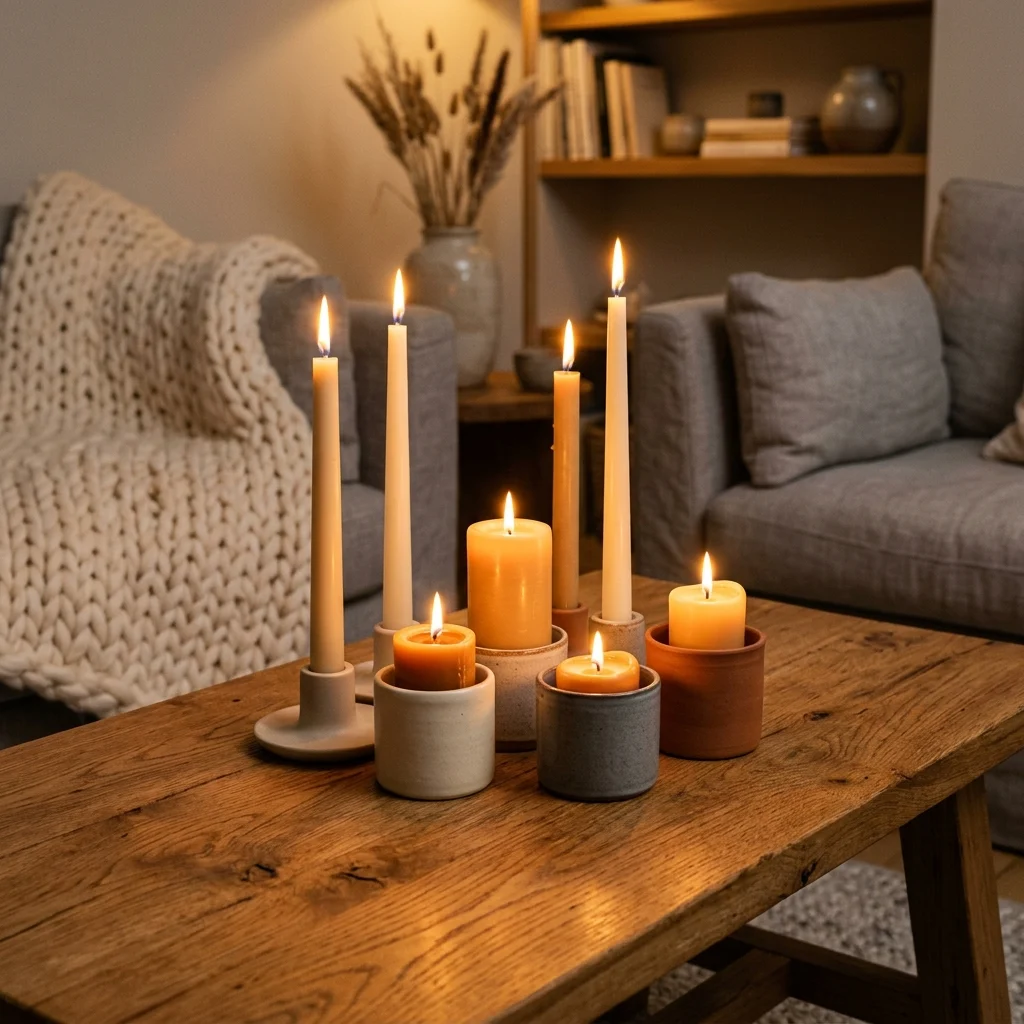
Vibe: The table feels warm, small flames doing more for the room’s mood than any single overhead fixture could.
Why it works: Grouping several candles at varied heights creates layered, flickering light that behaves differently from a static electric bulb, which is precisely the sensory quality hygge depends on during long dark-season evenings. Scandinavian countries reportedly burn more candles per capita than most other regions, a genuine cultural habit behind this styling choice, not just a trend.
How to get it: Group three to five unscented candles in varied ceramic or glass holders on a low table, mixing pillar and taper heights so the light reads as layered rather than uniform.
💡 Quick Win: A single grouped candle cluster on an existing coffee table is a five-minute styling change that adds warmth without new furniture.
Shop the Look
| Product |
| Unscented pillar candle set |
| Ceramic candle holder assorted heights |
| Glass taper candle holder |
| Wool throw blanket cream |
| Low wood coffee table |
4. Chunky Wool Throws Layered Over Neutral Furniture
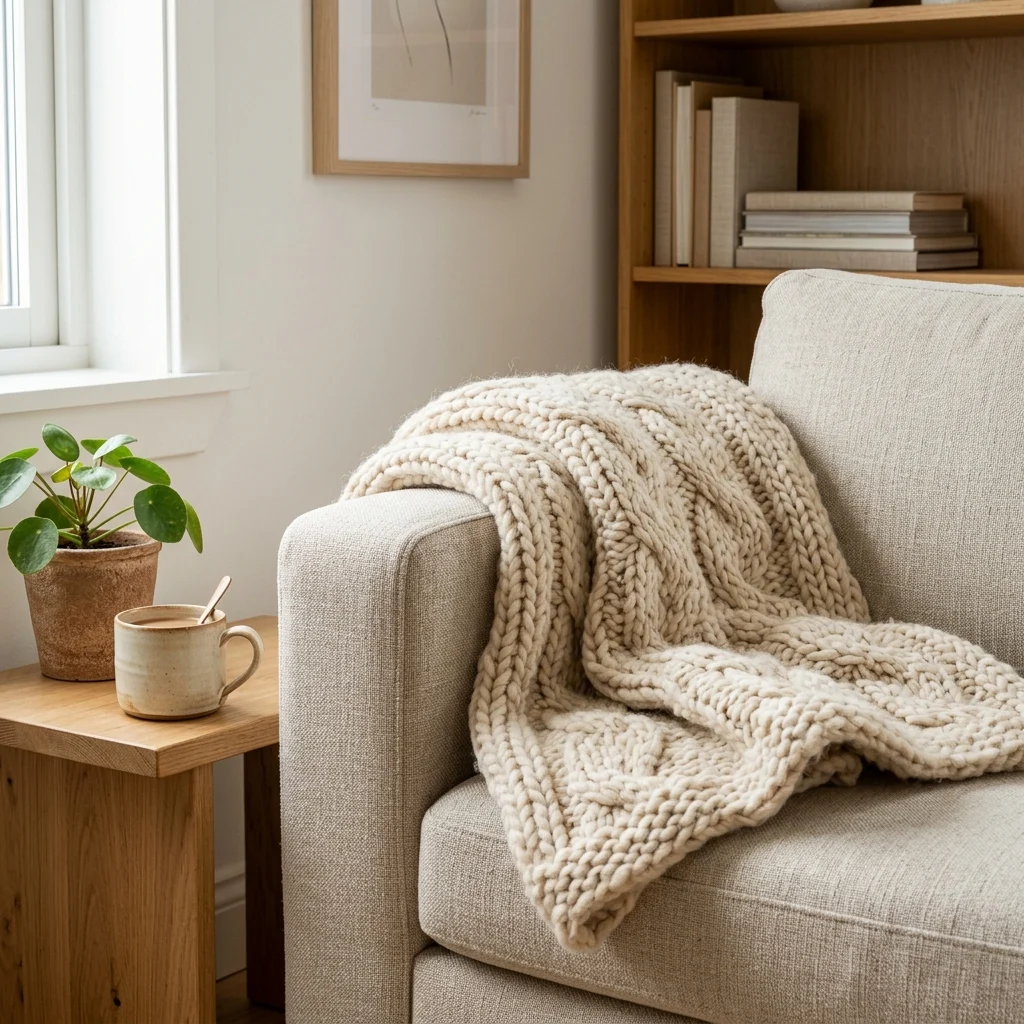
Vibe: The sofa feels welcoming, the texture doing what color usually would to signal warmth.
Why it works: A chunky knit wool throw introduces tactile depth against a smooth linen sofa, applying texture layering as the primary decorative tool in a palette that otherwise avoids strong color or pattern. Wool also insulates genuinely well, tying its decorative role to a real functional benefit in cold-climate homes.
How to get it: Choose a chunky knit wool throw in warm white or natural undyed wool, draped loosely over one arm rather than folded flat, so the texture reads clearly from across the room.
Shop the Look
| Product |
| Chunky knit wool throw blanket |
| Linen sofa slipcover neutral |
| Ceramic mug warm glaze |
| Small potted plant ceramic pot |
| Wool cushion cover natural |
5. Low, Tapered-Leg Furniture for an Open Floor Plane
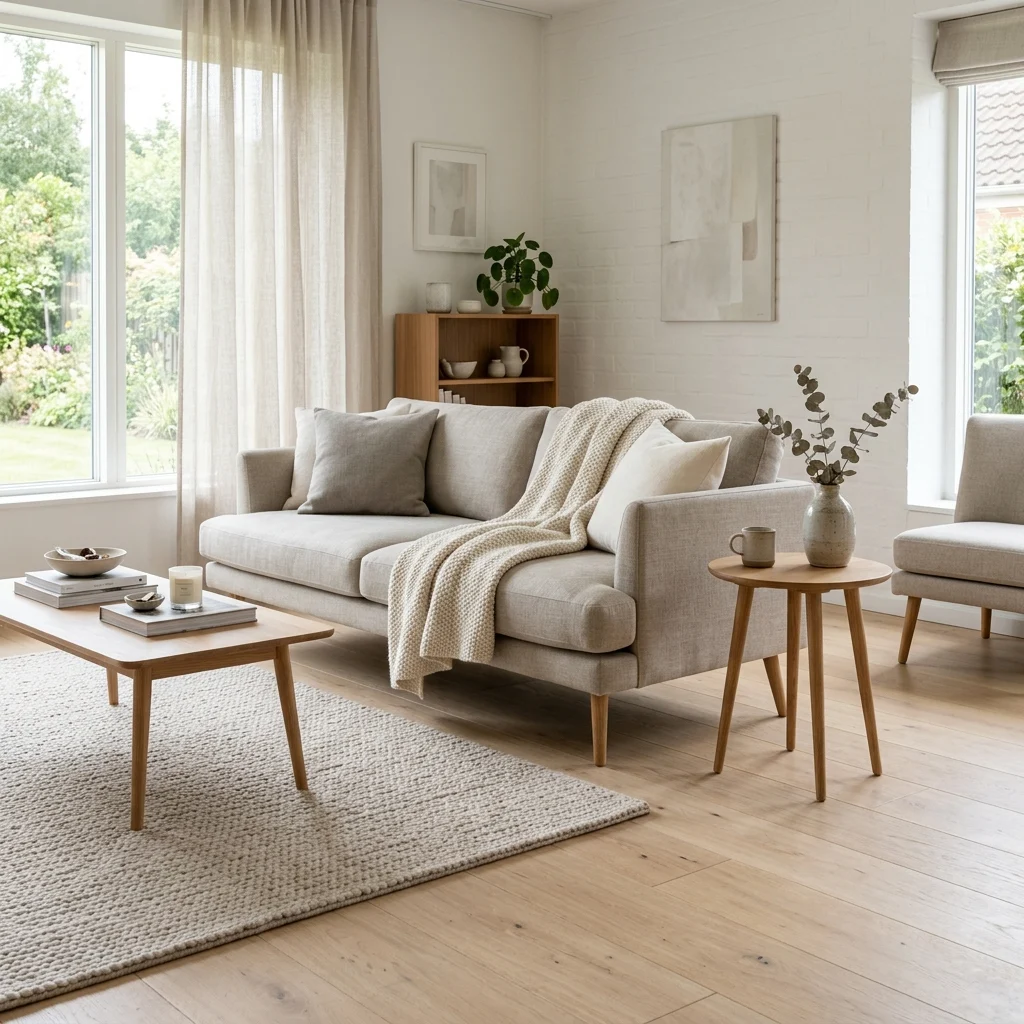
Vibe: The room feels open, furniture legs letting light travel across the floor uninterrupted.
Why it works: Tapered legs, a hallmark of mid-century Scandinavian furniture design, keep visual weight off the floor plane, letting daylight and sightlines pass beneath each piece, a proportion principle that matters even more in Nordic interiors where every bit of available light needs to travel as far as possible across the room.
How to get it: Choose furniture with slim tapered legs in pale birch or ash rather than skirted or boxy bases, keeping heights consistent across your sofa, chairs, and side tables.
💡 Quick Win: Adding screw-in tapered wood legs to an existing skirted sofa is a same-day upgrade that lightens its silhouette for under $40.
Shop the Look
| Product |
| Low sofa tapered wood legs |
| Side table slim tapered legs |
| Wool throw blanket |
| Ceramic vase warm white |
| Screw-in tapered furniture legs |
6. Dusty Blue Accent Wall Against Warm White
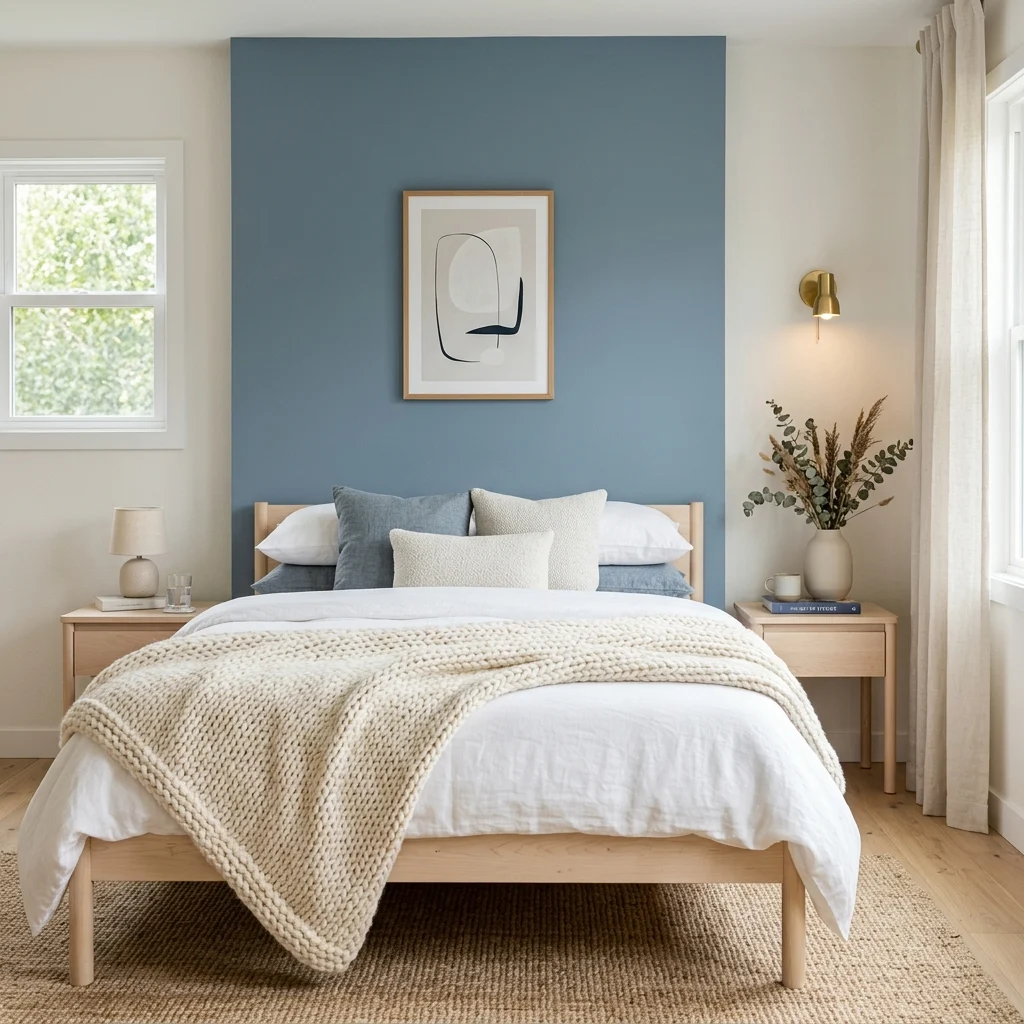
Vibe: The room feels hushed, one muted color carrying just enough visual interest without breaking the calm.
Why it works: Dusty blue sits at a low enough saturation to function as a near-neutral, which is why it pairs easily with warm white without disrupting the room’s overall restraint. The key difference between this and a bright, saturated blue is that it would compete for attention. Confining it to one wall keeps the accent controlled rather than overwhelming.
How to get it: Paint only the wall behind the bed or main seating in a dusty blue, such as Farrow & Ball’s Parma Gray No. 27, keeping every adjoining wall in warm white.
Shop the Look
| Product |
| Dusty blue interior wall paint |
| Warm white interior wall paint |
| Pale wood bed frame low |
| Wool throw blanket cream |
| Ceramic vase warm white |
7. Sheepskin Throws for Tactile Warmth on Hard Surfaces
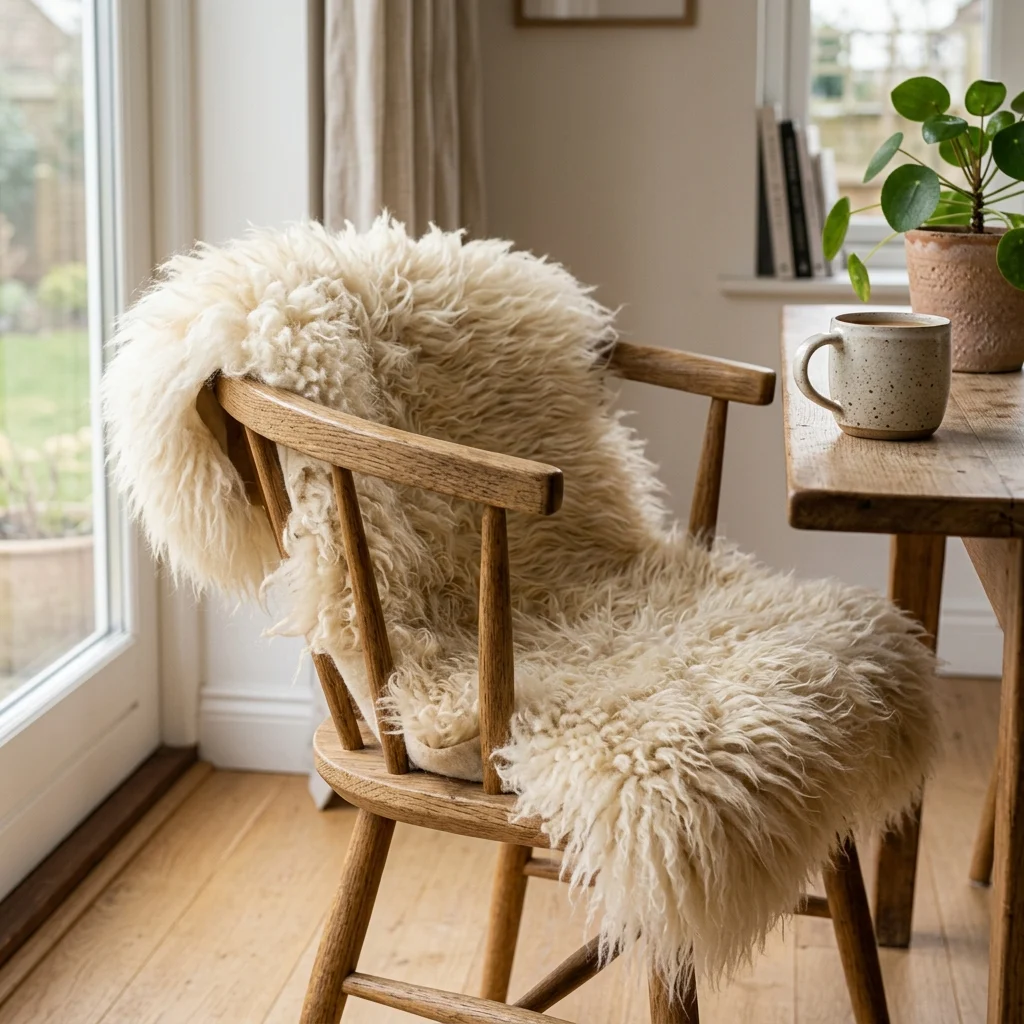
Vibe: The chair feels inviting, with soft fiber softening what would otherwise be a hardwood seat.
Why it works: Draping sheepskin over a hardwood chair or bench adds tactile warmth exactly where a room’s material palette is otherwise unforgiving, a texture-contrast technique that makes utilitarian furniture feel considered rather than purely functional. The natural variation in individual sheepskin pelts also keeps each one from looking mass-produced.
How to get it: Drape a natural (undyed) sheepskin over dining chairs, benches, or a reading chair, letting it hang slightly over the seat edge rather than tucking it flush to the cushion.
💡 Quick Win: A single sheepskin on a desk chair is an easy, low-cost way to add texture to a home office without redecorating the whole room.
Shop the Look
| Product |
| Natural sheepskin throw |
| Pale wood dining chair |
| Ceramic mug warm glaze |
| Small potted plant ceramic pot |
| Wool seat cushion |
8. Open-Plan Living Zoned by Furniture, Not Walls
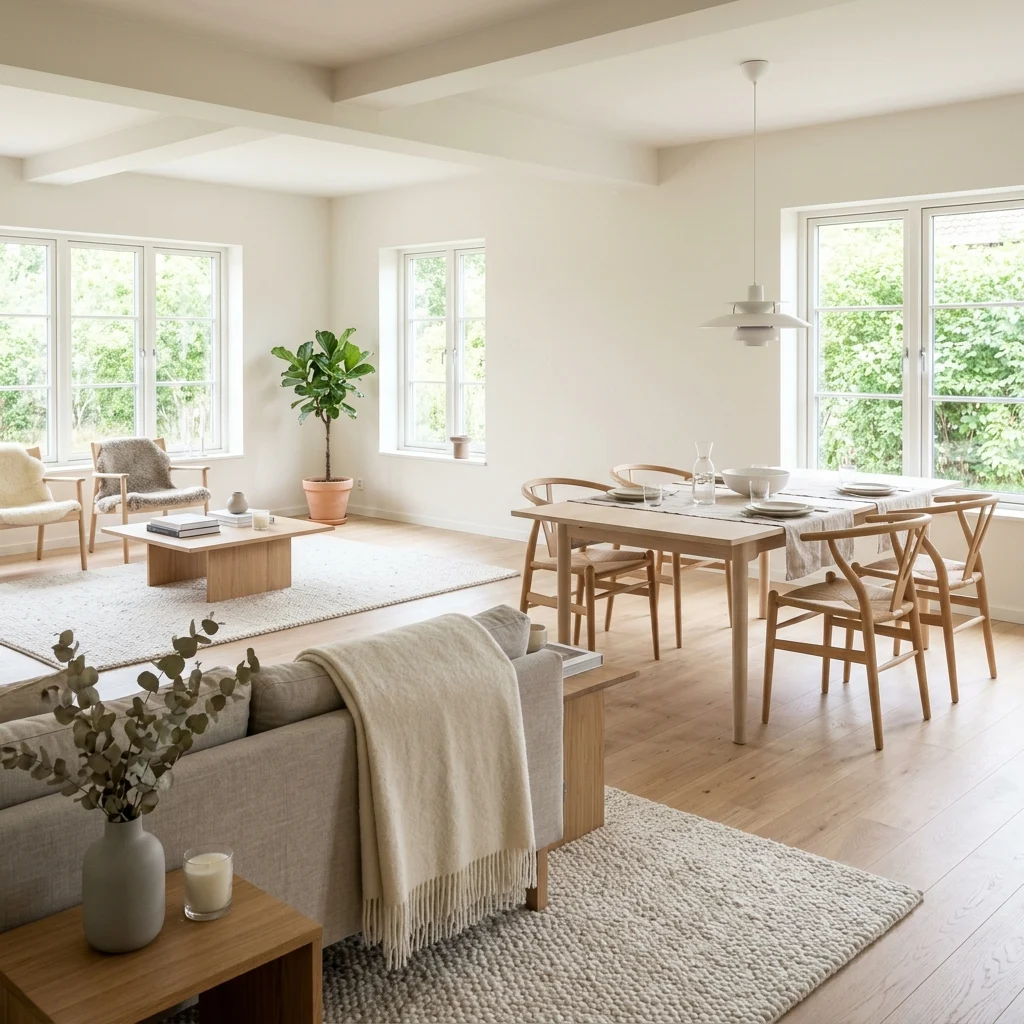
Vibe: The space feels connected, one open floor plan doing what several separate rooms usually would.
Why it works: Using a sofa’s back or a rug’s edge to define the boundary between living and dining zones rather than a wall preserves the unbroken sightlines that let daylight travel through an entire open floor plan, a layout principle especially valuable during months when natural light is genuinely scarce. This depends on furniture staying low enough not to block the view between zones.
How to get it: Position your sofa with its back facing the dining area rather than against a wall, using a rug sized to each zone’s furniture footprint to signal the transition instead of a partition.
Shop the Look
| Product |
| Low sofa back zone divider style |
| Wool area rug natural |
| Pale wood dining table |
| Ceramic vase warm white |
| Wool throw blanket |
9. Black-and-White Framed Photography in Simple Frames
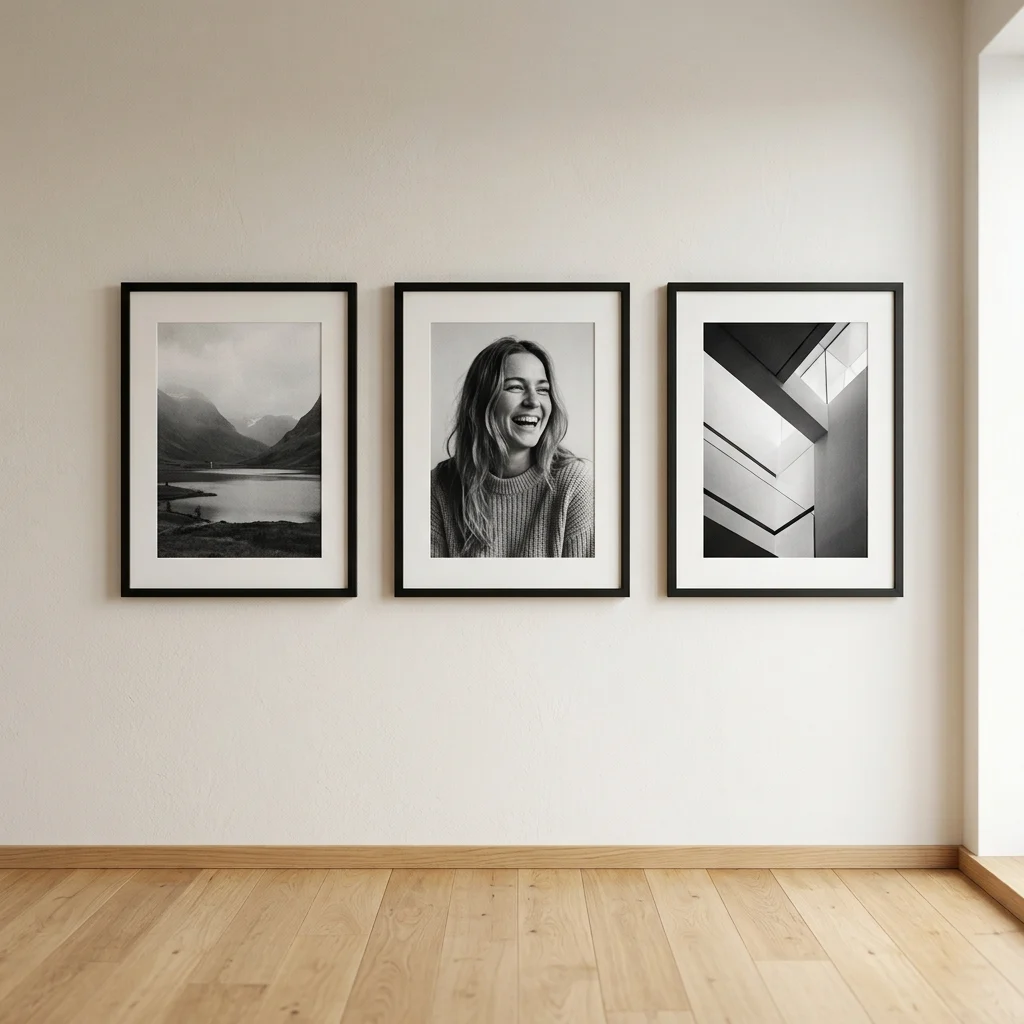
Vibe: The wall feels composed, restrained photography doing the work that color prints usually would.
Why it works: Black-and-white photography in identical simple frames removes color as a variable entirely, letting composition and tone carry the wall’s visual interest without introducing a new hue to the room’s palette. Arranging them in one straight line rather than a scattered gallery also keeps the display orderly, consistent with Scandinavian design’s preference for clean structure.
How to get it: Choose three photographs in identical thin black frames, hung at the same height with equal spacing (typically 3–4 inches) between each frame.
💡 Quick Win: Printing your own black-and-white photos at a local print shop and framing them in identical $10 frames achieves the look affordably.
Shop the Look
| Product |
| Thin black picture frame set |
| Black-and-white photography print set |
| Picture hanging kit |
| Level tool for frame spacing |
| Museum putty for stability |
10. Soft Sage Green Kitchen Cabinetry
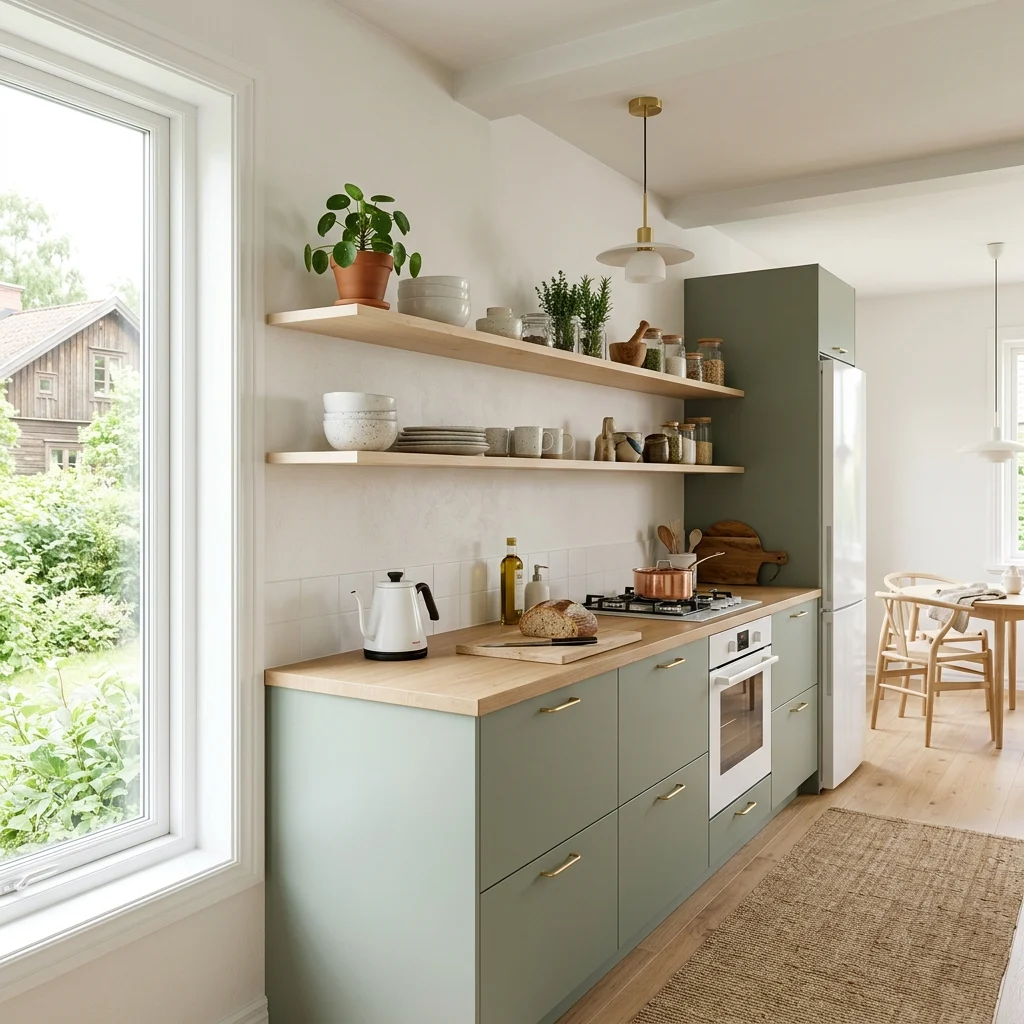
Vibe: The kitchen feels calm, muted green settling into the room rather than announcing itself.
Why it works: Soft sage sits at a low enough saturation to read as a neutral rather than a bold statement color, which is why it pairs comfortably with pale wood shelving without needing a second accent to balance it. This tonal restraint is what keeps a colored kitchen still feeling distinctly Scandinavian rather than trend-driven.
How to get it: Paint lower cabinets in a muted sage such as Farrow & Ball’s Green Smoke No. 47, keeping upper cabinets or open shelving in pale wood or warm white for contrast.
Shop the Look
| Product |
| Sage green cabinet paint matte |
| Pale wood open shelf set |
| Ceramic dishware set warm white |
| Small potted plant ceramic pot |
| Brass cabinet pull set |
11. Pendant Lighting with Paper or Fabric Shades for Soft Glow
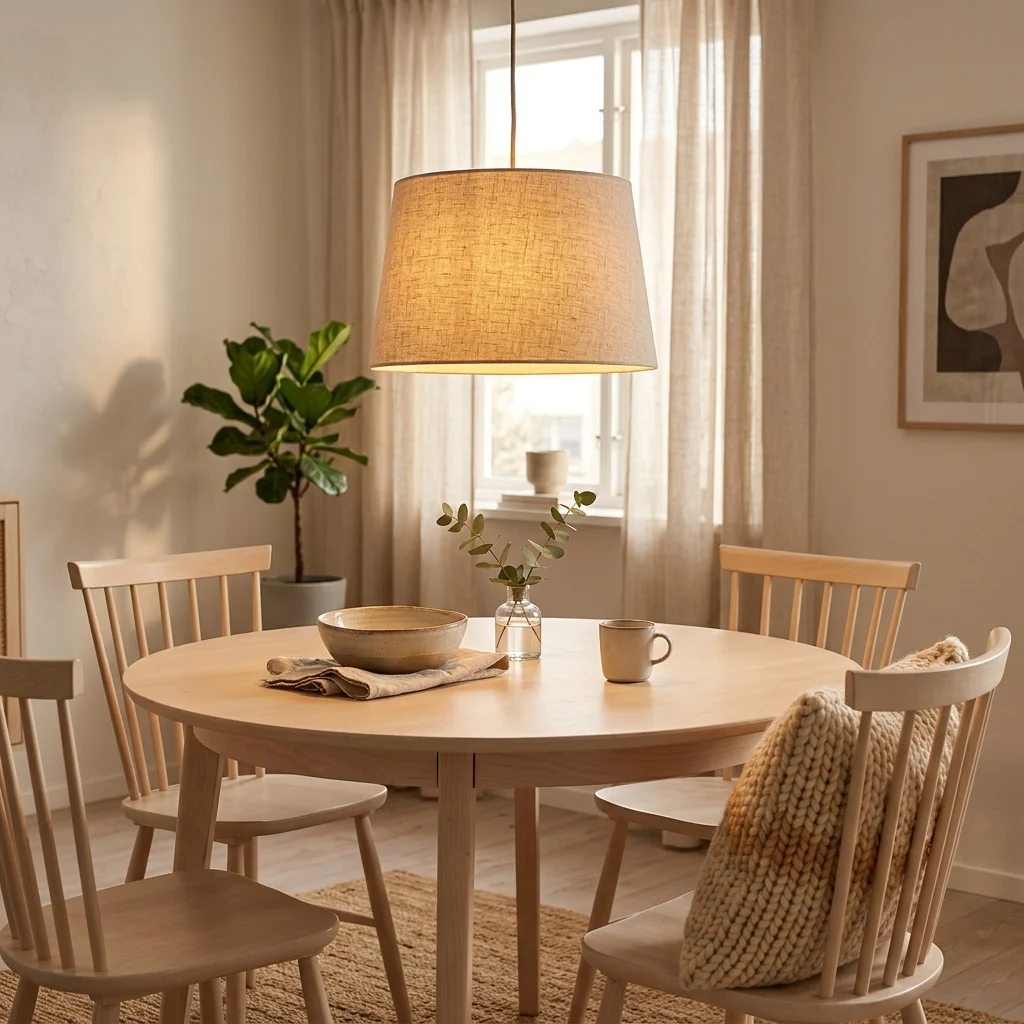
Vibe: The table feels gently lit, with a glow spreading evenly instead of pooling in one bright spot.
Why it works: A fabric or paper shade diffuses light across its entire surface rather than through a single exposed bulb, softening the light behavior in a way that suits a design tradition built around compensating for scarce daylight rather than adding harsh artificial substitutes. This is a specific technical reason Scandinavian pendant design favors shades over exposed bulbs, unlike the industrial style’s preference for visible filaments.
How to get it: Choose a pendant with a natural fabric or paper shade in warm white or natural linen, hung 30–34 inches above the dining table, fitted with a warm 2700K bulb.
💡 Quick Win: A fabric drum shade clipped over an existing bare-bulb fixture achieves the softened glow without rewiring.
Shop the Look
| Product |
| Fabric shade pendant light |
| Warm 2700K LED bulb dimmable |
| Ceramic serving bowl white |
| Wool cushion cover |
| Pale wood dining chair |
12. Streamlined Shelving with Two-Thirds Fill Rule
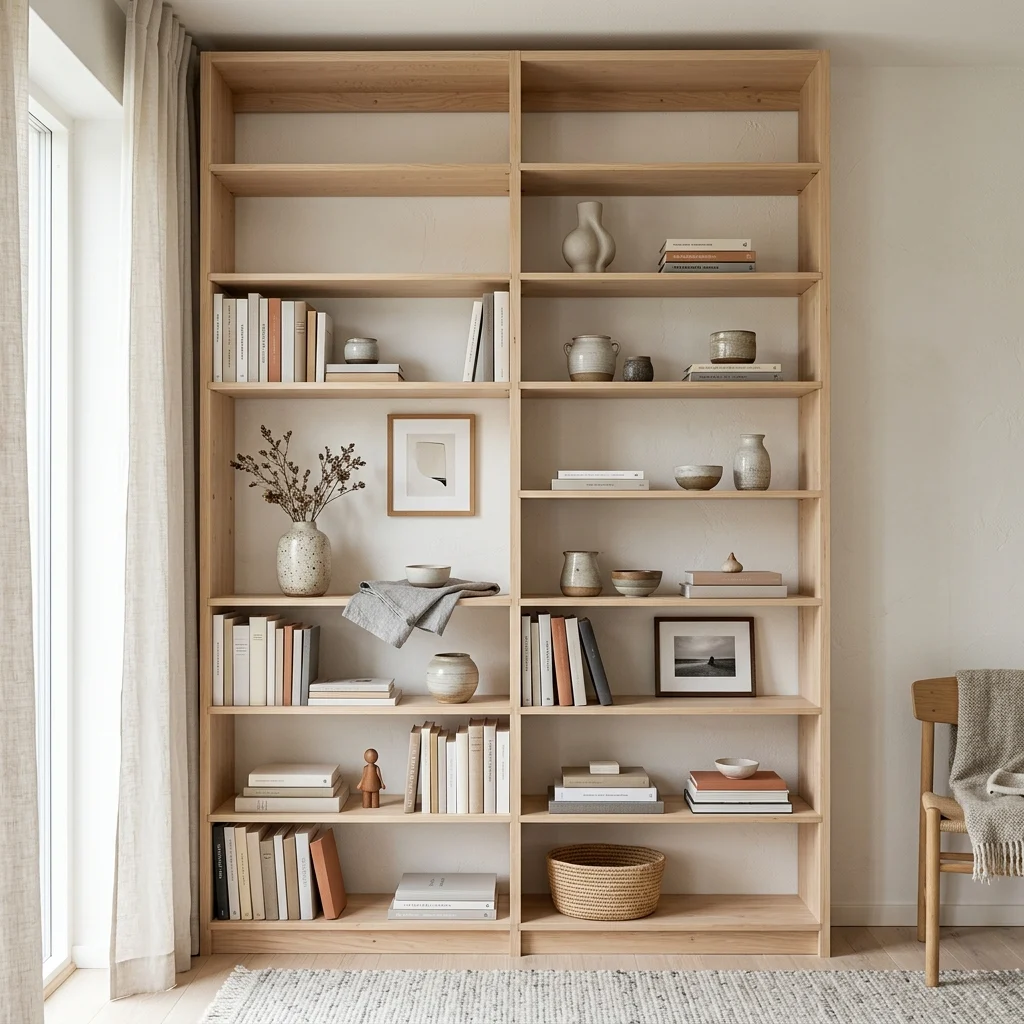
Vibe: The shelving feels breathable, space doing as much visual work as the objects on it.
Why it works: Filling shelving to only about two-thirds of its total volume, leaving the remaining third as intentional negative space keeps a tall storage piece from reading as crowded, a specific ratio Scandinavian styling relies on more precisely than most other styles, which often fill shelves edge to edge.
How to get it: Style each shelf with small groupings of two or three objects (books, a ceramic vase, a framed print) and leave at least one shelf section per unit visibly empty.
Shop the Look
| Product |
| Tall pale wood shelving unit |
| Ceramic vase set assorted |
| Small framed print black frame |
| Folded linen textile |
| Hardcover book set neutral |
13. Wool Area Rugs in Subtle Geometric Pattern
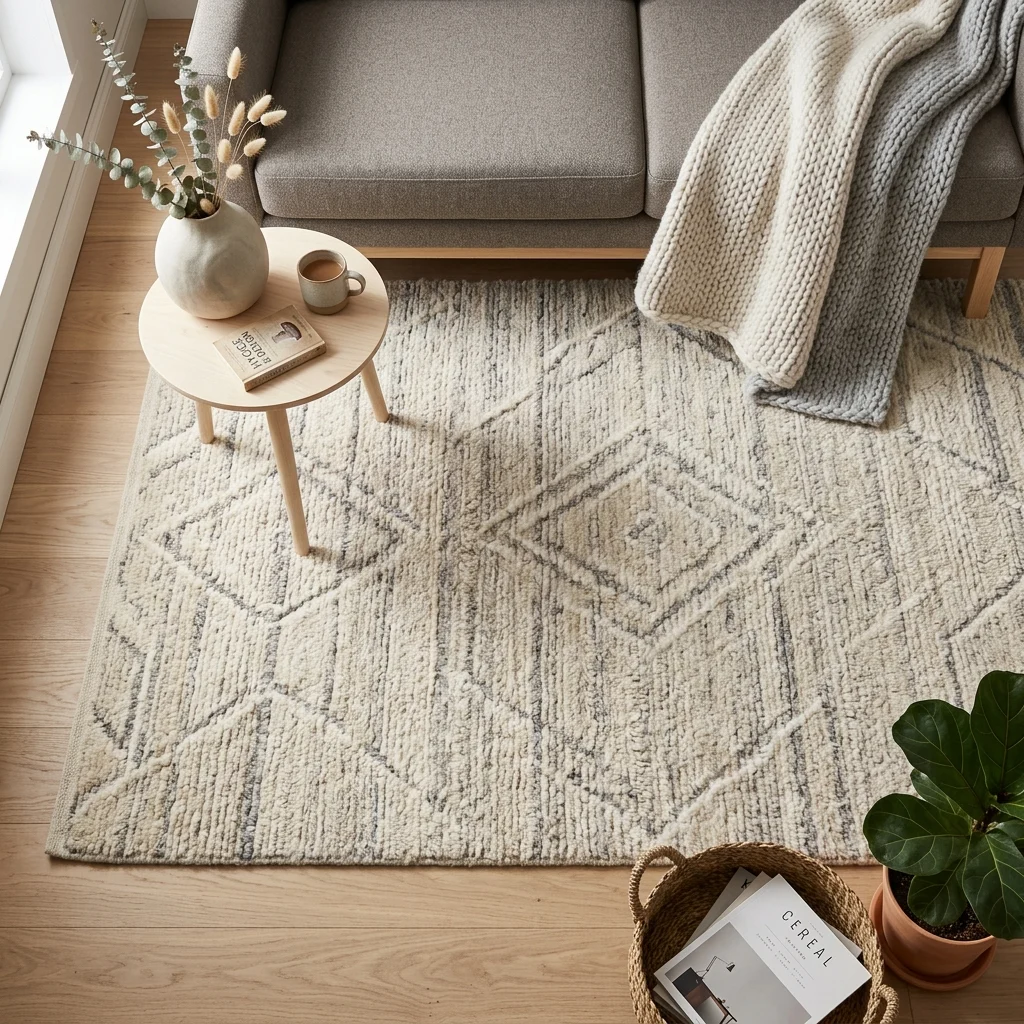
Vibe: The floor feels grounded, muted pattern adding just enough visual rhythm without breaking the calm.
Why it works: A subtle geometric wool rug introduces the room’s only pattern in a controlled, low-contrast way, applying texture layering at floor level rather than through color. The pattern reads more as texture variation than as a decorative statement, keeping it consistent with the style’s overall restraint.
How to get it: Choose a wool rug in a tonal geometric weave (warm white and soft grey, not high-contrast black and white), sized so all furniture legs sit at least partially on it.
💡 Quick Win: A smaller wool runner in the same pattern for a hallway extends the look without the cost of a full room-sized rug.
Shop the Look
| Product |
| Wool area rug tonal geometric |
| Wool throw blanket |
| Ceramic vase warm white |
| Low sofa with pale wood legs |
| Wool runner rug hallway |
14. A Single Potted Fig or Olive Tree as Living Sculpture
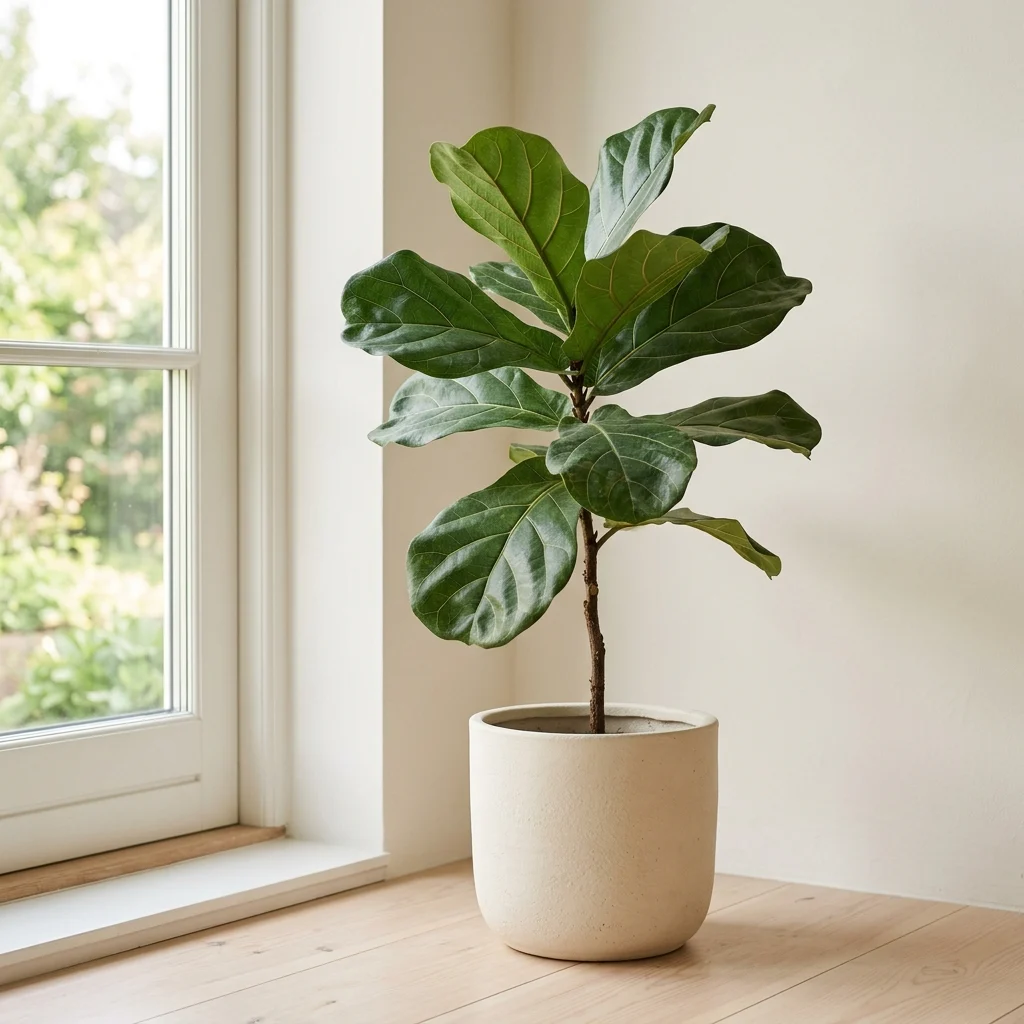
Vibe: The corner feels alive, one plant carrying more presence than a cluster of smaller ones would.
Why it works: A single large potted tree functions as a living sculpture rather than background greenery, applying the same restraint principle used throughout Scandinavian styling, one considered object instead of several competing accents. Its position near a window also serves the practical need for maximum light exposure in a climate where daylight is limited.
How to get it: Choose one fig or olive tree in a matte ceramic planter sized to roughly a third of the plant’s height, positioned within a few feet of your brightest window.
Shop the Look
| Product |
| Potted fig tree faux or live |
| Ceramic planter matte finish |
| Plant saucer drip tray |
| Watering can ceramic |
| Sheer linen curtain panel |
15. Foldable or Extendable Dining Table for Flexible Living
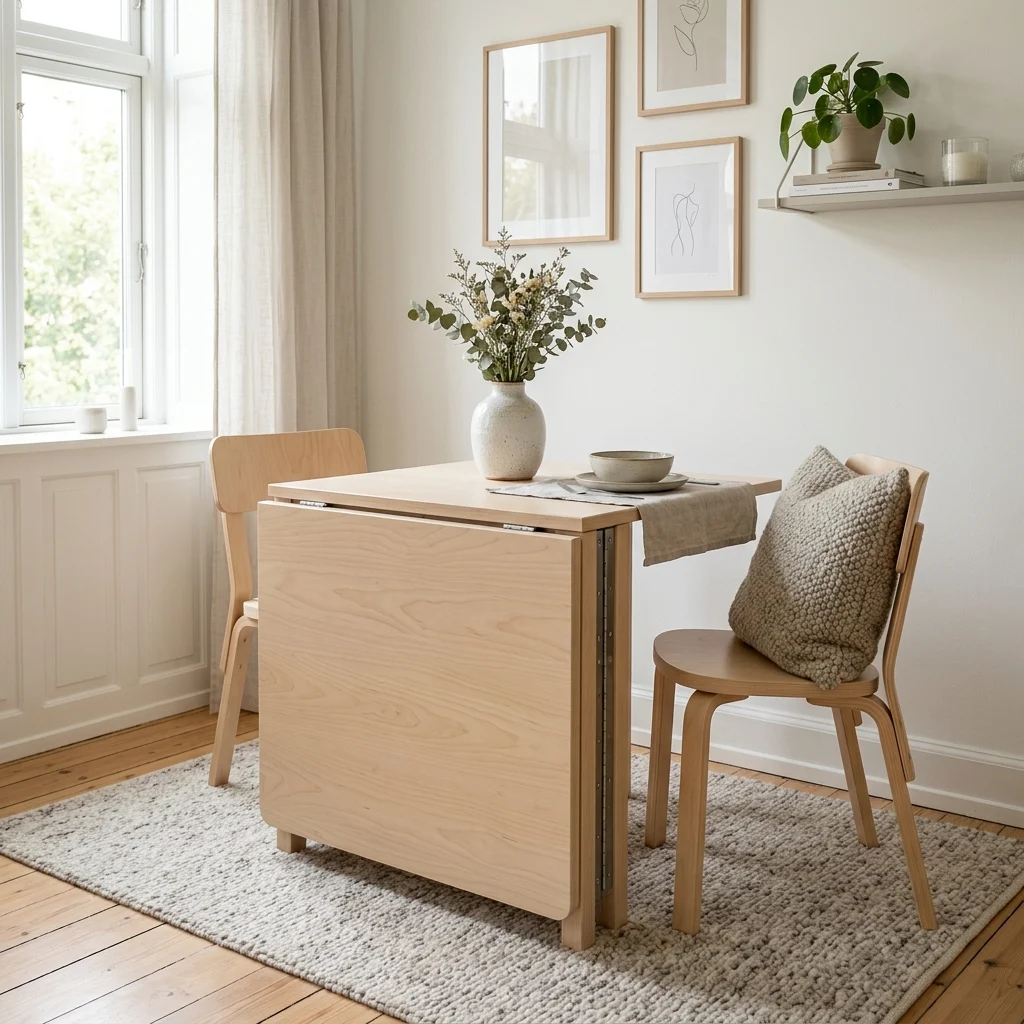
Vibe: The dining area feels adaptable, a full table appearing only when the room actually needs one.
Why it works: An extendable or fold-down table solves a genuinely common small-space problem needing seating for guests occasionally without permanently losing floor area to a large table daily, a multi-functional furniture principle Scandinavian design has relied on since its earliest compact-apartment applications.
How to get it: Choose a pale wood extendable table with a drop-leaf or pull-out mechanism, sized to seat two to four in its compact form and six to eight when extended.
💡 Quick Win: A round table with one drop leaf is often easier to fold and unfold single-handedly than a rectangular version with two.
Shop the Look
| Product |
| Extendable pale wood dining table |
| Stacking wood dining chair set |
| Ceramic vase warm white |
| Wool seat cushion |
| Table linen runner natural |
How to Start Your Scandinavian Transformation
Start with wall color, not furniture. A warm white such as Farrow & Ball’s All White is the single move that anchors every other decision, because it maximizes the daylight your home already receives, and every wood tone and accent color afterward is chosen to sit correctly against that base.
The most common mistake is choosing cool, blue-based grey furniture and paint, which reads as flat and clinical rather than warm a frequent misstep given how often “Scandinavian” gets conflated with sterile minimalism online. Fix it by swapping any blue-grey undertone for a warmer greige or pale wood tone throughout the room.
Three items under $50 that create immediate impact: a chunky knit wool throw in natural undyed wool, an unscented pillar candle set in varied ceramic holders, and a single sheepskin throw for a dining or desk chair.
A full Scandinavian home transformation realistically takes 4–8 weeks and costs $3,000–$9,000. A weekend refresh using paint, textiles, and candles costs $150–$450 and shifts the atmosphere immediately, before any furniture changes happen.
Frequently Asked Questions About Scandinavian Decor
What’s the difference between Scandinavian and minimalist decor?
Scandinavian decor deliberately layers in hygge warmth wool throws, candlelight, sheepskin while minimalist decor often strips these comfort elements away in favor of stricter architectural restraint. A Scandinavian living room will typically feel warmer and more textured than a minimalist one, even though both share a similar neutral base palette and preference for negative space.
What color palette works best for Scandinavian decor?
Warm white forms the base, with dusty blue and sage green as common soft accent colors layered against pale birch or ash wood tones. Farrow & Ball’s All White and Parma Gray No. 27 are frequently referenced starting points. Avoid cool, stark whites and heavily saturated accent colors, both of which break the palette’s calm, light-maximizing character.
How much does a Scandinavian decor makeover cost?
A budget refresh using paint, textiles, and candles typically runs $150–$500. A mid-range update adding new furniture and lighting costs $2,500–$6,000. A full transformation including new pale wood flooring and custom shelving can reach $10,000–$18,000 depending on square footage and material sourcing.
Does Scandinavian decor work with a boho or industrial home?
Yes Scandinavian pairs naturally with boho through shared natural materials like wool and wood, creating what’s often called “Scandi-boho.” It blends less easily with heavy industrial decor, where dark metal and exposed concrete conflict directly with Scandinavian design’s preference for pale, light-reflecting surfaces; if combining the two, keep metal accents limited to one or two pieces.
What’s the most important element in Scandinavian decor?
Natural light behavior is the most important element more than any single color or material, how effectively pale wood, warm white walls, and reflective surfaces work together to maximize available daylight is what defines genuine Scandinavian decor. A room with the right furniture but heavy curtains and dark flooring will still feel dim rather than airy.
Ready to Create Your Dream Scandinavian Space?
These 15 ideas move through pale wood tones, warm color accents, layered candlelight, and flexible furniture, showing that Scandinavian decor comes together through many small, light-conscious choices rather than one dramatic renovation. Starting with a single warm white wall or one chunky wool throw is not a lesser version of the style it’s exactly how these homes are meant to come together. Today, group three candles at varied heights on your coffee table and light them once the sun starts to set. Done well, the space will start to feel like a held breath of warmth against whatever the weather is doing outside, calm settling into every room the same way. Save the ideas that matched your own light and your own walls that pale birch floor, that single potted fig tree because Scandinavian decor rewards the home built slowly, one light-filled choice at a time.
You Might Also Like
- Eco Friendly Bamboo Home Decor: 9 Stunning Ways to Style Every Room
- 10 Stylish Shelf Decor Ideas for Every Room
- Modern Home Decor: 15 Ideas Worth Saving and Stealing
- 13 Minimalist Home Decor Ideas for a Calm, Clutter-Free Space
- 12 Small Space Decor Ideas for a Modern Minimalist Home
- 20 Vintage Home Decor Ideas for a Home Full of Character
[…] 15 Scandinavian Decor Ideas for Simple, Hygge-Inspired Living […]