
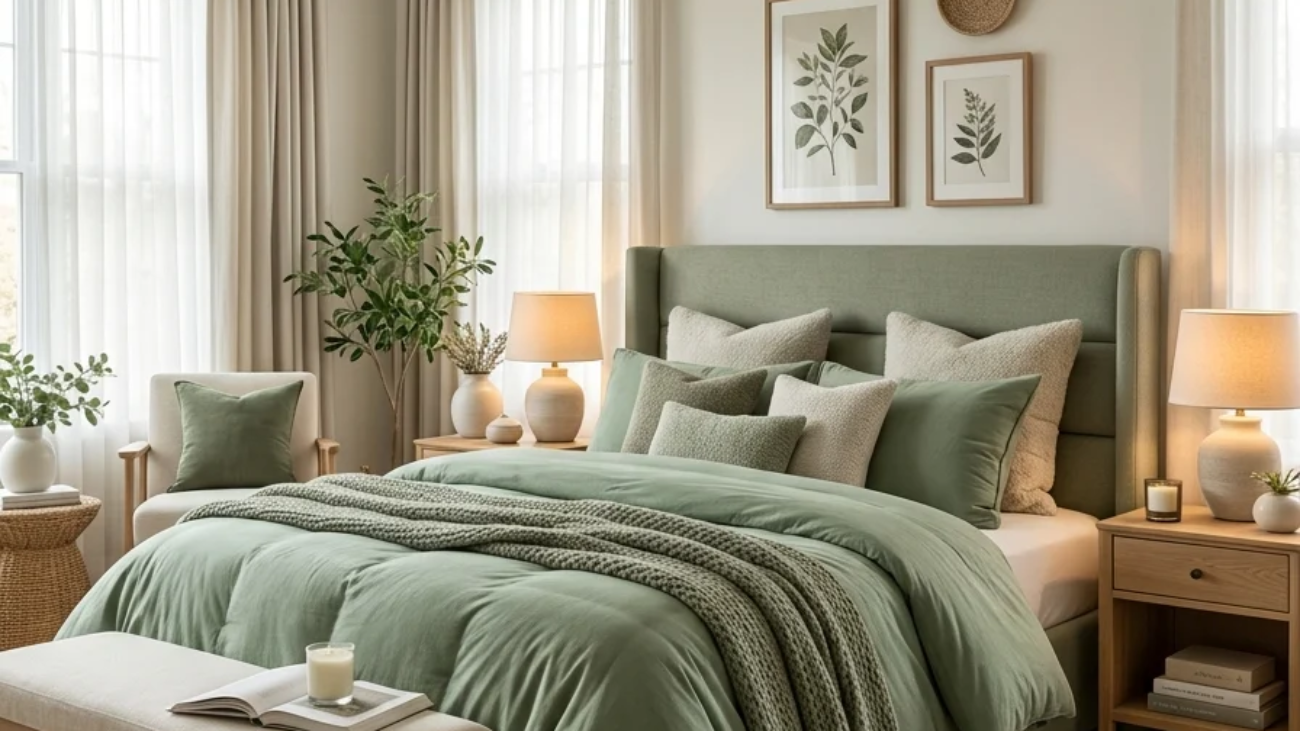
A green comforter bedroom for max comfort builds the whole room around one plush, richly-colored comforter sage, forest, or emerald layered with soft, breathable materials so the bed becomes the most comfortable spot in the house, not just the prettiest. This article gives you 12 green comforter bedroom ideas: color, materials, lighting, furniture, layout, and small-space fixes, each with a shoppable “Steal the Look” list.
Picture sinking into a bed so deep and soft it feels like the room exhales around you, the comforter’s weight settling in exactly the way a good hug does. Green makes the whole space feel like a forest clearing at dusk still, private, a little removed from the noise of the day. Warm light catches the comforter’s texture instead of flattening it. Here are 12 ideas worth saving nd stealing.
Why a Green Comforter Bedroom for Max Comfort Works So Well
A green comforter bedroom for max comfort blends two ideas rarely paired deliberately: sleep-science comfort (fill weight, breathability, layering) and the botanical calm of a sage-to-forest green story drawn from biophilic design. What separates it from a plain “green bedroom” is that comfort specs come first: fill type and weave matter as much as the shade on the label.
Its materials are specific: down alternative or responsibly-sourced down fill in the 300–500 GSM range, brushed cotton sateen or linen duvet covers, velvet throw pillows, and a warm oak or upholstered bed frame. Colors worth naming: sage, moss, hunter green, and deep forest for the comforter itself, balanced against warm white, oatmeal, or dove gray walls and linens.
This approach is trending because post-pandemic habits pushed people to spend more waking hours in bed working, reading, resting shifting priorities from purely visual bedrooms toward ones built for extended comfort. Pinterest shows rising interest in “cozy bedroom” and “hotel bed at home” queries.
Small bedrooms can do this, but oversized comforters overwhelm a compact room. Choose a comforter sized to the mattress rather than a large overhang, and prioritize one plush texture rather than layering three or four thick textiles.
| Element | Comfort Function | Green Aesthetic |
| Philosophy | Sleep-first, tactile layering | Sage-to-forest botanical calm |
| Materials | Down-alternative fill, cotton sateen, brushed microfiber | Velvet, linen, ceramic accents |
| Color Palette | Warm white, oatmeal, dove gray | Sage, moss, emerald, forest green |
1. Choosing Your Green Comforter Shade for the Room’s Light
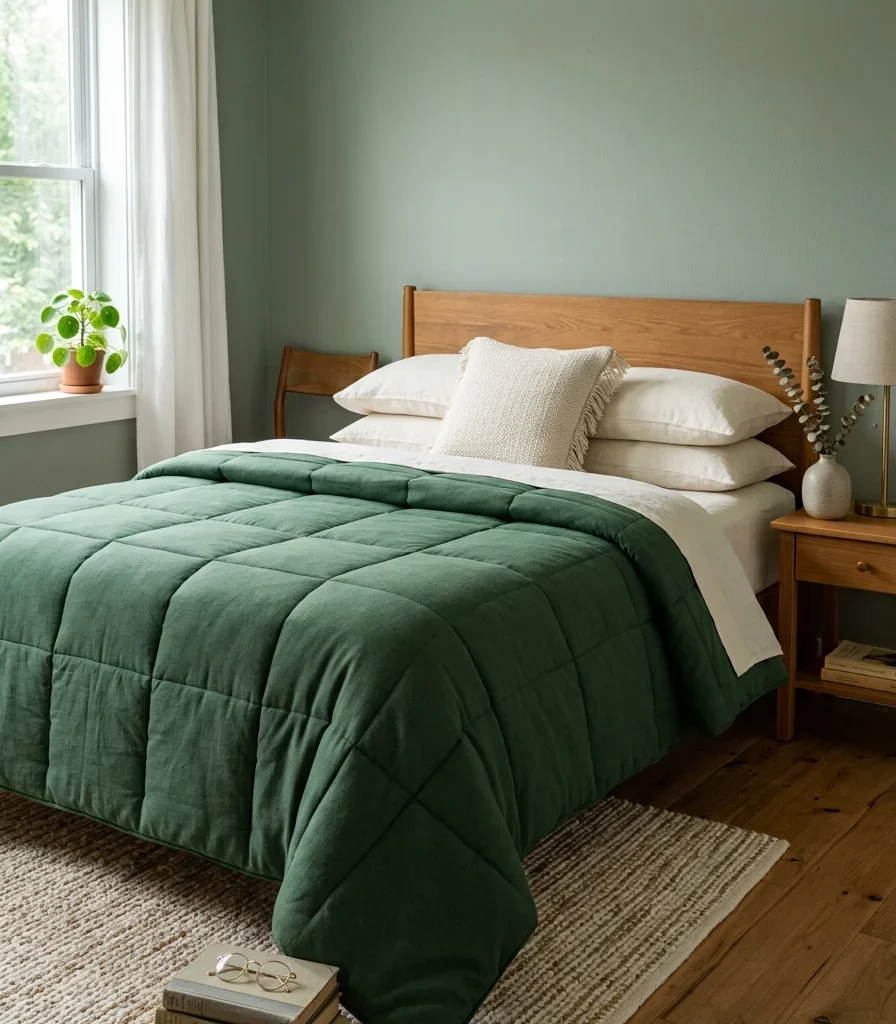
Vibe: Still a comforter shade chosen to work with the light already in the room, not against it.
Why it works: Cool, north-facing light makes pale sage look washed-out and gray, while warm, south-facing light can handle a deeper forest green. The same pigment shifts noticeably depending on the color temperature of light hitting it.
How to get it: In a cool-lit room, choose a deeper forest or hunter green comforter, which holds its color better under blue-toned daylight; in a warm-lit room, a lighter sage reads richer without looking flat.
💡 Quick Win: Hold a fabric swatch or comforter corner up against your window at midday before buying; the true color only shows in your own light, not a product photo.
Shop The Look
| Product |
| Forest green quilted comforter queen |
| Sage green comforter king size |
| Ivory linen throw pillow cover |
| Ceramic vase warm white glaze |
| Warm oak picture frame small |
2. Down Alternative vs. Down Fill for True Comfort
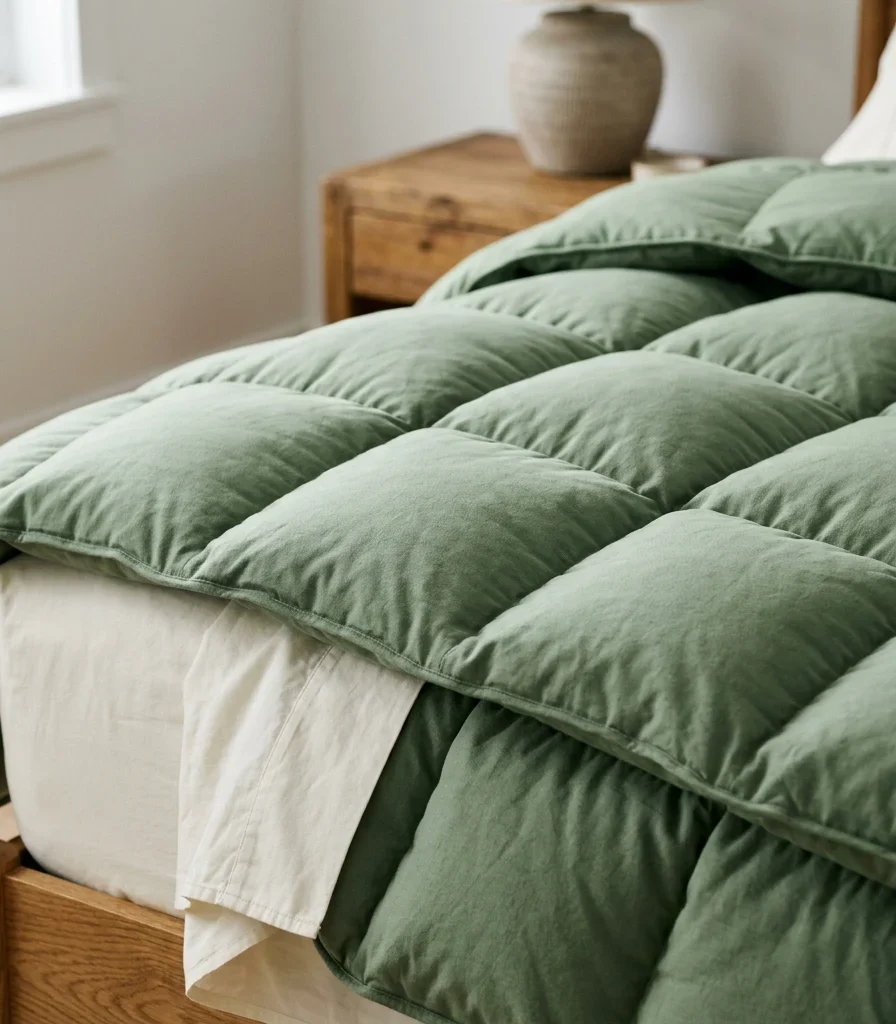
Vibe: Ground a comforter with enough loft to actually feel like it’s doing something.
Why it works: Fill weight, measured in GSM, directly determines warmth 300–350 GSM suits warm climates or hot sleepers, while 400–500 GSM suits colder rooms or a heavier, more cocooning feel. Down alternative mimics down’s loft without allergy risk; genuine down offers a slightly better warmth-to-weight ratio at a higher price.
How to get it: Match your comforter’s GSM to your room’s typical nighttime temperature and your own preference for weight; check the product listing’s fill weight specifically, not just the marketing language.
Shop The Look
| Product |
| Down alternative comforter 400 GSM |
| Genuine down comforter box-stitch |
| Duvet cover with interior ties |
| Cotton sateen sheet set ivory |
| Comforter storage bag, breathable |
3. Warm Bedside Glow That Flatters a Green Comforter
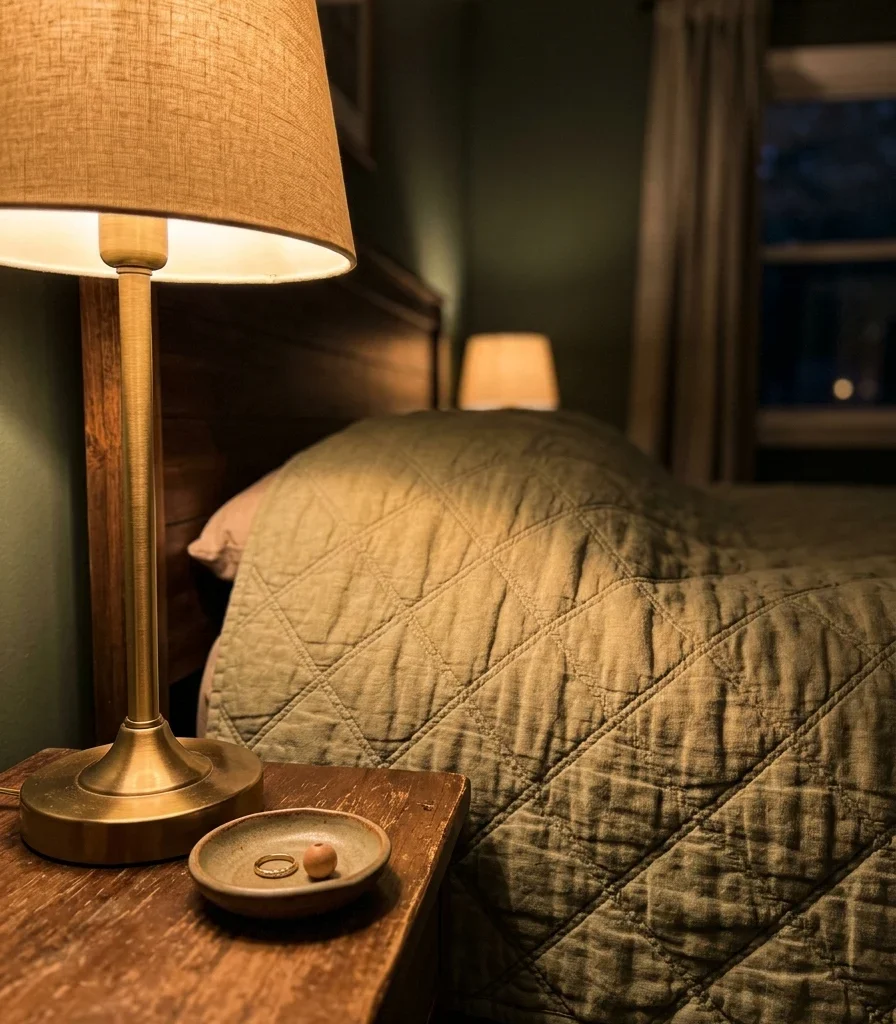
Vibe: Hushed light that makes the comforter’s texture visible instead of flattening it.
Why it works: Cool-white bulbs flatten fabric texture and mute green tones, while warm 2700K light brings out the quilted texture and richness of the color. The same bedding photographs differently under a flashlight versus a proper bedside lamp.
How to get it: Use brass table lamps with linen shades on 2700K bulbs at bedside height, positioned so the light falls across the comforter rather than only up toward the ceiling.
Shop The Look
| Product |
| Brass table lamp linen shade pair |
| Warm white 2700K bulb set |
| Small ceramic catch-all dish |
| In-line dimmer switch cord |
| Linen lamp shade replacement ivory |
4. A Low Upholstered Bed Frame That Lets the Comforter Lead
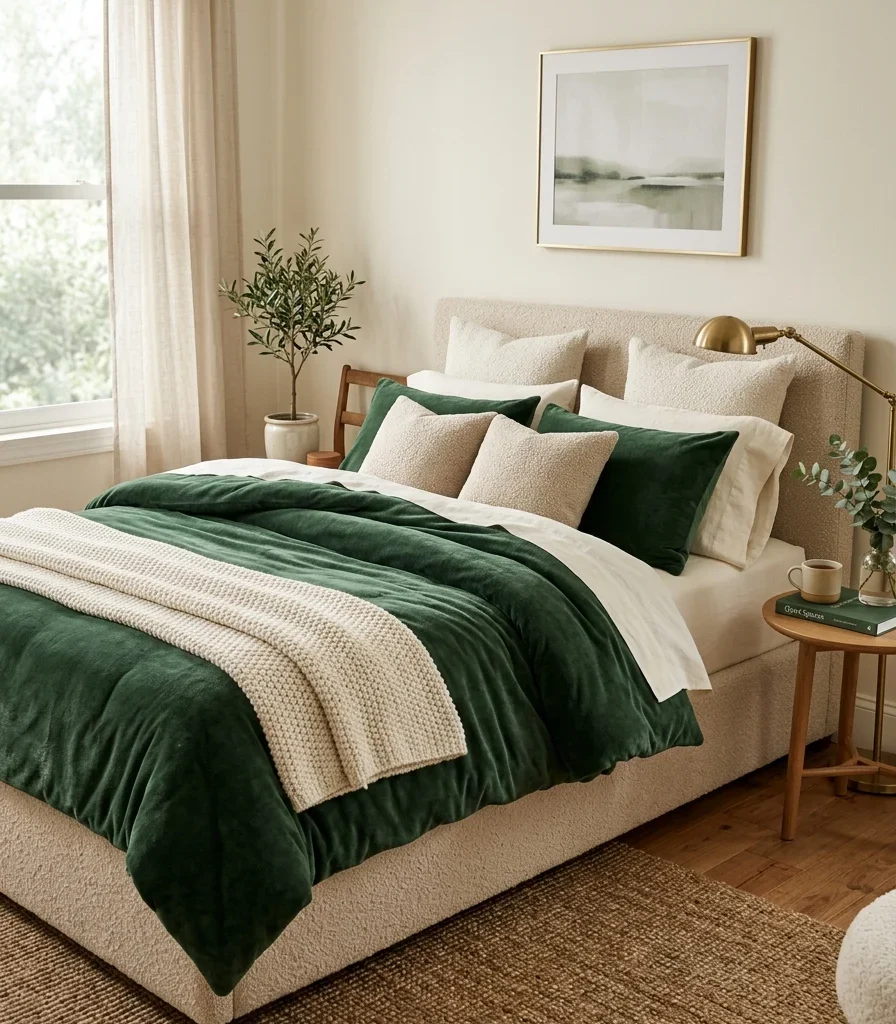
Vibe: Layered, a frame quiet enough that the comforter is clearly the star.
Why it works: A low-profile, neutral-toned frame keeps visual weight low so the eye goes straight to the comforter’s color and texture ;the frame becomes a supporting element rather than competing for attention.
How to get it: Choose an upholstered frame in oatmeal, ivory, or warm white boucle rather than a patterned or colored fabric, keeping the comforter as the room’s single boldest textile.
💡 Quick Win: Can’t replace the frame? A neutral fitted bed skirt hides a mismatched frame instantly and lets the comforter take over visually.
Shop The Look
| Product |
| Low-profile upholstered bed frame oatmeal |
| Bed skirt fitted neutral tone |
| Brass adjustable reading lamp |
| Wool throw blanket ivory |
| Brass bed frame leg caps |
5. Layered Throw Pillows Around the Comforter
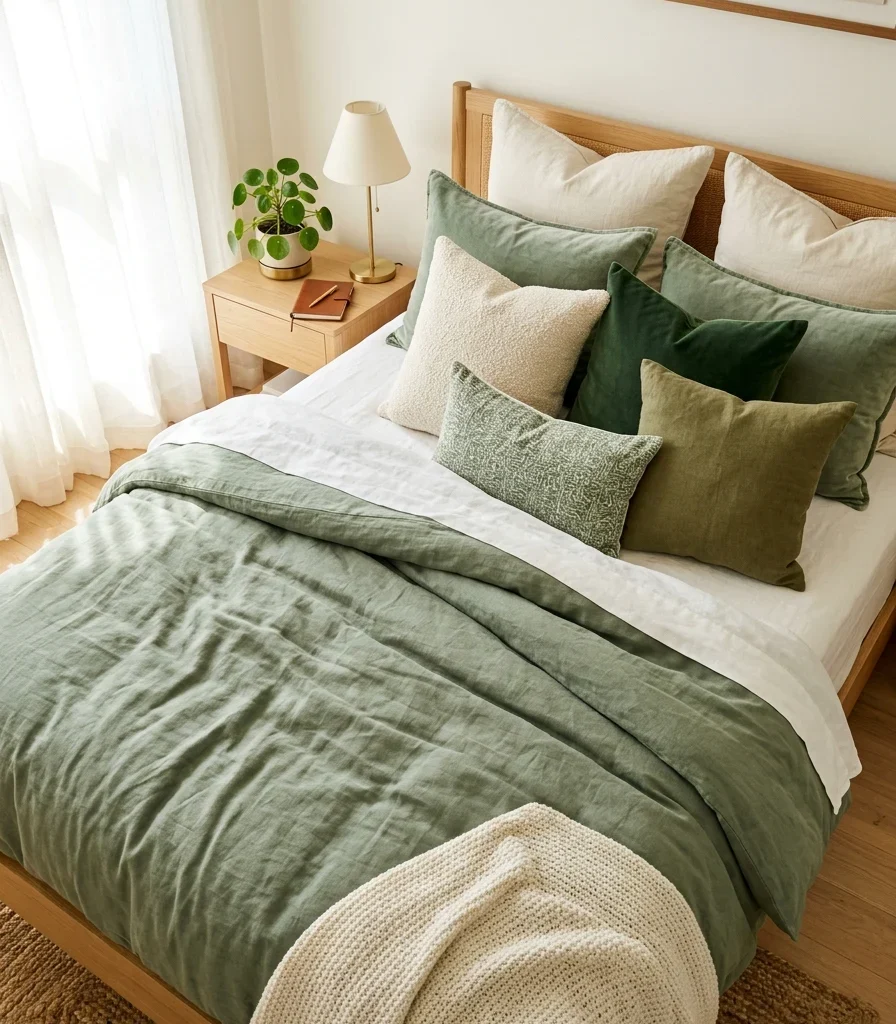
Vibe: Inviting a bed you actually want to flop onto at the end of the day.
Why it works: Mixing pillow textures within the comforter’s own color range adds richness through texture layering rather than introducing colors that compete with it, keeping the palette cohesive while adding depth.
How to get it: Stack five pillows total two standard shams, two decorative squares, one lumbar in three different textures, all within the sage-to-forest green range plus one ivory neutral.
Shop The Look
| Product |
| Velvet throw pillow cover forest green |
| Linen throw pillow cover sage |
| Boucle lumbar pillow cover ivory |
| Standard pillow sham set |
| Small potted plant faux nightstand |
6. Tonal Green Layering From Walls to Bedding
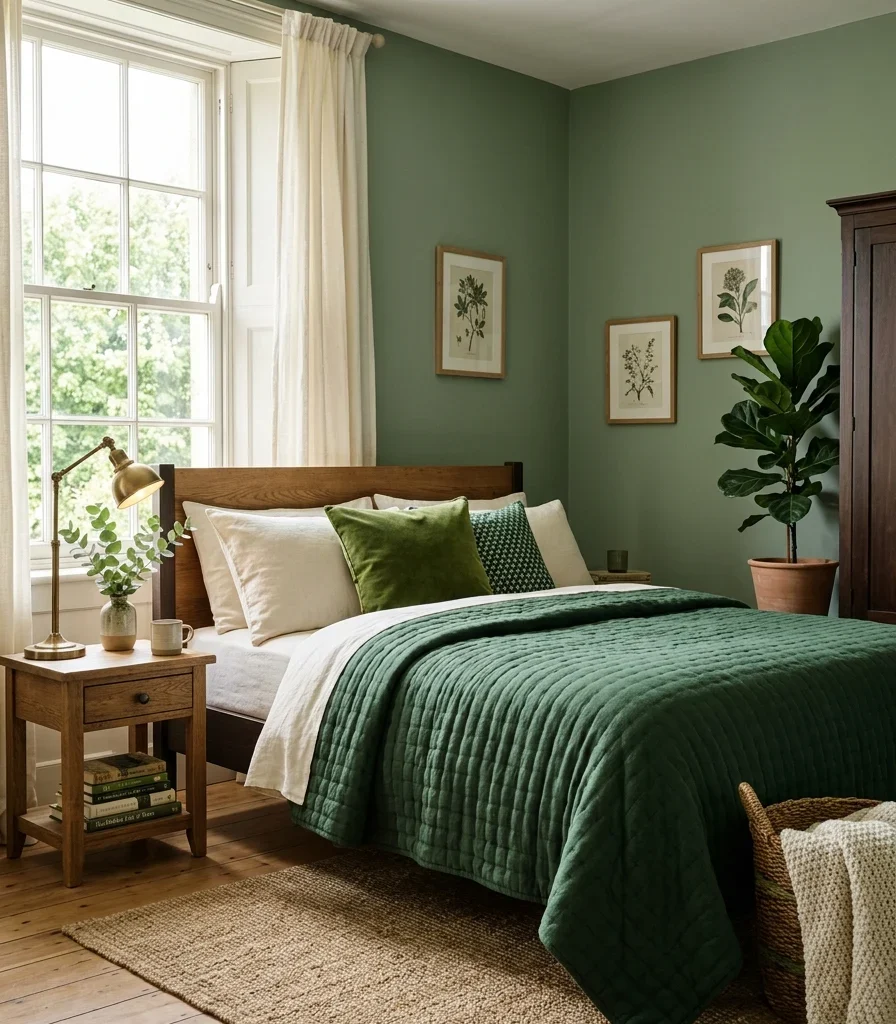
Vibe: Serene green showing up at three depths instead of one flat note.
Why it works: Tonal layering within one family sage walls, forest green comforter, moss cushion creates a gradient the eye can travel through, reading as intentional rather than one flat block of color.
How to get it: Paint walls in a soft sage such as Sherwin-Williams “Clary Sage,” choose a deeper forest green comforter, and add one moss green velvet cushion as the mid-tone bridge between the two.
Shop The Look
| Product |
| Sage green wall paint sample |
| Forest green quilted comforter |
| Moss green velvet cushion cover |
| Brass adjustable reading lamp |
| Ivory linen sheet set |
7. Cotton Sateen vs Linen Duvet Cover for Breathable Comfort
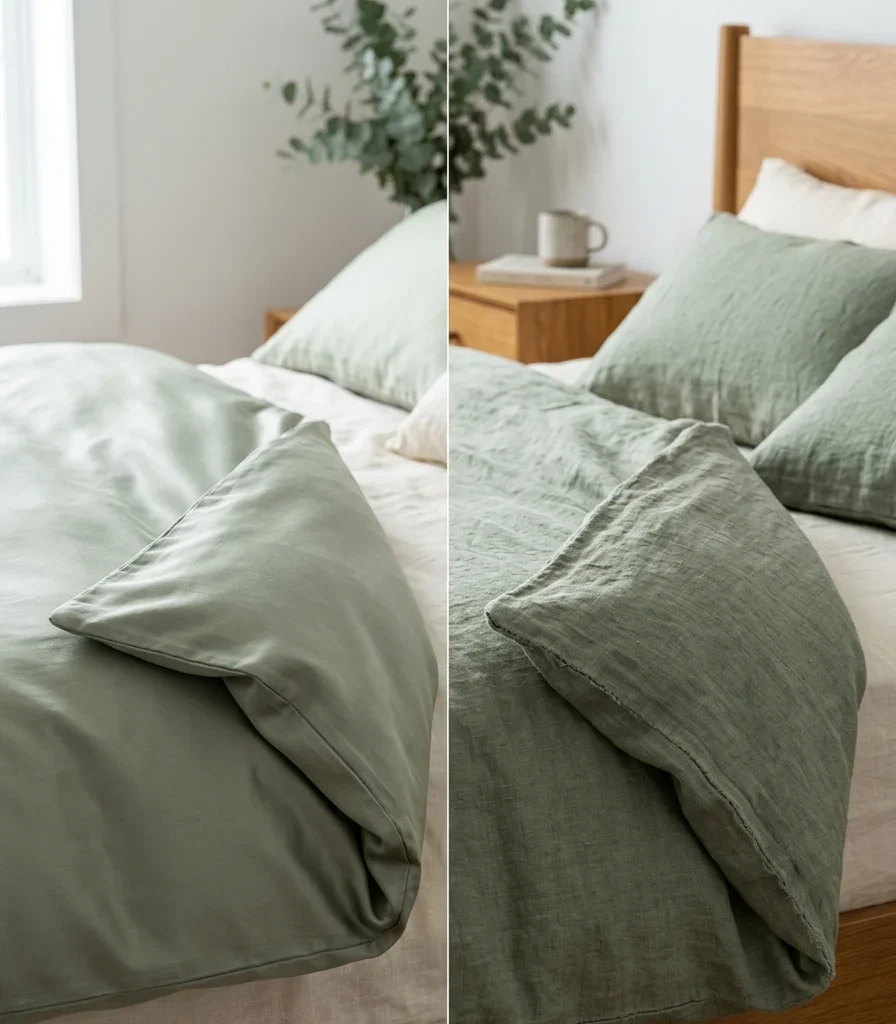
Vibe: Calm fabric choice that changes how the whole bed feels to climb into.
Why it works: Cotton sateen’s tighter weave creates a subtle sheen and cooler hand-feel, ideal for hot sleepers, while linen’s looser weave breathes more and softens with every wash the two fabrics suit different comfort needs even in the same green shade.
How to get it: Choose a 300-thread-count cotton sateen duvet cover if you sleep warm, or a stonewashed linen cover if you prioritize breathability and a relaxed, lived-in texture.
💡 Quick Win: A duvet cover in either fabric can slip over an existing comforter insert, letting you change the whole look without buying a new comforter.
Shop The Look
| Product |
| Cotton sateen duvet cover sage |
| Stonewashed linen duvet cover sage |
| Duvet insert clip set |
| Cotton sateen pillowcase pair |
| Linen pillowcase set ivory |
8. Layered Ceiling and Lamp Light for a Cocooning Glow
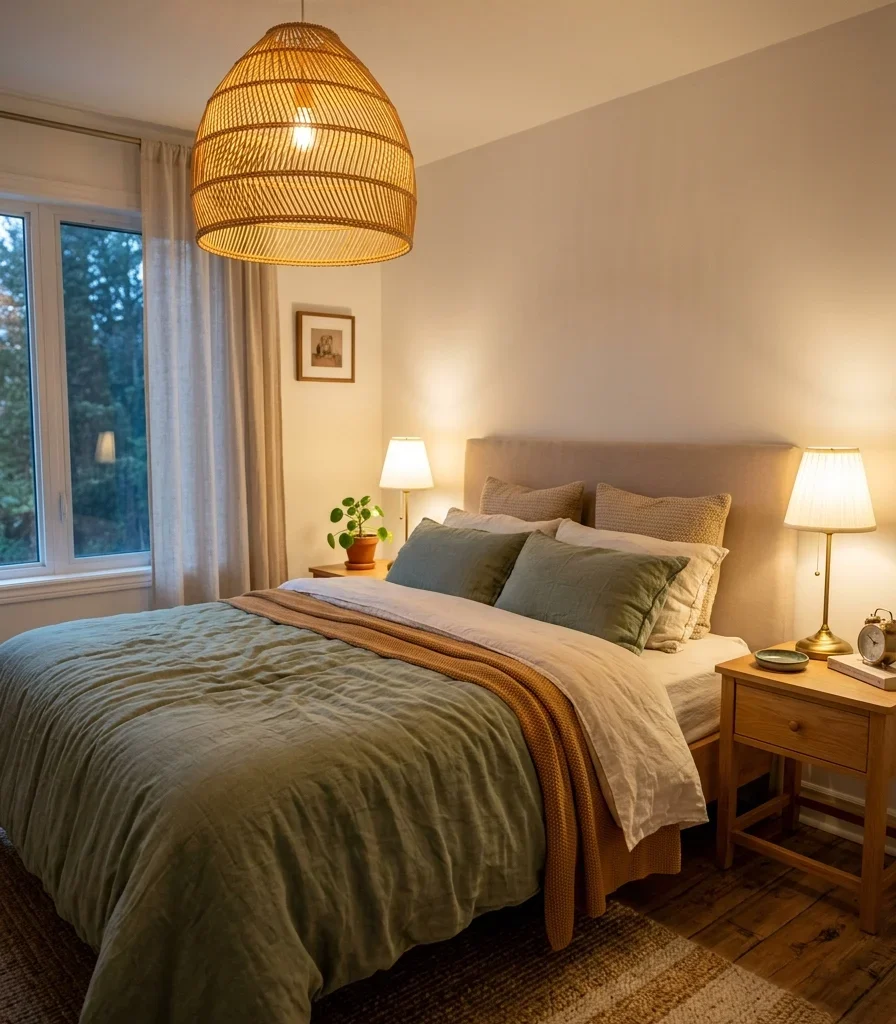
Vibe: Cocooning, e ugh layered light that the whole room feels like it’s wrapping around the bed.
Why it works: A single overhead fixture creates flat light that doesn’t flatter texture, while a pendant layered with two bedside lamps creates pools of light at different heights, making a plush comforter look genuinely inviting rather than just present.
How to get it: Install a rattan or woven pendant as the primary ceiling fixture and add matching brass lamps at both bedsides, all on warm 2700K bulbs with a shared dimmer if possible.
Shop The Look
| Product |
| Rattan dome pendant ceiling light |
| Brass table lamp pair warm shade |
| Warm white 2700K bulb set |
| Shared dimmer switch kit |
| Small ceramic catch-all dish pair |
9. A Storage Bench at the Foot of the Bed
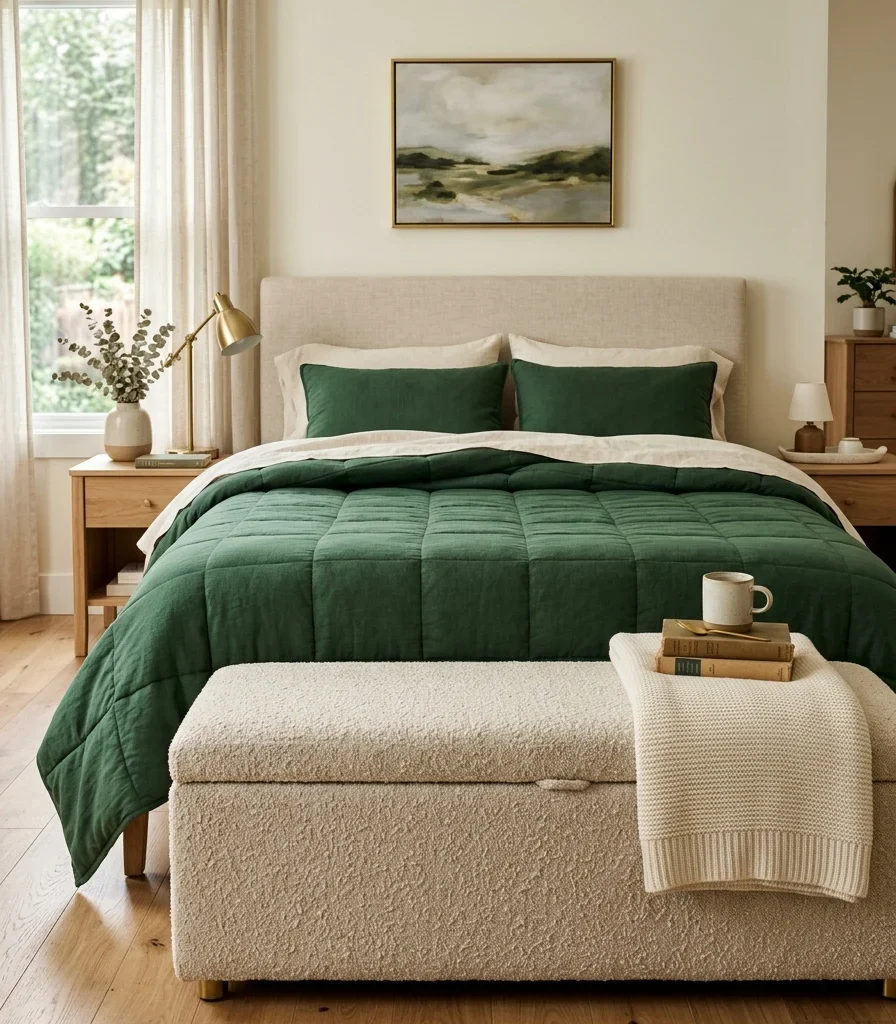
Vibe: A functional bench that holds the extra blanket you’ll actually reach for.
Why it works: A storage bench applies negative space and proportion; it fills what’s often empty floor while giving the extra layers this style depends on (a second throw, a spare comforter) somewhere to live besides a closet shelf.
How to get it: Choose a bench roughly two-thirds the width of the bed, upholstered in a neutral boucle or linen, with a hinged lid for blanket storage rather than an open shelf that shows clutter.
Shop The Look
| Product |
| Upholstered storage bench oatmeal boucle |
| Folded throw blanket forest green |
| Brass bench leg caps |
| Small woven basket for bench top |
| Linen bench cushion cover ivory |
10. A Weighted Blanket Layered Over the Comforter
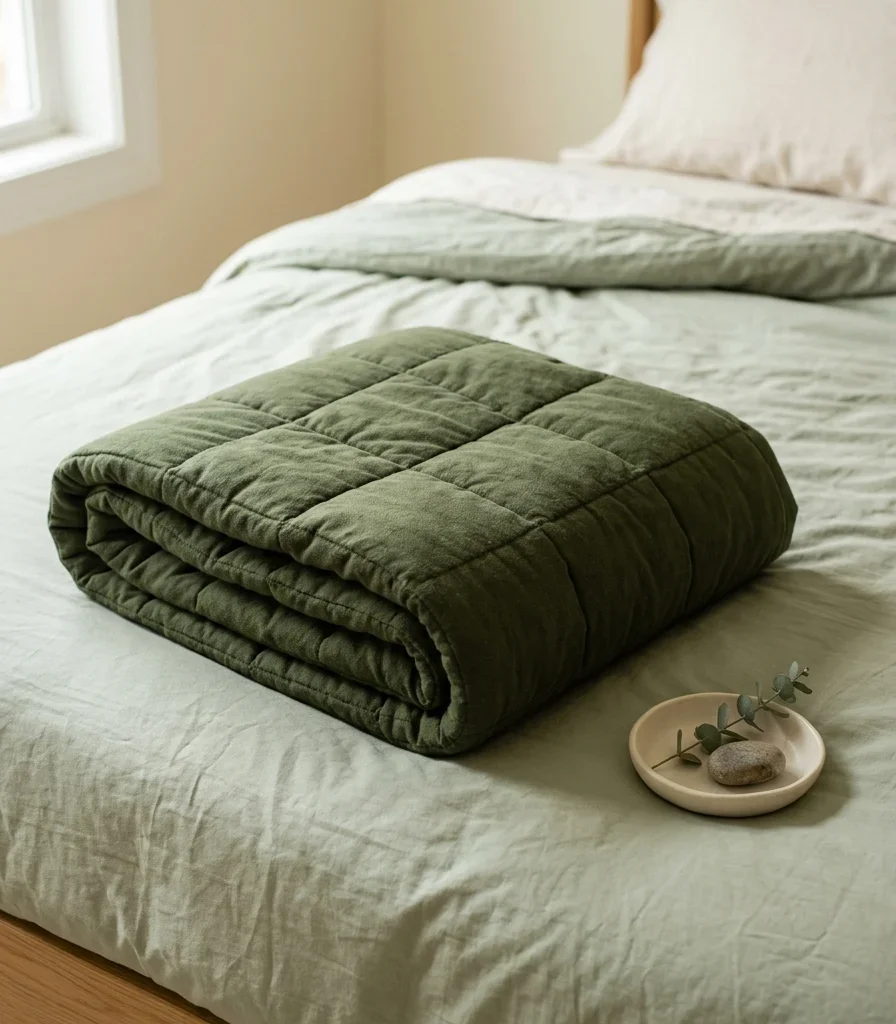
Vibe: Grounded; the layer that turns “cozy-looking” into actually calming to sleep under.
Why it works: A weighted blanket adds deep pressure stimulation some sleepers find calming, layered as a second textile rather than a replacement a practical comfort addition that also adds a second green tone deepening the tonal layering already at work.
How to get it: Choose a weighted blanket at roughly 10% of your body weight in a moss or hunter green cotton cover, folded at the foot of the bed over a lighter sage comforter so both greens stay visible.
💡 Quick Win: Fold the weighted blanket in thirds at the foot of the bed rather than draping it loosely; it reads intentional instead of like an afterthought.
Shop The Look
| Product |
| Weighted blanket cotton cover moss green |
| Removable duvet-style blanket cover |
| Sage green quilted comforter |
| Small ceramic dish nearby styling |
| Bed runner scarf forest green |
11. Arranging the Room Around a Cocooning Bed Zone
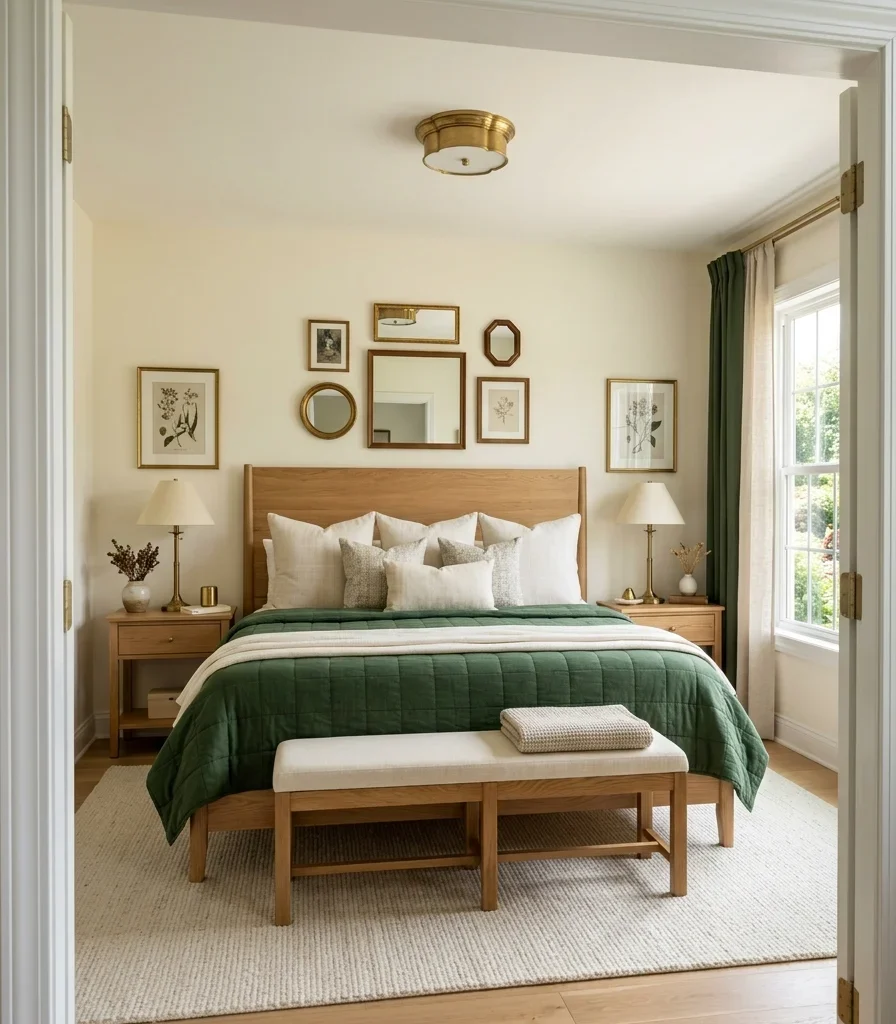
Vibe: Considered a layout where every other piece of furniture clearly supports the bed.
Why it works: Centering the bed on the longest wall and framing it symmetrically with matching nightstands applies zone definition; the room visually organizes around the bed, reinforcing the comfort-first philosophy at the furniture level, not just bedding.
How to get it: Position the bed so there’s at least 60cm of clearance on both sides for nightstands and walking space, and keep any additional furniture (a bench, a chair) aligned to the bed’s centerline rather than pushed into a random corner.
Shop The Look
| Product |
| Matching nightstand pair warm oak |
| Brass table lamp pair |
| Area rug soft pile ivory |
| Symmetrical wall art pair |
| Brass drawer pull hardware set |
12. Choosing Comforter Size and Placement for Small Bedrooms
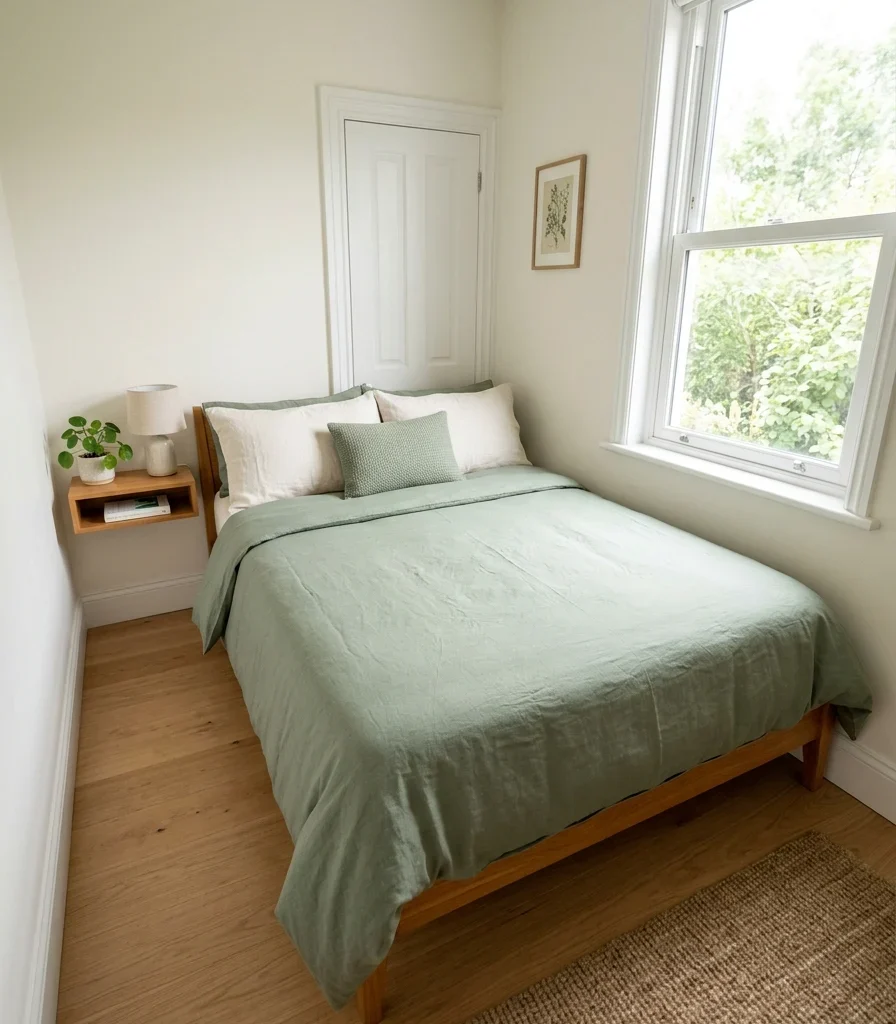
Vibe: Airy proof that a plush comforter doesn’t have to overwhelm a small room.
Why it works: An oversized comforter with a deep overhang expands the bed’s footprint in a small room, while one sized precisely to the mattress plus a modest 8–10 inch drop keeps visual weight in proportion a scale principle that matters more here than in a large bedroom.
How to get it: Measure your mattress before buying and choose a comforter labeled for that exact size rather than sizing up “for extra coziness,” which is the most common way a small bedroom ends up feeling bed-dominated.
Shop The Look
| Product |
| Sage green comforter sized to mattress |
| Slim floating nightstand shelf |
| Small area rug bedside |
| Wall-mounted reading light, space-saving |
| Under-bed storage bin woven |
How to Start Your Green Comforter Bedroom Transformation
Start with the comforter itself. Before choosing wall color, furniture, or lighting, select the exact green comforter shade, fill weight, and fabric since every other decision in the room gets made to support this one anchor piece, from the wall color that flatters it to the lamp warmth that lights it well.
The most common mistake beginners make is buying a comforter sized larger than the mattress “for a fuller look,” which creates excess bunching and a sloppy silhouette instead of the intentional, hotel-bed effect this style is going for. The fix is measuring your mattress and choosing the comforter size listed specifically for it, checking the product’s drop measurement rather than assuming.
Three items under $50 that make an immediate impact: a sage green velvet throw pillow cover ($18–$28) added to the bed; a warm white 2700K bulb set ($10–$14) for existing lamps; and a small ceramic vase ($15–$22) styled on the nightstand with one dried stem.
Realistic expectations: Astarter version the comforter itself plus a couple of pillows takes an afternoon and costs $80–$200. A full room transformation with new furniture, lighting, and a weighted blanket runs $600–$1,800 and typically takes two to four weeks.
Frequently Asked Questions About Green Comforter Bedrooms for Max Comfort
What is a green comforter bedroom, and how is it different from a plain sage green bedroom?
A green comforter bedroom for max comfort centers the entire design around the comforter’s fill weight, fabric, and fit not just its color while a plain sage green bedroom typically focuses on wall paint and decor first. The comfort-focused version treats the bedding as functional gear as much as decor, prioritizing GSM fi, fill weight a, nd breathable fabric alongside the shade of green.
What shade of green works best for a comforter?
Sage and moss green suit warm-lit, south-facing rooms, while deeper forest or hunter green holds its richness better in cooler, north-facing light that can wash out paler greens. Whichever shade you choose, check it against your own room’s natural light before buying, since product photos rarely reflect true color under different light temperatures.
How much does a good green comforter setup cost?
A quality down-alternative comforter with a 300–400 GSM fill typically runs $60–$150, and a full comfort-focused refresh including pillows and a duvet cover falls in the $80–$200 range. A more complete room transformation with new furniture and layered lighting generally runs $600–$1,800 depending on what’s already in the room.
Does a green comforter work with existing furniture, like a dark walnut bed frame or beige walls?
Yes dark walnut frames pair well with both sage and forest green comforters, since the warm wood tone grounds the cooler green, and beige or oatmeal walls provide a neutral backdrop that lets the comforter’s color and texture stand out rather than competing with a bold wall color.
What’s the most important factor for actual sleep comfort, not just looks?
Fill weight, measured in GSM, matters more for actual comfort than color or fabric choice a 300–350 GSM comforter suits warm sleepers or hot climates, while 400–500 GSM suits colder rooms or people who want a heavier, more cocooning feel. Choosing GSM based on your typical room temperature and sleep style will affect comfort more than any styling decision in this list.
Ready to Create Your Dream Green Comforter Bedroom?
These 12 ideas cover the full range of what this style can do, from choosing the right green shade and fill weight, to layering lighting and textiles, to small-space sizing that keeps a plush comforter from overwhelming the room. Building this kind of bedroom happens one layer at a time: the comforter first, then lighting, then furniture, and there’s no need to buy everything on the same weekend. If you’re starting today, measure your mattress and pick the exact comforter size and GSM fill that match how warm you actually sleep. Once the layers are right, this is the kind of bed that makes the whole day feel worth it just for the moment you finally climb in. Save the ideas that match your room’s light and your own comfort needs, and start building your green-comforter moodboard tonight.
You Might Also Like
- 15 Serene Atmosphere Green Bedroom Ideas
- 12 Cozy Green Terracotta Bedroom Ideas Worth Saving
- 10 Black and Green Bedroom Design Ideas Worth Saving
- 10 Ways to Create a Relaxing Green Grey Bedroom
- 16 Ways to Optimize a Home Office Setup in a Small Bedroom
- 16 Modern Cottage Bedroom Ideas That Feel Warm, Clean, and Effortless