
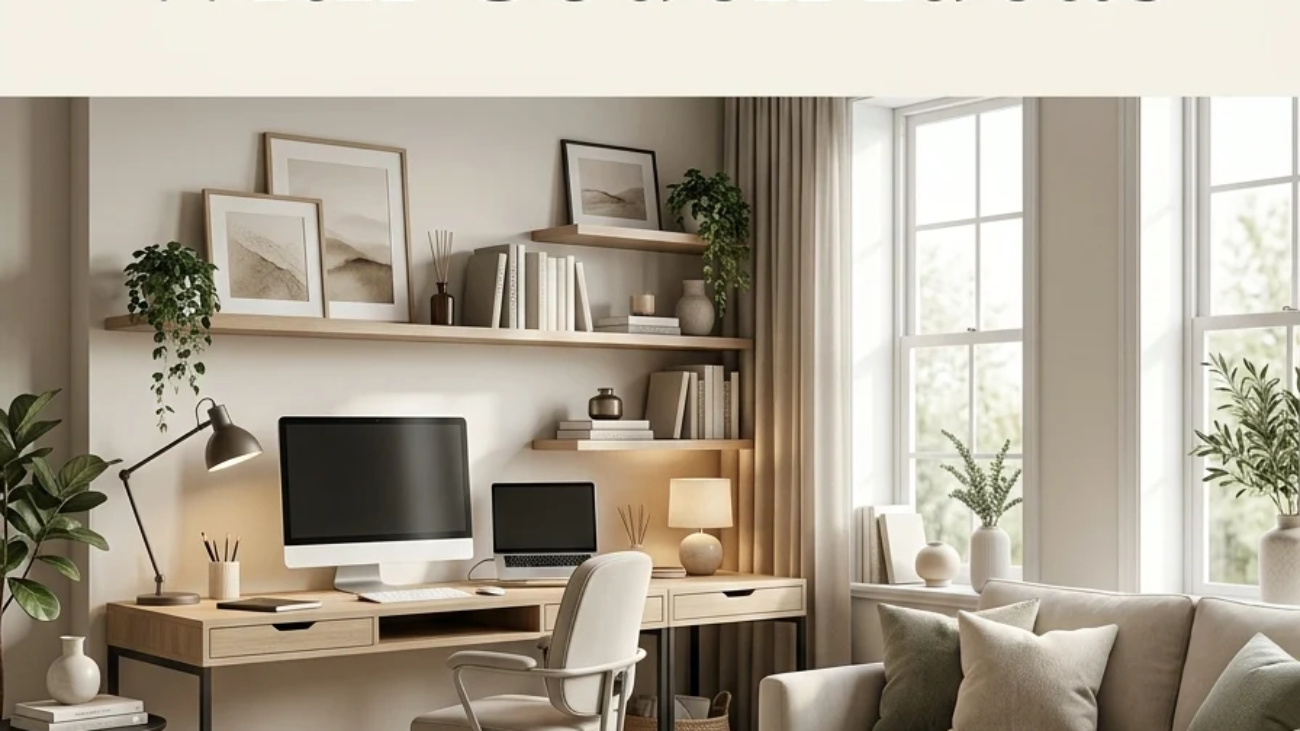
A comfortable home office setup with a couch is a work-from-home layout that replaces or supplements a traditional desk-and-chair arrangement by using a small sofa, loveseat, or daybed as the room’s primary seating, designed for both focused laptop work and relaxed reading or calls. This article gives you 17 genuinely comfortable, achievable home office setup with couch ideas covering furniture, color, material, and lighting decisions that make a work-from-home room feel like a place you actually want to sit in.
It feels like sinking into a Sunday afternoon that happens to have a laptop open on it: soft bouclé under your palm, a lamp throwing warm light instead of the flat glare of an overhead fixture, a blanket within reach for the 4 pm slump. This is the comfortable home office at its best: still productive, but never sterile, never corporate. Light pools low instead of flooding down from the ceiling. Texture does more work here than any motivational wall print could.
Here are 17 ideas worth saving and stealing.
Why a Comfortable Home Office Setup With Couch Works So Well
A comfortable home office setup with couch draws directly from the residential-to-commercial design crossover that reshaped workspaces after 2020, borrowing from hospitality lounge design the deliberately soft, layered seating found in boutique hotel lobbies rather than the ergonomic-desk tradition of corporate office furniture. What makes it distinct from a standard home office is the seating hierarchy: the couch, not the desk, is the room’s anchor piece, with a laptop tray, side table, or fold-out surface treated as secondary and moveable.
The core materials lean soft and tactile: bouclé, corduroy, and washed linen upholstery, walnut or white oak for side tables, jute or wool for rugs, and brass or matte black for lamp hardware. Color runs warm and low-contrast: cream, warm terracotta, sage green, and deep charcoal as an occasional anchor, always paired with enough neutral surrounding space that the room doesn’t tip into a living room pretending to be an office.
This setup is trending because remote and hybrid workers spend far more unstructured time in their home offices than a traditional 9-to-5 desk job ever required: video calls taken from a couch corner, reading done between meetings, a laptop moved from desk to sofa mid-afternoon. Pinterest search interest in “cozy home office” and “home office with couch” has risen steadily as people stop designing offices around a single fixed desk chair.
Yes, small spaces can absolutely pull this off, and a compact loveseat under 60 inches often fits a small office better than a full desk-and-credenza setup. Prioritize seating scale first; an oversized sofa is the fastest way to make a small home office feel crowded.
Style at a Glance
| Element | Core Trait 1 | Core Trait 2 |
| Philosophy | Seating is the room’s anchor, not the desk | Comfort and function share equal priority |
| Materials | Bouclé, corduroy, walnut, jute | Washed linen, white oak, wool, brass |
| Color Palette | Warm cream, terracotta, sage | Deep charcoal, warm walnut, soft oat |
17 Comfortable Home Office Setup With Couch Ideas
1. Choose a Loveseat as the Desk’s Anchor Piece
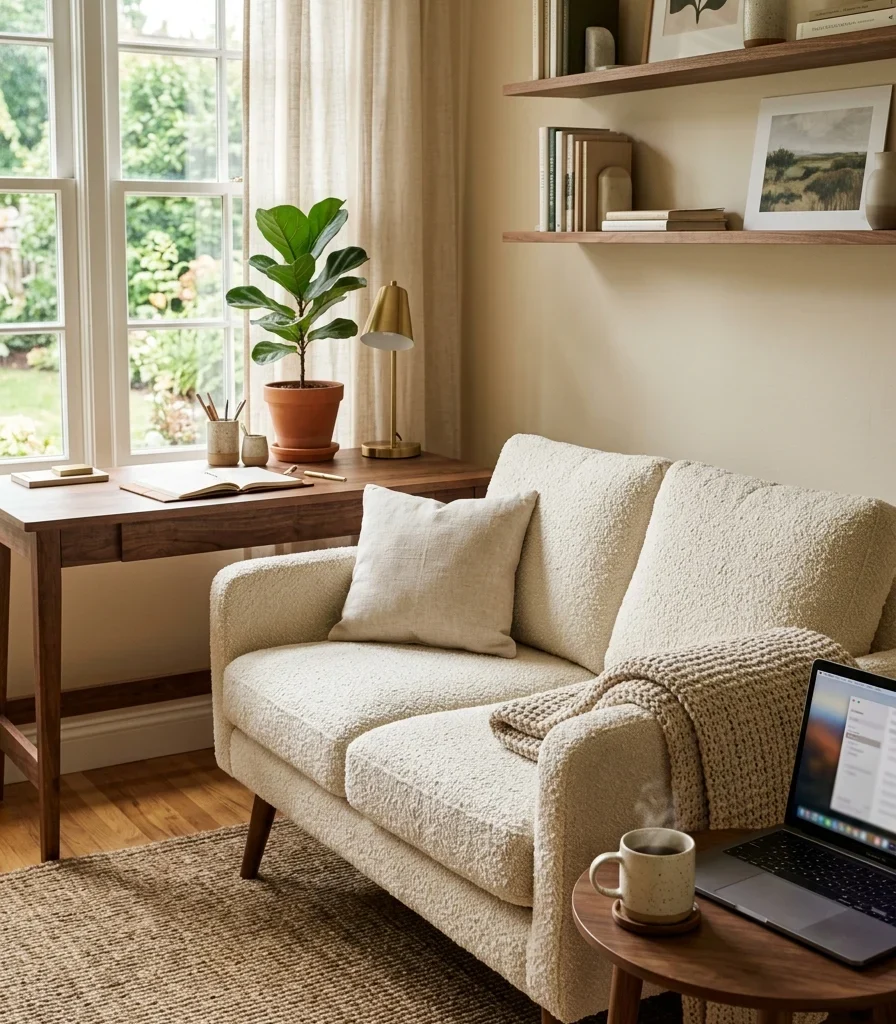
Vibe: Warm, a room where the seating invites you to stay long after the workday technically ends.
Why it works: Anchoring the room around a loveseat rather than a desk chair applies a furniture-hierarchy principle: the largest, softest piece in a room draws the eye and sets the emotional register first. Hence, a bouclé loveseat positioned as the room’s focal point immediately signals comfort before anyone notices the desk tucked beside it.
How to get it: Position a 54–60-inch loveseat at a slight angle to the desk rather than facing it head-on, which keeps sightlines open and lets the loveseat function independently for calls or reading without feeling like an extension of the workstation.
💡 Quick Win: A slipcovered loveseat under $400 delivers the anchor-piece effect without committing to a full custom upholstery order.
Shop the Look
| Product |
| Cream bouclé loveseat compact |
| Walnut writing desk slim |
| Small round walnut side table |
| Chunky knit throw blanket |
| Ceramic mug matte glaze |
2. Pair Warm Terracotta With Soft Cream
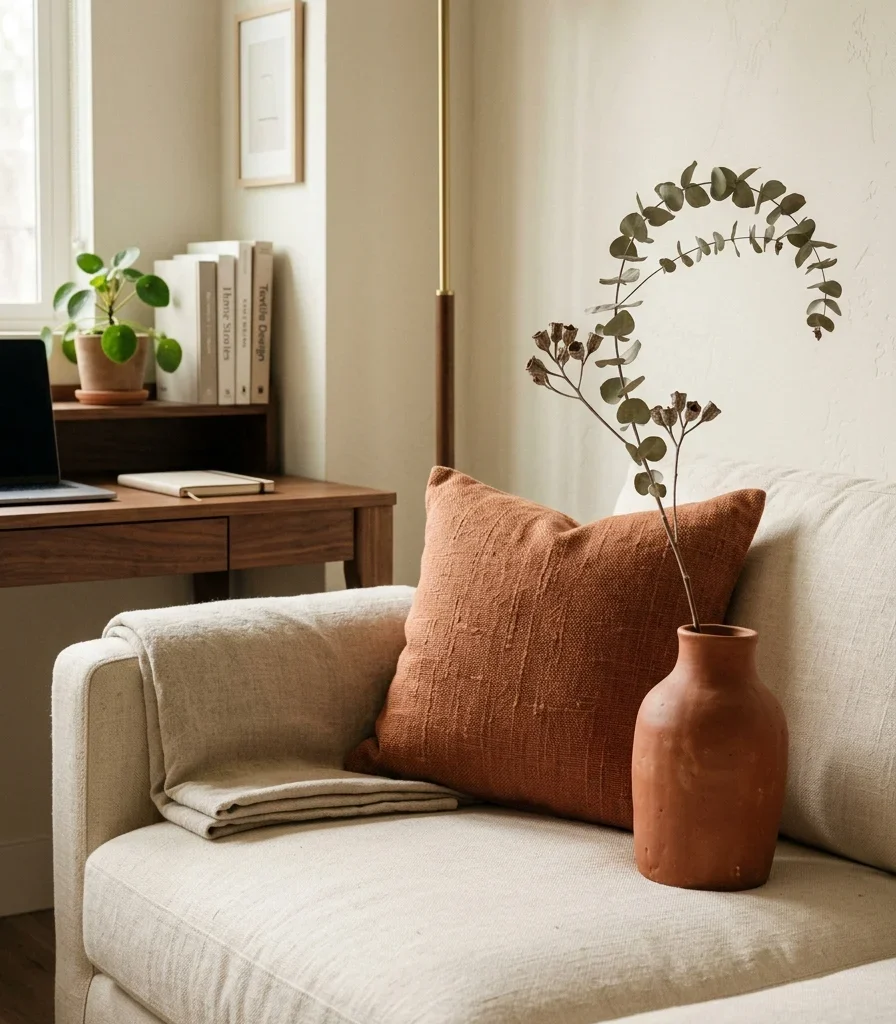
Vibe: Grounded a color pairing that reads warm without tipping into the visual noise of a full accent wall.
Why it works: Terracotta and cream apply a tonal layering principle where a saturated warm color is introduced only through textiles and small objects rather than paint, keeping the room’s overall brightness high (important for video calls) while still avoiding the flat, sterile feeling that all-neutral home offices often have.
How to get it: Limit terracotta to two or three objects: a throw pillow, a ceramic vase, and a small tray against a cream or warm white sofa and walls, so the color reads as a deliberate accent rather than a competing scheme.
Shop the Look
| Product |
| Terracotta linen throw pillow cover |
| Matte terracotta ceramic vase |
| Cream linen slipcover sofa |
| Small terracotta catchall tray |
| Dried botanical stem bundle |
3. Choose Bouclé Upholstery for Tactile Comfort
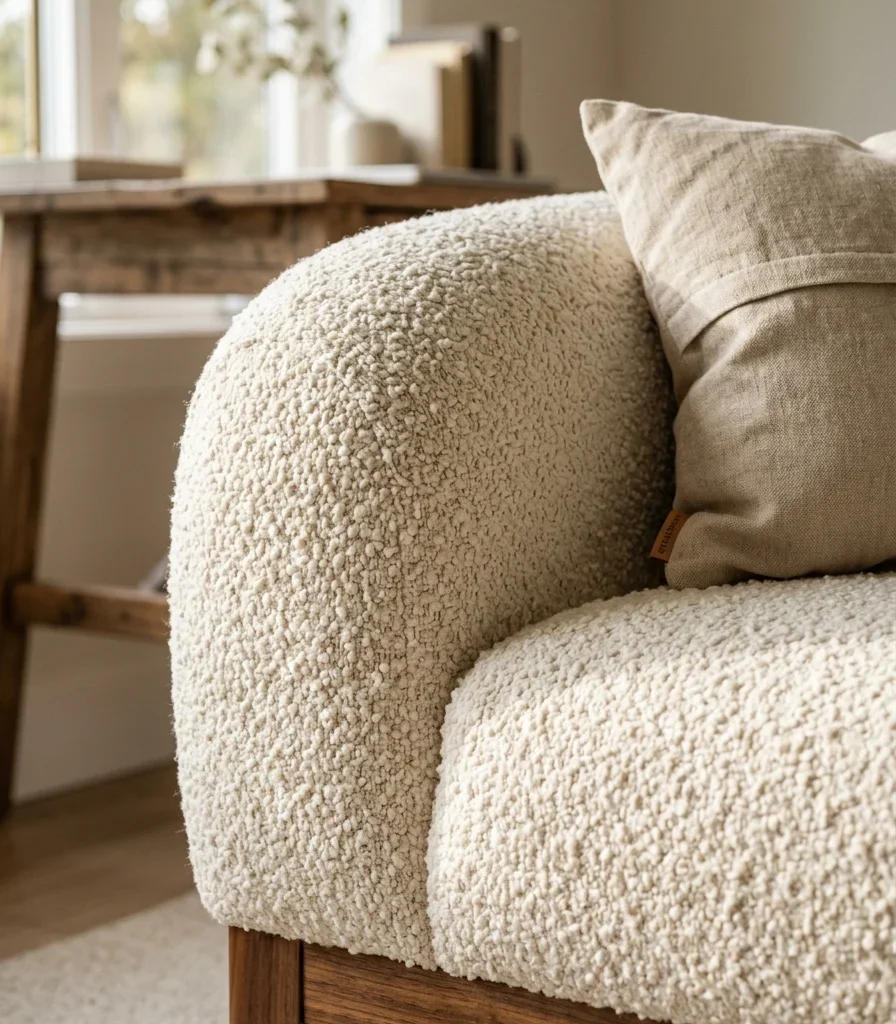
Vibe: Sun-warmed fabric texture soft enough to want to sit in even before you notice the color.
Why it works: Bouclé’s looped, textured weave is a tactile-layering material specifically suited to a room meant for long stretches of sitting; unlike flat-weave upholstery, its dimensional surface catches light unevenly and photographs with visible depth, which is part of why it reads as instantly cozier than a smooth linen or cotton sofa in the same neutral tone.
How to get it: Choose bouclé specifically for the primary seating piece rather than smaller accessories, since its comfort and visual impact are strongest at sofa scale, and pair it with a flat-weave linen pillow or two so the texture contrast stays intentional rather than overwhelming.
Shop the Look
| Product |
| Ivory bouclé compact sofa |
| Flat weave linen throw pillow |
| Walnut wood sofa leg set |
| Bouclé ottoman footstool small |
| Soft wool lap blanket |
4. Add a Warm Floor Lamp Beside the Couch
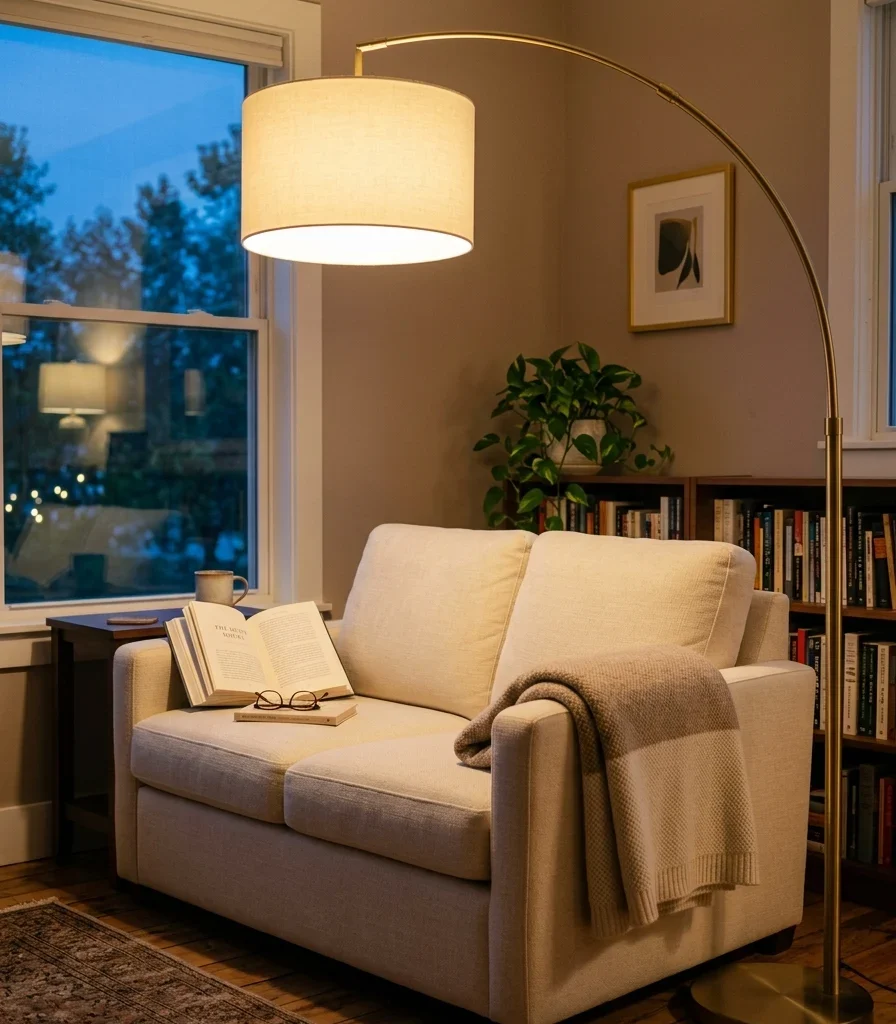
Vibe: Hushed, a single warm light source that turns a work corner into a reading nook the moment the laptop closes.
Why it works: Task and ambient lighting layered through one floor lamp rather than an overhead fixture is a light-behavior principle central to comfort. Overhead lighting flattens a room and reads as clinical, while a floor lamp positioned beside seating throws directional, warm light exactly where it’s needed for reading or a video call, leaving the rest of the room softer.
How to get it: Position the floor lamp so its light falls just behind and to the side of where your head rests against the couch, using a 2700K warm bulb, since a cooler bulb undercuts the cozy effect a fabric shade is designed to create.
Shop the Look
| Product |
| Brushed brass arc floor lamp |
| Fabric drum lamp shade cream |
| Warm 2700K LED bulb |
| Small side table for lamp |
| Linen bound hardcover book set |
5. Layer Throw Pillows and a Chunky Knit Blanket
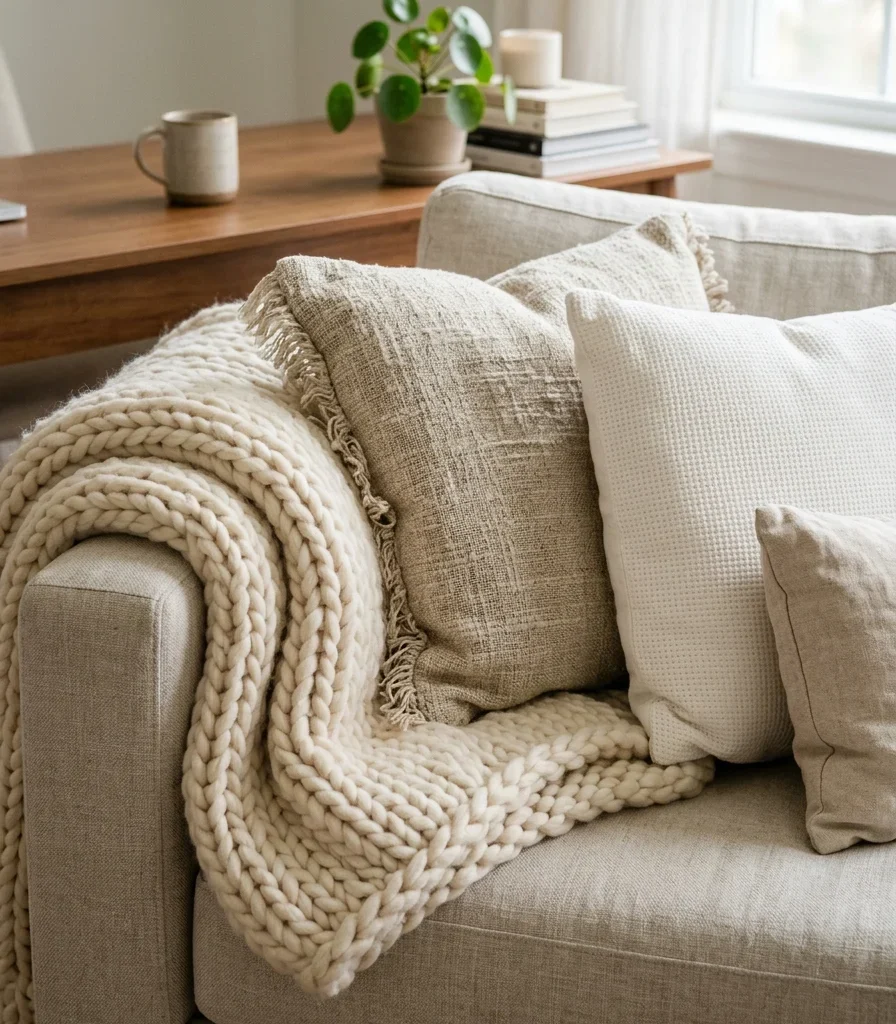
Vibe: Layered a sofa that looks like it’s been lived in rather than staged for a single photo.
Why it works: Textile layering is the principle of combining varied textures within one tonal family: a smooth linen pillow, a nubby wool one, and a chunky knit throw all in shades of oatmeal and cream create visual richness through texture contrast rather than color contrast, which keeps the room calm enough for focused work while still feeling considered.
How to get it: Use no more than four pillows total on a loveseat-scale sofa, mixing at least two different textures, and drape the knit throw over one arm rather than folding it flat, since the draped, asymmetric fold reads as more natural and lived-in.
💡 Quick Win: A single chunky knit throw under $35 instantly upgrades a plain sofa without any new pillows needed.
Shop the Look
| Product |
| Chunky knit throw blanket cream |
| Oatmeal linen throw pillow set |
| Wool textured lumbar pillow |
| Small folded linen cushion |
| Woven pillow cover natural |
6. Pair a Swivel Accent Chair With the Small Sofa
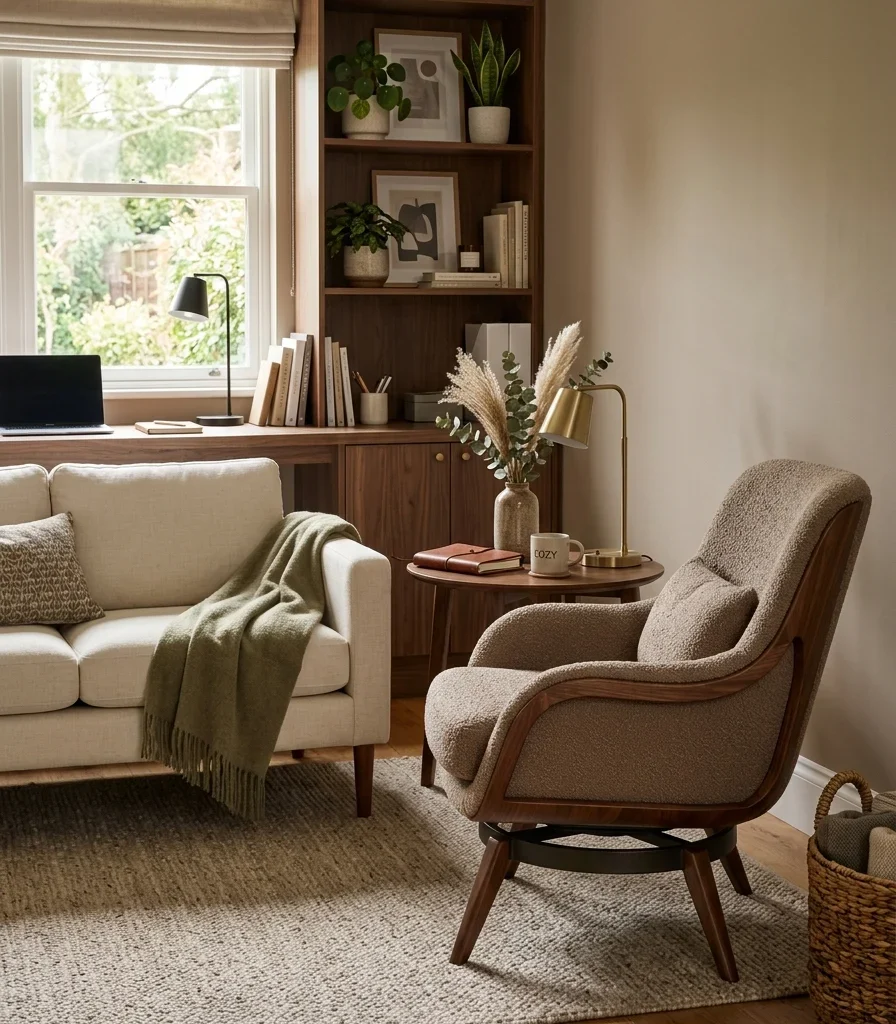
Vibe: Layered two distinct seating options that let the room shift between solo focus work and a second seat for calls or conversation.
Why it works: Adding a second, smaller seat applies a furniture-arrangement principle around flexible negative space: a swivel chair takes up less floor area than a second sofa but doubles the room’s functional seating, letting the chair rotate to face a screen for a call or turn back toward the sofa for a casual conversation without rearranging any furniture.
How to get it: Choose a swivel chair with a base no wider than 30 inches and position it at a diagonal angle to the sofa rather than directly facing it, leaving at least 24 inches of walking clearance between the two pieces.
Shop the Look
| Product |
| Taupe boucle swivel accent chair |
| Walnut tapered chair legs |
| Round walnut side table small |
| Small woven catchall basket |
| Textured wool throw pillow taupe |
7. Anchor the Room With a Deep Charcoal Wall Behind the Couch
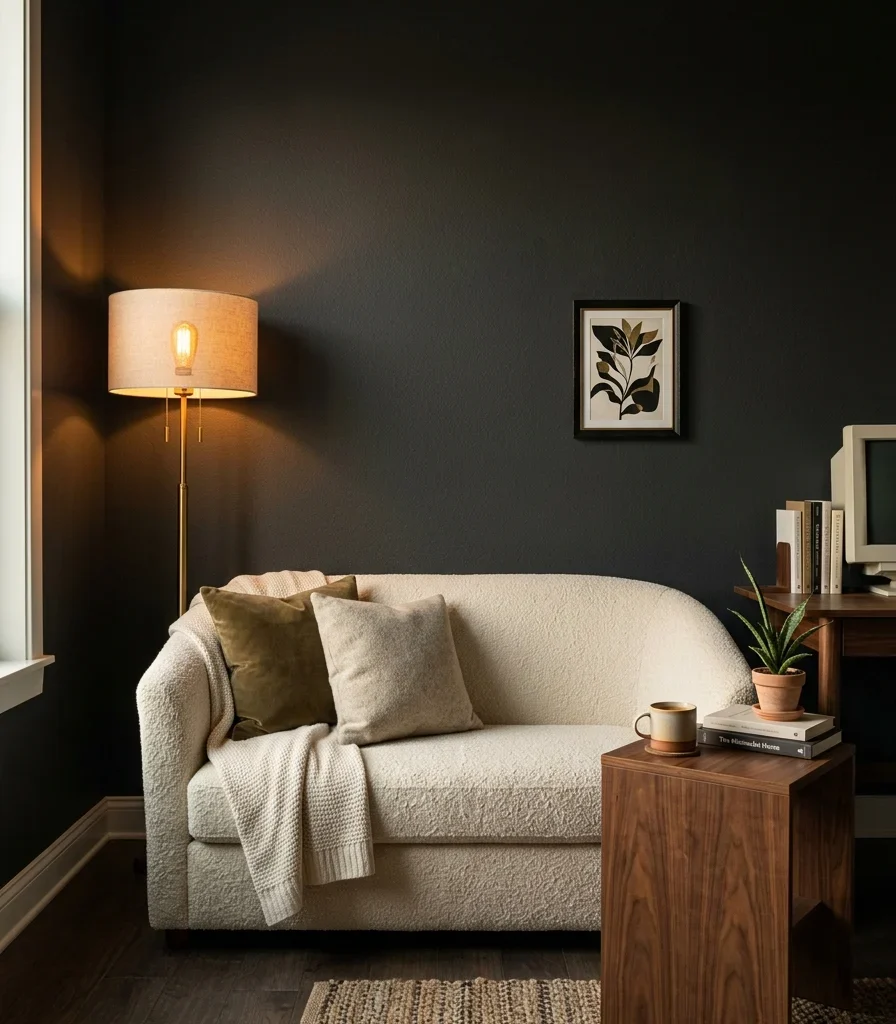
Vibe: Moody, a dark backdrop that makes the pale sofa read as the room’s clear focal point on any video call.
Why it works: Contrast is the design principle at work here: a deep charcoal wall behind a cream or ivory sofa creates the strongest possible tonal separation in the room, which does double duty as both a styling choice and a practical video-call backdrop, since the light-colored sofa reads clearly against the dark wall on camera instead of blending into a busy background.
How to get it: Paint only the single wall directly behind the couch in a warm charcoal (avoid a pure cool black, which reads harsher on camera), keeping the remaining walls in warm white so the dark wall functions as an intentional accent rather than an enclosing color.
Shop the Look
| Product |
| Warm charcoal matte wall paint |
| Cream bouclé sofa compact |
| Brushed brass table lamp |
| Small framed abstract print |
| Walnut wood side table |
8. Add a Walnut Side Table With Built-In Storage
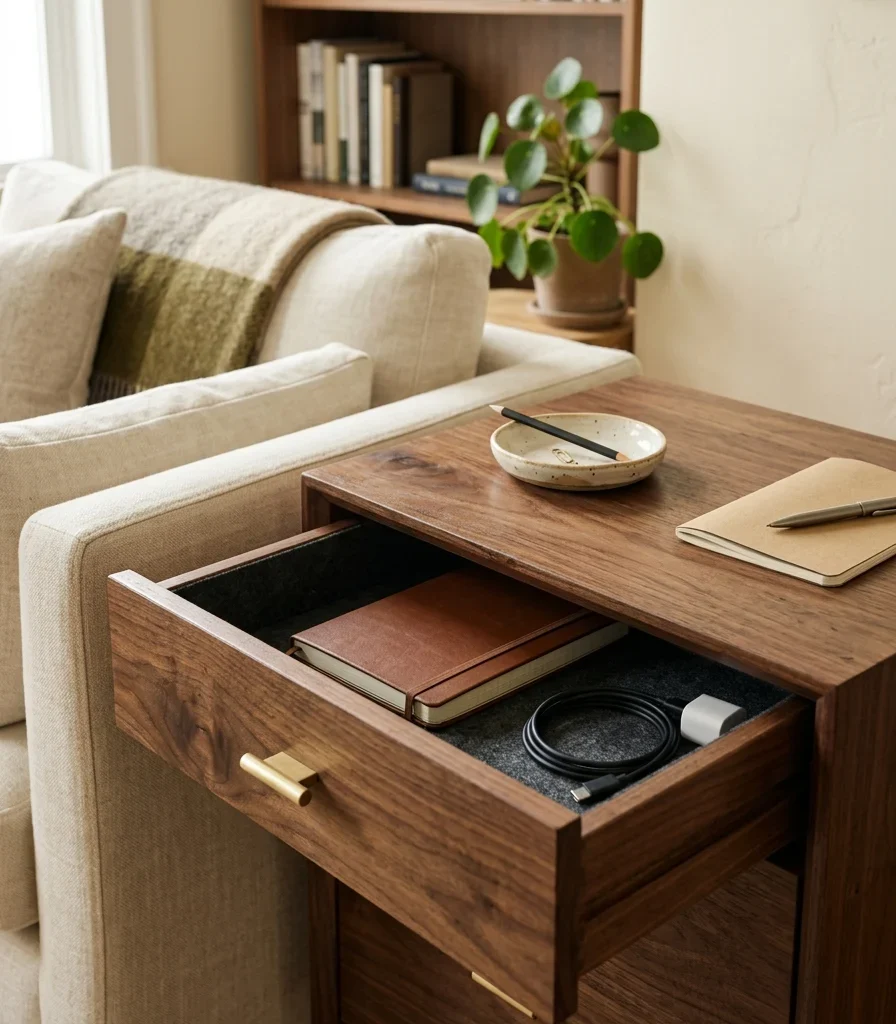
Vibe: Still a surface that holds a laptop charger and notebook without either ever sitting visibly on the couch cushion.
Why it works: A storage side table solves the material and clutter problem specific to couch-based work setups without a desk drawer; cords, notebooks, and chargers tend to pile directly on the cushions, while a walnut table with one felt-lined drawer gives those items a fixed home that keeps the seating surface genuinely clear for sitting.
How to get it: Choose a side table with at least one drawer at least 3 inches deep, positioned at armrest height so it’s reachable without leaning forward, and line the drawer with felt to prevent charger cables from tangling loosely inside.
Shop the Look
| Product |
| Walnut side table with drawer |
| Felt drawer organizer insert |
| Brass drawer pull hardware |
| Small ceramic catchall dish |
| Leather-bound notebook slim |
9. Combine Ambient and Task Lighting for Calls and Focus
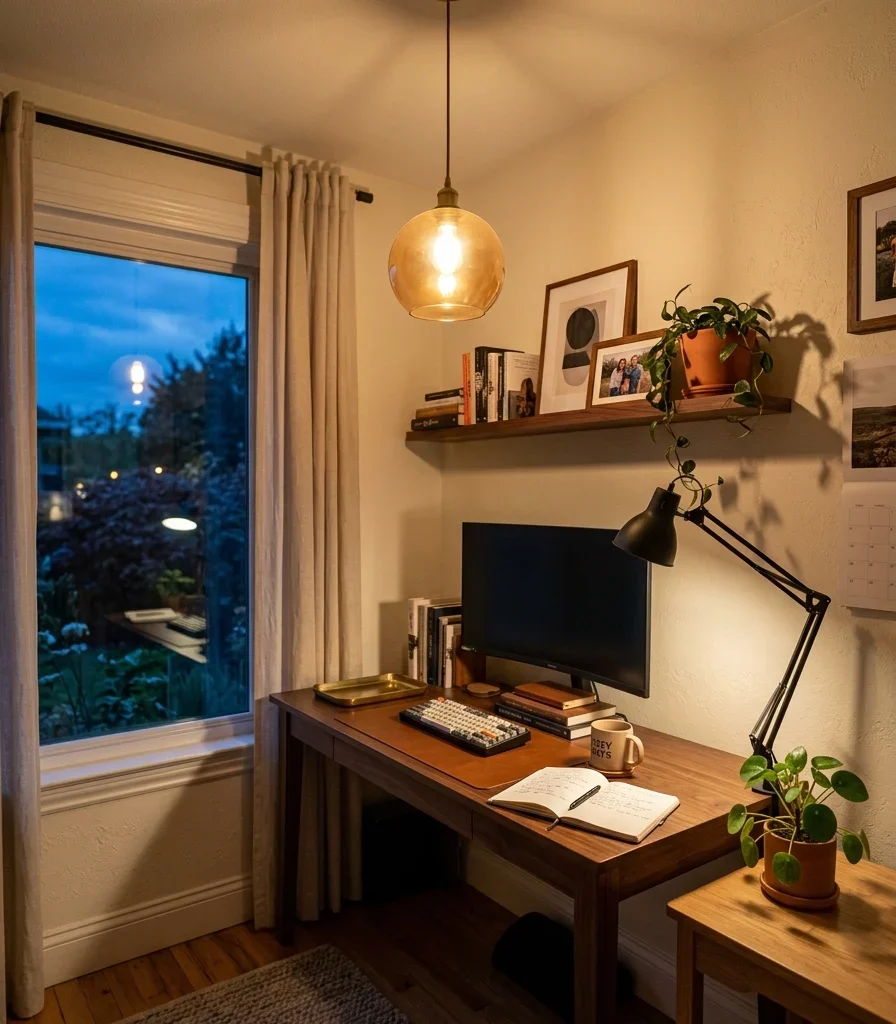
Vibe: Warm two light sources working together so the room never depends on one flat overhead glow.
Why it works: Light layering combines at least two sources at different heights and intensities; an ambient pendant sets the room’s overall warmth while a clip-on task lamp adds directional brightness exactly where a laptop screen or notebook sits, which prevents the harsh, flat lighting that makes video calls from a couch look washed out or shadowed.
How to get it: Set the pendant on a dimmer at roughly 40% brightness during work hours and let the task lamp carry the functional light needed for screen visibility, adjusting the ratio toward the pendant alone once the workday ends.
💡 Quick Win: A clip-on task lamp under $30 attaches directly to a side table shelf without requiring any additional outlet or wiring.
Shop the Look
| Product |
| Warm ceiling pendant dimmable |
| Clip-on directional task lamp |
| In-line dimmer switch cord |
| Small potted plant side table |
| Warm 2700K bulb pack |
10. Build a Gallery Wall Above the Couch
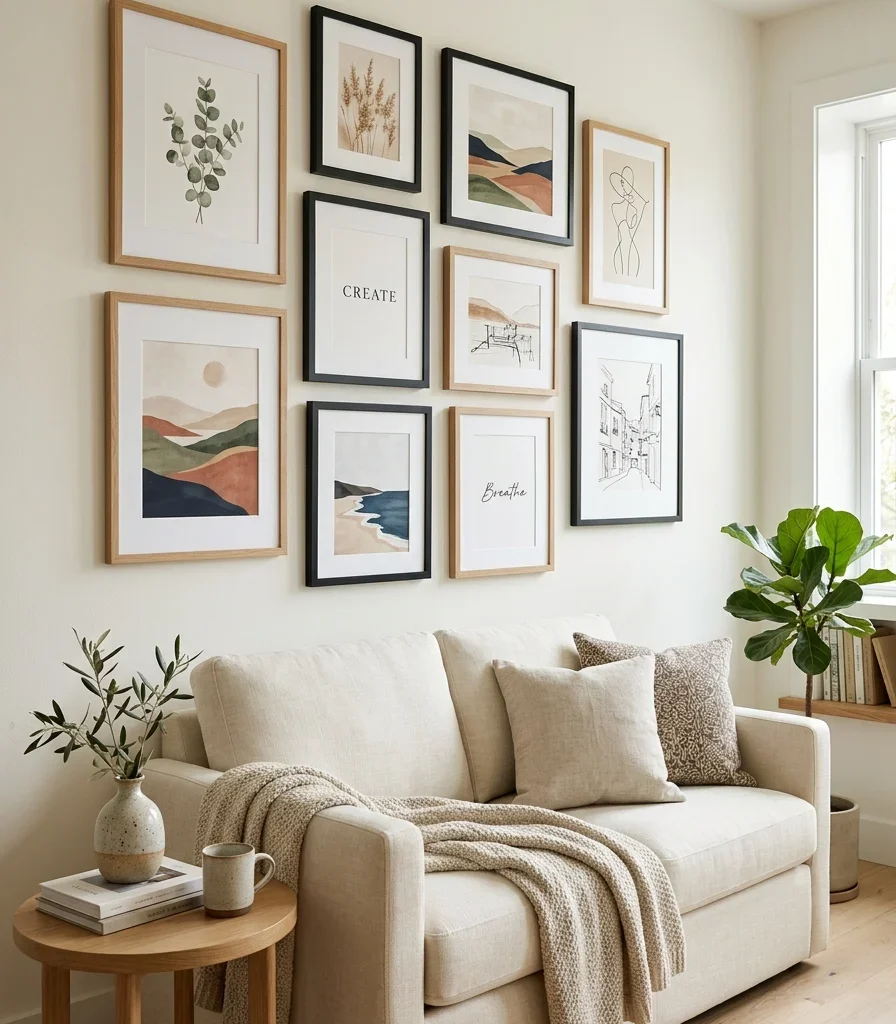
Vibe: Layered a wall that gives the eye something to rest on during a long call without becoming distracting.
Why it works: A gallery wall above the couch applies proportion and negative space; filling the vertical wall space directly above the sofa keeps the room from feeling top-heavy or empty on camera, while spacing frames with 2–3 inches of consistent negative space between them prevents the arrangement from reading as cluttered.
How to get it: Use five to seven frames in two finishes only (oak and matte black) rather than a fully mismatched mix, and lay the arrangement out on the floor first to confirm spacing before hanging a single piece.
Shop the Look
| Product |
| Thin oak picture frame set |
| Matte black picture frame set |
| Abstract line art print set |
| Small ceramic bud vase |
| Picture hanging spacer template |
11. Add a Fold-Out Lap Desk for Couch Work Sessions
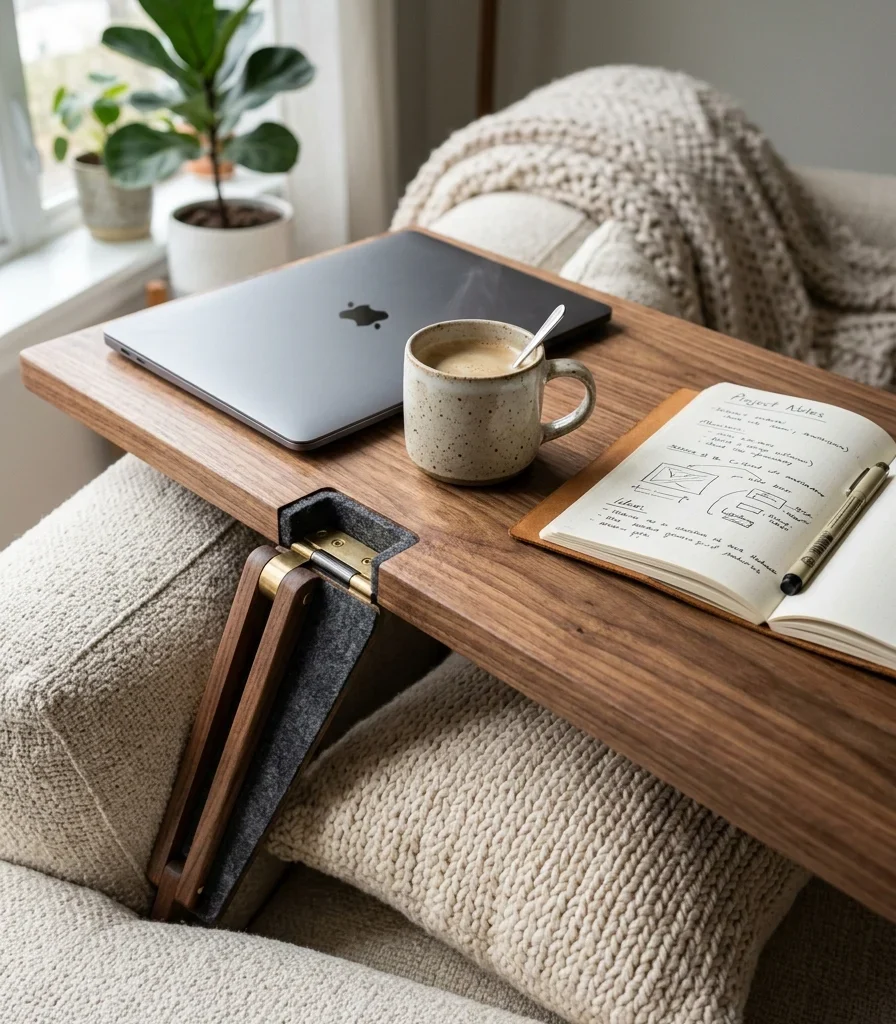
Vibe: A functional surface that turns the couch into a genuine workstation without a single permanent desk in sight.
Why it works: A fold-out lap desk is the piece of furniture that makes couch-based work practically viable rather than just aesthetically appealing. It solves the ergonomic gap between a soft cushion and a hard laptop by providing a stable, slightly elevated surface, and because it folds flat, it doesn’t occupy permanent floor space when not in use.
How to get it: Choose a walnut lap desk with folding legs rather than a flat cushion-style laptop tray, since the folding-leg design keeps the surface level even on a soft cushion, and store it leaning against the side table when not in use rather than under the couch, where it’s harder to reach.
Shop the Look
| Product |
| Walnut fold-out lap desk |
| Felt-lined laptop desk pad |
| Small ceramic coffee mug |
| Leather-bound notebook |
| Slim wireless mouse walnut |
12. Choose a Sage Green Velvet Couch as a Statement
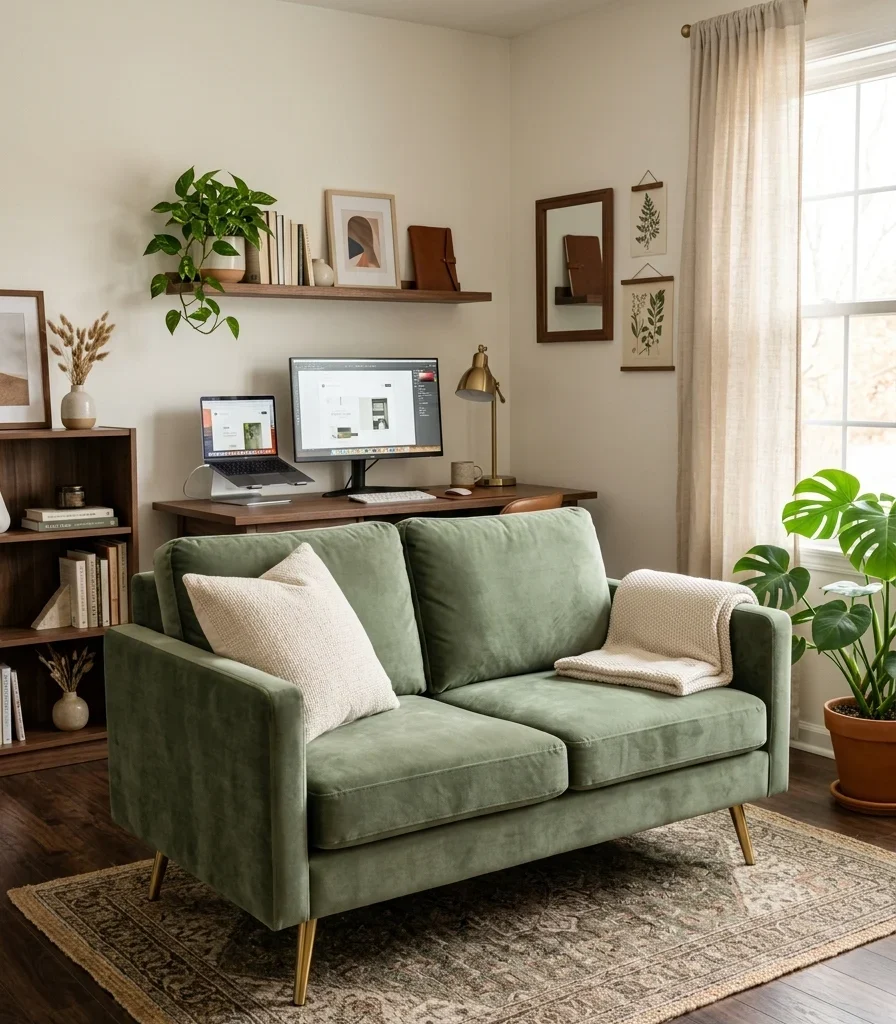
Vibe: Grounded, a single piece of color-saturated furniture that gives the whole room its personality.
Why it works: Committing the room’s largest single object to a saturated color is the same anchoring principle used earlier, applied here to color rather than scale. A sage velvet loveseat surrounded by warm white walls lets the color carry the entire room’s identity without requiring any additional accent wall or bold wallpaper.
How to get it: Choose a velvet in a matte, low-pile finish rather than high-shine velvet, which can read too formal for a work-from-home setting, and keep every other upholstered piece in the room in cream or oat so the sage sofa remains the singular color statement.
💡 Quick Win: A sage velvet accent pillow under $25 lets you test the color commitment before investing in a full sofa.
Shop the Look
| Product |
| Sage green velvet loveseat |
| Brushed brass tapered sofa legs |
| Cream linen throw pillow |
| Small potted plant ceramic pot |
| Sage velvet accent pillow |
13. Ground the Room With a Jute or Wool Rug
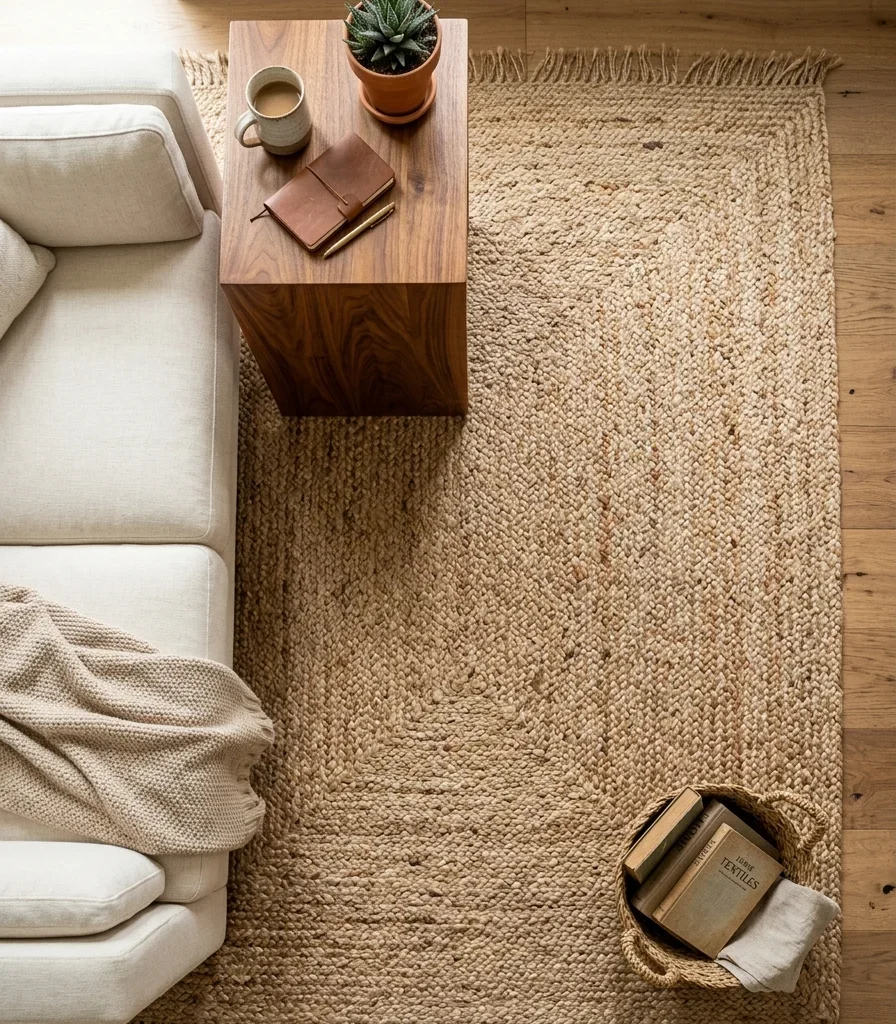
Vibe: Raw, a natural fiber underfoot that keeps a soft, upholstered room from floating without any material weight at floor level.
Why it works: A rug grounds a seating-heavy room through visual weight and material honesty; without one, a couch and side table can appear to float on a bare floor, disconnected from the walls, while a natural jute or wool rug anchors the furniture grouping and adds the textural roughness that balances out soft bouclé and velvet upholstery.
How to get it: Size the rug so at least the front legs of the sofa and any accent chair rest on it (an 8×10 rug typically works for a small office seating group), and choose jute for a more casual, textural room or a low-pile wool for a softer underfoot feel near bare feet.
Shop the Look
| Product |
| Natural jute area rug 8×10 |
| Low pile wool area rug |
| Rug pad non-slip |
| Small woven basket rug edge |
| Jute rug binding tape |
14. Use a Low Coffee Table That Doubles as a Laptop Stand
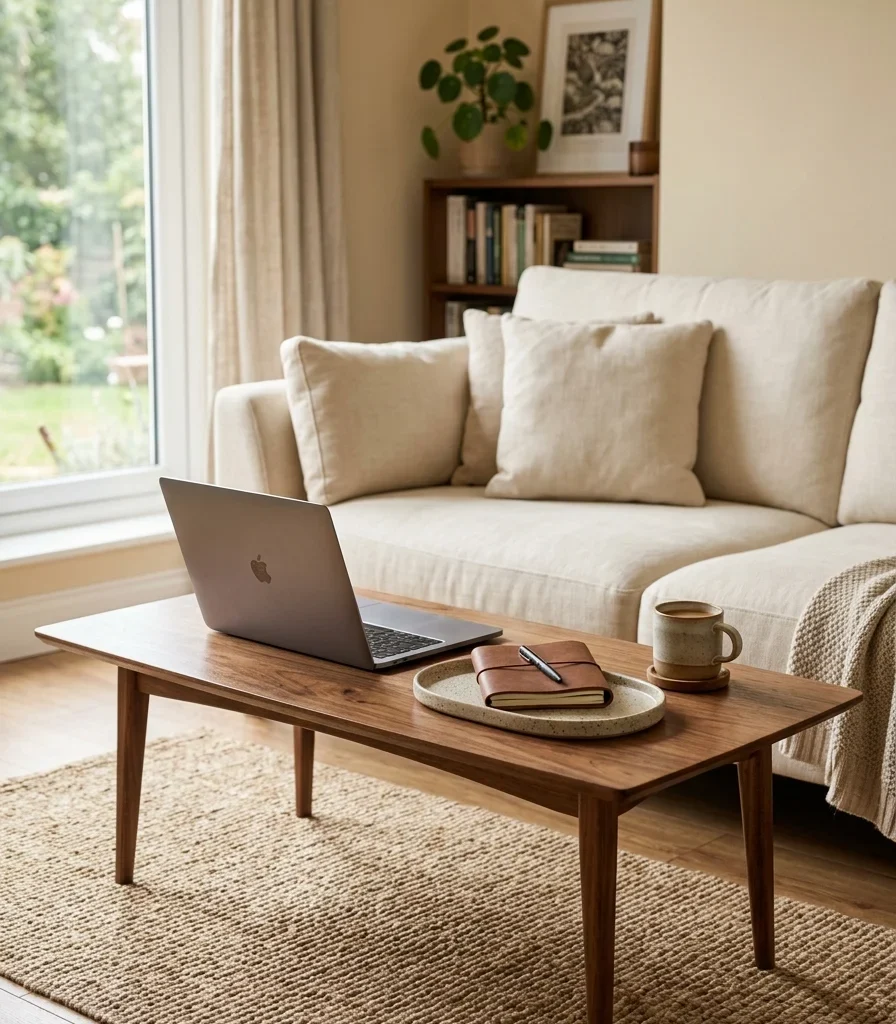
Vibe: Functional: a table low enough to keep the room’s proportions relaxed while still holding a full workday’s worth of gear.
Why it works: Table height is a proportion principle specific to couch-based work; a standard 18-inch coffee table sits at a comfortable viewing angle for a laptop screen when working from a low-backed sofa, while a taller table would force an awkward neck angle, so the height decision directly affects whether this setup is comfortable for actual multi-hour work sessions.
How to get it: Choose a coffee table between 16 and 18 inches tall with a surface large enough to hold a laptop and notebook side by side (at least 36 inches long), and add a small raised laptop stand on top if extra screen height is needed for calls.
Shop the Look
| Product |
| Walnut low coffee table |
| Portable laptop riser stand |
| Small ceramic desk tray |
| Leather notebook cover |
| Wireless charging pad walnut |
15. Store Cushions and Cables in a Woven Basket
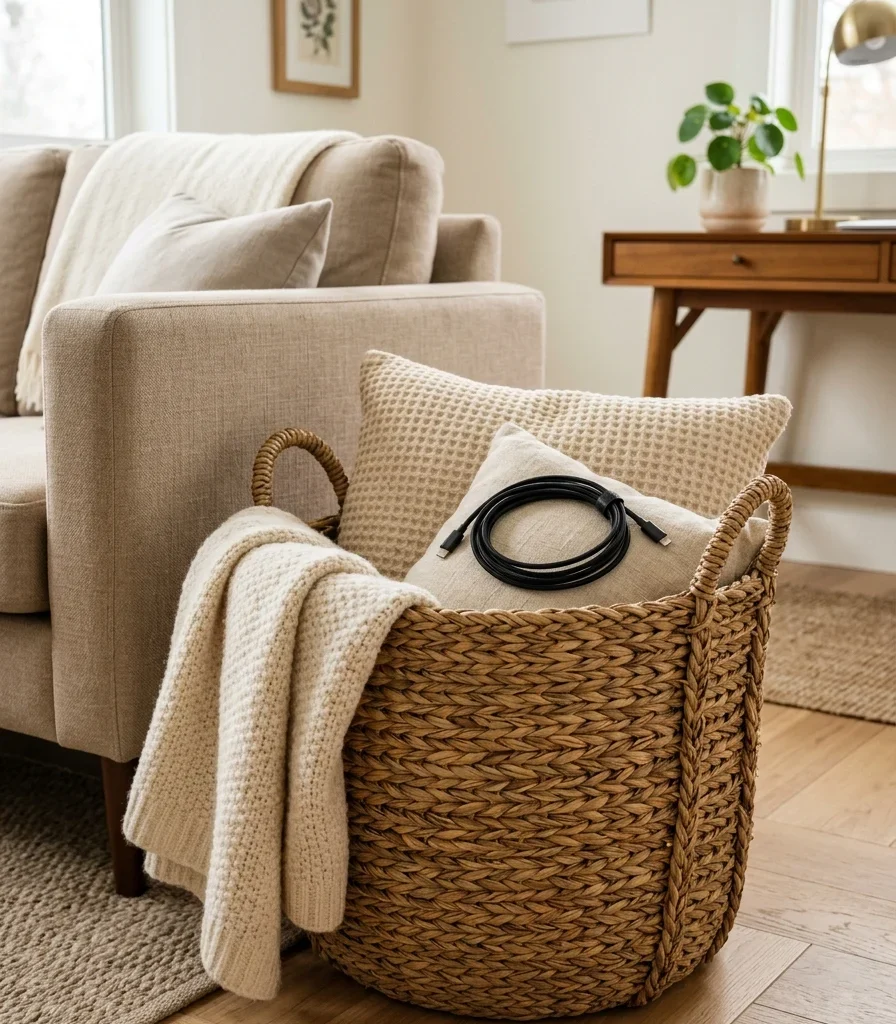
Vibe: Tidy a single basket that absorbs the small clutter a couch-based office setup accumulates fastest.
Why it works: A floor basket beside the sofa solves the specific storage gap a couch-based office has that a desk-based one doesn’t. There’s no drawer built into the seating, so extra cushions, chargers, and cables need one dedicated, out-of-the-way home, and a woven basket keeps those items accessible without visually cluttering the room the way a plastic bin would.
How to get it: Choose a basket at least 16 inches tall with a wide opening for easy one-handed access, positioned directly beside the armrest closest to the outlet, and reserve it exclusively for work-adjacent items rather than letting it become general household storage.
Shop the Look
| Product |
| Tall woven seagrass floor basket |
| Cable organizer coil set |
| Extra throw pillow insert |
| Small charging cable clips |
| Folded knit throw natural |
16. Zone the Couch Corner Away From Video-Call Traffic
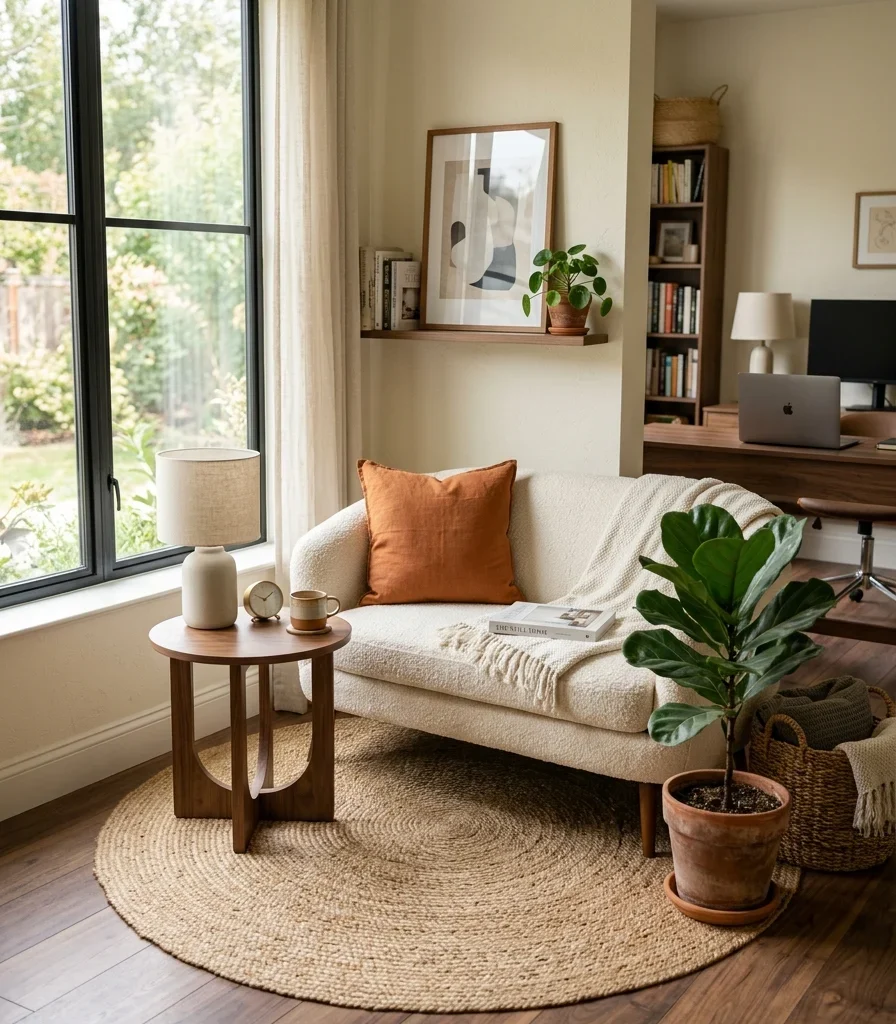
Vibe: Still a corner that reads as its own contained zone even without a wall separating it from the rest of the room.
Why it works: Traffic-flow zoning is the layout principle of grouping furniture tightly enough, and placing it far enough from a doorway or main walking path, that the eye reads it as a defined area rather than furniture scattered through open space critical for a couch-based office because background movement during video calls is more distracting than it would be behind a stationary desk.
How to get it: Position the sofa and side table so the main walking path runs behind the seating rather than in front of it or across the camera’s field of view, and use a rug to visually outline the zone’s boundary even in an open-plan room.
Shop the Look
| Product |
| Natural jute zone-defining rug |
| Small floor plant zone marker |
| Walnut side table corner |
| Cream throw pillow set |
| Woven floor basket accent |
17. Choose a Compact Loveseat for a Tiny Office Nook
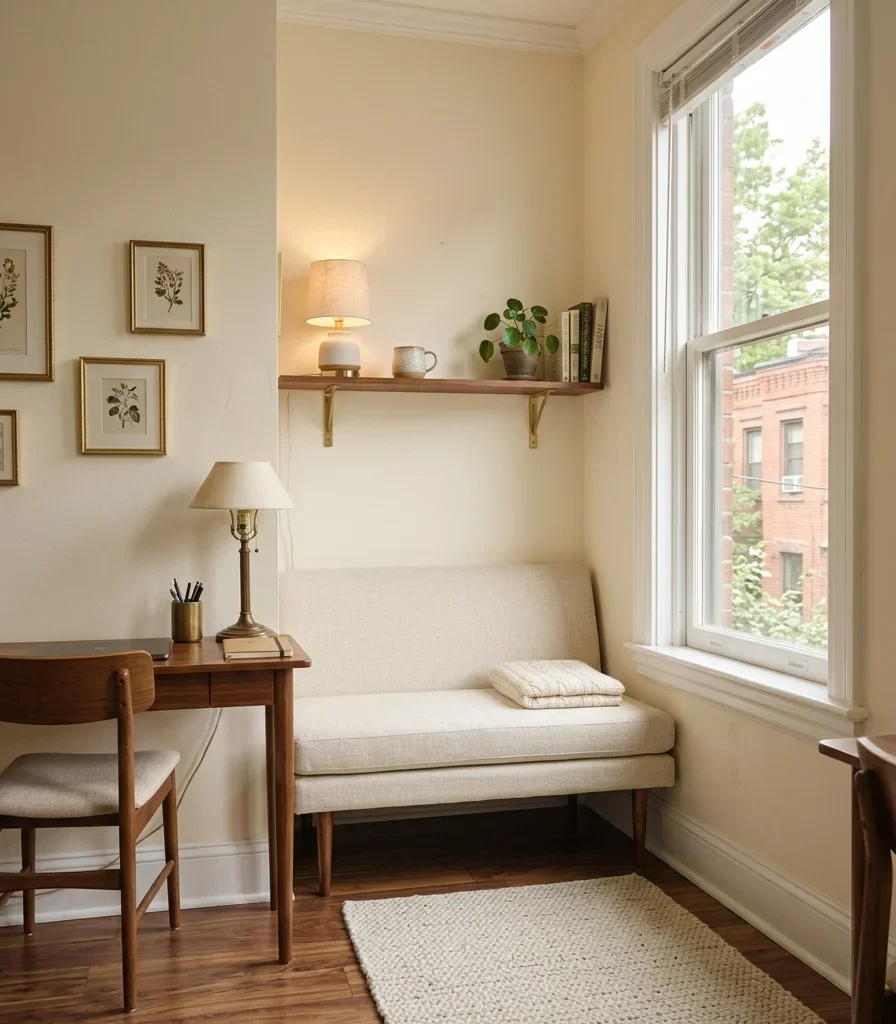
Vibe: Airy proof that a comfortable couch setup doesn’t require a room bigger than a closet.
Why it works: In a genuinely tight nook under 50 square feet, seat width becomes the limiting factor for the entire comfortable-couch concept. A standard 72-inch sofa simply won’t clear most narrow rooms, while a 48-inch loveseat with a shallow 30-inch depth fits the same footprint as a single armchair but still provides the two-person, sink-in comfort the style is built around.
How to get it: Measure the nook’s narrowest point before buying, choose a loveseat no deeper than 30 inches, and replace a floor lamp with a wall-mounted sconce or shelf-mounted lamp to free up the limited floor space a compact nook can’t spare.
💡 Quick Win: A slim armless loveseat under 48 inches wide fits nooks a standard two-seat sofa never could.
Shop the Look
| Product |
| Slim 48-inch armless loveseat |
| Wall-mounted floating shelf oak |
| Small brass wall sconce |
| Compact ceramic mug set |
| Folded throw blanket cream |
How to Start Your Comfortable Home Office With Couch Transformation
Your first move is choosing the couch before anything else, specifically, a loveseat between 48 and 60 inches wide in a soft, low-maintenance fabric like bouclé or performance linen. Every other decision in this list, from side table height to rug size, is scaled around the couch’s footprint, so committing to the wrong size first is the mistake that undoes every subsequent choice.
The most common mistake is buying a full-size sofa meant for a living room and squeezing it into a home office, which leaves no clearance for a side table, lap desk, or walking path. The fix is measuring the room’s actual clear floor space first and shopping strictly within that footprint, even if it means a smaller loveseat than initially planned.
Three items under $50 that create immediate comfort: a chunky knit throw blanket in warm cream, a felt-lined charging cable organizer for the side table drawer, and a single sage velvet lumbar pillow to test a color commitment.
A weekend project: new pillows, a throw, and a floor lamp costs $150–350. A full couch-centered office transformation with a new loveseat, side table, rug, and lighting typically runs $1,200–3,500 and takes two to three weeks including furniture delivery.
Frequently Asked Questions About Comfortable Home Office Setup With Couch
What is the difference between a couch-based home office and a traditional desk office?
A traditional desk office is built around a fixed desk and ergonomic chair as the primary workstation, with seating chosen for task focus over comfort. A comfortable home office setup with a couch treats a loveseat or small sofa as the primary seating, supported by a lap desk or side table, prioritizing flexibility between focused work and relaxed reading or calls over a single rigid workstation.
What color works best for a comfortable home office couch?
Warm cream, soft oat, and sage green are the most reliable choices, since they photograph well on video calls and read calm rather than corporate. Deep charcoal works well as a background wall color behind a pale sofa but is generally too heavy for the couch itself in a room meant to feel relaxed rather than dramatic.
How much does a comfortable home office setup with a couch cost?
A budget refresh using pillows, a throw blanket, and a floor lamp costs $150–400. A mid-range setup with a new loveseat, side table, and rug runs $1,200–2,500, and a fully furnished room with a velvet or bouclé sofa, custom lighting, and a gallery wall typically costs $2,500–4,500 depending on fabric and furniture quality.
Can a couch-based office setup work for daily video calls?
Yes, with two specific adjustments: position the sofa so a solid wall or gallery wall sits behind it rather than a doorway or window, and add a low coffee table or laptop riser to bring the camera to eye level, since a couch’s low seat height otherwise creates an unflattering upward camera angle.
What is the most important piece of furniture in a couch-based home office?
The couch itself is the most important decision, since every other furniture and layout choice in the room scales around its width and depth. A loveseat between 48 and 60 inches, in a low-maintenance fabric like performance bouclé, is the single piece that determines whether the rest of the room feels proportioned or crowded.
Ready to Create Your Dream Comfortable Home Office Setup With Couch?
These 17 ideas move across furniture, color, material, lighting, and true small-space solutions, from a bouclé loveseat anchoring the whole room to a compact 48-inch sofa that proves this setup works in even the narrowest nook. None of this needs to happen at once, and starting with a throw blanket and one good lamp is genuinely the right way to begin, not a smaller version of the vision. Today’s specific action: measure your room’s clear floor space and confirm exactly how wide a loveseat it can actually hold before you shop for anything else. Once the right-sized couch is in place, the room stops feeling like a workstation you tolerate and starts feeling like a corner you choose to sit in even after the laptop closes. Save the ideas that fit your room’s real dimensions and your own sense of comfort; that chunky knit throw and warm brass lamp will still feel exactly right a year from now.
[…] 17 Comfortable Home Office Setup With Couch Ideas […]
[…] 17 Comfortable Home Office Setup With Couch Ideas […]
[…] 17 Comfortable Home Office Setup With Couch Ideas […]
[…] 17 Comfortable Home Office Setup With Couch Ideas […]
[…] 17 Comfortable Home Office Setup With Couch Ideas […]