
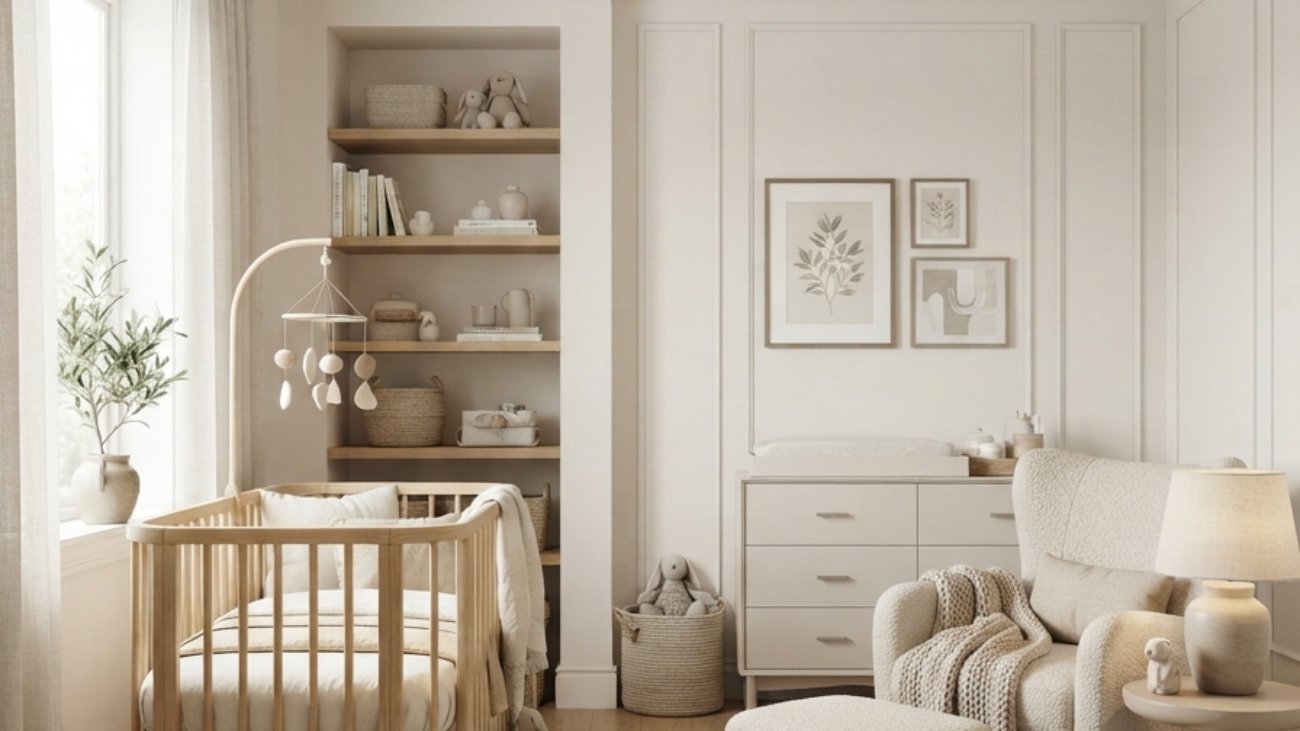
A nursery is a dedicated space for an infant that balances restful sleep, feeding, changing, storage, and everyday caregiving with a soothing visual environment. These 14 nursery ideas show how to combine color, furniture, lighting, materials, organization, and small-space planning into a room that feels calm without becoming impractical.
A good nursery should feel gentle before you even touch anything. Soft daylight settles across warm walls, natural textures make the room feel grounded, and carefully chosen storage keeps everyday baby essentials within reach without making every surface look busy. The best spaces also grow with the child rather than relying on a theme that quickly feels dated.
Think of these ideas as design frameworks rather than rigid formulas. You can borrow one wall treatment, one storage trick, or an entire palette depending on your room, budget, and existing furniture.
Here are 14 ideas worth saving and stealing.
Why Nursery Design Works So Well
Modern nursery design has moved beyond the heavily themed children’s room toward spaces that borrow from established interior styles such as Scandinavian, Japandi, contemporary, traditional, and organic modern design. The result is a room designed for both parent and child: visually calm enough for nighttime routines, practical enough for frequent changes, and flexible enough to evolve as the baby grows.
The strongest nursery palettes usually begin with warm neutrals rather than stark white. Think warm ivory, oatmeal, mushroom taupe, dusty sage, muted clay, pale oak, soft blue-gray, and warm greige. Natural oak, ash, cane, linen, cotton, wool-look textiles, matte ceramic, and lightly textured wallpaper add tactile variation without requiring bright colors.
Nurseries also reflect the wider movement toward homes that feel calmer and more intentional. Parents increasingly want children’s spaces to belong to the overall home rather than look like completely separate themed environments. A restrained palette and quality foundational pieces make it easier to reuse furniture, change artwork, and refresh textiles instead of replacing the whole room every few years.
Small rooms can absolutely work as nurseries, but every piece needs to justify its footprint. Prioritize the crib, a compact changing solution, accessible storage, and one comfortable feeding seat before adding decorative furniture. Keep circulation clear, use vertical storage where appropriate, and let wall color or one large art piece provide visual personality rather than filling every available surface.
Style at a Glance
| Element | Nursery Design Approach |
| Philosophy | Calm, functional, adaptable, parent-friendly |
| Key Materials | Pale oak, ash, linen, cotton, cane, rattan, matte ceramic |
| Key Colors | Warm ivory, oatmeal, greige, dusty sage, clay, blue-gray |
| Lighting | Soft ambient light, dimmable warm LEDs, gentle task lighting |
| Furniture | Safety-approved crib, compact dresser, comfortable glider, closed storage |
| Decor | Simple artwork, tactile textiles, baskets, books, restrained botanicals |
1. Warm Greige Nursery with Pale Oak Furniture
COLOR
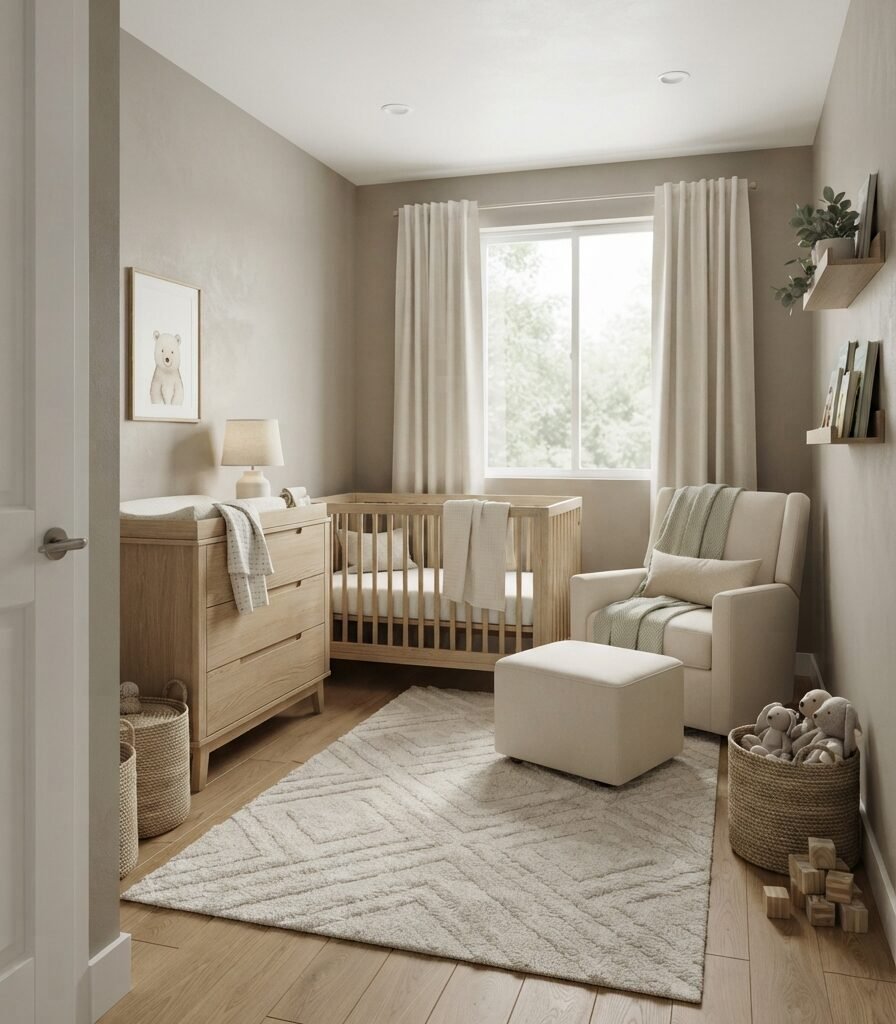
Vibe: The room feels hushed, warm, and quietly cocooning.
Why it works: Warm greige creates more depth than stark white while remaining neutral enough to work with changing textiles and artwork. The pale oak introduces a natural material contrast without creating the visual heaviness of dark furniture, while the ivory upholstery keeps the larger pieces visually light.
How to get it: Choose a warm greige with beige rather than blue undertones and test it beside your nursery’s natural light before painting the full room. Pair it with pale oak furniture and repeat the same oak tone at least twice so the wood reads as an intentional material story rather than a collection of unrelated pieces.
💡 Quick Win: Replace cool-white bulbs with warm 2700K LED bulbs in existing lamps to immediately soften the room’s evening atmosphere.
Shop The Look
| Product | Search phrase |
| Greige wall paint | Warm greige interior wall paint matte |
| Crib | Natural pale oak baby crib safety certified |
| Rug | Ivory low pile nursery rug washable |
| Curtain | Warm ivory linen-look nursery curtain panels |
| Storage | Natural seagrass nursery storage basket |
2. Vertical Board-and-Batten Feature Wall
MATERIAL
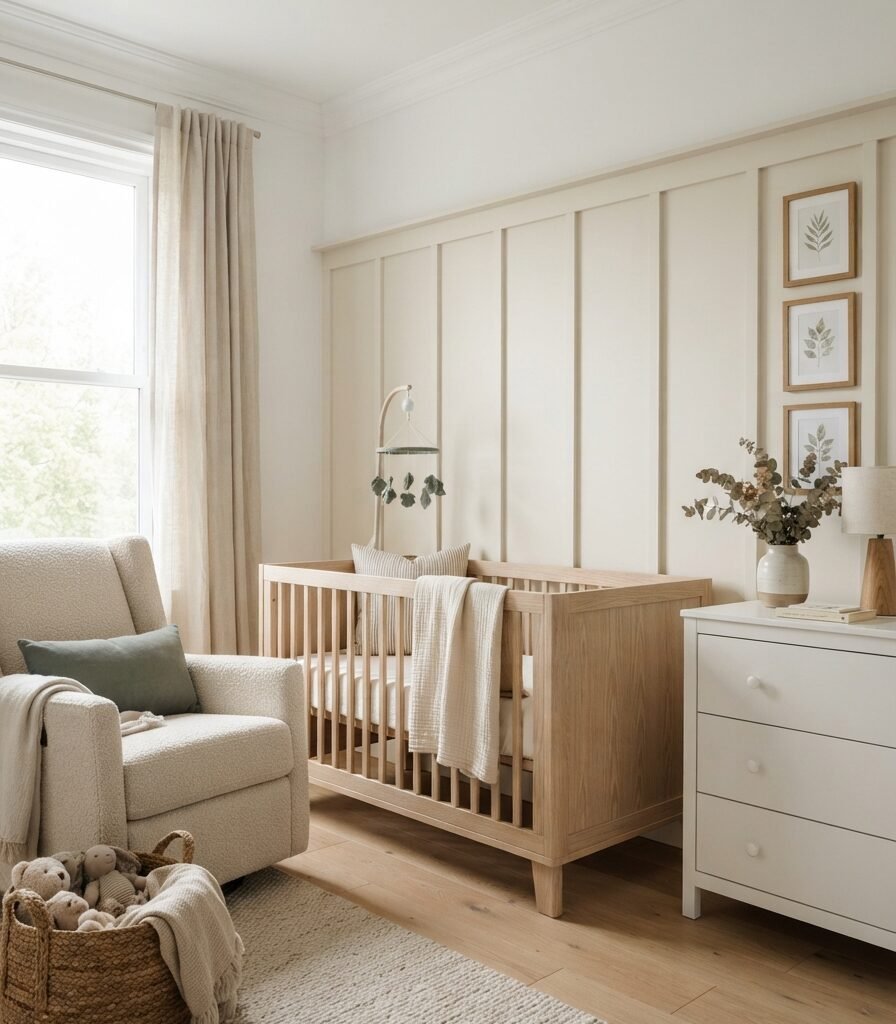
Vibe: The room feels grounded, architectural, and quietly finished.
Why it works: Vertical battens create rhythm and draw the eye upward, which can make a modest ceiling feel visually taller. The repeated vertical lines also give the crib wall architectural structure without relying on busy wallpaper or oversized graphics.
How to get it: Use narrow MDF strips approximately 30–40mm wide and maintain consistent spacing across the wall. Paint the battens and wall in the same warm ivory eggshell finish so the shadows create the texture rather than contrasting paint colors.
💡 Quick Win: If you do not want to install battens, use removable vertical wall molding strips to create a similar rhythm without permanent construction.
Shop The Look
| Product | Search phrase |
| Wall molding | 30mm narrow MDF decorative wall strips |
| Paint | Warm ivory eggshell interior paint |
| Crib | Natural wood minimalist nursery crib |
| Artwork | Neutral botanical nursery print set |
| Basket | Large woven seagrass floor basket |
3. Soft Sage and Natural Wood Nursery

COLOR
Vibe: The room feels still, botanical, and naturally restful.
Why it works: Dusty sage works particularly well when its saturation is restrained; it adds color without becoming visually stimulating. Pairing it with ash or pale oak gives the green an organic context while oatmeal textiles prevent the palette from feeling cold.
How to get it: Keep sage concentrated on the walls and let the furniture remain natural. Use no more than two additional accent colors, such as warm ivory and muted clay, so the nursery maintains a controlled tonal hierarchy.
💡 Quick Win: Add one muted sage fitted sheet or washable changing-pad cover rather than purchasing multiple green accessories.
Shop The Look
| Product | Search phrase |
| Wall paint | Dusty sage green nursery paint |
| Crib | Natural ash wood baby crib |
| Rug | Cream washable nursery area rug |
| Glider | Oatmeal boucle nursery rocking chair |
| Basket | Sage green fabric nursery storage bin |
4. Statement Pendant Over the Reading Chair
LIGHTING
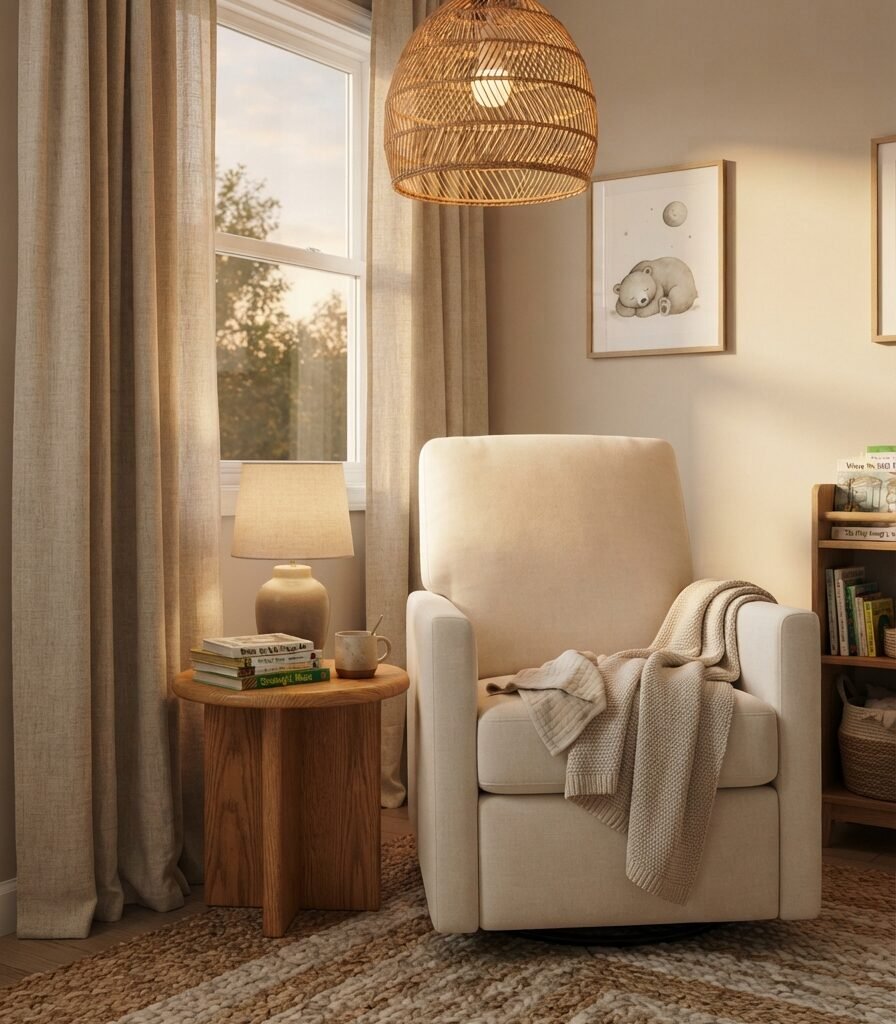
Vibe: The corner feels sun-warmed, intimate, and reassuring.
Why it works: A pendant gives the feeding or reading corner a defined visual zone without adding floor clutter. The woven shade also creates directional shadows across the ceiling, giving a simple nursery more atmospheric depth than a single flush ceiling fixture.
How to get it: Hang the pendant so its lowest point remains safely clear of the chair and everyday movement, and connect it to a dimmable warm-white LED source. A woven shade between approximately 35–50cm wide is substantial enough to define a corner without overwhelming a small nursery.
Shop The Look
| Product | Search phrase |
| Pendant | Natural woven rattan pendant light nursery |
| Bulb | Dimmable warm white LED 2700K |
| Side table | Small rounded oak nursery side table |
| Glider | Cream upholstered nursery glider chair |
| Rug | Oatmeal textured washable area rug |
5. Built-In-Look Storage Wall
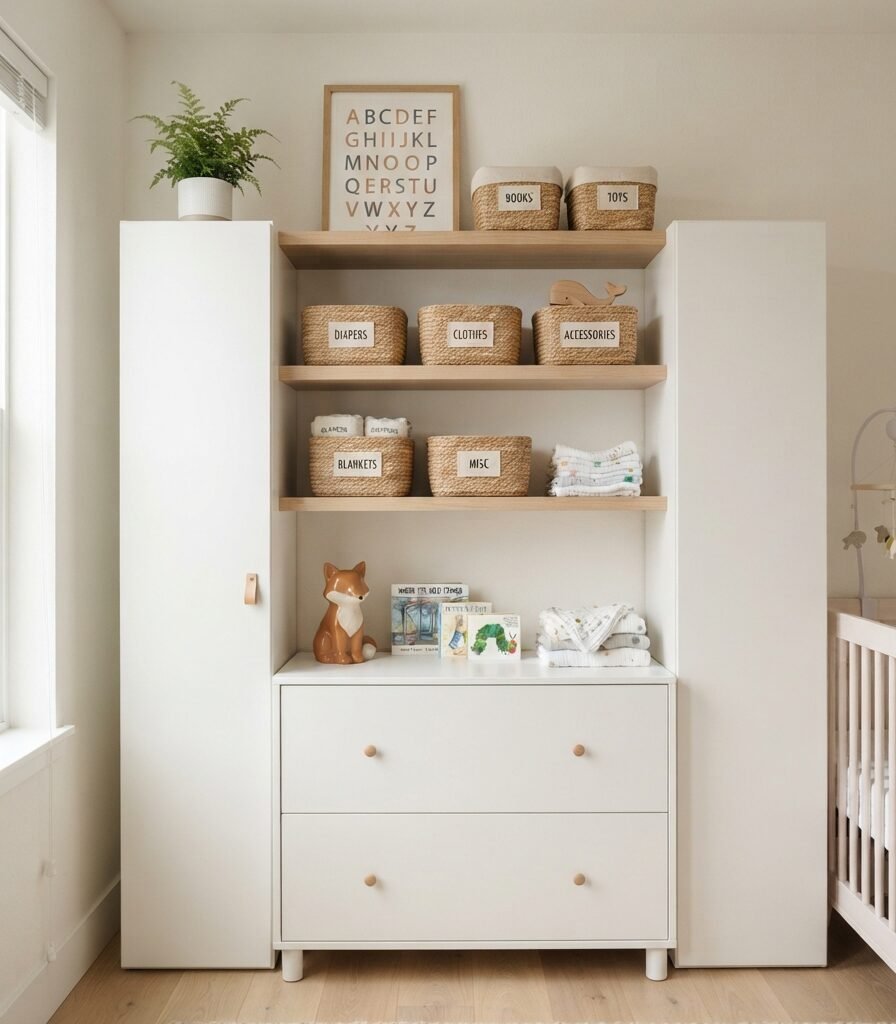
LAYOUT
Vibe: The room feels organized, effortless, and visually quiet.
Why it works: A storage wall concentrates functional elements into one vertical zone, leaving more open floor area for movement. Closed cabinets hide visually noisy supplies while a few open shelves create enough display space to keep the composition from becoming completely utilitarian.
How to get it: Give the lowest storage level to daily-use items and place decorative objects higher. Anchor freestanding dressers and shelving securely to the wall; CPSC specifically recommends anchoring furniture that could tip.
💡 Quick Win: Add identical woven baskets to open cubbies so diapers, blankets, toys, and spare clothes disappear into a consistent visual system.
Shop The Look
| Product | Search phrase |
| Shelves | Natural oak floating nursery shelves |
| Baskets | Set of matching woven nursery baskets |
| Dresser | Six-drawer white nursery dresser |
| Labels | Minimal neutral fabric storage labels |
| Books | Neutral board book set for nursery shelf |
6. Layered Linen Window Treatment

ACCESSORIES
Vibe: The space feels luminous, soft, and gently insulated.
Why it works: Layering a translucent or woven shade with full-length curtains adds depth while allowing daytime light to be controlled. The vertical curtain line also makes the window wall feel taller and more substantial.
How to get it: Choose cordless window coverings and keep the crib and other climbable furniture away from window-covering cords. CPSC recommends cordless coverings as the safest option around young children.
Shop The Look
| Product | Search phrase |
| Curtains | Warm ivory linen-look nursery curtains |
| Shade | Cordless woven Roman shade natural |
| Curtain rod | Ceiling mount matte brass curtain rod |
| Tiebacks | Natural linen curtain tieback set |
| Rug | Cream cotton flatweave nursery rug |
7. Curved Furniture for a Softer Nursery
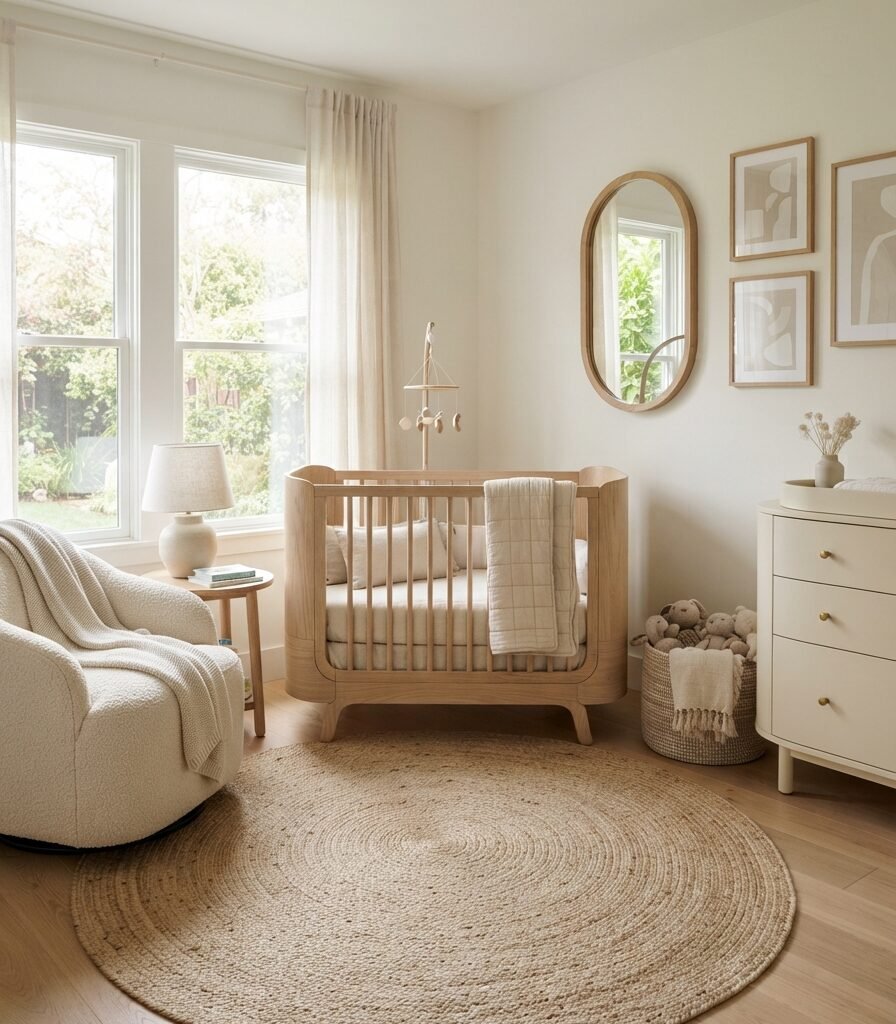
FURNITURE
Vibe: The room feels gentle, rounded, and welcoming.
Why it works: Curved profiles reduce the visual hardness created by repeated rectangular furniture. An oval or round shape beside the crib also creates contrast in silhouette, giving the room compositional variety without adding extra decoration.
How to get it: Choose one dominant curved furniture profile, such as a rounded dresser or oval rug, then repeat the curve once elsewhere. Too many curved pieces can make the room feel themed rather than deliberately composed.
💡 Quick Win: Replace one sharp-edged side table with a small round wood table; the silhouette change can alter the entire reading corner without replacing the main furniture.
Shop The Look
| Product | Search phrase |
| Dresser | Rounded corner white nursery dresser |
| Rug | Round cream washable nursery rug |
| Chair | Boucle swivel glider rounded nursery |
| Table | Small round natural wood side table |
| Mirror | Rounded arch nursery wall mirror |
8. Neutral Animal Art Gallery
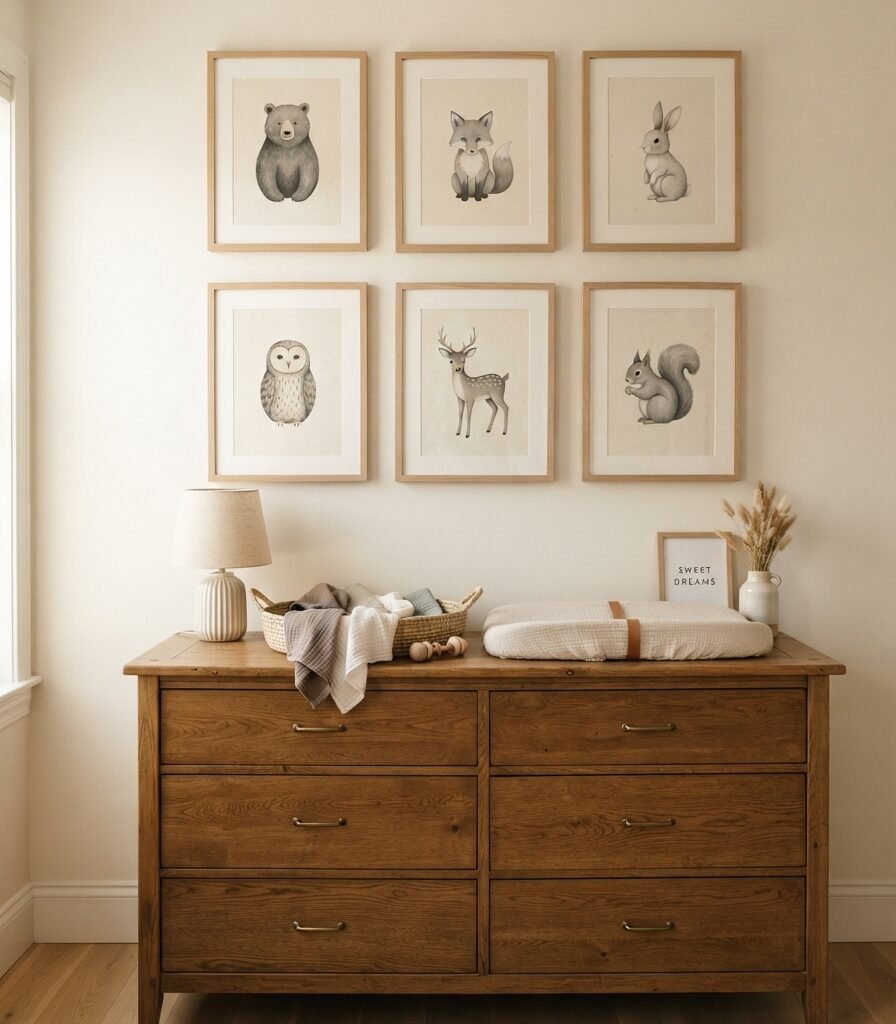
ACCESSORIES
Vibe: The wall feels layered, personal, and quietly nostalgic.
Why it works: A limited-color gallery wall gives a nursery personality without relying on oversized cartoon graphics. Repeating natural oak frames creates cohesion while the varied animal silhouettes prevent the arrangement from becoming rigid.
How to get it: Use six frames in two rows of three with approximately 5–8cm between frames. Keep the artwork palette consistent even if the subjects differ; the repeated color temperature is what makes the gallery feel collected rather than random.
Shop The Look
| Product | Search phrase |
| Art prints | Neutral vintage animal nursery print set |
| Frames | Natural oak 8×10 picture frame set |
| Hanging kit | Small picture hanging hardware kit |
| Dresser | Natural oak six drawer nursery dresser |
| Lamp | Small ceramic table lamp linen shade |
9. Compact Nursery with a Corner Crib Layout

SMALL SPACE
Vibe: The room feels airy, efficient, and surprisingly spacious.
Why it works: Small nurseries benefit from concentrating furniture along the perimeter instead of creating multiple competing zones. A round rug breaks up the rectangular geometry while vertical book ledges use wall height without consuming valuable floor area.
How to get it: Draw the furniture footprints on painter’s tape before buying anything. Maintain a clear walking path between the entrance, crib, changing station, and feeding chair rather than trying to fit every nursery feature into the room.
💡 Quick Win: Mount two narrow picture ledges for books instead of using a freestanding bookcase; you gain storage while preserving floor space.
Shop The Look
| Product | Search phrase |
| Crib | Compact mini nursery crib safety certified |
| Dresser | Narrow six drawer baby dresser |
| Book ledges | White nursery floating book ledges |
| Rug | Round washable neutral nursery rug |
| Basket | Slim tall woven laundry basket nursery |
10. Warm Clay Accent Wall with Cream Furniture
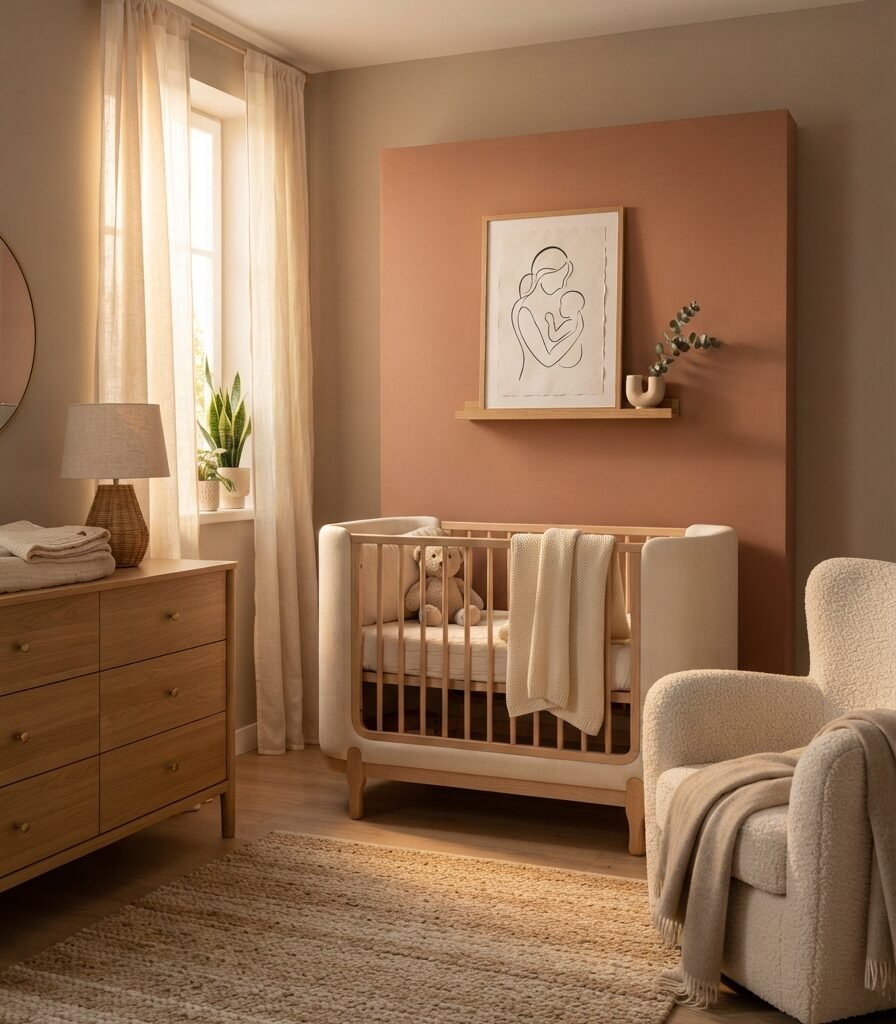
COLOR
Vibe: The nursery feels sun-warmed, earthy, and protective.
Why it works: A muted clay accent creates warmth without requiring a bright nursery theme. Keeping the crib and major furniture cream prevents the darker wall from visually shrinking the room, while pale oak connects the clay tone to natural materials.
How to get it: Use clay as a single focal surface rather than painting every wall. Choose a dusty, brown-influenced terracotta rather than a saturated orange so the nursery remains compatible with ivory, oak, and oatmeal textiles.
Shop The Look
| Product | Search phrase |
| Paint | Muted terracotta clay nursery wall paint |
| Crib | Cream upholstered baby crib |
| Chair | Oatmeal boucle nursery glider |
| Rug | Natural wool-look cream nursery rug |
| Basket | Large natural jute nursery basket |
11. Dedicated Changing Station with Closed Storage
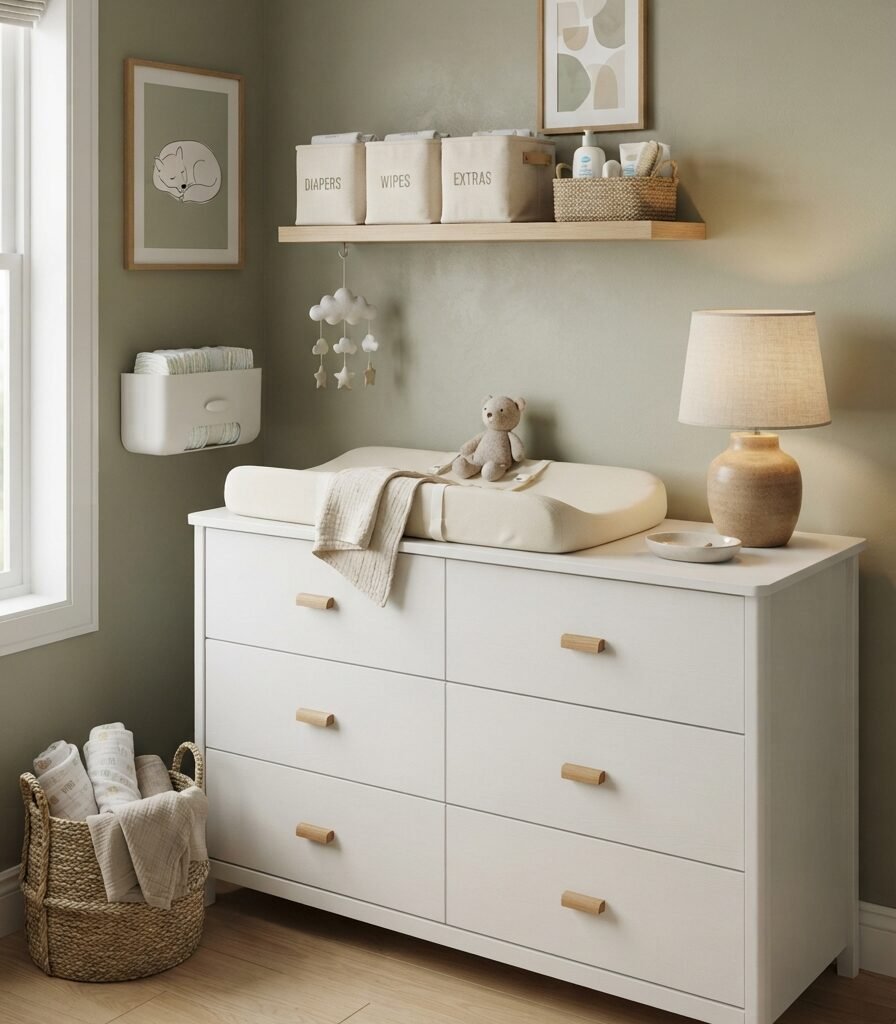
LAYOUT
Vibe: The station feels grounded, efficient, and ready for real life.
Why it works: Closed drawers hide bulk supplies while a few accessible containers keep the things used repeatedly within reach. The arrangement works because functional zones are visually concentrated rather than scattered across the room.
How to get it: Keep the changing surface clear except for genuinely necessary supplies and use drawer dividers for diapers, creams, cloths, and spare clothing. Follow the manufacturer’s safety instructions for any changing setup and never leave an infant unattended on a changing surface.
💡 Quick Win: Add one handled caddy for daily diaper supplies so the same essentials can move between rooms without creating multiple duplicate storage zones.
Shop The Look
| Product | Search phrase |
| Dresser | Six drawer white baby changing dresser |
| Changing pad | Contoured waterproof changing pad |
| Caddy | Neutral felt diaper caddy organizer |
| Dividers | Adjustable nursery drawer organizer |
| Lamp | Warm ceramic nursery table lamp |
12. Japandi-Inspired Minimal Nursery
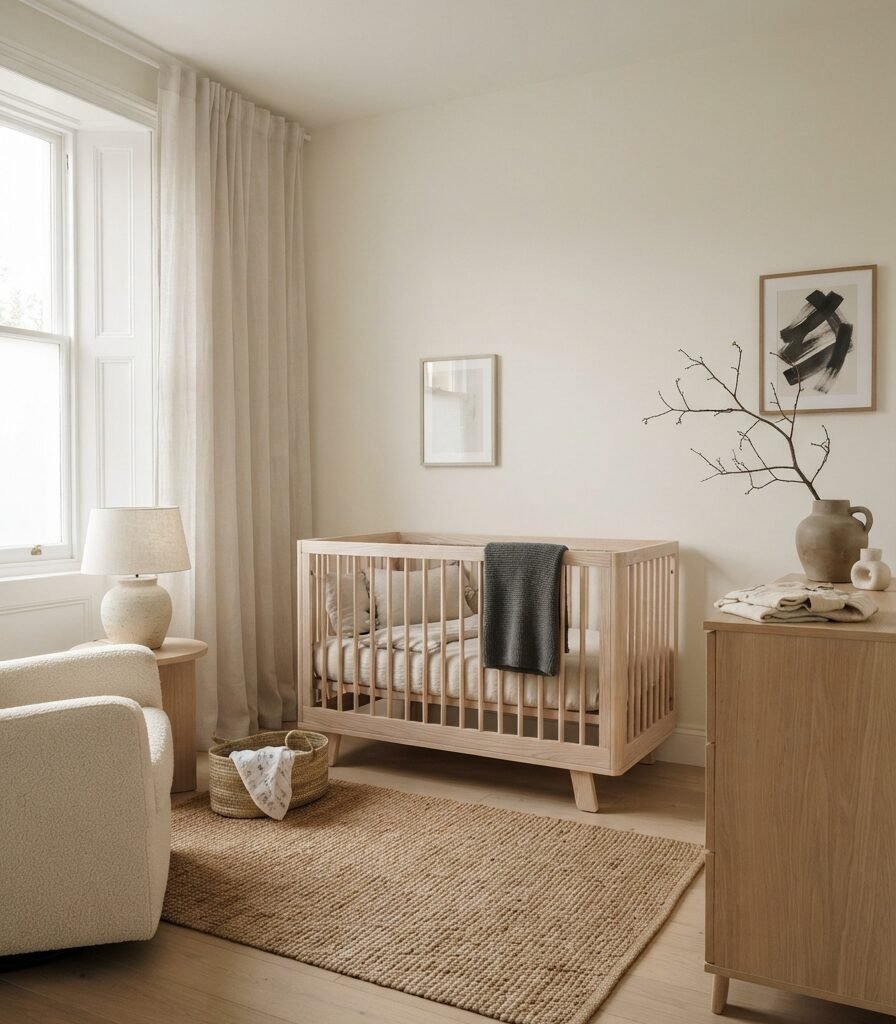
MATERIAL
Vibe: The room feels still, intentional, and deeply uncluttered.
Why it works: Japandi nursery design uses negative space as an active design element rather than treating empty areas as unfinished. Natural ash, linen, ceramic, and restrained artwork create material variation without requiring a large number of decorative objects.
How to get it: Apply the three-material rule: choose one light wood, one textile family, and one ceramic or stone accent, then repeat those materials throughout the room. Limit decorative objects to pieces that serve a clear visual or practical purpose.
Shop The Look
| Product | Search phrase |
| Crib | Minimal natural ash wood baby crib |
| Lamp | Handmade matte ceramic table lamp |
| Curtains | Natural linen-look nursery curtains |
| Rug | Oatmeal flatweave wool-look rug |
| Basket | Minimal woven storage basket natural |
13. Reading Nook with a Low Book Display

FURNITURE
Vibe: The corner feels cozy, slow, and ready for quiet routines.
Why it works: A low forward-facing book display lets book covers become part of the room’s color composition while making books easier for growing children to recognize and reach later. The chair and rug create a distinct activity zone without requiring a partition.
How to get it: Keep the book display low and secure it according to the manufacturer’s instructions. Arrange books by cover color rather than alphabetically when the goal is visual calm; rotate the front-facing selection every few weeks.
💡 Quick Win: Start with only five to eight favorite board books rather than filling the entire shelf. The negative space makes the display feel intentional and leaves room for the collection to grow.
Shop The Look
| Product | Search phrase |
| Bookcase | Low Montessori forward-facing bookshelf |
| Glider | Cream boucle nursery reading chair |
| Table | Small round oak side table |
| Rug | Washable oatmeal nursery play rug |
| Book display | Neutral wooden nursery book rack |
14. Timeless Cream Nursery That Grows with the Child
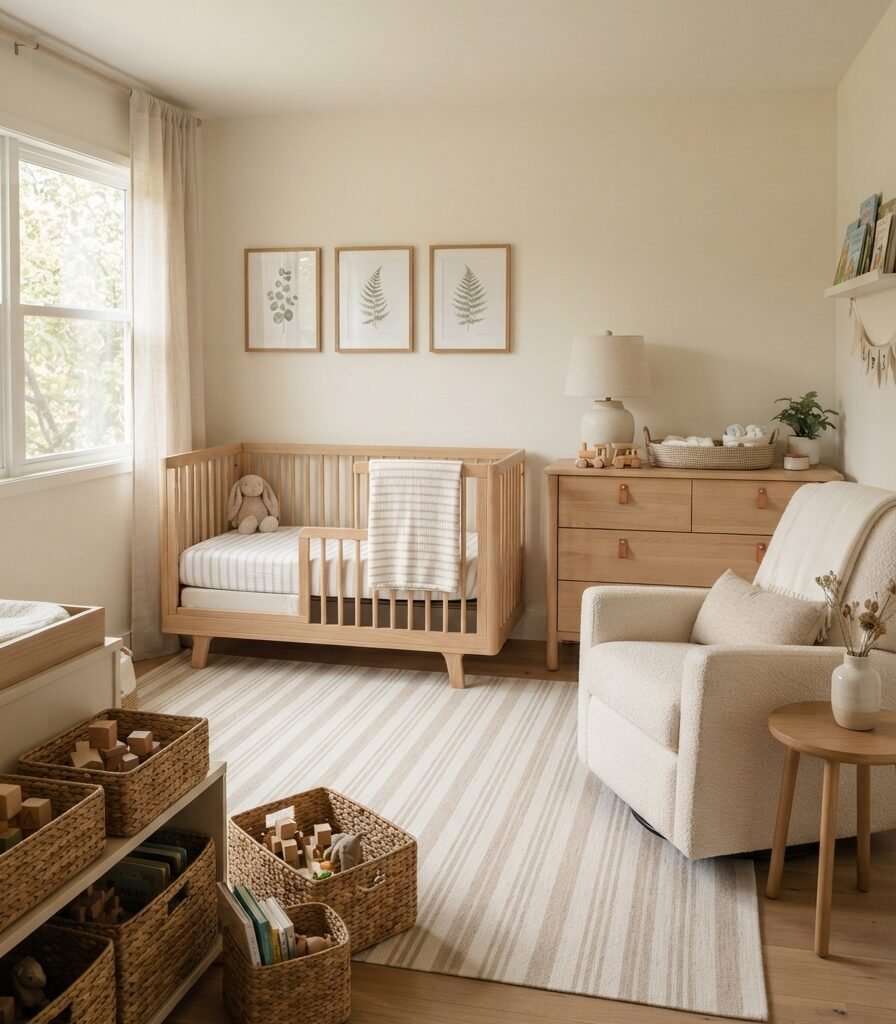
SMALL SPACE / COLOR
Vibe: The room feels timeless, gentle, and quietly prepared for change.
Why it works: A restrained cream-and-oak palette gives you a foundation that can survive changing developmental stages. Instead of investing heavily in baby-specific graphics, the design gets personality from removable textiles, artwork, books, and small accessories that can be replaced as the child grows.
How to get it: Choose a convertible crib and durable dresser first, then keep decorative elements interchangeable. For the sleeping area, follow current safe-sleep guidance rather than treating decorative bedding as part of the crib design; the AAP recommends a firm, flat, non-inclined sleep surface with no loose bedding or soft objects in the infant sleep area.
Shop The Look
| Product | Search phrase |
| Crib | Natural oak convertible baby crib toddler bed |
| Dresser | Six drawer natural oak nursery dresser |
| Rug | Neutral striped washable nursery rug |
| Artwork | Minimal botanical nursery print set |
| Storage | Large natural woven toy storage basket |
How to Start Your Nursery Transformation
Your single best first move is to choose the crib wall and its color before buying decorative accessories. For a flexible nursery, warm ivory is an especially useful anchor because it works with pale oak, dusty sage, muted clay, oatmeal, and blue-gray while reflecting natural light effectively. Once that wall and the crib position are established, the remaining furniture can be measured and selected around them rather than purchased as disconnected pieces.
The most common nursery mistake is buying too many small decorative objects before solving storage and circulation. A room can contain beautiful artwork, baskets, cushions, and toys yet still feel difficult to use if the diaper supplies are inaccessible or the feeding chair blocks the main walkway. Design the functional sequence first: sleep, change, feed, store, then decorate around it.
Three inexpensive entry points can change the room quickly: a $15–25 warm ivory linen-look curtain panel, a $10–20 woven storage basket, and a $15–30 framed neutral botanical or animal print. These pieces add texture, softness, and visual personality without committing you to a permanent theme.
A simple nursery refresh can happen over one weekend if the room already has suitable furniture and only needs paint, textiles, and organization. A starter transformation may fall around 300–800, while a fuller room with a new crib, dresser, glider, lighting, rug, window treatments, and wall treatment can easily reach 1,500–4,000+ depending on quality and renovation work.
Frequently Asked Questions About Nursery Ideas
What should a nursery have besides a crib?
A practical nursery usually needs a safe sleep space, changing solution, clothing and supply storage, and a comfortable place for feeding or soothing. A small dresser can perform two functions when paired with a suitable changing setup, reducing the amount of furniture required. The AAP recommends that infant sleep occur on a firm, flat, non-inclined surface with no loose bedding or soft objects in the sleep area.
What are the best colors for a nursery?
Warm ivory, oatmeal, greige, dusty sage, muted blue-gray, and soft clay are versatile nursery colors. Warm ivory is particularly adaptable because it works with both warm wood and muted accent colors. If the room receives little natural light, test paint samples at different times of day because a gray-beige shade can appear considerably cooler in north-facing light.
How much does it cost to decorate a nursery?
A basic nursery refresh can cost around 300–800 when you reuse the crib and major furniture and concentrate on paint, textiles, storage, and artwork. A complete room with new furniture, lighting, rug, curtains, and decorative treatments can range from roughly $1,500 to $4,000 or more. Custom cabinetry, wallpaper installation, premium furniture, and major electrical work can push the budget substantially higher.
Can a small bedroom work as a nursery?
Yes, but the layout needs to prioritize circulation and multifunctional furniture. A compact crib, narrow dresser, wall-mounted book ledges, and a small glider can provide the essential functions without filling the floor. Before purchasing anything, tape the furniture footprints onto the floor and make sure you can comfortably move between the door, crib, changing area, and seating zone.
What should I avoid putting in a baby’s crib?
Keep pillows, loose blankets, quilts, stuffed toys, bumpers, and other soft or loose objects out of the infant sleep area. The AAP recommends a firm, flat, non-inclined sleep surface with a fitted sheet and no additional soft objects or loose bedding. Also keep dangling window-covering cords and other cords away from the crib; CPSC recommends cordless window coverings as the safest option around young children.
Ready to Create Your Dream Nursery?
These 14 nursery ideas cover warm color palettes, natural materials, lighting, furniture profiles, storage, layouts, small-space solutions, and adaptable details rather than relying on one temporary theme. A nursery does not need to be completed in one decorating sprint; starting with the crib wall, storage, or one calming textile is often the more practical approach. Today, measure your room, mark the crib and dresser footprints with painter’s tape, and photograph the space in daylight before buying anything else. When the essentials are positioned thoughtfully, and the visual noise is reduced, the nursery begins to feel calmer not only to look at but to actually live in during long nights and slow mornings. Save the ideas that speak to you most, especially the pale-oak foundation, soft sage palette, and timeless cream approach, nd use them as your starting board for a nursery that can evolve with your child.