
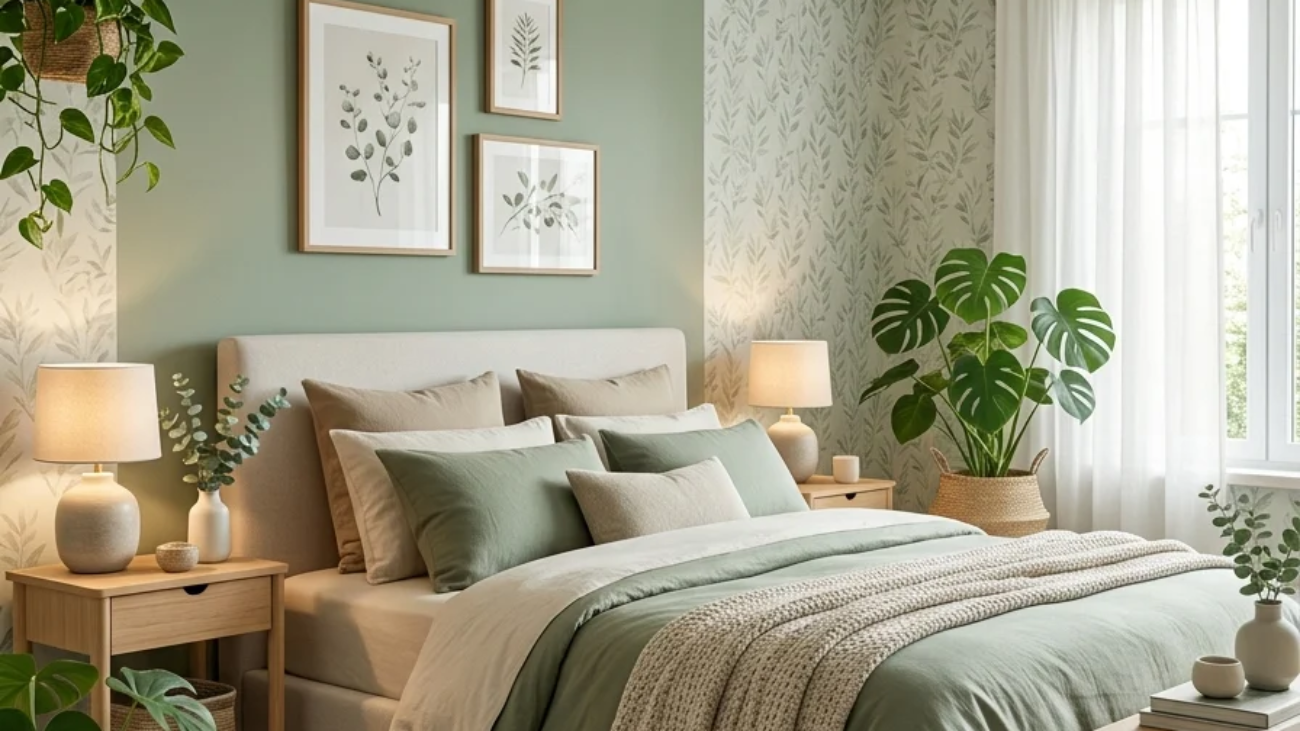
A serene atmosphere green bedroom uses layered, muted greens sage, moss, forest to bring the calming effect of nature indoors without turning the room into a jungle theme. This guide walks through 15 serene atmosphere green bedroom ideas, covering color, materials, lighting, and layout so the space reads as restful the moment you walk in.
Picture walls the color of sage leaves catching late-afternoon light, linen bedding in a muted moss tone that softens every corner, and a single trailing plant on a floating shelf tying the palette back to something living. The room feels hushed rather than heavy, grounded without closing in. It draws on the same biophilic instinct that makes a walk through a quiet forest feel like an exhale, translated into paint, linen, and unfinished wood.
Here are 15 ideas worth saving and stealing.
Why a Serene Green Bedroom Works So Well
A serene green bedroom isn’t a single decor movement; it’s a color-led approach rooted in biophilic design, the practice of bringing nature’s visual cues indoors, layered with the quiet restraint of Japandi and English countryside interiors that have used sage and moss tones for centuries. What sets it apart from a bold, saturated “green room” trend is restraint: every green here is muted, never neon or primary.
The palette moves from soft sage through moss to a deeper forest green, anchored by warm white trim and touches of terracotta blush for warmth. Materials lean natural and tactile: linen bedding, unfinished white oak furniture, woven rattan or cane headboards, and boucle throw pillows that add softness without pattern.
This look is trending because biophilic design has moved from office lobbies into bedrooms as more people prioritize sleep quality and nervous-system calm at home, and Pinterest searches for “sage green bedroom” and “moody green bedroom” have both climbed steadily as green overtook neutral gray as a top bedroom color choice.
Style at a Glance
| Element | Detail |
| Philosophy | Nature’s calm, translated indoors |
| Key Materials | linen, white oak, rattan, boucle |
| Key Colors | sage, moss, forest green, terracotta blush |
15 Serene Atmosphere Green Bedroom Ideas
1. Sage Green Paint on Just the Headboard Wall
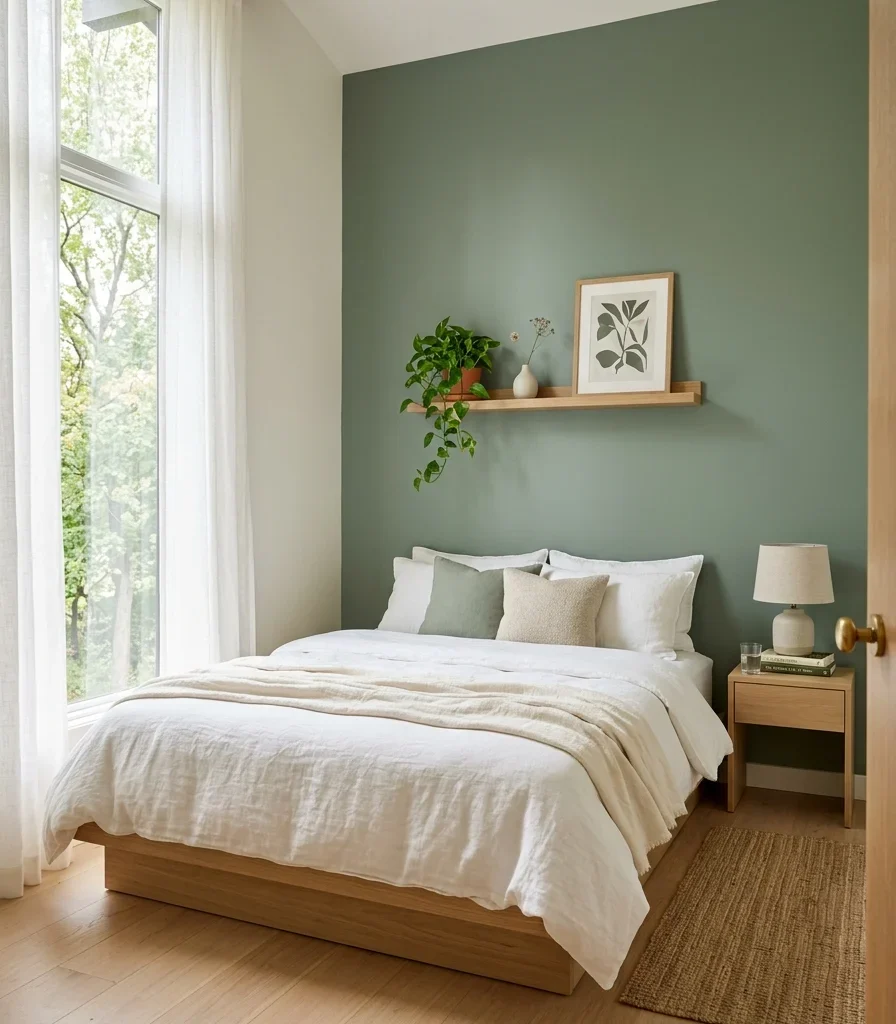
Vibe: Airy. One green wall delivers the calming effect without the room ever feeling boxed in.
Why it works: This uses color contrast and proportion together. Painting only the headboard wall in sage while keeping the remaining three in warm white preserves the sense of openness a small room needs, while still giving the eye one clear, restful focal point behind the bed.
How to get it: Paint just the headboard wall in a muted sage such as Farrow & Ball’s Vert de Terre, stopping the color precisely at the room’s corners so it reads as a defined plane, not a mistake.
Shop the Look
- Farrow & Ball Vert de Terre paint sample
- White oak platform bed frame, low profile
- Linen duvet cover, warm white
- Ceramic bud vase, single-stem
2. Layered Tonal Greens From Sage to Forest
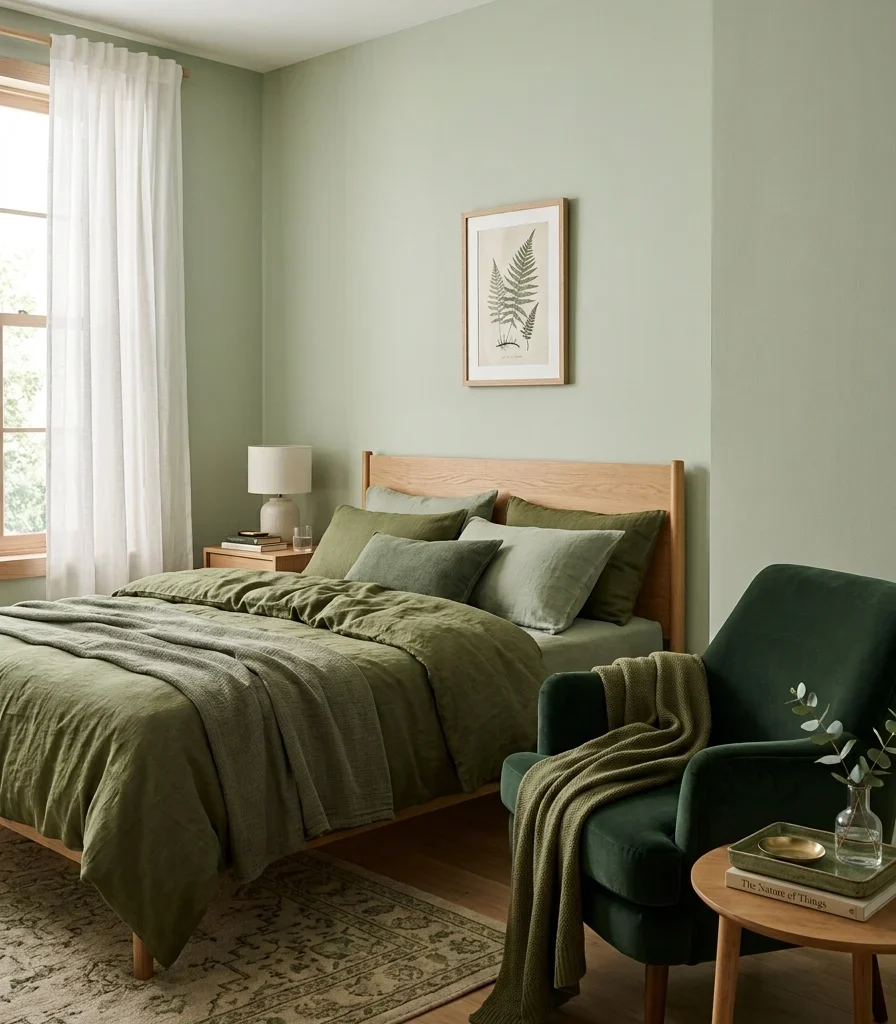
Vibe: Layered three shades of the same color read as depth rather than repetition, the way a forest canopy holds a dozen greens at once.
Why it works: Tonal layering is a color principle that avoids the flatness of a single-shade room. Using sage on walls, moss on bedding, and forest green on one accent chair creates gradation the eye reads as rich rather than monotonous, without introducing a second color family to manage.
How to get it: Choose three greens from the same undertone family one pale, one mid, one deep and assign each to a different surface: walls, textiles, and a single furniture piece, never mixing them within the same object.
💡 Quick Win: A single moss green throw pillow on white bedding is the fastest way to test this layering before committing to paint.
Shop the Look
- Moss green linen duvet cover
- Forest green velvet accent chair
- Botanical line-art print, framed
- Small ceramic catch-all tray
3. Linen Bedding in Muted Moss Tones
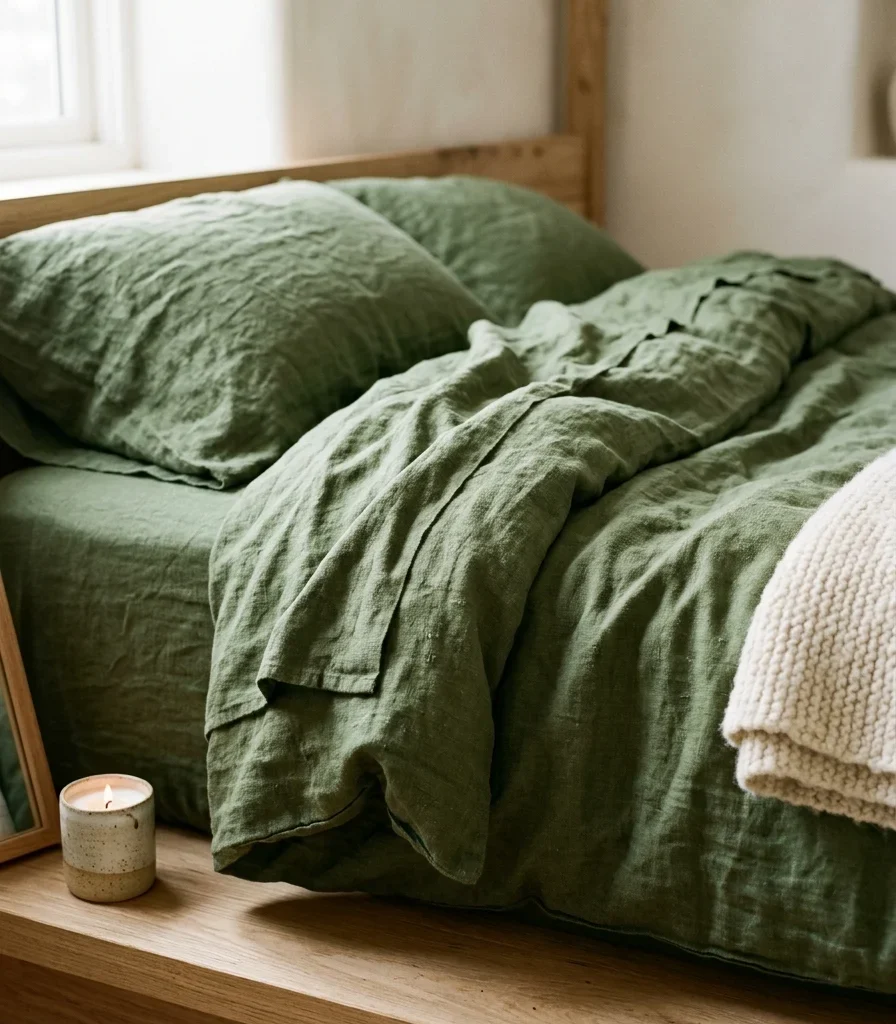
Vibe: Hushed linen’s natural wrinkle keeps a green bedroom from feeling too polished or showroom-perfect.
Why it works: Material choice changes how color reads under light. Linen’suneven weave scatters light rather than reflecting it evenly, which softens a saturated moss tone into something calmer than the same color would look on smooth cotton sateen.
How to get it: Choose stonewashed linen bedding in a muted moss tone, leaving the duvet loosely tucked rather than hospital-cornered so the natural texture and slight color variation stay visible.
Shop the Look
- Stonewashed linen duvet cover, moss green
- Linen fitted sheet, warm white
- Wool throw blanket, natural
- Ceramic pillar candle, matte white
4. Warm Amber Bedside Lighting
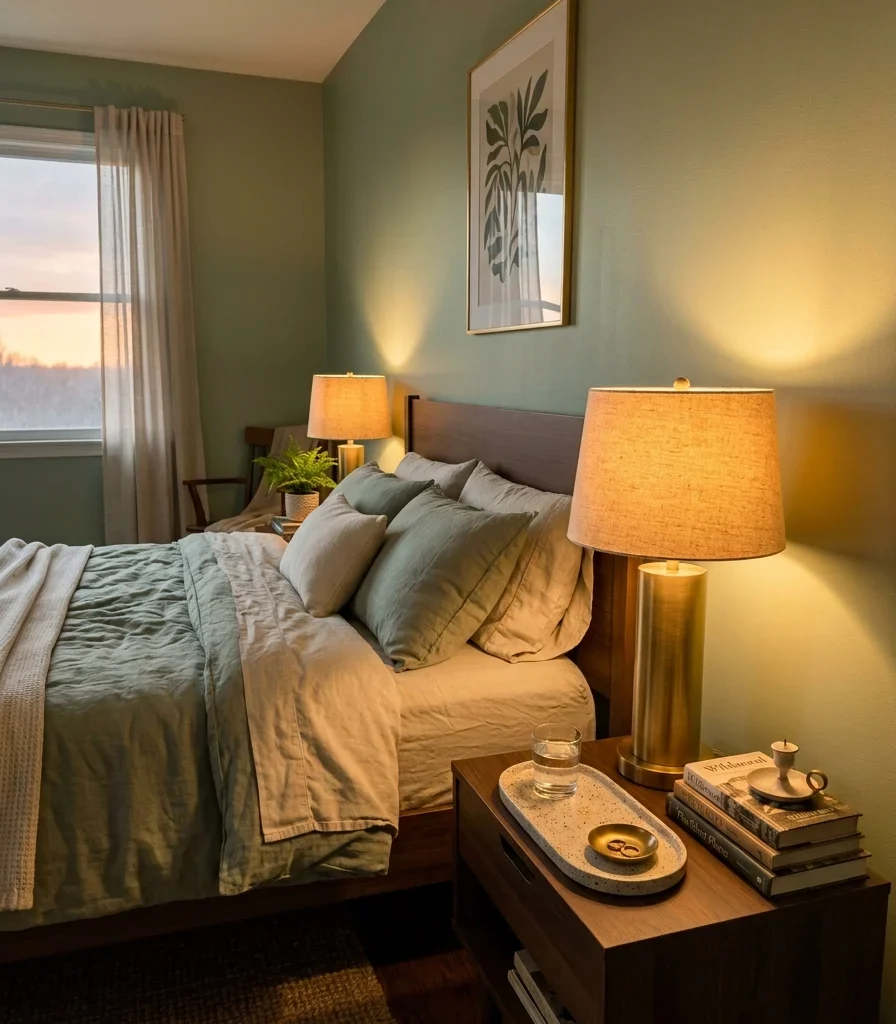
Vibe: Romantic warm light keeps green walls glowing rather than going flat and gray after sunset.
Why it works: Light temperature directly affects how green reads. Cool white bulbs pull the blue undertone out of sage and moss, making them feel colder and grayer, while warm 2700K bulbs enhance the yellow undertone in most muted greens, keeping the room feeling warm through the evening.
How to get it: Use matching brass table lamps with linen shades on both nightstands, fitted with warm white 2700K bulbs, and avoid any daylight-temperature bulb anywhere in the room.
Shop the Look
- Brass table lamp, linen shade, set of 2
- Warm white LED bulb, 2700K, set of 2
- White oak nightstand, set of 2
- Small ceramic bedside tray
5. Low-Profile Platform Bed to Keep the Room Grounded
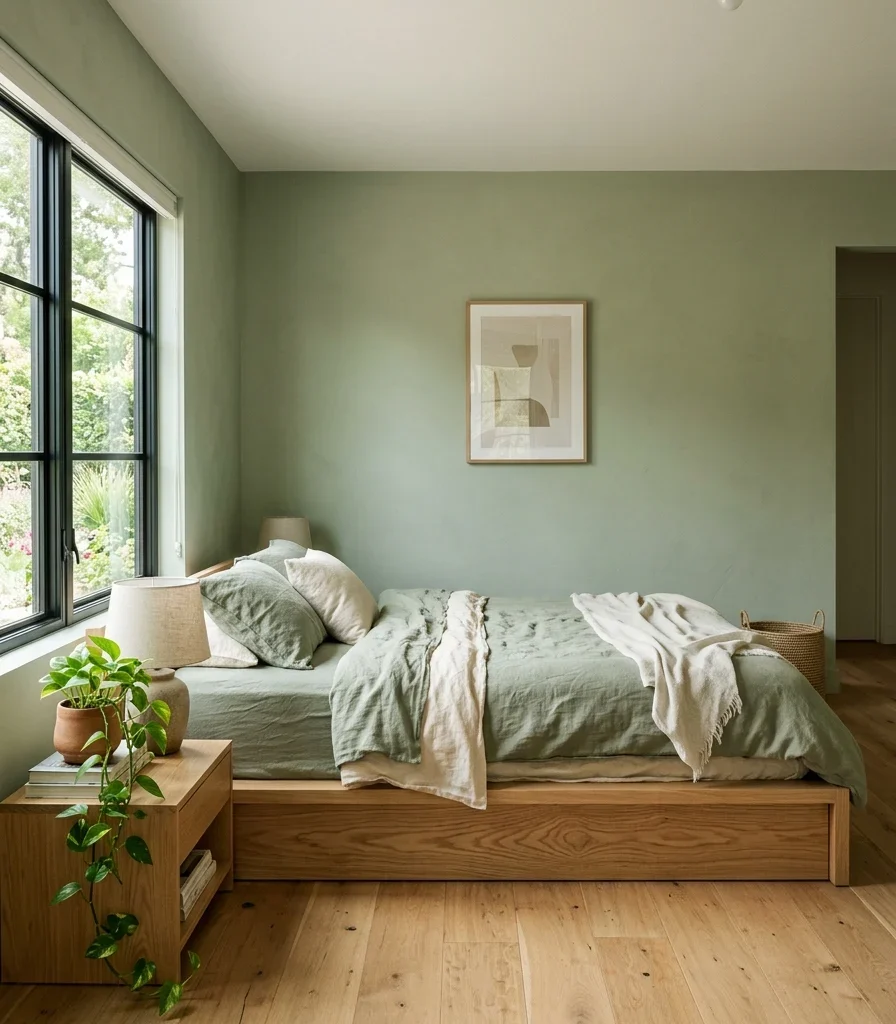
Vibe: Grounded. A low bed frame keeps the room’s visual weight close to the floor, echoing the stillness of forest-floor light.
Why it works: Visual weight and proportion matter directly here. A tall upholstered headboard competes with a saturated wall color for attention, while a low, simple platform frame lets the green wall remain the room’s clear focal point instead of splitting it.
How to get it: Choose a white oak platform bed frame no taller than 14 inches at the headboard, positioning it centered against the green wall with equal clearance on both sides.
Shop the Look
- White oak platform bed frame, low profile
- Linen duvet cover, warm white
- Small trailing pothos, ceramic pot
- Wool area rug, natural, 8×10
6. Warm White Trim Against Deep Forest Green Walls
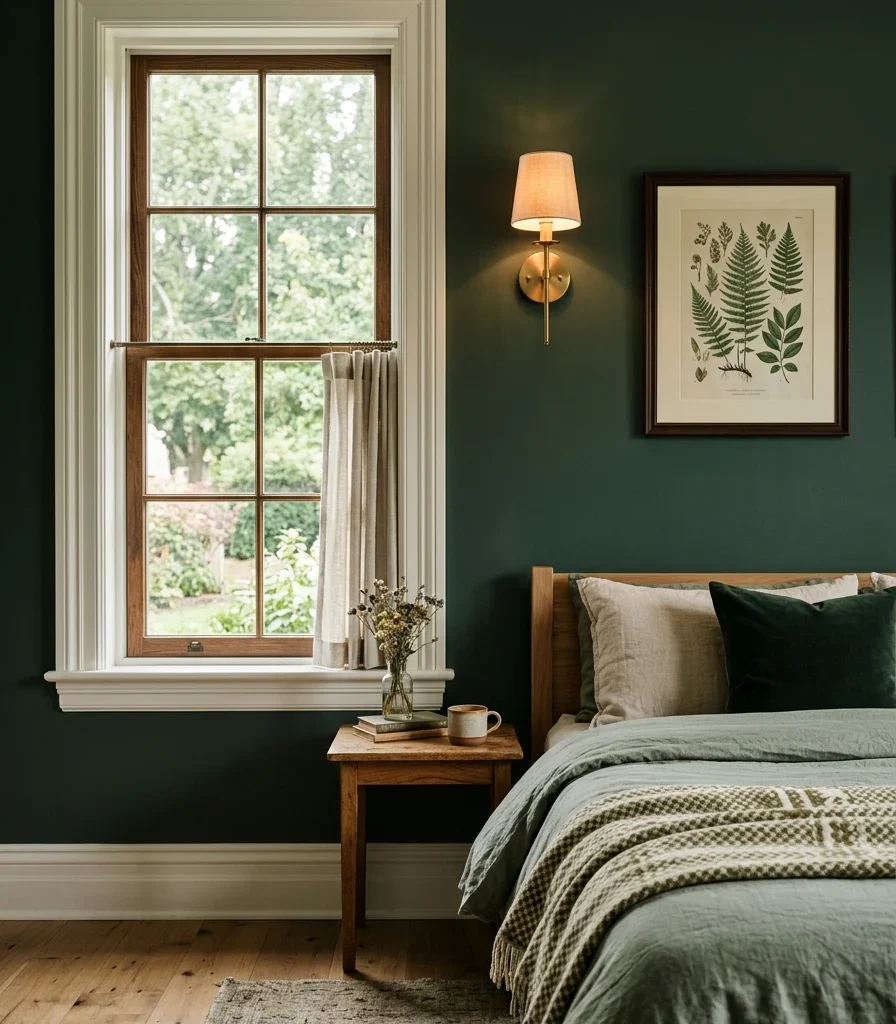
Vibe: Moody deep forest walls with crisp white trim feel enveloping rather than dark, like standing under a full canopy.
Why it works: Contrast theory keeps a deep saturated color from reading as heavy; glossy warm white trim around every window and doorway gives the eye a bright edge to rest on, which prevents forest green walls from visually shrinking the room the way an all-dark palette would.
How to get it: Paint walls in a deep forest green such as Farrow & Ball’s Studio Green, finishing all trim, baseboards, and window casings in a glossy warm white for maximum contrast at the edges.
Shop the Look
- Farrow & Ball Studio Green paint sample
- Glossy warm white trim paint
- Brass wall sconce, swing-arm
- Framed botanical print, small
7. Botanical Art in Slim Oak Frames
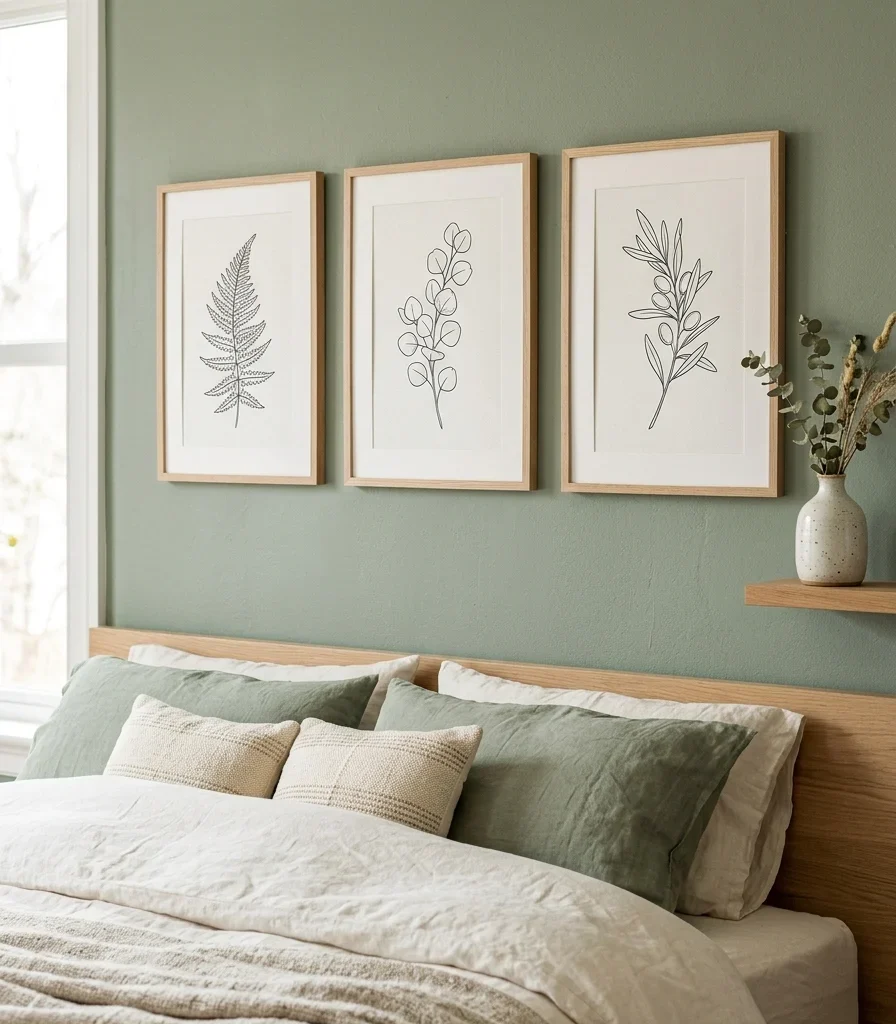
Vibe: Calm botanical prints echo the room’s palette without adding a competing color or busy pattern.
Why it works: Repetition of subject matter reinforces a room’s theme more subtly than repeating color alone. Three related botanical prints in identical thin oak frames create a cohesive gallery moment while keeping the visual weight light against a saturated wall.
How to get it: Hang three botanical line-art prints in matching slim white oak frames in a horizontal row above the headboard, spacing each frame two inches apart for a clean, gallery-style line.
💡 Quick Win: Printable botanical art from a design shop’s digital download can be framed at home for under $30 total.
Shop the Look
- Botanical line-art print, framed, set of 3
- Slim white oak picture frame, set of 3
- Small ceramic bud vase
- Picture hanging strip kit
8. Unfinished Rattan Headboard
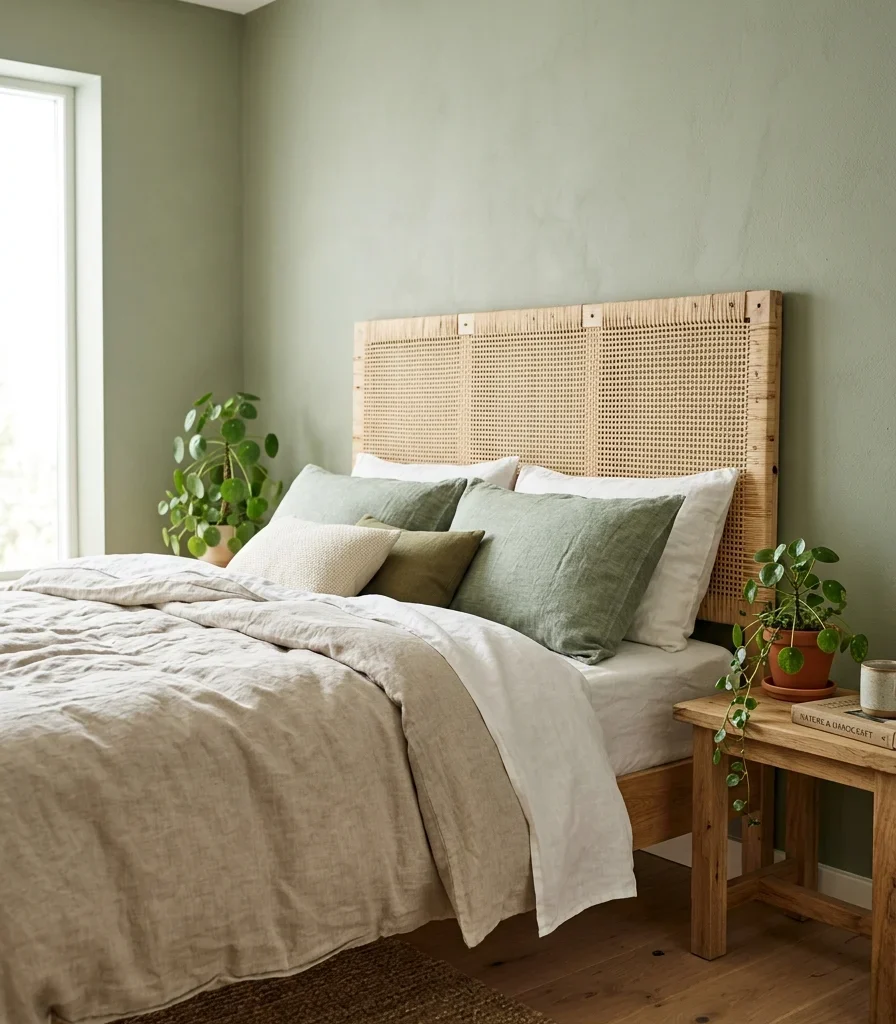
Vibe: Raw. A woven rattan headboard against green walls doubles down on the room’s natural, unpolished feel.
Why it works: Texture layering between two natural materials rattan’s open weave and a matte painted wall creates depth without adding another color, since both surfaces share warm, earthy undertones that reinforce rather than compete with each other.
How to get it: Choose an arched or fan-shaped unfinished rattan headboard sized to the bed frame, positioning it directly against the sage or moss wall so the weave’s shadow pattern is visible in daylight.
Shop the Look
- Unfinished rattan headboard, arched, queen size
- Linen duvet cover, moss green
- Wool throw blanket, natural
- Small potted fern, terracotta pot
9. Positioning the Bed to Face the Room’s Greenest Wall
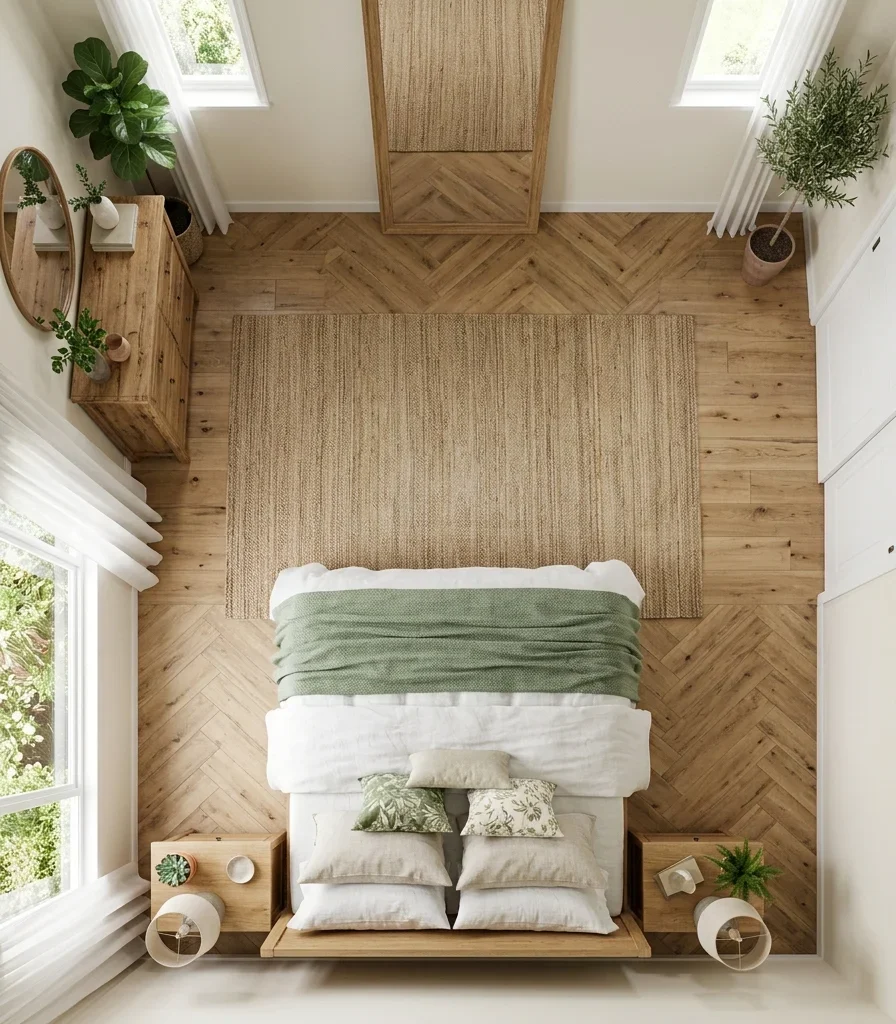
Vibe: Serene. Waking up facing the room’s calmest surface sets the emotional tone before the day even starts.
Why it works: This is a layout decision most bedroom guides skip. Positioning the bed so the sleeper’s eyeline lands on the green wall rather than a closet door or hallway view means the room’s most calming element is also its first visual impression each morning.
How to get it: Map your bedroom’s sightlines from a lying position before finalizing furniture placement, positioning the bed frame so the headboard sits opposite, not beside, the deepest green wall in the room.
Shop the Look
- White oak nightstand, set of 2
- Framed botanical print for green wall
- Small potted plant, ceramic pot, set of 2
- Wool area rug, natural
10. Terracotta Accents to Warm Up a Cool Sage Palette
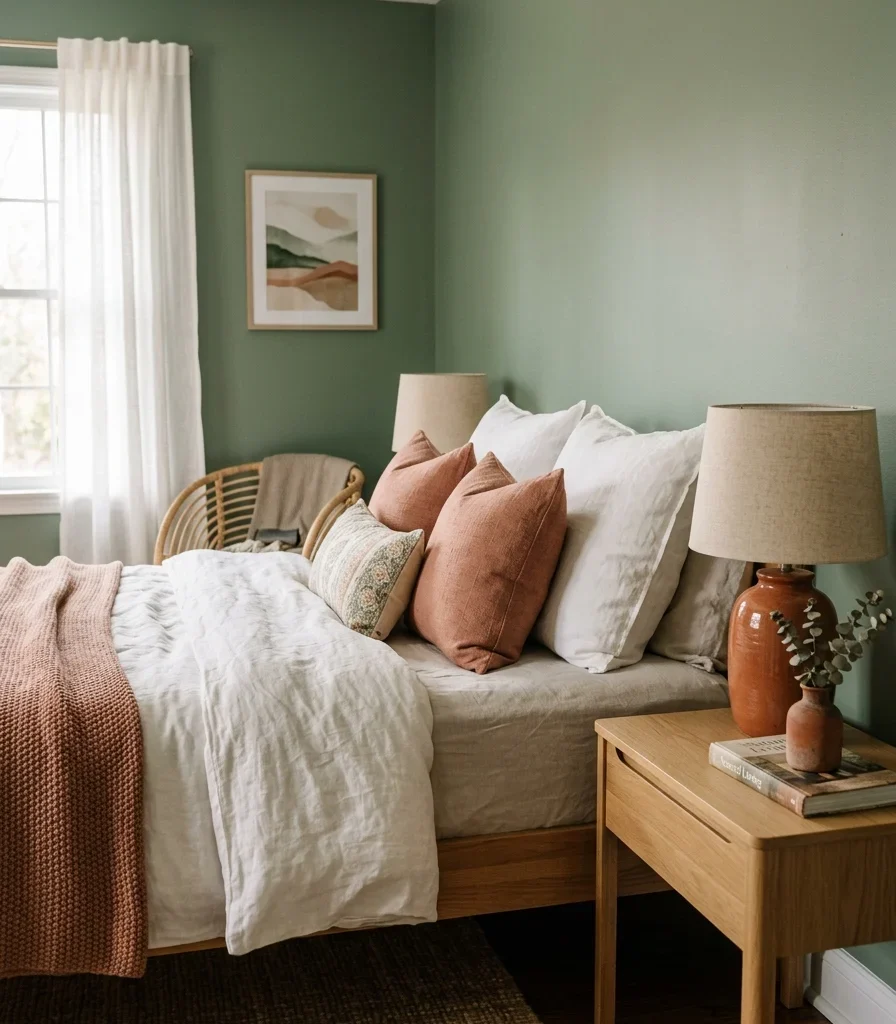
Vibe: Warm terracotta against sage keeps a cool-leaning green from ever feeling sterile or clinical.
Why it works: Color temperature balance matters in an all-green room. Sage and moss both lean slightly cool, and a warm terracotta accent color acts as a counterbalance, the same way a single warm object in a cool-toned photograph draws the eye and adds life.
How to get it: Introduce terracotta only through two or three small accents: a ceramic lamp base, one throw pillow cover, and a bud vase, rather than a full terracotta wall or large furniture piece that would compete with the green.
Shop the Look
- Terracotta ceramic table lamp base
- Terracotta blush linen pillow cover
- Small terracotta bud vase
- Folded cotton throw, warm white
11. Dimmable Wall Sconces Flanking the Bed
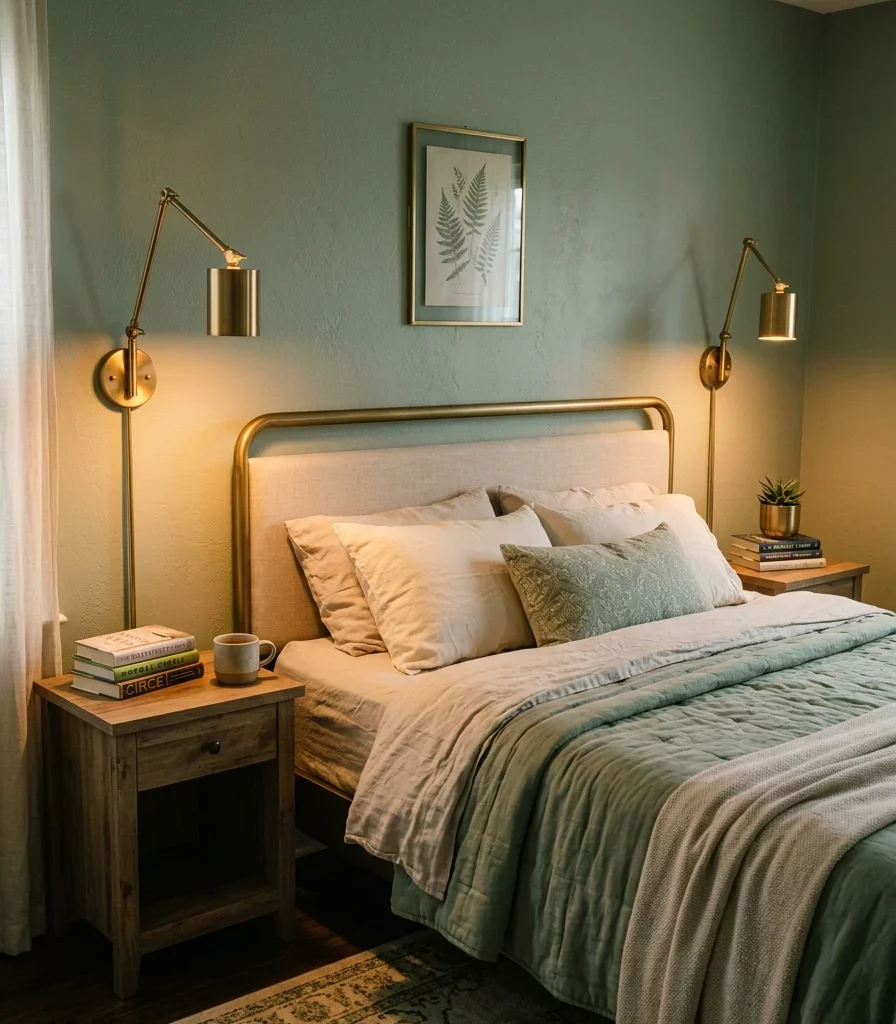
Vibe: Romantic. Sconces on either side of the bed create two soft pools of light rather than one flat overhead wash.
Why it works: Layered lighting placed symmetrically supports both function and calm. Wall-mounted sconces free up nightstand surface space, while their dimmable warm glow lets the room shift from reading-bright to sleep-ready without ever switching to a harsh overhead fixture.
How to get it: Mount two brushed brass swing-arm sconces at 24 inches above each nightstand, wiring both to a shared dimmer switch so they lower together to a warm, even glow at bedtime.
💡 Quick Win: Plug-in sconces with a built-in inline dimmer switch skip electrical work entirely.
Shop the Look
- Brushed brass swing-arm wall sconce, set of 2
- Shared dimmer switch, in-wall
- Warm white LED bulb, 2700K, set of 2
- Small stack of linen-bound books
12. A Cane Bench at the Foot of the Bed
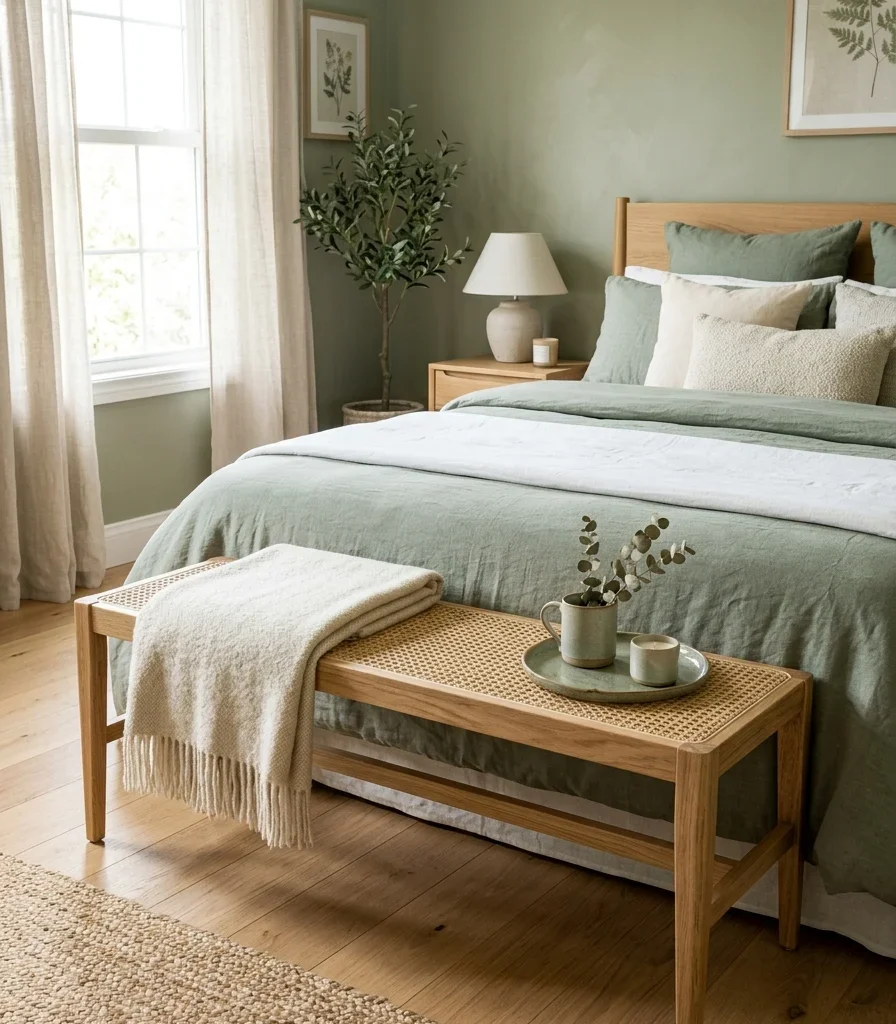
Vibe: Airy. A woven cane bench reads as furniture that lets light and sightlines pass through it, unlike a solid upholstered piece.
Why it works: Furniture arrangement in a saturated-color room benefits from visual lightness; an open-weave cane bench occupies the same footprint as a solid bench but reads as far less heavy, keeping the green wall behind it as the room’s dominant visual element.
How to get it: Place a slim woven cane bench with white oak legs at the foot of the bed, sized no wider than the bed frame itself so it doesn’t visually crowd the walking path.
Shop the Look
- Woven cane bench, white oak legs
- Wool throw blanket, moss green
- Small ceramic catch-all tray
- Linen lumbar pillow, warm white
13. Boucle Throw Pillows for Tactile Softness
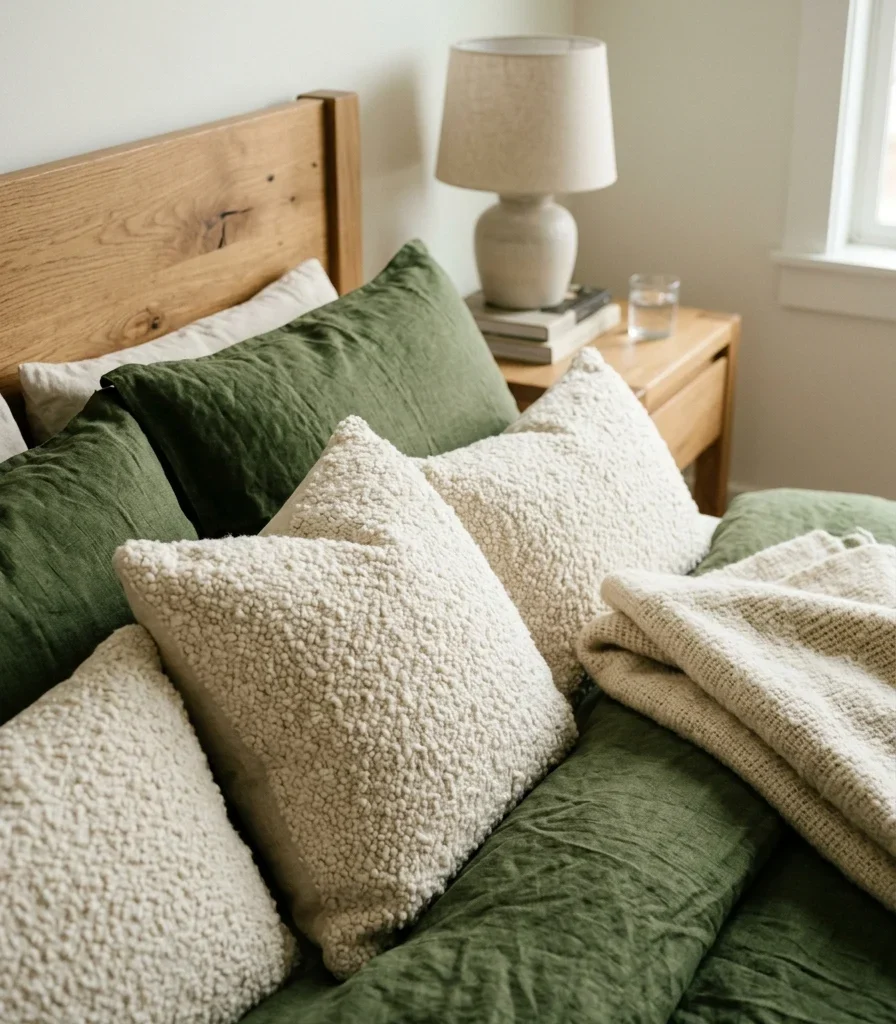
Vibe: Layered boucle’s nubby texture against smooth linen gives the bed visual and tactile depth without adding another color.
Why it works: Texture layering does the work color repetition can’t. Boucle’s loop texture creates shadow and highlight variation across its surface, adding visual interest to a monochromatic green-and-white bed without introducing a third color into the palette.
How to get it: Layer two ivory boucle lumbar pillows against the moss green duvet, keeping both in the same warm-white undertone so the texture contrast reads clearly rather than clashing.
Shop the Look
- Ivory boucle lumbar pillow cover, set of 2
- Moss green linen duvet cover
- Wool throw blanket, natural
- Linen euro pillow sham, warm white
14. Trailing Plants on a Floating Shelf
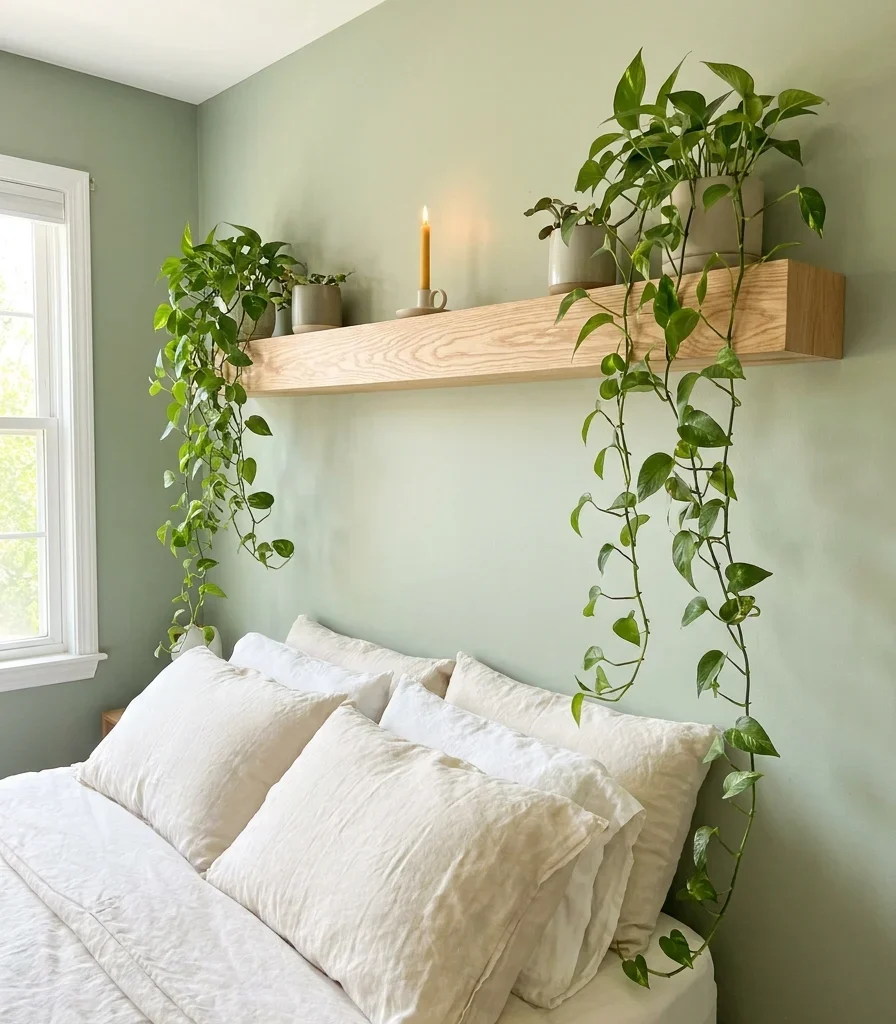
Vibe: Layered cascading vines against a painted green wall blur the line between decor and the living plant it echoes.
Why it works: This reinforces the room’s biophilic theme literally rather than symbolically. Trailing plants against a sage or moss wall create genuine texture, layering, and movement as vines grow and shift over time, something a static print or textile can’t replicate.
How to get it: Mount a single white oak floating shelf above the headboard, positioning two trailing pothos plants in matching ceramic pots so their vines cascade down toward the pillows over several months.
Shop the Look
- White oak floating shelf, 24-inch
- Trailing pothos plant, live, set of 2
- Matte ceramic plant pot, small, set of 2
- Ceramic pillar candle, sage green
15. Negative Space Around the Bed to Let the Green Breathe
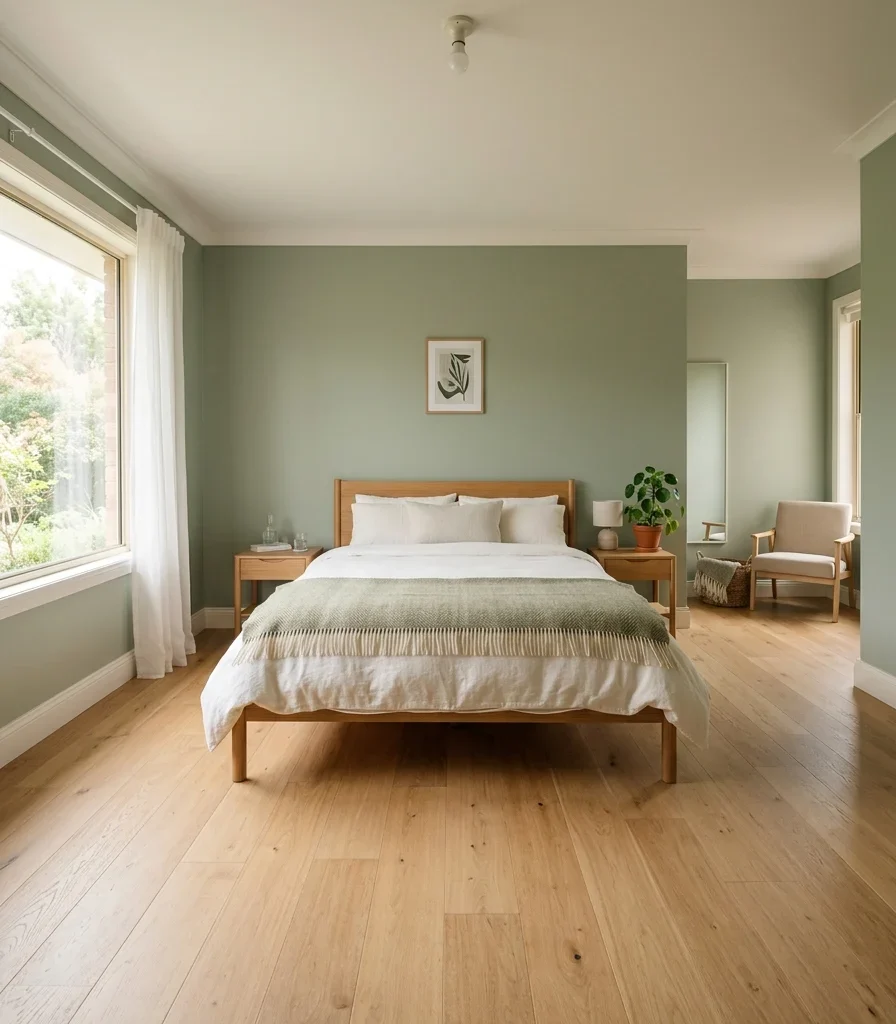
Vibe: Still, empty floor space around the bed lets a saturated green wall remain the room’s single quiet statement.
Why it works: Negative space is the layout principle most often skipped in favor of adding more furniture, but in a color-led room, empty floor area gives the eye room to rest between the bed and the wall, preventing the space from feeling visually competitive between color and clutter.
How to get it: Limit bedroom furniture to the bed, two nightstands, and one accent piece maximum, keeping at least three feet of clear floor space visible on at least two sides of the bed.
Shop the Look
- White oak nightstand, set of 2
- Wool area rug, natural, 8×10
- Single accent chair, boucle upholstery
- Small potted plant, ceramic pot
How to Start Your Serene Green Bedroom Transformation
Start with one wall of sage green paint behind the headboard, specifically a color like Farrow & Ball’s Vert de Terre. This single move anchors the entire room’s undertone before you buy a single piece of bedding or furniture, since every green, wood, and metal choice that follows needs to sit correctly against it.
The most common mistake is pairing a muted sage or moss wall with cool white daylight-temperature bulbs. This pulls the blue undertone out of the green and makes it read gray and lifeless by evening. The fix is simple: use only warm white 2700K bulbs throughout the room, no exceptions.
Three items under $50 create real impact fast: a moss green linen throw pillow cover (around $28), a small ceramic bud vase in matte white (around $16), and a single trailing pothos plant in a terracotta pot (around $22).
A weekend covers paint and styling swaps; a full room with new bedding, a headboard, and lighting takes two to three weeks to source and install. Budget $300–$700 for a starter version, or $2,000–$5,000 for a full room refresh with custom furniture.
Frequently Asked Questions About Serene Green Bedrooms
What’s the difference between a sage green bedroom and a forest green bedroom?
Sage green is a pale, gray-leaning tone best suited for full walls in smaller rooms since it stays light and airy even across four surfaces. Forest green is far more saturated and works best as an accent wall or in larger rooms with strong natural light, since covering an entire small room in it can feel closing without enough contrast from trim or furniture.
What color goes best with a green bedroom?
Warm white and terracotta blush are the two most reliable pairings. Warm white keeps trim, bedding, and ceilings bright enough to balance a saturated wall, while terracotta accents in a lamp base or pillow cover add warmth to counter green’s naturally cool undertone. Brushed brass hardware also complements both without competing for attention.
How much does it cost to create a serene green bedroom?
A starter version using paint, new bedding, and a few accessories runs $300 to $700. A mid-range update with a rattan headboard and new lighting typically lands between $1,000 and $2,000. A full room transformation with custom furniture and a professional paint job can reach $2,000 to $5,000 depending on the scope.
Can a serene green bedroom work in a room with little natural light?
Yes, with one adjustment: choose a lighter sage rather than a deep forest tone, since darker greens need strong daylight to avoid reading as murky in a dim room. Compensate with warm 2700K lighting layered at multiple heights, including bedside sconces and a floor lamp, rather than relying on a single overhead fixture.
What is the best material for a green bedroom headboard?
Unfinished rattan is the most searched and most versatile choice, since its natural texture and warm undertone complement both pale sage and deep forest walls without introducing a competing color. Linen-upholstered headboards in a matching or slightly lighter green tone are the second most common choice for a softer, less textured look.
Ready to Create Your Dream Serene Green Bedroom?
From tonal sage layering to rattan headboards and negative space around the bed, these 15 serene atmosphere green bedroom ideas cover color, materials, lighting, and layout so the room feels fully considered, not just repainted. You don’t need to commit to four green walls this weekend; starting with one accent wall or one linen duvet is genuinely the right way to begin, not a smaller version of the goal. Pick up a moss green throw pillow today and set it against your current bedding to see how the undertone reads in your own light. Once the room comes together, climbing into bed each night will feel like the quiet exhale this palette was always meant to give you. Pin your favorites now, especially any tonal-layering idea that shows you how far sage, moss, and forest green can stretch in one room.
You Might Also Like
- 12 Cozy Green Terracotta Bedroom Ideas Worth Saving
- 10 Black and Green Bedroom Design Ideas Worth Saving
- 10 Ways to Create a Relaxing Green Grey Bedroom
- 12 Green Comforter Bedroom Ideas for Max Comfort
- 16 Ways to Optimize a Home Office Setup in a Small Bedroom
- 16 Modern Cottage Bedroom Ideas That Feel Warm, Clean, and Effortless
[…] 15 Serene Atmosphere Green Bedroom Ideas […]
[…] 15 Serene Atmosphere Green Bedroom Ideas […]
[…] 15 Serene Atmosphere Green Bedroom Ideas […]