

Incorporating Italian modern luxury into a kitchen means layering in the style’s signature materials marble, brass, hand-glazed ceramics, saturated lacquer color through accessories, fixtures, and small swaps, without requiring a full cabinetry renovation. This article gives you 15 genuinely achievable ways to incorporate Italian kitchen design modern luxury into a kitchen you already have, covering material, color, lighting, and layout touches that bring real Italian character into an existing room.
It feels like a familiar kitchen suddenly speaking a new language: a marble board catching light on the counter, brass hardware warming under a pendant, a single bold cabinet insert doing more work than an entire repaint would. This is Italian modern luxury incorporated rather than rebuilt: confident, layered, achieved through addition instead of demolition. Every piece earns its place because none of it requires touching the existing cabinetry or floor plan.
Here are 15 ideas worth saving and stealing.
Why Incorporating Italian Modern Luxury Works So Well
Italian modern luxury kitchen design traces to the post-war Milanese furniture movement of the 1950s through 1970s, which treated cabinetry and kitchen objects with the same sculptural ambition as furniture shown at the Salone del Mobile: bold color, hand-blown glass, and warm brass hardware rather than the flatter, purely functional kitchens common elsewhere in Europe. Incorporating the style into an existing kitchen means borrowing its material vocabulary in smaller doses rather than rebuilding the room around it.
The core materials translate easily to accessories: marble for boards and small consoles, brass for hardware and lighting, hand-glazed terracotta and cream ceramics for serveware, and one saturated lacquer color, burgundy or olive, introduced through a single cabinet insert or bar cart rather than a full cabinetry run.
This incremental approach is trending because full kitchen renovations remain expensive and slow, while Pinterest and design-industry search data show sustained interest in “Italian kitchen accessories” and “Italian kitchen decor” as ways to bring the style’s warmth and color into a rental or an otherwise finished kitchen without construction.
Yes, incorporating Italian modern luxury is arguably easier in a small kitchen than a large one, since a single marble board, a brass hardware swap, and one Murano-style pendant already read clearly in a compact room where a large kitchen might need several more touches to register the same way.
Style at a Glance
| Element | Core Trait 1 | Core Trait 2 |
| Philosophy | Style incorporated through addition, not renovation | One bold color or material moment does the visual work |
| Materials | Marble, brass, hand-glazed ceramic | Terracotta, cream |
| Color Palette | Burgundy or olive accent | Warm cream base |
15 Ways to Incorporate Italian Kitchen Design Modern Luxury
1. Display a Marble Cutting Board and Cheese Board
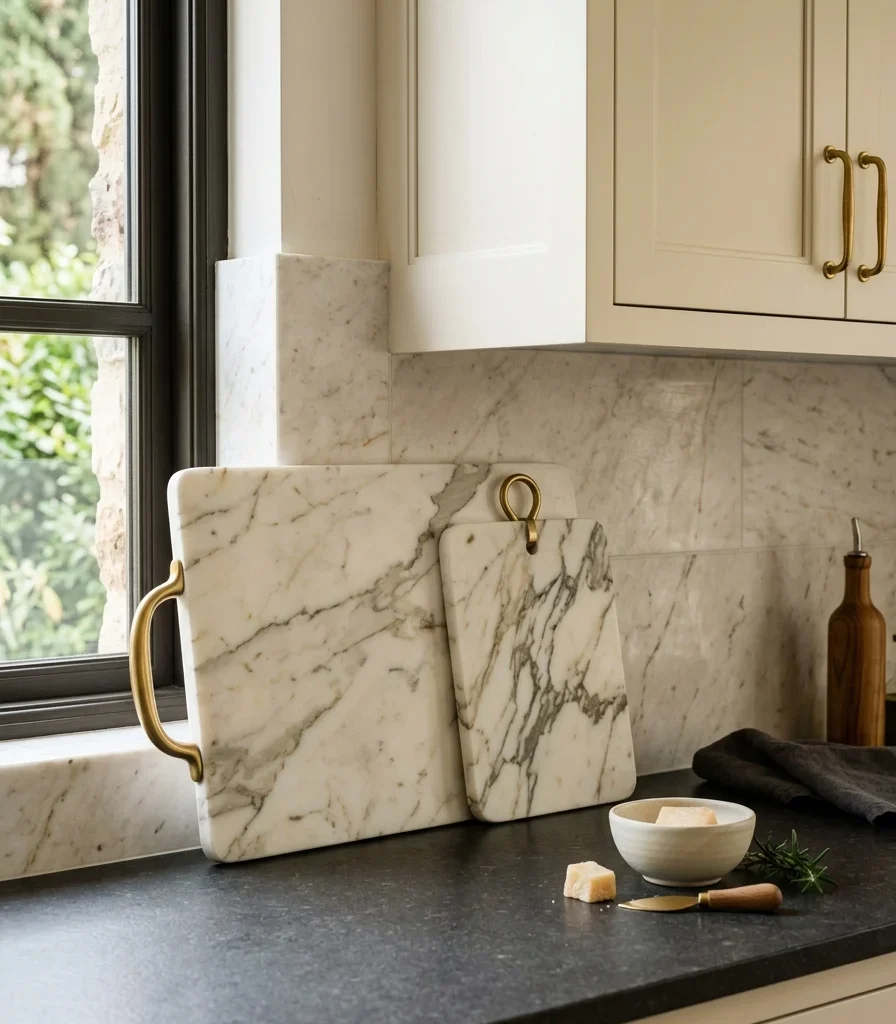
Vibe: Still a single object with enough material presence to change how the whole counter reads.
Why it works: A genuine marble board applies material honesty on a scale that requires no renovation; its veining and weight read as unmistakably Italian modern luxury the moment it’s set on the counter, doing more to signal the style than a laminate counter update could without any construction at all.
How to get it: Choose a marble board with a brass handle insert, leaning it against the backsplash rather than laying it flat, since propped upright it functions as a display object as much as a tool.
💡 Quick Win: A marble-look resin board under $30 approximates the material’s visual weight for a fraction of the cost of natural stone.
Shop the Look
| Product |
| Marble cutting board brass handle |
| Marble cheese board round |
| Small ceramic accent bowl |
| Brass board stand |
| Marble look resin board |
2. Add a Single Burgundy Lacquer Cabinet Insert
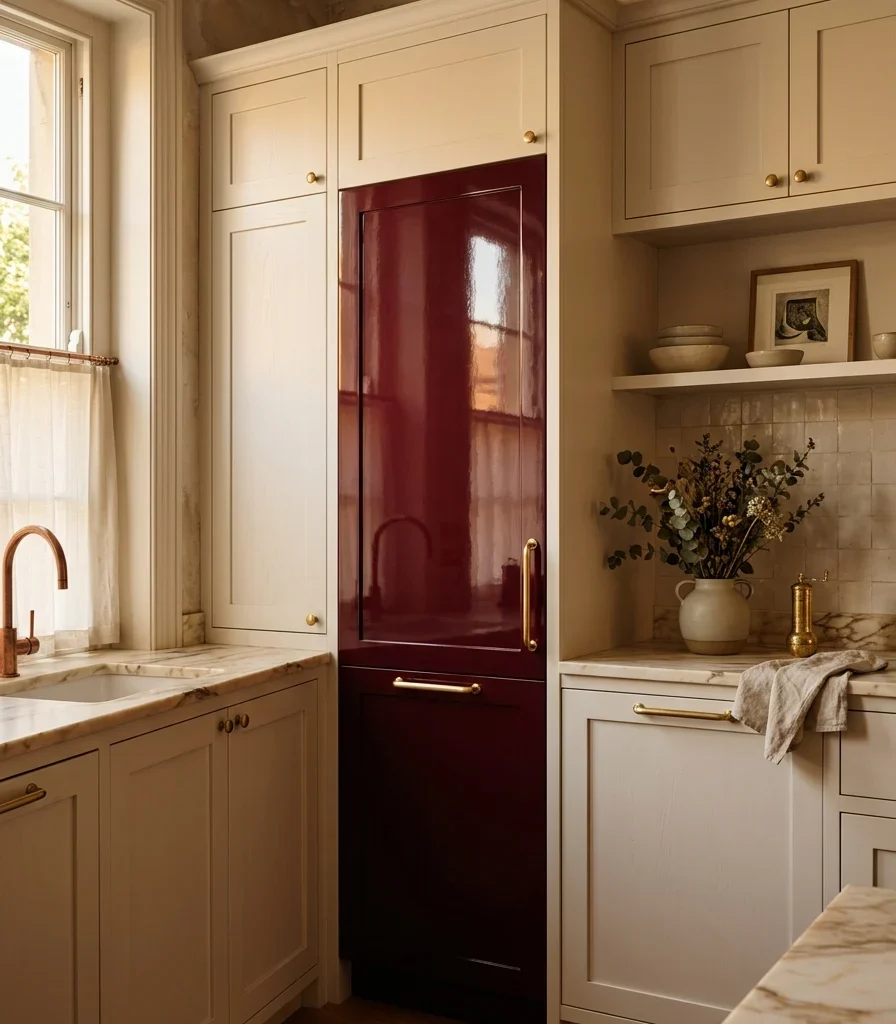
Vibe: Moody one saturated door doing the work of an entire accent wall.
Why it works: Repainting just one cabinet door in a genuine high-gloss lacquer applies color anchoring at the smallest possible scale; a single burgundy door against surrounding white cabinetry reads as a deliberate design choice rather than a full commitment, letting an existing kitchen borrow Italian design’s confidence with saturated color without repainting the whole run.
How to get it: Remove one lower cabinet door (ideally one that’s frequently visible, like an end-of-run panel) and refinish it in a genuine multi-coat lacquer rather than a single-coat enamel, pairing it with a brass pull to match the rest of the kitchen’s hardware.
Shop the Look
| Product |
| High gloss burgundy lacquer paint |
| Brass cabinet pull replacement |
| Small ceramic countertop vessel |
| Cabinet door refinishing kit |
| Brass cabinet hinge |
3. Add a Small Marble-Topped Bar Cart for Espresso and Aperitivo
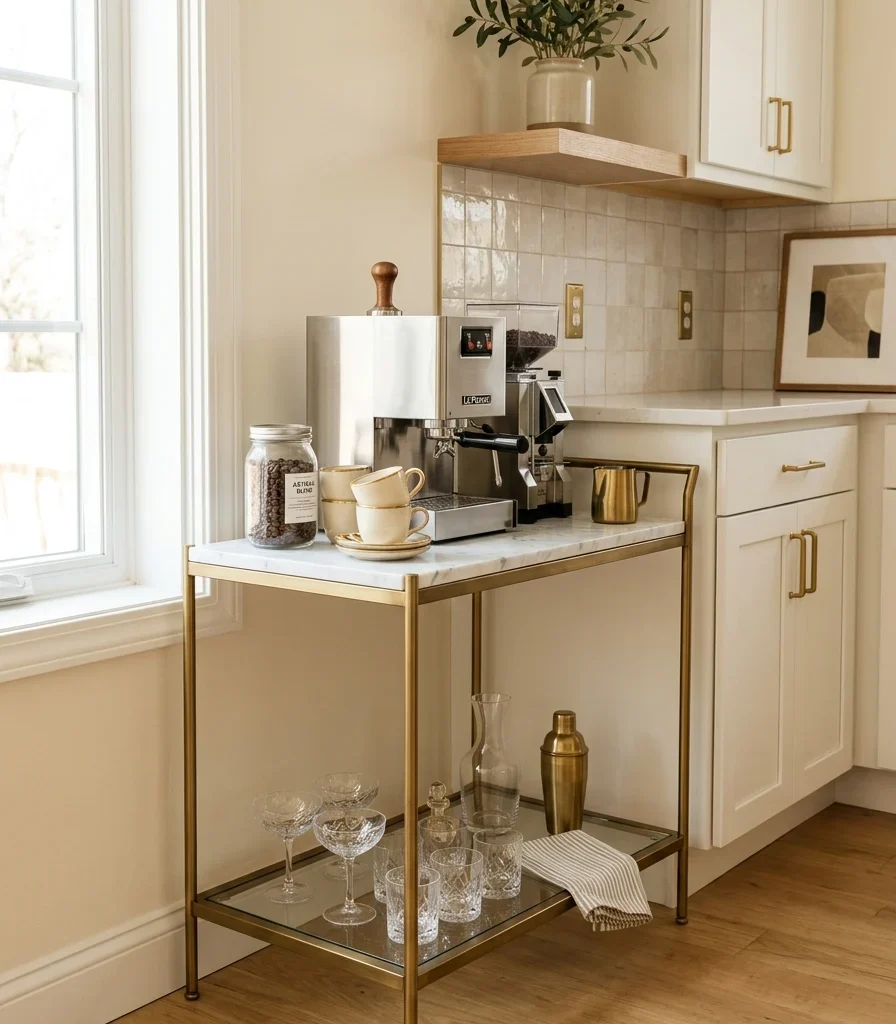
Vibe: Warm, a small, self-contained corner that feels like its own Italian café moment.
Why it works: A bar cart applies furniture-arrangement thinking as a freestanding, non-permanent addition; its slim brass frame and marble surface introduce two of the style’s signature materials at once, and because it rolls, it requires no fixed installation or permission from a landlord, unlike built-in cabinetry.
How to get it: Choose a cart no wider than 24 inches with a genuine marble (not marble-look laminate) top tier, styling it with an espresso setup and two or three small glasses for aperitivo, positioned in an underused kitchen corner.
Shop the Look
| Product |
| Brass bar cart marble top |
| Small ceramic espresso cup set |
| Glass aperitivo tumbler set |
| Small brass tray insert |
| Marble coaster set |
4. Swap In a Murano-Style Pendant Over One Zone
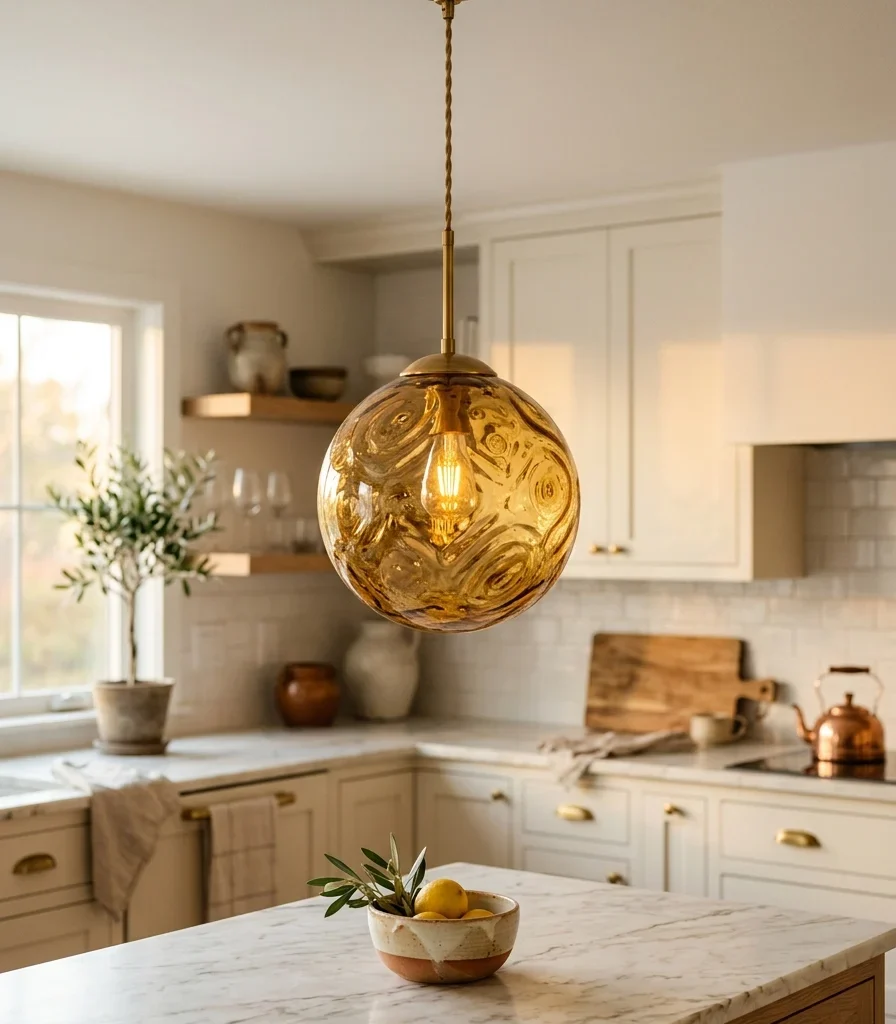
Vibe: Warm one fixture swap that changes the whole zone’s character without touching a single cabinet.
Why it works: A single pendant swap is a light-behavior and material-honesty principle that requires minimal electrical work. Hand-blown glass with visible swirl texture refracts light unevenly, casting a warmer, more dynamic glow than a standard fixture, referencing the Venetian glassblowing tradition central to Italian lighting design without any structural renovation.
How to get it: Replace one existing pendant or flush-mount fixture over a counter or small island with a single Murano-style swirled glass pendant, keeping the existing electrical box and simply swapping the fixture itself, which most electricians can complete in under an hour.
💡 Quick Win: A plug-in pendant conversion kit lets renters swap the fixture without any hardwiring at all.
Shop the Look
| Product |
| Murano style swirled glass pendant |
| Brass ceiling canopy trim |
| Plug-in pendant conversion kit |
| Warm 2700K bulb for pendant |
| Small ceramic countertop bowl |
5. Display Terracotta Ceramic Serveware on an Open Shelf
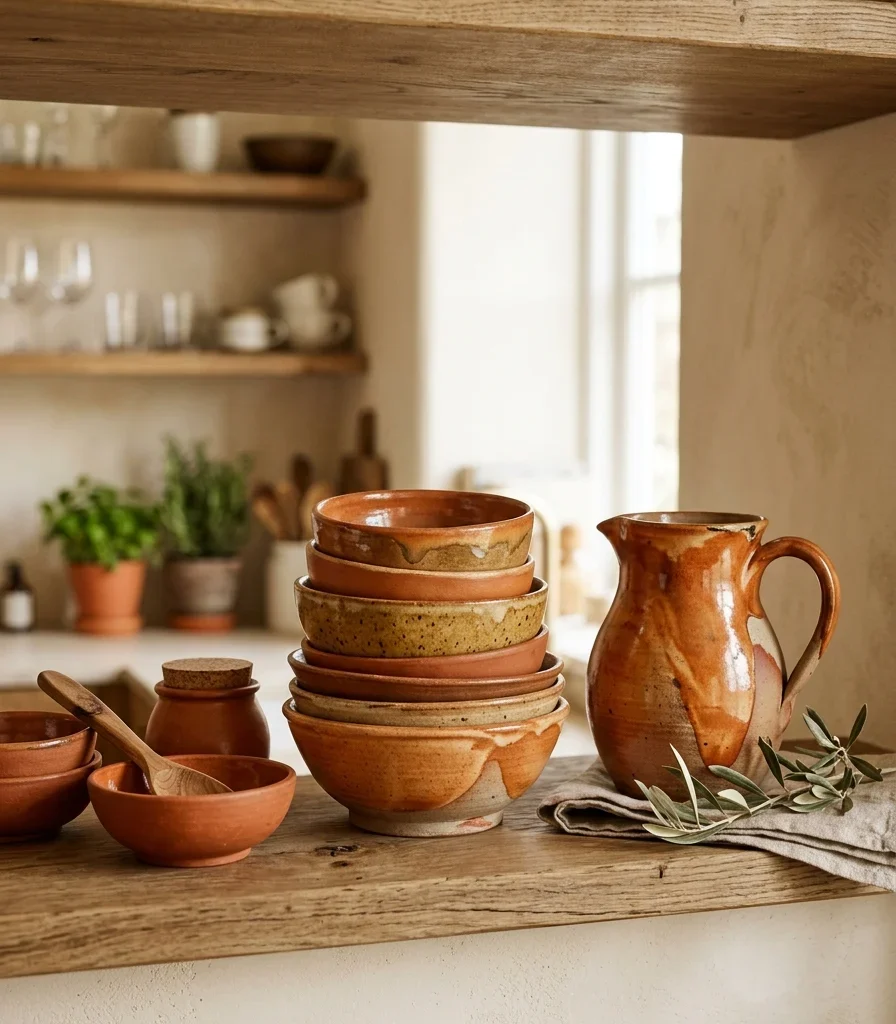
Vibe: Layered everyday serveware styled with enough intention to double as decor.
Why it works: Terracotta serveware applies texture layering directly to existing open shelving because the material itself carries the visual signal (hand-glazed earthenware reads as Italian regardless of the shelf beneath it); this incorporation requires no structural change, only a deliberate swap of whatever mismatched serveware currently occupies the shelf.
How to get it: Replace mismatched everyday bowls and a pitcher with hand-glazed terracotta pieces in a consistent warm tone, stacking bowls by size and adding one dried olive branch for a finishing touch that ties the display together.
Shop the Look
| Product |
| Hand-glazed terracotta bowl set |
| Terracotta ceramic pitcher |
| Small dried olive branch |
| Terracotta serving platter |
| Wood open shelf existing |
6. Style a Hand-Painted Ceramic Olive Oil Cruet Set
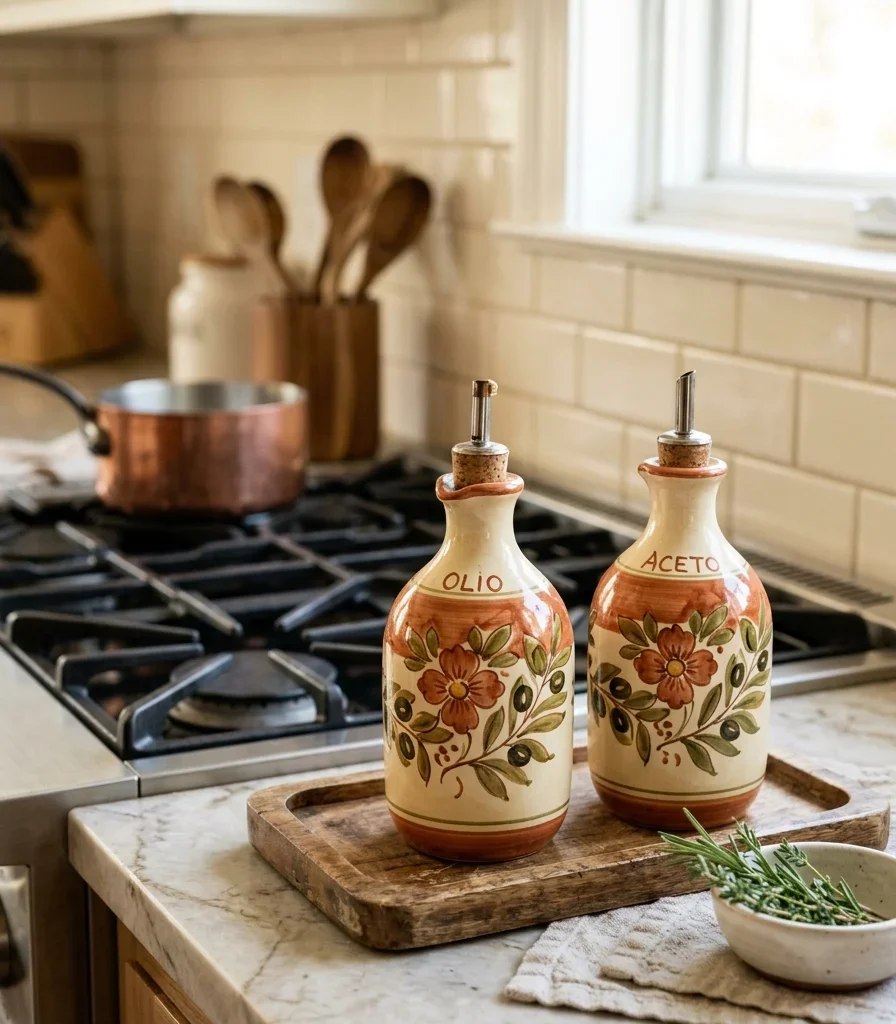
Vibe: Warm, a small daily-use object that carries genuine craft detail every time it’s reached for.
Why it works: A hand-painted cruet set applies accessory layering at the smallest functional scale because it replaces an object already in daily use (a plain bottle of olive oil); the style incorporation happens without adding any new footprint to the counter, simply upgrading what was already there.
How to get it: Choose a hand-painted ceramic cruet set in a warm cream base with a terracotta or olive pattern, positioning it on a small wood tray near the stove where it’s both genuinely used and visibly styled.
Shop the Look
| Product |
| Hand-painted ceramic cruet set |
| Small wood tray for cruets |
| Terracotta pattern ceramic finish |
| Small ceramic salt cellar |
| Olive oil funnel brass |
7. Paint an Olive Green Accent Behind Open Shelving
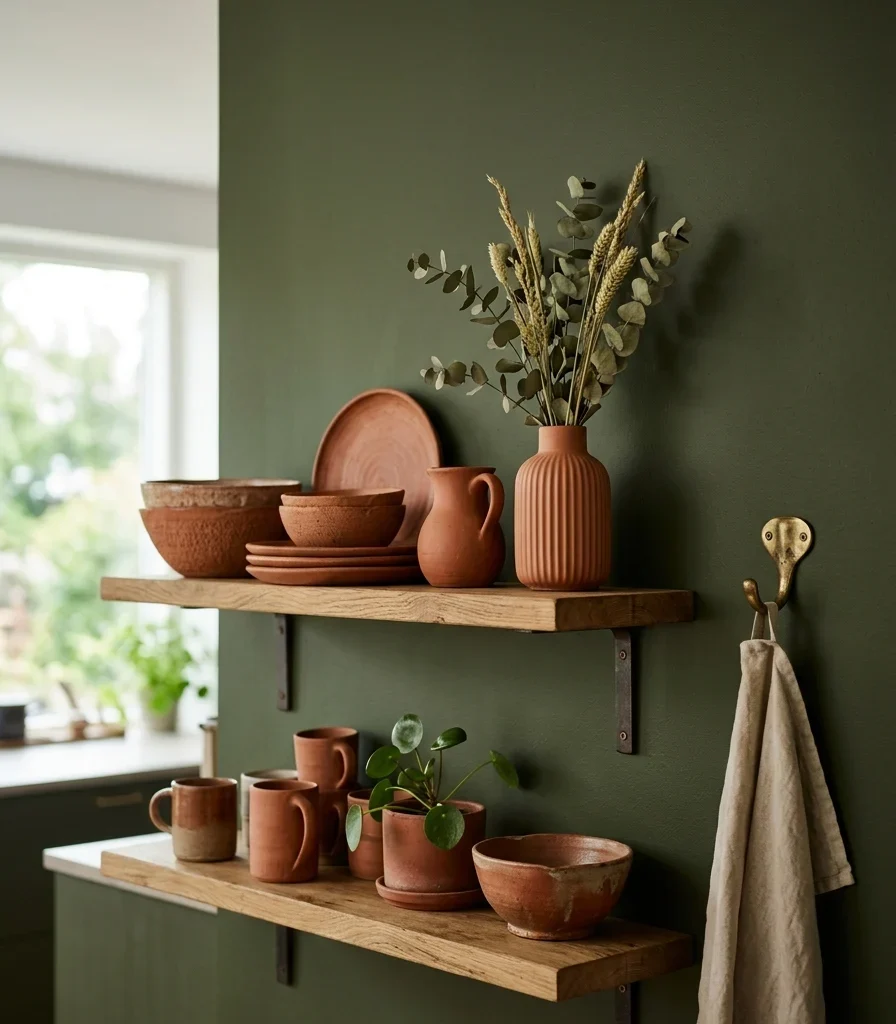
Vibe: Grounded, a painted backdrop that makes existing open shelving read as curated rather than incidental.
Why it works: Painting only the wall section directly behind open shelving is a color-anchoring principle that requires a small can of paint and an afternoon rather than a full room repaint; the olive backdrop gives displayed terracotta ceramics a contrasting stage, applying the same visual-weight logic Italian kitchens use at full scale, just concentrated into one wall section.
How to get it: Measure the shelving’s exact width and height, painting only that rectangle in matte olive green (masking the surrounding wall carefully), and restyle the shelf with terracotta or cream ceramics that stand out clearly against the new backdrop.
Shop the Look
| Product |
| Deep olive green matte paint |
| Painter’s tape precision edge |
| Terracotta ceramic display set |
| Small brass hook accent |
| Small ceramic olive dish |
8. Add Vintage-Style Bistro Stools at the Counter
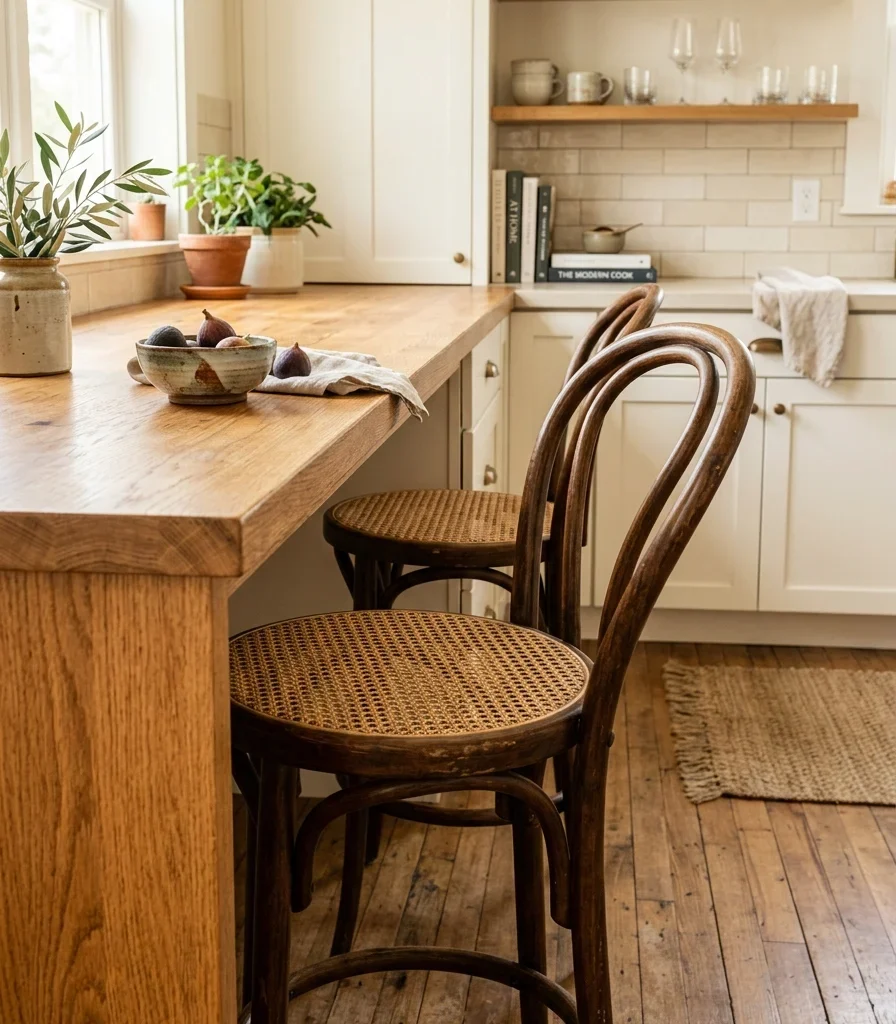
Vibe: Layered seating with genuine café character, swapped in without touching the counter itself.
Why it works: Replacing existing stools with a bentwood-and-cane bistro style applies furniture-arrangement thinking as a straightforward furniture swap; the curved wood frame and woven cane seat reference Italian and European café seating directly, changing the counter’s whole character without any structural work.
How to get it: Choose stools with a genuine bentwood frame (not a flat-panel wood imitation) and a woven cane or rattan seat, matching the counter’s existing height rather than assuming a standard 24- or 30-inch stool fits without measuring first.
Shop the Look
| Product |
| Bentwood bistro stool cane seat |
| Small ceramic counter bowl |
| Woven cane seat cushion |
| Wood stool floor glide |
| Small brass counter tray |
9. Flank the Range With Warm Brass Sconces
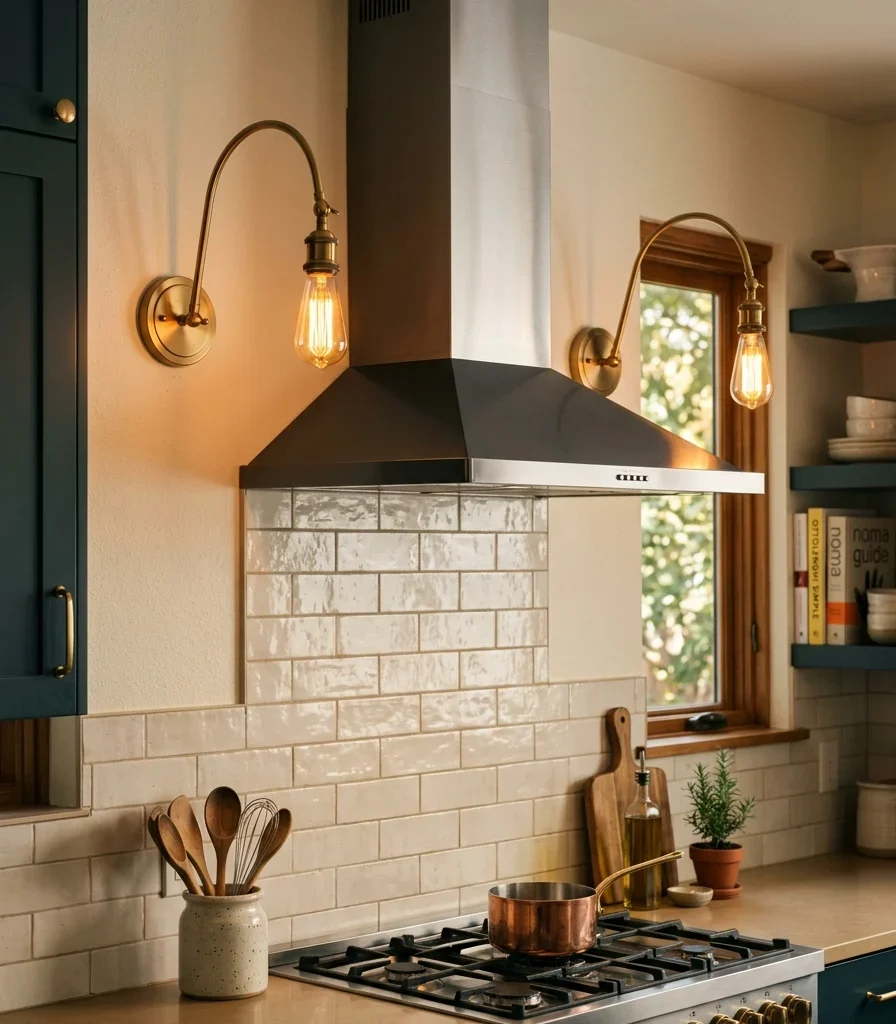
Vibe: Warm light that flatters the cooking zone the way a single overhead fixture never could.
Why it works: Sconces flanking the range apply light-layering as an addition rather than a replacement. Most kitchens rely entirely on overhead task lighting near the range, and adding warm brass sconces on either side introduces a secondary, softer light source that changes the mood of the cooking zone specifically during evening use.
How to get it: Mount two brass sconces at roughly 60 inches from the floor on either side of the range hood, choosing exposed filament bulbs at a warm 2700K, and wire them to a dimmer if the existing electrical allows.
Shop the Look
| Product |
| Brass wall sconce pair |
| Warm 2700K filament bulb set |
| Small ceramic utensil crock |
| In-wall dimmer switch |
| Brass sconce mounting hardware |
10. Swap Cabinet Hardware for a Brass Italian Touch

Vibe: Cohesive, a single hardware swap that changes the whole kitchen’s perceived material story.
Why it works: Hardware finish is a material-honesty principle with the highest return relative to its cost and effort, replacing existing chrome or brushed nickel pulls with warm brass touches every visible cabinet at eye level throughout the day, changing the room’s perceived quality more per dollar than almost any other single incorporation on this list.
How to get it: Replace every visible cabinet pull, knob, and the faucet simultaneously in the same warm brass finish, since a partial swap reads as unfinished, and measure existing hole spacing carefully before ordering to avoid needing to drill new holes.
Shop the Look
| Product |
| Warm brass cabinet pull set |
| Warm brass cabinet knob |
| Warm brass faucet single hole |
| Small ceramic countertop bowl |
| Brass drawer pull matching |
11. Use Cream and Terracotta Linen Tea Towels as a Color Cue
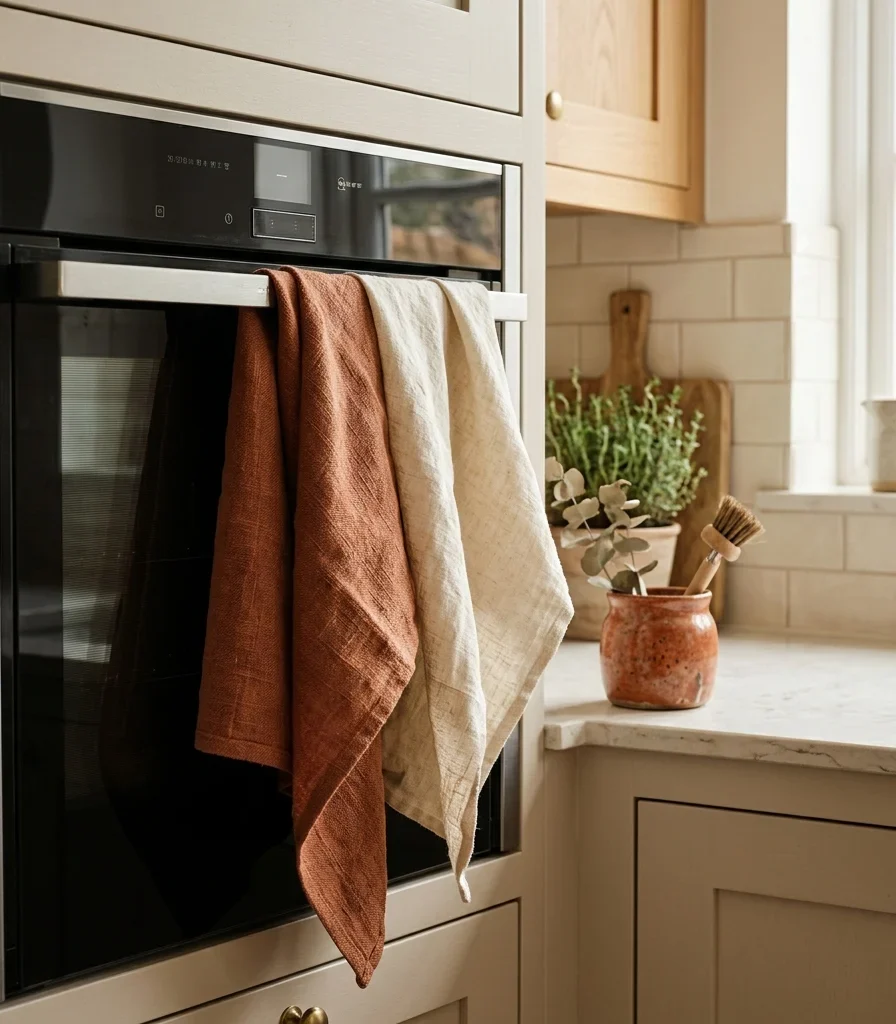
Vibe: Warm, a textile as small as a tea towel, doing genuine color work in the room.
Why it works: Textiles are the lowest-cost, lowest-commitment way to introduce Italian modern luxury’s warm palette. A cream and terracotta linen towel applies tonal layering without any installation at all, and because towels rotate through daily use and laundering, they’re the easiest element on this list to change seasonally or when the mood calls for it.
How to get it: Choose linen (not cotton terry) tea towels in cream and terracotta, draping one over the oven handle and folding a second on the counter, replacing any patterned or mismatched towels currently in rotation.
Shop the Look
| Product |
| Cream linen tea towel set |
| Terracotta linen tea towel |
| Small ceramic countertop vessel |
| Linen napkin matching set |
| Small wood towel ring |
12. Build a Curated Wine and Olive Oil Display Shelf
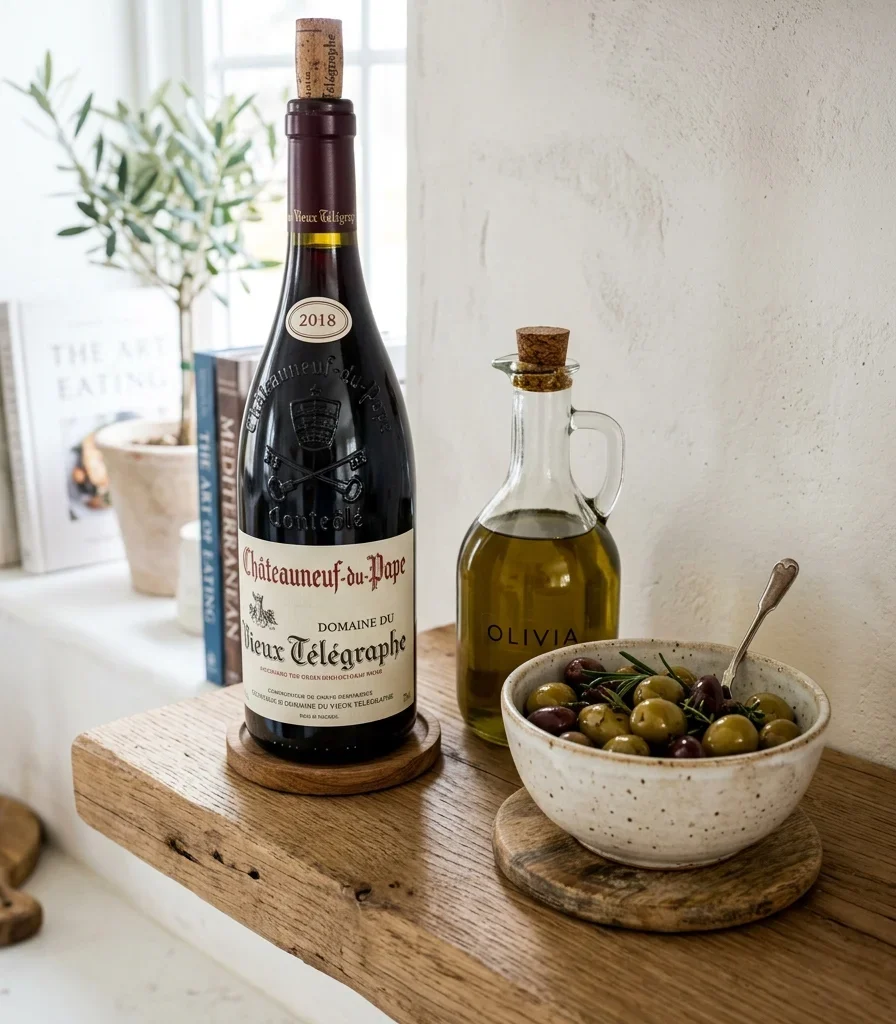
Vibe: Layered, a small vignette that turns a shelf into a genuine still-life composition.
Why it works: Styling an existing shelf around wine and olive oil applies accessory layering with a specifically Italian subject matter rather than generic decorative objects; these are ingredients central to Italian cooking and hospitality, which grounds the display in genuine cultural reference rather than purely aesthetic styling.
How to get it: Group one wine bottle, a glass olive oil cruet, and a small ceramic bowl of olives on an existing shelf, keeping the arrangement to three or four objects maximum so it reads as edited rather than cluttered.
Shop the Look
| Product |
| Glass olive oil cruet |
| Small ceramic olive bowl |
| Small wood coaster set |
| Ceramic wine glass holder |
| Small brass bottle opener |
13. Add a Marble-Topped Console for Coffee Service
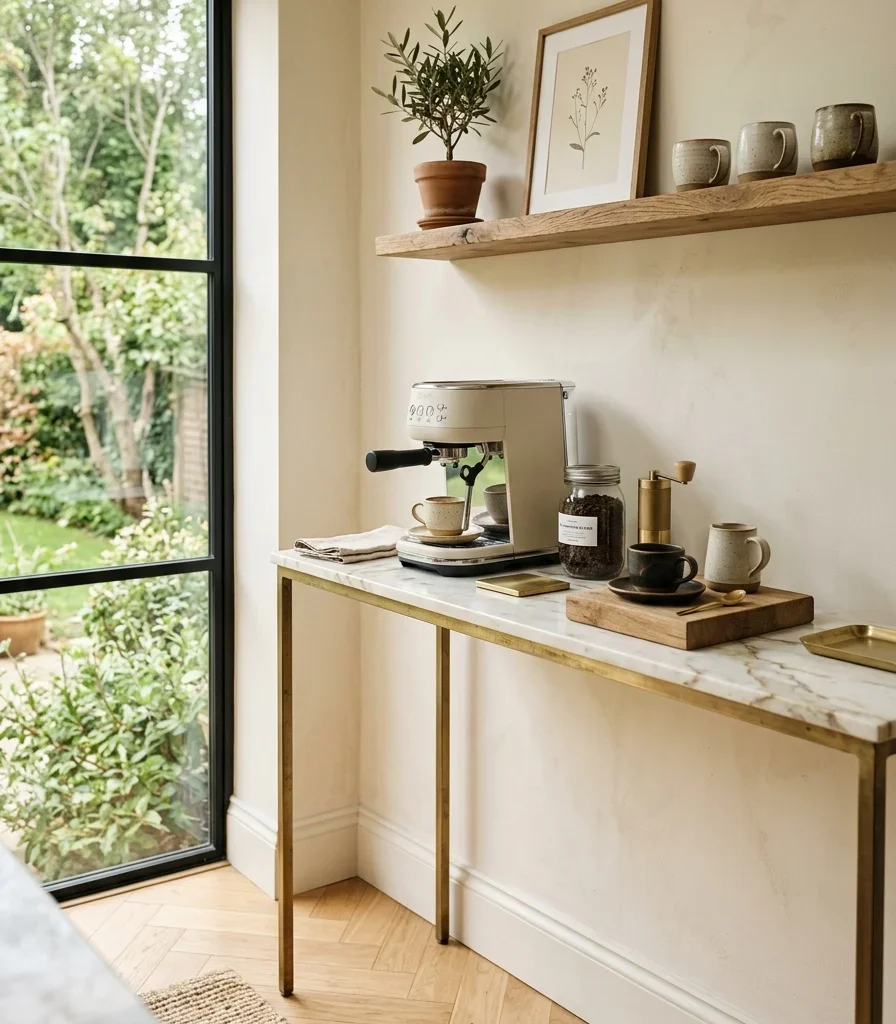
Vibe: Still a freestanding piece that adds genuine marble presence without touching a single existing counter.
Why it works: A console table applies furniture-arrangement thinking as an entirely additive move because it’s freestanding rather than built-in; it introduces real marble and brass into the kitchen’s material story without any construction, and it can be positioned along any wall with enough clearance, regardless of the existing layout.
How to get it: Choose a console no deeper than 14 inches so it doesn’t intrude into the kitchen’s walking path, topped in genuine marble rather than marble-look laminate, and dedicate it specifically to coffee service so its function stays clear.
Shop the Look
| Product |
| Marble top console table brass legs |
| Small ceramic espresso cup set |
| Brass coffee tray |
| Small ceramic sugar bowl |
| Marble coaster set |
14. Create an Aperitivo Corner Near the Window
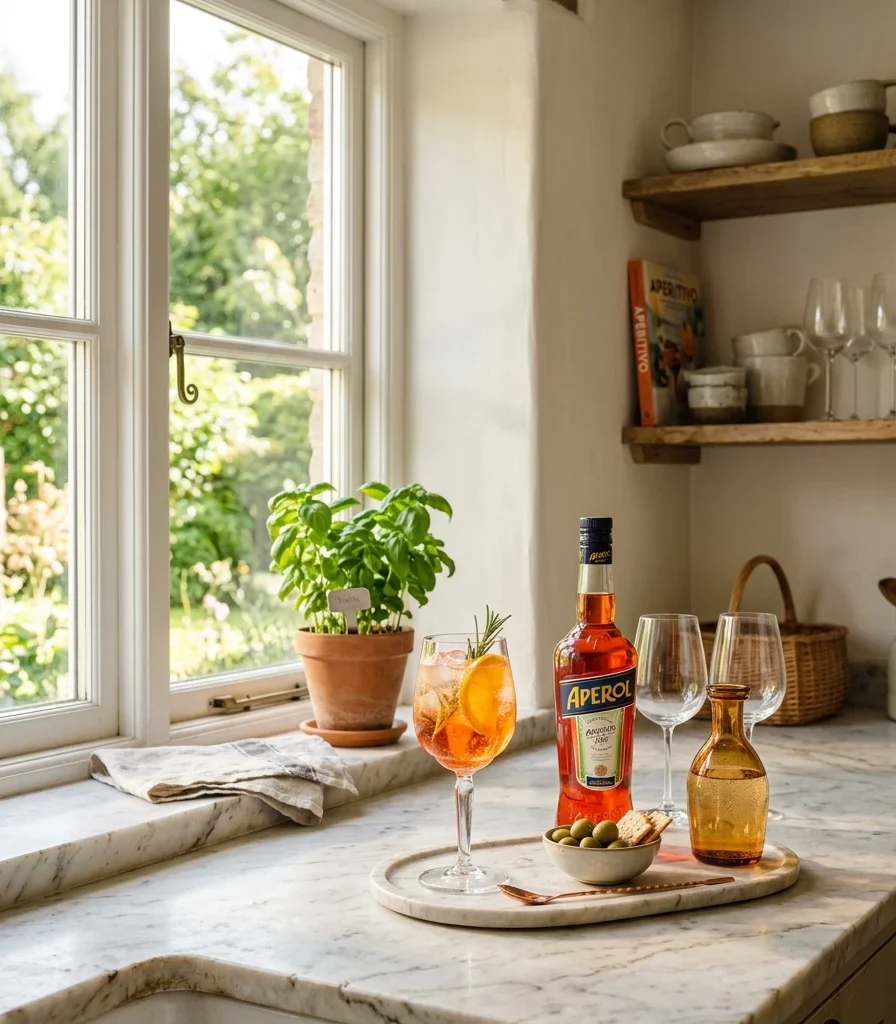
Vibe: Airy, a corner claimed specifically for the ritual of an evening drink, not for cooking or storage.
Why it works: Designating one zone specifically for aperitivo (rather than folding glassware storage into general cabinetry) is a traffic-flow and zone-definition principle that gives an existing kitchen a genuine secondary function beyond meal prep, treating hospitality as its own deliberate use of space the way Italian kitchens traditionally do.
How to get it: Choose the kitchen’s window-adjacent corner if one exists, positioning a small marble tray with two glasses and a bottle within reach of natural light, and add one small potted herb on the sill to reinforce the zone’s distinct, non-cooking purpose.
Shop the Look
| Product |
| Small marble serving tray |
| Aperitivo glass set |
| Small potted herb windowsill pot |
| Small brass bottle stand |
| Linen cocktail napkin set |
15. Incorporate Italian Touches in a Rental Kitchen With No Renovation
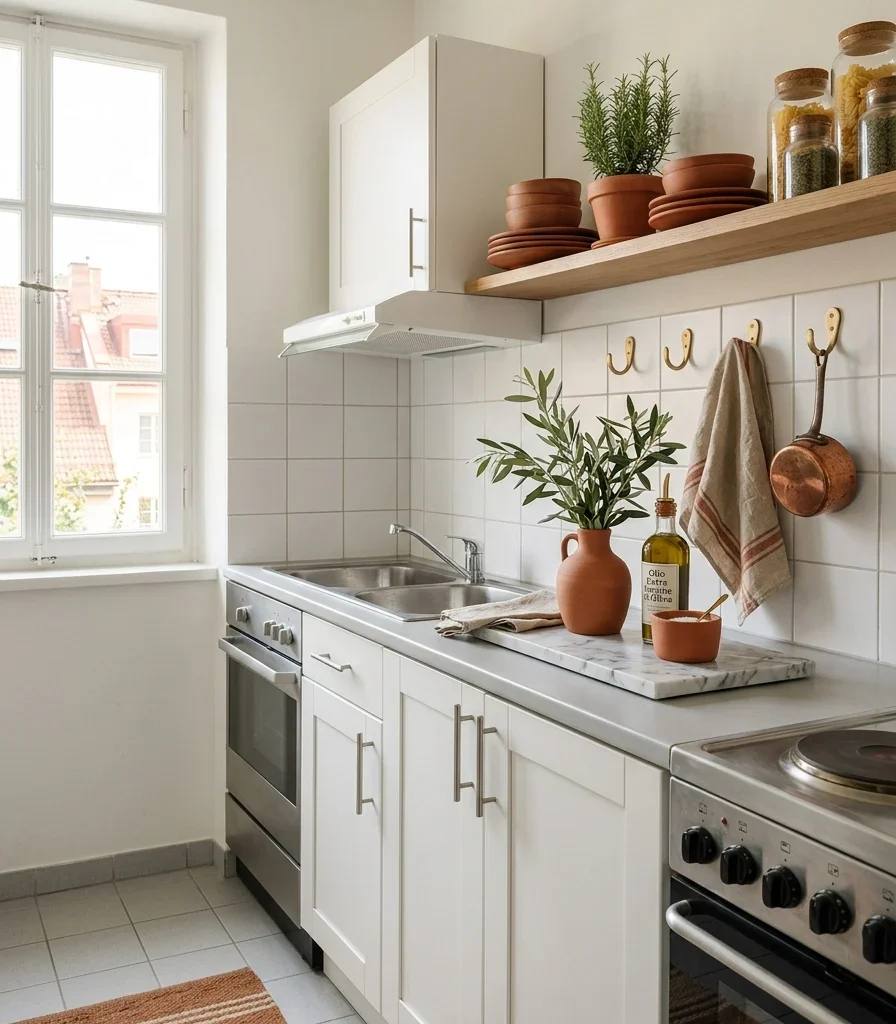
Vibe: Still proof that the style translates fully into a kitchen its resident doesn’t own or can’t alter.
Why it works: In a genuinely restricted rental kitchen, the small-space and no-renovation adaptation concentrates every incorporation technique from this list into entirely removable objects: marble trays, adhesive brass hooks, ceramic serveware, and textiles,s none of which require permission, drilling, or repainting, achieving the full material story without a single permanent change.
How to get it: Choose adhesive-mount brass hooks rather than drilled hardware, freestanding marble and console pieces rather than built-ins, and removable peel-and-stick options for any color or pattern element, documenting the kitchen’s original state before making any changes so everything can be restored on move-out.
💡 Quick Win: A single marble tray, one brass hook set, and a terracotta bowl together cost under $60 and deliver a genuinely cohesive incorporation in an afternoon.
Shop the Look
| Product |
| Adhesive mount brass hook set |
| Small marble serving tray |
| Terracotta ceramic bowl |
| Peel and stick accent tile |
| Removable brass cabinet pull covers |
How to Start Incorporating Italian Kitchen Design Modern Luxury
Your one first move is the hardware swap, replacing existing cabinet pulls and the faucet with warm brass before any other addition. Since hardware touches every cabinet at eye level throughout the day, this single change affects the kitchen’s perceived material story more broadly than any single accessory, and it anchors every other brass or marble piece that follows.
The most common mistake is adding too many small Italian-inspired objects at once without a unifying metal or color thread, which reads as scattered decor rather than a considered incorporation. The fix is committing to one consistent metal finish (brass) and one accent color (burgundy or olive) before adding any additional pieces, so every subsequent object reinforces the same story.
Three items under $50 that create immediate impact: a set of cream and terracotta linen tea towels, a hand-painted ceramic olive oil cruet, and a small marble coaster set to test the material before a larger purchase.
A weekend refresh of hardware, textiles, and one accessory vignette costs $150–400. A fuller incorporation including a bar cart, a pendant swap, and a cabinet insert typically runs $800–2,500 and requires no construction, just a single weekend of installation.
Frequently Asked Questions About Incorporating Italian Kitchen Design Modern Luxury
What is the difference between incorporating Italian design and a full Italian kitchen renovation?
A full Italian kitchen renovation replaces cabinetry, countertops, and flooring with lacquer, marble, and terrazzo throughout the room. Incorporating the style means introducing the same materials and colors through accessories, hardware, and freestanding furniture: a marble board, a brass pendant, and one lacquer cabinet door, achieving genuine Italian character without construction or a full material commitment.
What color works best for incorporating Italian modern luxury into an existing kitchen?
Deep burgundy or olive green work best as a single accent, introduced through one cabinet insert, a bar cart, or textiles rather than a full wall or cabinetry run, paired with warm brass rather than chrome or matte black to keep the incorporation feeling warm and cohesive with the style’s other materials.
How much does it cost to incorporate Italian kitchen design without renovating?
A budget refresh using textiles, hardware, and one accessory vignette costs $150–400. A fuller incorporation with a marble bar cart, a Murano-style pendant, and a cabinet insert runs $800–1,800, and a more complete version including a console table and layered lighting typically costs $1,800–3,000, all without construction.
Can a rental kitchen genuinely achieve an Italian modern luxury feel?
Yes, adhesive-mount brass hooks, freestanding marble pieces, removable peel-and-stick accents, and ceramic serveware together deliver the style’s full material story without any drilling, painting, or permanent alteration, all of which can be removed and taken to the next apartment.
What is the single highest-impact way to incorporate Italian design into a kitchen?
A brass hardware swap is the single highest-return change, since cabinet pulls and the faucet are touched and seen constantly throughout the day, and replacing chrome or nickel with warm brass changes the room’s perceived material quality more per dollar spent than almost any other single incorporation on this list.
Ready to Incorporate Italian Kitchen Design Modern Luxury Into Your Home?
These 15 ideas move across material, color, lighting, layout, and true small-space solutions, from a marble board and a brass hardware swap to a rental-friendly version that achieves the full look with nothing permanent at all. None of this needs to happen all at once, and starting with one hardware swap and a linen towel set is genuinely the smartest place to begin, not a scaled-down compromise. Today’s specific action: replace your kitchen’s cabinet pulls and faucet with warm brass this week, since that single change touches the whole room more directly and more often than any other addition on this list. Once that warm brass thread runs through the kitchen, every marble tray and terracotta bowl that follows will feel like it belongs to one considered story instead of scattered decor. Save the ideas that fit your kitchen’s actual constraints and your own appetite for Italian warmth; that brass glow and marble veining will still feel just as genuine a year from now.
You Might Also Like
- 14 Coastal Kitchen Decor Ideas for a Breezy, Sunlit Space
- 15 Luxurious Classic Kitchen Design Ideas With Real Architectural Detail
- 15 Ways to Decorate an Open Plan Kitchen Dining Space
- 15 Open Shelving in the Kitchen | Kitchen Storage Ideas
- 15 Ways to Create a Modern Luxury Kitchen Ceiling Design
- 15 Ways to Achieve a Luxurious Contemporary Kitchen Design