
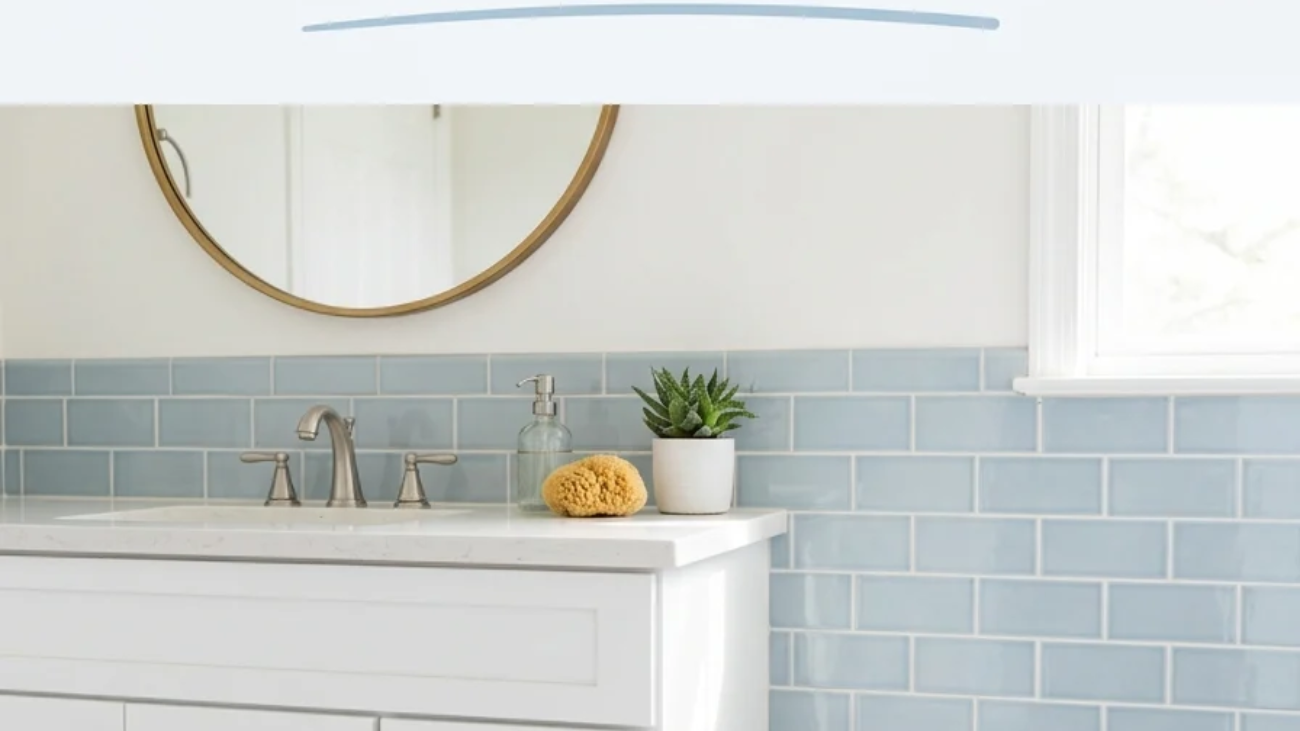
Coastal bathroom decor pulls from weathered shingle-style beach cottages, whitewashed wood, sea-glass color, and light that bounces off every reflective surface, turning a purely functional room into one that feels like an exhale. This article gives you 15 coastal bathroom decor ideas, from tile choice to lighting to layout, built for a room you actually use every day.
The feeling is unmistakable: morning light catching a whitewashed vanity, linen towels drying slightly stiff from salt air, a room that never feels heavy no matter how small its footprint. Coastal doesn’t chase a theme it chases air, worn texture, and water light. Here are 15 ideas worth saving and stealing.
Why Coastal Bathroom Decor Ideas Work So Well
What is it? Coastal style traces to the late-19th-century shingle cottages of Cape Cod and Nantucket, where salt air and beach living shaped homes built for easy upkeep and constant light rather than formality. Applied to a bathroom, coastal decor draws specifically on beach-house practicality rooms designed to rinse off sand and dry out fast, and stays distinct from “nautical” decor’s anchors and navy stripes by leaning on bleached wood and sea-glass tone instead.
What are its core materials and colors? The palette runs warm white, sea-glass blue-green, sandy beige, and driftwood grey. Materials stay light-catching and tactile: whitewashed shiplap, honed travertine, woven rattan, linen, brushed brass or nickel, and unglazed ceramic. Nothing sits dark or glossy every surface is chosen to reflect available light rather than absorb it.
Why is it trending now? Coastal bathroom searches climbed through 2022–2024 alongside the “coastal grandmother” aesthetic, part of a broader shift toward treating bathrooms as small daily retreats rather than purely functional rooms. Sustainability trends have also pushed reclaimed and driftwood-finish wood back into favor over synthetic vanity finishes.
Can small spaces achieve this style? Yes, coastal actually favors small bathrooms, since whitewashed materials and wall-mounted fixtures (rather than bulky cabinetry) are the style’s default anyway. Prioritize removing visual weight at floor level first.
| Element | Philosophy | Key Colors |
| Core value | Light and worn texture over polish | Warm white, sea-glass blue |
| Material approach | Reflective, tactile, salt-air-worn | Sandy beige, driftwood grey |
15 Coastal Bathroom Decor Ideas
1. Whitewashed Shiplap Wainscoting Around the Tub
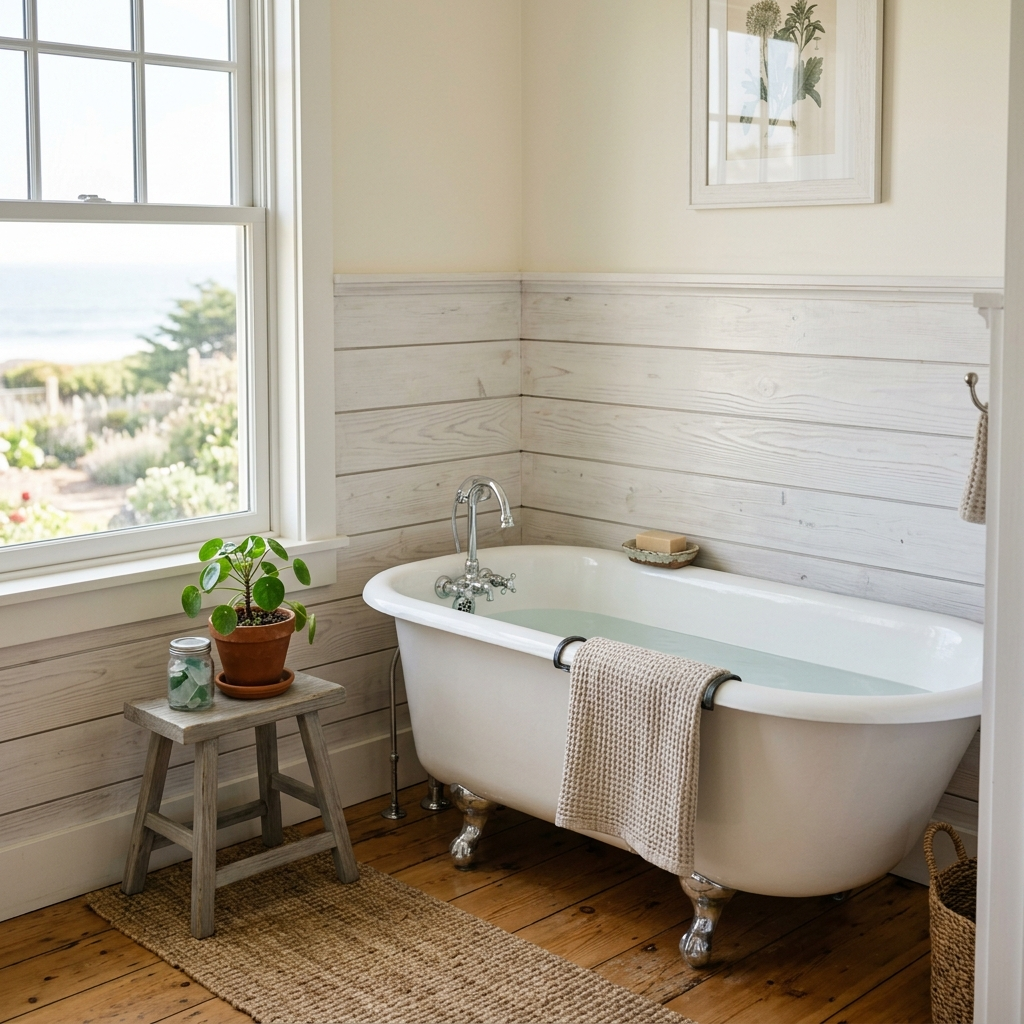
Vibe: The tub surround feels luminous, wood texture doing what tile usually would.
Why it works: Shiplap wainscoting adds horizontal texture and shadow lines at a height tile alone can’t replicate, a technique that keeps the lower wall visually interesting without adding pattern or color. Sealed with a water-resistant marine-grade varnish, it holds up in a wet zone while keeping the grain visible under the whitewash.
How to get it: Install pine shiplap to 36 inches around the tub only, apply a diluted white paint wash (roughly 1:1 paint to water) wiped with the grain, then seal with two coats of water-based marine varnish.
💡 Quick Win: Peel-and-stick whitewashed shiplap wallpaper achieves most of the look above the tub without any cutting or sealing required.
Shop the Look
| Product |
| Whitewashed shiplap wall panel kit |
| Marine-grade water-based varnish |
| Ceramic soap dish, warm white |
| Linen bath towel natural |
| Small potted plant ceramic pot |
2. Soft Sea-Glass Blue Vanity Against White Walls
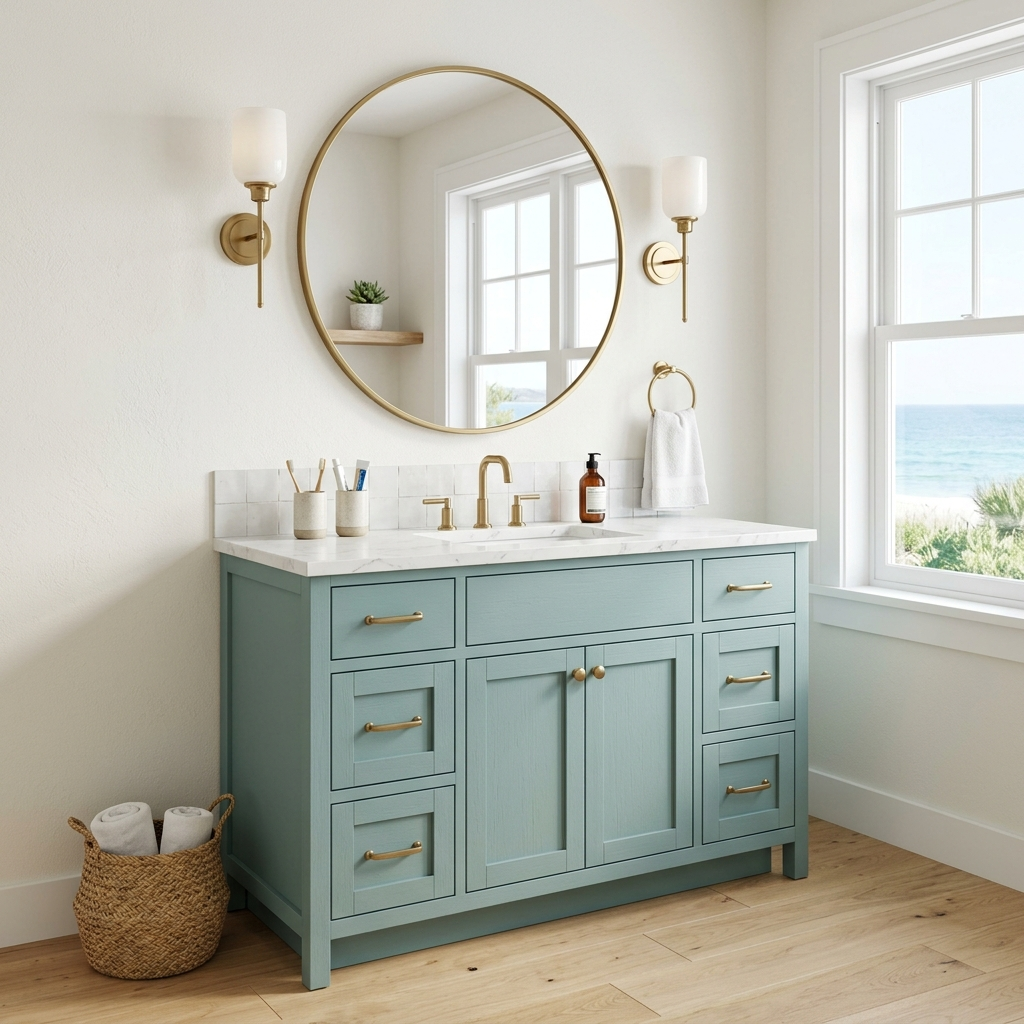
Vibe: The vanity feels calm, color pulled straight from shallow water rather than a paint chart.
Why it works: Sea-glass blue-green sits at a low enough saturation to function as a neutral, which is why it pairs easily with warm white walls without competing for attention. Farrow & Ball’s Green Blue No. 84 and Benjamin Moore’s Palladian Blue HC-144 both land in this exact tonal range, giving the color a historical design reference point rather than a trend-chasing one.
How to get it: Paint only the vanity cabinet in a soft sea-glass tone, keeping walls warm white, and finish with brushed brass or unlacquered brass hardware to avoid a cool, sterile contrast against the paint.
Shop the Look
| Product |
| Sea-glass blue cabinet paint matte |
| Brushed brass cabinet pull set |
| Ceramic bathroom tumbler set |
| Woven seagrass storage basket |
| Linen hand towel natural |
3. Woven Rattan Pendant Over a Freestanding Tub
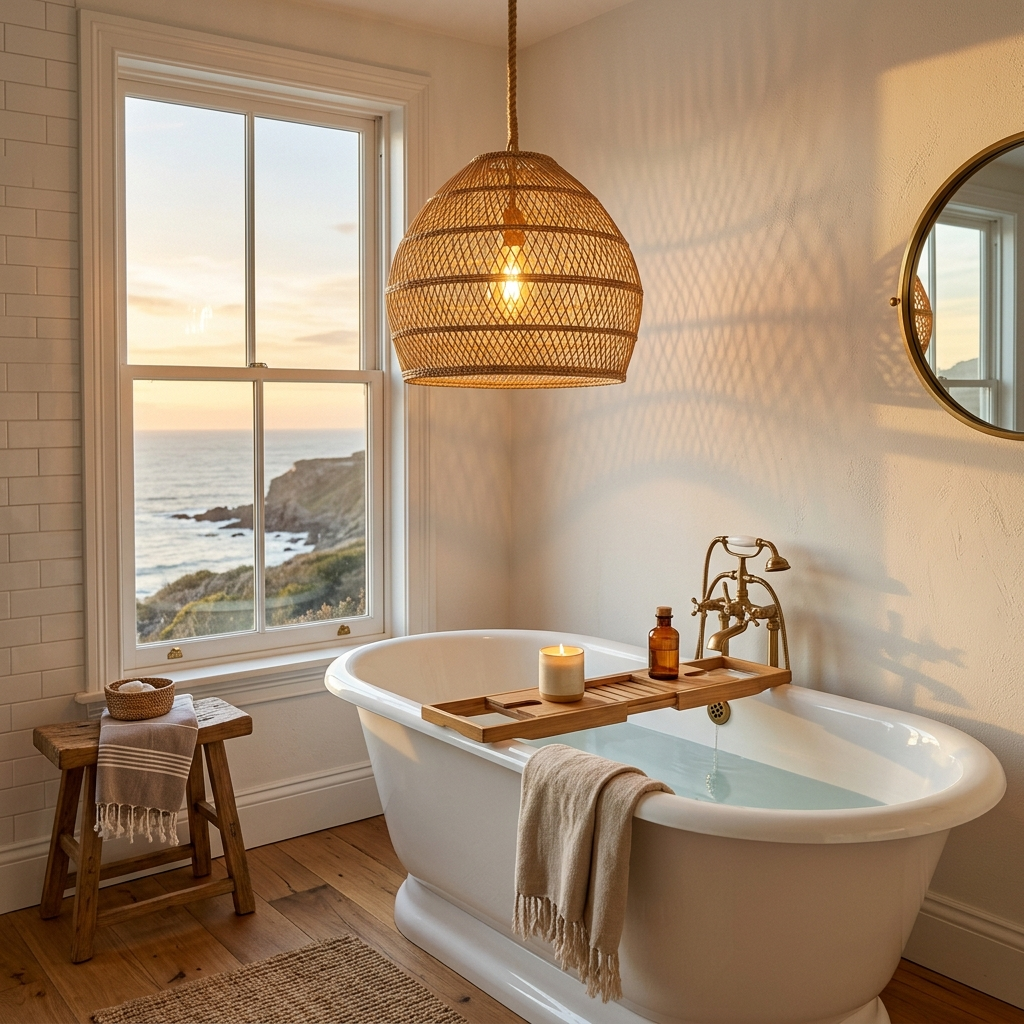
Vibe: The tub feels sun-warmed, with light filtering through the woven fibers instead of falling flat overhead.
Why it works: A rattan pendant diffuses light through its open weave, casting soft shadow patterns rather than a direct beam a lighting behavior that echoes sunlight moving through a woven beach hat. Centering it above the tub also uses the fixture as a compositional focal point, drawing the eye to the room’s main feature.
How to get it: Hang a rattan pendant rated for damp locations 30–36 inches above the tub rim, fitted with a warm 2700K bulb so the woven shadow reads amber rather than white.
💡 Quick Win: A damp-rated rattan clip-on shade over an existing fixture updates the texture in under an hour without rewiring.
Shop the Look
| Product |
| Woven rattan damp-rated pendant light |
| Warm 2700K LED bulb dimmable |
| Teak wood bath caddy |
| Unscented candle glass jar |
| Linen bath towel set |
4. Ceramic Apothecary Jars Styled on Open Shelving
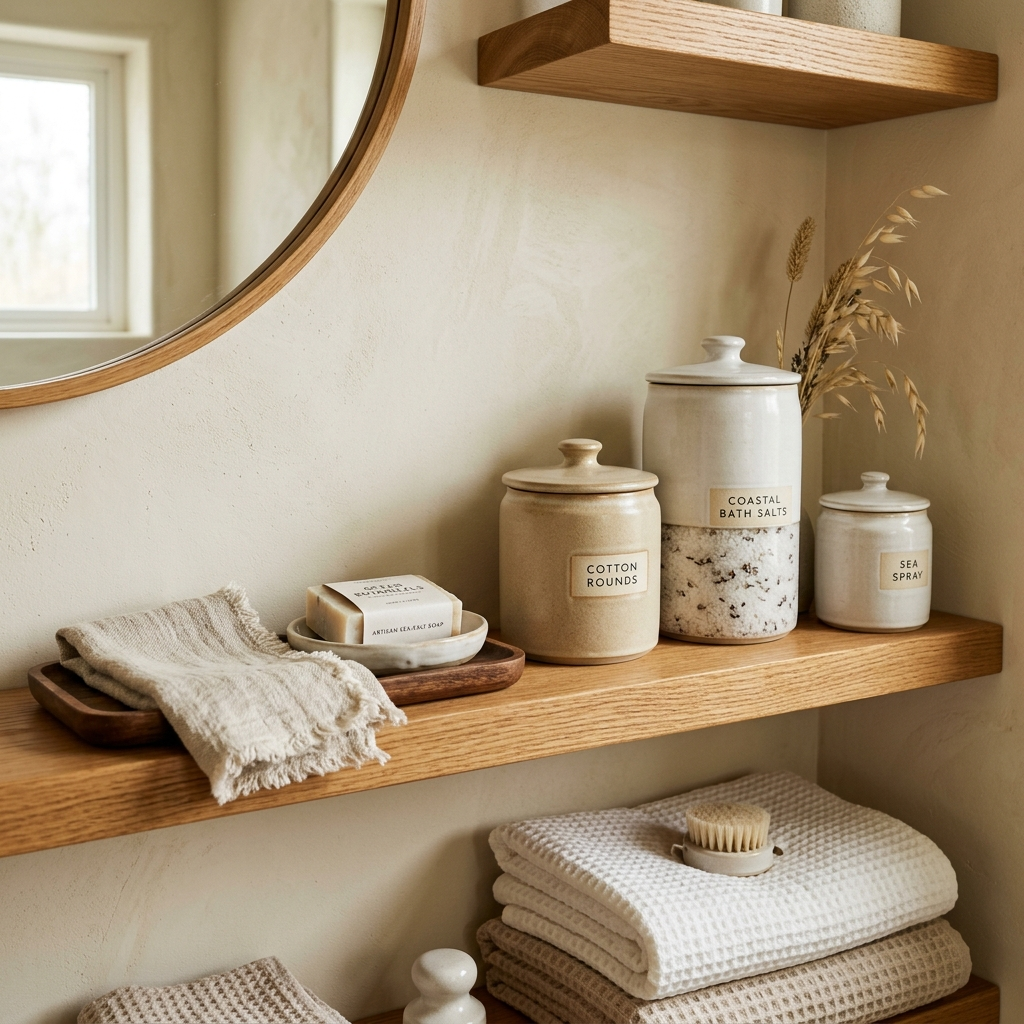
Vibe: The shelf feels collected, everyday items turned into a quiet display.
Why it works: Decanting toiletries into matching ceramic apothecary jars removes the visual clutter of printed packaging, which is the single biggest thing that breaks a coastal palette on an open shelf. Grouping jars by height rather than by contents creates a more considered arrangement than lining them up evenly.
How to get it: Choose three to five ceramic jars in warm white or sandy beige glazes with lids, and decant only the items you reach for daily so the shelf stays functional, not purely decorative.
Shop the Look
| Product |
| Ceramic apothecary jar set with lids |
| Oak floating shelf set |
| Dried coastal grass stem bundle |
| Linen washcloth set natural |
| Small wood catchall tray |
5. Reclaimed Wood Vanity with Turned Legs
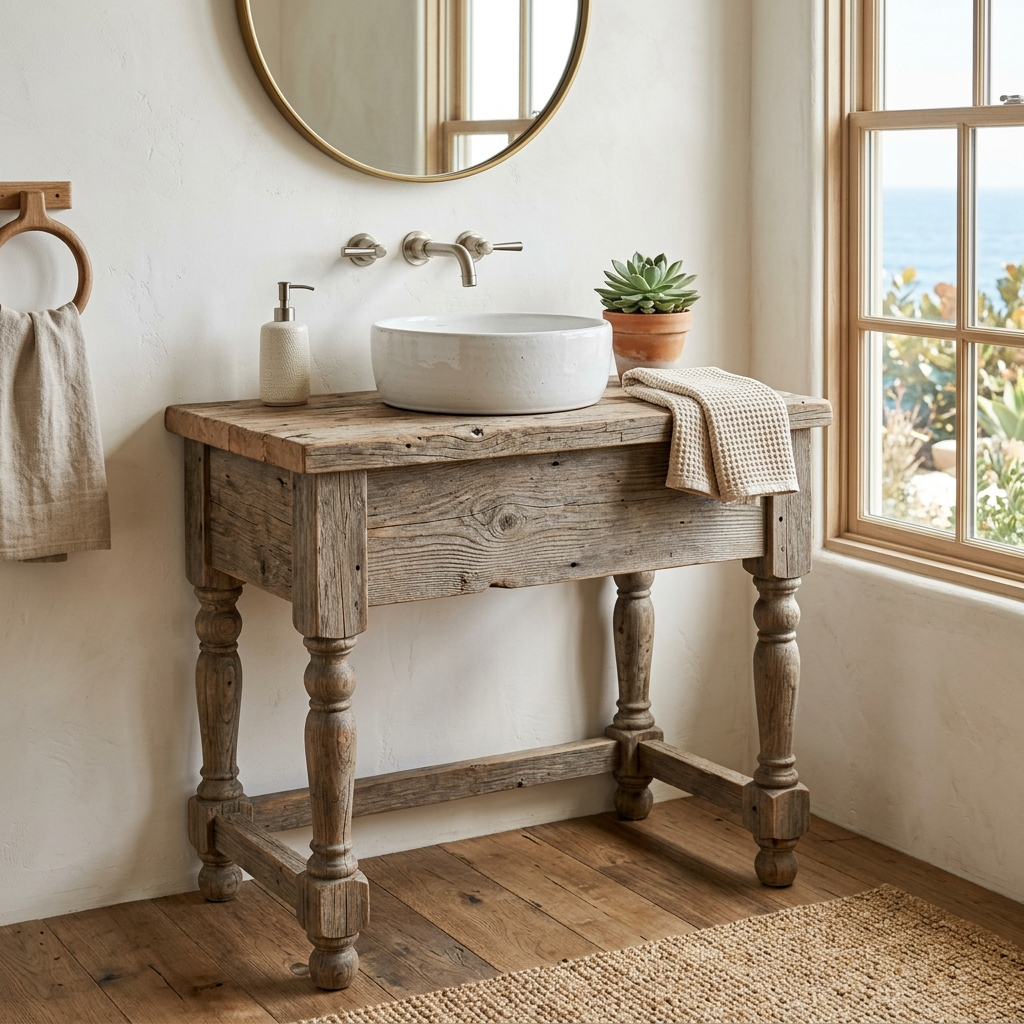
Vibe: The vanity feels relaxed, like a piece of furniture that wandered in rather than a built-in cabinet.
Why it works: A vanity with visible turned legs rather than a solid cabinet base lets light and floor pass beneath it, applying the same visual-lightness principle as floating vanities but with a furniture silhouette instead of wall-mounting. Reclaimed wood’s weathered grain also appears authentically worn, rather than distressed or manufactured.
How to get it: Choose a vanity built on a genuine reclaimed wood base with turned or tapered legs, and pair it with a simple ceramic vessel sink rather than an integrated basin so the furniture-like quality stays visible.
💡 Quick Win: Adding furniture-style bun feet to an existing boxy vanity is a weekend fix that lifts it visually off the floor for under $40.
Shop the Look
| Product |
| Reclaimed wood vanity turned legs |
| Ceramic vessel sink round, white |
| Brushed nickel vanity faucet |
| Small potted plant ceramic pot |
| Linen hand towel natural |
6. Warm White Walls with Sandy Beige Tile Floor
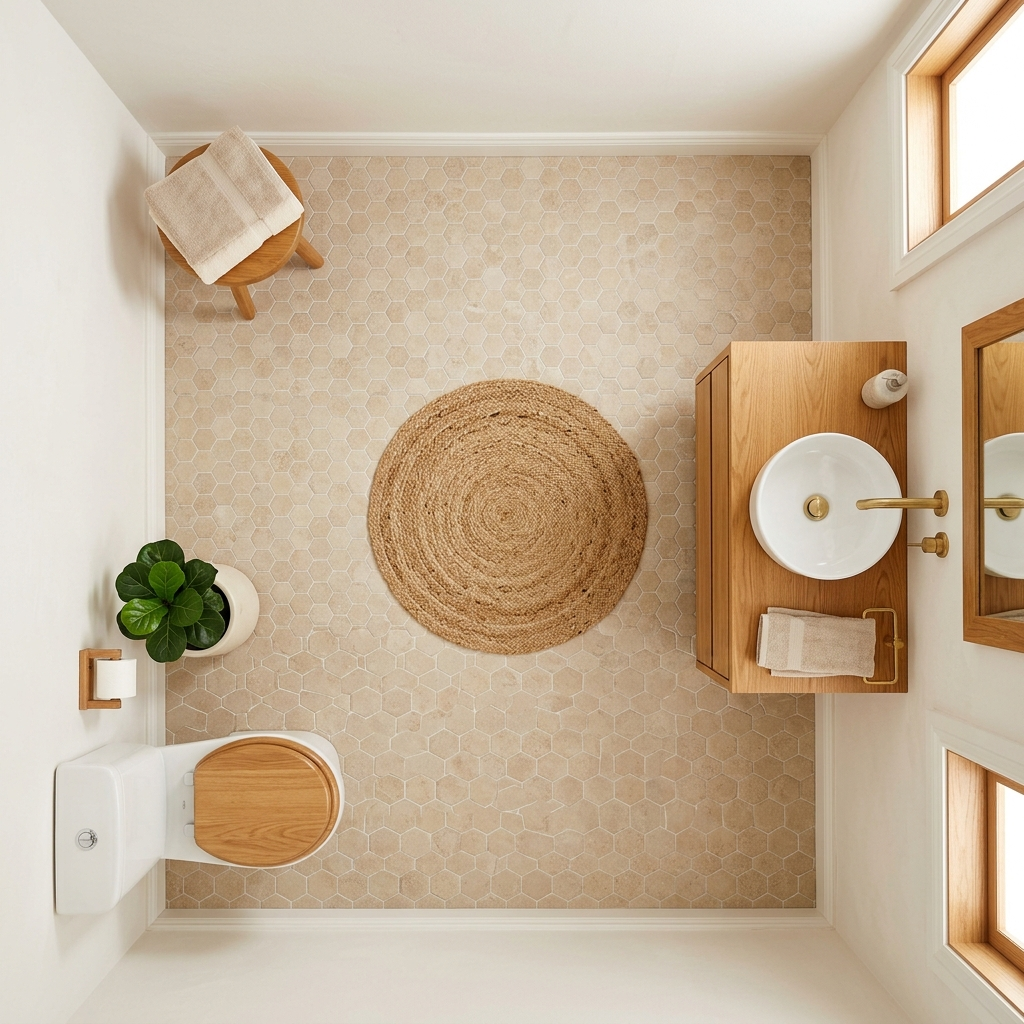
Vibe: The floor feels sun-warmed, sand-toned tile grounding an otherwise pale room.
Why it works: Keeping walls warm white while introducing the room’s only strong tone at floor level uses value contrast the same way a dark accent wall would elsewhere, except here the “accent” sits underfoot, which keeps sightlines at eye level uncluttered. Hexagon tile also adds geometric texture without needing a pattern on the walls.
How to get it: Choose a sandy beige hexagon or penny tile for the floor only, and keep wall paint in a warm white, such as Benjamin Moore White Dove, so the floor reads as the room’s grounding element.
Shop the Look
| Product |
| Sandy beige hexagon floor tile |
| Warm white interior wall paint |
| Woven jute bath mat |
| Ceramic planter, small terracotta |
| Linen bath towel, warm white |
7. Honed Travertine Shower Surround
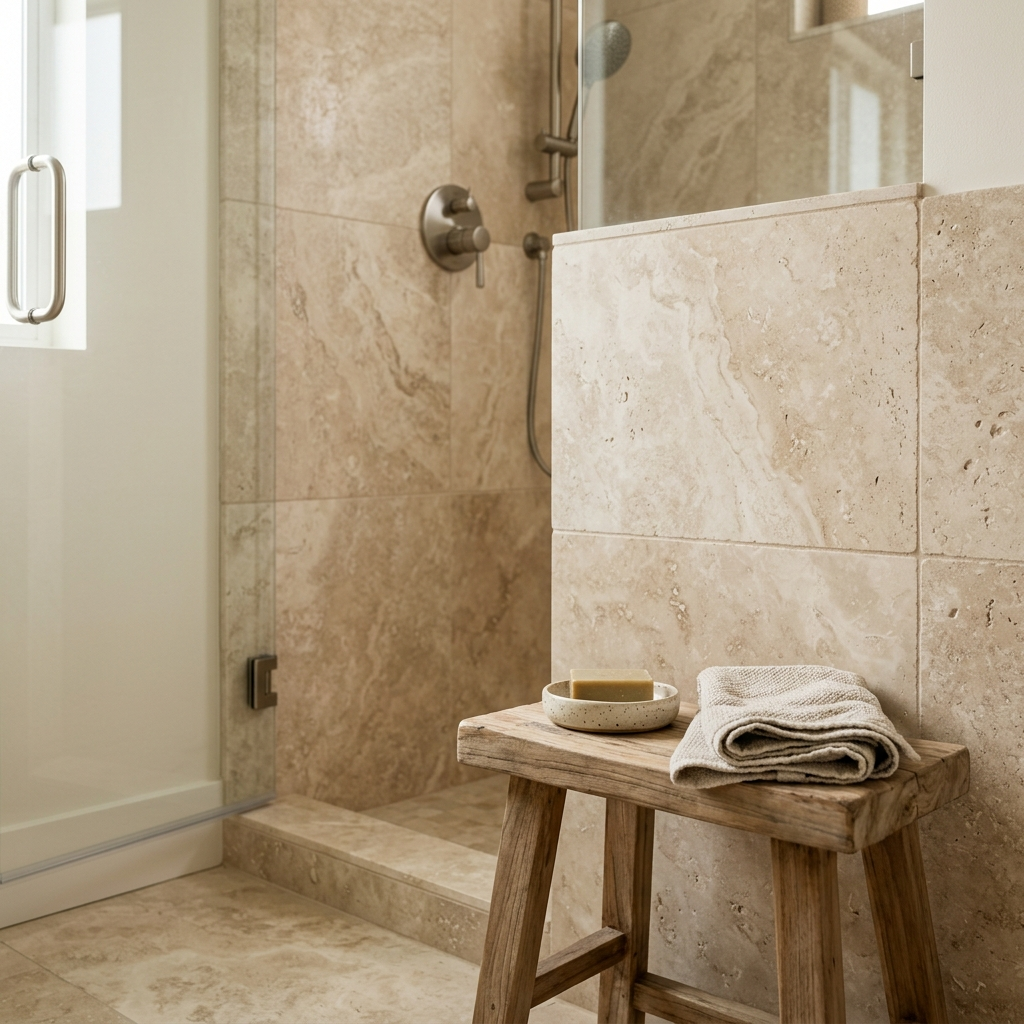
Vibe: The shower feels grounded, matte stone absorbing light instead of reflecting it back sharply.
Why it works: A honed rather than polished finish on travertine diffuses light softly across the surface, keeping the material from reading as formal the way a glossy marble shower might. Travertine’s natural variation also gives the wall depth without needing a second material or accent tile.
How to get it: Specify honed travertine tile in a large format to minimize grout lines, sealed with a penetrating stone sealer rated for wet environments and reapplied roughly every 12 months.
Shop the Look
| Product |
| Honed travertine shower wall tile |
| Penetrating stone sealer wet-rated |
| Teak wood shower stool |
| Ceramic soap dish matte |
| Linen bath towel set |
8. Wet Room Zoning with a Glass Partition for Flow
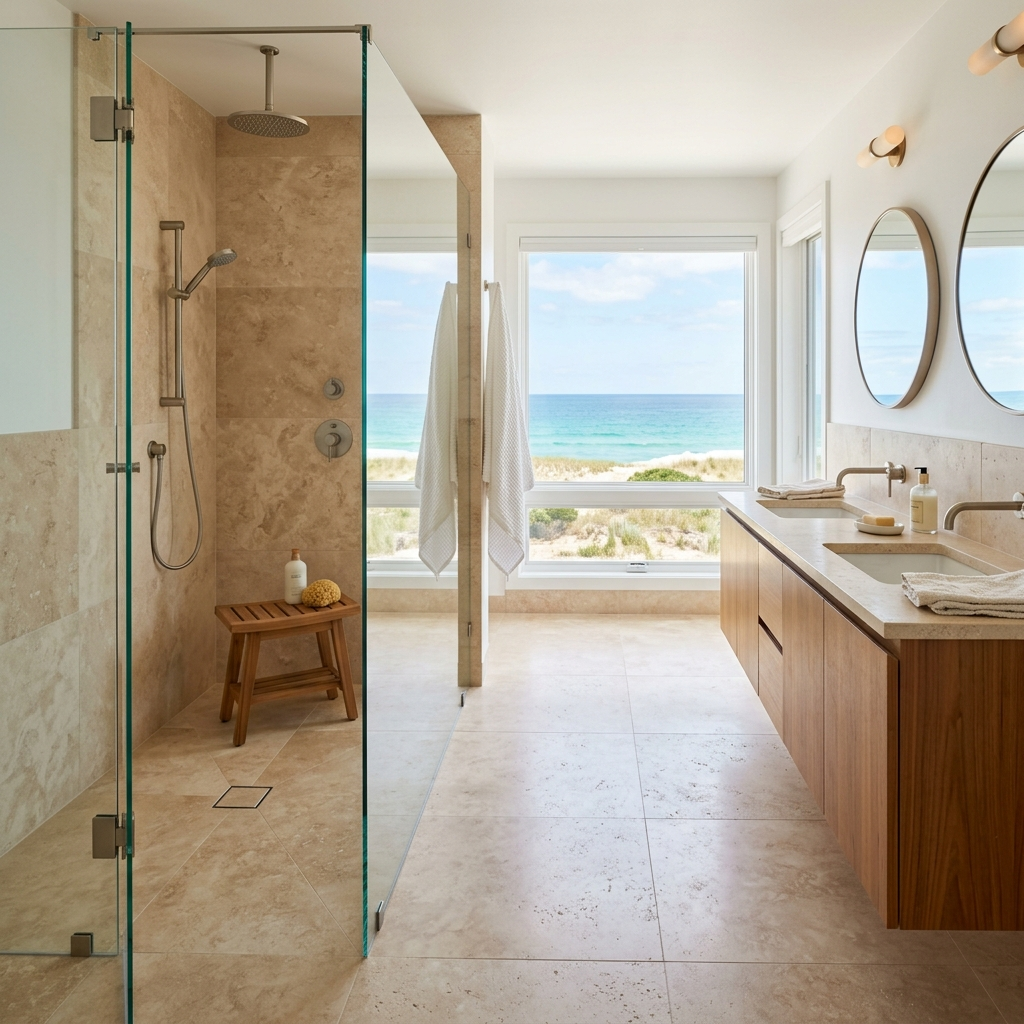
Vibe: The room feels open, one continuous floor doing the zoning that a wall usually would.
Why it works: A frameless glass partition defines the wet zone without a solid wall, keeping sightlines unbroken across the room a layout technique that makes even a modest bathroom register as one continuous space. This layout depends on the floor sloping correctly to a single drain, a structural detail worth confirming with a contractor before tiling.
How to get it: Specify a frameless tempered glass panel with minimal metal hardware, and continue the same floor tile from the vanity straight through the shower zone so material continuity, not a curb, signals the transition.
💡 Quick Win: A half-height glass partition instead of a full wall-to-ceiling panel achieves a similar open feel at a lower material cost.
Shop the Look
| Product |
| Frameless tempered glass shower partition |
| Minimal chrome partition hardware kit |
| Teak wood shower stool |
| Ceramic soap dish set |
| Linen bath towel, warm white |
9. Linen Waffle Towels Layered on a Ladder Rack
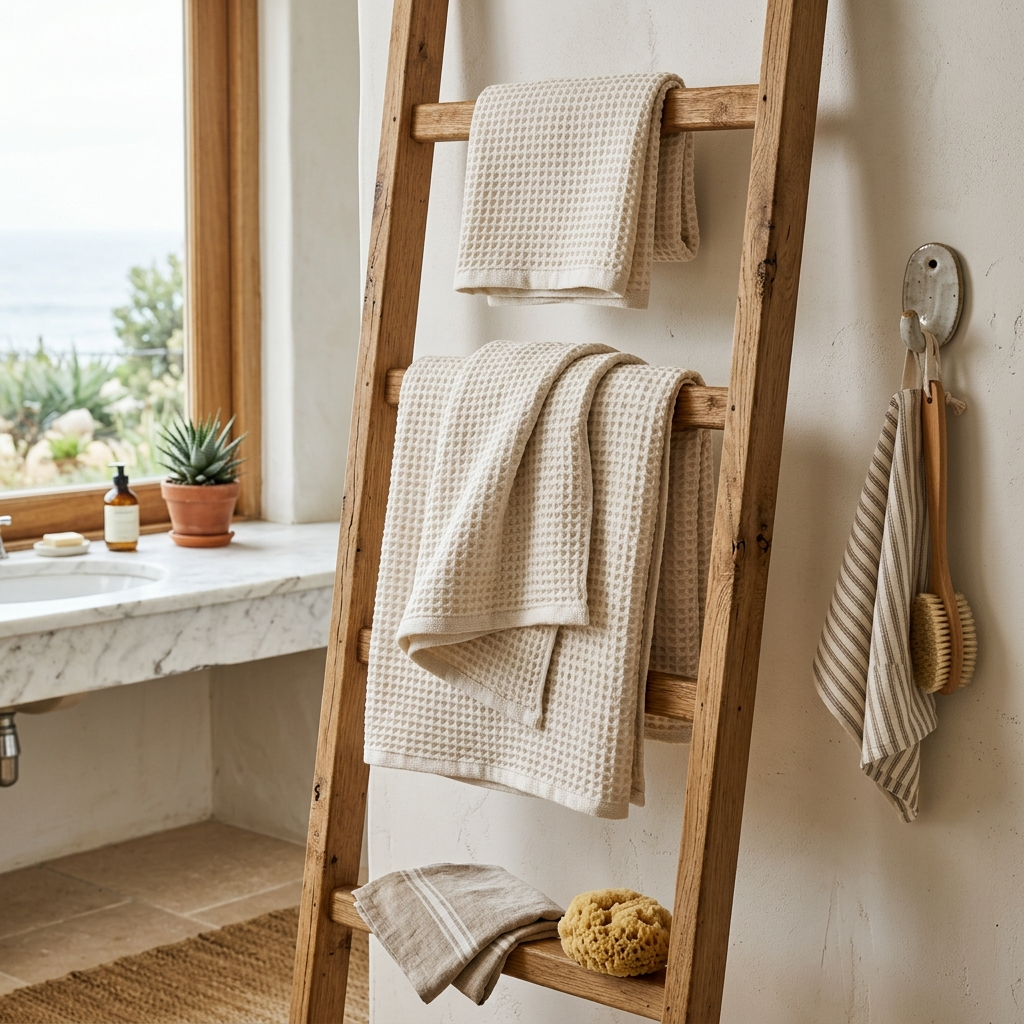
Vibe: The rack feels welcoming, texture doing the styling work color usually would.
Why it works: Layering waffle-weave towels in the same warm-white tone creates texture-based visual interest without introducing pattern or color, which keeps the display coastal rather than themed. Waffle weave also dries faster than plush terry, a genuinely practical benefit in a humid bathroom near a salt-air window.
How to get it: Hang towels folded in thirds rather than draped flat so the waffle texture is visible from across the room, using an oak ladder rack rather than wall hooks to display more than one towel at once.
Shop the Look
| Product |
| Oak ladder towel rack freestanding |
| Waffle weave bath towel set |
| Ceramic wall hook set |
| Small potted plant ceramic pot |
| Linen washcloth set |
10. Driftwood Grey Cabinetry with Brass Hardware
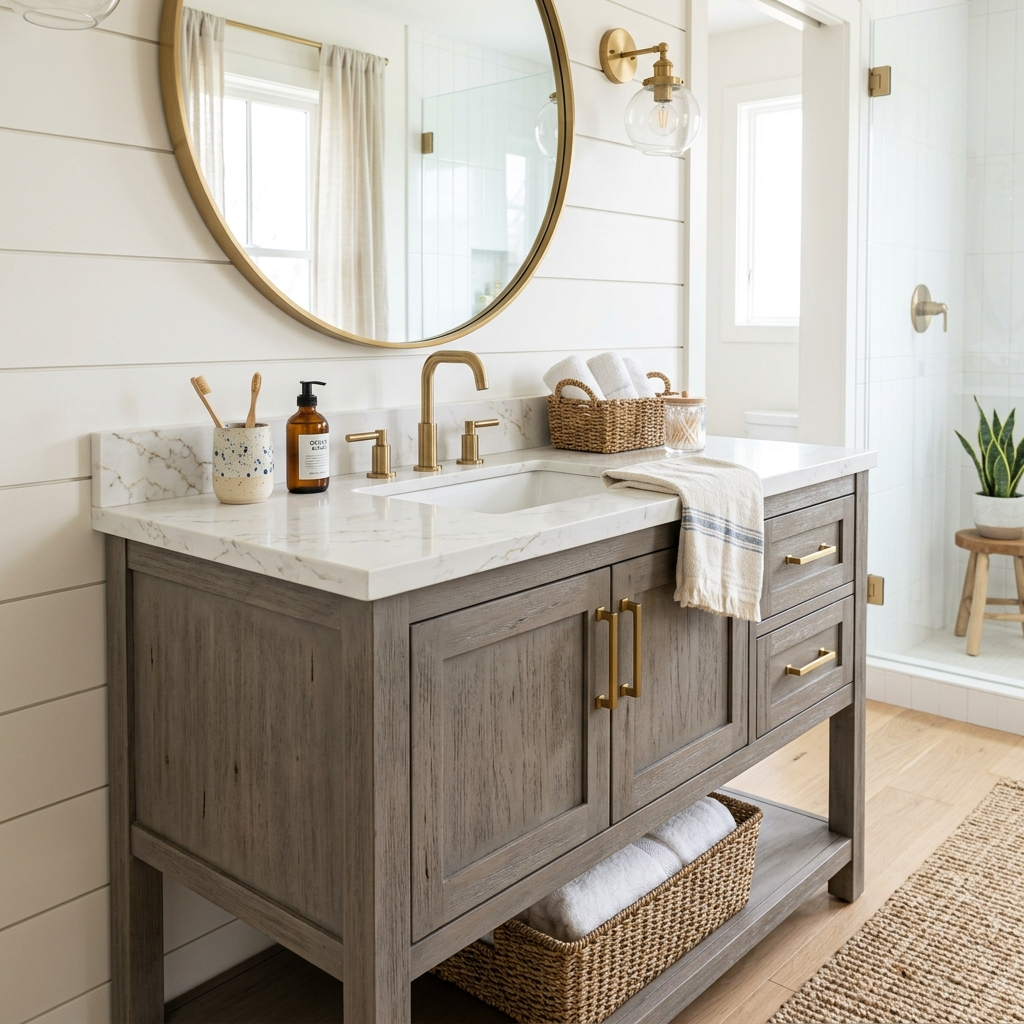
Vibe: The vanity feels weathered, color pulled from bleached wood rather than paint alone.
Why it works: Driftwood grey sits warmer than a typical cool “greige,” which is why it reads as coastal rather than industrial against white walls the undertone matters more than the value here, since a blue-grey would clash with brass hardware while a warm grey complements it. Brass hardware adds the single warm metal note the palette needs against an otherwise cool-leaning cabinet color.
How to get it: Paint the vanity in a warm-toned driftwood grey, such as Sherwin-Williams Anew Grey SW 7030, and finish with brushed or unlacquered brass pulls rather than chrome to keep the warmth intact.
Shop the Look
| Product |
| Driftwood grey cabinet paint matte |
| Brushed brass cabinet pull set |
| White marble-look vanity countertop |
| Ceramic bathroom tumbler |
| Woven storage basket small |
11. Skylight Tube for Overhead Natural Glow
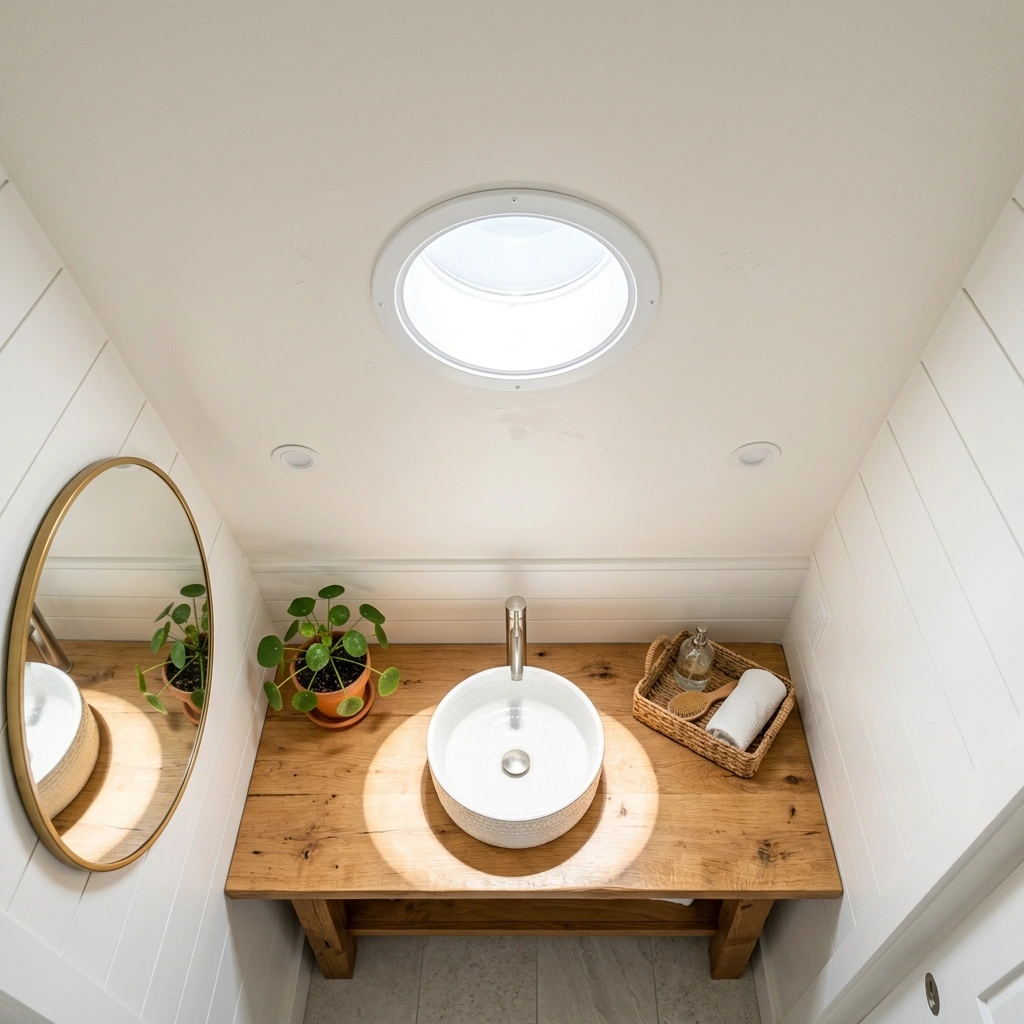
Vibe: The vanity feels lit from within, daylight arriving from directly overhead instead of through a small window.
Why it works: A solar tube introduces overhead daylight that a single small bathroom window often can’t provide, a light-behavior solution especially useful in interior or windowless bathrooms where coastal’s airy requirement would otherwise be hard to meet. Overhead daylight also shifts color temperature through the day, keeping the room feeling alive rather than static under one fixed bulb.
How to get it: Install a 10–14 inch solar tube directly above the vanity or tub, positioned where roof access allows a straight run, for daylight without the structural cost of a full skylight.
💡 Quick Win: A daylight-mimicking 4000K LED flush fixture is a same-day substitute if a solar tube isn’t feasible in your bathroom’s location.
Shop the Look
| Product |
| Solar tube skylight kit 10 inch |
| Daylight LED flush mount fixture |
| Ceramic vessel sink white |
| Woven storage basket small |
| Small potted plant ceramic pot |
12. Vessel Sink on a Console-Style Vanity
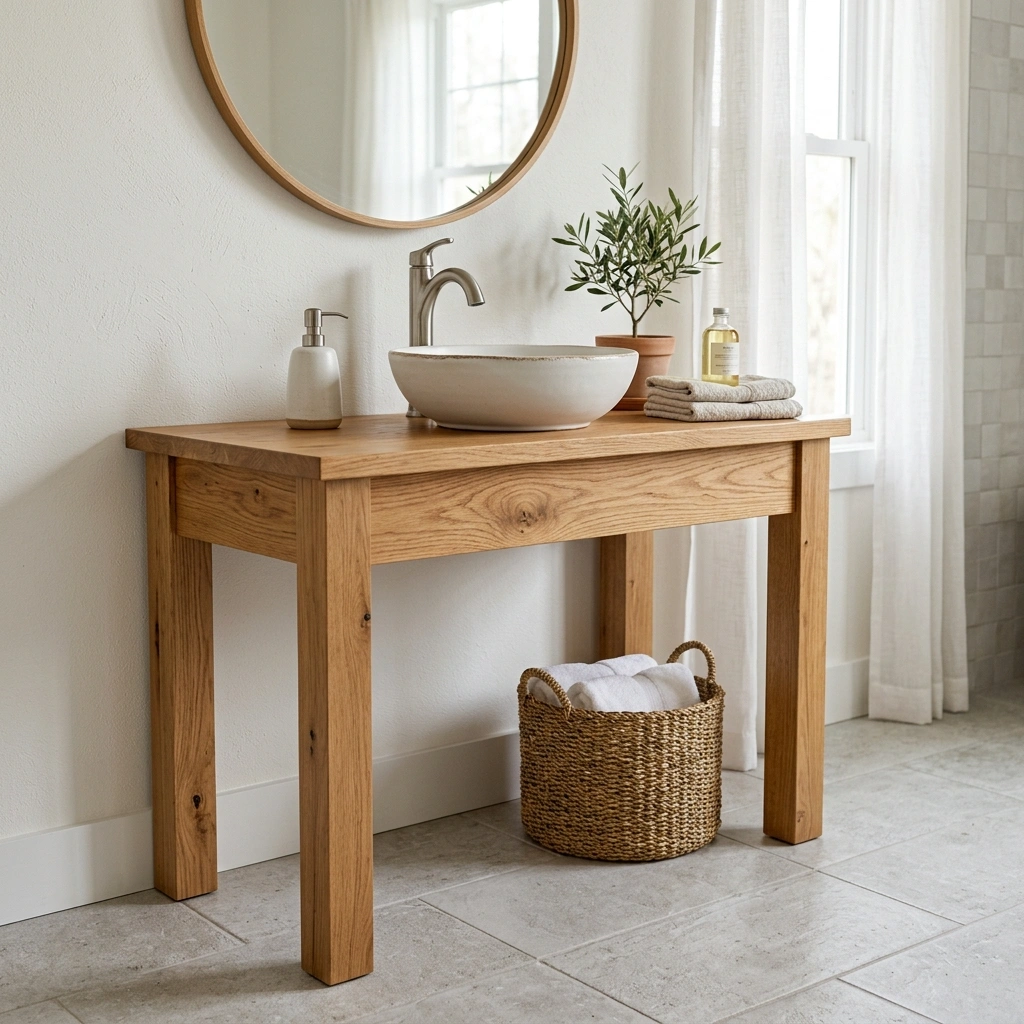
Vibe: The vanity feels open, with furniture-like legs keeping the floor visible beneath it.
Why it works: A console-style vanity with open legs removes visual mass at floor level compared to a solid cabinet base, the same negative-space principle used in floating vanities but achieved here with a furniture silhouette rather than wall-mounting, useful when plumbing access makes true floating installation difficult.
How to get it: Choose a console vanity with exposed wood or metal legs rather than a skirted base, and pair it with a simple round ceramic vessel sink so the open structure beneath stays the visual focus.
Shop the Look
| Product |
| Console-style open leg wood vanity |
| Ceramic vessel sink round |
| Brushed nickel vanity faucet |
| Linen hand towel natural |
| Small potted plant ceramic pot |
13. Woven Seagrass Wallcovering on an Accent Wall
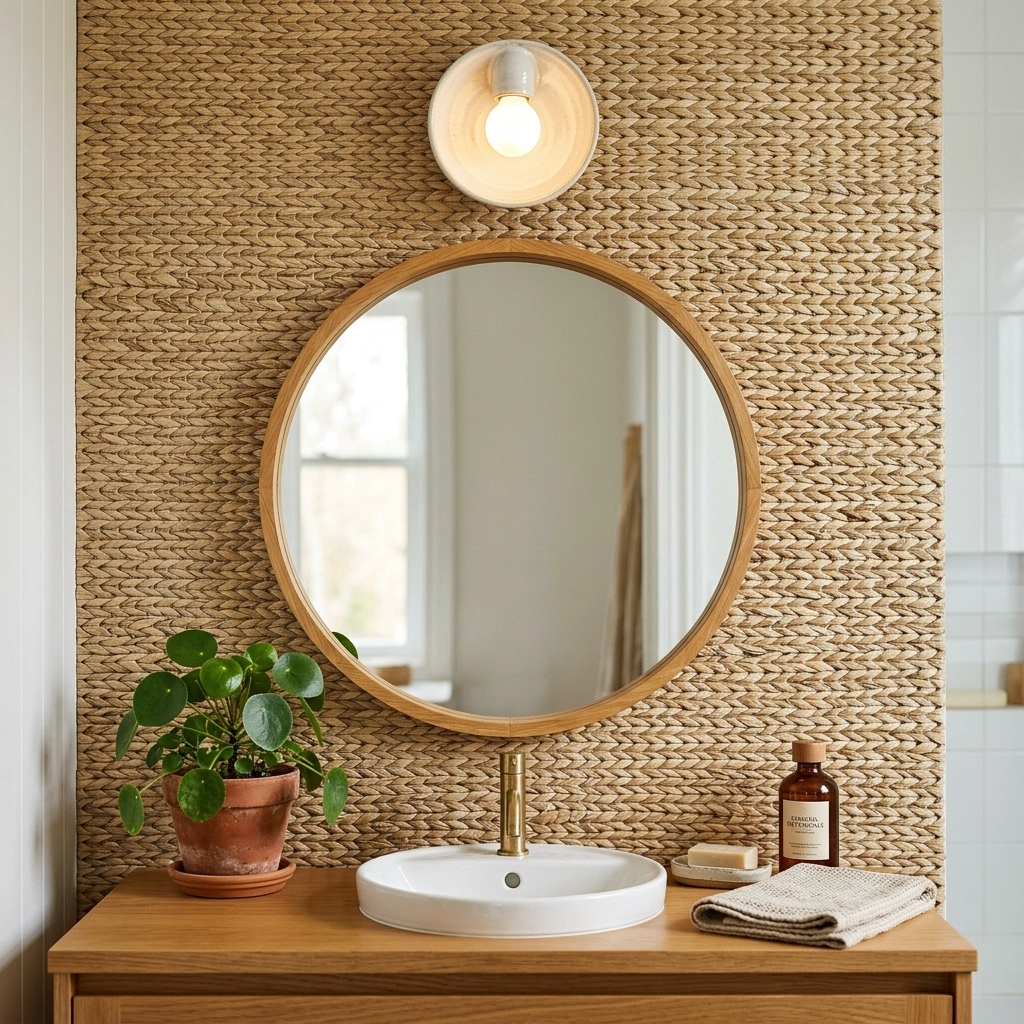
Vibe: The wall feels textured without a pattern, fiber doing what wallpaper print usually would.
Why it works: Woven seagrass wallcovering introduces texture-based visual interest on a dry wall away from direct water contact, adding depth without any printed pattern, breaking the coastal palette. Its natural tonal variation also catches light unevenly, giving a flat wall the kind of depth a single paint color can’t achieve alone.
How to get it: Apply seagrass wallcovering to one dry accent wall only, never inside the shower or tub splash zone using a clear wallcovering adhesive rated for humid rooms.
💡 Quick Win: A seagrass-textured peel-and-stick wallpaper achieves a similar effect for a weekend project without professional installation.
Shop the Look
| Product |
| Woven seagrass wallcovering natural |
| Humid-rated wallcovering adhesive |
| Ceramic wall sconce warm white |
| Small potted plant ceramic pot |
| Linen hand towel natural |
14. A Single Ceramic Vase with Dried Coastal Grass
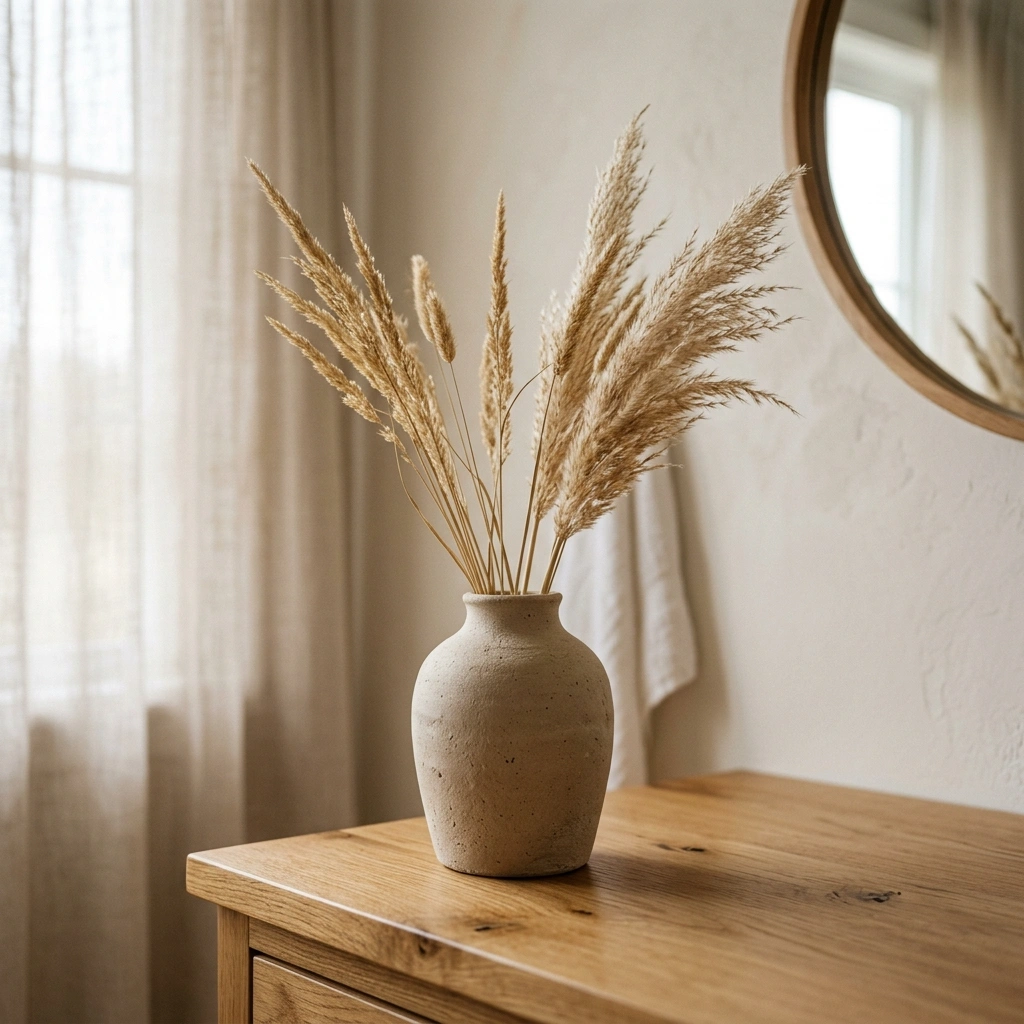
Vibe: The counter feels deliberate, one object carrying the weight a dozen usually would.
Why it works: Restricting a vanity surface to a single styled object is a restraint principle that forces visual focus onto that object’s texture the irregularity of hand-thrown unglazed ceramic becomes noticeable precisely because nothing else on the counter competes with it. This also keeps daily-use items like toothbrushes visually separate from the styled display.
How to get it: Choose one hand-thrown ceramic vase with a visibly irregular rim, and place it alone on the counter with dried coastal grass or pampas stems, keeping everyday toiletries in a drawer or closed cabinet.
Shop the Look
| Product |
| Unglazed handmade ceramic vase |
| Dried coastal grass stem bundle |
| Small woven drawer organizer |
| Ceramic soap dish minimal |
| Linen hand towel natural |
15. Wall-Mounted Fixtures and a Corner Shower for Compact Bathrooms
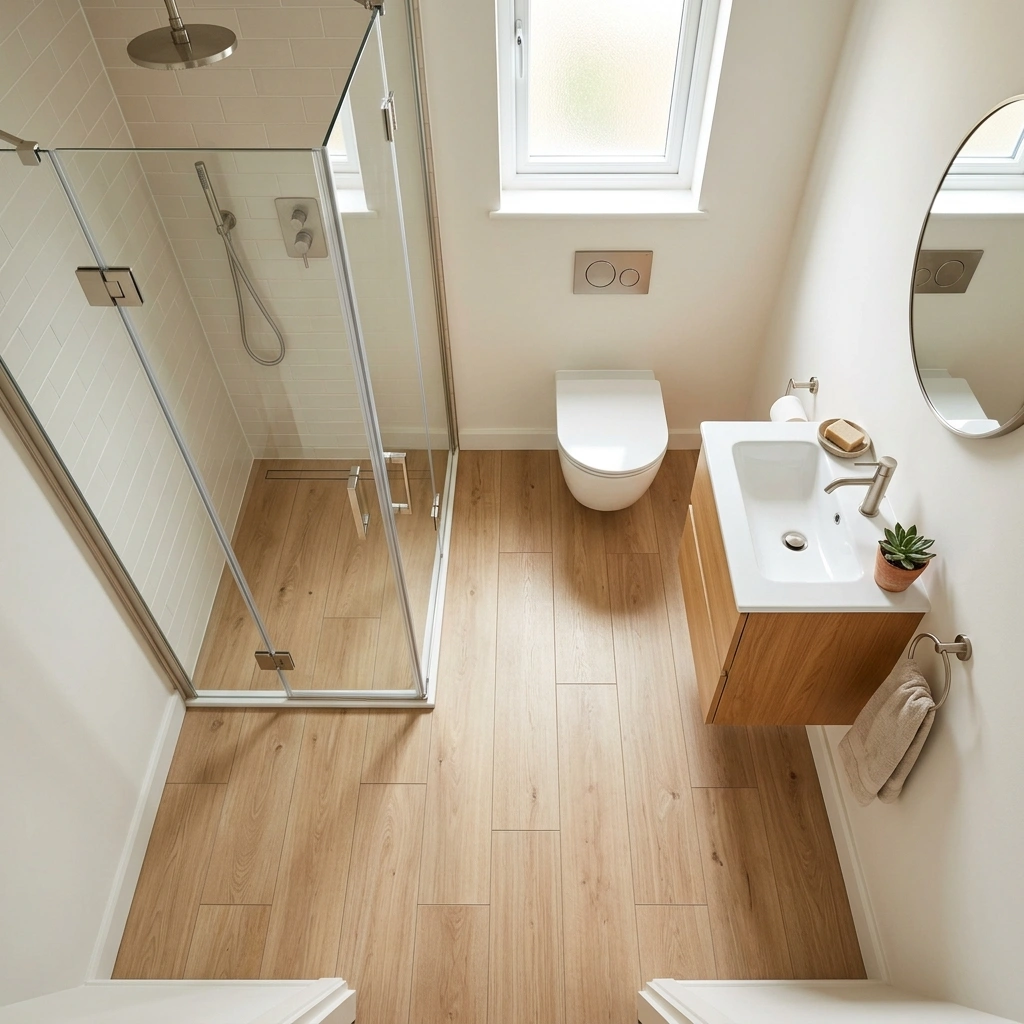
Vibe: The small bathroom feels open, with floor space doing more work than the square footage suggests.
Why it works: Wall-mounted toilets and vanities remove visual mass at floor level, and a corner shower claims the least-used geometry of a small footprint rather than eating into a straight wall run together these choices apply small-space design’s core rule that visible open floor, not total room size, is what reads as spacious.
How to get it: Specify a wall-mounted toilet system with an in-wall tank carrier, paired with a corner shower enclosure sized to the smallest footprint that still meets local code clearance, typically 32×32 inches.
Shop the Look
| Product |
| Wall-mounted toilet in-wall tank system |
| Corner shower glass enclosure |
| Floating oak vanity compact |
| Ceramic soap dish small |
| Linen hand towel set |
How to Start Your Coastal Bathroom Transformation
Start with wall color, not fixtures. A warm white, such as Benjamin Moore White Dove, is the single move that anchors every other decision, because it sets the light-reflecting base against which every tile, cabinet color, and metal finish is chosen to sit against.
The most common mistake is leaning into “nautical” theming rope mirror frames, anchor hooks, and navy-and-white stripe accents. This breaks the look because coastal’s calm comes from worn natural materials and light, not literal beach props; fix it by swapping any themed decor item for one made of an honest material like linen, rattan, or ceramic.
Three items under $50 that create immediate impact: an unglazed ceramic vase with dried coastal grass, a warm-white waffle-weave towel set, and a woven seagrass bath mat.
A full coastal bathroom transformation with new tile, vanity, and fixtures realistically takes 5–8 weeks and costs $9,000–$22,000. A weekend refresh using paint, towels, and open shelving costs $150–$450 and shifts the room’s atmosphere immediately, before any tile work begins.
Frequently Asked Questions About Coastal Bathroom Decor
What’s the difference between coastal and nautical bathroom decor?
Coastal decor relies on weathered natural materials and light whitewashed wood, linen, sea-glass color while nautical decor leans on literal beach symbols like anchors, rope trim, and navy-and-red stripes. Coastal reads closer to a lived-in Nantucket cottage bathroom; nautical leans toward themed novelty decor. Most modern coastal bathrooms intentionally avoid nautical motifs.
What color should I paint a coastal bathroom?
Warm white with a soft undertone, such as Benjamin Moore White Dove or Sherwin-Williams Alabaster, is the standard base wall color. Sea-glass blue-green (Farrow & Ball Green Blue No. 84) is a common vanity or accent-wall color layered on top. Avoid cool, stark blue-whites, which read clinical rather than coastal.
How much does a coastal bathroom makeover cost?
A budget refresh using paint, towels, and open shelving typically runs $150–$600. A mid-range update adding a new vanity and lighting costs $3,000–$7,000. A full renovation with new tile, a freestanding tub, and fixtures can reach $15,000–$25,000, depending on square footage and material choices.
Does coastal bathroom style work with a modern or farmhouse home?
Yes coastal blends naturally with modern through clean lines and a light palette, and with farmhouse through shared materials like whitewashed wood and open shelving. It pairs less easily with heavily traditional or dark academia interiors, where deep wood tones and formal detail conflict with coastal’s intentionally relaxed, sun-bleached character.
What’s the most important element in coastal bathroom decor?
Natural light behavior is the most important element how light moves through the room via open shelving, reflective warm-white surfaces, and light-catching materials like honed travertine is what makes a coastal bathroom read as airy rather than simply beachy in color alone. A bathroom with the right palette but heavy blinds and closed cabinets will still feel dim.
Ready to Create Your Dream Coastal Bathroom?
These 15 ideas move through cabinet color, natural materials, overhead light, and small-space layout tricks, showing that coastal bathroom decor comes together through many small, honest choices rather than one theme purchase. Starting with a single whitewashed wall or one sea-glass vanity is not a lesser version of the style; it’s exactly how these rooms are meant to come together. Today, decant one bottle of soap or lotion into a plain ceramic pump dispenser and notice how much calmer the counter feels. Done right, the space will start to feel like the pause before your day begins rather than a stop along the way to somewhere else. Save the ideas that matched your own light and your own walls that honed travertine surround, that driftwood grey cabinet, because coastal bathroom decor rewards the room built slowly, one worn, natural material at a time.
[…] 15 Coastal Bathroom Decor Ideas to Bring the Seaside Home […]
[…] 15 Coastal Bathroom Decor Ideas to Bring the Seaside Home […]
[…] 15 Coastal Bathroom Decor Ideas to Bring the Seaside Home […]
[…] 15 Coastal Bathroom Decor Ideas to Bring the Seaside Home […]