
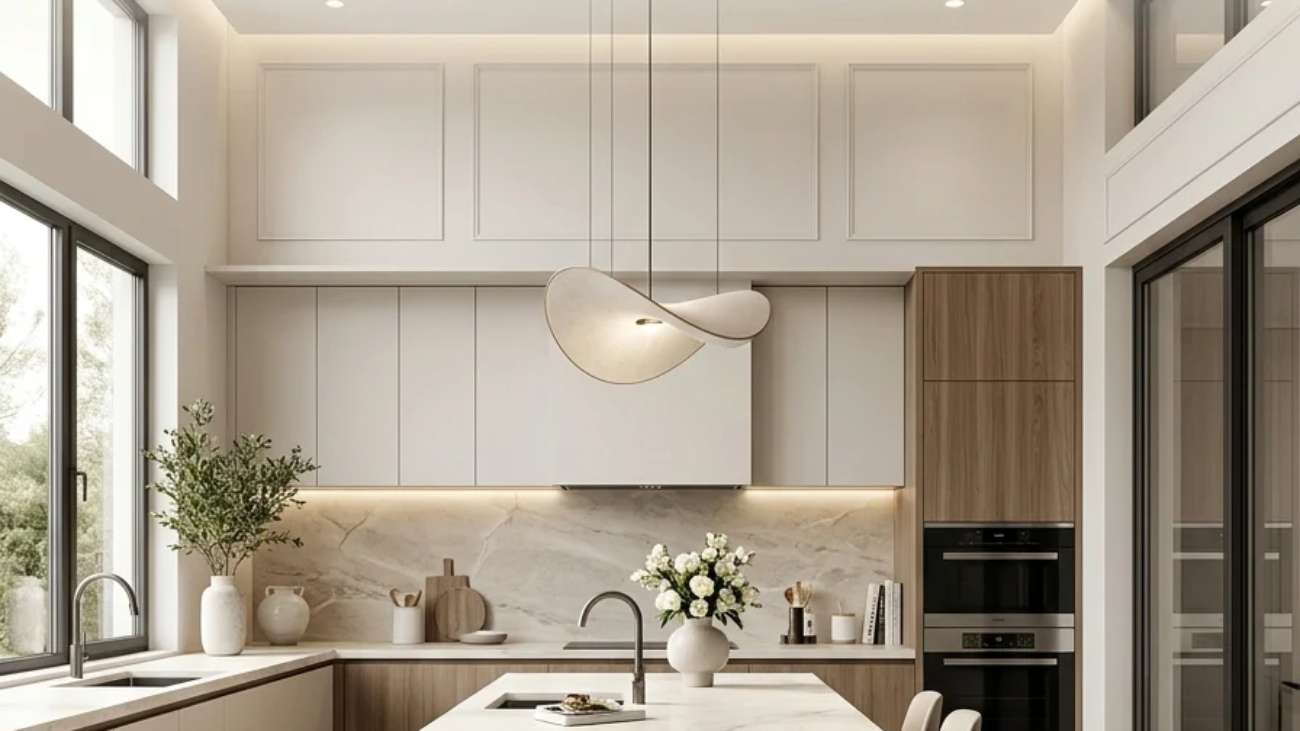
A luxurious contemporary kitchen pairs current, ever-evolving design language curved forms, mixed materials, hidden technology with genuinely high-end execution, rather than following any single fixed historical rulebook. This article gives you 15 real ways to achieve that exact balance, covering color, material, lighting, furniture, and layout, each one built around a technique current luxury kitchens are actually using rather than a passing trend.
The feel is unmistakable: a waterfall island with a curve instead of a hard edge, appliances that vanish entirely behind matching panels, light treated as sculpture rather than fixture. Contemporary luxury doesn’t look backward for its authority; it earns it through material quality and quiet, confident restraint. Here are 15 ideas worth saving and stealing.
Why Luxurious Contemporary Kitchen Design Works So Well
Contemporary kitchen design describes whatever high-end design language is currently in circulation, evolving roughly every decade, which is what separates it from classic or period-specific styles that follow fixed historical proportion rules. Today’s expression pulls from postmodernism’s comfort mixing references, a renewed interest in curved and organic forms after over a decade of hard-edged minimalism, and a growing “warm minimalism” reaction against the stark, cold, all-white kitchens that dominated the 2010s.
The materials that define genuinely luxurious contemporary kitchens include quartzite and Dekton for curved waterfall surfaces, hand-troweled organic plaster for range hood surrounds, warm white oak cabinetry, and poured microcement flooring for a seamless, joint-free surface. Matte black and brushed brass appear constantly, mixed deliberately rather than matched, while fully integrated panel-ready appliances let refrigeration and dishwashers disappear entirely behind cabinetry rather than announcing themselves as separate equipment.
Contemporary luxury kitchens are trending specifically because biophilic design research the documented psychological benefit of visual connection to natural materials and living elements has moved from academic interest into mainstream renovation planning, alongside a broader cultural fatigue with the stark, showroom-white kitchens that once signaled luxury by default. Search interest in “warm minimalist kitchen” and “organic modern kitchen” has grown steadily as homeowners look for luxury that feels lived-in rather than clinical.
Small kitchens can absolutely achieve genuine contemporary luxury, since many of the style’s core techniques curved edges, integrated appliances, a single sculptural light actually perform better in a compact footprint than a sprawling one, where the same detail might otherwise get visually lost. The priority in a small space is concentrating investment in one or two true material moments, like a curved quartzite waterfall or an organic plaster hood, rather than spreading the budget thin across every surface.
Style at a Glance
| Element | Core Trait 1 | Core Trait 2 |
| Philosophy | Warm minimalism, curved forms over hard edges | Hidden technology, seamless integration |
| Materials | Quartzite, organic plaster, white oak | Microcement, matte black, brushed brass |
| Color Palette | Warm greige, matte black | Sage green accent, warm white |
15 Ways to Achieve Luxurious Contemporary Kitchen Design
1. Warm Greige Cabinetry as a Quiet Luxury Backdrop
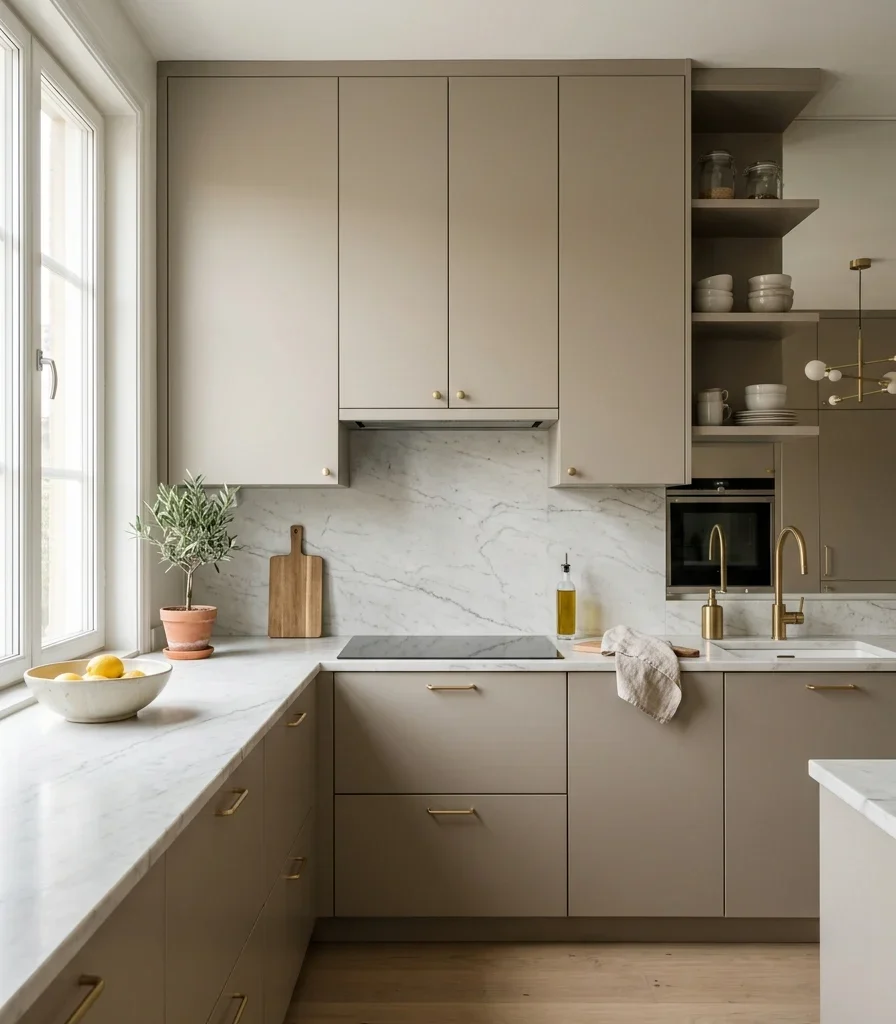
Vibe: The kitchen feels refined, with quiet color letting material quality carry the room.
Why it works: Warm greige sits at the exact midpoint between cold minimalist white and heavier traditional browns, which is why it reads as current and considered rather than either clinical or dated. This restraint is deliberate, since contemporary luxury increasingly signals wealth through material quality and craftsmanship rather than bold color statements. Slab-front cabinetry with no visible panel detailing keeps the greige reading as a clean, continuous surface.
How to get it: Choose a greige with a visible warm undertone rather than a cool gray-leaning shade, and pair it with slab-front rather than shaker-style doors, since the flat surface is what lets the color read as genuinely quiet rather than broken up by panel shadow lines.
💡 Quick Win: Testing greige paint on cabinet sample doors under your kitchen’s actual lighting before committing prevents the most common contemporary color mistake: a greige that reads too cool or too pink under artificial light.
Shop the Look
| Product |
| Warm greige cabinet-grade paint |
| Quartzite countertop slab |
| Brushed brass cabinet hardware set |
| Ceramic decorative bowl |
| Small potted plant |
2. A Curved Waterfall Island in Quartzite
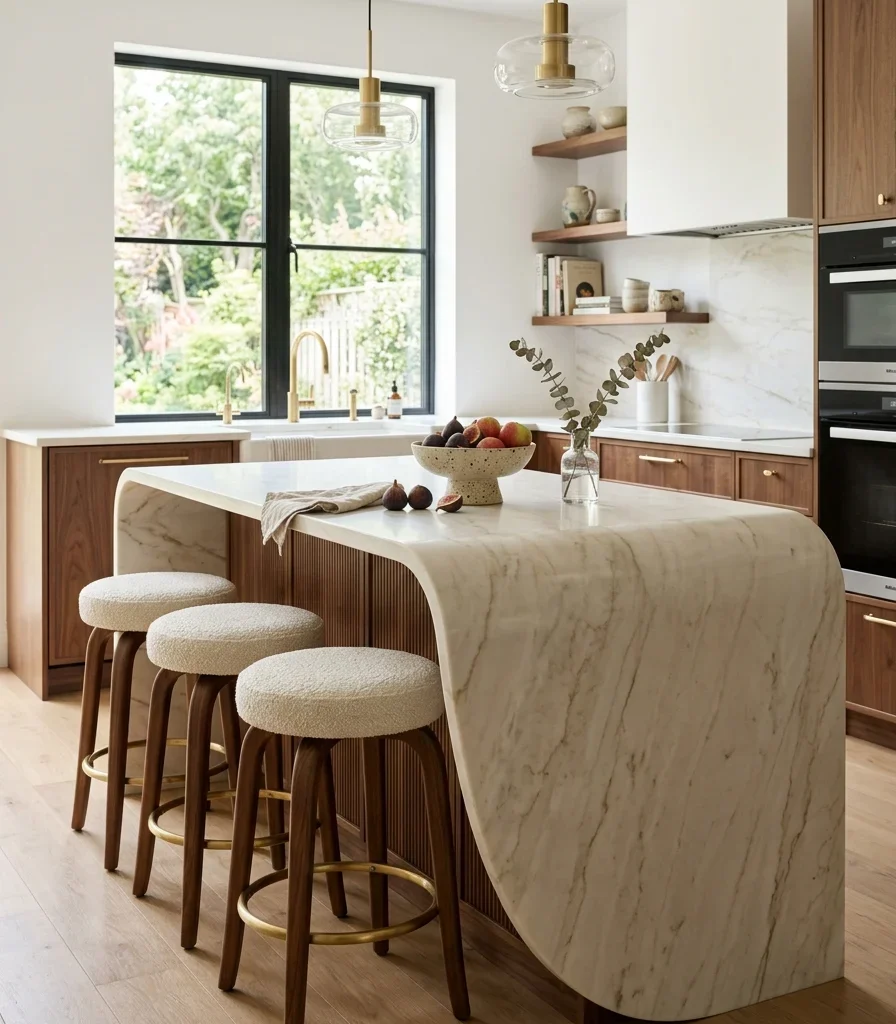
Vibe: The island feels sculptural, stone curving instead of cutting a hard corner.
Why it works: A curved waterfall edge requires significantly more complex fabrication than a standard mitered corner, since the stone must be cut and polished along a continuous radius rather than a straight seam. This technical difficulty is exactly why curved stonework signals real investment, and it softens the island’s overall geometry in a way that aligns with contemporary design’s broader move away from hard-edged minimalism. Quartzite specifically offers more consistent veining and higher heat resistance than marble, making it a genuinely practical choice for a curved, heavily-used surface.
How to get it: Work with a fabricator experienced specifically in curved stone work, since standard countertop shops without radius-cutting equipment can’t produce a true curved waterfall edge, and request a mockup template before the final cut to confirm the curve’s exact radius.
Shop the Look
| Product |
| Quartzite slab, curved fabrication |
| Boucle upholstered barstool set |
| Ceramic fruit bowl |
| Brushed brass drawer pull set |
| Stone sealant, quartzite-safe |
3. A Sculptural Pendant Light as the Kitchen’s Art Piece
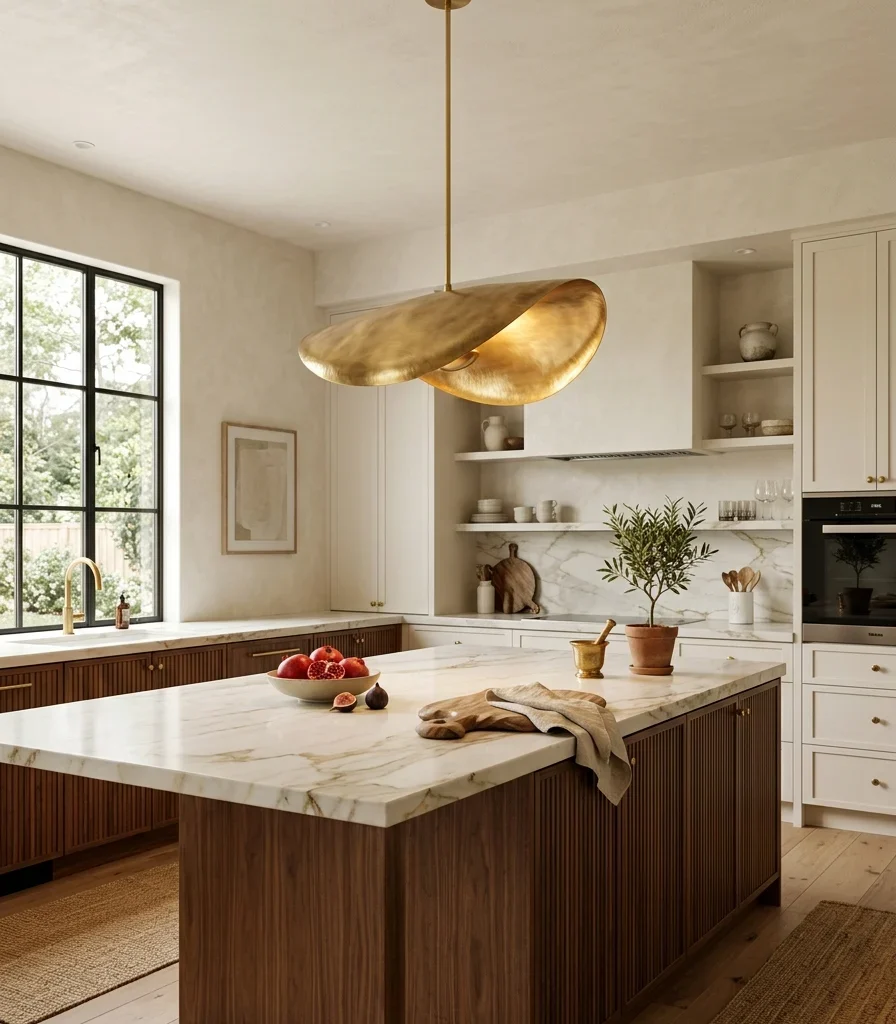
Vibe: The island feels artful, one light fixture doing the job a sculpture would.
Why it works: Contemporary lighting design increasingly treats fixtures as sculptural objects meant to be looked at even when unlit, a shift reflected in designers who build lamps around organic, asymmetric forms rather than purely functional shapes. Choosing one genuinely sculptural pendant over a matched set of smaller fixtures gives the kitchen a clear emphasis point, the same focal-point principle used elsewhere in lighting design, but expressed through a single striking silhouette rather than repetition.
How to get it: Choose a pendant with a distinct organic or asymmetric form rather than a standard drum or globe shade, and let it stand alone above the island’s center rather than pairing it with matching secondary fixtures that would compete with its sculptural presence.
Shop the Look
| Product |
| Sculptural organic-form pendant light |
| Dimmer switch for pendant |
| Warm dimmable bulb, brass-toned glow |
| Quartzite countertop, island |
| Boucle barstool set |
4. Fully Integrated Panel-Ready Appliances
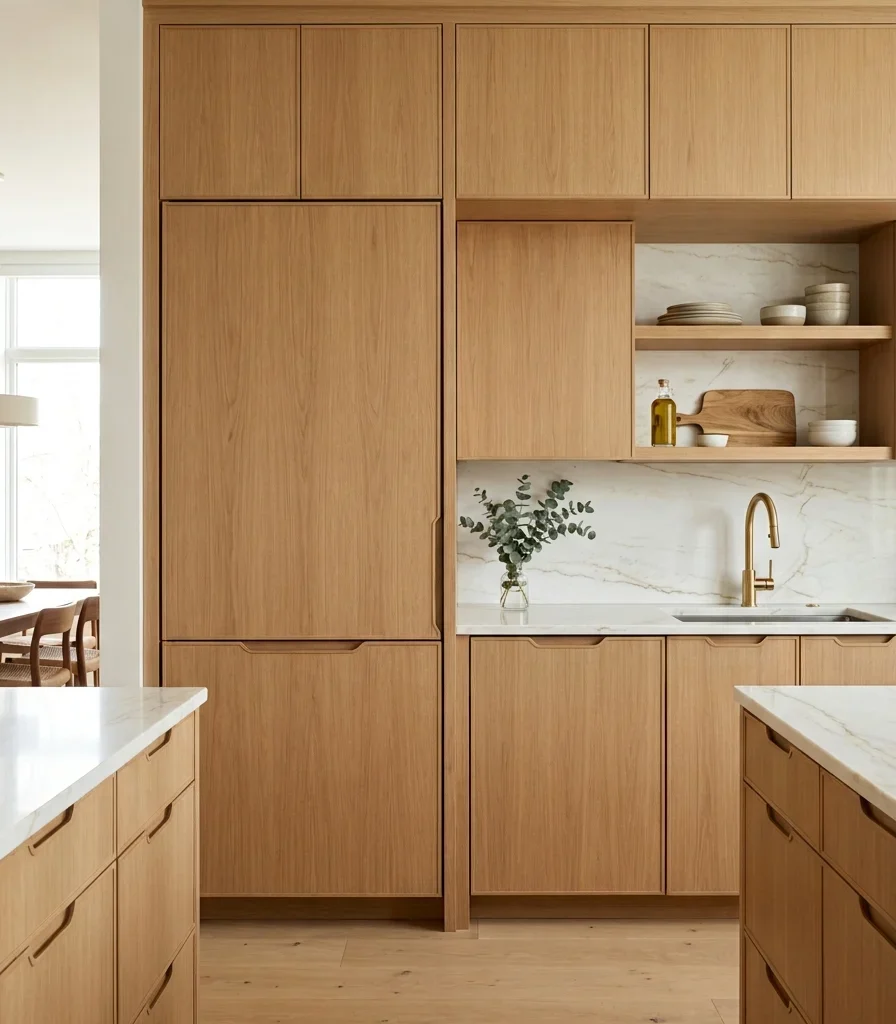
Vibe: The kitchen feels seamless, appliances disappearing entirely into the cabinetry line.
Why it works: Panel-ready appliances accept custom cabinet-matching door fronts instead of showing their own branded stainless or black finish, which lets a refrigerator or dishwasher disappear visually into the surrounding cabinet run entirely. This uninterrupted surface is a specifically contemporary luxury signal, since it prioritizes an unbroken material story over displaying the appliance itself as a status object the way visible professional-grade equipment does in more traditional luxury kitchens.
How to get it: Confirm your chosen appliance model explicitly supports panel-ready installation before ordering cabinetry, and match the panel’s exact door style, finish, and hardware placement to the surrounding cabinet run so the seam reads as continuous rather than merely close.
Shop the Look
| Product |
| Panel-ready refrigerator, custom front |
| Matching cabinet panel, appliance-fitted |
| Brushed brass appliance pull, matching cabinetry |
| Warm white oak cabinet fronts |
| Quartzite countertop |
5. Cantilevered Floating Shelves With No Visible Brackets
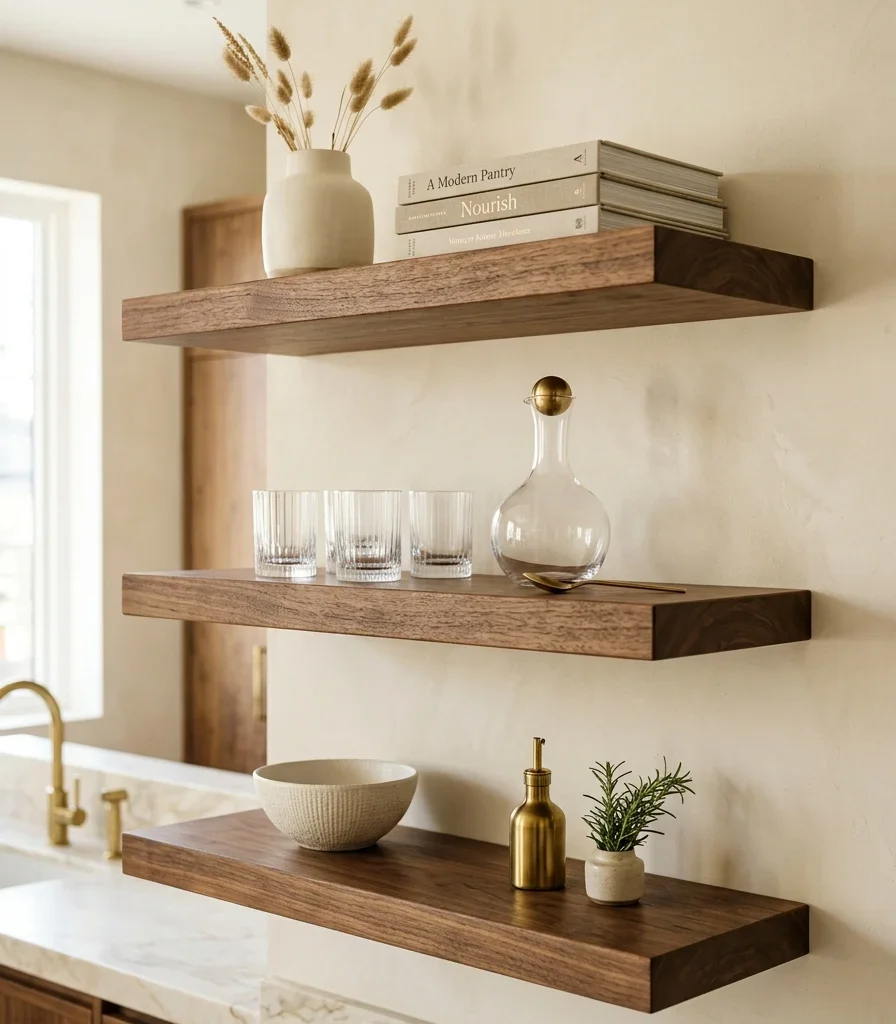
Vibe: The shelf feels refined, wood appearing to hover with no visible means of support.
Why it works: True cantilevered shelving uses an internal steel rod system recessed entirely within the wood, rather than the visible L-bracket most floating shelves actually rely on, which is why genuinely bracket-free shelves cost significantly more and read as noticeably more refined. The illusion of a thick, heavy wood plank floating unsupported depends entirely on that hidden engineering being done correctly. This is negative space and material honesty working together: nothing visible is doing the supporting work you’d expect to see.
How to get it: Specify true cantilevered mounting hardware rather than a standard bracket system when ordering, and confirm wall stud placement can accommodate the rod’s required depth before installation, since cantilevered systems typically need more secure anchoring than surface-mounted brackets.
Shop the Look
| Product |
| Walnut floating shelf, cantilevered mount |
| Hidden rod bracket system |
| Ceramic vessel set |
| Glassware set, clear |
| Stud finder tool |
6. Matte Black Used as a Contemporary Neutral Throughout
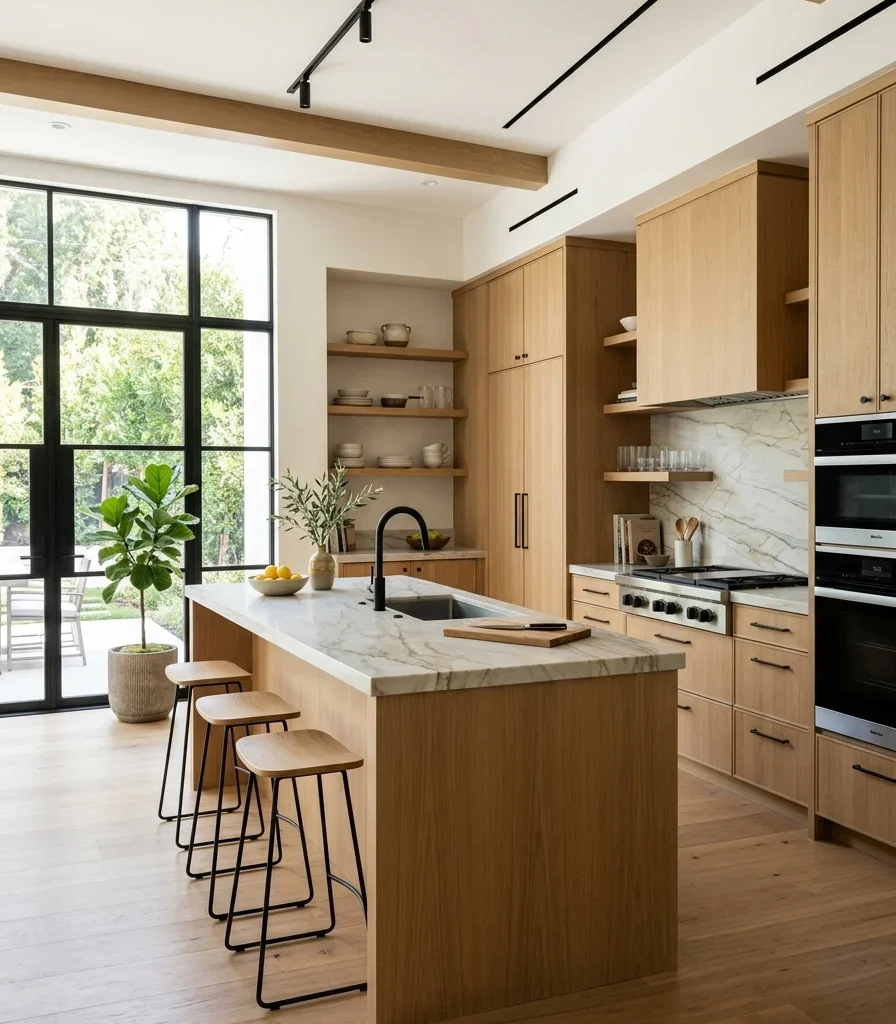
Vibe: The kitchen feels grounded, black doing quiet structural work rather than shouting for attention.
Why it works: Contemporary design increasingly treats matte black the way earlier eras treated white or beige as a foundational neutral rather than a bold statement color, used in thin, structural doses across window frames, faucets, and cabinet hardware rather than as a dominant wall or cabinet color. This works because black distributed at a small, consistent scale reads as definition and structure, the same principle governing charcoal accents elsewhere in minimalist design, rather than as visual weight.
How to get it: Apply matte black specifically to hardware, faucet, and window or door frames rather than large cabinet surfaces, keeping the palette otherwise warm and light so the black reads as considered structural detail rather than a heavy dominant choice.
Shop the Look
| Product |
| Matte black kitchen faucet |
| Matte black cabinet hardware set |
| Matte black window frame paint |
| Warm white oak cabinet fronts |
| Quartzite countertop |
7. An Organic Plaster Range Hood Surround
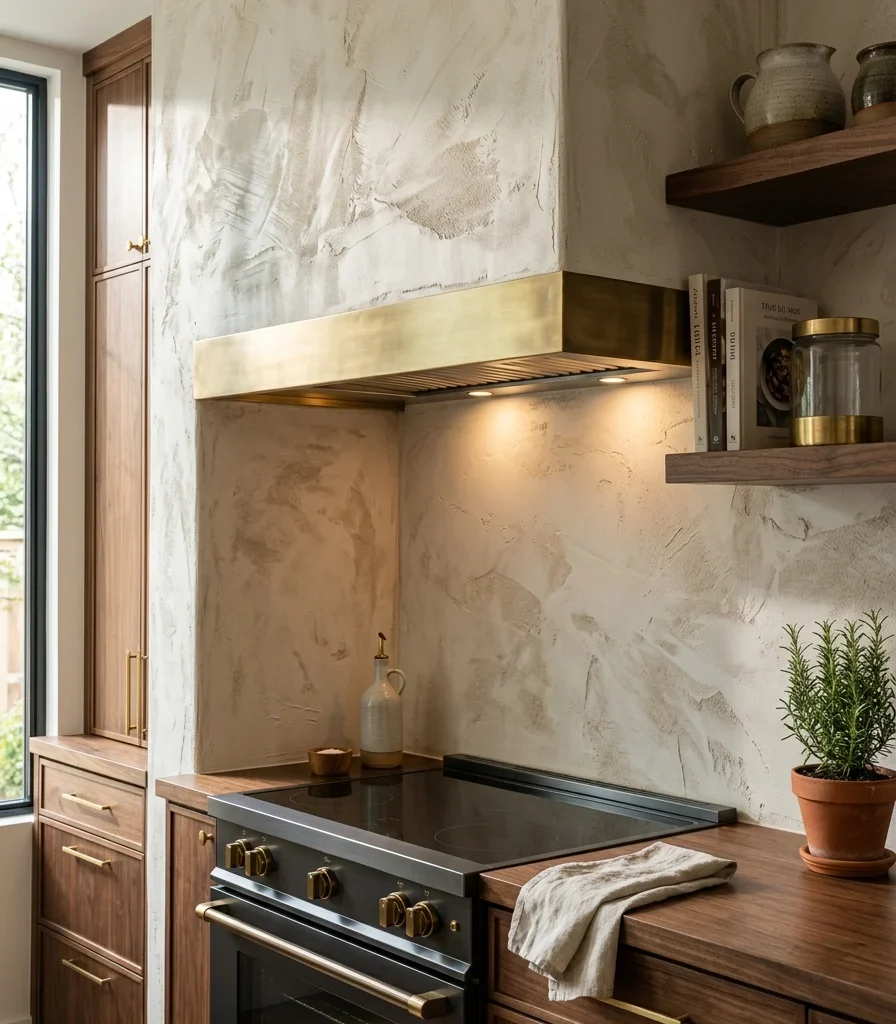
Vibe: The range wall feels sculptural, plaster texture doing what flat drywall never could.
Why it works: A hand-troweled organic plaster hood surround has microscopic surface variation that catches and scatters light differently across its own contour, giving the range wall genuine dimensional presence rather than the flat, uniform finish a standard drywall or tile hood surround provides. This technique has deep roots in Mediterranean plastering traditions, and its current resurgence in contemporary kitchens reflects the broader shift toward materials that show the maker’s hand rather than a perfectly factory-uniform surface.
How to get it: Apply plaster in overlapping, slightly irregular trowel strokes rather than uniform passes, since the intentional inconsistency is what produces the light-catching texture this technique depends on, and seal it with a protective topcoat given its proximity to cooking heat and grease.
Shop the Look
| Product |
| Venetian plaster wall finish kit |
| Wide trowel or putty knife |
| Plaster sealant, heat-resistant |
| Brass range hood trim |
| Warm white oak cabinetry, surrounding |
8. A Hidden Prep Kitchen Behind Pocket Doors
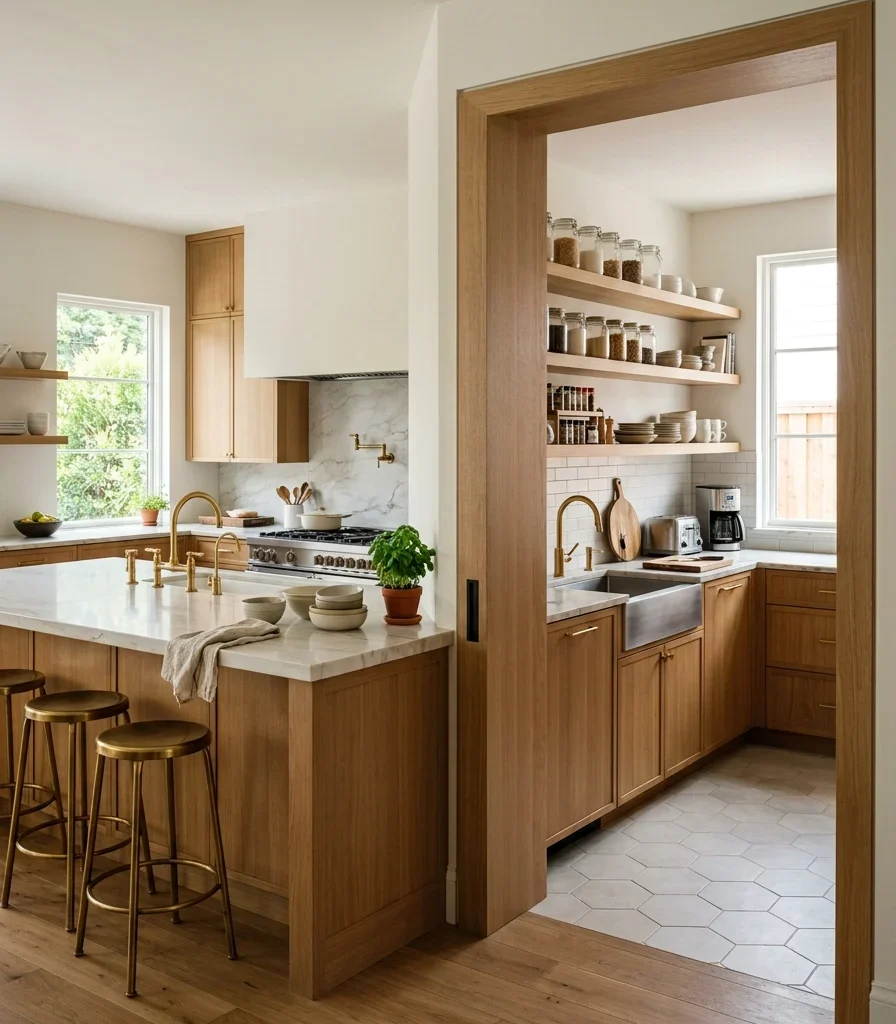
Vibe: The kitchen feels discreet, a second workspace vanishing entirely when it’s not needed.
Why it works: A hidden prep kitchen a secondary work zone with its own sink, small appliances, and prep surface concealed behind pocket doors that slide fully into the wall rather than swinging open, keeps the main kitchen’s showpiece surfaces clear of everyday mess and food prep clutter during entertaining. Unlike a hinged door, a pocket door leaves zero visible presence when open, reinforcing the seamless, uninterrupted quality contemporary luxury design prioritizes throughout.
How to get it: Confirm adequate wall cavity depth for the pocket door track during initial construction planning, since retrofitting a pocket door into an existing wall is significantly more disruptive than installing one during a full renovation.
Shop the Look
| Product |
| Pocket door track and hardware kit |
| Small prep sink and faucet |
| Open shelving, prep kitchen |
| Quartzite counter, prep-sized |
| Brass cabinet hardware, matching main kitchen |
9. An Oversized Single Pendant Instead of a Cluster
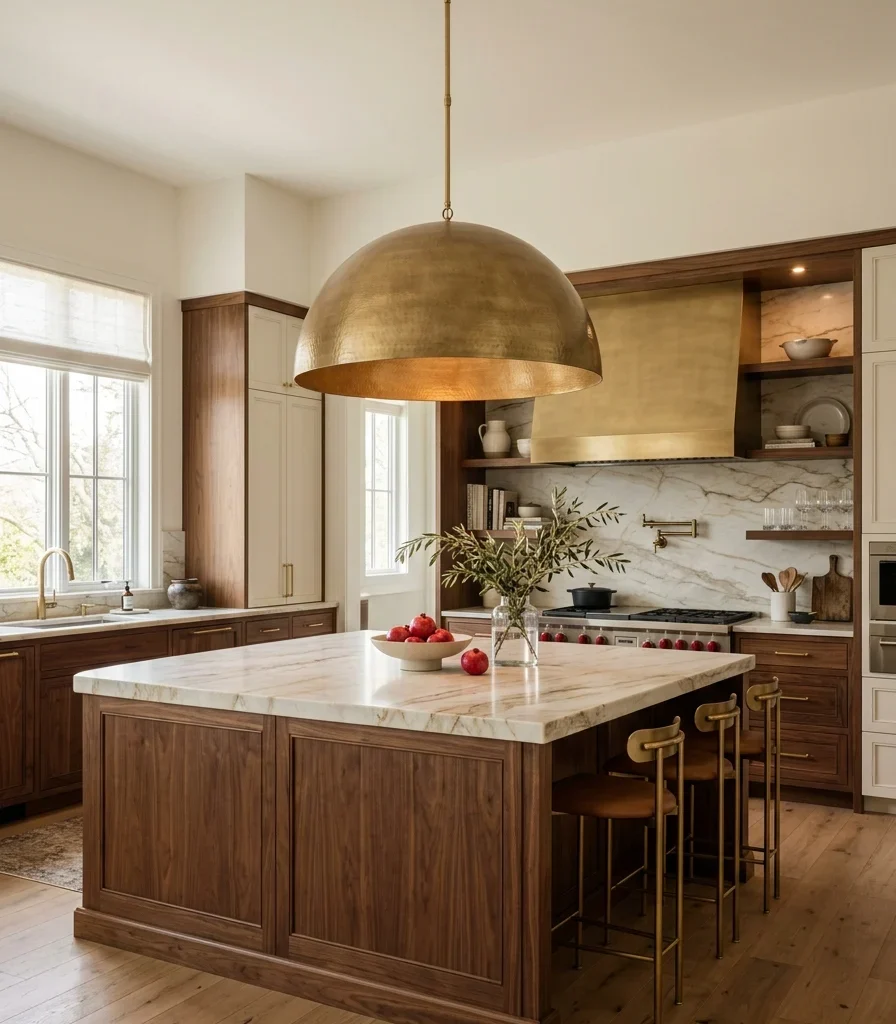
Vibe: The island feels confident, one substantial light doing what three smaller ones usually attempt.
Why it works: Clustered pendant groupings became the default kitchen island lighting choice largely through repetition rather than necessity, and a single oversized fixture instead delivers the same total light coverage while reading as a more deliberate, contemporary design decision one substantial statement rather than a matched set. This is the same emphasis principle behind a single statement art piece over a gallery wall, applied here to lighting specifically.
How to get it: Size the single pendant to roughly one-third to one-half the island’s total length, and confirm its light output measured in lumens matches or exceeds what a three-pendant cluster would have provided, since one larger fixture needs to work harder to cover the same surface area.
Shop the Look
| Product |
| Oversized statement pendant light |
| Dimmer switch for pendant |
| Warm dimmable bulb, high lumen output |
| Quartzite island countertop |
| Boucle barstool set |
10. Boucle Upholstered Barstools for Textural Softness
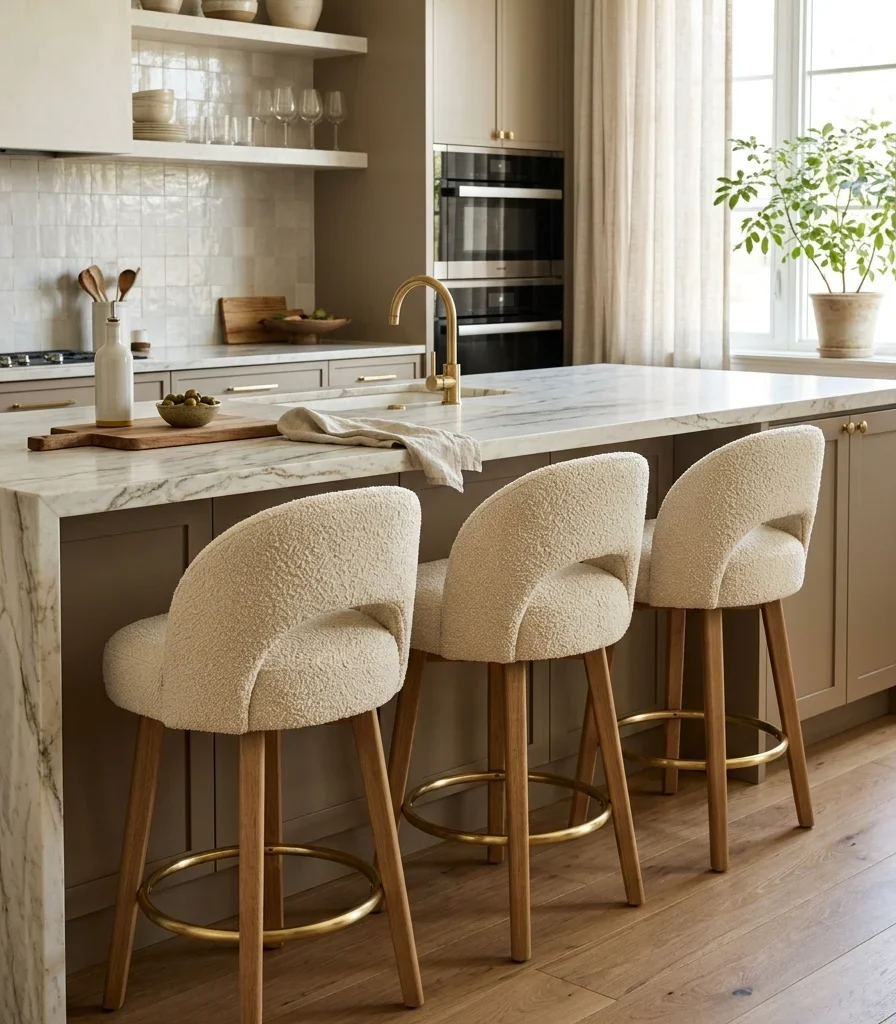
Vibe: The island feels tactile, soft texture softening an otherwise hard-surfaced room.
Why it works: Kitchens are dominated by hard, reflective materials stone, tile, metal, glass more than almost any other room, which is exactly why boucle’s looped, textural upholstery reads as a deliberate and welcome counterpoint rather than a mismatched addition. This texture-layering principle is the same one governing material choices throughout contemporary design, applied specifically to seating, which is often the only genuinely soft surface a kitchen contains.
How to get it: Choose boucle in a warm cream or oatmeal tone rather than a stark white, and pair the upholstery with a curved rather than angular stool frame, since the rounded silhouette reinforces the same soft, organic quality the fabric introduces.
Shop the Look
| Product |
| Boucle upholstered barstool, curved frame |
| Brass footrest ring |
| Quartzite island countertop |
| Sculptural pendant light |
| Ceramic fruit bowl |
11. Poured Microcement Flooring for a Seamless Look
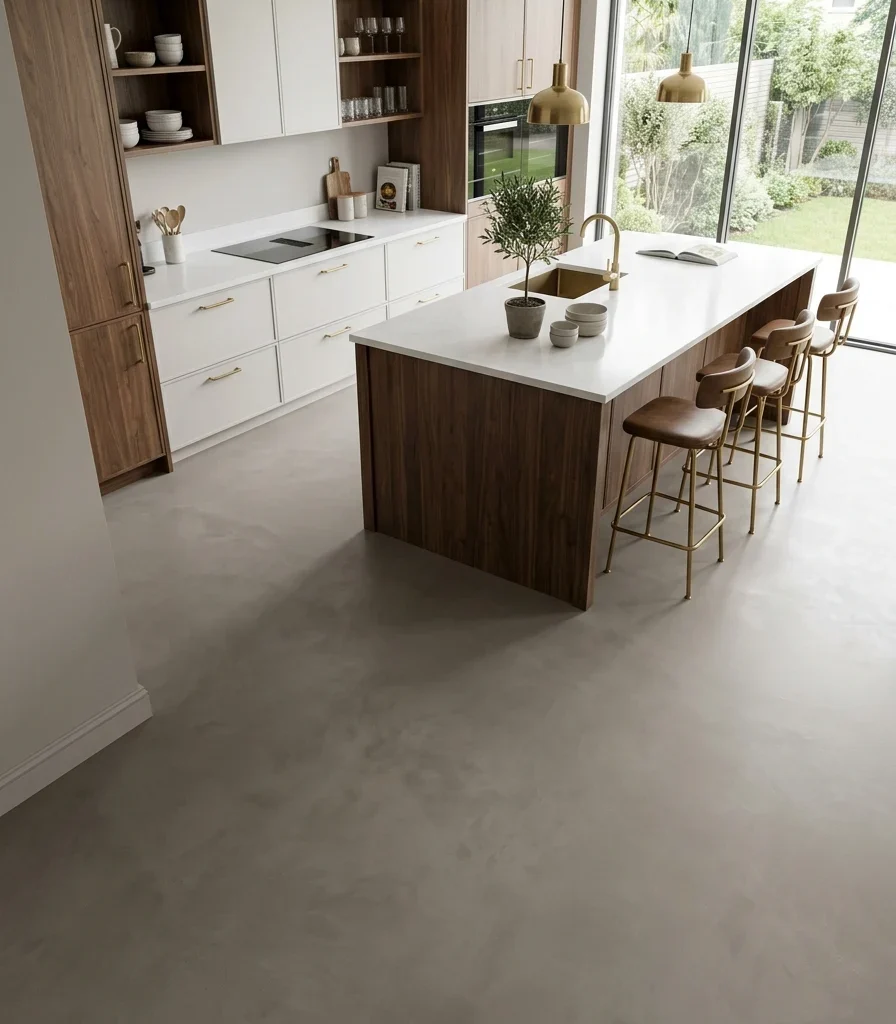
Vibe: The floor feels seamless, one continuous surface with nowhere for the eye to catch a seam.
Why it works: Microcement is applied as a thin, poured coating directly over an existing subfloor, curing into one entirely continuous surface with zero grout lines or tile joints. This seamlessness is a specifically contemporary material choice, since it removes the visible grid pattern that even the most premium large-format tile still carries. The uninterrupted surface also extends visually into adjoining rooms when the same material continues past the kitchen’s boundary, reinforcing an open, continuous floor plan.
How to get it: Work with an installer experienced specifically in microcement application, since the material requires precise multi-coat layering and sealing that standard tile or flooring installers typically aren’t trained in, and budget for professional application rather than treating it as a DIY project.
Shop the Look
| Product |
| Microcement flooring system, warm gray |
| Microcement sealant, high-traffic rated |
| Walnut island base |
| Brushed brass cabinet hardware |
| Quartzite countertop |
12. A Living Herb Wall for Biophilic Contrast
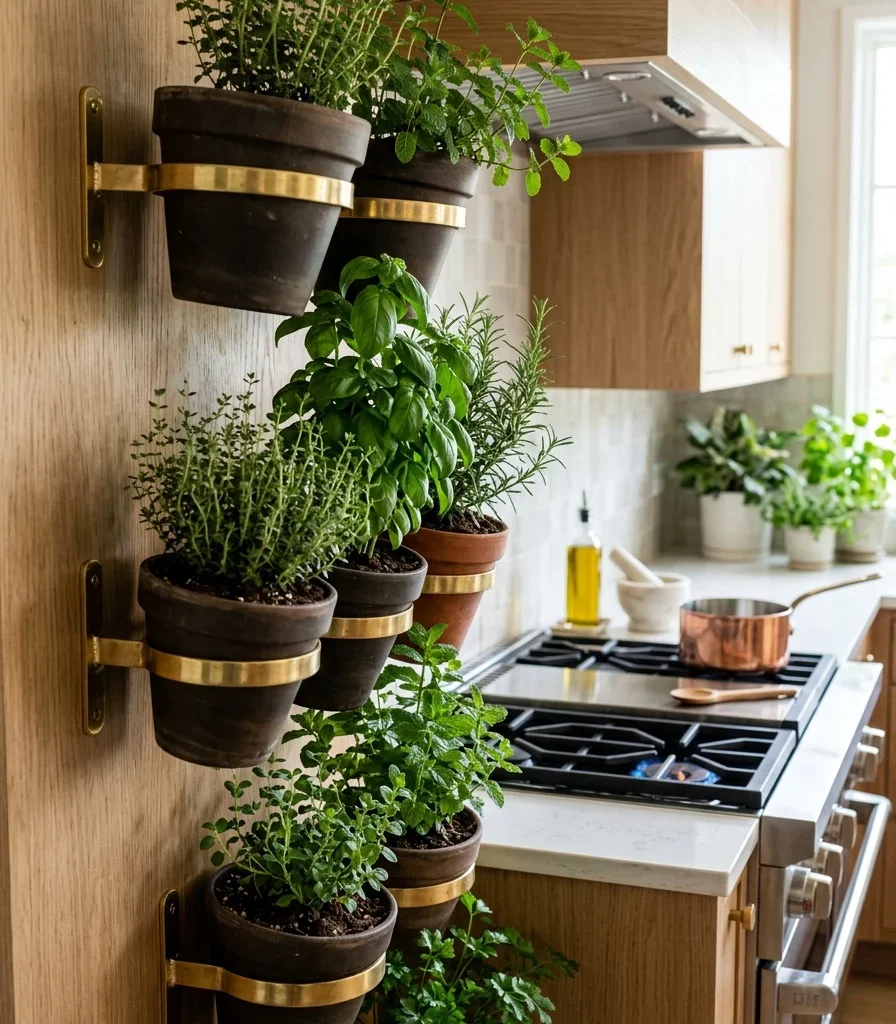
Vibe: The wall feels grounded, real green life set against otherwise hard, polished surfaces.
Why it works: A living herb wall introduces genuine biophilic contrast real, growing plant material set directly against stone, metal, and plaster which research on biophilic design links to measurable stress reduction and a stronger sense of connection to a space. This is functional as well as decorative, since fresh herbs positioned directly beside the range solve a real cooking need while delivering the same organic material contrast contemporary luxury design increasingly prioritizes over purely hard, polished surfaces.
How to get it: Choose a vertical planter system with individual watering access for each herb pot, and position it near a window or supplement with a small grow light, since most culinary herbs need more direct light than an interior kitchen wall alone typically provides.
Shop the Look
| Product |
| Vertical herb planter wall system |
| Small potted herb set, culinary varieties |
| Brass planter mounting brackets |
| Small grow light, discreet |
| Ceramic herb snip scissors |
13. A Single Sage Green Accent Amid Neutral Stone
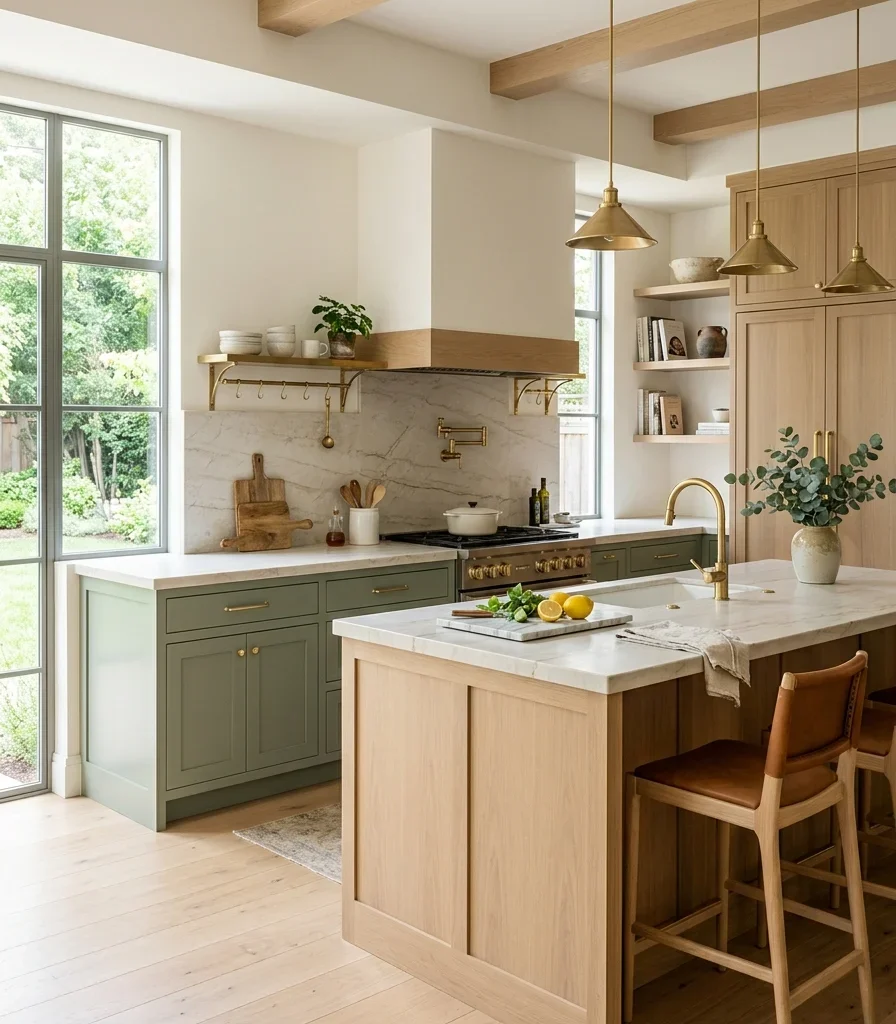
Vibe: The kitchen feels considered, one calm color note against an otherwise neutral stone palette.
Why it works: Sage green sits close enough to gray on the color wheel to function almost like a neutral, which is exactly why it reads as calming rather than bold when confined to a single lower cabinet run against an otherwise neutral quartzite and white oak palette. This restrained accent approach reflects contemporary luxury’s broader preference for controlled, singular color moments over the saturated, room-wide color commitments more common in classic or maximalist kitchen styles.
How to get it: Confine sage green to one specific cabinet run, typically lower cabinets away from the main sightline, rather than distributing it across multiple surfaces, keeping the remaining palette in warm white and stone tones so the green reads as a deliberate single note.
Shop the Look
| Product |
| Sage green cabinet-grade paint |
| Quartzite countertop |
| Warm white oak upper cabinetry |
| Brushed brass hardware set |
| Ceramic decorative bowl |
14. Mixed-Height Island for Cooking and Casual Dining
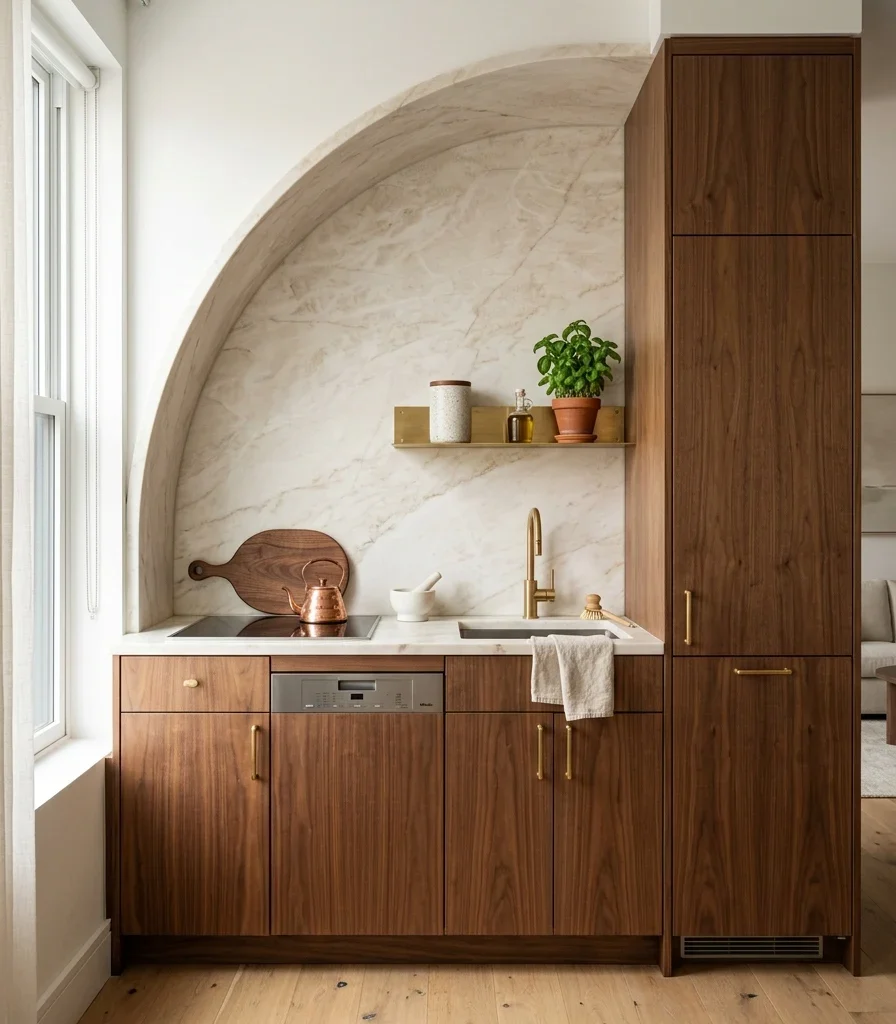
Vibe: The island feels functional, with two distinct heights each doing their own clear job.
Why it works: A mixed-height island separates the messier, functional work of food prep at standard counter height from a raised bar-height section dedicated to casual seating, which solves the same functional conflict a double-island layout addresses but within a single connected piece rather than two separate islands a more space-efficient solution for kitchens without the square footage for two full islands. The height change itself also visually signals the transition between zones without requiring any additional material or color cue.
How to get it: Set the raised dining section 4–6 inches above the standard 36-inch counter height, and finish both levels in the same stone material for visual continuity, letting the height difference alone carry the zoning distinction.
Shop the Look
| Product |
| Quartzite countertop, mixed-height island |
| Boucle counter-height barstool set |
| Brushed brass cabinet hardware |
| Sculptural pendant light, above raised section |
| Ceramic serving tray |
15. Scaled-Down Contemporary Luxury for a Small Kitchen
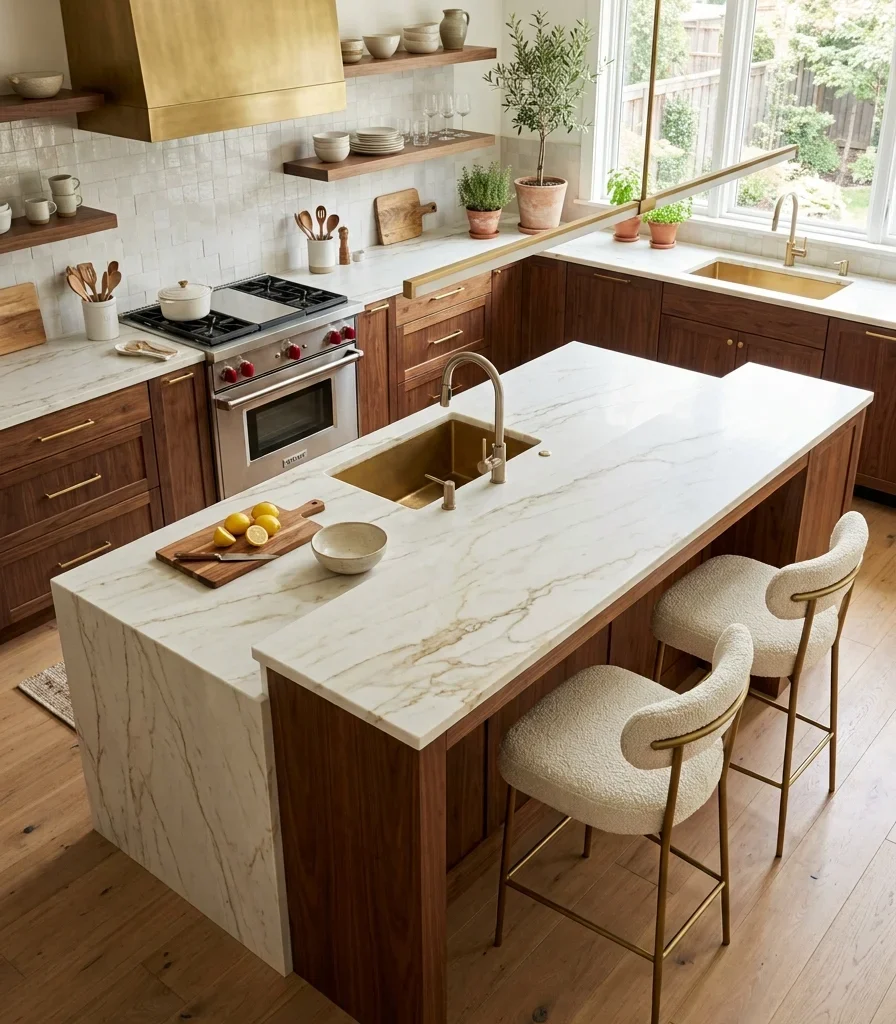
Vibe: The kitchen feels efficient, contemporary material quality standing in for square footage.
Why it works: A small kitchen can’t accommodate a mixed-height island or a hidden prep kitchen, but it can absolutely support the same core contemporary luxury techniques at a concentrated scale. A single curved stone backsplash moment and fully integrated panel-ready appliances deliver the same seamless, high-end signal in a fraction of the space. This is the small-space application of contemporary luxury’s “quality over quantity” philosophy, prioritizing one or two genuinely well-executed details over spreading a limited budget thin.
How to get it: Concentrate your material and technique investment on the one or two surfaces with the most visual presence in a small kitchen, typically the backsplash and appliance integration, rather than attempting curved islands or mixed-height zones that genuinely require more square footage than a small kitchen has.
Shop the Look
| Product |
| Curved quartzite backsplash panel |
| Panel-ready appliance front, small kitchen scale |
| Brushed brass cabinet hardware |
| Small open walnut shelf |
| Ceramic kitchen canister set |
How to Start Your Luxurious Contemporary Kitchen Transformation
Your single first move should be choosing your metal finish matte black or brushed brass before any other decision, since every hardware piece, faucet, and light fixture in the kitchen gets selected against that one consistent metal, and starting anywhere else risks an inconsistent mix accumulated across separate purchases.
The most common mistake is mixing genuinely classic architectural detail, like raised-panel cabinetry or ornate corbels, with contemporary elements like curved waterfall edges and integrated appliances, which creates visual conflict rather than a cohesive look. Fix it by committing fully to slab-front or minimally detailed cabinetry throughout, since contemporary design’s core techniques seamless surfaces, hidden hardware, curved forms depend on flat, uninterrupted cabinet fronts to read correctly.
Three specific items under $50 that create immediate impact: a single boucle-covered barstool cushion to preview the texture against your existing seating, a small potted herb set for testing a future herb wall concept, and a ceramic canister set in warm greige to match your intended cabinet color.
A cosmetic contemporary refresh using hardware, paint, and lighting typically takes one to two weeks and costs $2,000–$5,000. A fuller transformation including quartzite counters and panel-ready appliances runs $35,000–$75,000 and takes two to four months, while a complete custom contemporary luxury build realistically spans five to eight months and costs $100,000–$220,000 depending on curved fabrication and integration complexity.
Frequently Asked Questions About Luxurious Contemporary Kitchens
What is the difference between contemporary and classic luxury kitchen design?
Contemporary kitchen design describes whatever high-end design language is currently in circulation, evolving roughly every decade with curved forms, seamless surfaces, and hidden technology, while classic kitchen design follows fixed Georgian and Victorian architectural proportion rules like raised-panel cabinetry and decorative corbels that don’t change with passing trends. A contemporary kitchen prioritizes concealment and material seamlessness: hidden appliances, no visible hardware, while classic design displays its architectural detail openly and formally.
What colors define a luxurious contemporary kitchen?
Warm greige and warm white oak form the dominant neutral base, with matte black used in thin structural doses across hardware and window frames rather than as a full cabinet color. A single confined color accent, often sage green, applied to just one cabinet run or surface reflects contemporary luxury’s preference for controlled, singular color moments over the room-wide saturated palettes more common in bolder or more traditional kitchen styles.
How much does a luxurious contemporary kitchen renovation cost?
A cosmetic refresh using hardware, paint, and lighting updates typically costs $2,000–$5,000 and takes one to two weeks. A fuller transformation including quartzite counters and panel-ready integrated appliances generally runs $35,000–$75,000 and takes two to four months, while a complete custom-built contemporary luxury kitchen with curved stone fabrication and full appliance integration realistically falls between $100,000 and $220,000 depending on the complexity of curved elements specified.
Can a small kitchen achieve genuine contemporary luxury?
Yes, and several core contemporary techniques curved backsplash moments, integrated panel-ready appliances, a single sculptural pendant actually read more clearly in a compact footprint than a sprawling one, where the same detail can get visually lost. The main limitation is square footage-dependent features like a mixed-height island or a hidden prep kitchen, which genuinely require more room than most small kitchens have available, making concentrated investment in one or two techniques the smarter small-space approach.
What is the most requested contemporary kitchen feature right now?
Fully integrated panel-ready appliances and curved waterfall islands consistently rank among the most searched contemporary luxury kitchen features, reflecting the style’s core preference for seamless, uninterrupted material stories over visible equipment and hard angles. Organic plaster range hoods and living herb walls are also seeing significant search growth, both driven by increasing interest in biophilic, tactile materials as a counterpoint to the stark minimalism that defined the previous decade’s luxury kitchen trends.
Ready to Achieve Your Dream Luxurious Contemporary Kitchen?
These 15 ways to achieve luxurious contemporary kitchen design span color, material, lighting, furniture, and layout, from a curved quartzite waterfall island and an organic plaster range hood to a hidden prep kitchen and a single sculptural pendant treated as real art, so there’s a genuinely fitting starting point here whether you’re planning a full custom build or one high-impact upgrade. You don’t need every technique at once, and choosing your metal finish and committing to slab-front cabinetry before anything else is not a smaller version of the vision; it’s the sequence that keeps every later contemporary detail reading as intentional rather than accidental. Today’s specific action: choose matte black or brushed brass as your kitchen’s single metal finish, and audit every existing fixture against it before any other purchase. Once that one consistent thread runs through the room, every curved edge, integrated appliance, and sculptural light layered on top of it will finally read as one considered contemporary kitchen rather than a collection of trend-chasing choices. Save the techniques that matched your own kitchen’s potential today: that curved waterfall island, that hidden prep kitchen, because in contemporary luxury design, the details no one else sees working are exactly what make the space feel effortlessly, quietly expensive.
You Might Also Like
- 15 Ways to Achieve a Luxurious Contemporary Kitchen Design
- 15 Luxurious Classic Kitchen Design Ideas With Real Architectural Detail
- 14 Coastal Kitchen Decor Ideas for a Breezy, Sunlit Space
- 15 Ways to Decorate an Open Plan Kitchen Dining Space
- 15 Open Shelving in the Kitchen | Kitchen Storage Ideas
- 15 Ways to Create a Modern Luxury Kitchen Ceiling Design